
Keeping a poinsettia alive after the holidays comes down to one thing: the soil you use. These plants hate sitting in soggy roots, but they dry out fast if the mix is too loose. You need a soil that drains fast yet holds enough moisture between waterings, and the right bag makes all the difference.
I’m Rikta — the co-founder and writer behind Lawn Gear Lab. This guide is built by comparing the manufacturers’ published specifications and the patterns across verified customer reviews, so you get each pick’s real strengths and trade-offs instead of marketing spin.
The best soil for poinsettias balances drainage, aeration, and moisture so your plant stays vibrant from Thanksgiving through the New Year.
How To Choose The Best Soil For Poinsettias
The biggest mistake is using heavy garden soil or cheap topsoil. Poinsettias are tropical plants with fine, sensitive roots that need air pockets to breathe. If the mix holds too much water, the roots suffocate and rot within days.
Drainage and Aeration Are Everything
Look for a mix that contains perlite (small white volcanic rocks) and coarse sand or vermiculite (a mineral that holds water like a sponge inside tiny crystals). These particles create air gaps so water passes through quickly instead of pooling around the roots. A well-draining soil for poinsettias should feel light and crumbly in your hand, not dense or clumpy.
Moisture Retention Without Sogginess
While drainage is critical, poinsettias also need consistent moisture. Peat moss (a spongy plant material from bogs) or coconut coir (made from coconut husks) hold water like a sponge and release it slowly between waterings. Too much peat makes the mix waterlog, but the right blend keeps the soil evenly damp — never wet.
pH Balance Matters
Poinsettias prefer a slightly acidic soil with a pH between 5.5 and 6.5. Many good potting mixes include garden lime to balance the pH, which helps the plant absorb nutrients efficiently. A balanced pH also keeps the colorful bracts (the red leaves people call “flowers”) from fading or dropping early.
Fertilizer or No Fertilizer
Some soils come pre-fertilized, which is useful for a poinsettia that is already actively growing. But a poinsettia you bought during the holidays is usually already at peak bloom and does not need extra food for the first few months. If the soil you pick has a slow-release fertilizer, that is fine — it just means you can skip feeding for 4 to 6 months.
Pest-Free Promise
Fungus gnats (tiny black flies) are the #1 complaint from indoor plant owners who buy soil online. They breed in moist, organic-rich medium. Several premium soils in this guide are formulated without compost or bark to eliminate gnat habitats — a detail you will appreciate when you are not fighting flying insects in your living room.
Quick Comparison
On smaller screens, swipe sideways to see the full table.
| Model | Category | Best For | Key Spec | Amazon |
|---|---|---|---|---|
| Miracle-Gro Organic Indoor (2-Pack) | Best Overall | Safe moisture regulation | 8 qt. (2-pack) | Amazon |
| Miracle-Gro Indoor (2-Pack) | Gnat-Free Choice | Fungus gnat prevention | 6 qt. (2-pack) | Amazon |
| Lambert Potting Mix | Best Value | General use & recovery | 8 Quarts | Amazon |
| Perfect Plants Indoor Soil | Premium Pick | Bug-free premium blend | 4 Quarts | Amazon |
| Jessi Mae Potting Soil | Slightly Acidic | Acid-loving houseplants | 4 Quarts | Amazon |
| Midwest Hearth Premium Mix | Professional Formula | Peat-vermiculite-perlite blend | 8 Dry Quarts | Amazon |
In‑Depth Reviews
1. Miracle-Gro Organic Indoor Potting Mix (2-Pack, 8 qt.)

8 quarts per bag (16 quarts total in the 2-pack) makes this the top pick for anyone who has ever killed a poinsettia by overwatering. Its organic blend of sphagnum peat moss and coir (coconut husk fiber) creates a sponge-like texture that pulls in water when the plant needs it and lets go of excess before roots sit in a puddle. If you have killed a poinsettia by watering too much, this is your safety net.
Each bag holds 8 quarts (enough to fill two 8-inch pots), and the bundle gives you two bags — 16 quarts total to repot multiple poinsettias or other houseplants. Buyers report the mix holds moisture well and helps struggling plants bounce back. One buyer says, “My plants grow better, healthier, more rapidly.” It carries an OMRI Listed organic certification (meaning it meets strict organic standards).
The catch is that the organic formula feels damp right out of the bag. If you ever pot a succulent or cactus alongside your poinsettia, you would need to mix in sand or perlite to dry it out. But for poinsettias, this balanced moisture regulation is exactly what they need through the winter.
Why it’s great
- Helps regulate soil moisture to prevent both over and under watering
- Organic, OMRI Listed with responsibly sourced peat and coir
- Comes as a 2-pack giving you 16 quarts total
Good to know
- Moisture retention may be too high for succulents or cacti without amendments
2. Miracle-Gro Indoor Potting Mix (2-Pack, 6 qt.)
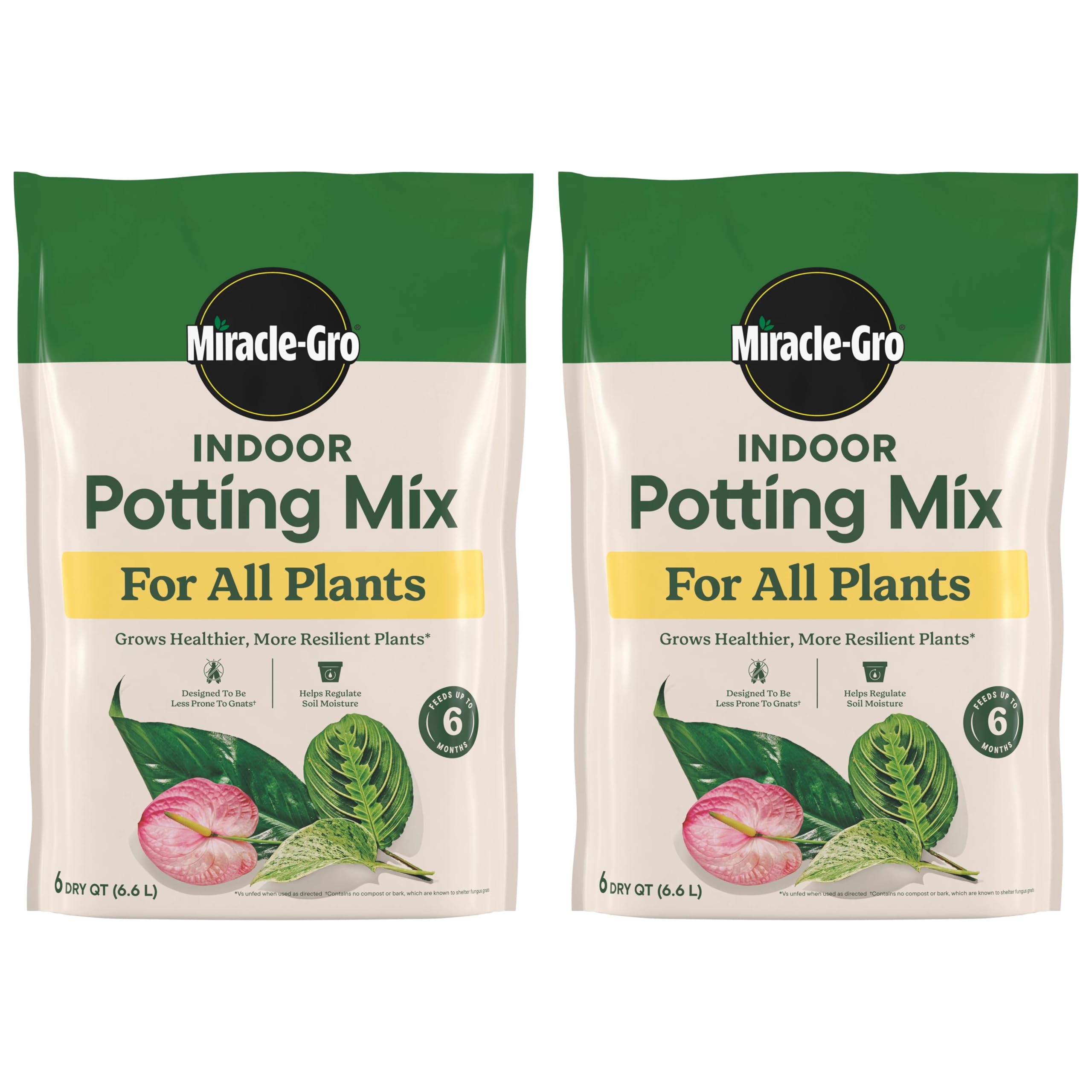
Compared to the top pick (Organic version), this mix wins on one critical point: it is made without compost or bark, which are the ingredients that shelter fungus gnats (tiny flies that swarm around wet soil). If you have dealt with gnats before, you know how frustrating it is. This formula uses sphagnum peat moss, coconut coir, and perlite to keep the environment clean, and owners mention it consistently arrives gnat-free.
The soil feeds your poinsettia for up to 6 months with built-in nutrients, so you do not add fertilizer during the holiday period. At 3.15 kilograms per bag, it is heavier than the Lambert mix (1.75 kilograms for 8 quarts), which means a denser moisture-holding structure. That helps poinsettias stay hydrated between weekly waterings. Customers note it has excellent drainage and moisture retention; one noted, “Back home to Miracle-Gro potting mix, just can’t beat it.”
But a few buyers flagged that this blend can be dusty when first poured. It may also be too moisture-retentive for cacti or succulents without mixing in sand or perlite. For your poinsettia, that moisture-retentive quality is actually a benefit, so choose this over the top pick if keeping gnats away is your top priority over an organic label.
Where it shines
- Formulated without compost or bark to prevent fungus gnat infestations
- Feeds plants for up to 6 months with built-in nutrients
- Blend of peat moss, coir, and perlite for balanced moisture retention
Worth noting
- Can be dusty when first poured; may need sand/perlite for cacti or succulents
3. Lambert Potting Mix (8 Quarts)
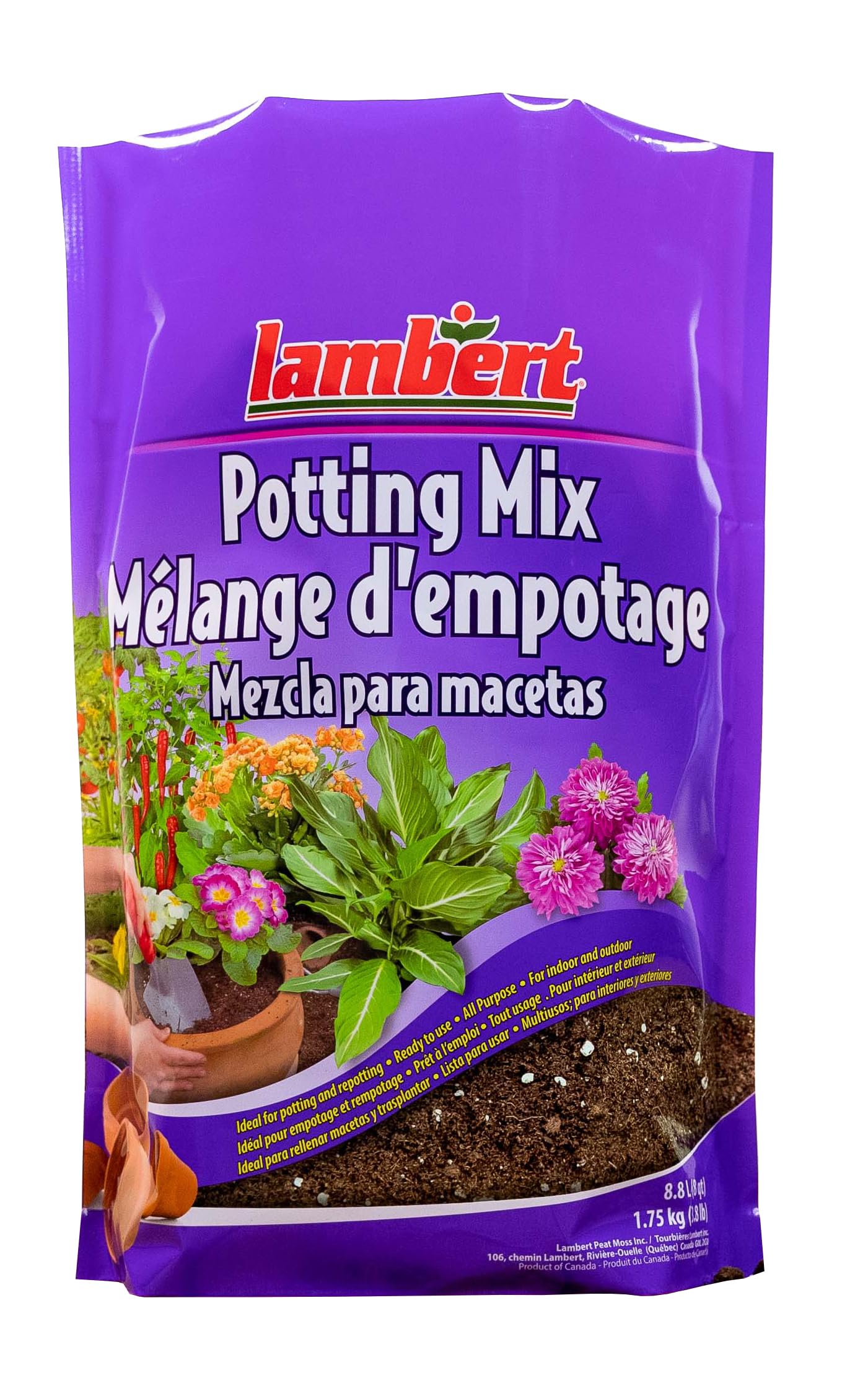
If you are repotting a tired-looking poinsettia that came from a grocery store and is already dropping leaves, this mix is built for a revival. It is an all-purpose blend that works for flowers, vegetables, shrubs, and houseplants, so it is the most flexible pick if you have multiple plant types around the house. At 8 quarts, it offers the same volume as the Miracle-Gro Organic bag but at a lower price per quart.
One buyer shared a dramatic turnaround: “I repotted my houseplants as they were weak and hanging lifeless… when I got home, WOW! My plants came to life and are thriving.” The mix is clean and consistent with no cheap fillers, and has a light texture that drains well while still holding enough moisture for a poinsettia’s fine roots. It uses eco-friendly peat moss from certified producers.
The key difference from the Miracle-Gro Indoor mix: this bag weighs only 1.75 kilograms compared to 3.15 kilograms — an 80% weight difference. The lighter weight means Lambert is fluffier and airier, which is great for drainage but means you might water slightly more often in a dry home. For most poinsettia owners, that airiness is a feature, not a bug.
What stands out
- Light, fluffy texture with excellent drainage for sensitive poinsettia roots
- Clean and consistent with no cheap fillers
- Eco-friendly formulation from certified peat producers
The trade-offs
- Lightweight may require more frequent watering in dry indoor air
4. Perfect Plants Indoor Plant Soil (4 Quarts)

The single number that matters most here is “bug-free,” and this soil scores a perfect 5 out of 5 from multiple reviewers who specifically call out zero fungus gnats — a rare claim in the soil world. One reviewer noted, “Not cheap, but bug-free and my plants are thriving,” and another called it “completely bug-free, unlike Miracle Grow.” If you have had a gnat infestation before, this soil is worth the premium for that peace of mind.
The downside is the smaller bag — 4 quarts compared to the 8-quart bags from Miracle-Gro and Lambert. That means half the volume at a higher price per quart. The ingredients are also unique: pine bark, coco coir, perlite, sand, and garden lime. The sand helps fast drainage, and the garden lime keeps the pH in the 5.5–6.5 range poinsettias prefer.
One buyer mentioned that a 4-quart bag still leaves half the soil over after repotting a single medium ivy, so for a single decorative poinsettia, this bag is plenty. If you want a soil mixed on a USA farm and sold in a heavy-duty resealable bag, this is the most deliberate choice on the list, offering a premium price-to-value read for those prioritizing bug-free peace of mind over volume.
The upsides
- Consistently bug-free with zero fungus gnats reported by multiple buyers
- Light, airy texture with excellent drainage and moisture retention
- pH-balanced with garden lime for poinsettia’s preferred 5.5–6.5 range
Keep in mind
- Smaller bag (4 quarts) at a higher per-quart cost than competitors
5. Jessi Mae Potting Soil (4 Quarts)

You get a hand-mixed, organic potting soil made in the USA that is specifically designed to be slightly acidic and well-draining — two characteristics that directly match what a poinsettia needs. The blend includes perlite and organic materials, and the texture is light and airy, which enhances air circulation around the roots and reduces the risk of root rot.
You give up volume again — this is a 4-quart bag (128 fluid ounces), comparable to the Perfect Plants offering in size but slightly pricier. The soil has a notable organic smell when first opened; one reviewer warned, “It definitely SMELLS organic. Luckily the smell dissipates after a day or two.” If you are sensitive to earthy smells, let the bag air out for an hour before using it.
This bag is for you if you are a houseplant enthusiast who wants a ready-to-use, pre-mixed soil without measuring perlite or sand yourself. One owner reported, “I’m a plant newbie so it was really helpful to be able to get the correct soil without having to mix it myself or worry about pests/chemicals.” A reviewer noted their peace lily produced a new bud just a few weeks after repotting with this soil — it is perfect for the budget buyer who prioritizes convenience and organic ingredients over maximum volume.
Why we’d pick it
- Hand-mixed in small batches in the USA with organic ingredients
- Light and airy texture with perlite for excellent drainage
- Slightly acidic pH ideal for poinsettias and other acid-loving plants
A few caveats
- Strong organic smell when first opened that fades within a day or two
- Smaller 4-quart bag at a premium price point
6. Midwest Hearth Premium Potting Soil Mix (8 Dry Quarts)

This bag is perfect for the indoor gardener who wants a professional-grade, “set it and forget it” mix and is willing to pay a premium for a scientifically balanced recipe. It uses the same three-part formulation professional growers rely on: peat moss for moisture retention, perlite for drainage, and vermiculite for aeration. The peat moss holds water and releases it slowly, while the perlite and vermiculite create air pockets so poinsettia roots can breathe.
What you get for the price is an 8-quart bag that is pH-controlled for a broad spectrum of plants, including poinsettias. It is also the lightest bag by weight at 1.25 kilograms — very fluffy and airy, which prevents compaction around roots. One customer observed, “Does not appear to harden around the roots,” which is important because compacted soil is a silent killer of potted poinsettias. The bag is resealable, so you can store leftovers without them drying out or attracting bugs.
The one reason to choose this over the others is the professional-grade blend that includes vermiculite — an ingredient absent from every other product on this list. Vermiculite acts as a moisture reservoir that holds water inside its crystalline structure and releases it only as the soil dries. For a poinsettia that needs consistent hydration without sogginess, vermiculite is a powerful addition that the cheaper mixes skip, though its premium price may not suit every budget.
Strong points
- Professional three-part formula: peat moss + perlite + vermiculite
- Light and fluffy texture that prevents soil compaction around roots
- Resealable bag for convenient storage; made in the USA
Before you buy
- Requires pre-soaking to help the soil retain water initially
- Premium price point compared to basic potting mixes
Understanding the Specs
Perlite and Drainage
Those small white rocks you see in potting soil are perlite — a volcanic glass heated until it pops like popcorn. Perlite creates air pockets so water flows through quickly instead of pooling. For poinsettias, look for a mix that visibly includes perlite; it is the best visual clue the soil will drain properly. The Jessi Mae and Perfect Plants mixes both include perlite prominently, while the Midwest Hearth adds vermiculite for extra aeration.
Peat Moss vs. Coconut Coir
Peat moss is a spongy material harvested from bogs that holds many times its weight in water. Coconut coir is a renewable alternative made from coconut husks. Both do the same job for poinsettias — they retain moisture without making the soil soggy. The Miracle-Gro Organic mix uses responsibly sourced peat and coir together, while the Lambert mix uses peat from certified producers. Coir is more sustainable, but peat is more widely available and often cheaper.
FAQ
Can I use regular garden soil for my poinsettia?
How often should I water a poinsettia in good soil?
My poinsettia is dropping leaves. Is it the soil?
Do I need to add fertilizer to the soil for my poinsettia?
How do I know if my soil has fungus gnats before I use it?
Final Thoughts: The Verdict
For most people, the best soil for poinsettias is the Miracle-Gro Organic Indoor Potting Mix (2-Pack) — it delivers balanced moisture regulation, a generous 16-quart volume, and organic certification all in one bag. If you are worried about fungus gnats, grab the Miracle-Gro Indoor Potting Mix (2-Pack) for its proven gnat-free formula. And for the most scientifically balanced professional-grade blend with vermiculite for extra aeration, choose the Midwest Hearth Premium Potting Soil Mix.