
When your pothos stops pushing out new leaves or the vines look pale and thin, your plant is almost certainly hungry for nutrients. Pothos are tough — they can handle low light — but to grow thick, cascading vines with big, dark leaves, they need a steady supply of the right food. The challenge is picking a fertilizer that gives pothos what it wants without burning the roots or leaving salt deposits in the soil.
I’m Rikta — the co-founder and writer behind Lawn Gear Lab. This guide is built by comparing the manufacturers’ published specifications and the patterns across verified customer reviews, so you get each pick’s real strengths and trade-offs instead of marketing spin.
How To Choose The Best Pothos Fertilizer
Pothos are not heavy feeders, but they do need a balanced supply of nitrogen (N, the nutrient that fuels leaf growth), phosphorus (P, for root support), and potassium (K, for overall health) to keep foliage dark green and vines growing. The wrong fertilizer can push too much phosphorus — which pothos barely use — or deliver nitrogen in a form that causes root burn. Here is what actually matters.
The NPK Ratio: Higher Nitrogen for Leaves
Pothos are grown for their leaves, not for flowers. Look for a fertilizer where the first number (nitrogen) is the highest, because nitrogen fuels leaf growth and chlorophyll production (the pigment that makes leaves green and drives photosynthesis). A ratio like 6-2-4 or 3-1-2 gives you the right balance. Avoid anything with a high middle number (phosphorus), since that formula is designed for flowering plants, not foliage.
Liquid Concentrate vs Ready-to-Spray
Most pothos fertilizers come as liquid concentrates that you mix with water. These let you control the strength — you can dilute to half-strength for young plants or sensitive varieties. Ready-to-spray bottles cost more per ounce and take away that control, but they are convenient if you only have one plant. Concentrates are almost always the better value, especially if you have multiple houseplants.
Organic vs Synthetic Formulas
Organic fertilizers (made from ingredients like worm castings, kelp meal, or bat guano) release nutrients slowly and feed the soil microbes. They are gentler and almost impossible to overdo, but they can have a natural smell. Synthetic fertilizers act faster and give you a visible boost within days, but you need to follow the mixing instructions closely to avoid salt buildup — a chemical residue that can burn root tips and turn leaf edges brown.
Quick Comparison
On smaller screens, swipe sideways to see the full table.
| Model | Category | Best For | Key Spec | Amazon |
|---|---|---|---|---|
| HiThrive All Purpose Plant Food | Best Overall | Maximum value per bottle | 16 fl oz, makes 87+ gallons | Amazon |
| Farmer’s Secret Pothos Food | Pothos-Specific | Targeted pothos root and vine growth | 8 fl oz, concentrated 6:5:3 NPK | Amazon |
| EZ-gro Professional Pothos Fertilizer | Professional Grade | Balanced 3:1:2 ratio for foliage | 8 fl oz, 3:1:2 NPK ratio | Amazon |
| Gardenera Plant Superfood Spray | Foliar Spray | Quick absorption through leaves | 8 fl oz, spray-on formula | Amazon |
| Gardenera Organic Superfood Concentrate | Premium Organic | 18 essential nutrients for deep feeding | 8 fl oz, organic concentrate | Amazon |
| Espoma Organic Indoor Plant Food | Organic Pick | Trusted organic brand, pack of 2 | 8 fl oz, pack of 2 | Amazon |
| Houseplant Resource Center Pothos Fertilizer | Specialty Pothos | Gentle 3-3-3 formula with biostimulants | 8 fl oz, 3-3-3 NPK with sea kelp | Amazon |
In‑Depth Reviews
1. HiThrive All Purpose Indoor Plant Food

A single 16-ounce bottle of this HiThrive concentrate makes more than 87 gallons of plant food — that is double the liquid of any other bottle on this list, so one purchase covers every pothos you own for months. The 6-2-4 NPK ratio delivers the highest nitrogen number here, which fuels thick leaves and long vines. It earns the best overall spot because the high volume and a leaf-focused formula work for pothos, fiddle leaf figs, snake plants, and monstera alike — you are not locked into one use.
Buyers report that they just “add a small amount to the jug I use to water and it goes a long way,” which matches the simple mixing instruction: 1 teaspoon per gallon of water. The liquid feeds roots instantly, so you often see pale or drooping leaves turn perkier within a week. At 1.2 pounds for the full bottle, it is heavy enough to last through months of weekly feedings without needing a restock.
The catch is that the 6-2-4 formula is a synthetic concentrate, so you need to measure carefully — doubling the dose can cause leaf tip burn. If you want a set-it-and-forget-it organic option, the Espoma pack farther down the list is your match. But for straightforward, high-value feeding that makes your pothos visibly greener, this is the bottle to grab.
Why it’s great
- Makes over 87 gallons from one bottle, the highest yield on this list
- 6-2-4 NPK ratio provides the nitrogen pothos needs for lush foliage
- Two times more liquid than the average 8-ounce competitor
Good to know
- Synthetic formula — over-mixing can cause salt buildup and leaf burn
- Not organic, which matters if you prefer natural soil feeding
2. Farmer’s Secret Pothos Liquid Plant Food
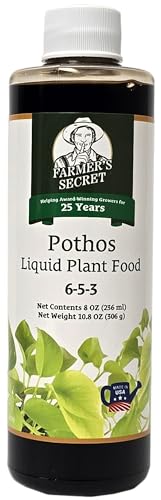
Compared to the top pick HiThrive’s 1:1:1 general-purpose NPK, Farmer’s Secret uses a 6:5:3 ratio that delivers 5 parts phosphorus versus HiThrive’s 1 part — a 5x increase designed specifically for pothos root strength. The bottle is 8 fluid ounces versus HiThrive’s 16 ounces, but Farmer’s Secret requires only half a teaspoon per two cups of water for young plants, making it last nearly as long despite the smaller size.
Owners mention that “My Pothos look fantastic and already have visibly grown longer,” and the built-in measuring cap makes dosing easy even for beginners. One reviewer noted that their largest pothos had vines “growing across the wall in a matter of weeks” after adding this to their watering routine. The 1:128 mixing ratio means a single bottle can feed a mature collection of pothos for several months without running out.
The downside is that the 6:5:3 ratio includes more phosphorus than pothos strictly needs, which is fine for root development but could be wasteful if your pothos is already growing in rich soil. Choose this bottle over the HiThrive if you have a specific pothos variety like a marble queen or neon pothos that you want to push into rapid vine growth.
Where it shines
- Formulated specifically for pothos with a 6:5:3 NPK ratio
- Super concentrated — a little goes a very long way
- Cap doubles as a measuring device for easy dosing
Worth noting
- 8-ounce bottle is smaller than the top pick (2.0x less liquid volume)
- Higher phosphorus content than foliage-only formulas
3. EZ-gro Professional Liquid Pothos Fertilizer
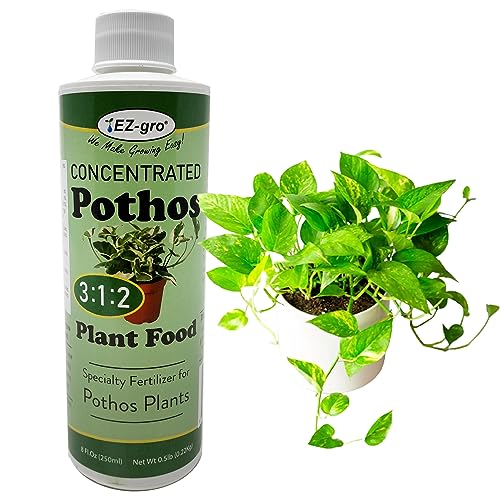
If you are the type of plant owner who mixes exact ratios and waters on a strict schedule, the EZ-gro 3:1:2 formula is built for your precision. This 3:1:2 NPK ratio is widely considered the ideal balance for tropical foliage plants because it delivers nitrogen for leaves (3), minimal phosphorus for root support (1), and a moderate amount of potassium for overall plant health (2). It comes in an 8-ounce bottle, but you use 2 tablespoons per gallon of water, so each bottle makes about 2.5 gallons of ready-to-use fertilizer.
The “professional” label is earned — the formula includes ingredients designed to help control soil pH when your tap water is alkaline (high pH), a common problem for indoor plant owners who see leaves turning pale despite regular feeding. One buyer mentioned that they use it on their snake plant and found it “thriving even with low sun,” which hints at how well the nutrient absorption works. Another reviewer said it is “easy to use and seems to work so far,” adding that the simple mixing instruction takes the guesswork out of feeding.
The trade-off is that the 8-ounce bottle is the smallest format here, and at 2 tablespoons per gallon, it goes through faster than ultra-concentrated alternatives. For a single pothos or a small collection, that is fine — but if you have a wall of plants, you will be reordering sooner than you would with the HiThrive. Each bottle yields exactly 2.5 gallons of ready-to-use fertilizer, no more, no less.
What stands out
- 3:1:2 NPK ratio is the professional standard for tropical foliage
- Helps control soil pH when using alkaline tap water
- Made and packaged in the USA
The trade-offs
- 8-ounce bottle lasts for fewer total gallons than the top pick
- Requires 2 tablespoons per gallon, which is a larger dose per watering
4. Gardenera Plant Superfood for POTHOS (Spray)
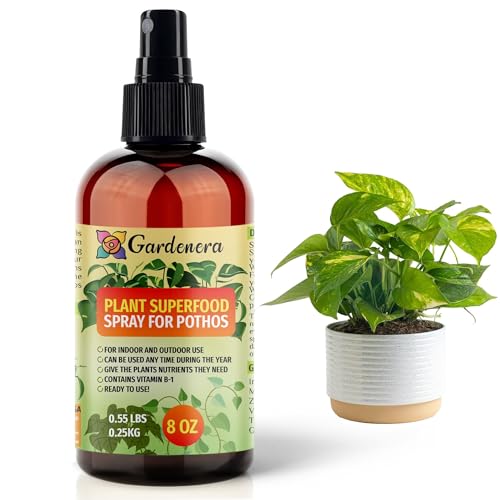
Most fertilizers work through the roots, but this Gardenera spray delivers nutrients directly through the leaves (a method called foliar feeding). The key ingredient here is Vitamin B-1, which is designed to stimulate root development and reduce transplant shock — useful if you recently repotted a pothos or moved a cutting from water to soil. The spray also contains iron, manganese, and zinc, along with added glucose for an immediate energy boost. For a pothos that looks sad and needs a quick recovery, this spray can show results faster than soil drenching.
One reviewer described an “Avocado plant revived with vigor after proper use” and a “Meyer lemon tree regrew on dead branches, produced buds after 9 years,” which speaks to the potency of the micronutrient blend. Pothos owners specifically note that 2-3 sprays at the base and a few on the leaves keep the plant “super healthy looking” even through fluctuating indoor temperatures. The spray bottle design is convenient, though a few buyers wished it had a handle-grip trigger rather than a finger-depress nozzle.
One limitation is that foliar sprays require more frequent application than soil drenches — you are feeding the leaves, not the root system, so the effect wears off faster. This is a great supplement to a regular liquid fertilizer routine, but it should not be your only source of nutrition for a mature pothos. If you have one or two plants and want a hands-on feeding method, this works beautifully.
The upsides
- Vitamin B-1 helps reduce transplant shock and strengthen roots
- Added glucose provides an immediate energy boost to leaves
- Spray formula absorbs through leaves for faster results than soil feeding
Keep in mind
- Foliar sprays need more frequent application than soil drenches
- Small bottle requires reordering sooner for large plant collections
5. Gardenera Organic Superfood Concentrate for POTHOS
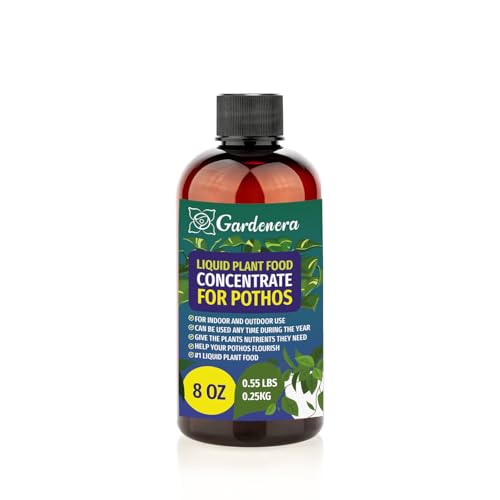
At this lower price you get an 8-ounce bottle of Gardenera Organic Superfood Concentrate packed with 18 essential nutrients from worm castings, bat guano, kelp meal, and mycorrhizae—a beneficial fungus that helps roots absorb water and minerals.
The mixing ratio is 2 tablespoons per gallon of water, and customers note their plants “thrive” after weekly feedings. One owner reported that their “money tree perked up after one dose” and that the all-natural formula lets you “use sparingly in winter to avoid overfeeding.” The Zymology process breaks down the ingredients over five years before bottling, making the nutrients immediately available to the plant rather than requiring soil bacteria to break them down first. Some buyers mention that the 8-ounce bottle does not last long if you have many plants, since the dose is relatively large.
This is the pick if you want a truly organic solution that feeds the soil, not just the plant, and you are willing to pay a premium for the ingredient sourcing. It works across all growing media including hydroponics, leca balls, and terrariums, so it is a versatile addition to your plant-care shelf. For standard potting soil, the HiThrive gives you more feedings for your money, but this Gardenera formula gives you richer soil biology—making it the exact budget buyer it is perfect for: the organic-focused plant parent who prioritizes soil health over cost per feeding.
Why we’d pick it
- 18 essential organic nutrients including worm castings, bat guano, and kelp
- Suitable for all growing media: soil, hydroponics, leca, and terrariums
- 100% pet and fish safe with no chemical odors
A few caveats
- 2 tablespoons per gallon dose means the bottle empties faster than ultra-concentrates
- Premium price point compared to synthetic alternatives
6. Espoma Organic Indoor Plant Food (Pack of 2)

This pack of two 8-ounce bottles is perfect for the organic-focused houseplant parent who wants a gentle, time-tested liquid feed they can use at every watering without fear of root burn. Espoma has been making organic plant food since 1929, and this indoor formula is one of the most trusted names in houseplant care. The concentrated liquid — you add half a cap per quart of water — is balanced enough for pothos, snake plants, and fiddle leaf figs, and the double-bottle pack gives you more volume than most single-bottle competitors.
The immediate trade-off is the smell. Multiple buyers mention a “strong manure-like odor” when mixing, though it fades quickly after watering. One 74-year veteran gardener called it “the best indoor fertilizer I have used,” praising the results despite the temporary scent. Another user noted that it is “gentle enough I use it every watering” with half a cap in a gallon of water, and their plants flourish. The organic ingredients mean the nutrients are released slowly by soil microbes, so you get steady growth rather than a sudden spike.
Choose the Espoma pack if you want a trusted organic brand with a long track record and you do not mind the earthy smell. The pack of two bottles gives you good value, and the gentle formula is perfect if you tend to over-love your plants with too much food. Just be aware that if odor sensitivity is a dealbreaker for you, the HiThrive synthetic concentrate is completely scent-free.
Strong points
- Trusted organic brand with nearly a century of experience
- Pack of 2 bottles gives you double the volume of most competitors
- Gentle enough to use at every watering without burning roots
Before you buy
- Has a strong, natural manure-like smell during mixing
- Organic formula works slower than synthetic concentrates
7. Houseplant Resource Center Pothos Fertilizer
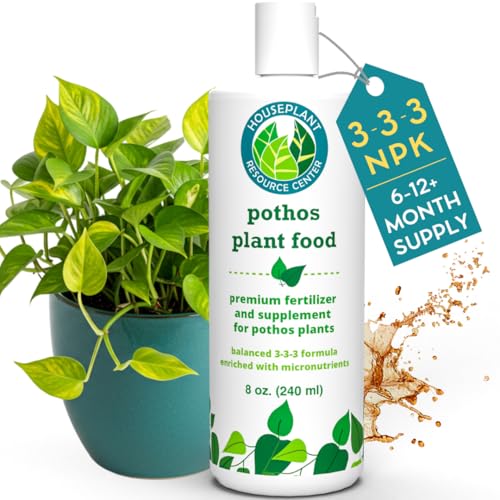
This is the most specialized pothos fertilizer on the list, and it is priced accordingly, making it a premium option compared to more budget-friendly picks like the HiThrive. The 3-3-3 NPK formula is perfectly balanced — equal parts nitrogen, phosphorus, and potassium — so it never pushes too hard on any single element. What sets it apart is the biostimulant blend of sea kelp extract, humic acid (a natural compound that improves nutrient uptake), and fulvic acid (which helps carry nutrients into plant cells), which improve how well the plant absorbs the existing nutrients in the soil. For a pothos that is struggling in poor or depleted potting mix, this formula helps unlock whatever nutrition is already there.
The manufacturer claims each bottle lasts six months to a year, and reviewers confirm the results: one customer observed a pothos “near death” that “revived with a dozen large leaves in 4 weeks” after using this. The bottle requires no mixing — you can use it directly at every watering without risk of burning the plant, which removes the biggest cause of fertilizer mistakes. It also includes a free care webinar and e-book, which is a nice bonus if you are new to pothos care. Some customers note that it feels “pricey for many plants” if you have a large collection.
The one clear reason to choose it is the gentle all-in-one formula that works without measuring, plus the biostimulants that improve nutrient uptake in less-than-ideal soil. It is the best choice for a single beloved pothos plant that you want to baby back to health. For multiple plants or a tight budget, the HiThrive gives you better value per bottle.
What we like
- 3-3-3 NPK formula is perfectly balanced and gentle for every watering
- Sea kelp, humic acid, and fulvic acid boost nutrient absorption
- Includes a free pothos care webinar and e-book
The downsides
- Premium price point, especially for owners with multiple plants
- Some bottles have been reported to leak during shipping
Understanding the Specs
NPK Ratio Explained for Pothos
The three numbers on a fertilizer label (like 6-2-4 or 3:1:2) tell you the percentage of nitrogen (N), phosphorus (P), and potassium (K) by weight. For pothos, nitrogen is the most important because it drives leaf production and chlorophyll (the green pigment that turns sunlight into energy) — that is what makes leaves dark green. Phosphorus supports root growth, and potassium helps with overall plant health and disease resistance. A ratio with the first number highest (more nitrogen) is ideal for pothos, since you want leaves, not flowers. A balanced 3-3-3 works too, but avoid high-phosphorus “bloom booster” formulas.
Liquid Volume and Concentration
The liquid volume (measured in fluid ounces) tells you how much product is in the bottle, but the concentration matters more. A 16-ounce bottle of HiThrive that makes 87 gallons is actually a better value than two 8-ounce bottles of a less concentrated formula. Look at the mixing ratio (like “1 teaspoon per gallon” or “1:128”) to figure out how many total gallons a bottle will make. Super-concentrated formulas cost more per bottle but last much longer, so they are usually cheaper per feeding.
FAQ
How often should I fertilize my pothos?
Can I use a general houseplant fertilizer on my pothos?
What happens if I over-fertilize my pothos?
Should I fertilize pothos growing in water?
Final Thoughts: The Verdict
For most pothos owners, the best pothos fertilizer winner is the HiThrive All Purpose Plant Food because its 6-2-4 NPK ratio and massive 87-gallon yield give you the best balance of effective feeding and long-term value. If you want a pothos-specific formula that pushes faster vine growth, grab the Farmer’s Secret Pothos Food. And for organic care with zero synthetic chemicals, the Espoma Organic Indoor Plant Food pack of two gives you a trusted brand with gentle, slow-release feeding.