
Your Phalaenopsis orchid’s roots are built to grow on tree bark, not in dirt. Shove them into regular potting soil and they suffocate and rot. The fix is a chunky mix of coarse bark, perlite (popped volcanic glass that helps drainage), and a touch of moss — like the branch of a tree, letting air reach the roots and water drain fast. This article names the six specific blends that buyers report actually work, and which one you should buy first.
I’m Rikta — the co-founder and writer behind Lawn Gear Lab. This guide is built by comparing the manufacturers’ published specifications and the patterns across verified customer reviews, so you get each pick’s real strengths and trade-offs instead of marketing spin.
Whether you are repotting a store-bought orchid or reviving one with yellow leaves, choosing the right orchid mix for phalaenopsis is the single most important decision for your plant’s long-term health and bloom cycle.
How To Choose The Best Orchid Mix For Phalaenopsis
A good mix does two things: it lets air reach the roots (orchid roots photosynthesize and need light and air), and it dries fast enough that roots never sit in standing water. Here are the key factors to check before you buy.
Particle Size and Texture
Phalaenopsis roots are thick, and they need large air pockets. Look for bark pieces roughly 1/2-inch to 3/4-inch across. Small enough to pack around the roots, big enough that water drains freely. Fine dust and tiny particles pack down over time and choke the roots.
Moisture Retention vs. Drainage
Pure bark drains fast but dries out quickly. A balanced mix includes sphagnum moss or coco peat (coconut husk fibers) that hold moisture against the bark, giving roots a slow sip between waterings. Perlite and pumice add drainage without holding water.
Bag Volume and Pot Count
A single Phalaenopsis in a 4-inch pot needs about one quart of mix. A 2-quart bag handles two small repots or one large one. A 4-quart bag covers two to three medium 6-inch pots. Bigger bags save a second purchase if you have multiple orchids.
Additional Ingredients
Some mixes include biochar (a charcoal-like material that holds nutrients and microbes), mycorrhizae (beneficial fungi that help roots absorb water and fertilizer), or worm castings. These extras help the plant establish faster, but plain bark plus orchid fertilizer works fine.
Quick Comparison
On smaller screens, swipe sideways to see the full table.
| Model | Category | Best For | Key Spec | Amazon |
|---|---|---|---|---|
| Rosy Soil Orchid Potting Mix | Premium | Blooming Reliability | 4 Quarts, Biochar + Mycorrhizae | Amazon |
| Riare 2QT Orchid Potting Mix | Value | Complete Kit | 2 Quarts, Moss + Bark + Perlite | Amazon |
| Harris Premium Orchid Mix | Mid-Range | Heat-Treated Bark | 4 Quarts, Douglas Fir Bark | Amazon |
| Bigmeta 4qt NZ Bark | Premium Bark | Pure Bark Mixers | 4 Quarts, Medium Pine Chips | Amazon |
| Gardenera Premium Orchid Soil Mix | Hand-Mixed | Small Batch Quality | 1 Quart, NZ Pine + Clay Pebbles | Amazon |
| Mulctun Orchid Bark Potting Mix | Bulk Value | Large Collections | 9 Quarts, Pine Bark + Perlite | Amazon |
In‑Depth Reviews
1. Rosy Soil Orchid Potting Mix
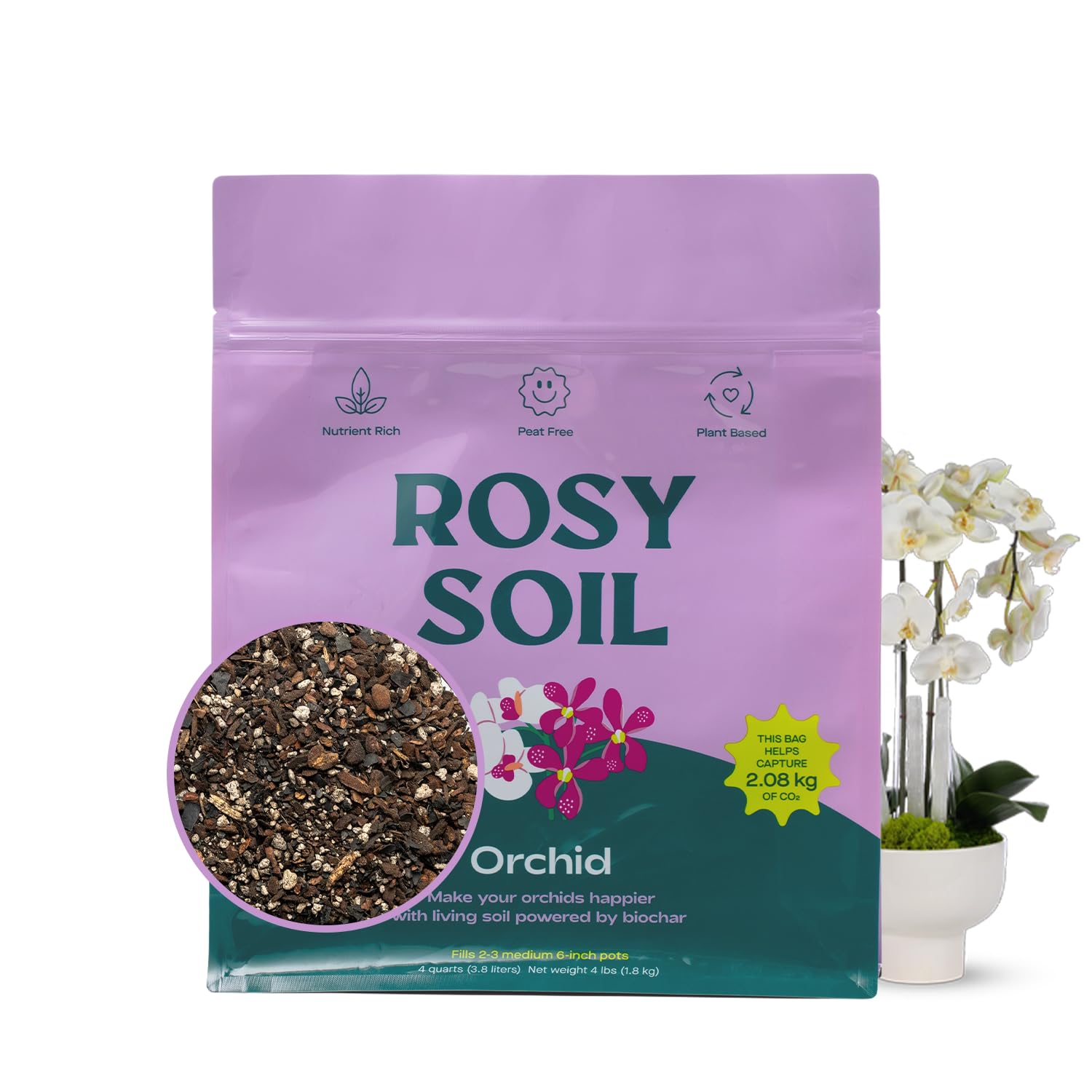
4 quarts — enough to fill two to three medium 6-inch pots — make this the top pick for anyone who wants a mix that actively feeds roots to boost next season’s blooms. It blends orchid bark, pumice, and biochar into an open, fast-draining structure, and the bag holds the same volume as the Harris mix and 4.0x the size of the Gardenera mix.
Unlike the Riare mix, this one includes mycorrhizae (beneficial fungi that form a network around roots to pull in water and fertilizer) and worm castings that help establish the plant faster. Owners mention that a sad orchid repotted in Rosy Soil produced a bloom stalk and a new leaf. One reviewer noted: “My orchids love it! I have a kiki on one plant (never before) and they are growing and blooming better than they have in years.” It is also peat-free, so you avoid soggy peat going to landfill.
Pick this for maximum bloom reliability. skip it if your home is very dry, because the chunky texture may be too open and dry out quickly. The honest trade-off is price — this bag costs more per quart than simple bark blends. For maximum bloom reliability, this mix is the clear winner.
Why it’s great
- Biochar + mycorrhizae actively support root health and nutrient uptake
- 4-quart bag fills 2-3 medium pots
- Peat-free and climate-positive packaging
Good to know
- Premium price point compared to basic bark blends
- One buyer mentioned the chunky texture may be too open for very dry homes
2. Riare 2QT Orchid Potting Mix
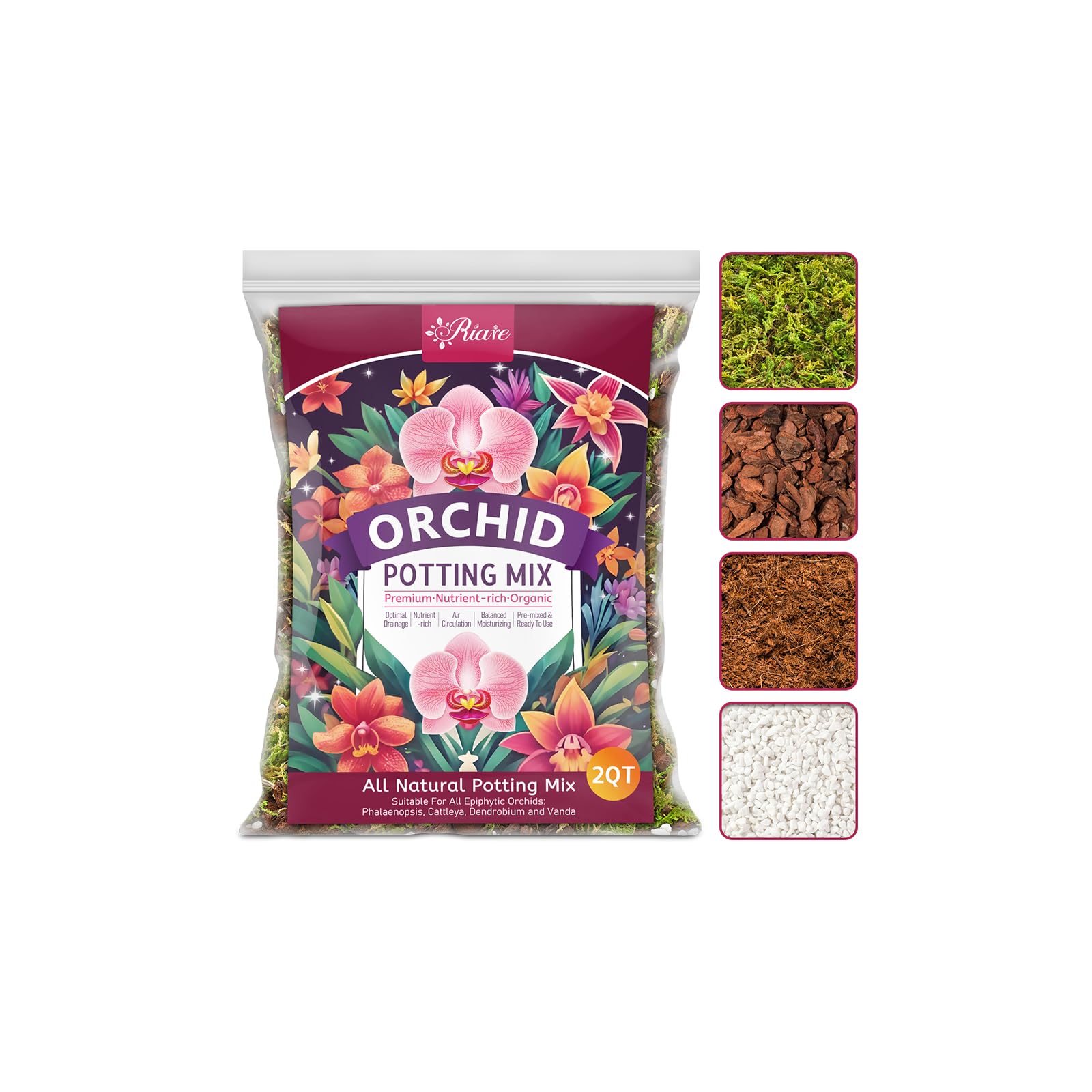
Compared to the Rosy Soil top pick, this Riare 2QT Orchid Potting Mix costs less per quart and comes as a complete four-ingredient blend (bark, perlite, coco peat, and forest moss) rather than a three-ingredient mix. At 2 quarts, one owner reported the bag is small, but another reviewer confirmed “one bag used for 3 smaller orchids” and reported fast growth within a week of repotting.
This mix is designed for epiphytic orchids (plants that grow on tree surfaces). The coco peat and moss provide moisture retention that pure bark lacks. The perlite creates air channels so roots breathe and water drains fast — critical for Phalaenopsis, which rot quickly in stagnant moisture. The bag is resealable, so leftover mix stays fresh.
One customer observed the bag was smaller than expected and felt pricey for the volume, though their orchid thrived after the repot. The 2-quart size handles about two orchids in 4-inch pots. Of all the picks, this one saves you from buying three separate ingredients if you want moss and perlite already mixed in. Choose this over the top pick if you want a lower-cost, ready-to-use blend with added moisture retention from coco peat and moss, and you only need to repot a few small orchids.
Where it shines
- Complete four-ingredient blend — no need to buy moss or perlite separately
- Customers note fast new root growth within one week of repotting
- Resealable bag keeps unused mix fresh
Worth noting
- 2-quart bag is small; some buyers felt it was pricey for the volume
- Best for two to three smaller orchids per bag
3. Harris Premium Orchid Potting Mix

Heat-treated Douglas fir bark kills any pests or pathogens before the bag is sealed — peace of mind that you are not introducing fungus gnats. At 4 quarts, this bag holds 4.0x the volume of the Gardenera mix, enough to repot three to four medium orchids. One buyer had an orchid with yellow leaves and brown, mushy roots from the store; repotting in Harris revived it.
The mix includes peat moss, pumice, and perlite in a ratio that drains easily while holding enough moisture. Reviewers point out that even orchids that lost all flowers and leaves perked up after repotting. One user highlighted: “I was unsure about reporting orchids but I used this for 3 orchids and reported them and they are doing great.” The coarse texture prevents root compaction.
The most common complaint is dust — the mix arrives fine and dusty. Multiple reviewers recommend repotting outside. If you want a heat-sterilized bark blend for Phalaenopsis, Cattleyas, and Dendrobiums, this is your pick. pass on it if you prefer a dust-free experience like the Gardenera mix offers.
What stands out
- Heat-treated Douglas fir bark eliminates pests and pathogens
- 4-quart bag covers multiple orchids in one purchase
- Coarse texture prevents root compaction and suffocation
The trade-offs
- Very dusty — best used outdoors or on a covered work surface
- Some buyers felt the bag was smaller than expected for the price
4. Bigmeta 4qt New Zealand Orchid Bark
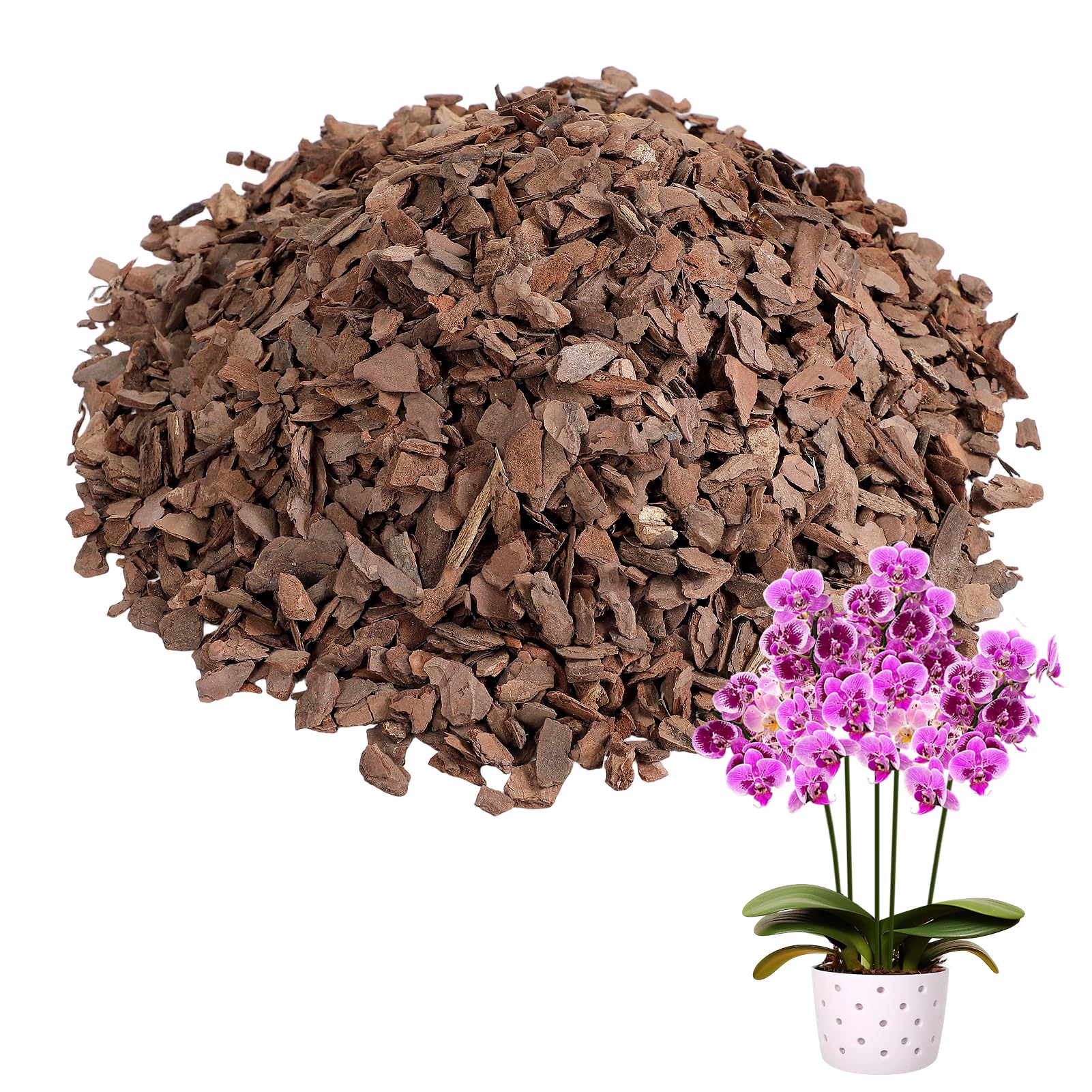
The single number that matters most in this category is particle size — and this bark uses 1/2- to 3/4-inch medium chips of sun-dried organic pine wood from New Zealand. Large enough to prevent waterlogging, small enough to pack around roots without crushing them. At 4 quarts, it matches the Harris and Rosy Soil bags in volume.
Unlike the ready-to-use Riare mix, this is pure bark — you need to mix it yourself. One reviewer specifically noted: “Pine bark dries out quickly, even when soaked,” and recommended blending with one-third to one-half sphagnum moss. Without moisture-retaining ingredients, this bark works best for growers who already have perlite, moss, or charcoal and want custom ratios.
Buyers also use it for monsteras and other tropical houseplants. The bark is professionally processed (fermented, high-temperature treated, and sun-dried) and sealed in a clean bag. This is not a complete ready-to-use mix, but for the experienced grower who wants control over every ingredient, the quality beats most generic blends. it’s not for you if you want a grab-and-go mix — the price-to-value read is best for DIY enthusiasts, not convenience seekers.
The upsides
- Large, consistent 1/2- to 3/4-inch chips promote excellent drainage and aeration
- 4-quart bag provides plenty of material for mixing and multiple pots
- Professional processing (fermented, heat-treated, sun-dried) ensures cleanliness
Keep in mind
- Pure bark dries out very quickly — must be mixed with sphagnum moss or other moisture-retaining material
- Not a complete ready-to-use mix; requires DIY blending
5. Gardenera Premium Orchid Soil Mix

At 1 quart, this is the smallest bag — roughly one-third the size of the Riare mix and one-quarter the size of the Harris or Rosy Soil bags. What you get for that smaller volume is a hand-mixed blend of New Zealand Pinus Radiata pine bark, clay pebbles, perlite, and sphagnum moss, sourced globally and combined in the USA. The transparent, resealable bag lets you see exactly what is inside.
You give up bulk value. One quart is enough for a single Phalaenopsis in a 4-inch pot or maybe two very small orchids. One shopper added it is “good for repotting from nursery pots.” Another praised the “perfect chunkiness” and said their orchids are “flourishing” after months. Unlike the dusty Harris bag, this comes pre-moistened and dust-free — perfect for indoor repotting on a kitchen counter.
The exact buyer for this is someone repotting a single Phalaenopsis for the first time, wanting a premium, all-natural mix without committing to a big bag. If you have one orchid and want a hand-mixed, ready-to-use blend with no leftover bag to store, this is the entry point.
Why we’d pick it
- Hand-mixed with premium ingredients (NZ pine bark, clay pebbles, sphagnum moss)
- Comes pre-moistened and dust-free — clean indoor repotting
- 100% natural, sterile, and chemical-free
A few caveats
- Only 1 quart — enough for a single small orchid or two tiny ones
- Higher cost per quart compared to bulk options like Harris or Rosy Soil
6. Mulctun Orchid Bark Potting Mix
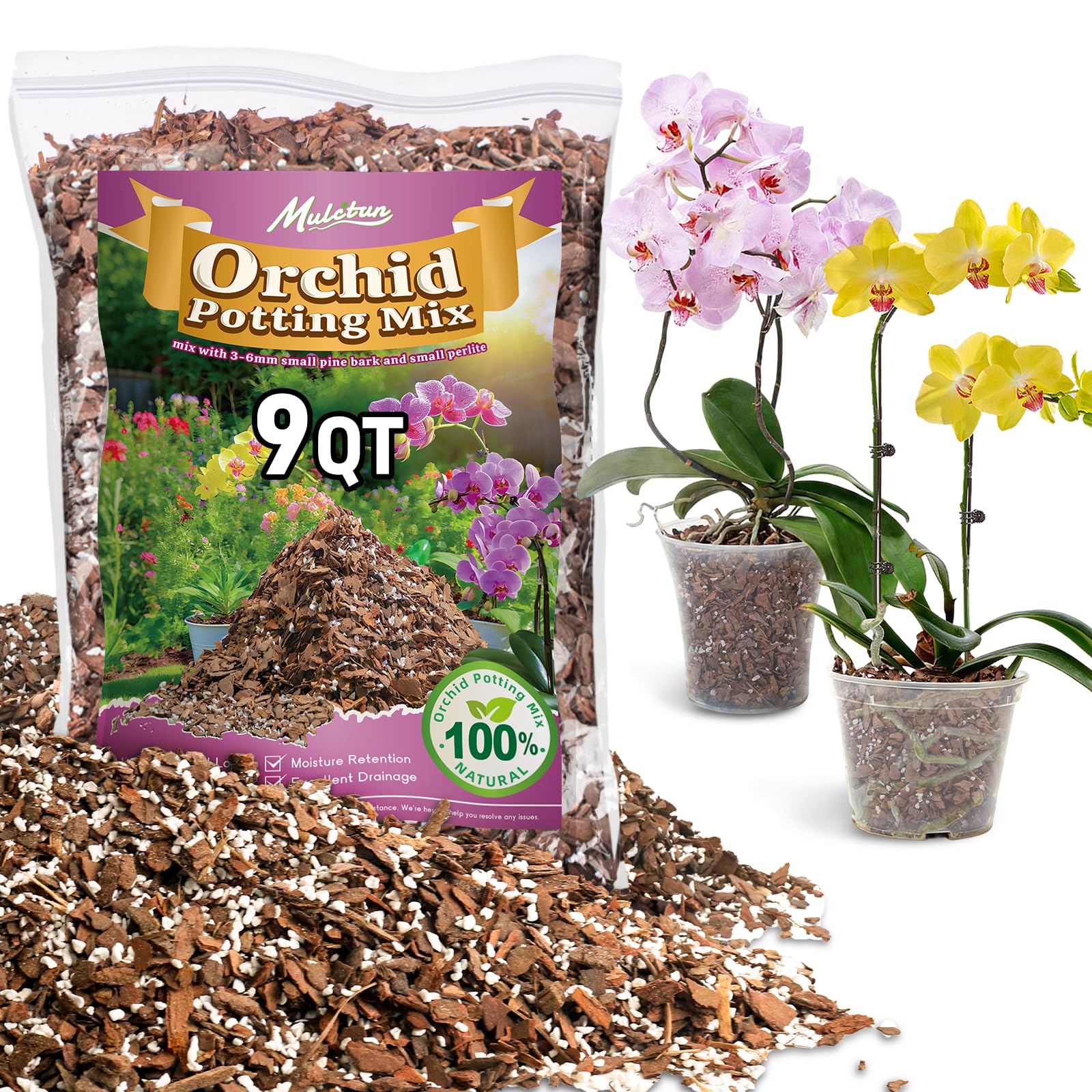
If you have six orchids on a windowsill, the Mulctun mix gives you 9 quarts — more than double any other bag here and a 9.0x size advantage over the Gardenera mix. The blend combines natural pine bark and perlite in a ratio designed for drainage and aeration with Phalaenopsis, Cattleyas, Dendrobiums, and other epiphytic orchids.
One reviewer described the chips as “a perfect size,” around thumbnail-size or smaller, with an even bark-to-perlite mix. Multiple buyers use it not as a standalone medium but to mix into regular potting soil to make it chunkier. One said “my plants show better health with this mix allowing it to not stay wet too long.” The bag is resealable.
The one reason to choose this over all others is volume-to-price ratio. One reviewer noted the material is finer than other orchid mixes they bought — pieces are small enough that they may pack down faster than the chunky 1/2-inch chips of the Bigmeta bark. If you prefer a very coarse, open structure, you may find this too fine.
Strong points
- 9-quart bag provides the most material per purchase in this lineup
- Pine bark and perlite blend promotes drainage and prevents waterlogging
- Shoppers say healthier plants with less moisture retention
Before you buy
- Bark pieces are on the finer side — may not be chunky enough for growers who prefer very open structure
- Some buyers found it too fine for a standalone orchid medium and mix it with chunkier soil
Understanding the Specs
Particle Size and Air Flow
Phalaenopsis roots contain chlorophyll — they photosynthesize like leaves. If the mix is too fine, light and air cannot reach the roots and they suffocate. Look for bark pieces between 1/2-inch and 3/4-inch across (about the size of your thumbnail), which create large air pockets so water drains fast and roots breathe. Medium or coarse mixes work; fine mixes are for seedlings and will choke a Phalaenopsis.
Moisture Retention vs. Drainage
Pure bark drains fast, preventing root rot, but in a dry home it can dry out so fast that roots dehydrate. A balanced blend includes sphagnum moss or coco peat (coconut husk fiber) that holds water against the bark. Perlite and pumice add aeration without holding extra water — giving fast drainage plus a slow moisture reserve.
Bag Volume and Pot Count
A single Phalaenopsis in a 4-inch pot needs roughly 1 quart of mix. A 6-inch pot needs about 2 quarts. A 2-quart bag handles one 6-inch repot or two 4-inch repots. A 4-quart bag covers two to three medium pots. The 9-quart Mulctun bag repots six to eight orchids. Resealable bags like Riare or Gardenera keep leftover mix fresh for months.
Additional Ingredients
Biochar is a charcoal-like material that holds nutrients and microbes in the root zone, preventing fertilizer washout. Mycorrhizae are beneficial fungi that form a network around roots, helping pull in water and phosphorus. Worm castings provide slow-release natural fertilizer. These extras help the orchid establish faster and produce stronger blooms, especially the first season after repotting, but basic bark mix plus orchid fertilizer works for most growers.
FAQ
Can I use regular potting soil for my Phalaenopsis orchid?
How often should I repot my Phalaenopsis into fresh mix?
Should I soak orchid bark before repotting?
What size pot should I use when repotting with orchid mix?
Can I make my own orchid mix for Phalaenopsis?
Final Thoughts: The Verdict
Across the board, the best orchid mix for phalaenopsis is the Rosy Soil Orchid Potting Mix because its biochar and mycorrhizae blend actively supports root health and bloom reliability, and one 4-quart bag fills two to three medium pots. If you want a complete four-ingredient kit at a lower price that buyers report produces fast growth within a week, grab the Riare 2QT Orchid Potting Mix. And for large collections where volume-to-value matters most, the Mulctun 9QT Orchid Bark Potting Mix gives you the most material per bag, perfect for blending custom mixes or repotting a windowsill full of orchids in one go.