
If you are finding holes chewed through your tomato leaves or tiny insects clustering on the stems, you need a spray that kills the pests without ruining the fruit you plan to eat. The right insecticide for tomatoes stops the damage fast, stays safe enough for vegetables, and is simple to apply so you get back to enjoying your garden.
I’m Rikta — the co-founder and writer behind Lawn Gear Lab. This guide is built by comparing the manufacturers’ published specifications and the patterns across verified customer reviews, so you get each pick’s real strengths and trade-offs instead of marketing spin.
Facing aphids, caterpillars, or spider mites on your tomato plants? The best insecticide for tomatoes comes down to matching the active ingredient to the specific pest and your gardening style.
How To Choose The Best Insecticide For Tomatoes
Choosing the right tomato insecticide comes down to matching the active ingredient to the pest you see and deciding how much work you want to put into application. Here are the key factors to consider.
Identify the pest first
Tomatoes attract different bugs at different growth stages. Caterpillars and hornworms eat leaves and fruit, while aphids and whiteflies cluster on stems and undersides of leaves. Spider mites cause stippling and yellowing. Pick an insecticide labeled for the specific pest — Spinosad works on caterpillars, thrips, and leafminers, while B.t. (a natural bacteria that targets only caterpillars and worms) is harmless to other insects.
Choose your application method
You have three main options: a ready-to-use spray bottle for small gardens, a concentrate you mix with water in a tank sprayer for larger areas, or a dust that you apply dry. Ready-to-use bottles are the simplest for a few tomato plants. Concentrates are more economical for bigger vegetable patches. Dusts like the Ortho Flower & Vegetable Garden Dust stick to leaves and last longer between applications, meaning less work for you.
Check the harvest interval
The harvest interval is the time you must wait after spraying before picking fruit. Some organic options like the Arber spray allow picking after just 30 minutes, which is ideal if you harvest daily. Others require waiting one to seven days. Always check the label so you do not accidentally eat fruit with wet insecticide residue.
Quick Comparison
On smaller screens, swipe sideways to see the full table.
| Model | Category | Best For | Key Spec | Amazon |
|---|---|---|---|---|
| Monterey Spinosad | Premium | Caterpillars & leafminers | 8 oz concentrate | Amazon |
| Ortho Garden Dust | Mid-Range | Broad-spectrum coverage | 1.75 lbs dust | Amazon |
| Fertilome Spinosad Soap | Mid-Range | Ready-to-use spray | 32 oz RTU | Amazon |
| Monterey B.t. | Mid-Range | Caterpillar-specific control | 8 oz concentrate | Amazon |
| Garden Safe Neem Oil | Premium | Fungus + insects combo | 128 oz RTU | Amazon |
| Arber Organic Spray | Premium | Pollinator-friendly spray | 16 oz hose-end | Amazon |
| Hi-Yield Malathion | Premium | Stubborn mite & scale | 32 oz concentrate | Amazon |
In‑Depth Reviews
1. Monterey Spinosad Insecticide Concentrate
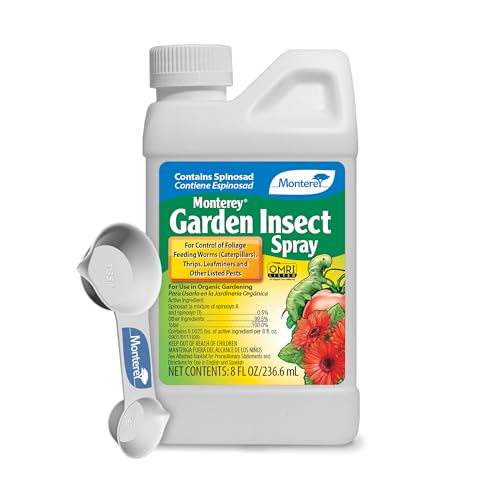
Monterey Spinosad earns the top spot because it stops caterpillars, leafminers, thrips, and borers — all common tomato pests — with just one 8 oz concentrate bottle. The active ingredient Spinosad comes from a natural soil bacterium, so it is OMRI Listed (approved for organic gardening). Buyers report it “finally found something that gets rid of leaf miners” after just one weekly reapplication.
You mix the 8 oz bottle with water in a sprayer and apply to both sides of the leaves. It is odorless during application and breaks down quickly in sunlight, so you can harvest tomatoes after the label-specified wait period. The concentrate format gives you more applications per bottle than any ready-to-use spray at this price tier.
Where it falls short of the Fertilome Spinosad Soap is convenience — you have to mix it yourself rather than spray straight from a bottle. This concentrate suits the gardener who does not mind a few minutes of mixing for vastly more coverage and cheaper cost per spray. skip it if you own just one or two container plants and want zero measuring.
Why it’s great
- Controls caterpillars, leafminers, thrips, and borers with one product
- OMRI Listed for organic vegetable gardening
- Odorless and fast-acting on contact
Good to know
- Requires mixing with water before use
- Needs weekly reapplication for ongoing infestations
2. Ortho Insect Killer Flower & Vegetable Garden Dust

Compared to the top-pick Monterey Spray, which covers roughly 260–325 sq. ft. per typical concentrate bottle, the Ortho Garden Dust covers up to 1,300 sq. ft. of vegetable garden with one 1.75 lb container — roughly 4 to 5 times the area. Unlike the Monterey Spray that needs weekly mixing, this dust kills aphids, whiteflies, and cabbage loopers on contact, and a manufacturer claim says it keeps working for up to 8 months after application.
Buyers confirm it “eliminated all flea beetles on tomatillos and ground cherries within 12 hours using a duster.” One reviewer noted reapplication was only needed “after heavy rain or 2 weeks.” The catch is that you need a dry, calm day to apply the dust, and windy conditions can blow it back onto you.
Choose this over the top pick if you have a sprawling vegetable patch and want to apply once and forget about it for weeks.
Where it shines
- Covers up to 1,300 sq. ft. of vegetable garden per container
- Kills on contact and protects for up to 8 months
- Requires fewer reapplications than sprays
Worth noting
- Must apply on dry, calm days to avoid powder drift
- Cannot be used on wet leaves or before rain
3. Fertilome Spinosad Soap Insecticide Ready to Use

Picture this: you walk outside, spot something munching your tomato leaves, grab a spray bottle, and start killing bugs immediately without measuring or mixing. Fertilome Spinosad Soap is that pick — a ready-to-use 32 oz spray bottle containing both Spinosad (0.005%) and potassium salts of fatty acids (0.940%), which work together to penetrate the insect’s outer shell on contact. Owners mention it “effectively eliminated my thrips” and works “right on contact first use,” controlling Colorado potato beetles, armyworms, codling moths, and lace bugs.
Compared to the Monterey concentrate, you pay more per ounce and the bottle covers less area. This is for the gardener with a small raised bed or container tomatoes who wants the simplest possible application. pass on it if you have a large garden — the concentrate is far more economical.
For small-space tomato growers, no other ready-to-use spray packs both Spinosad and insecticidal soap into a single 32 oz bottle that hits on contact.
What stands out
- Completely ready to use with no mixing required
- Controls a wide range of tomato pests including potato beetles and borers
- OMRI Listed for organic gardening
The trade-offs
- More expensive per ounce than concentrate forms
- May need to alternate with other insecticides to prevent resistance
4. Monterey B.t. Caterpillar & Worm Killer
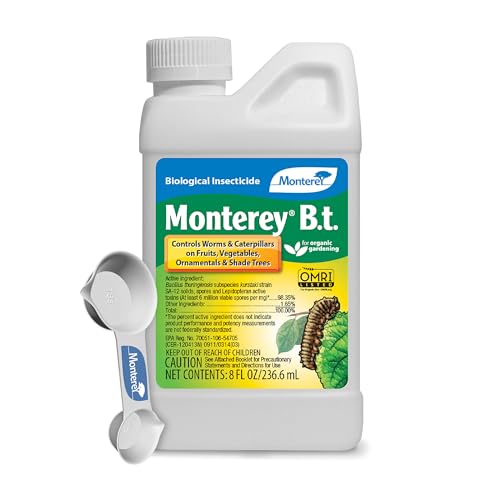
Monterey B.t. scores a 10 out of 10 for bee safety, making it the most targeted and bee-safe option when the pest is clearly a caterpillar, hornworm, or cabbage looper. B.t. (Bacillus thuringiensis) is a natural bacteria that specifically attacks the digestive system of caterpillars and worms while having no effect on birds, earthworms, ladybugs, or honeybees. Buyers confirm that “BT effectively controlled cabbage looper worms that destroyed flower seedlings last year.” One buyer mentioned “I can’t garden without it now.”
You mix the 8 oz concentrate with water and spray directly on the leaves where you see caterpillars. The bacteria only activates when ingested by leaf-eating worms, so it is harmless to pollinators that drink nectar from tomato flowers.
The limitation: B.t. does nothing against aphids, mites, thrips, or beetles. If you have multiple pest types, you will need to pair this with a broader insecticide like the Monterey Spinosad above. For pure caterpillar control, this is the safest choice, and its price-to-value read is strong for anyone who prioritizes bee protection above all else.
The upsides
- Completely safe for honeybees, earthworms, and ladybugs
- OMRI Listed for organic vegetable gardening
- Targets only caterpillars and worms without harming other insects
Keep in mind
- Does not control aphids, mites, thrips, or beetles
- Requires the caterpillar to eat treated leaves to work
5. Garden Safe Neem Oil Fungicide3
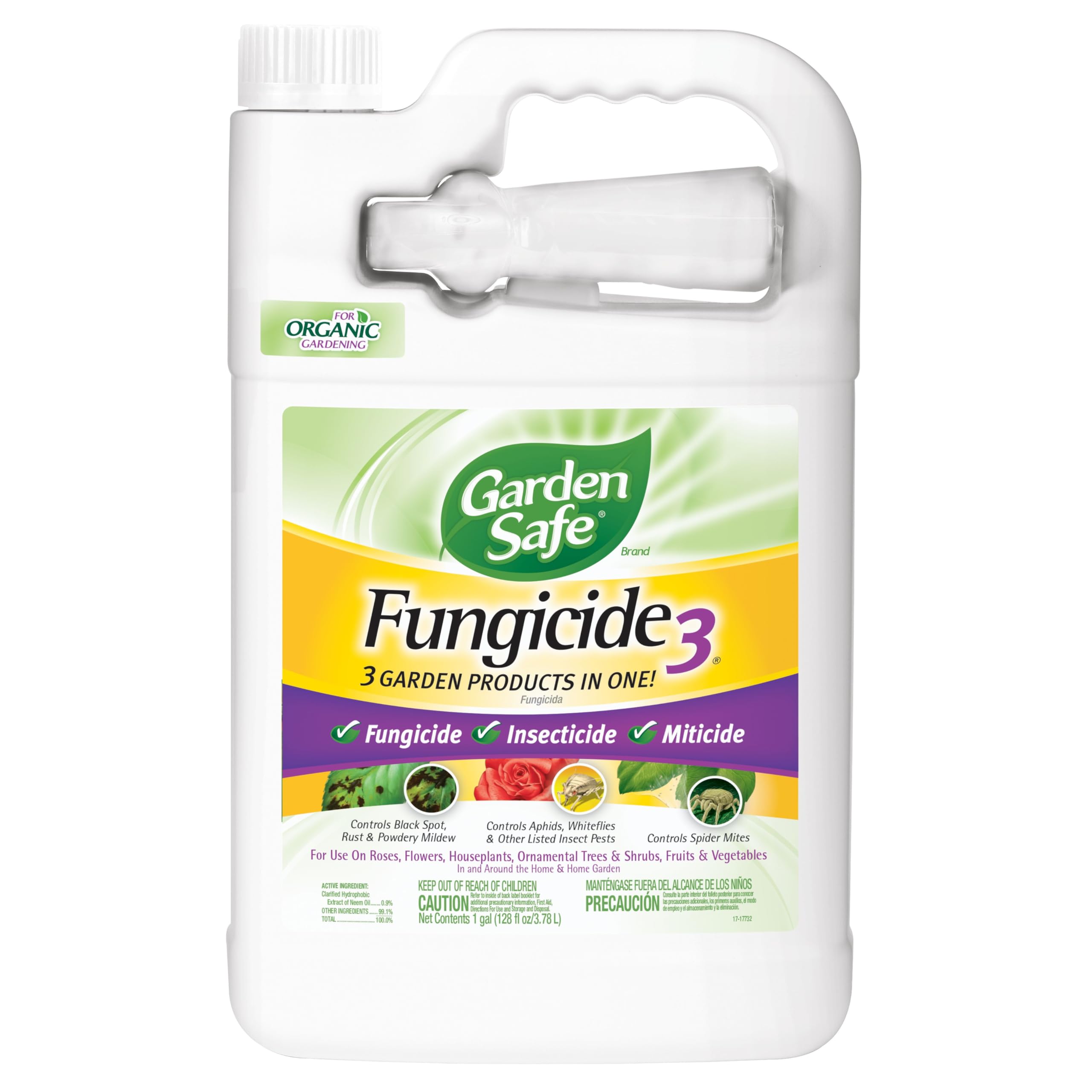
What you actually get at this lower price is 128 fluid ounces (one gallon) of ready-to-use clarified hydrophobic neem oil extract that fights both insect pests like aphids and spider mites and fungal diseases like powdery mildew at once, saving you from buying two separate bottles. It covers an enormous area — 16 times more volume than the Monterey Spinosad concentrate.
Customers note that “weekly use eliminated mildew, boosted foliage and yields” on tomatoes. Because neem oil works by coating pests rather than poisoning them, it is safe for use on edible vegetables right up to harvest day. If you are fighting both bugs and fungus, this one product replaces two separate bottles. The downside: neem oil can burn leaf edges if applied during hot daytime sun — reviewers point out to “use less than half recommended dose.”
This budget buyer it is perfect for is the gardener who wants a single, low-cost, ready-to-use spray that tackles both insect and fungal problems on tomatoes without needing a second bottle.
Why we’d pick it
- Functions as fungicide, insecticide, and miticide in one spray
- 128 oz ready-to-use bottle covers large gardens without mixing
- Safe for organic vegetable gardens up to harvest day
A few caveats
- Can burn leaves if applied during hot sun or at full strength
- Attached sprayer design makes it awkward to reach far plants
6. Arber Organic Insecticide Hose-End Spray
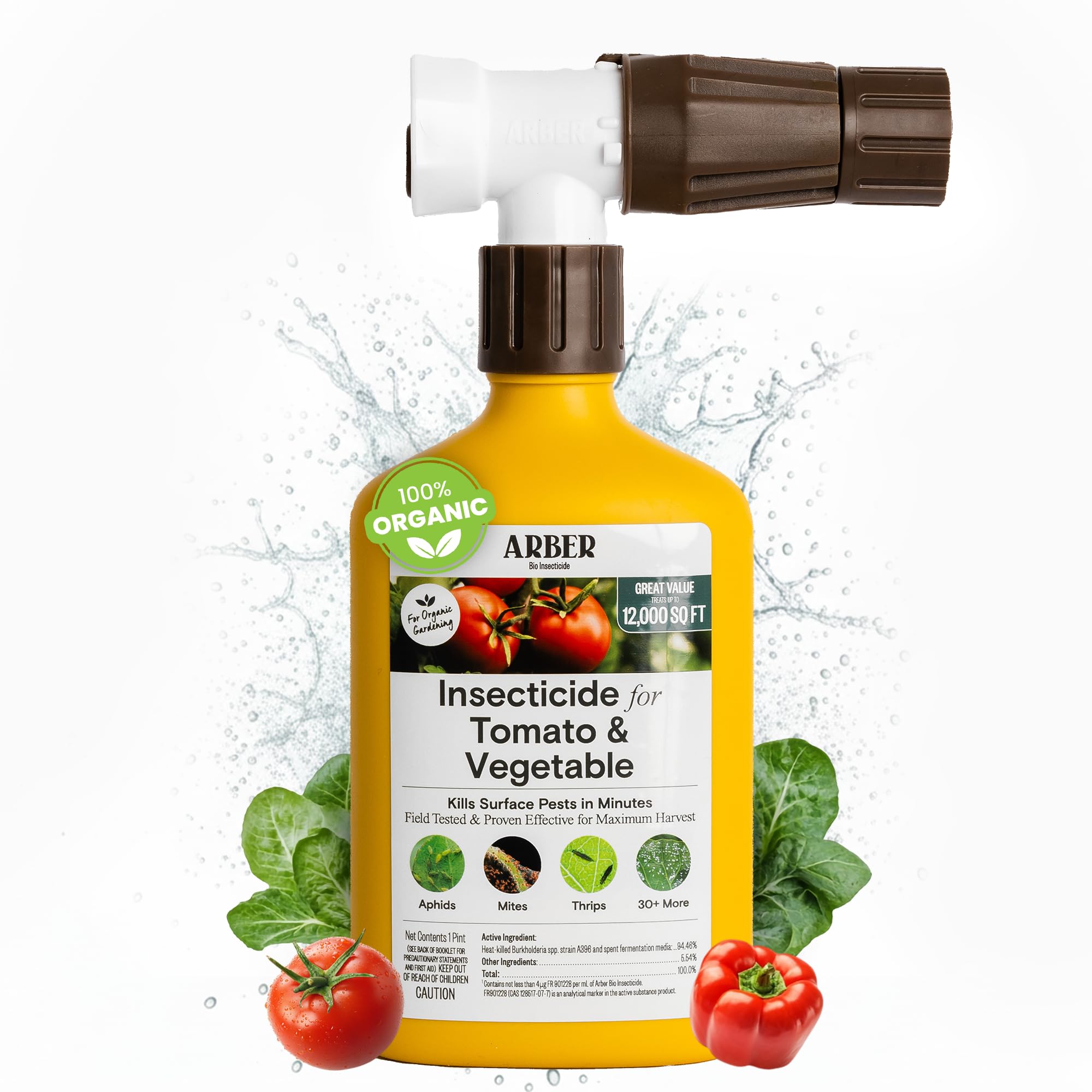
Arber Organic Spray is perfect for the daily tomato harvester who wants to pick and eat fruit just 30 minutes after spraying — the shortest harvest interval of any product here. The formula is certified organic and designed to be gentle on bees when used as directed, so you can spray in the evening and have pollinators back the next morning. You attach the 16 oz bottle to your garden hose and spray your entire tomato patch without mixing, with one bottle treating up to 2,500 sq. ft.
Where it falls short of the Monterey Spinosad is in pest range — the Arber targets aphids, mites, thrips, and whiteflies but is not labeled for caterpillars or beetles. If you have hornworms, you still need a B.t. or Spinosad product. This is the best choice for the gardener who values ultra-fast harvest intervals and hose-end convenience above all else.
Just remember that if you battle caterpillars, this spray won’t cover them — so check your pest list before you buy.
Strong points
- Harvest-safe in just 30 minutes after spraying
- Covers up to 2,500 sq. ft. with hose-end attachment
- Certified organic and bee-friendly when used properly
Before you buy
- Does not control caterpillars, beetles, or borers
- Requires reapplication every 7–14 days or after rain
7. Hi-Yield 55% Malathion Spray

Hi-Yield Malathion is the heavy hitter for when gentler organic options have failed. With 55% Malathion as the active ingredient — a synthetic organophosphate (a chemical class that attacks the insect nervous system) — it kills stubborn pests like scale, red spider mites, and mosquitoes that can resist Spinosad and neem oil. Buyers describe it as “Kryptonite for Mosquitoes” and say it “works the best of all” for spider mites, outperforming Ortho products on tough infestations. The 32 oz concentrate covers a large area cost-effectively, making it a budget-friendly choice compared to pricier organic alternatives.
One reviewer warns it is a “strong suspected carcinogen” and recommends it “last resort use only,” suggesting hiring a licensed professional for application. On tomatoes, Malathion is effective but carries risks that the organic options do not. You must wear protective gloves and a mask during application and apply only in calm weather with no rain predicted for 24 hours. Choose this only if you have tried Spinosad and neem oil without success. Skip it for routine use — the safety trade-offs are too high.
The one clear reason to choose it is when gentler organic options have failed and you need a potent synthetic that kills stubborn pests like scale, red spider mites, and mosquitoes that resist Spinosad and neem oil.
What we like
- Kills tough pests like scale and spider mites that resist organic options
- 32 oz concentrate covers a large area and is very cost-effective per use
- Works on a broad range of vegetable and fruit tree pests
The downsides
- Requires full protective gear and careful timing to apply safely
- Strong synthetic chemical with health and environmental concerns
Understanding the Specs
Active Ingredient
This is the chemical or natural compound that actually kills the pest. Spinosad comes from a soil bacterium and works on contact and ingestion. B.t. is a natural bacteria that only affects caterpillars and worms. Neem oil smothers insects and fungi by coating them. Malathion is a synthetic organophosphate that attacks the insect’s nervous system. Match the ingredient to the pest you have for the best results.
Formulation Type
Insecticides come as a ready-to-use spray bottle, a concentrate you mix with water, or a dry dust. Ready-to-use is the simplest for small gardens — you spray straight from the bottle. Concentrates are more economical for large areas and let you control the strength. Dusts adhere to leaves and last longer between applications, but require calm weather to apply without the powder blowing away.
Harvest Interval
This is the number of hours or days you must wait after spraying before you can safely pick and eat your tomatoes. Some organic formulas allow picking after just 30 minutes, while synthetic chemicals may require a 7- to 14-day wait. Always check the label so you do not eat produce with wet insecticide residue. Faster intervals are better if you harvest tomatoes daily.
Organic Certification
The OMRI (Organic Materials Review Institute) seal means the product is allowed for use in certified organic vegetable gardens. These products use naturally-derived active ingredients and are generally safer for pollinators, earthworms, and soil health. However, “organic” does not mean “harmless” — even organic insecticides can kill beneficial insects if sprayed directly on them, so always spray in the evening when bees are not active.
FAQ
Can I use the same insecticide on tomatoes and other vegetables?
How often should I spray insecticide on my tomato plants?
Will insecticide kill bees if I spray it on tomato flowers?
What is the difference between Spinosad and B.t. for tomatoes?
Can I mix insecticide with fungicide and apply them together?
Final Thoughts: The Verdict
For most home tomato growers, the insecticide for tomatoes winner is the Monterey Spinosad Concentrate because it combines organic certification with broad pest coverage that includes caterpillars and leafminers, plus the cost-effectiveness of a concentrate that makes many spray bottles from one purchase. If you want a dust that lasts for months without reapplying and covers a huge area, grab the Ortho Flower & Vegetable Garden Dust. For the gardener who needs to harvest tomatoes the same day they spray, the Arber Organic Hose-End Spray is unmatched with its 30-minute harvest interval and easy hose attachment.