
Your oleanders need a specific balance of nutrients to push out those massive, show-stopping blooms without burning their roots—the wrong ratio of nitrogen (for leaves) to phosphorus (for flowers) can leave you with a bushy green shrub that barely flowers. This guide walks through the six best formulas for oleanders, from fast-acting granular feeds to slow-release spikes you hammer in once and forget.
I’m Rikta — the co-founder and writer behind Lawn Gear Lab. This guide is built by comparing the manufacturers’ published specifications and the patterns across verified customer reviews, so you get each pick’s real strengths and trade-offs instead of marketing spin.
Oleanders are heavy feeders that thrive on a steady supply of nutrients, and these picks are narrowed to the best fertilizer for oleanders based on NPK balance, release speed, and real-world results from experienced growers.
How To Choose The Best Fertilizer For Oleanders
Feeding oleanders correctly comes down to matching the NPK ratio (the three numbers that stand for nitrogen, phosphorus, and potassium) to the plant’s growth stage, and deciding how much effort you want to put into application. Here are the two critical specs to check before buying.
Understanding the NPK Ratio for Oleanders
Oleanders need a balanced or slightly phosphorus-heavy formula to encourage flowering. A 10-10-10 ratio (equal parts nitrogen, phosphorus, potassium) is a safe all-purpose choice that supports green foliage and steady blooms. A higher first number, like 13-3-3, pushes more leaf growth—use that if your oleander is young and you want it to fill out fast, but expect fewer flowers until you switch to a balanced feed later in the season.
Slow-Release vs. Fast-Acting: The catch for Oleanders
Slow-release granules and spikes feed your oleander steadily over weeks or months, which reduces the risk of fertilizer burn (damage from too much salt hitting the roots at once). Fast-acting formulas dissolve quickly and give a visible green-up within days, but you have to reapply more often and measure carefully—oleanders are tough, but a heavy pour can still scorch leaves. For most home gardeners, slow-release is the safer bet for a low-maintenance feeding schedule.
Quick Comparison
On smaller screens, swipe sideways to see the full table.
| Model | Category | Best For | Key Spec | Amazon |
|---|---|---|---|---|
| Espoma 10-10-10 Garden Food | Premium | Balanced feeding for established hedges | 10-10-10 NPK, 216 oz total | Amazon |
| Osmocote Smart-Release Plant Food | Premium | Set-it-and-forget feeding up to 6 months | Resin-coated granules, 8 lbs | Amazon |
| Jobe’s Organics All Purpose Fertilizer | Premium | Organic gardening with long-lasting results | 4-4-4 NPK, 16 lbs bag | Amazon |
| Old Farmer’s Almanac Tree & Shrub Spikes | Mid-Range | Deep root feeding for established shrubs | 13-3-3 NPK, 12 spikes | Amazon |
| Lilly Miller 10-10-10 All Purpose Food | Value | Economical fast-acting feed for general use | 10-10-10 NPK, 4 lbs bag | Amazon |
| Smart Grower Bio-Active Fertilizer | Budget | Soil health boost with microbes and humic acid | 6-5-6 NPK, 7.05 oz bag | Amazon |
In‑Depth Reviews
1. Espoma 10-10-10 Garden Food, 6.75-Pound Bag (Pack of Two)
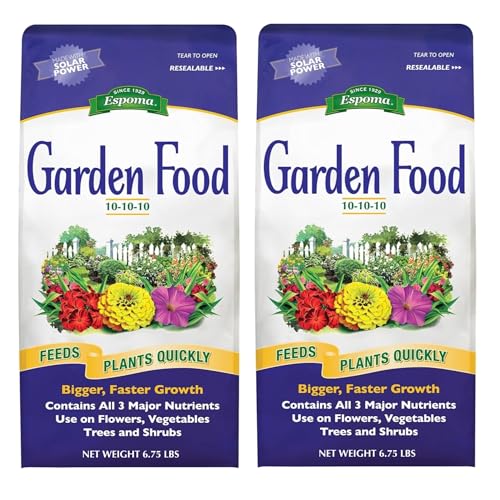
The 10-10-10 NPK ratio (equal parts nitrogen, phosphorus, and potassium) is the safest and most effective starting point for oleanders, and this Espoma bag delivers it in a straightforward granular form that you sprinkle around the drip line and water in. It comes as a pack of two bags, giving you a total of 216 ounces of feed — a 30.6x larger quantity than the Smart Grower option, so you can treat a full hedge row without reordering every week.
Buyers report that it revived a lightning-struck magnolia, and one gardener counted roughly 5000 fig fruits after a season of feeding — so the fast-acting formula clearly pushes heavy growth. At 13.5 pounds total item weight (4.5x heavier than the Old Farmer’s Almanac spikes at 3 pounds), you are getting enough material to feed multiple oleanders for a full growing season with monthly applications.
The downside is that because it feeds quickly, you need to water thoroughly after applying to avoid salt buildup near the roots, and you have to reapply every few weeks during the active growing months. If you want a no-nonsense balanced feed that produces visible results for a whole hedge, this is the one to buy.
Why it’s great
- Balanced 10-10-10 NPK is ideal for oleander blooms
- Pack of two bags provides 216 oz total — enough for a whole hedge
- Fast-acting granules show results within a week when watered in
Good to know
- Requires monthly reapplication during the growing season
- Must water in thoroughly to prevent salt damage
2. Osmocote Smart-Release Plant Food Plus Outdoor & Indoor, 8 lbs

Where the Esposa needs monthly reapplication, Osmocote’s resin-coated granules release nutrients continuously for up to six months from a single application — that means you sprinkle it around your oleanders once in early spring and they stay fed through summer without you lifting a finger. It contains 11 essential nutrients, which covers trace elements (tiny amounts of minerals like iron and magnesium) that granular 10-10-10 blends often skip.
Owners mention “greener, faster growth in seedlings and grafted trees,” and the coverage is generous: one 8-pound container covers up to 300 square feet, so a single bag handles a long oleander hedge with room to spare. The slow-release mechanism also means the no-burn pledge is credible — customers note they have never seen it scorch a plant even in containers, which matters for oleanders growing in pots.
The trade-off is that you cannot easily adjust the feeding if your oleander shows signs of needing more phosphorus for blooms mid-season — the release rate is fixed. Choose this over the top pick if the lowest-maintenance feeding schedule for a large hedge is your priority; but if you need to fine-tune nutrients for heavy bloom push, you are better off with a granular feed you can control.
Where it shines
- One application feeds for up to 6 months — true set-and-forget
- Resin coating prevents fertilizer burn even in hot weather
- 11 essential nutrients including trace minerals for deep green foliage
Worth noting
- Cannot fine-tune the nutrient release mid-season
- Higher upfront cost for a single bag vs. standard granular feeds
3. Jobe’s Organics Granular All Purpose Fertilizer, 16 lbs

If you have a large oleander hedge and want to avoid synthetic chemicals, this 16-pound bag of 4-4-4 NPK granules is OMRI listed (certified by the Organic Materials Review Institute for use in organic gardening under USDA rules). The lower numbers mean the nutrients are less concentrated, so you apply more volume per feeding than you would with a 10-10-10 — but one limitation is a much gentler action on the soil food web (the community of bacteria and fungi that break down organic matter for roots).
Reviewers point out that mixing it into the soil and making a liquid tea (1 cup granules steeped in 1 gallon of dechlorinated water for 24 hours) produced squash, cucumbers, and peppers that “thrived; flowers opened 48 hours after feeding.” For oleanders, that same method gives you a mild liquid feed you can apply every two to three weeks without worrying about burn. At 16 pounds per bag, it is the heaviest single bag on this list, giving you months of supply even for a large hedge.
The honest limit is the 4-4-4 ratio — it is lower in phosphorus than ideal for maximum oleander blooms, so you may want to supplement with a bone meal (a phosphorus-rich organic powder) during early summer. The organic gardener who values soil health as much as flower count will like this best; but if your goal is peak bloom volume with minimal effort, the Espoma or Osmocote are stronger picks — and at 16 pounds, this is the heaviest bag on the list for months of gentle feeding.
What stands out
- OMRI listed for organic gardening — no synthetic chemicals
- Gentle 4-4-4 NPK is safe for repeated applications every 2-3 weeks
- 16-pound bag provides a long supply for large hedges
The trade-offs
- Lower phosphorus ratio may need supplementing for peak bloom
- Granules have a pungent odor until watered in
4. The Old Farmer’s Almanac Tree & Shrub Fertilizer Spikes (Box of 12)

The single number that matters most in this category is the nitrogen content: 13 in the 13-3-3 NPK ratio, which pushes vigorous leaf and stem growth for established oleander shrubs 4 feet or taller. These 5-inch TruSpikes deliver the nutrients 6 inches deep into the root zone where the plant actually drinks — bypassing surface runoff and evaporation that wastes granular feeds. This makes them a strong choice for young oleanders you want to fill out a hedge, or for mature shrubs that lost leaves in a frost and need to regrow.
Shoppers say that spikes “saved struggling dogwood; drove in last fall, tree bloomed profusely this spring,” and the patented design is guaranteed not to break, crush, or smash when hammered into dry soil — though one reviewer found they broke and recommended stepping them in or using a digging bar instead. Each spike feeds continuously for up to 3 months, so a box of 12 covers a 6-spike spring application and a 6-spike fall application for a standard hedge.
The standout spec here is the delivery system: no measuring, no dust, no mixing. You hammer the spike into the soil along the drip line and you are done. The gardener who hates messing with scoops and bags will find this the most convenient option; but for smaller or potted oleanders, the spikes are too concentrated and the 13-3-3 ratio will reduce blooms — making the price-to-value read best for large, established hedges rather than containers or young plants.
The upsides
- Delivers nutrients directly to the root zone — zero runoff waste
- 13-3-3 NPK pushes fast leaf growth for young or stressed oleanders
- Each spike feeds for up to 3 months with a single hammer-in
Keep in mind
- High nitrogen ratio reduces blooms unless balanced with other feed
- Spikes can break in hard soil; best to drive in after rain
5. Lilly Miller All Purpose Planting And Growing Food 10-10-10, 4lb
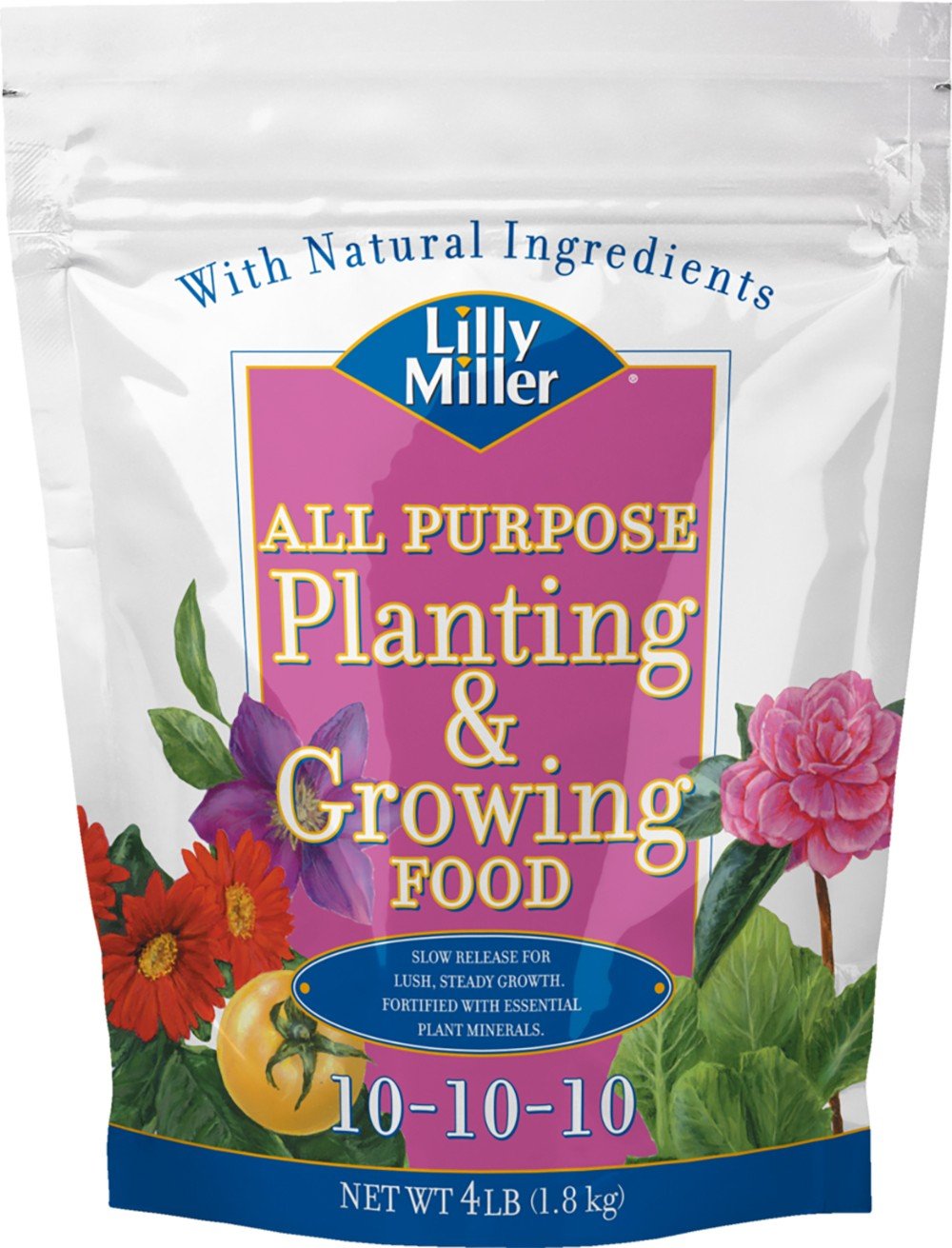
At just 4 pounds with a 10-10-10 NPK ratio, this is the smallest and most affordable entry point for feeding a few oleander shrubs, giving you the exact same balanced nutrition as the Espoma at a lower volume. The key number that matters here is the number of items: 65, which means you get 65 individual bags in a single order — clearly a bulk listing quirk — but the actual product is a single 4-pound bag of concentrated, fast-acting granules.
Buyers report it “revives yellowing tomato plants overnight, effect lasts months,” and one gardener used it to keep indoor basil and tomato plants alive for 2-3 years by steeping a tea satchel of the granules in water. The dry fertilizer has an unpleasant odor and produces dust, so a mask is recommended during application — but reviewers consistently say the smell disappears after watering. Oleanders respond well to the 10-10-10 balance, and the fast nutrient release means you will see greener leaves within a week.
The value proposition is straightforward: you get the same 10-10-10 ratio that oleanders love at a fraction of the upfront commitment of the Espoma. It is perfect for anyone with 2-3 oleander shrubs who does not want to store a massive bag, though the smaller size means you will reapply more often than with a slow-release option.
Why we’d pick it
- Same 10-10-10 balanced NPK as premium options at a lower cost
- Fast-acting granules show visible greening within a week
- Compact 4-pound bag is easy to store for small yards
A few caveats
- Dry granules produce dust and have a strong odor
- Requires more frequent reapplication than slow-release formulas
6. Smart Grower Bio-Active Plant Fertilizer Granular 6-5-6, 200g
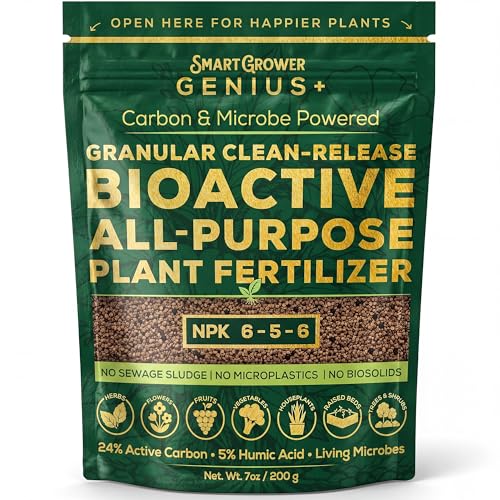
This pick is perfect for the container gardener who owns a single oleander and wants to give it a concentrated dose of soil biology, not just basic NPK. For the lowest price on the list, you get a 200-gram bag (7.05 ounces) of 6-5-6 NPK granules that also contains 24% active carbon, 5% humic acid, mycorrhizal fungi (beneficial fungi that attach to roots and help them absorb water and nutrients), and beneficial microbes — turning this into a soil conditioner as much as a fertilizer. The volume is tiny compared to the Espoma’s 216 ounces (a 30.6x gap), so this is meant for a single container-grown oleander or a small potted shrub, not a hedge row.
Owners mention that “after a week, plants healthier, thriving,” and that a single tomato plant with one fruit developed several new fruits and blossoms within days — the bio-active additives clearly accelerate root uptake. The formula contains no biosolids (treated sewage sludge), PFAS (persistent synthetic chemicals), or microplastics, which is rare at this price point. For a potted oleander on a patio, the 6-5-6 ratio gives slightly more phosphorus than nitrogen, which nudges the plant toward flower production over leaf growth.
The obvious limit is the quantity: at 7.05 ounces, you will need to reorder frequently if feeding multiple plants. The gardener with one special oleander in a container who wants to supercharge the soil life will get the most out of this; but for anyone managing a hedge, the Espoma or Osmocote deliver far more value per ounce.
Strong points
- Includes humic acid, mycorrhizae, and active carbon for soil health
- 6-5-6 NPK slightly favors blooms over foliage
- No biosolids, PFAS, or microplastics — clean formula
Before you buy
- Very small 200g bag — only enough for 1-2 container plants
- Higher per-ounce cost than bulk alternatives
Understanding the Specs
NPK Ratio — The Three Numbers
The three hyphenated numbers on a fertilizer bag stand for nitrogen (N) for leaf and stem growth, phosphorus (P) for root development and flower production, and potassium (K) for overall plant health and disease resistance. For oleanders, a 10-10-10 or 6-5-6 ratio provides the balanced nutrition that supports both the bushy green structure and the heavy summer blooms. A very high first number, like 13-3-3, will push rapid leaf growth but may reduce flowering unless you switch to a bloom-focused feed mid-season.
Slow-Release vs. Fast-Acting Granules
Slow-release fertilizers use a coating (like Osmocote’s resin shell) or a spike delivery system to meter out nutrients over weeks or months, which protects oleander roots from salt burn and cuts your application frequency. Fast-acting granules dissolve as soon as they touch water, giving you a visible green-up in 3-7 days but requiring careful measuring and monthly reapplication. For oleanders growing in poor, sandy soil, slow-release is generally safer because the roots get a steady trickle instead of a flood of salts.
FAQ
How often should I fertilize my oleanders?
Can I use a general-purpose 10-10-10 fertilizer on my oleanders?
Should I use spikes or granules for my oleanders?
Final Thoughts: The Verdict
For most people, the fertilizer for oleanders winner is the Espoma 10-10-10 Garden Food because the balanced NPK ratio and generous 216-ounce pack of two bags give you everything a full hedge needs for a season of heavy blooms. If you want a single-application solution that feeds for months without any effort, grab the Osmocote Smart-Release Plant Food. And for organic gardeners who prioritize soil biology over synthetic efficiency, the Jobe’s Organics 4-4-4 is the best match.