
Picking the wrong mulch for your flower beds means you’ll be fighting weeds all summer, watching your soil dry out too fast, or hauling bags that are way heavier than they need to be. This guide walks you through six of the most effective organic options—from coconut husk chips that expand ten times their size to long-needle pine straw—so you can match the right material to your garden’s actual needs.
I’m Rikta — the co-founder and writer behind Lawn Gear Lab. This guide is built by comparing the manufacturers’ published specifications and the patterns across verified customer reviews, so you get each pick’s real strengths and trade-offs instead of marketing spin.
After looking at how each material holds onto moisture, blocks sunlight from weeds, and breaks down over time, you’ll know exactly which type of mulch for flower beds fits your garden’s soil, sunlight, and maintenance schedule.
How To Choose The Best Type Of Mulch For Flower Beds
The right mulch does three things: it holds moisture in the soil so you water less often, it blocks sunlight so weed seeds can’t sprout, and it slowly feeds organic matter back into the ground as it rots. The trick is picking the material that does this at the right speed for your specific flowers and climate.
Water Retention vs. Drainage
Some mulches, like coconut husk chips (coco coir), can absorb up to ten times their weight in water, which means you can stretch the time between waterings significantly. Other materials, like long pine straw, let water pass through quickly while still shading the soil—better for plants that rot if they sit in wet ground too long.
Particle Size and Decomposition Speed
Bigger chips or bark pieces last longer because they take more time to break down, but they also let more light through between the gaps. Fine straw or shredded bark locks together tightly and blocks weeds very well, but it rots faster and needs topping up every season. Your choice depends on whether you want a one-and-done layer or if you prefer to refresh the bed each spring.
Weight and Ease of Spreading
A compressed bale of wheat straw might cover 100 square feet at a two-inch depth while weighing under 15 pounds once dry, whereas a bag of wet bark chips could weigh twice as much for the same coverage. If you have a large bed or need to carry the bag through the house, lighter materials like straw or pine needles are far easier on your back.
Quick Comparison
On smaller screens, swipe sideways to see the full table.
| Model | Category | Best For | Key Spec | Amazon |
|---|---|---|---|---|
| Back to the Roots Coco Mulch | Expanding Block | Best Overall Value | 2 cubic ft from a 10 lb block | Amazon |
| Plantonix Coco Chips | Coconut Husk Chips | Long-lasting aeration | 160 oz, 15 gallons volume | Amazon |
| Hull Farm Cocoa Bean Shell | Cocoa Shell Mulch | Chocolate scent, moisture retention | 2 cubic feet, 2.5-1-3 fertilizer value | Amazon |
| HealthiStraw GardenStraw | Wheat Straw | Clean, long-lasting coverage | 3 cu ft, covers 100 sq ft at 2–3” | Amazon |
| USA PINESTRAW Pine Straw | Pine Needles | Erosion control, natural look | 14-inch needles, 1 set | Amazon |
| Blue Mountain Hay Organic Straw | Organic Straw | Pet-safe, multi-purpose use | 10 lb box, compressed | Amazon |
In‑Depth Reviews
1. Back to the Roots 100% Organic Coco Mulch
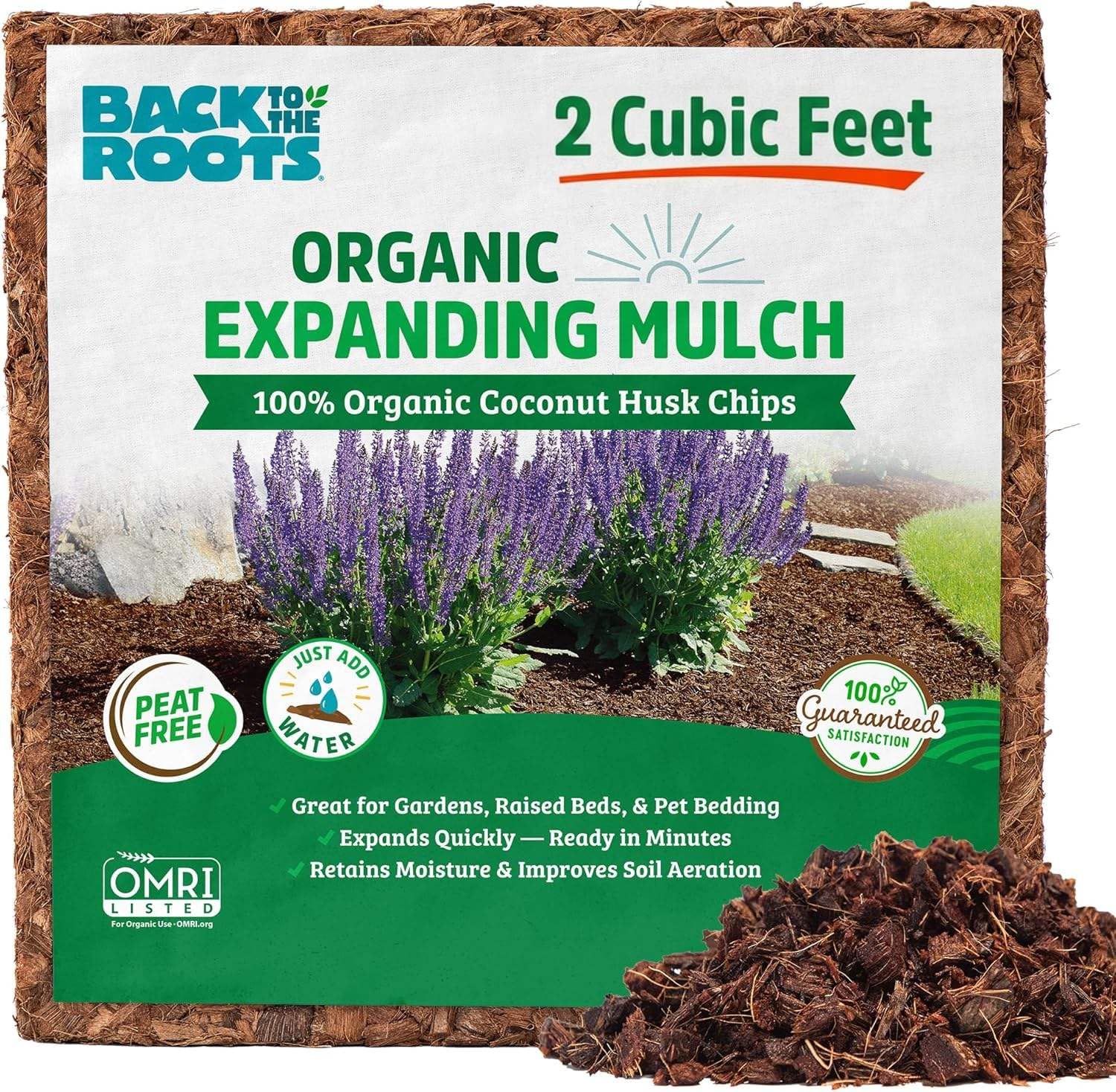
2+ cubic feet from a 10‑pound compressed block (a 10:1 expansion ratio) makes this the top pick for gardeners who want maximum coverage per dollar and a certified organic mulch that is safe for vegetable beds right next to flowers. You get more ground covered per dollar than any other pick here: this compressed coconut husk block expands to over 2 cubic feet of mulch from a 10-pound block — that is a ten-to-one expansion ratio that saves you space in the car and weight on your back. It also carries OMRI-listed organic certification (a seal from the Organic Materials Review Institute, meaning it is approved for use in organic farming), so it is safe for vegetable beds right next to your flowers.
Buyers report that this stuff expands significantly with water — one reviewer filled their wheelbarrow three-quarters full from a single block, and another used a kiddie pool to hydrate the whole block at once. The pieces lock together after watering to block weeds effectively, and the coconut fiber naturally holds moisture in the root zone much longer than wood bark, so you water less often.
The only real catch is that you have to soak it for 15–20 minutes before spreading, which adds a few extra minutes on installation day. If you want the best overall balance of coverage, organic purity, and weed suppression for your flower beds, this is the one to buy.
Why it’s great
- Expands to 2 cubic feet from a compact 10-pound block
- OMRI-listed organic and peat-free
- Excellent weed suppression after the fibers knit together
Good to know
- Requires soaking for 15–20 minutes before use
- One block covers roughly 24 sq ft at 1-inch depth
2. Plantonix Organic Coco Chips (10 lbs)

Unlike the top-pick Back to the Roots block’s finely shredded fiber, the Plantonix Organic Coco Chips are chunky husk pieces that create bigger air pockets in the soil, preventing compaction and improving oxygen flow to your flower roots for months longer. At 160 ounces and about 15 gallons of volume, this bag delivers a heavier, chunkier layer that does not wash away in a heavy rain.
Owners mention that the brick breaks into good-sized chips when you add water, with no smell and a natural color that blends into garden beds. Because the chips hold up to ten times their own weight in water, they reduce watering frequency even in raised planters that usually dry out fast. They also have a neutral pH and high cation exchange capacity (CEC), which is a fancy way of saying they grab onto nutrients in the soil and keep them available for your flowers rather than letting them wash out.
Choose this over the Back to the Roots block if your flower beds have heavy clay soil that needs more aeration, or if you prefer a chip texture that stays intact for a full growing season without turning into mush.
Where it shines
- Chunky chips improve soil aeration and drainage
- Absorbs up to 10x its weight in water
- Neutral pH prevents nutrient lock-up in the root zone
Worth noting
- Needs to be buffered (calcium/magnesium treated) to avoid stealing nutrients from the soil
- Lighter coverage per bag than compressed straw options
3. Hull Farm Cocoa Bean Shell Mulch (2 Cubic Feet)

Imagine walking past your flower bed and catching the scent of chocolate in the afternoon heat — that is exactly what this cocoa bean shell mulch delivers. Reviewers in dry climates like Las Vegas say it retains moisture better than any other mulch they have tried while feeding the soil a mild 2.5-1-3 fertilizer value (2.5% nitrogen, 1% phosphorus, 3% potassium) that won’t burn plant roots. This is the mulch for flower beds where the sensory experience matters as much as the practical function.
The shells are very lightweight when dry — they can blow around before you water them in — but once wet, they mat together nicely and stay put. Customers note that this mulch also deters squirrels who love pecan hulls; one reviewer switched to cocoa shells specifically because the squirrels lost interest. The chocolate smell is strong for the first week, then fades to a faint background note.
One critical warning that several reviewers highlight: cocoa bean shells contain theobromine and caffeine (the same compounds in chocolate that are toxic to dogs), so it is crucial to avoid this mulch entirely if you have a pup that likes to snack in the yard.
What stands out
- Smells like chocolate for the first week after application
- Provides a mild fertilizer boost (2.5-1-3) as it breaks down
- Holds moisture well, especially in hot, dry climates
The trade-offs
- Toxic to dogs if ingested
- Very lightweight and may blow away until watered
4. HealthiStraw GardenStraw (3 cu ft)
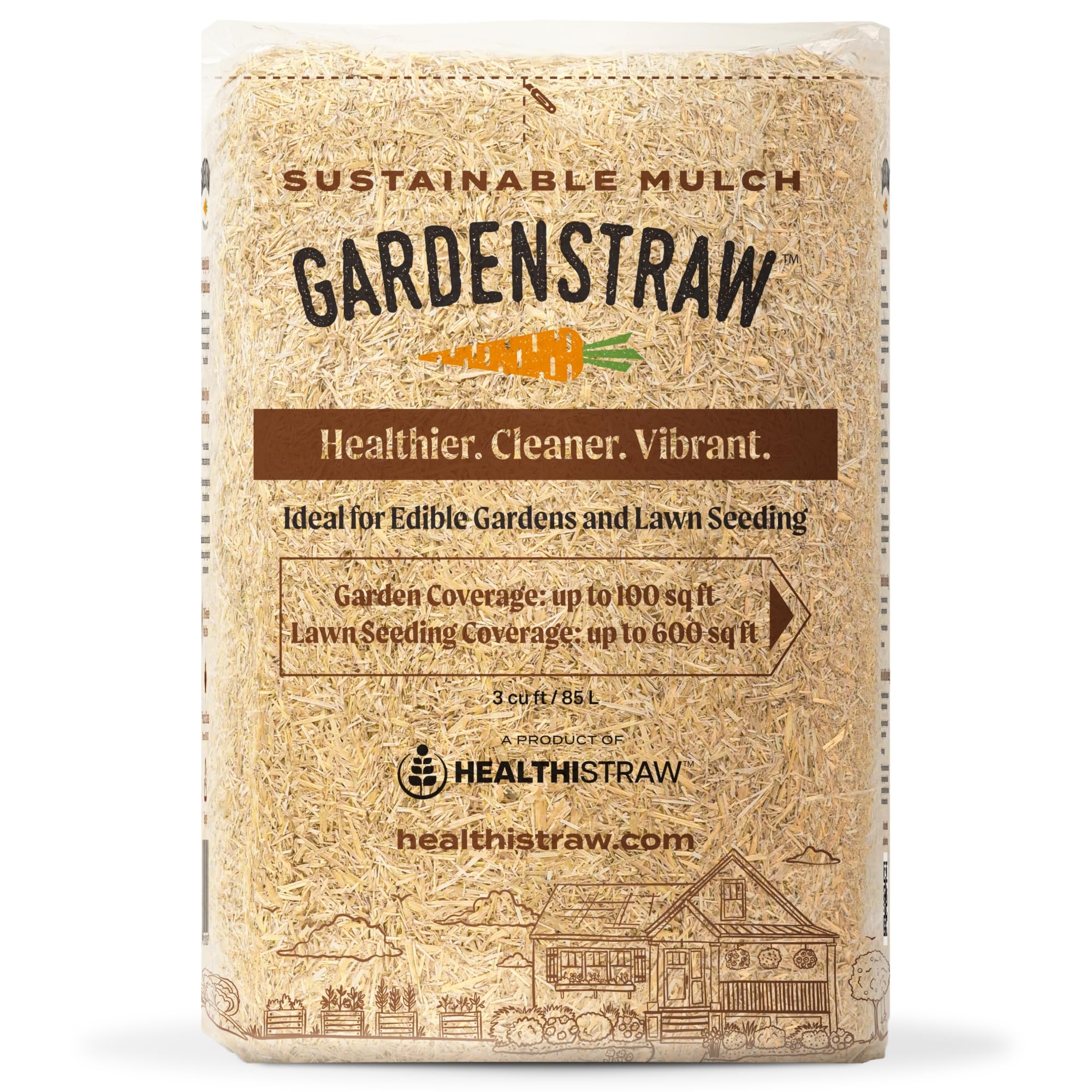
The single most important number for any flower bed mulch is how much ground it covers per bag, and this 3-cubic-foot compressed bale of HealthiStraw covers up to 100 square feet at a 2-to-3-inch layer — easily the biggest coverage in this lineup, which means you buy fewer bags to finish the job. It is made from 100% non-GMO wheat straw that has been specially cleaned to remove dust, dirt, and as many weed seeds as possible.
The catch you accept with straw mulch is that it decomposes faster than wood chips or cocoa shells, so you will need to add a fresh layer each spring. But the upside is that as it breaks down, it adds carbon to your compost and builds organic matter in the soil. Buyers rave about the coverage: one reviewer says the bag lasts forever, and another notes that the straw fibers interlock when watered, resisting wind without any chemical binders.
At this price per square foot of coverage, HealthiStraw is the most economical way to mulch a large flower bed, especially if you value organic certification and minimal weed seeds.
The upsides
- Covers up to 100 sq ft at a 2–3-inch depth from one bale
- Specially cleaned to remove weed seeds and dust
- Sustainably sourced and compost-friendly
Keep in mind
- Some buyers still reported weed seeds sprouting in the bed
- Decomposes faster than bark or coco chips
5. USA PINESTRAW Pine Straw Mulch
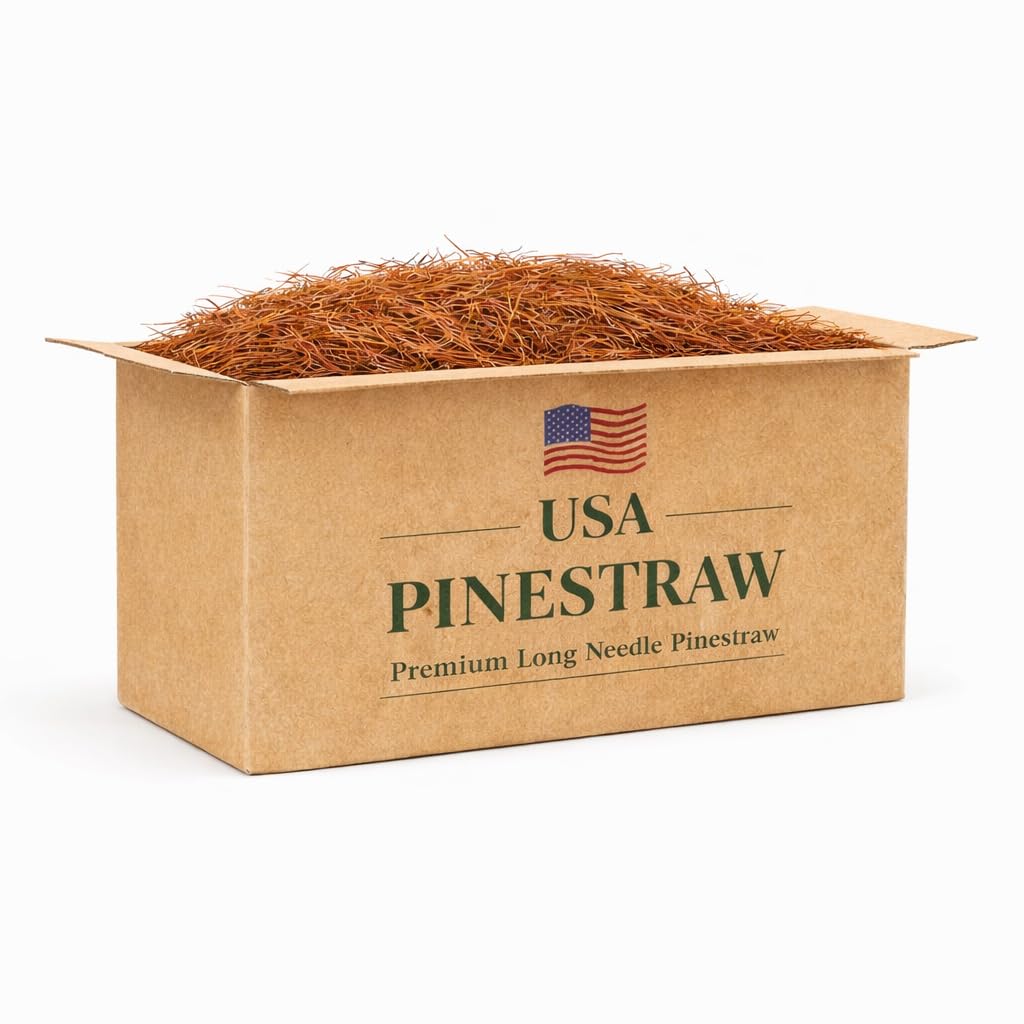
What you actually get at this lower price is a bundle of long-needle pine straw that delivers a clean red-brown color, which does not wash out or fade the way dark bark does. The needles interlock naturally when you spread them, meaning they stay put on sloped flower beds where bark chips would roll downhill after the first rain.
What you give up with pine straw is coverage density: one reviewer who ordered this expecting to cover 80 square feet found the bundle didn’t lay thick enough to suppress weeds across the whole area. The needles are also more expensive per square foot than straw or coco coir, so it is best reserved for smaller, high-visibility beds rather than a whole-yard application.
This is the perfect fit for the gardener with a modest flower bed who wants a chemical-free, sustainable mulch that naturally resists erosion, looks great, and is harvested from USA pine forests — the exact budget buyer it is perfect for.
Why we’d pick it
- Needles interlock to stay on slopes and resist wind
- 100% organic and sourced from sustainable pine forests
- Naturally acidic, great for acid-loving flowers like azaleas
A few caveats
- Coverage is less than advertised — one bale may not fully cover 80 sq ft at 2–3 inches
- More expensive per square foot than straw or coco coir
6. Blue Mountain Hay Organic Garden Straw (10 lb)
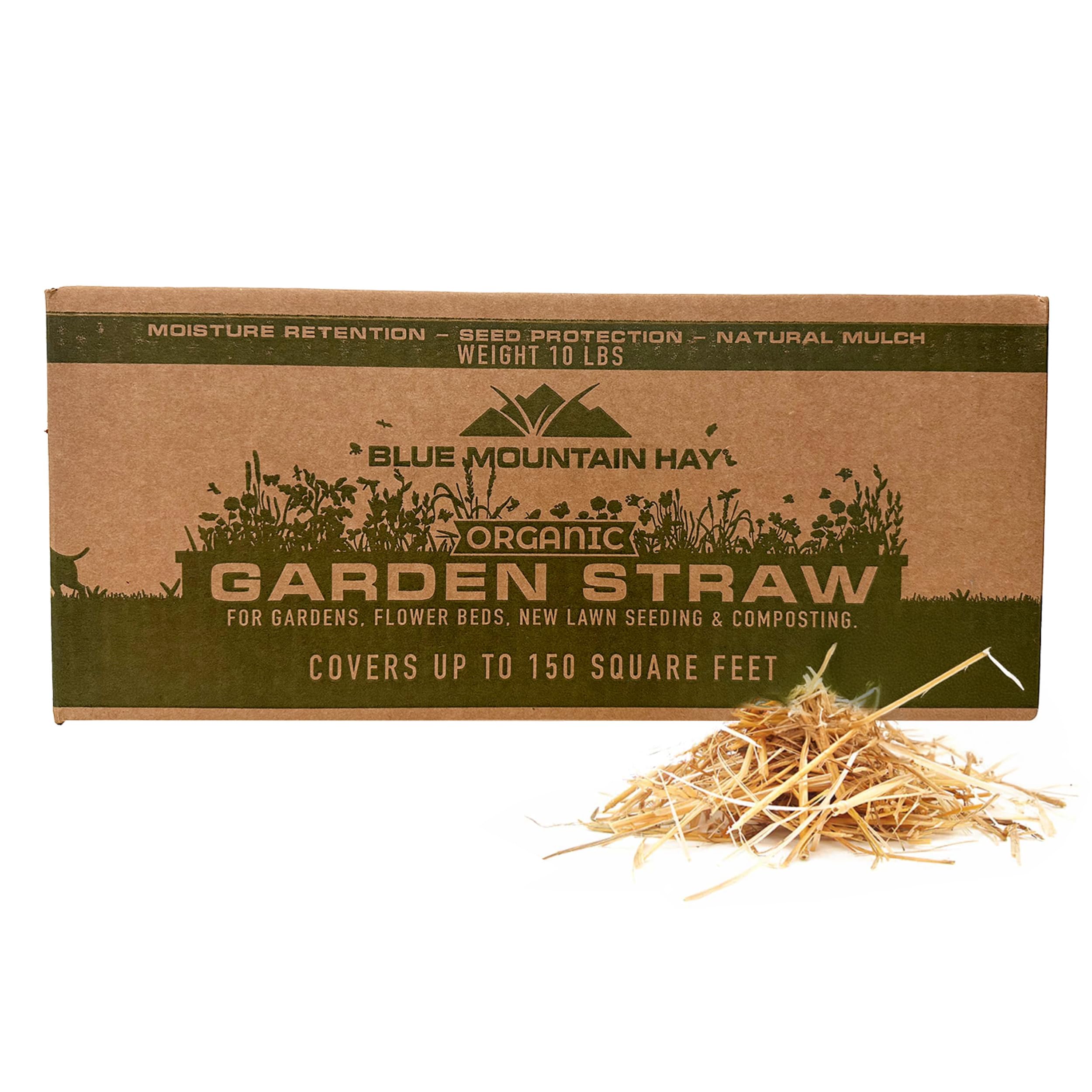
This is exactly the right purchase for the small-bed gardener who needs a clean, organic, pet-safe straw that is easy to handle and store, and who is willing to refresh the layer every season.
At around ten pounds per box, this organic straw from Blue Mountain Hay is the lightest option here, which makes it the easiest to carry from the driveway to the back flower bed without straining your arms. It is clean, naturally dried straw that buyers describe as soft, pure, and free of dirt or bugs — ideal for protecting potted plants or layering around onions and garlic as well as flowers. What you get for that convenience and weight is significantly less coverage than the HealthiStraw: one box equals roughly one-third of a full straw bale, covering about 100 square feet at a 1-inch depth rather than the 300 square feet the package claims.
One reviewer warns that the straw introduced grass seeds into their raised beds, ruining vegetable and strawberry plantings, so you should be cautious if weed-free soil is critical to your flower garden.
Strong points
- Light, clean, and easy to carry and spread
- Organic and safe for pets and edible gardens
- Good for small beds and container plants
Before you buy
- Some reviewers point out grass seeds sprouting from the straw
- Expensive per square foot for large areas
Understanding the Specs
Water Retention (Absorption Capacity)
This tells you how much water the mulch can hold relative to its own dry weight. Coconut husk chips can absorb up to ten times their weight in water, which means the soil underneath stays damp for days longer than it would under bark. Wheat straw holds less water but still slows evaporation significantly. If you live in a dry climate, a high-absorption mulch like coco coir will reduce how often you have to water your flowers.
Coverage Area (Cubic Feet or Square Feet)
This is the most practical number when you are buying mulch: how much ground will one bag cover at a healthy two-to-three-inch layer. A 2-cubic-foot bag covers roughly 8 to 12 square feet, while a 3-cubic-foot compressed bale can cover up to 100 square feet. Always check the coverage claim — some products list the maximum at a very thin one-inch layer, which won’t suppress weeds well.
FAQ
How deep should I spread mulch in a flower bed?
Is cocoa bean shell mulch safe for dogs?
How often do I need to replace the mulch in my flower beds?
Final Thoughts: The Verdict
For most buyers, the type of mulch for flower beds winner is the Back to the Roots Organic Coco Mulch because it combines the biggest coverage per block with organic certification and excellent weed suppression. If you want chunkier chips that improve soil aeration and last longer, grab the Plantonix Coco Chips. And for a massive, budget-friendly coverage that keeps weeds out of large beds, the standout is the HealthiStraw GardenStraw.