
Supporting a heavy tomato plant with a string that snaps mid-season — it undoes all your work in a single afternoon. The right trellis string for tomatoes needs to hold the weight of maturing fruit, stay strong in sun and rain, and come in a length that actually lasts the whole season. You need something that works from planting to your first harvest.
I’m Rikta — the co-founder and writer behind Lawn Gear Lab. This guide is built by comparing the manufacturers’ published specifications and the patterns across verified customer reviews, so you get each pick’s real strengths and trade-offs instead of marketing spin.
Whether you are running a Florida weave or training single stems up a stake, these are the top options for any gardener choosing the best string for tomato trellis to keep your plants upright and productive all season long.
How To Choose The Best String For Tomato Trellis
Picking the right trellis string comes down to the weight your plants will carry, the weather your garden sees, and how long you want the twine to last without degrading.
Material — natural vs. synthetic
Jute and coir (coconut fiber) are biodegradable and feel nicer to handle, but they absorb water and can weaken over a wet season. Polypropylene (PP) is water-resistant, resists rot, and typically offers higher tensile strength for a similar price per foot.
Tensile strength — how much weight can it hold?
The force required to break a string is measured in pounds. A loaded tomato vine with fruit can pull hard on a trellis line. You want a twine rated at least 50-60 lbs for a single-stem system to avoid mid-season snapping. 200-lb rated twine is overkill for tomatoes but gives you headroom for heavy squash, melons, or bundling branches.
Length per spool — does the quantity match your garden size?
A small raised bed may only need 200 feet of string for a season. A large plot or farm uses thousands of feet. Check the total unit length (listed in feet) to avoid buying a short spool and needing to reorder mid-season. Longer spools often deliver better per-foot value.
Quick Comparison
On smaller screens, swipe sideways to see the full table.
| Model | Category | Best For | Key Spec | Amazon |
|---|---|---|---|---|
| Tomato Twine 6300 Ft | Premium | Large gardens, whole-season use | 6,300 ft, 59-lb tensile strength | Amazon |
| Heavy Duty 200 lbs (1467 ft) | Premium | Heavy fruit, high-stress trellis | 2.0 mm, 200-lb break strength | Amazon |
| Heavy Duty 200 lbs (656 ft) | Mid-Range | Medium beds, heavy-duty use | 2.0 mm, 200-lb break strength | Amazon |
| Coconut Fiber Twine 200 ft | Mid-Range | Eco-friendly, natural garden look | 5 mm diameter, 200 ft total | Amazon |
| Natural 3mm Jute Twine 1000 ft | Budget | Small gardens, craft, short-term use | 3 mm, 1000 ft length | Amazon |
In‑Depth Reviews
1. Tomato Twine 6300 Ft – Heavy Duty Polypropylene Twine White

The 6,300-foot continuous spool makes this the top pick for any gardener running a Florida weave across a full row who wants one roll to last the entire season. The Tomato Twine 6300 Ft holds that massive length of weather-resistant polypropylene string on one spool, weighing only 3 pounds, and is rated at 59 lbs of tensile strength — enough for standard tomato vines.
Buyers report that this twine “pulls smoothly from box” and holds tension well through the weave pattern, which is a real pain point with cheaper spools that kink or tangle. The polypropylene material resists rain and sun better than natural twine — you will not see rot or mold weeks into the season. The top-feed box design means you do not have to wrestle a spinning roll.
The practical trade-off is that the string feels thinner than some heavy-duty competitors — it lands at a 59-lb rating rather than the 200-lb standard of premium PP twine. For standard tomatoes, even heavy slicers, 59 lbs is plenty; just know you would not use it to support watermelon or giant pumpkin vines. This is the one to grab if you plant a big tomato patch every year and want a straightforward, season-saving roll.
Why it’s great
- Huge 6,300-ft length covers multiple seasons without a restock
- Polypropylene resists weather, rot, and odor
- Smooth box-feed design prevents tangles
Good to know
- 59-lb tensile strength is good for tomatoes but not the strongest available
- Feels thin compared to 2.0 mm premium twine like the 200-lb spools
2. Heavy Duty 200 lbs Strong Polypropylene Tomato Twine (1467 ft)
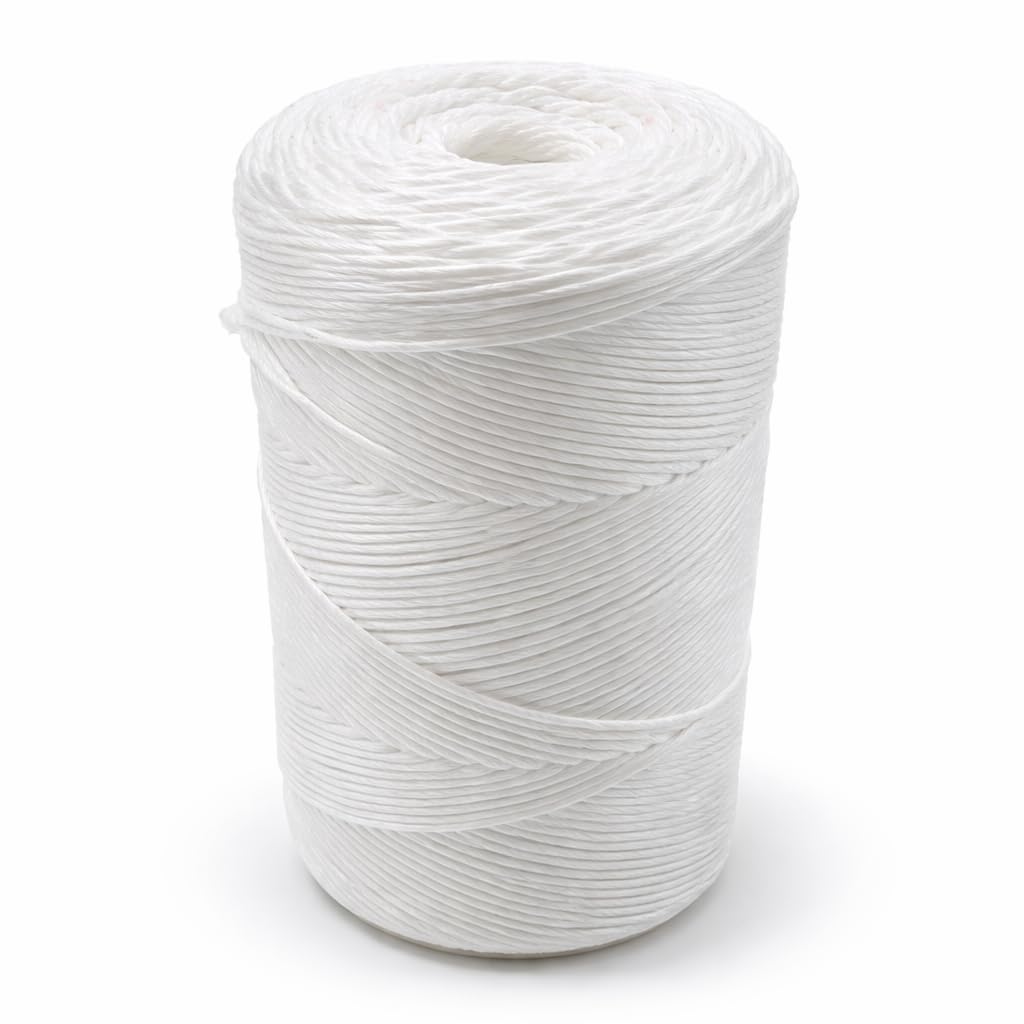
Against the top pick’s 59-lb break strength, this spool delivers a 200-lb rating — more than triple the holding power — but you trade length, getting 1,467 feet instead of 6,300. That is still enough for a solid medium-to-large garden. At 2.0 mm thick, a genuine 200-lb break strength means you can trellis heavy squash or even bundle branches without worrying about a snap halfway through.
Owners mention it “lasts longer than brittle brands” and requires less twine per bundle because the thickness itself gives stability. It is also tangle-free off the spool, which saves irritation when you are moving fast between planting rows. The per-foot cost is higher than thinner twine, but for that you get near-industrial headroom.
Choose this over the top pick if you grow a varied garden with heavy producers — the 1467 ft of 200-lb twine is the better tool for that job. If you need only tomatoes in large volume, that top pick’s 6300-ft roll gives you far more total footage.
Where it shines
- 200-lb tensile strength is near-industrial for home gardens
- 2.0 mm diameter feels substantial and holds knots securely
- Tangle-free spool design works smoothly
Worth noting
- 1,467 ft is shorter than bulk options; high-volume planters may need two spools
- Some customers note the per-foot cost is higher than thinner twine
3. Heavy Duty 200 lbs Strong Polypropylene Tomato Twine (656 ft)
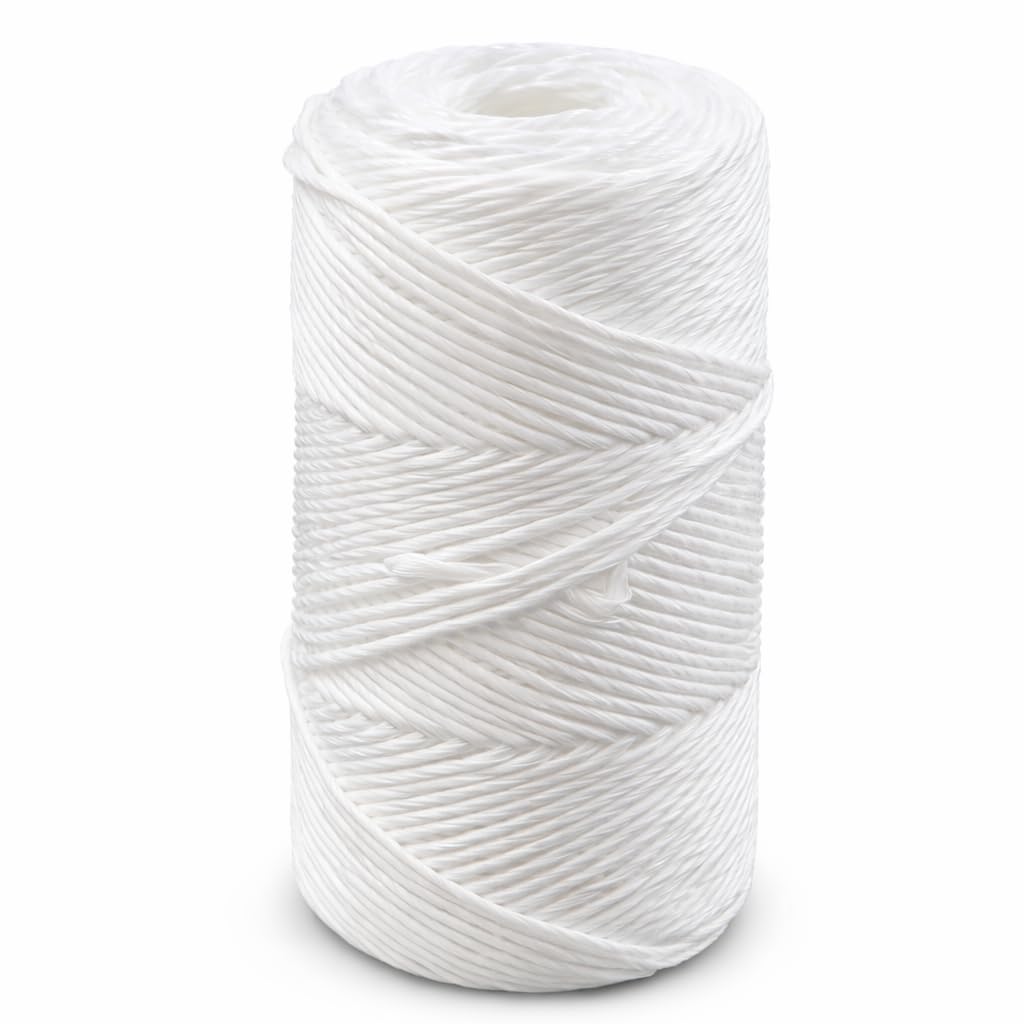
Imagine a moderate raised bed with 8 to 12 tomato plants. You do not need a 6,300-ft behemoth, but you also do not want to run out halfway through. At 656 feet with the same 200-lb polypropylene construction as the larger spool, this version hits the exact middle ground. The 200-lb rating (the same max force as the 1467-ft spool) means you can use it for heavy work beyond just tomatoes — reviewers point out the twine is “effective for tying cardboard boxes” and works well for bundling branches after pruning.
The factory-direct manufacturing (30+ years by GOLDEN COCK) means you get consistent thickness and strength that rebranded spools sometimes lack. You get the same industrial-grade strength as the 1467-ft spool but in a mid-size volume. For a modest planting that covers the season without overstocking, this is a smart per-garden buy.
656 feet of 200-lb polypropylene twine from a factory with three decades of direct manufacturing experience.
What stands out
- 200-lb break strength in a moderate 656-ft spool suits most home gardens
- Factory-direct production ensures consistent quality
- Light enough for daily handling, strong enough for heavy crops
The trade-offs
- 656 ft may be too short for large-scale or commercial growers
- Some buyers felt the per-roll price is premium for the length
4. Coconut Fiber Twine, Coir Fiber Twine, Length 200 Feet (50 ft @ 4), 5 mm

The single number that matters most in this category is diameter: at 5 mm thick, this coir twine is 67% thicker than standard 3 mm jute string, giving it real heft in your hands. If you want a completely biodegradable option (can be tossed in compost at season’s end) that looks natural, this coconut-fiber twine delivers a different experience from any synthetic spool. The rough texture helps climbing plants grip naturally.
The catch you accept with natural twine is that it degrades faster in wet conditions. But one buyer in New England noted the coir “will last 2-3 years if left outside all year” — a surprisingly long life for an organic material. The 200-ft total (four 50-ft hanks bundled together) is enough for a small garden with 10-15 tomato plants on single stems.
You are paying for a premium natural product, not sheer quantity. If your garden philosophy leans organic and biodegradable, this 5 mm coir twine rewards that choice with surprising outdoor durability — a price-to-value read that favors longevity over volume.
The upsides
- 5 mm thickness is noticeably heavier and stronger than most natural strings
- 100% biodegradable, compostable material
- Rough surface helps climbing plants and vines grip naturally
Keep in mind
- 200 ft total length is short compared to synthetic spools
- Can degrade if left in constant wet soil contact
5. Natural 3mm Jute Twine String, 1000-FT Hemp Rope for Gardening, Handmde

At 1,000 feet for a very accessible price, you get a massive roll of natural jute that costs about the same as a small spool of coir. The material is soft, flexible, and easy on the hands — shoppers say it is “perfect strength for tying plants and making netting” and one reviewer specifically added “I will use it to do the Florida weave in my tomato garden.” This jute twine handles the weave tension method well.
What you give up is water resistance and long-term outdoor durability. The 3 mm diameter means it is thinner than the coir alternative (67% less diameter), so it will snap under heavier fruit loads if stretched too tight, and it will begin to rot if it sits in direct contact with damp soil for weeks. The natural scent that some buyers notice dissipates quickly outdoors.
This jute string is for the budget-conscious gardener who plants a moderate patch and does not mind replacing the twine each season. At 1,000 feet, you have enough for multiple seasons of small gardens, craft projects, and general household tying.
Why we’d pick it
- 1,000 ft of natural fiber is a strong quantity for the cost
- Soft, flexible material is comfortable to work with by hand
- Proven in the field for Florida weave trellis methods
A few caveats
- Jute degrades faster in constant moisture than coir or polypropylene
- 3 mm is thinner than some alternatives; not ideal for heavy fruit clusters
Understanding the Specs
Tensile Strength (lbs)
This is the amount of force required to snap a string, measured in pounds. A 59-lb twine will support a heavily laden tomato vine, but if you grow giant beefsteaks or add extra stems, you want a 200-lb-rated string for a safety margin. Heavier crops like winter squash will demand the higher end.
Diameter (mm)
The thickness of the string itself. A 3 mm string is fine for single-stem tomatoes, but a 5 mm coir or 2.0 mm premium PP feels sturdier in hand and holds knots better under load. Diameter also determines how much spool you get — thinner means more feet per pound, thicker means more individual strength per inch.
FAQ
Is polypropylene string safe for edible tomato plants?
Will natural jute or coir twine rot before the season ends?
Final Thoughts: The Verdict
For the majority of shoppers, the best string for tomato trellis winner is the Tomato Twine 6300 Ft because its massive 6,300-foot spool, 59-lb strength, and weather-resistant polypropylene construction cover any size garden without a mid-season restock. If you need maximum break strength for heavy crops, grab the Heavy Duty 200 lbs (1467 ft) for its 200-lb rating and 2.0 mm thickness. And for a natural, biodegradable option with surprising outdoor longevity, the Coconut Fiber Twine (5 mm) handles small gardens and eco-conscious gardening philosophy with one roll.