
Drilling a hole in a ceramic pot is nerve-wracking — one wrong move and the whole thing cracks. You need a bit that grinds through hard, brittle material instead of grabbing and chipping it. This guide names seven drill bits built for that job, ranked by what they deliver for real planters, pots, and home projects.
I’m Rikta — the co-founder and writer behind Lawn Gear Lab. This guide is built by comparing the manufacturers’ published specifications and the patterns across verified customer reviews, so you get each pick’s real strengths and trade-offs instead of marketing spin.
If you are adding drainage holes to a favorite ceramic planter or drilling into a porcelain tile for a bathroom remodel, this guide helps you find the right drill bit for ceramic pots without guesswork.
How To Choose The Best Drill Bit For Ceramic Pots
Ceramic is hard and brittle — standard twist drills grab and shatter it. You need a bit that grinds away material rather than cutting into it. Here is what matters most.
Diamond Grit vs Carbide Tip
Diamond-coated bits (industrial diamond powder bonded to steel) handle ceramic, porcelain, granite, and glass best. They grind through without chipping. Carbide-tipped bits like the Bosch PTBX05 are good for porcelain tile but wear faster in thicker ceramic.
Pilot Bit Makes the Start Safe
A pilot bit (a small center drill bit) keeps the main hole saw from skidding across the glazed surface. Kits with a removable pilot bit let you start the hole exactly where you want, then remove it for the wider saw to finish.
Water Cooling Prevents Cracks
Friction from drilling overheats ceramic and causes thermal shock cracks. Lubricating with water (spray bottle or a drip) keeps the temperature down and doubles the bit’s life. Some bits have internal wax for dry drilling, but water is always safer.
Quick Comparison
On smaller screens, swipe sideways to see the full table.
| Model | Category | Best For | Key Spec | Amazon |
|---|---|---|---|---|
| 3/4″ Diamond Hole-Saw Bits with Pilot Bit | Mid-Range | Thick ceramic pots and granite | 3/4″ (20mm) hole saw | Amazon |
| DEWALT Tile Drill Bit DW5572 | Premium | Multiple small holes in planters | 1/4″ (6.35mm) solid bit | Amazon |
| 1″ Diamond Hole-Saw Bits with Pilot Bit | Mid-Range | Large holes for sink cutouts | 1″ (25mm) hole saw | Amazon |
| BGTEC 10pcs Dry Diamond Drill Bit Set | Value | Bulk drilling of multiple pots | 10 bits at 1/4″ (6mm) | Amazon |
| 1/4″ Dry Diamond Core Drill Bits Set | Budget | Angle grinder users | 5/8″-11 thread mount | Amazon |
| BOSCH PTBX05 5 pc Porcelain Tile Bit Set | Premium | Clean holes in glazed porcelain tile | 5 sizes, carbide tip | Amazon |
| ASNOMY 10PCS Diamond Hole Saw Set | Premium | Variety of hole sizes with guide jig | 10 sizes 1/4″ to 2″ | Amazon |
In‑Depth Reviews
1. 3/4″ Diamond Hole-Saw Bits with Pilot Drill Bit – 2pc 3/4 inch Diamond Tipped
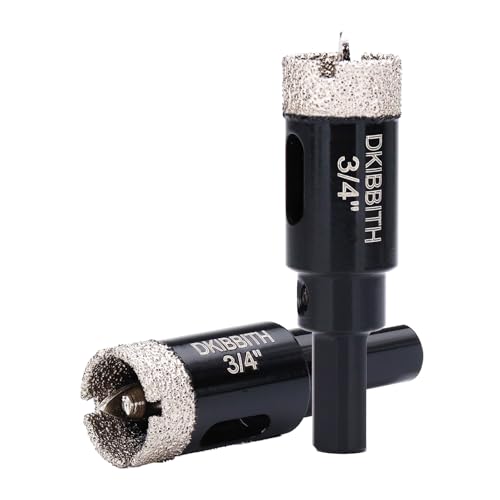
A 3/4-inch diamond-tipped hole saw with a pilot bit makes this the top pick for anyone drilling multiple holes in thick ceramic or stoneware. The 3/8-inch diamond height and 1-3/8-inch cutting depth handle material up to 1-3/8 inches thick without struggling.
Buyers report it “drilled 2 holes in granite desk in 20 mins each” using water for cooling. The removable pilot bit locks the saw from skidding, solving the biggest problem beginners face. This gives you cleaner, more predictable results than the DEWALT DW5572 if you need wider holes (3/4 inch versus 1/4 inch).
The catch: this set costs more upfront than a single solid bit, and you need to keep the bit wet during drilling to avoid overheating. But given the diamond grit stays sharp after multiple holes, it is the most versatile pick for anyone doing more than one or two pots. If you only need tiny 1/4-inch drainage holes, choose the DEWALT instead — but for anything wider, this is the one.
Why it’s great
- Pilot bit prevents skidding on glazed ceramic
- Diamond-tipped cutting edge stays sharp through granite
- Includes two hole saws for backup
Good to know
- Requires water cooling for best results
- Slightly heavier than solid bits at 0.12 kg
2. DEWALT Tile Drill Bit, Diamond Tip, 1/4-Inch (DW5572)
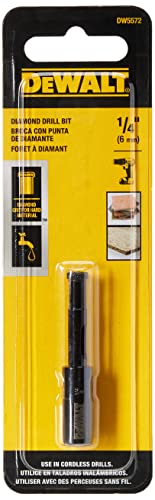
Compared to the top pick’s hole saw, this DEWALT diamond-tipped bit is harder to break on glazed ceramic thanks to its 1/4-inch (6.35mm) solid body and diamond-welded tip. One reviewer noted drilling “12 holes in 1/2″ thick porcelain tile” with one bit still working — that beats the 3/4-inch hole saw on per-hole lifespan for small-diameter work.
The reverse spiral thread pulls water down to the cutting edge, a feature that keeps the bit cool without you manually dripping water. The core ejection slot lets you push out the ceramic plug when you finish each hole — no tapping or chiseling to clear it.
It is pricier than multi-bit sets per piece, and starting the hole on a slick pot bottom requires tape or a punch to keep the tip from walking. Choose this DEWALT over the top pick if you need consistent small holes and want a name you trust, but skip it if you need to drill wider than 1/4 inch.
Where it shines
- Diamond-welded tip lasts through dozens of holes
- Reverse spiral thread delivers continuous water feed
- Core ejection slot clears debris easily
Worth noting
- May need tape to prevent walking on glaze
- Only one size in the package
3. 1 Inch Diamond Hole-Saw Bits with Pilot Drill Bit – 2pc 1″ Diamond Tipped
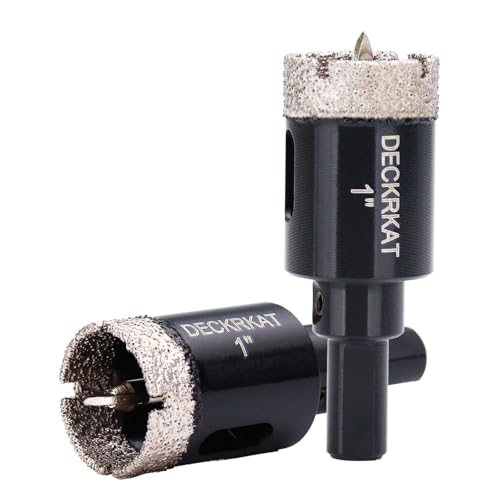
If you need a 1-inch (25mm) hole for a faucet or a large pot spout, this diamond hole saw gives you the width without requiring a separate tool. One buyer mentioned they “cut 4 holes through 1.5″ granite for sink cutout” using water and a plywood template — showing the 1-3/8-inch cutting depth handles thick material, just like the 3/4-inch version but wider.
At 0.15 kilograms, it is 25% heavier than the 3/4-inch version, which helps the bit stay planted during the wobbling motion recommended for clearing dust. The 3/8-inch triangle shank grips better in standard drill chucks than round shanks that slip.
Some reviewers had the pilot bit fall out during drilling, so check the Allen screw tightness before use. For a single large hole in a big ceramic pot, this is the fastest option — the diamond grit lasts longer than carbide, especially if you spray water while drilling. If you rarely need a hole that wide, the 3/4-inch set is more sensible.
What stands out
- Large 1-inch hole cuts through thick granite with water
- Triangle shank prevents slipping in the chuck
- Two hole saws included in the set
The trade-offs
- Pilot bit can loosen without careful tightening
- Weight may feel heavy on smaller drills
4. BGTEC 10pcs Dry Diamond Drill Bit Set, 1/4″ 6mm

10 bits per box: that is the single number that matters most in this category, and it scores a 10 out of 10 for volume buyers. With ten 1/4-inch (6mm) bits in one set, you get the lowest cost per hole for large projects. One review noted getting “9-10 holes per bit in ceramic tile,” outlasting big-box store bits that only managed 3-4 holes — so the ten bits can handle 90 or more holes total.
What you accept: these bits are solid cylinders (no hollow core), so you cannot use a pilot bit to center them. Owners mention the bit “wanders if not held straight” and requires a slow speed with water spray to stay on target. The internal wax helps cool during dry drilling, but for ceramic pots, water is still recommended.
For the buyer making dozens of drainage holes in multiple planters — a gardener, a pottery seller, or a workshop — the per-bit cost is hard to beat. If you only need two holes, a single-bit set wastes less money, so the price-to-value read here is excellent for high-volume work but poor for one-off jobs.
The upsides
- 10 bits for 90+ holes of total capacity
- Internal wax core provides dry cooling
- Side holes and grooves clear stone chips
Keep in mind
- No pilot bit — can wander during start
- Solid design limits chip removal in deep holes
5. 1/4 Inch Dry Diamond Core Drill Bits Set 2 pcs for Ceramic Porcelain Granite
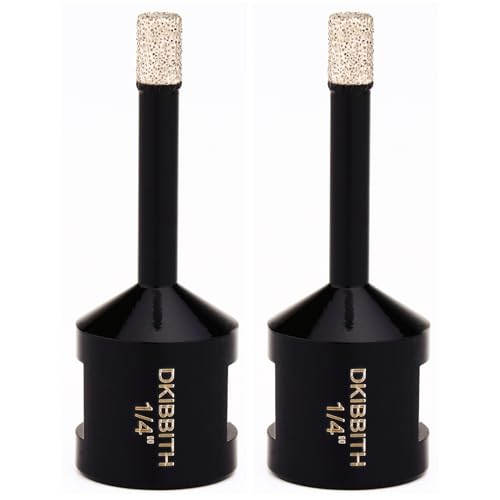
At this lower price, you get two diamond core bits (6mm diameter each) that mount on angle grinders via a 5/8-inch-11 thread. One owner reported it “drilled perfect hole in porcelain tile using wood template” — the 1/4-inch 6mm size is ideal for small drainage holes.
What you give up: these are threaded for angle grinders, not standard hand drills, so you need grinder-compatible equipment. The maximum working depth is 1.37 inches (35mm), which is fine for most pots but not thick granite slabs. Bits also lack a pilot, so starting at a 45-degree angle is required to groove the surface first.
For anyone who already owns an angle grinder and wants to drill small holes in ceramic pots, this is the budget entry point. If you use a regular drill, pick a bit with a round shank instead.
Why we’d pick it
- Dense cooling wax inside prevents overheating
- Fits angle grinders with 5/8-11 thread
- Two bits included for backup
A few caveats
- Needs angle grinder — not for standard drills
- No pilot bit requires angled start
6. BOSCH PTBX05 5 pc. Porcelain Tile Drill Bit Set

For anyone who values a clean, crack-free hole on first attempt — especially in high-end glazed porcelain tile — the Bosch PTBX05 set offers an arrow-shaped tip that does not skate (slide across the surface). One customer observed it “drilled 12 holes through tile” with a 3/16-inch bit without the bit walking at all.
The hex shank locks securely into the drill chuck, delivering full torque without slipping. Bosch claims the carbide tip lasts up to 5 times longer than standard glass-and-tile bits, and reviewers confirm the sharp centering zone makes starting easy even on vertical surfaces like shower walls.
The honest limit: carbide tips, even good ones, wear faster on ceramic than diamond grit. After 6-8 holes in hard porcelain, some bits start to dull. This set is best for precision work in thin tile — for thick ceramic pots, a diamond hole saw is more durable.
Strong points
- Arrow-shaped head eliminates skating on glaze
- Hex shank transfers maximum torque without slip
- Includes 5 common sizes
Before you buy
- Carbide wears faster on thick ceramic than diamond
- Higher upfront investment for occasional use
7. ASNOMY 10PCS Diamond Hole Saw Set, 1/4″ to 2″

Compared to the BGTEC set that only offers 1/4-inch bits, this ASNOMY kit delivers 10 hole saws spanning from 1/4-inch (6mm) up to 2 inches (50mm), plus an EVA guide jig (a foam pad that the hole saw fits into) that holds the bit steady on the start point. One user highlighted it “cut through my ceramic tile like butter” — the serrated diamond edge grinds faster than a smooth rim.
The guide jig is the standout addition: it keeps the bit from sliding on the first contact. Reviewers found the serrated teeth also work well for small grinding tasks, expanding the tool’s use beyond drilling.
The downside is that the included sizes may give you more bits than you need — 5/16-inch and 25/32-inch are less common sizes for most pot projects. If you often cut a range of hole diameters for different pots and tiles, this set covers every scenario.
What we like
- Serrated cutting edge reduces drilling resistance
- EVA guide jig prevents walking on start
- 10 sizes cover small to large holes
The downsides
- Some sizes less useful for standard pot drainage
- Storage bag included but individual bits not labeled
Understanding the Specs
Diamond Grit vs Carbide Tip
Diamond bits use industrial diamond powder bonded to the steel body — they grind through ceramic, glass, and granite by wearing away the material one grain at a time. Carbide-tipped bits (like the Bosch PTBX05) have a sharp metal cutting edge, which is good for tile but dulls faster on hard ceramic. For drilling pots, diamond is generally the more durable choice.
Pilot Bit and Wobbling Motion
A pilot bit is a small center drill that creates a starter divot so the wider hole saw does not skate across the glaze. After the pilot hole is deep enough, you remove the pilot bit (with the included Allen wrench) and drill in a gentle wobbling motion to clear dust from the cut. This prevents the bit from binding and cracking the pot.
Water Cooling and Wax Cores
Overheating is the main cause of ceramic cracking during drilling. Water cooling (a spray bottle or a puddle on the surface) absorbs heat and flushes away abrasive dust. Some bits, like the BGTEC set, have wax cores that melt and lubricate during dry use, but water is still safer for fragile pots. Bits without cooling features should be dipped every 15-20 seconds.
Hole Saw vs Solid Bit
A hole saw is a hollow cylinder that cuts a circle around the perimeter, leaving a plug in the center — good for larger holes (3/4 inch and up). A solid bit (like the DEWALT DW5572) drills a full hole by grinding the entire area — best for small drainage holes under 1/2 inch. Hole saws remove material faster but require a pilot bit; solid bits are simpler but slower.
FAQ
Can I use a regular masonry bit on ceramic pots?
How do I stop the bit from sliding on glazed ceramic?
What size hole do I need for pot drainage?
Do I have to use water when drilling ceramic pots?
Final Thoughts: The Verdict
For most people drilling drainage holes in ceramic pots at home, the winner is the 3/4″ Diamond Hole-Saw Bits with Pilot Bit because the pilot bit prevents skating and the diamond grit handles everything from thin terracotta to thick glazed stoneware. If you want a precise small hole (1/4 inch) from a trusted brand, grab the DEWALT DW5572. And for drilling dozens of pots without a huge per-bit cost, the standout is the BGTEC 10-pack — it gives you enough bits to finish a big project and still have spares.