
If your potted fruit tree looks sad despite your best watering efforts, the problem is almost always the soil you’re using. Regular potting mix holds too much water and lacks the nutrients a confined tree needs, leading to yellow leaves, stunted growth, or root rot. This guide breaks down the six best bagged mixes specifically blended for fruit trees in containers, so you can stop guessing and start growing.
I’m Rikta — the co-founder and writer behind Lawn Gear Lab. This guide is built by comparing the manufacturers’ published specifications and the patterns across verified customer reviews, so you get each pick’s real strengths and trade-offs instead of marketing spin.
Choosing the right potting soil for fruit trees is the single most important decision you’ll make for your plant’s long-term health and harvest. Whether you’re nursing a Meyer lemon, a dwarf orange, or an avocado pit you sprouted in a glass, the mix you pick decides whether your tree thrives or just survives.
How To Choose The Best Potting Soil For Fruit Trees
Container fruit trees depend entirely on the soil you give them — they can’t send roots deeper to find better drainage or nutrients. The wrong mix leads to root rot, nutrient deficiencies, or a tree that never fruits. Here are the three most important factors to consider.
Drainage and Aeration
Fruit tree roots need oxygen as much as they need water. A mix that stays soggy will suffocate the roots and invite fungal diseases. Look for ingredients like perlite (volcanic glass that creates air pockets), coarse sand, or coconut coir (coconut husk fibers that hold some moisture but drain well). A good mix should feel light and crumbly when you squeeze it, not dense or muddy.
pH Balance for Fruit Trees
Most fruit trees, especially citrus, prefer a slightly acidic pH of about 5.5 to 6.5. In this range, the tree can absorb the iron and magnesium it needs for green leaves and sweet fruit. Many dedicated fruit tree mixes include lime (crushed limestone) or dolomite lime (lime with added magnesium) to keep the pH stable over time, so you don’t have to test and adjust constantly.
Nutrient Content and Amendments
Container-grown trees use up nutrients faster than in-ground trees, because every watering flushes some away. A mix that already contains worm castings (worm droppings rich in beneficial microbes), organic compost, or slow-release organic fertilizer gives the tree a steady food supply for months. Without these, you’ll need to fertilize more often to avoid yellow leaves and weak growth.
Quick Comparison
On smaller screens, swipe sideways to see the full table.
| Model | Category | Best For | Key Spec | Amazon |
|---|---|---|---|---|
| DUSPRO Citrus Tree Potting Soil Mix | Best Overall | General citrus & fruit tree repotting | 6 Quarts | Amazon |
| GARDENWISE Organic Lemon Tree Soil | Best Value | Fast growth with built-in fertilizer | 3 Quarts | Amazon |
| GARDENWISE Premium Organic Citrus Potting Soil | Premium Pick | Serious citrus growers wanting top results | 3 Quarts | Amazon |
| Gardenera’s Award-Winning Lemon Tree Soil Mix | Compact Pick | Single small potted lemon tree | 2 Quarts | Amazon |
| Soil Sunrise Citrus Tree Potting Soil Mix | Best for Large Pots | Multiple trees or large containers | 12 Quarts | Amazon |
| Soil Sunrise Avocado Tree Potting Soil Mix | Specialty Pick | Avocado plants & seedlings | 12 Quarts | Amazon |
In‑Depth Reviews
1. DUSPRO Citrus Tree Potting Soil Mix for Potted Lemon Tree, Specialized for Oranges, Fruit Tree Indoor Planting Pre-Mixed 4-in-1 Ready to Use (6 Quarts)
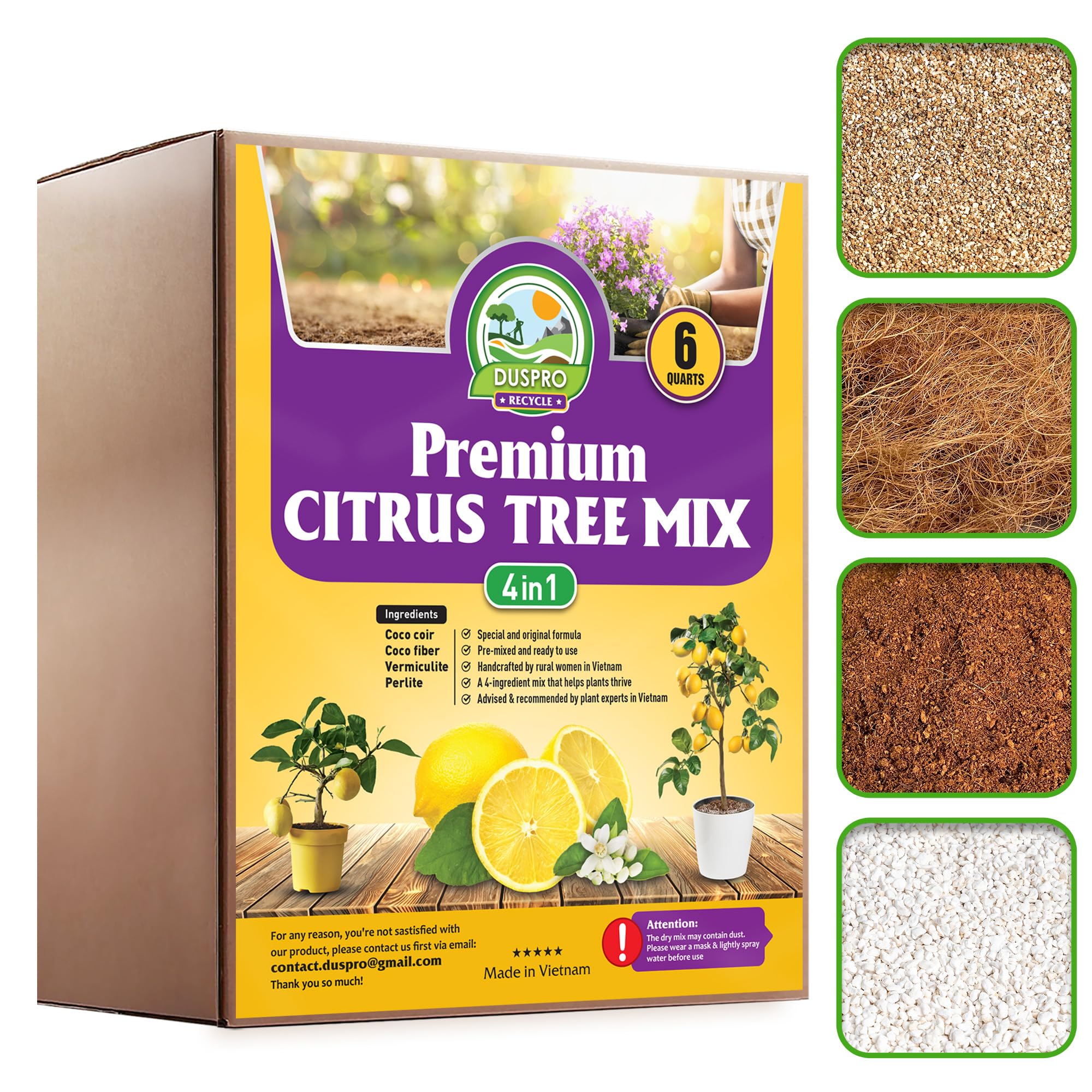
6 quarts — three times the volume of the Gardenera mix — makes the DUSPRO Citrus Tree Potting Soil Mix the top pick for anyone who needs to repot a medium-sized fruit tree or refresh several smaller containers from a single bag. The 4-in-1 formula combines peat moss, perlite (volcanic glass that creates air pockets for root breathing), lime (crushed limestone that balances pH), and worm castings (worm droppings rich in beneficial microbes) — the same core ingredients you’d pay extra to mix yourself. Buyers report that “after 3-4 weeks, plants are healthier with new leaves,” and one reviewer described how their orange tree “looked peaked” until they swapped out the old heavy soil for this mix — the tree improved immediately.
The mix is pre-screened for consistency, so you won’t find stray chunks or clumps that block drainage. According to the brand, it is also versatile enough for lemons, limes, oranges, avocados, olive trees, and even money trees. The only real trade-off is that the bag gets dusty near the bottom, so reviewers recommend wearing a mask when pouring the last bit. Compared to the pricier GARDENWISE Premium mix, this one gives you double the volume for less, making it the best all-around choice for most container fruit tree owners.
If you want the biggest bag and the simplest one-and-done purchase, start here.
Why it’s great
- Generous 6-quart size handles multiple trees or a single large repot.
- Pre-mixed with peat moss, perlite, lime, and worm castings.
- Reviewers report visible recovery in orange and lemon trees within weeks.
Good to know
- Bag can become dusty at the end; wear a mask.
- Some users add extra perlite for very heavy-feeding trees.
2. GARDENWISE Organic Lemon Tree Soil – Citrus Potting Mix with Organic Fertilizer – Ideal for Potted Lemon Trees, Meyer Lemons & Citrus Plants – Chunky, Indoor & Outdoor (3 QUARTS)
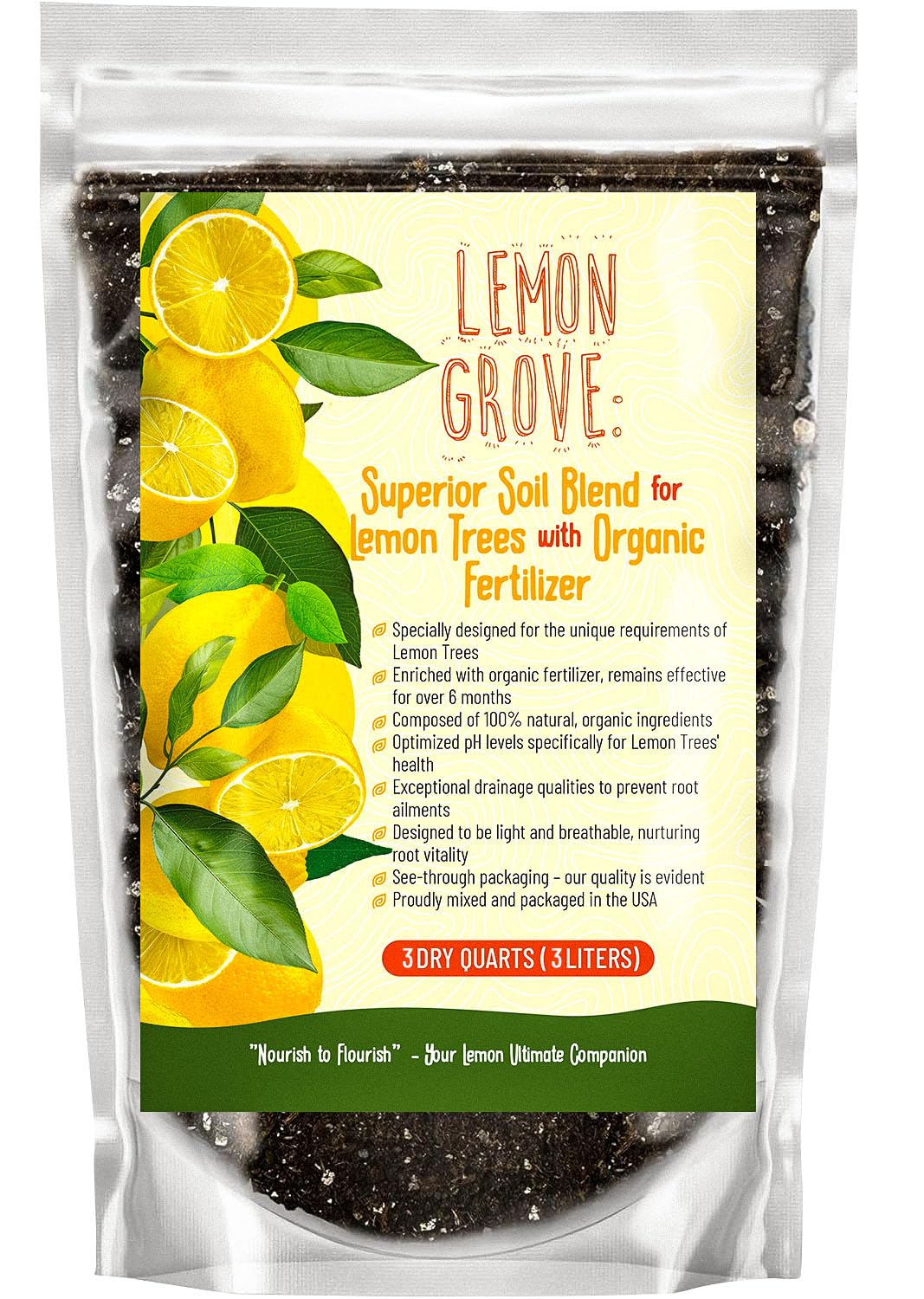
While the DUSPRO mix wins on sheer volume, this GARDENWISE mix beats it on long-term feeding power — it comes with organic fertilizer already blended in that feeds your tree for up to six months. That means you can set it and forget it for half a year, which is a significant convenience if you tend to forget the fertilizing schedule. The mix also includes coarse sand and extra perlite for drainage that rivals any premium option. One reviewer noted their “Meyer dwarf lemon tree is already showing new sprout growth in 2 weeks time” after repotting with this soil, and another called it “excellent aeration and feeding for trees.”
The chunky texture is intentional — it creates more air pockets so roots can breathe, and the mix maintains a pH between 5.5 and 6.5, the sweet spot for citrus. It’s also enriched with iron, magnesium, and manganese to prevent the yellowing leaves that frustrate many new fruit tree owners.
Choose this over the DUSPRO if you are repotting a single smaller tree and want built-in fertilizer that reduces the need for liquid feeding. The 3-quart bag is just right for a standard 10- to 14-inch pot, making it a smarter pick for beginners who want the simplest possible care routine. If you have a larger pot, you will need two bags.
Where it shines
- Organic fertilizer feeds for up to 6 months right out of the bag.
- Chunky texture with perlite and coarse sand ensures excellent drainage.
- Optimized pH (5.5-6.5) and added micronutrients prevent leaf yellowing.
Worth noting
- Smaller 3-quart bag means you may need two bags for a large pot.
- Some buyers feel it is a bit pricey for the volume.
3. GARDENWISE Premium Organic Citrus Potting Soil for Indoor/Outdoor Plants – Perfect for Oranges, Lemons, Limes & Grapefruits Trees – Hand Blended for Optimal Growth (3 QUARTS)
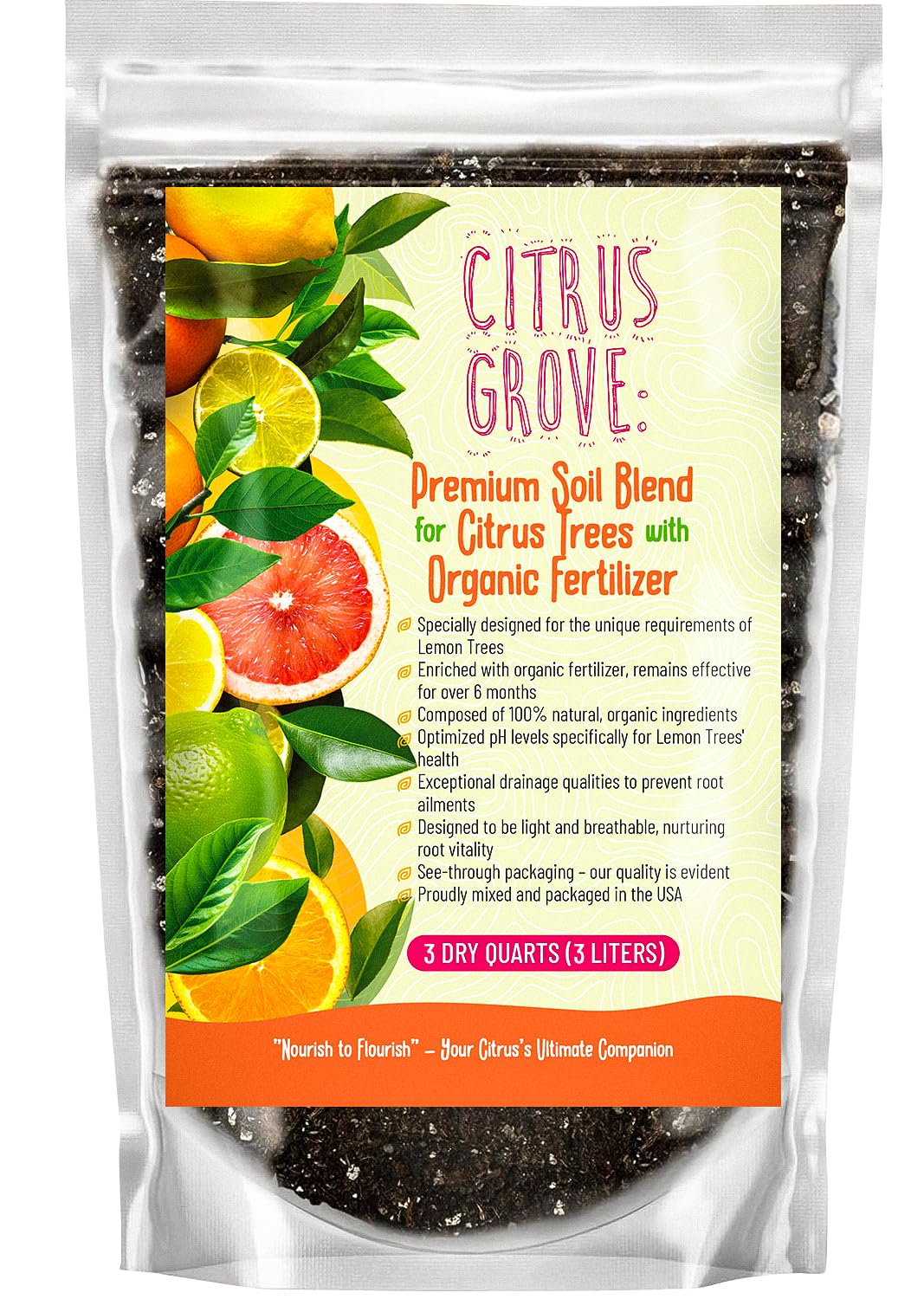
When you’ve just brought home a prized Meyer lemon tree and want to give it the best possible start—cost be damned—this is the bag you reach for. One buyer whose tree “bloomed profusely” but had sparse leaves saw a “total transformation” after switching to this hand-blended mix. It includes dolomite lime (lime with added magnesium) for pH stability and a special slow-release organic fertilizer, all built around a “moisture balance mastery” concept—the compost base retains just enough water without getting soggy, while extra perlite (volcanic glass for air pockets) and coarse sand create the enhanced drainage that prevents root rot.
Reviewers confirm it works: “I repotted my two grapefruit plants in this soil, and they are thanking me every day” and “My citrus is thriving well with this mix!” The bag is 3 quarts, ideal for a single medium pot, but the hand-blended quality makes it feel more like a curated product than a commodity. The standout here is stability—the dolomite lime keeps your pH locked in the 5.5–6.5 range without you having to test and adjust, which matters if you’ve ever dealt with citrus leaves turning yellow from pH swings.
If you own a single Meyer lemon or grapefruit tree that you’ve babied for years, this mix is the right investment—and it’s the only one in this guide that locks pH for you without a single test strip.
What stands out
- Dolomite lime keeps pH stable in the ideal 5.5-6.5 range.
- Slow-release organic fertilizer reduces need for liquid feeding.
- Owners mention dramatic leaf and flower growth after switching.
The trade-offs
- Premium price for only 3 quarts — best for a single tree.
- Hand-blended, so batch-to-batch texture may vary slightly.
4. Gardenera’s Award-Winning Lemon Tree Soil Mix: The Ideal Choice for Healthy, Productive Citrus Trees – [2 Quart Bag]

The single number that matters most in this category is 2 quarts — and it scores highest for precision, not volume. At just 2 quarts, this is the smallest bag in the lineup — and that is its superpower if you are potting a single small lemon tree or a cutting from a friend’s tree. The volume is exactly right for a 6- to 8-inch pot, so you won’t have a half-empty bag sitting in your garage losing quality. The mix is hand-picked and made in the USA with a balanced blend of peat moss, perlite, worm castings, and lime specifically for Citrus Limon trees.
The catch you accept here is price per quart — it is the most expensive per unit volume on this list. But the targeted formula means the ingredients are dialed in for lemon trees specifically, not just a general bag of citrus mix. One buyer mentioned their “Meyer Lemon tree was so pitiful I was constantly worried that it would die,” but after repotting with this soil “the tree looks better than it has in years!” Another reported that their tree “exploded with flowers that are turning into many lemons.”
For the price-per-volume math, this is a premium purchase at a small scale. If you have a single treasured lemon tree and want an immediate improvement, the focused formula delivers results that justify the cost — making the price-to-value read as a smart splurge for a single tree, not a budget buy for a grove.
The upsides
- Targeted formula with peat moss, perlite, worm castings, and lime for lemons.
- Hand-picked and made in the USA.
- Customers note dramatic recovery of sick Meyer lemon trees.
Keep in mind
- Only 2 quarts — not enough for a large pot or multiple trees.
- Higher cost per quart than most other picks.
5. Soil Sunrise Citrus Tree Potting Soil Mix (12 Quarts) Special Blend for Indoor Oranges, Lemons, Limes and More

You get a 12-quart bag of Soil Sunrise Citrus Tree Potting Soil Mix, which holds twice the volume of the DUSPRO mix and six times the Gardenera bag, designed for superior aeration, effective drainage, and excellent nutrient retention, plus lime to balance the pH for citrus.
Buyers confirm it works for the long haul: one reviewer says their potted citrus trees “are doing great” and that the mix “definitely helps,” while another describes a “total transformation” of their Meyer lemon tree — “every branch now has new leaf growth” after repotting. The only consistent feedback is about the packaging: the plastic bag inside the box isn’t sealed, so some customers wish for a resealable bag for easier storage.
Some also find it a little pricey, but given the 12-quart volume, the per-quart cost is competitive with the DUSPRO, making it the perfect budget buy for anyone who needs maximum volume in a single bag to repot multiple trees over the same weekend.
Why we’d pick it
- Generous 12-quart volume handles large containers or multiple trees.
- Designed for superior aeration, drainage, and nutrient retention.
- Reviewers point out visible leaf growth on Meyer lemon trees.
A few caveats
- Packaging is a plain plastic bag inside a box; not resealable.
- Some buyers consider it a little overpriced for the mix.
6. Soil Sunrise Avocado Tree Potting Soil Mix (12 Quarts) for Germinating, Growing and Repotting Avocado Plants

This mix is perfect for the avocado enthusiast who wants a soil formulated specifically for that plant’s unique needs, whether starting from a pit or repotting a nursery sapling. Avocados require even more drainage than citrus, and this 12-quart bag (weighing 5.1 pounds) delivers with a blend of peat moss, perlite, sand, and lime (crushed limestone for pH balance). It is enough to transplant a young tree into a 14- to 16-inch pot or to start several avocado pits in smaller containers, and shoppers say the soil is “light, well-draining soil with good moisture retention” with “no odor.”
One buyer whose avocado tree was doing fine in regular soil saw “healthier leaves and steady growth” after switching to this mix, while another called it “the perfect soil when transplanting my avocado tree to a larger pot. The tree is thriving beautifully.” Some experienced growers add even more perlite for extra drainage, but the base formula already does a solid job straight out of the bag. Compared to the other Soil Sunrise citrus mix, this avocado-specific blend includes sand as a primary ingredient rather than just an addition, giving it a grittier texture that avocado roots love.
If you are an avocado enthusiast who wants a mix tailored from the ground up, this is the clear choice — just be aware that its specialized drainage formula may be too fast-draining for plants that prefer more moisture retention.
Strong points
- Specialized sand-and-lime blend matches avocados’ extreme drainage needs.
- Large 12-quart bag fits a 14- to 16-inch pot comfortably.
- Buyers report thriving avocado trees and no odor issues.
Before you buy
- Some heavy feeders may still want extra perlite mixed in.
- Best for avocados specifically; citrus trees prefer a different nutrient profile.
Understanding the Specs
Perlite and Coarse Sand
These white volcanic glass pebbles and rough sand grains create tiny air pockets in the soil so roots can breathe. Without them, the mix would compact into a dense slab that suffocates roots and holds water against them. The more perlite or sand a mix has, the faster water flows through, which is critical for fruit trees that hate wet feet.
pH Level
This is a measure of how acidic or alkaline your soil is on a scale of 0 to 14. Fruit trees, especially citrus, thrive between pH 5.5 and 6.5 (slightly acidic). In that range, the tree can absorb the iron, magnesium, and manganese it needs for dark green leaves and sweet fruit. If the pH is wrong, the nutrients are physically present in the soil but the tree can’t take them up — that’s when you see yellow leaves despite regular fertilizing. Many fruit tree mixes include lime (a powdered rock that resists pH swings) to keep things stable.
FAQ
Can I use regular potting soil for my potted fruit tree?
How often should I repot my fruit tree with fresh soil?
What does dolomite lime do in potted fruit tree soil?
Final Thoughts: The Verdict
If you want one dependable pick, the potting soil for fruit trees winner is the DUSPRO Citrus Tree Potting Soil Mix because it combines the best volume-to-value ratio with a proven 4-in-1 formula that works for citrus, avocados, and even money trees. If you want built-in organic fertilizer that feeds for six months with no extra work, grab the GARDENWISE Organic Lemon Tree Soil. And for avocado growers who need maximum drainage in a large bag, the standout is the Soil Sunrise Avocado Tree Potting Soil Mix.