
Getting plump, juicy tomatoes starts with what you put in the soil, but with powders, liquids, and spikes lining the shelves, picking the right one can be confusing. This guide cuts through the noise to show you exactly which type of plant food delivers the harvest you want without the guesswork.
I’m Rikta — the co-founder and writer behind Lawn Gear Lab. This guide is built by comparing the manufacturers’ published specifications and the patterns across verified customer reviews, so you get each pick’s real strengths and trade-offs instead of marketing spin.
Knowing which formula and delivery method will actually work for your setup is what separates a good season from a great one — whether you are starting seeds indoors or nursing a struggling plant in a raised bed. That is what this breakdown of the best tomato fertilizer is designed to do for you.
How To Choose The Best Tomato Fertilizer
Picking a fertilizer is simpler when you know what your tomato plant actually needs at different points in its life. A formula high in nitrogen (the first NPK number) pushes leafy growth, which is great for seedlings but bad for fruiting if used too late. For flowers and fruit, you want a higher phosphorus (middle number) and potassium (last number) content. The delivery method — liquid, granular, or spike — then decides how often you need to apply it.
NPK Ratio: The Three Numbers
Every fertilizer label shows three numbers, like 6-18-6 or 3-4-4. The first is nitrogen (N), which fuels green leaves and stems. The second is phosphorus (P), which supports root development and flower production. The third is potassium (K), which helps overall plant health and fruit quality. For tomatoes, you generally want a middle and last number that is equal to or higher than the first once the plant starts flowering, so it puts energy into fruit, not just leaves.
Slow-Release vs. Quick-Release
Slow-release fertilizers, like the spikes or coated granules, feed your plant steadily over weeks or months. You apply them once and they do the work. Quick-release formulas, like liquid concentrates, give an immediate boost but need to be reapplied more often — usually every one to two weeks. If you tend to forget to feed, a slow-release option is more forgiving. If you like to monitor and adjust your feeding weekly, a liquid gives you more control.
Organic vs. Synthetic Ingredients
Organic fertilizers are derived from natural sources like bone meal, kelp, or compost. They feed the soil microbes, which in turn make nutrients available to the plant. They are gentler and less likely to burn roots, but they release nutrients more slowly. Synthetic fertilizers are chemically manufactured for a precise, fast-acting nutrient hit. They are effective, but overuse can damage soil health over time and can lead to salt buildup that harms roots.
Calcium: Why It Matters
A common tomato problem called blossom end rot — a dark, sunken spot on the bottom of the fruit — is directly linked to a calcium deficiency. Some fertilizers, like the FoxFarm Happy Frog and the Espoma Tomato-Tone, specifically add calcium to prevent this issue. If your garden has a history of blossom end rot, you want a fertilizer with calcium listed in its guaranteed analysis. You can also add calcium through soil amendments like gypsum or crushed eggshells, but a pre-mixed fertilizer is the simplest route.
Quick Comparison
On smaller screens, swipe sideways to see the full table.
| Model | Category | Best For | Key Spec | Amazon |
|---|---|---|---|---|
| FoxFarm Happy Frog | Granules | Best Overall | NPK 5-7-3 + Calcium & Fungi | Amazon |
| Espoma Tomato-Tone | Granules | Targeted Tomato Formula | NPK 3-4-6 + 8% Calcium | Amazon |
| Jobe’s Spikes | Spikes | Set & Forget | NPK 6-18-6 Time-Release | Amazon |
| Bloom City Liquid | Liquid | Quick Boost | 32 oz Concentrate, 2 oz/gallon | Amazon |
| Down To Earth Mix | Granules | Organic Soil Builder | NPK 4-6-2, 5 lb | Amazon |
| Espoma Garden-Tone | Granules | Versatile Garden Feeding | NPK 3-4-4 + 5% Calcium | Amazon |
| Great Big Tomatoes | Liquid | High-Yield Booster | 1 Gal Concentrate, 70 Minerals | Amazon |
In‑Depth Reviews
1. FoxFarm Happy Frog Tomato & Vegetable Fertilizer

For the gardener who wants one bag that handles the whole season, the 5-7-3 NPK (nitrogen-phosphorus-potassium) — with that slightly higher phosphorus, 7, to boost blooms and fruit — makes this the top pick. It also adds calcium to stop blossom end rot (a dark sunken spot on the fruit bottom) and mycorrhizal fungi (a root-friendly fungus) that help roots pull in more water and nutrients. Buyers report that their tomatoes produced fruit days after feeding, which is a fast turnaround for a granular option.
Its real strength is in how it covers your bases. The calcium directly addresses the most common tomato frustration, while the 4-pound bag is light enough to handle with one hand but still covers a decent patch of garden. It is formulated to support every stage from vegetative growth through harvest.
The catch is that it costs more per pound than the Espoma Garden-Tone (which has a 3-4-4 NPK ratio). But for a dedicated tomato fertilizer that is a step above generic mixes, the FoxFarm delivers the most complete package. If you want to minimize fuss with one bag instead of juggling multiple products, this is your pick.
Why it’s great
- Includes calcium to prevent blossom end rot
- Mycorrhizal fungi improve root efficiency
- Balanced 5-7-3 NPK for robust fruit production
- Pleasant smell, easy to apply without burning
Good to know
- Pricier per pound than general-purpose organics
- Needs to be worked into the soil and watered in
2. Espoma Organic Tomato-Tone 3-4-6
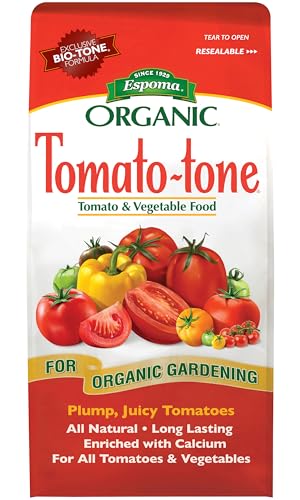
Where the FoxFarm is an all-in-one generalist, the Espoma Tomato-Tone is a specialist that leans harder into fruit production. Its NPK ratio of 3-4-6 is higher in potassium (the last number, 6) than the FoxFarm’s 5-7-3, which means it is designed to prioritize fruit size and quality over foliage. It also packs 8% calcium — nearly double the amount you get in the Garden-Tone version — making it a strong shield against blossom end rot (that dark spot on the fruit bottom caused by a calcium shortfall).
Gardening enthusiasts who use it report that after applying Tomato-Tone at planting and side-dressing every three weeks, their tomato plants become “tomato trees,” yielding beautiful, bountiful fruit. The powder form is easy to scatter around the drip line of the plant before watering, and because it is a gentle organic formula, you do not have to worry about burning the roots if you over-apply slightly.
You should choose this over the FoxFarm if your primary concern is preventing blossom end rot or if you are growing especially large heirloom varieties that need that extra potassium push. The 3-bag pack (12 pounds total) also offers a better value if you have a large garden or plan to share with a neighbor. This one is not for the gardener who wants a single, all-season formula; the FoxFarm covers more growth stages in one bag.
Where it shines
- High 8% calcium specifically targets blossom end rot
- NPK 3-4-6 supports fruit size and flavor
- Organic and safe, won’t burn plants
- Three-bag pack offers great long-term value
Worth noting
- Requires re-application every two weeks for best results
- Has a noticeable organic smell after application
3. Jobe’s Tomato Fertilizer Spikes 6-18-6

If your watering schedule is inconsistent or you just want to plant and not think about feeding for two months, these spikes are the answer. Jobe’s formula uses a 6-18-6 NPK ratio — high in phosphorus (18, the middle number) compared to the other picks here — which targets root establishment and flower development right where the active roots are growing. You just push a spike into the soil and it releases nutrients continuously for 8 weeks with no mixing, no measuring, and no runoff.
Owners mention that these spikes “saved my tomato plants” and that they buy them every year because they are so easy to install and they last all season. The 2-pack gives you 18 spikes per pouch in a resealable waterproof package, so you can store the extras for next year without worrying about moisture ruining them. At 8.8 ounces for the whole set, they are feather-light to handle compared to a heavy bag of granules.
The standout feature here is pure convenience. The Bloom City liquid holds 32 ounces, but it requires you to remember to mix and apply it every week. With Jobe’s, you push it in once. The downside is that you cannot adjust the feeding mid-season; if your plant needs less, you are stuck with a spike already in the ground. But for the low-maintenance gardener, there is no simpler option. skip it if you like to fine-tune your feeding week to week — go with the Bloom City liquid instead. 8 weeks of feeding from a single push.
What stands out
- No mixing or measuring required
- Feeds for 8 weeks straight from one application
- Compact and easy to store in the resealable pouch
- High phosphorus (18) supports strong blooms
The trade-offs
- Cannot adjust dose mid-season
- Overuse or overwatering can damage plants
4. Bloom City Tomato & Veggie Plant Food Liquid

The single number that matters most for a liquid fertilizer is how much concentrate you get per dollar, and here the Bloom City delivers a full 32 fluid ounces. That is a 6.4x larger volume than the Down To Earth liquid, giving you enough to feed a single plant for multiple seasons or a whole garden for a summer. You mix just 2 ounces per gallon of water, so one bottle goes a long way.
The trade-off is that as a liquid, it provides a fast-acting nutrient hit but requires consistent reapplication. Customers note that it “made a huge difference” in their tomato plants, helping them produce tons of delicious beefsteak tomatoes. It is suitable for raised beds, containers, and in-ground gardens, and it feeds without overstimulating the plant if you follow the directions.
At a mid-range price point, this is the value play for gardeners who want an immediate green-up and are willing to mix a weekly feed. It is especially good if you only have a few plants, as the bottle will last you years if you store it properly. This is not the pick if you want a one-time application that works for months — grab the Jobe’s spikes instead.
The upsides
- Large 32 oz bottle feeds many plants for a long time
- Easy to mix and apply with a watering can
- Gives a fast, visible boost to struggling plants
- Made in the USA
Keep in mind
- Needs to be applied every 1-2 weeks
- Some users saw no difference vs granular food
5. Down To Earth All Natural Fertilizers 4-6-2

What you actually get at this lower price is a 4-6-2 NPK ratio gentle, non-burning formula made from fish bone meal, blood meal, feather meal, and kelp meal, listed by the Organic Materials Review Institute (OMRI) for certified organic production.
What you give up is the targeted tomato-specific calcium and fungi that the FoxFarm offers; this is an all-purpose mix designed for vegetables, herbs, and flowers. Reviewers point out it “revived pale, flimsy tomato plants within two weeks after application,” suggesting the organic ingredients are bioavailable enough to make a difference quickly, though the smell is strong when first applied but dissipates in a few days.
This is the perfect pick for the organic purist who wants to build soil health with diverse amendments, not just feed the plant in the moment — the kelp meal and greensand in this blend are valuable additions a simple NPK spike cannot provide, but if preventing blossom end rot is your top concern, you will get better results from the FoxFarm Happy Frog or Espoma Tomato-Tone, both adding calcium this mix lacks; it is the exact budget buyer it is perfect for.
Why we’d pick it
- OMRI listed for organic gardening
- Diverse ingredient list feeds soil microbes
- Gentle formula, low risk of burning roots
- Large 5 lb box offers solid value
A few caveats
- Strong fishy smell for a few days
- Not specifically optimized for fruiting tomatoes
6. Espoma Organic Garden-Tone 3-4-4

This is the perfect pick for the home gardener who grows a mix of vegetables—not just tomatoes—and wants one simple, organic fertilizer to feed everything from lettuce and kale to peppers and squash.
The 3-4-4 NPK ratio includes 5% calcium, and the 2-bag pack provides 8 pounds total for a season of feeding. It contains Espoma’s exclusive Bio-tone formula, a proprietary blend of beneficial microbes that help break down nutrients in the soil. Shoppers say that after using Espoma products for a year, “my garden has thanked me by the show of growth, blooms and beauty.” It is ready to use right out of the bag with no mixing, applied monthly around the drip line and watered in.
If you have a mixed vegetable garden, this one bag keeps all your plants happy. Just be aware that it will not give your tomatoes the same potassium punch as the Tomato-Tone (a 3-4-4 vs. a 3-4-6), so if tomatoes are the only thing you grow, stick with the Tomato-Tone for better fruit results.
Strong points
- Works on a wide variety of vegetables and herbs
- Includes Bio-tone for enhanced soil biology
- Safe, organic formula won’t burn plants if over-applied
- Easy monthly application schedule
Before you buy
- Lower potassium than specialized tomato formulas
- Has a noticeable organic smell when first applied
7. Great Big Tomatoes and Vegetables Liquid Fertilizer Booster
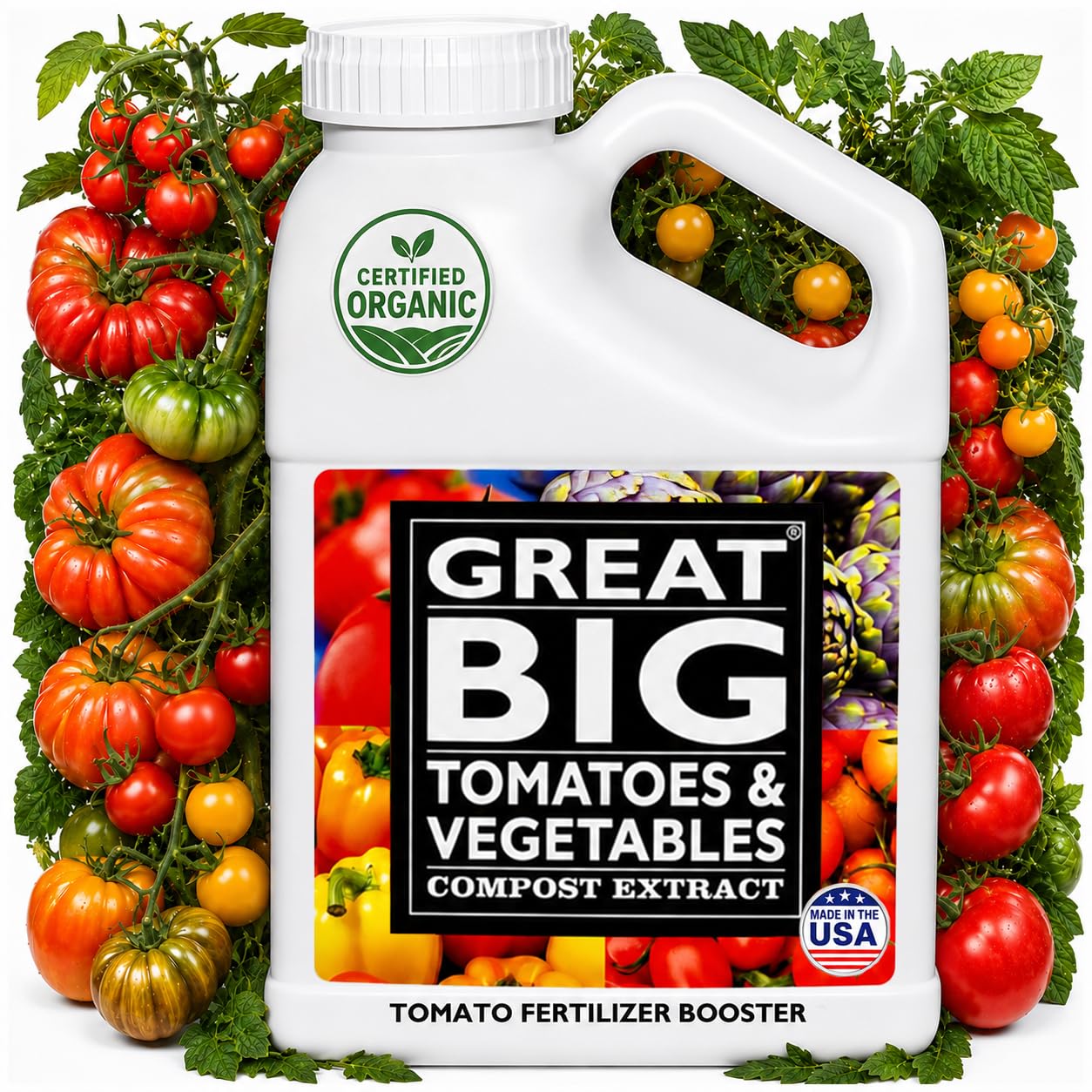
This is the highest concentration product on the list, coming in at 128 fluid ounces (1 gallon), and it offers the lowest cost per feeding of any liquid here — a single gallon yields 256 feedings at its 1 tablespoon per pint of water mixing ratio, far more than any other liquid in the guide. It is a liquid compost extract packed with over 70 chelated trace minerals and humic acid, designed to act as a soil conditioner and booster alongside your regular fertilizer rather than replacing it.
What it does is unlock nutrients already in your soil and make them available to the roots. Buyers report that “tomatoes produced fruit days after feeding” and that they saw “bigger better tomatoes this year.” It is a gentle organic formula that you can apply at any time of day without risk of burning, and it is suitable for tomatoes, peppers, cucumbers, and squash.
One limitation is the price — it is the most expensive single item on the list. But when you compare it to the rest of the field, the cost per feeding is actually the lowest. If you have a large garden or want to supercharge your existing fertilizer routine without switching entirely, this is the one product that stands alone for its sheer value in volume and effectiveness.
What we like
- Extremely concentrated, makes 256 feedings per gallon
- Includes 70+ trace minerals for soil health
- Gentle organic formula, won’t burn roots
- Works as a booster with any existing fertilizer
The downsides
- Higher upfront cost than other options
- Intended as a supplement, not a standalone feed
Understanding the Specs
NPK Ratio
The three numbers you see on every fertilizer bag, like 6-18-6 or 3-4-4, represent the percentage by weight of Nitrogen (first number), Phosphorus (second), and Potassium (third). For tomatoes, a higher middle number boosts blooms and fruit set, while a high first number pushes leafy growth that can actually reduce the fruit yield if applied after the plant starts flowering. Think of it as a diet plan: you switch from a “grow leaves” mix to a “grow fruit” mix as the season progresses.
Granular vs Liquid vs Spikes
Granular fertilizers like the FoxFarm Happy Frog are dry pellets you work into the soil and water in. They release nutrients slowly over a few weeks and are great for a consistent feed. Liquids like the Bloom City give an immediate boost because the nutrients are already dissolved and ready for root uptake — but they wash away quicker and need to be reapplied every week or two. Spikes like the Jobe’s are the ultimate hands-off option; you stick them in the ground and they dissolve gradually over weeks. Choose based on how often you want to interact with your plants.
FAQ
Can I use a general vegetable fertilizer on my tomatoes?
How often should I feed my tomato plants?
What does calcium do for tomato plants?
Final Thoughts: The Verdict
For most people, the tomato fertilizer winner is the FoxFarm Happy Frog because it offers a complete package of balanced 5-7-3 NPK, added calcium for blossom end rot prevention, and mycorrhizal fungi for root efficiency — all in one easy-to-use bag. If you want a targeted formula that puts even more emphasis on fruit size and rot prevention, grab the Espoma Tomato-Tone. And for the low-maintenance gardener who wants to feed once and forget, the standout is the convenience of the Jobe’s Spikes.