
Getting your roses off to a strong start in spring is the difference between a few sad blooms and a fence covered in flowers. The trick is picking the right food — one that feeds the soil and the plant without burning the roots or smelling like bait. This guide cuts through the marketing to find the six best rose fertilizers that actually deliver measurable results, from nutrient-boosted liquids to slow-release granules that make your neighbors ask questions.
I’m Rikta — the co-founder and writer behind Lawn Gear Lab. This guide is built by comparing the manufacturers’ published specifications and the patterns across verified customer reviews, so you get each pick’s real strengths and trade-offs instead of marketing spin.
After sorting through the data on NPK ratios, form factors, and coverage areas, we landed on six top contenders to help you find the absolute best fertilizer for roses in spring that fits your garden size and your patience for mixing.
How To Choose The Best Fertilizer For Roses In Spring
Spring feeding is all about waking up the roots and pushing out the first flush of blooms. Not every bag of plant food is built for that job. Here is what to check before you buy.
NPK Ratio — the three numbers that control the show
The three numbers on the front (like 2-6-4) stand for nitrogen (N), phosphorus (P), and potassium (K). For roses in spring, you want a lower first number for nitrogen (too much gives you leaves and no flowers) and a higher middle number for phosphorus (that pushes buds). A ratio like 2-6-4 is a reliable starting point — it pushes blooms without turning your rose bush into a green jungle.
Liquid vs. Granular — speed versus longevity
Liquid fertilizers, like Neptune’s Harvest or Growth Technology, get absorbed by the roots within hours but need reapplying every week or two. Granular options, like True Organic or Dr. Earth, break down slowly and feed the plant for three to four weeks per application. If you want to set it and forget it, go granular. If you love to see immediate results and don’t mind a regular routine, go liquid.
Organic vs. Synthetic — what your soil microbes prefer
Every product on this list is organic, meaning they feed the soil biology that keeps roses healthy long-term. Synthetic fertilizers can give a quick green-up but often kill off beneficial microbes and can build up salt that burns roots. Organic inputs like fish emulsion, bone meal, and seaweed also improve soil structure so your roses drain well and hold water better.
Quick Comparison
On smaller screens, swipe sideways to see the full table.
| Model | Category | Best For | Key Spec | Amazon |
|---|---|---|---|---|
| Neptune’s Harvest (36oz) | Premium Liquid | Big gardens & hoarding | NPK 2-6-4, 1064 ml | Amazon |
| Dr. Earth Total Advantage | Premium Granules | Certified organic purity | 4 lbs, Non-GMO Verified | Amazon |
| True Organic Rose & Flower | Best Value Granules | Set-it-and-forget-it feeding | 4 lbs, covers 70 sq ft | Amazon |
| Neptune’s Harvest (18oz) | Mid-Range Liquid | Starters & small beds | NPK 2-6-4, 473 ml | Amazon |
| Growth Technology GT Rose Focus | Specialist Liquid | Hydro & container growers | 250 ml, extra calcium | Amazon |
| Farmer’s Secret Rose Booster | Budget Entry | New growers & rescue roses | 32 oz, super concentrated | Amazon |
In‑Depth Reviews
1. Neptune’s Harvest Rose & Flowering Fertilizer (36oz)
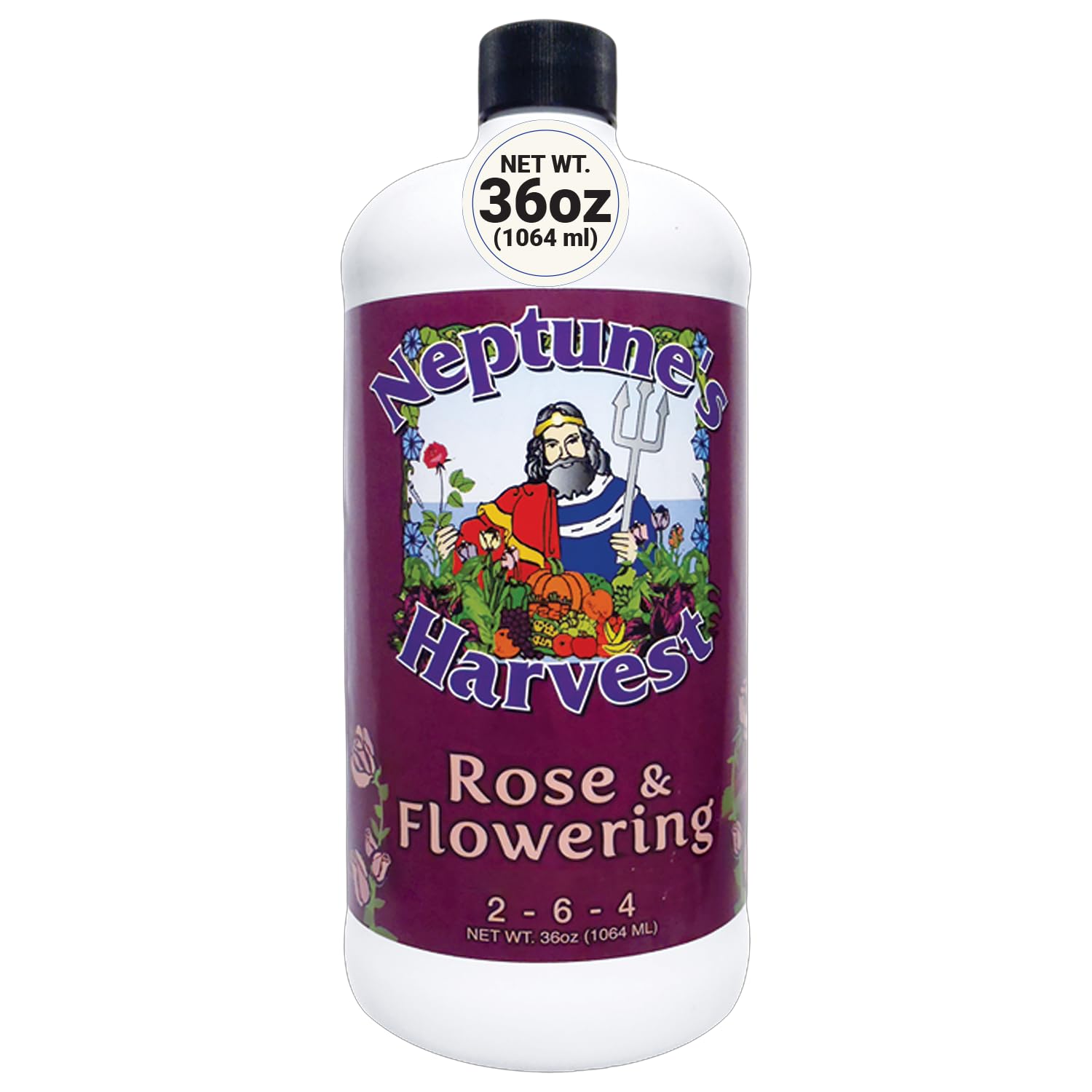
Its 2-6-4 NPK ratio delivers the bloom-boosting phosphorus punch without drowning roses in nitrogen, making it the top pick for gardeners who want to push flowers instead of leaves. One reviewer noted that using this on flowering plants gave them “102 bell peppers from 9 plants,” which shows how well the formula works for all flowering crops, not just roses. A single mix of 1/8 cup per gallon of water can give you strong roots within weeks, according to reviewers.
Yes, it smells like the ocean for a few hours after application, but the smell fades once it dries. Compared to the 18-ounce Neptune’s Harvest pint, this 36-ounce (1064 ml) version saves you refills and lasts significantly longer per dollar. This is the reliable choice for the gardener who wants one versatile organic liquid that works fast for roses, vegetables, and containers alike.
For a fast-acting, versatile organic liquid that won’t over-nitrogen your blooms, this is the one to buy.
Why it’s great
- Huge 1064 ml bottle — you refill less often
- NPK 2-6-4 pushes vibrant blooms fast
- Can be used as a foliar spray or soil drench
Good to know
- Has a noticeable fishy smell that fades after drying
- Liquid format means weekly application during growing season
2. Dr. Earth Total Advantage Rose & Flower Fertilizer 4 lb

Unlike the top pick Neptune’s Harvest, which requires weekly mixing of a liquid concentrate, Dr. Earth Total Advantage Rose & Flower Fertilizer is a 4 lb granular formula that feeds a medium-sized bed for weeks after a single application. It is the only rose fertilizer in the USA with Non-GMO Project Verified status, plus it carries OMRI (Organic Material Review Institute) certification, so it is free from synthetic chemicals and GMO chicken manure. Buyers report that after two years of use, their ten established rose bushes produced “the best blooms ever.”
The formula includes humic acids and trace elements that improve soil structure, so your roses drain well and hold moisture between waterings. The catch compared to liquid feeds is speed — this takes a week or two to start showing results because the granules need to break down.
Choose Dr. Earth over the top pick if you want maximum organic transparency and are happy to apply once a month in spring, skipping the weekly mixing routine.
Where it shines
- Non-GMO Project Verified — the only one in the USA
- Slow-release granules feed for weeks per application
- Enriched with humic acids for soil health
Worth noting
- Slower to show results compared to liquid fertilizers
- Bag is compact at 4 lbs may need multiple for large gardens
3. True Organic Rose & Flower Food – 4lb Bag
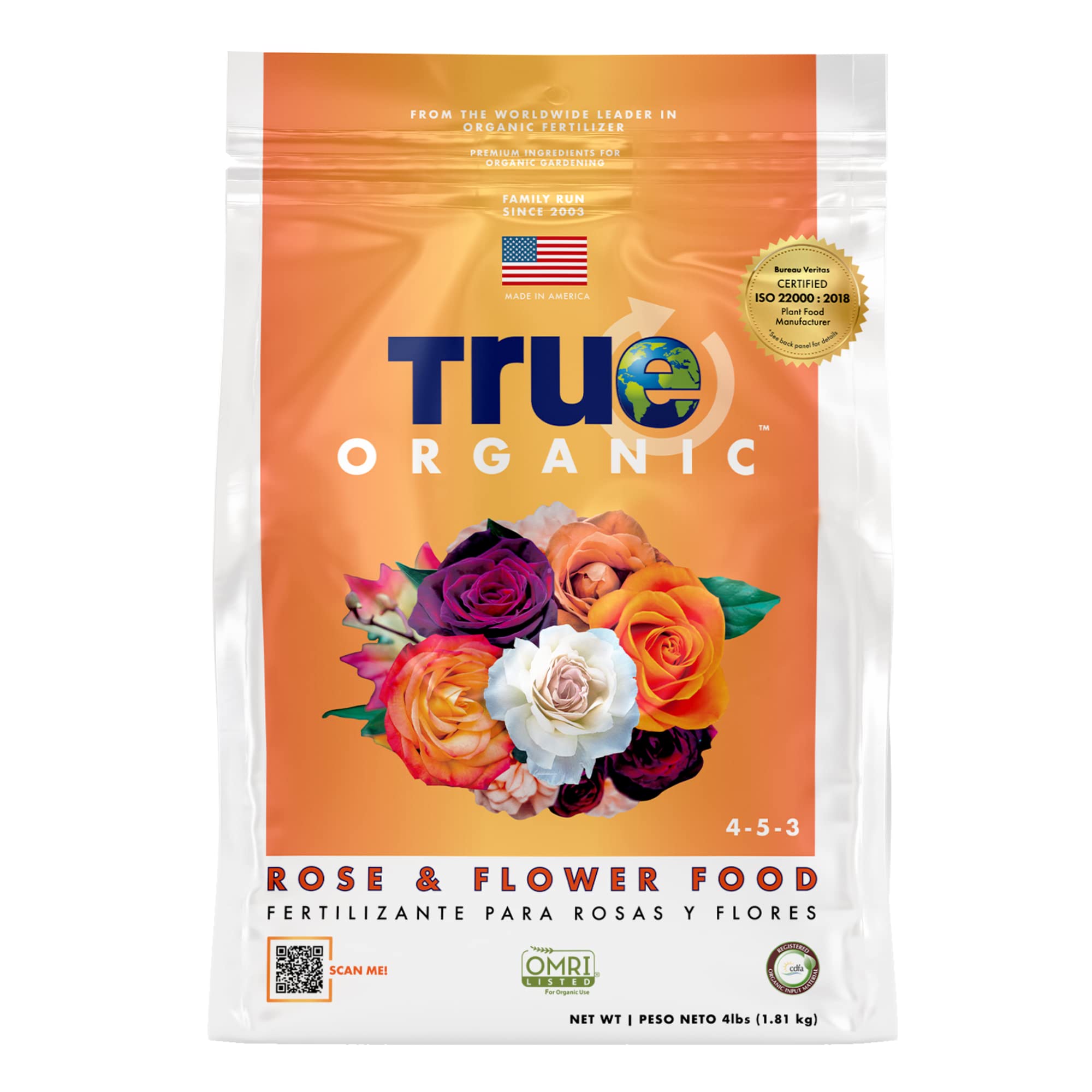
If you want to cover a modest 7×10 foot flower bed without overspending, the 4-pound bag of True Organic Rose & Flower Food treats 70 square feet of soil. Its blend relies on seabird guano, shrimp and crab shell meal, and fish bone meal to feed plants without synthetic fillers. One buyer mentioned that their new rose bush grew from 2-3 feet to 7 feet in a single season after using this once a month — a rapid vertical explosion that shows the blend is rich enough for strong spring growth.
The granules mix into soil easily and don’t have a strong fishy smell, even after rain. Apply it once when the first buds appear, and the nutrition lasts three to four weeks through the initial spring flush. This is the granular pick for anyone who wants reliable coverage without paying the premium for Dr. Earth’s certifications, and who prefers a once-a-month schedule over weekly mixing.
True Organic delivers 70 square feet of coverage per 4-pound bag — enough for a small 7×10 foot patch — without synthetic fillers or a premium price tag.
What stands out
- 70 sq ft coverage per 4 lb bag is generous for the price
- All-natural inputs—seabird guano, crab meal, bone meal
- No fishy smell reported by buyers
The trade-offs
- Granular form takes time to break down
- Only one application per month recommended
4. Neptune’s Harvest Rose & Flowering Fertilizer (18oz Pint)
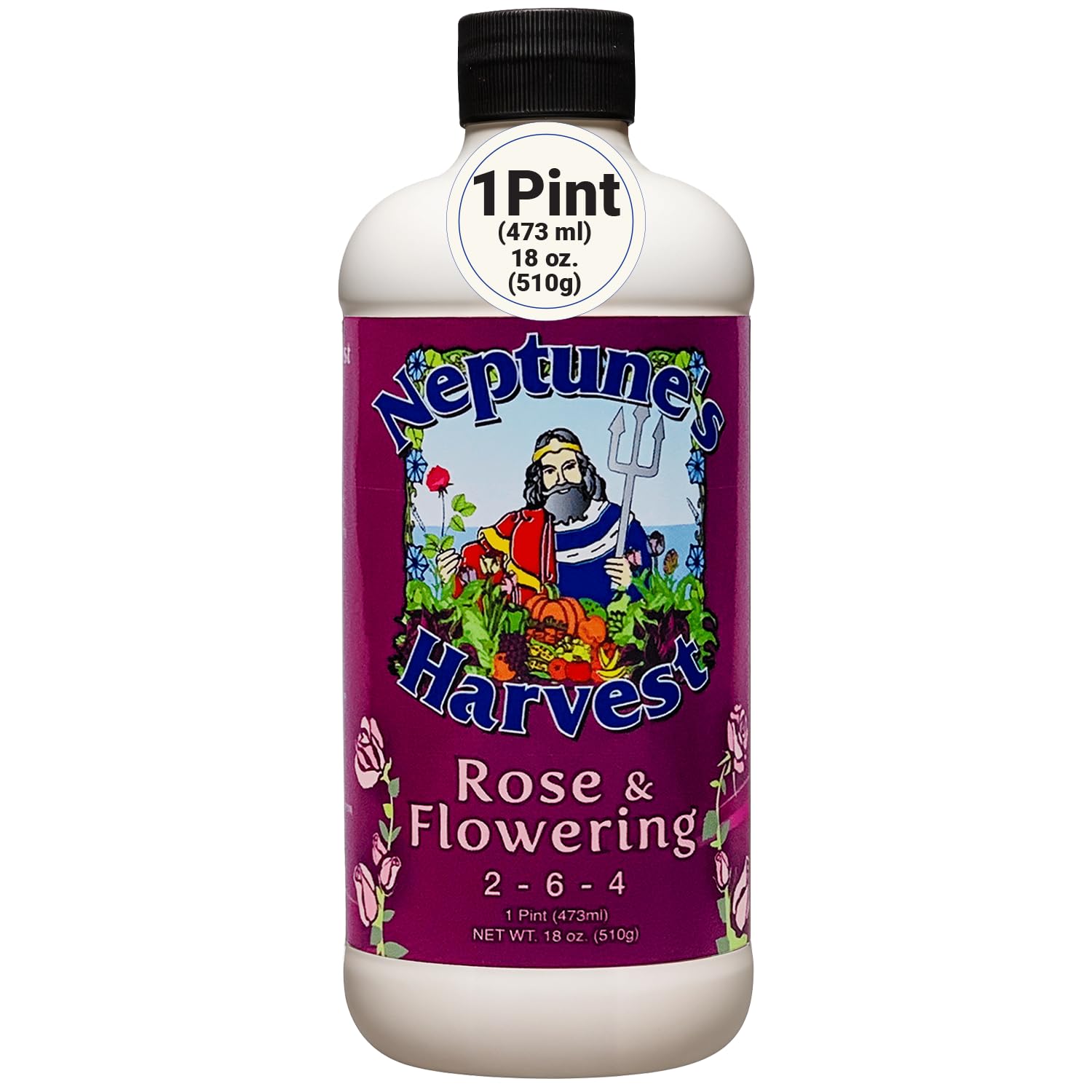
The single number that matters most in this category is the NPK ratio, and this pint scores a 2-6-4 formula — high phosphorus for blooms, moderate nitrogen for leaves, and potassium for roots — that is exactly right for spring. At 473 ml, it is the perfect starter size for a small rose bed or a handful of container roses. The downside here is volume: this pint is about half the size of the Neptune’s Harvest 36-ounce bottle (473 ml vs 1064 ml), so you will reorder sooner if you have a large garden.
The same organic formula made from fish, seaweed, molasses, and humic acids that owners mention revived a failing Brandywine tomato “overnight” works just as well here. If you have fewer than five rose bushes, this pint will get you through the spring flush with weekly feedings.
Price-to-value read: this is the most affordable way to test Neptune’s Harvest on your roses without committing to a huge bottle.
The upsides
- NPK 2-6-4 is ideal for spring blooming
- Made from fish, seaweed, molasses, humic acids
- Smaller bottle is perfect for testing before buying bulk
Keep in mind
- Only 473 ml — you’ll need to reorder for large beds
- Fishy smell lingers until it dries
5. Growth Technology GT Rose Focus – 250ml
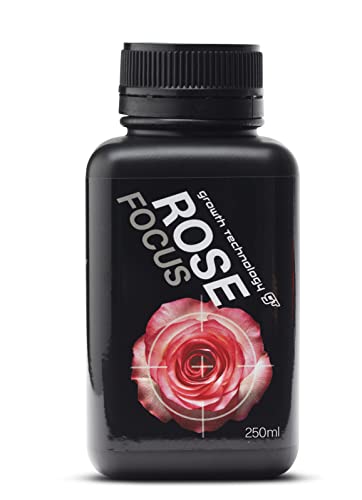
You get a 250 ml bottle of pH-buffered liquid fertilizer with 12 essential minerals plus extra soluble calcium, designed specifically for container roses. The mixing ratio is 3-7 ml per liter of water depending on your growing medium, and one cap equals 20 ml for easy measuring. Customers note bigger leaves and faster growth.
The trade-off is the volume — at 250 ml, it costs more per ounce than Neptune’s Harvest, even though you use less per feed. That makes it a poor fit for a large in-ground garden. But if you grow roses in pots or use a hydroponic (water-based, no soil) setup, this is the most targeted formula on the list for delivering a complete mineral profile without excess sodium or chlorides.
This is the perfect pick for the budget-conscious container gardener who wants a precise, complete mineral feed without buying a gallon they will never finish.
Why we’d pick it
- Extra calcium for stronger stems and bloom development
- pH-buffered for efficient absorption in hydro or soil
- Highly concentrated — a little goes a long way
A few caveats
- Small 250 ml bottle costs more per ounce than other options
- Best suited for container and hydroponic use
6. Farmer’s Secret Rose Booster Fertilizer 32oz
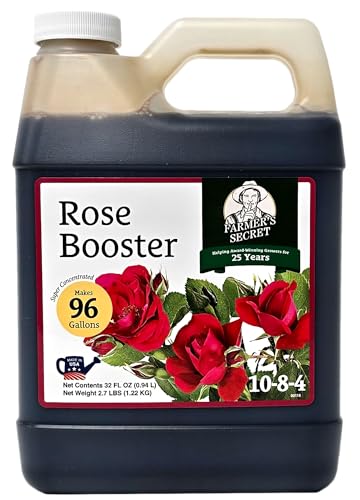
This budget-friendly liquid concentrate is perfect for a first-time rose gardener who wants to see if a liquid fertilizer makes a difference before investing in a pricier option like Neptune’s Harvest. The 32-ounce bottle is super concentrated, needing only two teaspoons per gallon of water, applied weekly, which makes it stretch further than most liquid feeds in this list. One buyer with 50 rose bushes reported over 500 blooms by late October using this weekly, and another revived three near-dead roses in one month.
What you give up is the certification transparency of Dr. Earth or Neptune’s Harvest. Farmer’s Secret is not OMRI listed, and the formula is less upfront about exactly what is inside. The sulfur smell during mixing may also be unpleasant for some users.
This is the exact budget-friendly pick for a first-time rose gardener who wants to see if liquid fertilizer makes a difference before investing in a pricier option like Neptune’s Harvest — just measure with care, as its one weakness is that the concentrated formula requires precise measuring to avoid overfeeding.
Strong points
- 32 oz bottle is super concentrated — 2 tsp per gallon
- Reviewers point out saving near-dead roses in one month
- Very easy to measure and apply weekly
Before you buy
- Not OMRI certified or fully transparent on ingredients
- Sulfur smell during mixing may be unpleasant for some
Understanding the Specs
NPK Ratio — the three numbers that decide blooms vs. leaves
Every fertilizer label has three numbers separated by dashes, like 2-6-4. The first number is nitrogen (N), which pushes green leaf growth. The second is phosphorus (P), which drives root development and flower production. The third is potassium (K), which supports overall plant health and disease resistance. For roses in spring, you want a middle number that is higher than the first one — something like 2-6-4 is ideal. Too much nitrogen (like a 10-10-10 lawn food) will turn your rose bush into a leafy green monster with very few flowers.
Coverage Area — how much ground a bag or bottle actually feeds
Coverage tells you how many square feet of garden bed the product can feed at the recommended dose. A 4-pound bag of True Organic covers 70 square feet, which is roughly a small 7×10 foot bed. Liquid fertilizers don’t always list coverage in square feet, but the bottle size (milliliters or fluid ounces) and the mixing ratio (like 1 ounce per gallon of water) tell you how many gallons of feed you can make. The larger 36-ounce Neptune’s Harvest bottle makes about 36 gallons of feed, so it lasts several months for a small garden.
FAQ
When exactly should I start feeding my roses in spring?
How often should I apply rose fertilizer in spring?
Final Thoughts: The Verdict
For most gardeners, the fertilizer for roses in spring winner is the Neptune’s Harvest 36oz because it packs a proven 2-6-4 NPK ratio in a generous liquid bottle that works for roses, vegetables, and containers alike. If you want a no-mix granular that feeds for weeks, grab the True Organic Rose & Flower Food. And for certified-organic peace of mind in slow-release form, the Dr. Earth Total Advantage is your best bet.