
Nothing ruins a pristine garden bed faster than a stubborn weed pushing through the soil. You spend the weekend planting, watering, and mulching, only to see crabgrass and dandelions stealing nutrients and sunlight from your vegetables and flowers. A quality barrier stops this battle at the source, letting your plants thrive while you reclaim your weekends.
I’m Rikta — the co-founder and writer behind Lawn Gear Lab. By analyzing thousands of owner experiences and comparing material densities, weave types, and permeability data, I’ve isolated the heavy-duty fabrics that deliver real results for flower beds, vegetable patches, and pathways.
This guide compares seven top-rated options to help you pick the best weed control for garden beds based on your project size, soil conditions, and budget.
How To Choose The Best Weed Control For Garden Beds
Picking the right weed barrier means understanding your garden’s specific needs. The most expensive roll isn’t always the smartest choice for your vegetable patch or flower bed. Focus on these four factors to ensure you get a fabric that blocks weeds without suffocating your soil.
Fabric Weight and Thickness
Weight is measured in ounces per square yard. A 3.2-oz fabric works well for flower beds and light mulching, while 5-oz or heavier fabrics hold up under gravel, decomposed granite, and high-traffic pathways. Heavier fabrics resist punctures from foot traffic and sharp rocks, extending their effective lifespan underground.
Weave Type and Permeability
Woven polypropylene fabrics offer excellent water permeability and air exchange, preventing soil compaction and root rot. Non-woven needle-punched fabrics use molecular attraction to draw water downward, which boosts drainage in clay-heavy soils. Avoid plastic sheeting — it blocks both water and air, killing beneficial soil microbes.
Width and Total Coverage
Standard widths range from 3 ft to 6 ft. Measure your bed’s longest dimension first and buy a roll that covers it without a seam. Seams are weak points where weeds push through. For large projects, 300-ft rolls offer the best coverage-to-waste ratio. Green guide lines every foot help with straight planting rows.
Fraying and Edge Stability
Cut edges naturally unravel over time, especially in woven fabrics. Some manufacturers use ultrasonic cutting or thermal bonding to reduce fraying. If you plan to cut the fabric into irregular shapes, look for a dual-layer or needle-punched construction that holds its edge better than standard woven materials.
Quick Comparison
On smaller screens, swipe sideways to see the full table.
| Model | Category | Best For | Key Spec | Amazon |
|---|---|---|---|---|
| VIVOSUN Premium | Dual-Layer | Heavy-duty gardens & gravel | 5 oz weight, needle-punched | Amazon |
| Land Guard 4×300 | Woven | Large raised beds & pathways | 4 ft x 300 ft coverage | Amazon |
| Vanver Grid 3×300 | Grid Design | Precise row planting | 13.4″ x 13.4″ planting grid | Amazon |
| Vanver 3.2 oz 3×300 | Woven PP | Budget-conscious large areas | 3.2 oz, anti-aging material | Amazon |
| Groweco 6×50 | Woven | Wide beds & narrow paths | 6 ft wide x 50 ft length | Amazon |
| GRASSCLUB 4×100 | High Tensile | Driveways & heavy loads | 400 LBS tensile strength | Amazon |
| UWIOFF 4×100 | PE Fabric | Entry-level flower beds | 3.2 oz PE, UV resistant | Amazon |
In-Depth Reviews
1. VIVOSUN Premium Weed Barrier Landscape Fabric
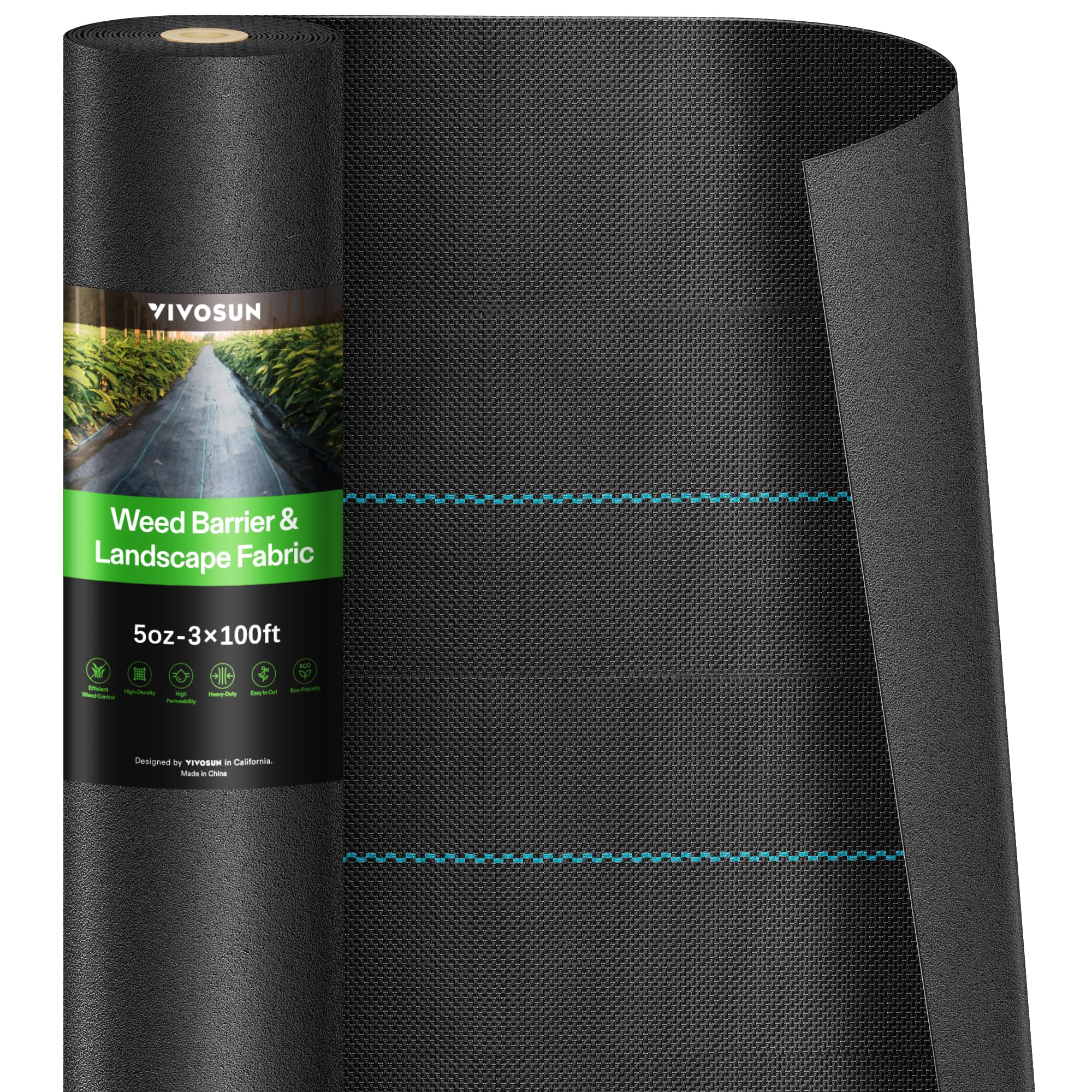
VIVOSUN’s 5-oz dual-layer construction combines a non-woven top layer with a woven bottom layer using a needle-punching process. This hybrid design draws water downward through molecular attraction, achieving six times the permeability of standard woven fabrics. At 3 ft wide by 100 ft long, it provides ample coverage for long raised beds and flower borders.
The fuzzy underside grips the soil surface, reducing fabric shift during heavy rain or foot traffic. Green guide lines every foot simplify plant spacing. Owners report using this as a base for gravel walkways, vegetable gardens with pepper and tomato rows, and under decomposed granite without breakthrough weeds. The edges fray less than standard woven fabrics due to the bonded fiber construction.
At 10.28 pounds, the roll is manageable for one person to unroll. Store it in a cool, dry place away from direct sunlight between uses to preserve the UV-stabilized fibers. The commercial-grade density warrants the higher investment for gardeners who want a single application to last multiple seasons without replacement.
What works
- Superior water permeability outperforms standard woven fabrics.
- Thick 5-oz material holds up under heavy foot traffic and gravel.
- Fuzzy backing grips the ground, preventing the fabric from shifting.
What doesn’t
- Cut edges still fray despite the dual-layer construction.
- Higher cost per square foot compared to 3.2-oz alternatives.
2. Land Guard 4ft x 300ft Weed Barrier Fabric
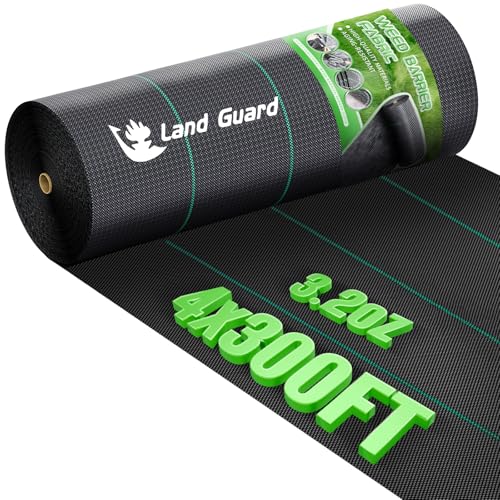
Land Guard’s 4-ft by 300-ft roll delivers 1,200 square feet of coverage, making it the best choice for sprawling vegetable gardens, long pathways, and multi-bed projects. The woven polypropylene construction balances water permeability with weed blocking, allowing air and moisture to reach the soil while starving weed seeds of sunlight.
Owners consistently praise the fabric’s thickness and resilience. One reviewer layered it inside a raised bed and reported zero breakthrough weeds after months of use. Another used it under a gravel driveway and noted excellent drainage with no puddling. The green stripe pattern helps with alignment during installation, though it folds in half during shipping and requires a deliberate unfolding step before laying.
At 7.34 pounds for the entire roll, it’s surprisingly lightweight given the coverage area. The woven structure allows scissors or a utility knife to cut cleanly, but like all woven fabrics, the edges unravel if left exposed without staples or mulch weighing them down. This is a purely functional grade fabric with no additional drainage layers or anti-fray coatings.
What works
- Massive 300-ft roll covers large projects without seams.
- Lightweight and easy to transport despite the length.
- Good water drainage with no standing water issues reported.
What doesn’t
- Arrives folded in half, requiring extra effort to flatten during install.
- Cut edges unravel if not secured with staples or heavy mulch.
3. Vanver 3ft x 300ft Landscape Fabric with Grid Design

Vanver’s weed barrier prints 13.4-inch by 13.4-inch grid lines directly onto the fabric, eliminating the need for measuring tapes or string lines when spacing plants. The grid is printed in a contrasting white pattern that remains visible even after a light mulch cover. This is especially useful for vegetable gardeners who want uniform row spacing for tomatoes, peppers, and squash.
The fabric itself is a tightly woven polypropylene with a micro-porous structure that blocks weed emergence while allowing air and water exchange. At 18.16 pounds for the 300-ft roll, the material density feels substantial. Owners have used it under stone pathways, around flower borders, and inside raised beds, reporting no breakthrough weeds after a full season. The tight weave resists punctures from sharp gravel better than looser woven alternatives.
The bulkiness of the roll is the main trade-off. The 3-ft width and heavy weight make it awkward to maneuver alone in tight spaces. Some users noted the grid lines are printed on one side only, so orientation matters during installation. The fabric cuts cleanly with scissors, and the edges hold up reasonably well against fraying compared to standard woven fabrics.
What works
- Printed grid lines enable precise, uniform plant spacing without measuring tools.
- Extremely tight weave resists weed breakthroughs and sharp gravel punctures.
- 300-ft length covers extended beds and pathways without extra seams.
What doesn’t
- Heavy roll is cumbersome for one person to handle and unroll.
- Grid is only visible on one side, requiring correct orientation during install.
4. Vanver 3ft x 300ft Heavy Duty Weed Barrier Fabric
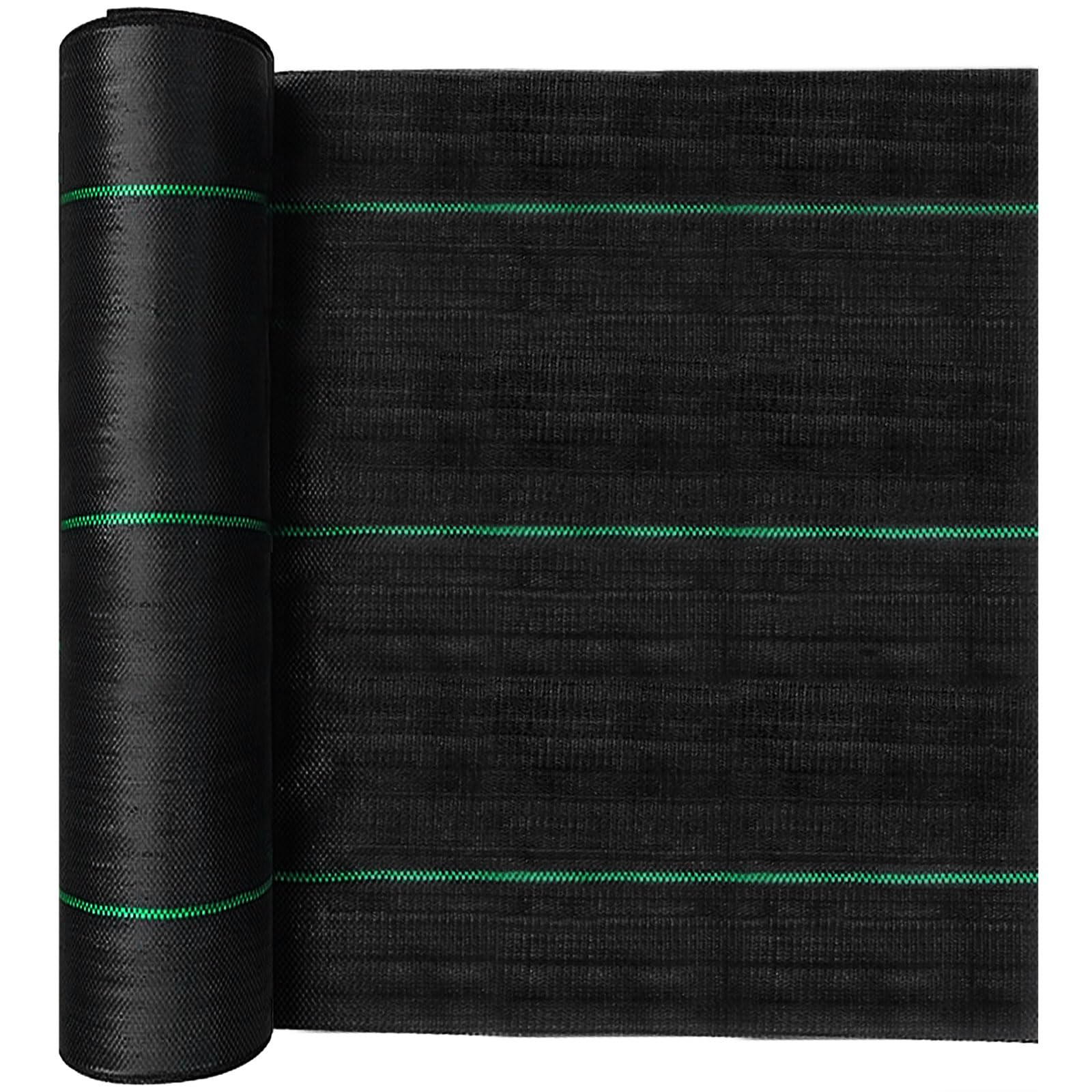
This Vanver 3.2-oz woven polypropylene fabric offers the same 300-ft length as the grid version at a lower per-foot cost, making it a strong contender for budget-conscious gardeners. The inclusion of anti-aging additives in the polymer extends the fabric’s effective life compared to standard PP materials, which can become brittle after two years of UV exposure.
Owner feedback highlights the fabric’s ability to reduce weed pressure significantly. One reviewer used it under decomposed granite for pathways and reported virtually no weeds after several months. Another noted that occasional weeds still pushed through, but at a much lower rate than store-bought alternatives. The 100% polypropylene weave allows slow air and water exchange, keeping soil biology active while preventing light penetration.
At 18.76 pounds, this roll is as heavy as the grid version. The standard woven structure means cut edges will fray without proper securing. A propane torch can seal cut edges and prevent unraveling, a trick shared by experienced owners. This fabric works well for large-scale mulching projects or as a underlayment for artificial turf where absolute weed-proofing is not critical but cost efficiency is.
What works
- Anti-aging additives extend lifespan beyond standard woven fabrics.
- 300-ft roll provides excellent coverage per dollar spent.
- Good air and water exchange prevents soil compaction and root rot.
What doesn’t
- Occasional weeds can still push through the weave over time.
- Heavy, bulky roll requires significant storage space and effort to handle.
5. Groweco Landscape Fabric 6ft x 50ft
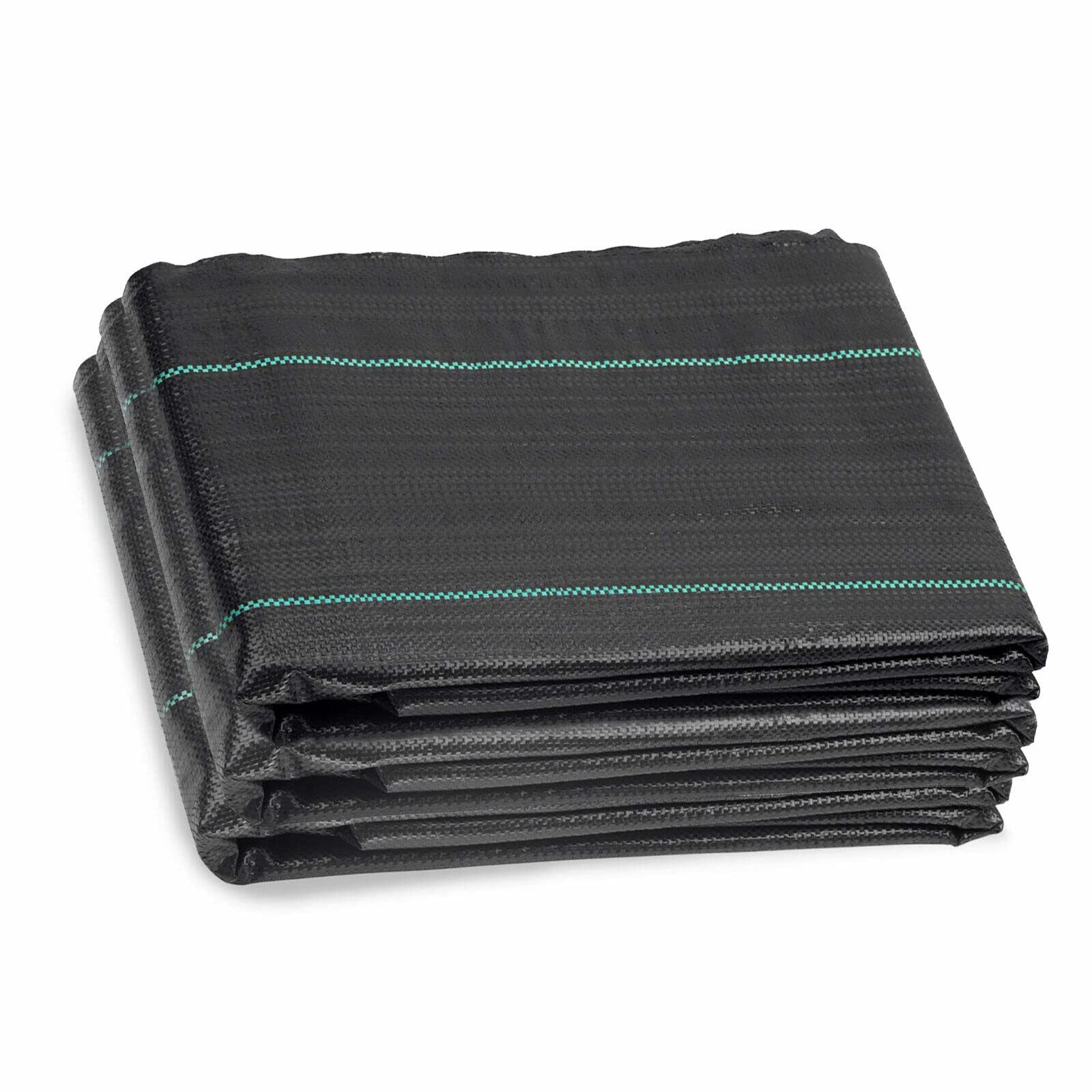
Groweco’s 6-ft width is the standout feature here. Standard 3-ft and 4-ft widths require two parallel strips to cover wide beds, introducing a seam line where weeds exploit. A single 6-ft strip covers the entire width of most residential raised beds and flower borders, simplifying installation and eliminating mid-bed seams.
The 3.2-oz polypropylene construction feels substantial for the weight class. Owners describe it as “the best garden fabric I have purchased” noting it keeps weeds out while allowing water to drain. The green stripe pattern helps with straight cuts, and the fabric cuts cleanly with standard scissors. One reviewer previously used fabric-style barriers that plants pushed through, but the Groweco material held firm against aggressive growth.
At 50 ft long, this roll covers 300 square feet of wide bed area. The shorter length is a trade-off — it works well for small to medium gardens but requires multiple rolls for long pathways. The 5.3-pound weight makes it the easiest roll on this list to transport and unroll alone. The woven structure offers good permeability, though standing water on top may bead initially before soaking through.
What works
- 6-ft width covers wide beds without a center seam.
- Lightweight and easy for one person to handle and install.
- Durable 3.2-oz fabric resists plant breakthrough better than thinner barriers.
What doesn’t
- 50-ft length is short for long pathways or extended gardens.
- Water may bead on the surface initially before penetrating.
6. GRASSCLUB 4ft x 100ft Heavy Duty Weed Barrier
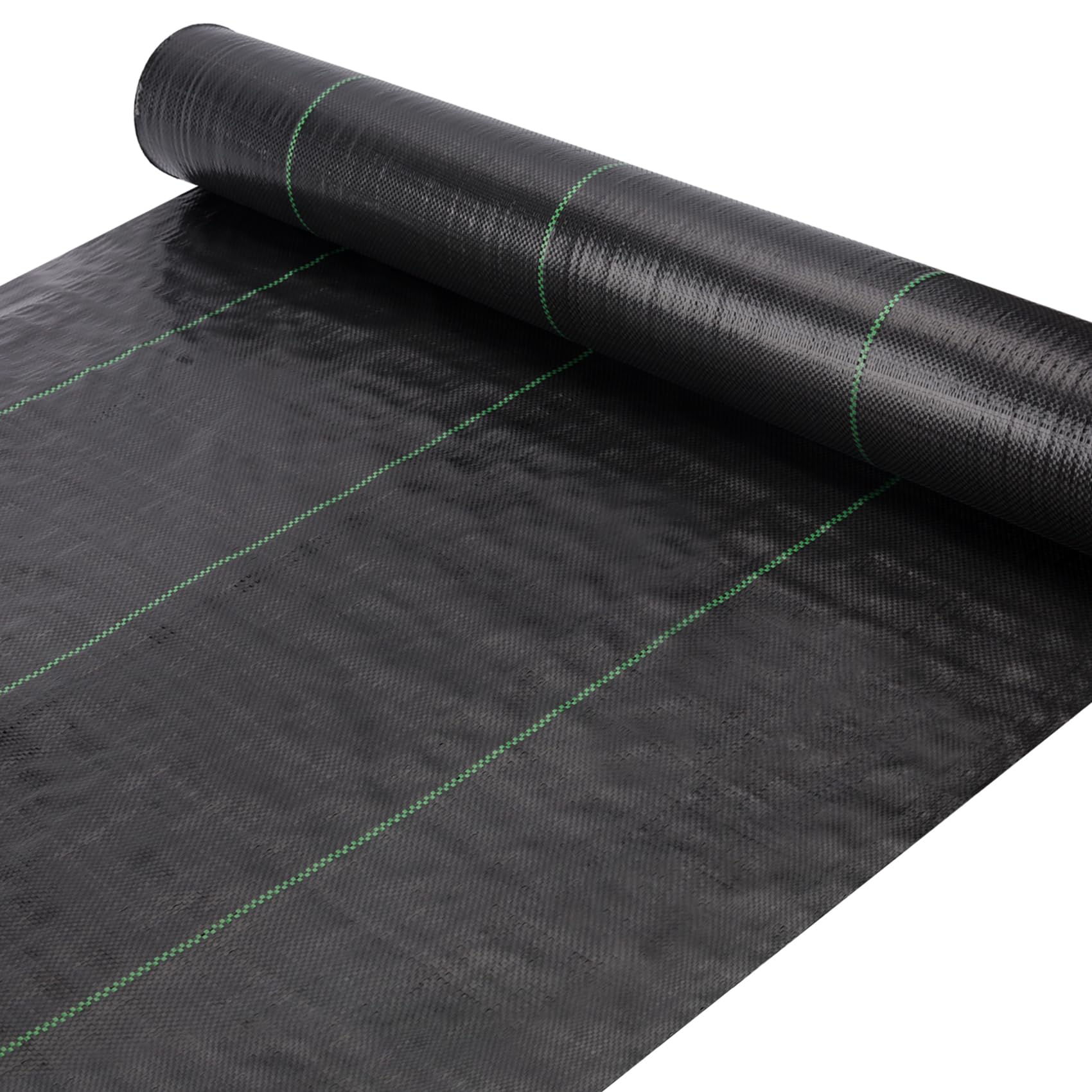
GRASSCLUB rates its woven PP fabric at 400 LBS tensile strength, making it the strongest option for structural applications like driveway underlayment and gravel pad stabilization. The high-density weave increases soil bearing capacity and prevents sharp rocks from punching through, an important factor for pathways that support wheelbarrows and foot traffic.
Owners report excellent long-term performance. One reviewer noted the fabric kept quack grass at bay, a notoriously tough weed that spreads through rhizomes. After a full year in the ground, another owner confirmed no weeds had penetrated and the fabric remained intact. The 4-ft width by 100-ft length provides 400 square feet of coverage, which suits medium-sized garden beds and standard gravel paths.
A minor caveat: some users observed water beading up on the surface initially, with slow absorption where standing water collected. This improved over time as the fabric settled and organic material accumulated on the surface. The cut edges require careful securing to prevent unraveling. A propane torch or duct tape on cut edges helps maintain a clean installation.
What works
- Exceptional 400 LBS tensile strength resists tearing and punctures.
- Proven effectiveness against aggressive weeds like quack grass.
- Suitable for heavy-duty applications including gravel driveways.
What doesn’t
- Water may bead on the surface rather than soaking through quickly initially.
- Cut edges require extra securing to prevent fraying.
7. UWIOFF 4ft x 100ft Garden Weed Barrier
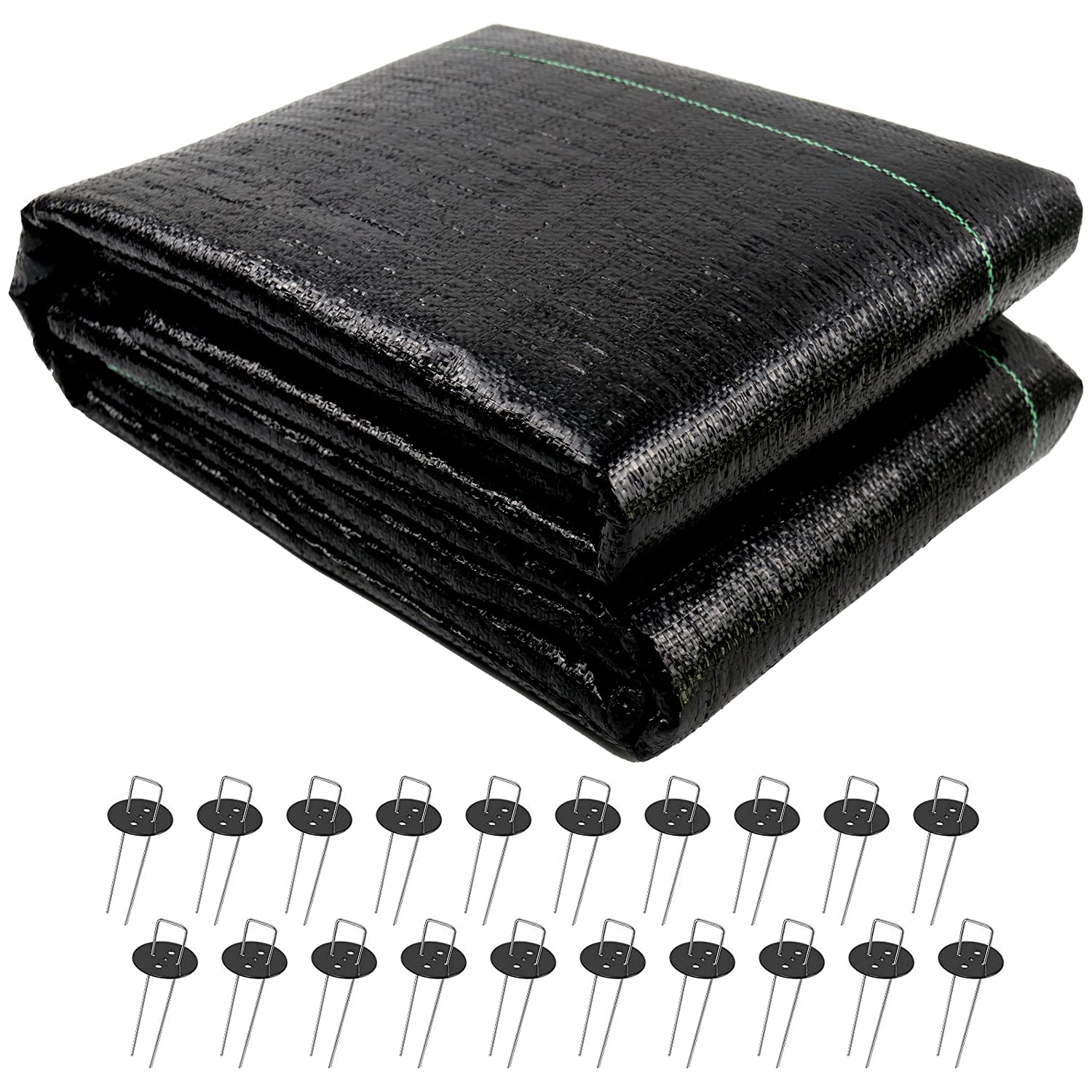
UWIOFF uses a 3.2-oz polyethylene fabric rather than standard polypropylene, which makes it more flexible and more aging-resistant according to the manufacturer. The PE material cuts cleanly but can fray aggressively once cut — owners recommend using a torch to melt-cut the edges or applying black duct tape to stop unraveling.
The 4-ft by 100-ft roll covers 400 square feet, suitable for small to medium flower beds or a single vegetable garden strip. One owner used it as a base for a stone pathway and reported no breakthrough grass or weeds, even under daily foot traffic. Another, using it for a cut flower garden, noted fraying at hole-cut locations but confirmed the fabric remained effective at weed suppression.
At 7.34 pounds, the roll is light and manageable. The green alignment stripes make straight cuts easy. The PE material is UV-stabilized for more than five years of ground-level exposure, but the fraying issue is the main complaint across verified reviews. This is a solid entry-level fabric for gardeners who want an affordable barrier and are willing to put in a little extra edge-securing effort during installation.
What works
- Flexible PE material resists UV degradation and aging better than standard PP.
- Lightweight roll is easy to transport and lay down alone.
- Green guide stripes simplify straight alignment and cutting.
What doesn’t
- Cut edges fray aggressively, requiring extra steps to secure.
- PE material may not be as puncture-resistant as woven PP alternatives.
Hardware & Specs Guide
Fabric Weight (oz/sq-yd)
This is the single most important spec for longevity. A 3.2-oz fabric is the standard baseline for flower beds and light mulching. A 5-oz fabric like the VIVOSUN Premium adds significant puncture resistance and is recommended for areas with gravel, heavy foot traffic, or decomposed granite. Heavier fabrics also block more UV light, starving weed seeds more effectively.
Weave Construction
Woven fabrics use polypropylene strands in a grid pattern, offering high tensile strength and good water flow. Non-woven needle-punched fabrics use bonded fibers with random orientation, giving superior fray resistance and enhanced water permeability through molecular attraction. The VIVOSUN hybrid combines both layers for the best of both worlds.
Width and Seam Management
Bed width determines whether you can use a single strip or need overlapping seams. A 6-ft width covers standard raised beds and flower borders without a seam. For beds wider than 6 ft, overlap seams by at least 6 inches and secure with landscape staples every 12-18 inches to prevent weed emergence through the gap.
Anti-Aging Additives and UV Stabilizers
Polypropylene degrades under UV exposure. Fabrics with UV stabilizers or anti-aging additives last significantly longer than untreated materials. UWIOFF uses PE fabric which is inherently more UV-stable, while Vanver adds anti-aging compounds to its PP fabric. Both approaches extend effective life beyond the standard two-to-three-year window.
FAQ
What thickness of landscape fabric is best for vegetable garden beds?
Can I put landscape fabric directly over weeds without removing them first?
How many landscape staples do I need per square foot?
Final Thoughts: The Verdict
For most gardeners, the weed control for garden beds winner is the VIVOSUN Premium because its 5-oz dual-layer construction combines superior water permeability with excellent weed blocking, making it the most reliable single application for flower beds, vegetable patches, and gravel pathways. If you need to cover a wide bed without a seam, grab the Groweco 6×50. And for large-scale projects where coverage area is paramount, nothing beats the Land Guard 300-ft roll for sheer square footage per dollar.