
Natural ground cover chips break down differently than standard bark mulch, making the choice between coconut husk, pine straw, or cocoa shells a matter of matching the chip’s physical behavior to your specific landscape challenge. Each type delivers a distinct balance of moisture retention, weed suppression longevity, and soil pH influence that changes how your garden performs over two seasons.
I’m Rikta — the co-founder and writer behind Lawn Gear Lab. My approach to this guide involved cross-referencing water-absorption rates, CEC values, and coverage specifications against real owner reports of how these mulches behave through freeze-thaw cycles, heavy rain, and high winds.
Whether you need a durable top layer for pathways, a moisture-retentive blanket for vegetable beds, or an aromatic finish for ornamental borders, this roundup helps you find the right best ground cover chips without overspending on features your site doesn’t need.
How To Choose The Best Ground Cover Chips
Ground cover chips fall into three broad material families — coconut coir, wood-based bark/straw, and agricultural byproducts like cocoa hulls or wheat straw. Each family has a different decomposition timeline, water-holding curve, and nutrient interaction that dictates where it performs best.
Water Absorption & Irrigation Reduction
Coco coir chips absorb up to ten times their dry weight in water, releasing it slowly to the root zone. This makes them the strongest choice if your primary goal is cutting watering frequency. Wheat straw and pine straw hold less moisture but allow faster surface drying, which can reduce fungal pressure in humid climates.
Weed Suppression Longevity
Coarser chips with larger particle size — such as husk chips or pine bark nuggets — interlock less tightly, letting small weeds push through. Finer materials like shredded pine straw or cocoa shells form a denser mat that blocks light more effectively. The tradeoff is that finer mulches break down faster and need refreshing after one season instead of two.
Soil pH & Nutrient Interaction
Coco coir sits at a neutral pH and has a high cation exchange capacity, meaning it holds onto fertilizer ions rather than letting them wash away. Pine-based products trend slightly acidic as they decompose, beneficial for acid-loving plants such as azaleas and blueberries. Cocoa shells carry a mild fertilizer value (NPK 2.5-1-3) and will not burn roots, but the chocolate aroma attracts dogs and certain wildlife.
Wind Resistance & Slope Stability
Lightweight straw and shredded bark will blow away in exposed areas unless watered to activate the interlocking fibers. Coco chips and cocoa hulls, once wet, form a heavier cohesive layer that stays put on slopes. If your site is windy or graded, favor denser chip types that resist washout.
Quick Comparison
On smaller screens, swipe sideways to see the full table.
| Model | Category | Best For | Key Spec | Amazon |
|---|---|---|---|---|
| PlantBest Coco Mulch | Coco Coir Chip | Paths & bare-soil coverage | Expands to 64 quarts, 17.5 sq ft at 1.5″ depth | Amazon |
| Plantonix Coco Chips 10lb | Coco Coir Chip | Hydroponics & seed-starting | Absorbs 10x weight in water, 15 gallons expanded volume | Amazon |
| GROW!T JSCC2 Planting Chips | Coco Coir Chip | Top-dressing tropicals & indoor pots | OMRI-listed organic, 9 lb compressed block | Amazon |
| HealthiStraw GardenStraw | Wheat Straw | Vegetable beds & lawn seeding | Coverage 100 sq ft at 2-3″ depth, reduces watering 50% | Amazon |
| Hull Farm Cocoa Bean Mulch | Cocoa Shell | Ornamental beds & chocolate scent | Fertilizer value 2.5-1-3, 2 cubic feet bag | Amazon |
| Soil Sunrise Pine Bark 30 qt | Pine Bark | Orchid & aroid potting mixes | Premium select pine bark, 30 quarts volume | Amazon |
| Longleaf Pine Straw Roll | Pine Straw | Large-scale slopes & mud control | Covers 125 sq ft, ~14-inch needle length | Amazon |
In‑Depth Reviews
1. PlantBest Coco Mulch Compressed Block 9.1 lb
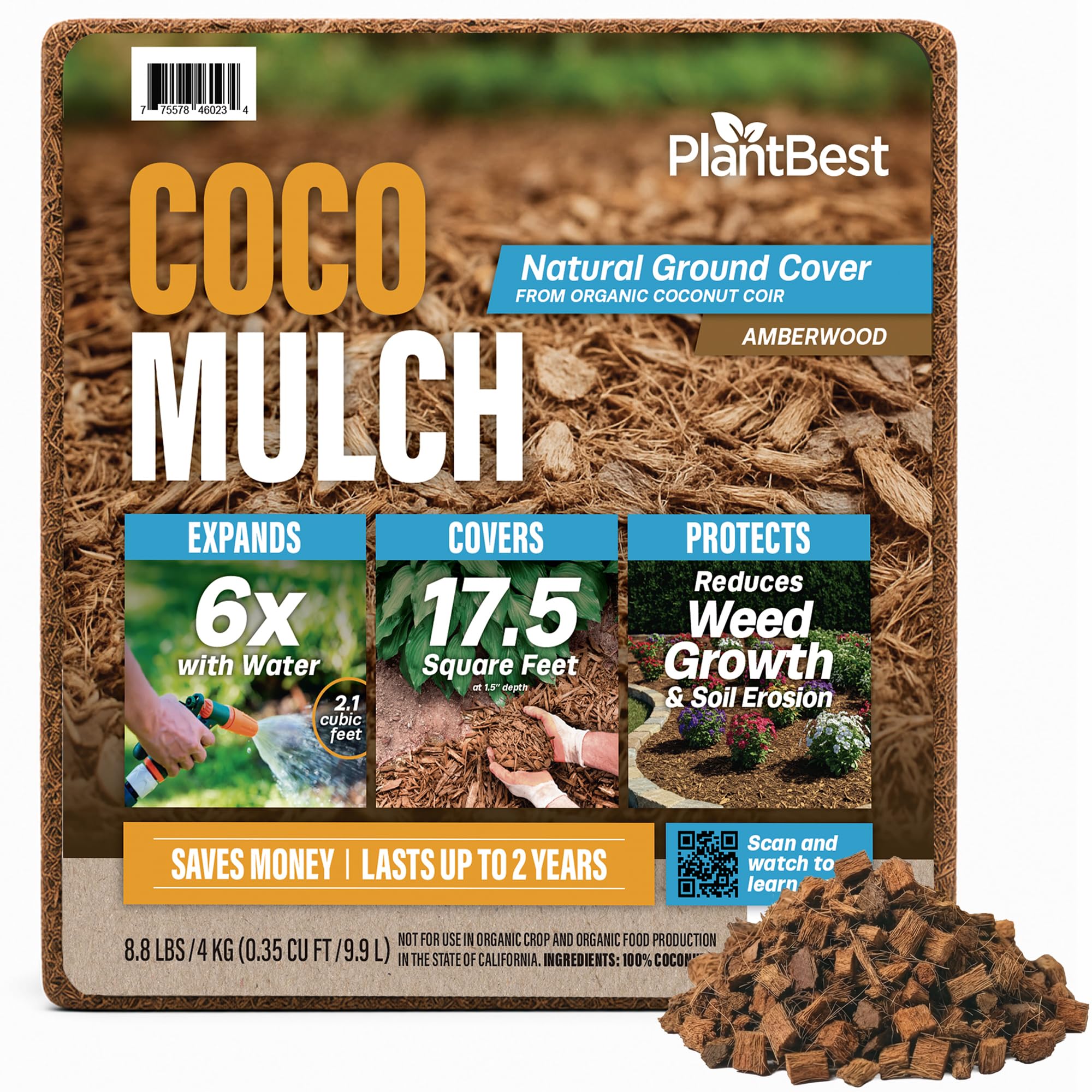
The PlantBest block delivers the most efficient coverage per pound in this roundup — a 9.1 lb compressed brick expands to 64 quarts and blankets up to 17.5 square feet at a 1.5-inch depth. That makes it ideal for mulching garden pathways, walkways, and bare-soil areas between raised beds without hauling multiple heavy bags.
Owner reports consistently note that the chips interlock well after watering, which helps the layer resist washout on gentle slopes and reduces weed emergence through the first season. The 100% renewable coconut coir contains no synthetic dyes and holds moisture effectively, cutting watering frequency noticeably in vegetable and flower beds.
The main limitation is wind sensitivity when dry — several users mention that the lightweight block material can scatter in exposed, breezy sites before it receives its first soaking. Pre-wetting the expanded chips before spreading mitigates this issue significantly.
What works
- Exceptional expansion ratio — one block replaces several bags of loose mulch
- Good weed suppression and moisture retention for a full growing season
- Lightweight to carry and easy to hydrate on-site
What doesn’t
- Dry chips prone to blowing away in windy conditions
- Not suitable for incorporation into raised bed soil as an amendment
2. Plantonix Organic Coco Chips for Plants 10lb

Plantonix positions these compressed coco chips as a dual-purpose product suitable for both soil amendment and surface mulching. The 10 lb block expands to roughly 15 gallons, and the chips retain a chunky consistency that creates air pockets in potting mixes while still forming a functional ground cover layer on top of garden soil.
The standout feature is the high cation exchange capacity common to buffered coco coir — the chips hold onto nutrient ions rather than letting them leach away, which benefits heavy-feeding vegetables and container plants. A neutral pH of roughly 5.5 to 6.5 means it won’t alter soil chemistry the way pine or peat products do.
Multiple verified buyers emphasize the importance of ensuring the product is buffered before use; unbuffered coco can absorb calcium and magnesium from your fertilizer. Users who mixed these chips with finer coco coir reported excellent results in raised beds and seed-starting blends.
What works
- Buffered coco chip prevents nutrient lock-up in the root zone
- Compressed brick creates minimal dust during rehydration
- Versatile — works as mulch, soil aerator, or hydroponic media
What doesn’t
- Not pretreated — buyers must confirm buffering status
- Small block volume may require multiple units for large beds
3. GROW!T JSCC2 Organic Coco Coir Planting Chips 9 lb

Hydrofarm’s GROW!T block is an OMRI-listed organic option specifically formulated for tropical plants and indoor container mulching. The compressed 9 lb block expands significantly — reviewers report a single block filling a large tote — and the chips are notably chunky with thick consistent fibers that resist compaction longer than finer coir dust.
Several users praised the product for its absence of foreign particles, minimal plastic packaging, and near-zero dust during rehydration. The chips retain humidity well and show resistance to mold and fungus in both indoor potting contexts and outdoor tropical beds. The dense fiber structure also helps the layer stay ventilated, preventing waterlogged roots.
The large chip size makes it less suitable for incorporation into garden soil through tilling, as the pieces take longer to break down. The block is recommended for top-dressing and hydroponic aggregate use rather than direct soil amendment.
What works
- Very clean block with zero mold odor, unlike some competitor bricks
- Thick chips resist fungal growth and maintain aeration
- Excellent moisture retention for tropical and container plants
What doesn’t
- Chips are too coarse for easy incorporation into garden soil
- Limited coverage area relative to competing blocks at this weight
4. HealthiStraw GardenStraw 3 cu ft
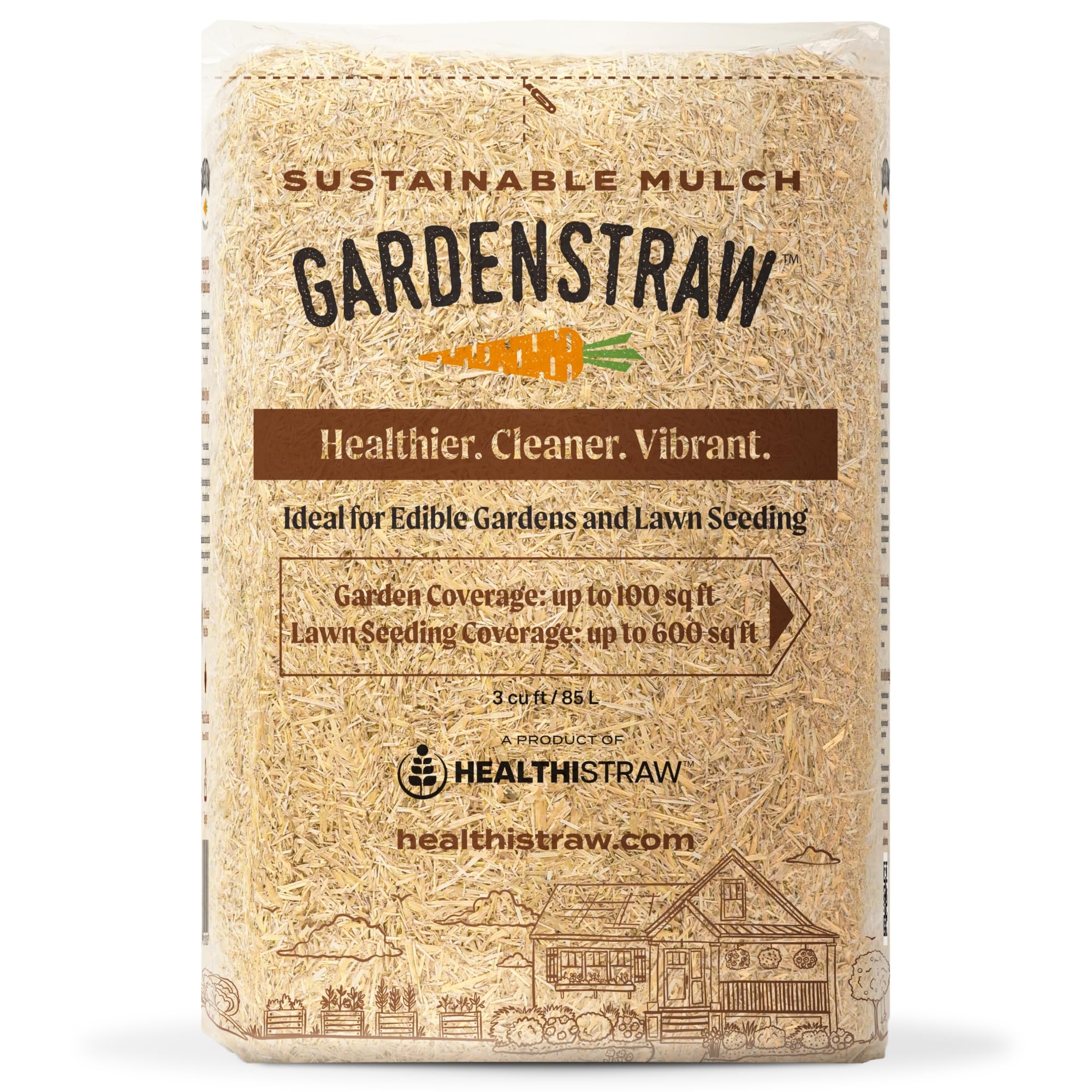
GardenStraw is a specially filtered wheat straw that undergoes natural processing to remove excess dust, dirt, and as many weed seeds as possible — a common pain point with standard hay mulches. The 3 cubic foot compressed bale offers expansive coverage: up to 100 square feet at a 2- to 3-inch depth for garden beds, or 600 square feet at a quarter-inch layer for lawn seeding.
The straw fibers are cut to a length that encourages interlocking when watered, helping the layer stay in place without chemical binders. Verified buyers consistently highlight the clean appearance, low weed-seed count, and effectiveness at cutting surface evaporation in vegetable gardens. Several users also noted the straw’s quick decomposition adds valuable carbon to compost piles.
A minority of reports mention that some grass seeds still appear, likely from the growing process rather than contamination. The bale is bulky but lightweight, and the straw settles noticeably over the season, requiring a thicker initial application for full weed suppression.
What works
- Naturally filtered to reduce weed seeds and dust
- Interlocking fibers resist wind when wet
- Compost-friendly — breaks down quickly and adds carbon
What doesn’t
- Some grass seeds may still germinate in the bed
- Settles significantly; needs thicker layer than wood-based chips
5. Hull Farm Cocoa Bean Shell Mulch 2 cu ft

Cocoa shell mulch straddles the line between decorative top dressing and functional soil conditioner. The 2 cubic foot bag from Hull Farm contains lightweight hulls that carry a mild fertilizer value of 2.5-1-3, meaning they slowly release nitrogen, phosphorus, and potassium as they break down without burning plant roots.
The strongest differentiator is the intense chocolate aroma that persists for the first week after spreading — several buyers describe this as the primary reason for choosing cocoa shells over neutral colored mulches. The hulls also form a dense mat after watering that suppresses weeds effectively and stays put better than lighter straw options.
The main drawbacks are the premium price and potential toxicity to dogs if ingested in quantity. Several reviewers noted the product is not labeled as safe for edible gardens and that the initial chocolate smell attracts squirrels and other wildlife. The bag weight (12.47 kg package) is deceptive because of the hulls’ lightweight nature — coverage is generous but the upfront cost is higher per square foot than coco chip alternatives.
What works
- Strong chocolate scent adds sensory appeal to ornamental beds
- Hulls mat together to resist wind and retain soil moisture
- Light fertilizer value provides a gentle nutrient boost
What doesn’t
- Expensive compared to coir and straw alternatives
- Can be toxic to dogs if consumed; not for edible gardens
6. Soil Sunrise 100% Organic Orchid Bark 30 qt
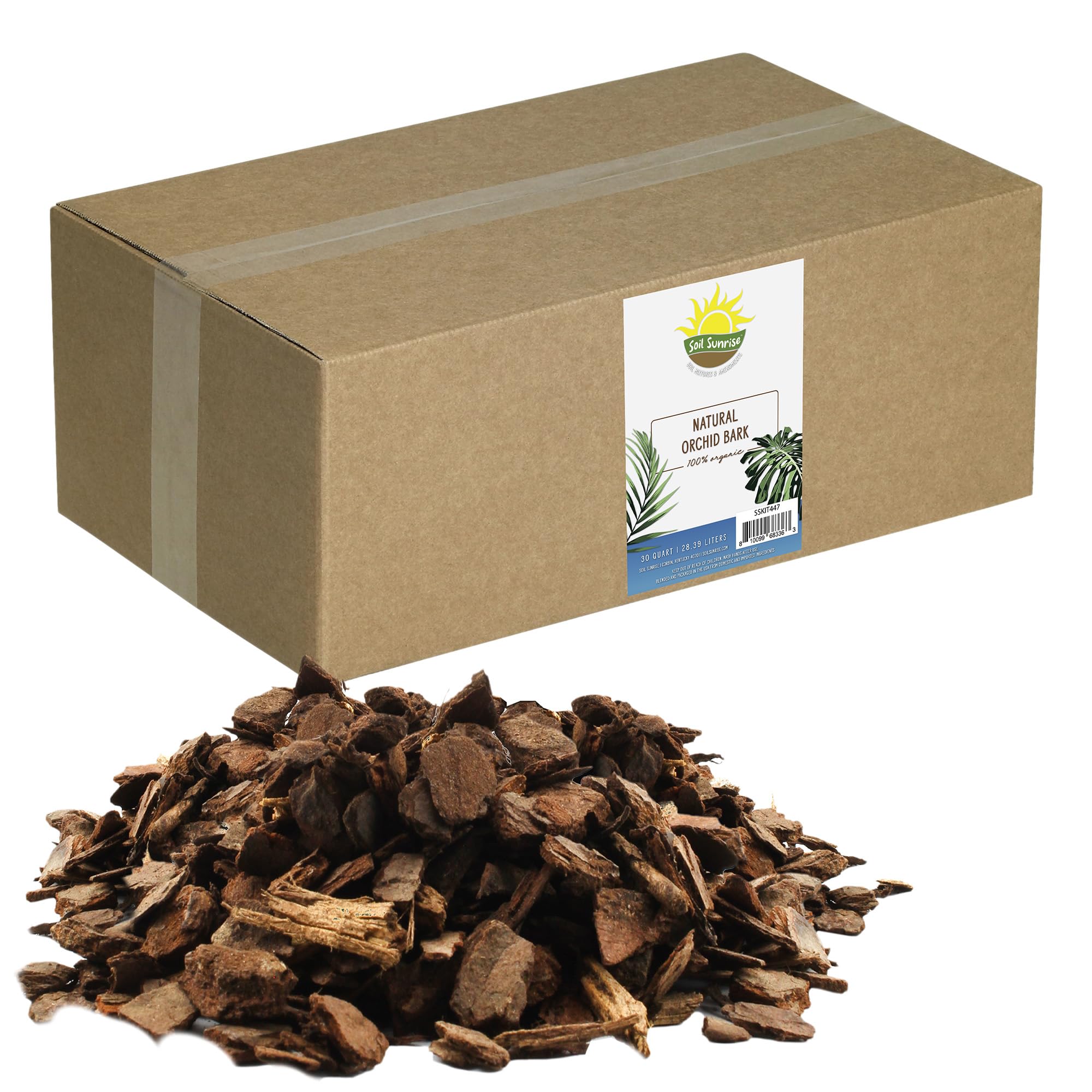
Soil Sunrise offers a clean, all-natural pine bark specifically sized for orchids, aroids, and epiphytic plants that demand fast drainage. The 30-quart bag contains chips roughly the size of a quarter, which is smaller than traditional orchid bark nuggets — this makes it better suited for potting mix use than as a broad landscape ground cover.
The bark contains no additives, artificial colors, or chemical treatments. The uniform chip size creates consistent air pockets in container media, mimicking the natural growing environment for epiphytes. Several aroid collectors reported excellent results using these chips as a soilless additive for Monstera and Philodendron mixes, noting the resealable bag adds convenience for repeated use.
The primary limitation from a ground cover perspective is the small chip size — it will settle and decompose faster than larger nuggets, requiring more frequent top-ups. The bark also floats when dry and can wash away in heavy rain if used as a surface mulch outdoors without a border.
What works
- Uniform quarter-sized chips provide consistent aeration in pots
- No additives, chemicals, or artificial colors
- Resealable bag helps maintain freshness for ongoing use
What doesn’t
- Smaller chip size limits ground-cover longevity compared to larger bark
- May float and wash away in heavy rain when used as surface mulch
7. Longleaf Pine Straw Roll for Landscaping

Longleaf pine straw is the gold standard for large-scale ground cover in the Southeastern United States, prized for its exceptionally long needles — averaging 14 inches — that interlock tightly to resist erosion on slopes. This roll format covers up to 125 square feet, making it a practical option for homeowners tackling hillsides, muddy dog paths, or extensive garden beds.
Verified buyers consistently describe it as the cleanest straw they have used, with near-zero sticks, thorns, or debris. The needles lay flat and form a natural mat that withstands both high winds and heavy rain. Multiple reviewers in Southern climates noted significant water savings after applying pine straw around shrubs and trees, as the deep layer reduces surface evaporation.
The main consideration is regional suitability — longleaf pine grows primarily in the Southeast, and shipping outside this range adds cost. The roll format also means the needles come compressed; fluffing them by hand before spreading improves coverage consistency but requires extra labor on large areas.
What works
- Exceptionally clean — minimal sticks, thorns, or debris
- Long needles interlock to resist wind and water erosion
- Effective at reducing mud tracks from dogs in high-traffic paths
What doesn’t
- Shipping adds significant cost outside the Southeast region
- Rolled needles require manual fluffing for even coverage
Hardware & Specs Guide
Water Absorption Capacity
Coco coir chips absorb up to 10 times their dry weight in water, making them the most effective option for reducing irrigation frequency. Wheat straw and pine straw absorb less total moisture but allow faster surface drying, which matters in humid climates where fungal pressure is high.
Cation Exchange Capacity (CEC)
Coco-based chips have a high CEC, meaning they hold positively charged nutrient ions (calcium, magnesium, potassium) in the root zone rather than letting them leach. This makes them ideal for vegetable beds and container gardens where fertilizer efficiency matters more than aesthetics.
Decomposition Timeline
Cocoa shells and finely shredded straw break down within one growing season, returning organic matter to the soil quickly. Pine bark nuggets and coco chips persist for up to two seasons before needing replacement, making them better suited for pathways and permanent beds where annual re-mulching is undesirable.
Wind & Erosion Resistance
Long pine straw needles and cocoa hulls form cohesive mats after wetting that stay anchored on slopes and resist washout. Lightweight wheat straw and dry coco chips can scatter in exposed areas before they have been thoroughly wetted, requiring a post-application soaking to lock the fibers in place.
FAQ
Will ground cover chips attract termites or other pests?
How deep should I spread ground cover chips for effective weed suppression?
Can I use cocoa shell chips around vegetable plants?
Final Thoughts: The Verdict
For most gardeners looking to cover bare soil with a long-lasting, weed-suppressing layer, the best ground cover chips winner is the PlantBest Coco Mulch because its compression ratio gives the most coverage per pound and the coir chips hold moisture without altering soil pH. If you want a fine-textured, compost-friendly mulch for vegetable beds, grab the HealthiStraw GardenStraw. And for large slopes or muddy pathways where erosion resistance is the priority, nothing beats the Longleaf Pine Straw Roll.