
Bagged soil is a gamble. You order a heavy sack expecting rich, dark loam and instead get a bag of sticks, dust, or—worse—a colony of fungus gnats. The real pain isn’t the price, it’s discovering you’ve wasted weeks of growing time on a medium that smothers roots instead of feeding them. For serious container gardeners and raised-bed growers, a single bad batch can derail an entire season, making the choice of the right big bag dirt the single most critical decision you’ll make this spring.
I’m Rikta — the co-founder and writer behind Lawn Gear Lab. I’ve spent hundreds of hours cross-referencing grower reports, analyzing soil texture and NPK ratios, and measuring drainage performance across more than forty bagged soil products to separate the true growing media from the overpriced pulverized timber.
Whether you’re filling a new raised bed or repotting a prized indoor palm, the right medium determines whether your plants thrive or just survive. This guide breaks down the specs that actually matter so you can confidently pick the big bag dirt that delivers real results instead of regret.
How To Choose The Best Big Bag Dirt
Big bag dirt is a consumable, not a one-time tool, so the “best” choice depends entirely on what you’re growing and your tolerance for texture versus cost. Skip the marketing claims and focus on these three criteria before you buy.
Texture and Aeration: The Feel That Tells the Story
Crumble a handful. Premium soil should feel spongy and fluffy, not dense or clumpy. A high proportion of perlite, pumice, or coco coir creates pore space for oxygen, which is non-negotiable for root health. If the bag feels heavy for its volume, it’s likely waterlogged or packed with low-quality sand and fines.
Ingredient Transparency and Filler Content
Look for specific ingredient lists—aged forest products, sphagnum peat moss, perlite, and organic fertilizers. Vague terms like “composted materials” raise red flags. Review photos reveal wood chunks, rocks, and plastic debris in poorly screened products. If you see complaints about sticks, skip that brand unless you’re willing to sift.
Bag Volume vs. Weight: The Density Trap
A 40-pound bag sounds like a deal, but weight is often moisture content, not soil quality. Compare cubic feet (cu ft) or quarts (qt) instead. A 1.5 cu ft bag of quality mix will weigh less than a 40-pound bag of dense, waterlogged filler but will fill the same volume of planter. Prioritize volume over weight for true value.
Quick Comparison
On smaller screens, swipe sideways to see the full table.
| Model | Category | Best For | Key Spec | Amazon |
|---|---|---|---|---|
| FoxFarm Ocean Forest | All-Purpose Premium | Tomatoes, heavy feeders, container gardens | 1.5 cu ft bag | Amazon |
| Coast of Maine Bar Harbor | Organic Premium | Organic gardens, indoor plants, hanging baskets | 16 QT bag | Amazon |
| Michigan Peat Premium w/ Perlite | All-Purpose Value | General container gardening, flowers, bulbs | 50 lb bag | Amazon |
| FoxFarm Cultivation Nation 70:30 | Coco Coir Blend | Seed starting, cuttings, hydro-adjacent growing | 2 cu ft bag | Amazon |
| Black Kow Composted Manure | Organic Amendment | Soil enrichment, lawn prep, tomato planting | 35 lb bag | Amazon |
| Michigan Peat Garden Magic | General Purpose | Budget repotting, indoor/outdoor planters | 40 lb bag | Amazon |
| Roots Organics Original | Coco Fiber Premium | Heavy-feeding, frequent-feeding container crops | 1.5 cu ft bag | Amazon |
In‑Depth Reviews
1. FoxFarm Ocean Forest Potting Soil
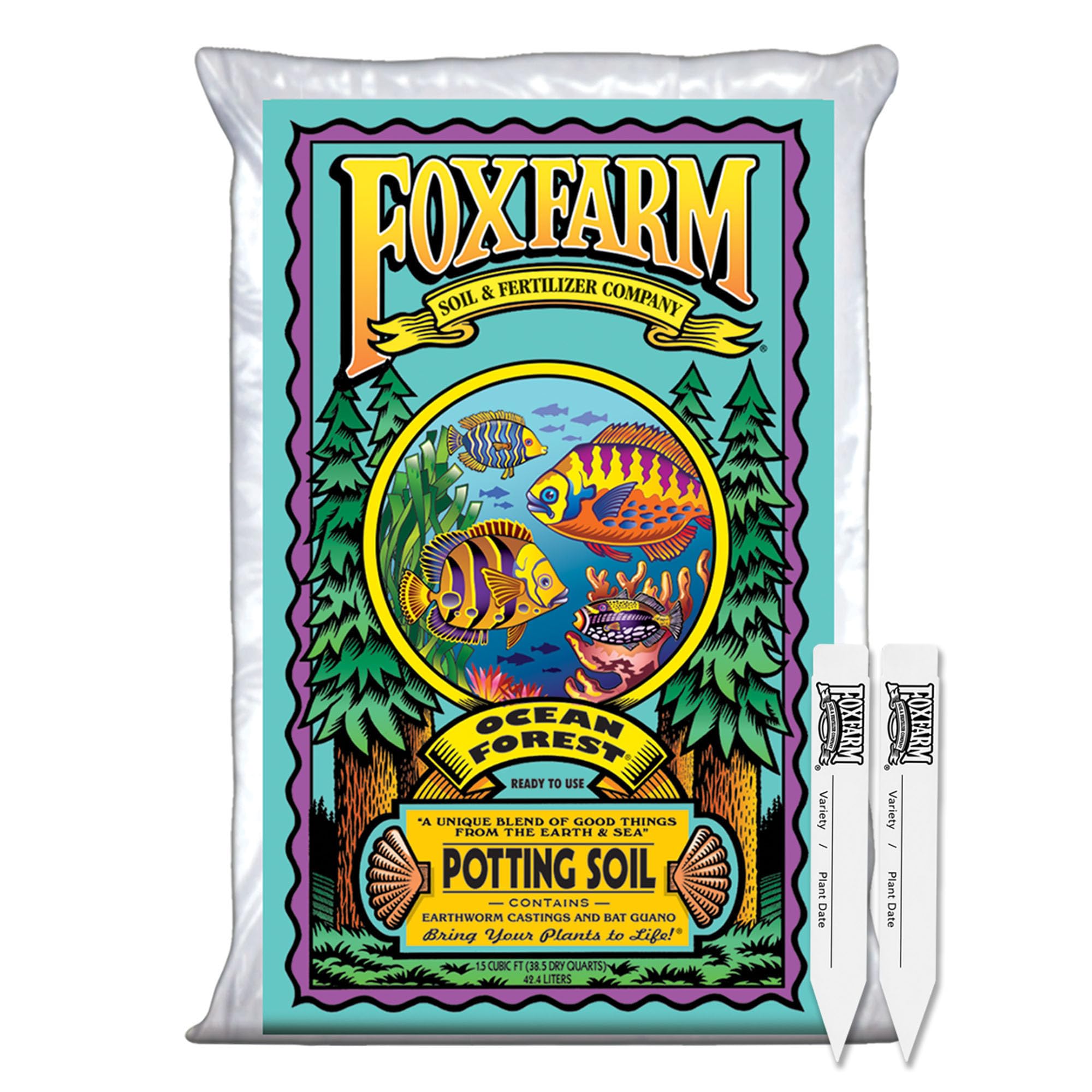
The FoxFarm Ocean Forest is the gold standard for serious container growers, and for good reason: its texture is noticeably light and airy, thanks to the blend of aged forest products and sphagnum peat moss. This 1.5-cubic-foot bag is ready to use immediately, with no extra mixing required. The inclusion of fish emulsion, crab meal, shrimp meal, and earthworm castings provides a rich, slow-release nutrient profile that heavy feeders like tomatoes and peppers respond to aggressively.
Growers consistently report faster growth and deeper green coloration compared to generic big-box mixes. The soil absorbs water immediately on first watering instead of beading up and running off, a sign of proper wetting agent and organic matter balance. The added oyster shell and kelp meal contribute calcium and trace micronutrients that support fruit set and disease resistance.
The primary drawback is cost—this bag sits at a premium price point, and some users note that prices have crept up over recent years. A few batches have occasionally included small mushrooms, which is harmless but can startle new growers. For those who want the highest-performing blend without blending their own, this remains the most reliable pick on the market.
What works
- Light, well-aerated texture that roots love
- Rich nutrient profile with fish, crab, and kelp meal
- Immediate water absorption, no runoff issues
What doesn’t
- Premium price per bag for large beds
- Occasional mushroom growth reported
- Inconsistent quality control across batches
2. Coast of Maine Bar Harbor Blend Potting Soil
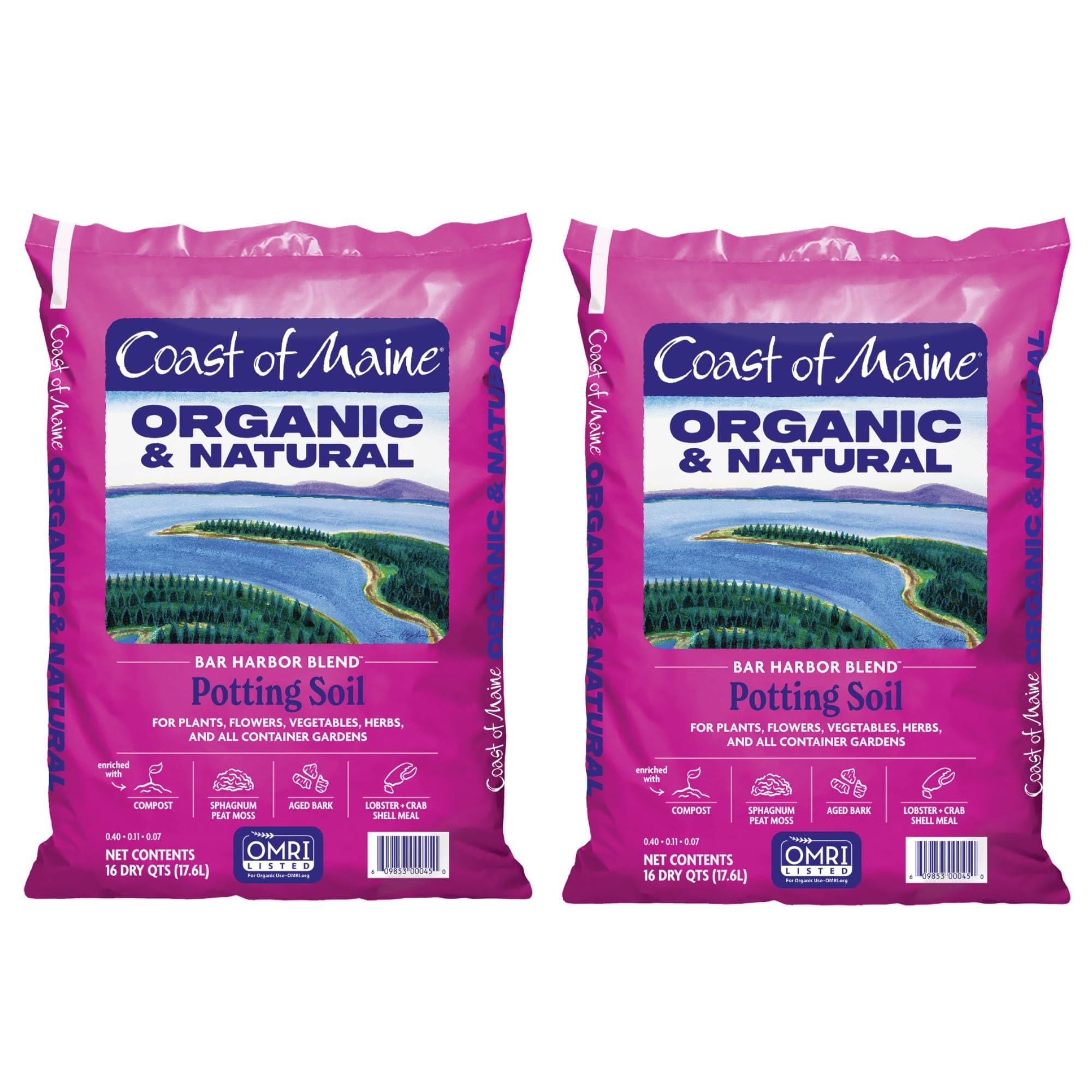
Coast of Maine delivers something rare in the bagged soil world: a truly local, traceable ingredient profile. The Bar Harbor Blend features sphagnum peat moss, compost, perlite, and the brand’s signature lobster and crab shell meal alongside kelp meal. The result is a dark, rich soil that smells earthy and marine-influenced rather than sour or woody. Growers note that their vegetables and flowers show more vigorous root development and better color than with standard all-purpose mixes.
The organic ingredients provide slow-release nitrogen from the shellfish meal, which sustains plants through the growing season without burning tender roots. The perlite content is generous, ensuring good aeration for container plants even after repeated watering. Users report no weed seeds or unexpected sprouts, a sign of proper composting temperatures. The 16-quart bag size is moderate, ideal for a few large pots or a small raised bed.
Volume is the main concern here—16 quarts is smaller than many competing bags, and the price per cubic foot is higher than some alternatives. Some users also mention that the darker color makes it harder to judge moisture content visually. For organic gardeners who prioritize ingredient provenance over sheer volume, this blend is a clear winner.
What works
- Unique marine-based organic nutrient profile
- No weeds or unwanted seedlings reported
- Excellent aeration and drainage for containers
What doesn’t
- Smaller bag volume, higher cost per cubic foot
- Limited availability outside coastal regions
- Dark color makes moisture status harder to gauge
3. Michigan Peat Premium Potting Soil with Perlite

Michigan Peat’s premium offering bridges the gap between economical bulk soil and a finished, ready-to-use mix. This 50-pound bag includes a proven combination of rich dark reed sedge peat, perlite, and sand, plus starter and slow-release fertilizers. The texture is consistent and workable, with enough porosity for good drainage while still retaining moisture for moderate dry spells. It’s a true all-purpose blend that suits indoor pots, outdoor containers, and raised beds without needing additional amendments.
Growers appreciate the convenience of the built-in fertilizer, which provides a gentle nutrient boost for the first several weeks. The soil arrives pre-moistened and ready to use, which means no dust clouds when opening the bag. The perlite content is visible and evenly distributed, contributing to better aeration than some competitors in the same weight class.
The most common complaint—and it’s a notable one—is that the soil can harbor fungus gnats. Multiple reviewers mention gnats emerging soon after potting, which can be a nuisance indoors. A few also report occasional large wood sticks mixed in. For gardeners who plan to use the soil outdoors or who can manage gnats with yellow traps and careful watering, the value-to-volume ratio is hard to match.
What works
- Excellent value per pound for large projects
- Includes built-in slow-release fertilizer
- Pre-moistened and ready to use
What doesn’t
- Fungus gnats reported in some batches
- Occasional large wood pieces
- Heavy bag at 50 pounds
4. FoxFarm Cultivation Nation 70:30 Growing Media

This is not traditional dirt—it’s an engineered growing medium. The Cultivation Nation 70:30 blend is 70% buffered coconut coir and 30% perlite, creating a substrate with exceptional drainage and aeration properties. Coco coir retains water while perlite ensures the root zone never becomes waterlogged. The 2-cubic-foot bag provides generous volume for multiple projects, and the light weight makes it far easier to handle than peat-based bags of equivalent size.
Growers report that spinach and other leafy greens show dramatically accelerated growth compared to standard potting mixes under identical conditions. The blend is pH-stable and pre-buffered, so it works well for seedlings, cuttings, and any plants that are sensitive to root rot. Since the medium is essentially inert, it gives the grower full control over nutrient inputs, making it ideal for those who prefer to mix their own liquid fertilizer regimen.
The main limitation is that this medium has no inherent nutrient content. You must add fertilizer from day one or the plants will starve quickly. The price per bag is also higher than traditional soil blends. For growers who want maximum control and superior root structure over a commodity mix, this is a specialized tool that performs exactly as advertised.
What works
- Superior drainage prevents root rot
- Lightweight and easy to handle
- pH-stable, ideal for precise nutrient control
What doesn’t
- No nutrients—must add fertilizer
- Higher cost than traditional potting soils
- Not suitable for beginners seeking “all-in-one”
5. Black Kow Composted Cow Manure

Black Kow isn’t a standalone potting soil; it’s a composted manure amendment designed to improve existing soil structure and nutrient content. With a gentle 0.5-0.5-0.5 NPK ratio, it won’t burn tender roots, making it safe for direct mixing with native soil or bagged mixes. Gardeners report that adding Black Kow transforms sandy soils by improving moisture retention and loosens heavy clay by adding organic bulk.
The reviews are remarkably enthusiastic. Users note that roses change color after a season of amending with Black Kow, and vegetable gardens planted directly into the bag (by laying it on its side and cutting an opening) produce heavy yields. The compost is dark and crumbly with a mild, earthy smell—not the sharp ammonia odor of fresh manure. It’s an excellent source of slow-release organic matter that feeds soil biology.
Local availability is the biggest sticking point. Many users point out that big-box home improvement stores sell equivalent products for much less per bag. The Amazon price is convenient but not the best deal if you have a local nursery nearby. Also, as an amendment, it isn’t a complete growing medium on its own—you need to mix it with existing soil or a base blend.
What works
- Gentle NPK won’t burn roots
- Improves both sandy and clay soils
- Can be used directly as a planting bag for tomatoes
What doesn’t
- Better pricing available at local retailers
- Requires mixing—not a standalone soil
- Weight varies significantly with moisture content
6. Michigan Peat Garden Magic General Purpose Potting Soil
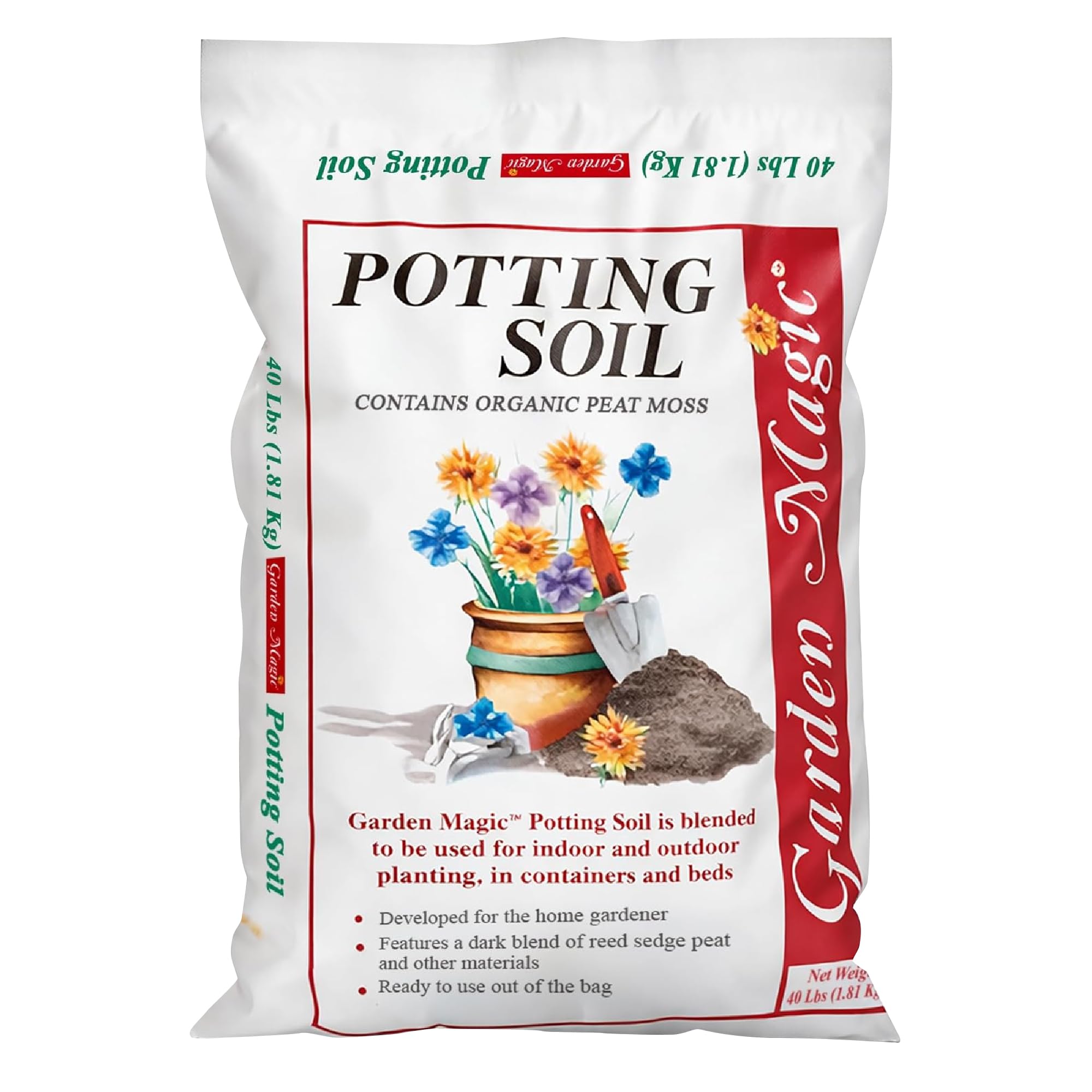
Michigan Peat’s Garden Magic is the entry-level workhorse of the big bag dirt world. The 40-pound bag delivers a dark, moisture-retentive blend of reed sedge peat and organic peat moss that’s ready to use out of the bag. It does what it says: retains moisture during dry spells, supports general plant growth, and costs less per pound than nearly any premium alternative. For casual users repotting a few houseplants or filling small outdoor containers, this is a perfectly functional choice.
The moisture retention is genuinely effective—users note that plants stay hydrated longer between waterings compared to lighter, perlite-heavy mixes. The soil smells like healthy earth, and reviews consistently mention no insect issues or foul odors. It’s heavy, which makes it feel substantial, but that weight is moisture and organic matter, not sand.
The texture is the weak point. Multiple users report finding large wood sticks and debris mixed into the soil, which is annoying when working in small containers where those pieces don’t have time to break down. The lack of perlite also means drainage is below average compared to premium mixes, so overwatering can become a problem for indoor plants in non-draining pots.
What works
- Lowest cost per pound in this guide
- Excellent moisture retention for dry spells
- No insects, clean earthy smell
What doesn’t
- Frequent wood sticks and debris
- Poor drainage without added perlite
- Very heavy bag to move
7. Roots Organics Original Potting Soil

Roots Organics Original is a coco-fiber-based potting soil designed for the most demanding growers. This eight-pack of 1.5-cubic-foot bags is a bulk solution for serious gardeners who want consistent, high-quality medium across many containers. The ingredient list reads like a master class in organic inputs: bat guano, premium earthworm castings, fish bone meal, feather meal, green sand, glacial rock dust, soybean meal, humic acid, and mycorrhizae. It’s a complete, living soil right out of the bag.
Growers who switch from FoxFarm to Roots Organics often stay with Roots. The coconut coir base provides excellent water retention while still draining quickly enough to prevent sogginess. The mycorrhizal inoculant supports root development during transplant, and the humic acid helps plants access bound nutrients. Users consistently report that plants bounce back faster from transplant shock and display deeper green foliage.
The drawbacks are notable. Recent batches have shown an increase in small rocks and pebbles mixed into the soil, which is frustrating for a product at this price tier. Additionally, the multi-pack format is expensive upfront, even though the per-bag cost is competitive. Some users have also reported occasional “hot” batches that caused slight burning, though this is rare. For those who demand the best organic coco-based soil and need volume, this is the top-tier choice.
What works
- Rich organic amendment profile with mycorrhizae
- Coco fiber base balances moisture and aeration
- Reduces transplant shock effectively
What doesn’t
- Increasing rocks and debris in recent batches
- High upfront cost for multi-pack
- Rare “hot” batches may burn sensitive seedlings
Hardware & Specs Guide
Moisture Retention vs. Aeration
The fundamental trade-off in any bagged soil is between how much water the medium holds and how much oxygen reaches the roots. Peat moss and coco coir are champions of moisture retention, holding several times their weight in water. Perlite, pumice, and sand create air pockets that allow roots to breathe. A well-balanced mix typically uses a ratio of 60-70% water-retentive material to 30-40% aeration material. Products like FoxFarm Ocean Forest and Coast of Maine hit this balance, while budget options like Michigan Peat Garden Magic tilt toward retention and require added perlite for heavy-feeding or indoor plants.
Bag Volume vs. Actual Usable Weight
Bagged dirt is sold by weight yet compared by volume. A 40-pound bag of compacted peat-based soil may fill only 1 cubic foot, while a 35-pound bag of coco coir blend can fill 2 cubic feet. Moisture content varies wildly—freshly composted manure can be 50% water by weight. Always check the volume in quarts or cubic feet on the label. A true comparison requires converting to cost per cubic foot or per quart. For raised beds that need 10+ cubic feet, volume trumps weight every time. A light bag that fills more space is almost always better value.
FAQ
Should I sift big bag dirt before using it?
Can big bag dirt go bad if stored for a season?
Why does my bagged soil have tiny white or yellow pellets?
How much big bag dirt do I need for a standard raised bed?
Final Thoughts: The Verdict
For most gardeners, the big bag dirt winner is the FoxFarm Ocean Forest because it delivers the best balance of texture, nutrient density, and ready-to-use convenience across the widest range of plants. If you want organic, traceable ingredients with marine-based nutrition, grab the Coast of Maine Bar Harbor Blend. And for budget-conscious growers who need volume for raised beds or outdoor planters, nothing beats the raw value of the Michigan Peat Premium with Perlite.