
The difference between a tool that fights you and one that flows through branches comes down to engine displacement, blade geometry, and the anti-vibration engineering buried in the chassis. For anyone managing a property with dense shrubs, coarse vines, or hedges that laugh at battery-powered clippers, the fuel-burning category is the only honest answer.
I’m Rikta — the co-founder and writer behind Lawn Gear Lab. I spend my days comparing motorcycle-engine designs, studying blade-tip speeds, analyzing carburetor purge systems, and cross-referencing thousands of owner reports to separate the trimmers that deliver seasons of reliable cuts from the ones that become shelf ornaments.
After evaluating nine distinct models ranging from compact homeowner units to commercial-grade shaft clippers, the strongest candidate for most people is the Husqvarna 322HD60 because it balances a lightweight chassis with a proven 21.7cc engine and metal gears that refuse to strip. This guide will help you confidently identify the best gas hedge trimmer for your specific property and pruning demands.
How To Choose The Best Gas Hedge Trimmer
Selecting a gas hedge trimmer involves more than grabbing the one with the longest blade. The engine type, cutting capacity, handle adjustability, and overall weight all shape how the tool performs in your hands. Understanding these variables prevents you from overpaying for power you do not need or undershooting on capability for thick hedges.
Engine Displacement and Cycle Type
Engine size is measured in cubic centimeters (cc) and directly correlates with torque. A 21cc to 22cc engine handles typical residential hedges and branches up to ¾-inch thick. Jumping to a 26cc or 36cc engine delivers the grunt to chew through 1-inch to 2-inch woody growth without bogging down. Cycle type matters equally: 2-cycle engines require pre-mixing oil and gas but are typically lighter and rev higher, while 4-cycle engines run on straight gas and produce less exhaust smoke but add weight and complexity. For occasional property maintenance, a 2-cycle model around 25cc offers the best power-to-weight ratio. For daily commercial use, a proven 4-cycle system reduces fuel prep time.
Blade Length and Cutting Capacity
Blade length determines the sweep of each pass. A 20-inch blade suits tight, manicured hedges where precision matters more than speed. A 24-inch or 25-inch blade covers more surface area per stroke, cutting job time nearly in half on long hedgerows. Cutting capacity — the maximum branch thickness the blades can sever — is the spec beginners overlook. A 1-inch cutting capacity handles most overgrown shrubs, while a 2-inch rating is needed for neglected properties with woody growth. Dual-action blades (both edges reciprocating) cut cleaner and vibrate significantly less than single-sided designs.
Handle Design and Anti-Vibration Systems
Rotating rear handles, typically offering 90° to 180° of adjustment, let you switch between vertical and horizontal cutting without twisting your wrist into an unnatural position. This feature matters most when shaping the tops of tall hedges. Anti-vibration dampeners — rubber bushings or springs between the engine and handles — directly affect how long you can work before your hands go numb. Models without any vibration isolation become punishing after 20 minutes of continuous cutting. A shoulder strap is a non-negotiable addition for any trimmer over 11 pounds, as it transfers weight from your arms to your torso.
Quick Comparison
On smaller screens, swipe sideways to see the full table.
| Model | Category | Best For | Key Spec | Amazon |
|---|---|---|---|---|
| Husqvarna 322HD60 | Premium | Heavy residential / light commercial | 21.7cc, 24-inch dual-action | Amazon |
| Husqvarna 122HD60 | Premium | Ergonomics and easy starting | 21.7cc, Smart Start + purge | Amazon |
| ECHO HC-2020 | Professional | Commercial-grade durability | 21.2cc, 20-inch double-reciprocating | Amazon |
| ECHO SHC-225S | Pro Shaft | Extended reach / shaft attachment | 21.2cc, 20-inch shaft clipper | Amazon |
| SENIX HT4QL-L | Mid-Range | No-mix fuel convenience | 26.5cc 4-cycle, 22-inch | Amazon |
| VEVOR 26cc | Value | Budget-conscious with accessories | 26cc 2-stroke, 23.2-inch | Amazon |
| Baotree 36cc | High Torque | Thick branches up to 2 inches | 36cc 2-cycle, 24-inch | Amazon |
| PROYAMA 22.5CC | Ergonomic | Rotating handle flexibility | 22.5cc, 25-inch dual-action | Amazon |
| JENPECH 26cc | Budget | Entry-level price point | 26cc 2-stroke, 24-inch | Amazon |
In‑Depth Reviews
1. Husqvarna 322HD60

The Husqvarna 322HD60 packs a 21.7cc 2-cycle engine into an 11.5-pound package, making it one of the lightest premium gas trimmers on the market. The 24-inch dual-action stainless steel blade cuts in both directions, which effectively doubles your efficiency on long hedgerows. Owner reports consistently note that the metal gearbox outlasts the plastic-gear competitors that strip after a season of heavy use.
This model uses a standard 50:1 fuel mix and features an adjustable rear handle that rotates for vertical and horizontal cutting without forcing your wrist into an awkward angle. The anti-vibration system is present but not class-leading — it dampens enough for hour-long sessions but does not eliminate hand fatigue entirely. The Smart Start technology reduces the effort needed to pull the cord, a genuine benefit for users who struggle with hard-starting engines.
Owner feedback highlights that the 322HD60 slices through 1-inch branches with near-zero resistance, reducing what used to be a two-hour job to roughly 30 minutes. A few users note the weight is noticeable after extended overhead work, but the included shoulder strap is not included — you need to buy one separately. The build quality and parts availability make this the best long-term value for residential users who want commercial-grade internals.
What works
- Starts easily and runs smoothly even after sitting idle
- Metal gearbox delivers superior durability over plastic competitors
- 24-inch blade halves trimming time on long hedges
What doesn’t
- No shoulder strap included despite 11.5-pound weight
- Vibration reduction is adequate but not best-in-class
2. Husqvarna 122HD60
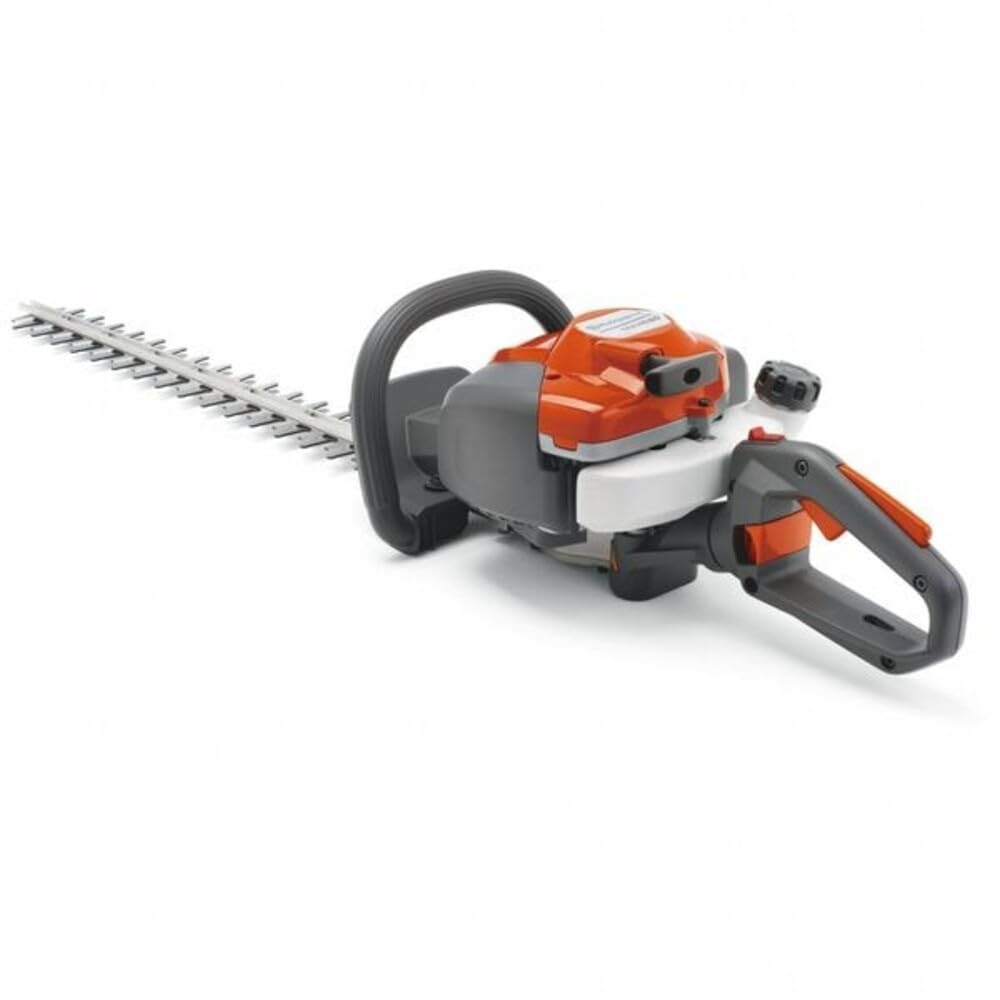
The Husqvarna 122HD60 shares the same 21.7cc engine platform as the 322HD60 but features a distinct starting system and a slightly shorter 23.7-inch blade. The Smart Start engine includes a carburetor air purge bulb that removes air from the fuel system before you pull the cord, and the stop switch automatically resets to the run position after shutdown. These details matter when you are wrestling with a tangled hedge and the trimmer fires on the second pull every time.
The rear handle rotates for multi-angle cutting, and anti-vibration dampeners absorb enough shake to keep your hands comfortable for extended sessions. Owners report that the high-carbon steel blades stay sharp through multiple seasons and cut branches up to 1 inch thick with minimal resistance. The 122HD60 weighs 16 pounds, making it noticeably heavier than the 322HD60, but the balance is well distributed so the weight does not feel oppressive during use.
Several long-term owners mention that the carburetor may need a minor adjustment out of the box — a tool resolves a lean idle condition in about two minutes. Once dialed in, this trimmer runs reliably for years. The fuel tank grommet has been a failure point for some units, but Husqvarna warranty support addresses it without hassle. For buyers who prioritize effortless starting over absolute low weight, the 122HD60 delivers consistent daily performance.
What works
- Purge bulb and auto-reset stop switch ensure fast, predictable starts
- Adjustable handle makes overhead and side cuts natural
- High-carbon steel blades resist dulling through heavy use
What doesn’t
- Heavier than the 322HD60 at 16 pounds
- Minor carburetor adjustment may be needed for optimal idle
3. ECHO HC-2020

The ECHO HC-2020 is a professional-grade 21.2cc 2-stroke trimmer built around a 20-inch double-reciprocating blade system. ECHO claims twice as many cutting edges as competing trimmers, and the razor-edge blade design bears out in practice — owners describe it cutting through heavy evergreen overgrowth with noticeably less effort than single-sided alternatives. The shorter blade length favors precision over raw speed, making this a strong pick for manicured landscapes with defined hedge lines.
This model includes a tool-less air filter cover and a zero-type grease fitting for easy maintenance. The 1-year commercial / 5-year consumer warranty is one of the strongest in the category, reflecting ECHO’s confidence in the powertrain. The engine starts reliably after a few primes, though some units arrive with the carburetor set too lean from the factory and need a quick dealer adjustment before they idle correctly.
Owners who run the HC-2020 in landscaping businesses report three-plus seasons of daily use without major issues. The blades can bind when sap builds up between them during heavy cutting, but a quick spray of WD-40 clears the jam. The trimmer is extremely lightweight on paper, but the balance is engine-forward, so the front end feels heavier during extended use. For buyers who value commercial durability and easy maintenance over maximum blade length, the HC-2020 is a sound long-term investment.
What works
- Double-reciprocating blades cut cleaner with less vibration
- Tool-less air filter access simplifies routine upkeep
- Industry-leading 5-year consumer warranty
What doesn’t
- Carburetor may require dealer adjustment for proper idle
- Blades can clog with sap on dense, wet greenery
4. ECHO SHC-225S

The ECHO SHC-225S is a shaft-mounted hedge clipper designed for users who already own an ECHO power head or want the flexibility of a multi-tool system. The 20-inch stainless steel blade attaches to the shaft drive, giving you extended reach for tall hedges without needing a ladder. The build quality is unmistakably commercial — the gearbox is sealed, the shaft is rigid, and the trigger mechanism is mechanical rather than cable-actuated, which means fewer failure points over time.
This model runs on the same 21.2cc 2-stroke engine found in the HC-2020, but the shaft design changes the handling dynamics. The weight is concentrated at the power head, so the cutting end feels lighter and more maneuverable when working overhead. Owners who have used ECHO products for decades consistently cite the brand’s reliability and parts availability as the reason they stay with the system. The stainless steel blades resist corrosion and stay sharp through heavy seasonal use.
A few owners note that the SHC-225S runs hot during extended operation, and the exposed shaft area near the engine can become hot enough to burn bare skin if contacted. This is a characteristic of the shaft design rather than a defect, but it warrants caution. The trimmer is not a standalone tool — you need the compatible power head, which adds to the total investment. For users already in the ECHO ecosystem, this attachment is a natural extension of their existing gear.
What works
- Extended reach eliminates the need for ladders on tall hedges
- Stainless steel blade resists rust and stays sharp
- ECHO brand reliability backed by decades of user loyalty
What doesn’t
- Requires compatible power head — not a standalone tool
- Shaft area near engine runs very hot during use
5. SENIX 4QL-L

The SENIX 4QL-L is a 26.5cc 4-cycle hedge trimmer that eliminates the need to mix gas and oil. You pour straight unleaded fuel into the tank and the engine lubricates itself through a separate oil system. The 4QL technology keeps the motor lubricated in any orientation without stalling or oil leakage, which is a genuine advantage for users who cut at odd angles or store the trimmer on its side. The 22-inch dual-action stainless steel blade delivers a clean cut with a 1-1/8 inch cutting capacity.
The engine is 20% more compact than comparable 4-cycle designs, keeping the overall weight at 9.4 pounds — among the lightest in this mid-range category. The rotating rear handle provides comfortable access to different cutting angles, and the low-emission 4QL system produces noticeably less exhaust odor than a traditional 2-stroke. Owners report that the trimmer starts easily when the starting procedure is followed precisely, but some note that the initial break-in requires a few extra pulls before the engine settles into a consistent idle.
Long-term durability is a mixed bag in owner reports. Many users get two to three seasons of infrequent use without issues, but a subset reports that the engine will not start after that point despite fresh fuel and a clean spark plug. The 3-year limited warranty provides some recourse, but the replacement cost of a failed engine at this price tier may push buyers toward simpler 2-stroke designs. For users who prioritize the convenience of no-mix fuel and low emissions, the SENIX delivers a refined experience while it runs.
What works
- No gas/oil mixing required — pour and go convenience
- Light weight at 9.4 pounds reduces fatigue
- Low exhaust odor compared to 2-stroke engines
What doesn’t
- Some units fail to start after 2-3 seasons of light use
- Initial starting requires careful procedure adherence
6. VEVOR 26cc

The VEVOR 26cc hedge trimmer offers a 23.2-inch dual-sided blade powered by a 2-stroke engine that spins at 8500 RPM. The 180° adjustable trimmer head lets you switch cutting angles without repositioning your body, and the included accessory bundle — gloves, ear protectors, mixing bottle, funnel, storage bag — means you have everything needed to start trimming on arrival. The engine uses a high-magnetic ignition system that owners describe as responsive, typically firing within three pulls.
The trimmer weighs 15.9 pounds, placing it on the heavier side of the mid-range segment. The included single shoulder strap helps offset the weight, but the balance is engine-heavy, so the front of the trimmer can feel floaty during horizontal cuts. The alloy steel blades cut through dense shrubs effectively, and the 23.2-inch length provides a good middle ground between the precision of 20-inch blades and the coverage of 24-inch options. The fuel tank is large enough for roughly 40 minutes of continuous operation.
Owner experiences vary more with VEVOR than with established brands. Some report excellent performance — powerful engine, easy starting, effective cutting — while others describe assembly instructions that are vague and attachment quality that feels thin. The aluminum components are functional but do not inspire confidence for commercial workloads. For a budget-conscious homeowner who needs a complete kit without piecemeal accessory purchases, the VEVOR delivers respectable capability for intermittent trimming sessions.
What works
- Comprehensive accessory kit eliminates separate purchases
- 180° adjustable head enables flexible cutting angles
- Powerful 8500 RPM engine starts reliably
What doesn’t
- Heavy at 15.9 pounds despite included strap
- Assembly instructions lack clarity for first-time users
7. Baotree 36cc
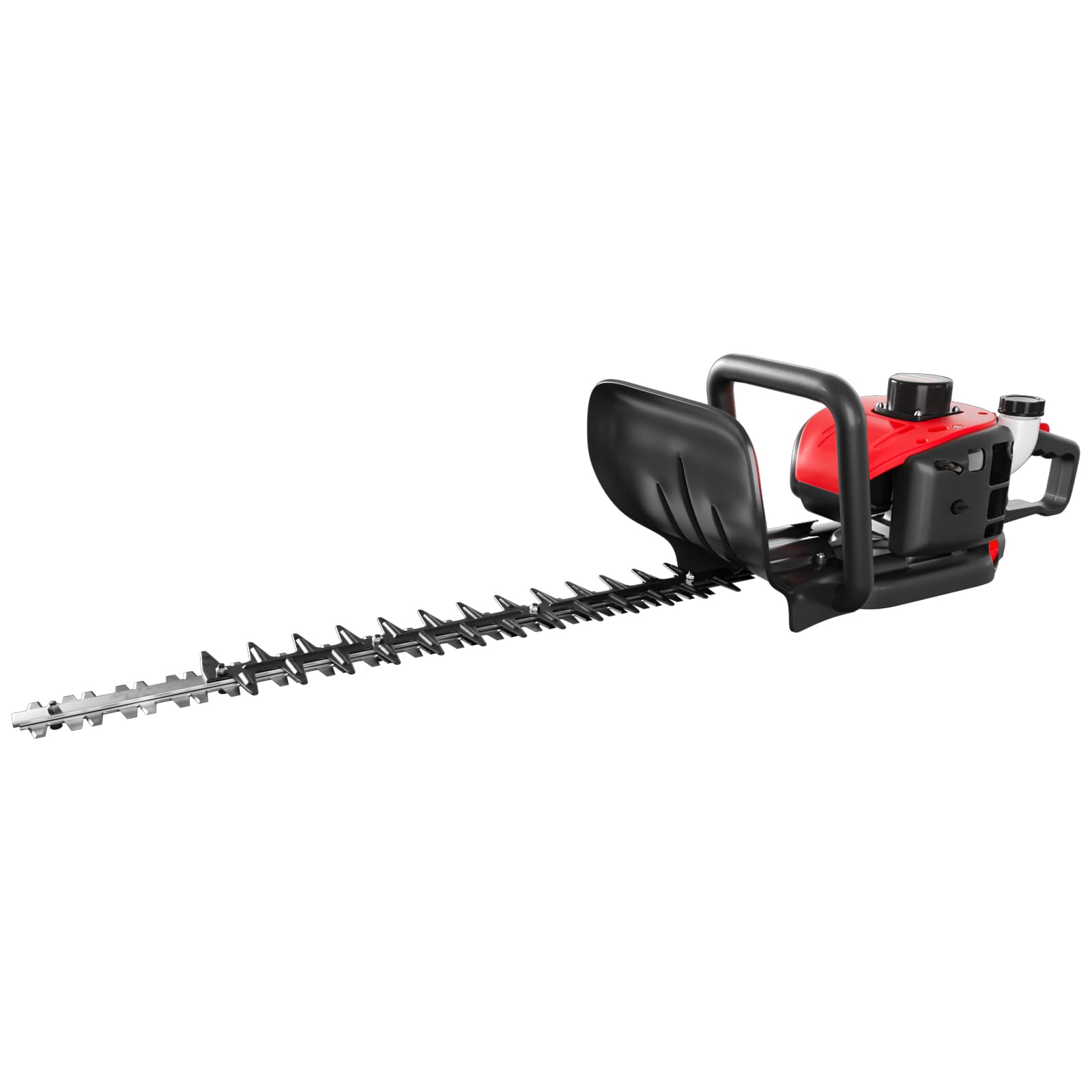
The Baotree 36cc hedge trimmer is the highest-displacement model in this lineup, delivering far more torque than typical 21cc to 26cc units. The manufacturer claims the ability to cut 2-inch thick branches, and owner reports confirm that this tool powers through heavy, woody growth that stalls lesser trimmers. The 24-inch double-edged serrated blade covers large areas efficiently, and the engine provides roughly 300% more torque than typical electric models, making it a legitimate choice for neglected properties with overgrown shrubbery.
The trimmer features an anti-vibration handle and a lightweight design relative to its displacement — though at 16.53 pounds it is not light in absolute terms. The reinforced magnesium alloy gearbox and anti-rust coating are marketed as commercial-grade durable, and the 3-in-1 safety system includes instant brake, throttle lock, and hand guard. Owners generally confirm the build quality feels robust, but a few reports describe a cracked gas tank after limited use, which suggests quality control inconsistency.
Vibration is the primary compromise with this much engine. Even with anti-vibration handles, the 36cc motor transmits significant shake to the operator’s hands, making extended sessions fatiguing without thick gloves. The fuel mixing ratio is not clearly documented in the manual, leading to confusion for first-time 2-stroke users. For buyers who need to clear aggressively overgrown hedges with thick woody stems, the Baotree’s torque is unmatched in this price range, but the trade-off in vibration and QC is real.
What works
- Highest torque in the lineup — cuts 2-inch branches easily
- Magnesium alloy gearbox provides genuine structural durability
- 24-inch serrated blade covers large areas per pass
What doesn’t
- Significant hand vibration during extended trimming
- Quality control issues reported with gas tank cracking
8. PROYAMA 22.5CC
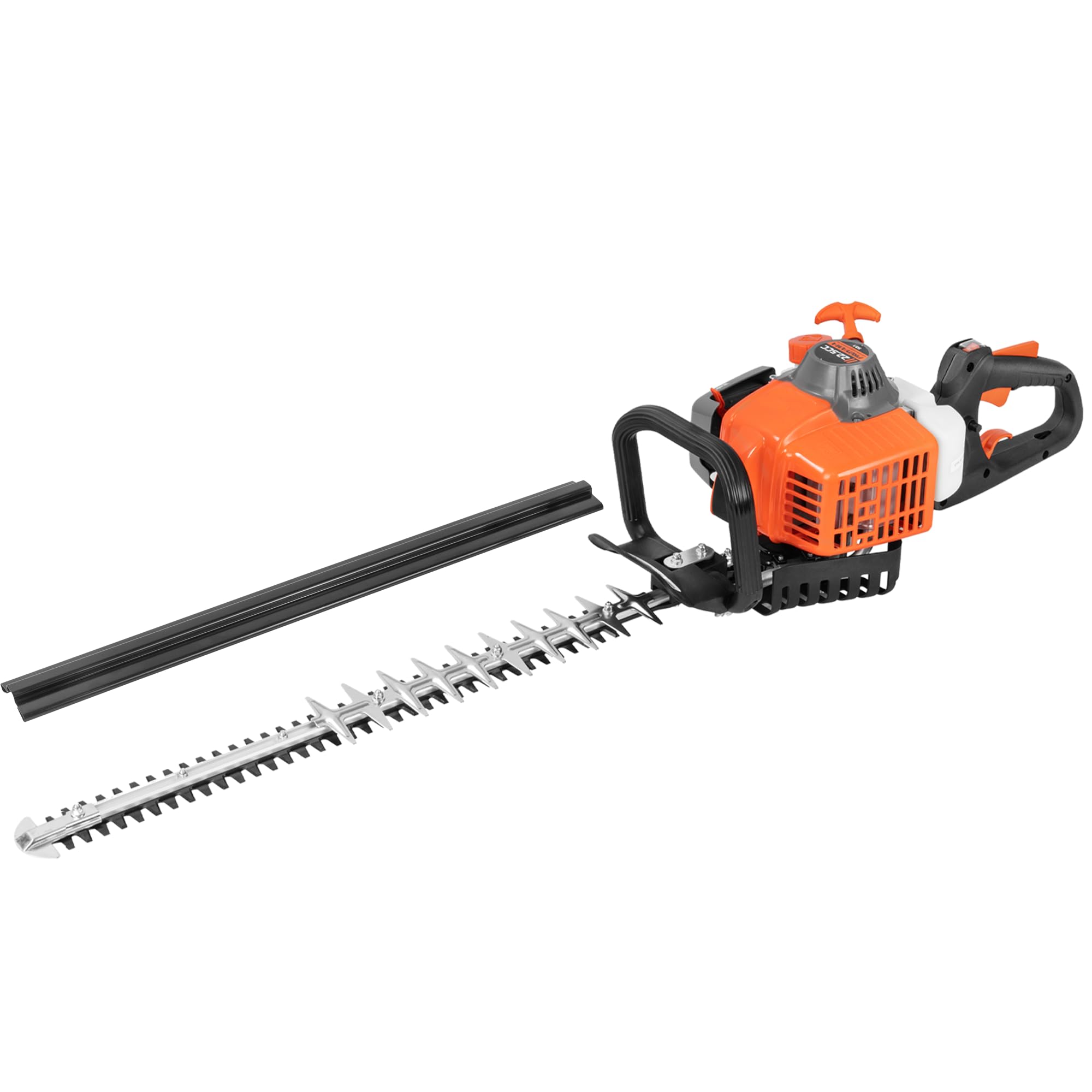
The PROYAMA 22.5CC hedge trimmer features a 1 HP 2-cycle engine paired with the longest blade in this comparison — 25 inches of dual-action alloy steel. The 180° rotating rear handle is the standout design element, allowing you to cut tops, sides, and undergrowth from a comfortable grip position without twisting your torso. The 1-inch cutting capacity handles most residential overgrowth, and the anti-vibration system reduces the shake transmitted to your hands compared to budget models without isolation.
The trimmer weighs 11.7 pounds, which is reasonable for a 25-inch blade, and the soft-grip handle improves comfort during extended use. Owners running landscaping businesses report that the PROYAMA starts and cuts well out of the box, with some preferring it to premium brands like Stihl for value. The 22.5cc engine is not as torquey as a 26cc or 36cc unit, so it can bog down on branches approaching the full 1-inch capacity, but for typical hedge trimming it has sufficient power.
A recurring issue in owner reports is the gas cap — the threads cross-align easily, leading to fuel leaks if the cap is not perfectly seated. The required 25:1 fuel mix is richer than the standard 50:1 used by most competitors, which means more oil consumption and potentially more exhaust smoke. Some units have failed after a single season due to seized pistons, though the service department reportedly replaced those units without hassle. The PROYAMA offers strong value for its blade length and handle flexibility, provided you are diligent about fuel mix and cap alignment.
What works
- Longest blade in the comparison at 25 inches for maximum coverage
- 180° rotating rear handle improves ergonomics at multiple angles
- Anti-vibration system reduces hand fatigue
What doesn’t
- Gas cap cross-threads easily causing fuel leaks
- Requires richer 25:1 fuel mix than standard 50:1
9. JENPECH 26cc

The JENPECH 26cc hedge trimmer is the entry-level option in this lineup, offering a 24-inch double-sided serrated blade powered by a full-crank 2-stroke engine. The cutting capacity is rated at 1 inch, and the anti-slip handle design includes a 90° rotating rear handle for angle adjustments. The package includes a full accessory bundle — gas bottle, funnel, back strap, gloves, and safety glasses — making it a complete starter kit for first-time gas trimmer buyers.
The trimmer weighs only 6.17 pounds according to the listing, though the shipping weight is 16.53 pounds, suggesting the actual tool weight is higher when assembled. Owners describe the engine as easy to start and powerful enough to cut 1-inch branches cleanly. The low noise engine design is a relative claim — 2-stroke trimmers are all loud by nature, but owners confirm it is not aggressively louder than comparable models. The thickened splash guard effectively blocks debris from the operator’s face.
Quality control is the biggest variable with this budget unit. Most owners report satisfaction with the performance for the price, but a minority received units that did not work out of the box or failed shortly after purchase. The seller’s refund process reportedly took nearly a month in some cases, which is a risk at this price point. The JENPECH is a functional trimmer for light to moderate residential use where budget is the primary constraint, but it lacks the durability consistency of the premium options.
What works
- Complete accessory kit included — no extra purchases needed
- 24-inch blade provides good coverage for the price
- Engine starts easily and cuts 1-inch branches effectively
What doesn’t
- Quality control is inconsistent across units
- Refund process can take up to a month if unit fails
Hardware & Specs Guide
Engine Displacement and Power
Engine displacement is measured in cubic centimeters (cc) and directly correlates with the torque available at the blades. A 21cc to 22cc engine delivers adequate power for typical residential hedges with branches up to ¾-inch thick. Jumping to a 26cc engine provides noticeably more grunt, allowing the blades to maintain speed through thicker growth without bogging. The 36cc Baotree engine sits at the high end, producing enough torque to sever 2-inch woody stems but at the cost of significantly more vibration and weight. The 2-cycle engines in this category typically produce 0.8 to 1.2 HP, with peak torque arriving higher in the RPM band compared to 4-cycle designs.
Blade Length and Cutting Capacity
Blade length determines how much material each pass covers. A 20-inch blade provides precision for manicured hedges where clean lines matter more than speed. A 24-inch to 25-inch blade nearly doubles the cutting swath, reducing overall job time significantly on long hedgerows. Cutting capacity — the maximum branch thickness the blades can sever — ranges from 4/5-inch on the Husqvarna 322HD60 to 2 inches on the Baotree 36cc. Dual-action blades, where both edges reciprocate, cut smoother and generate less vibration than single-sided designs. Serrated edges improve grip on thick branches but produce a slightly rougher cut surface on soft growth.
FAQ
What fuel mix ratio does a typical 2-cycle gas hedge trimmer use?
How does a 4-cycle hedge trimmer differ from a 2-cycle model in daily use?
Why do some gas hedge trimmers include a rotating rear handle?
Is a gas hedge trimmer with a 36cc engine too powerful for home use?
Can I use ethanol-blended gasoline in a gas hedge trimmer?
Final Thoughts: The Verdict
For most gardeners, the best gas hedge trimmer winner is the Husqvarna 322HD60 because it combines a lightweight 11.5-pound chassis with a proven 21.7cc engine and a metal gearbox that outlasts plastic alternatives. If you want a no-mix fuel system with less exhaust odor, grab the SENIX 4QL-L. And for cutting through thick, woody branches up to 2 inches with maximum torque, nothing beats the Baotree 36cc.