
Raised bed soil is not just about volume — it’s about porosity, drainage, and nutrient density. The wrong mix leads to compaction and root rot, while the right one powers deep root runs and heavy harvests all season. This guide isolates the blends that deliver measurable differences in texture and biological activity.
I’m Rikta — the co-founder and writer behind Lawn Gear Lab. I’ve spent hundreds of hours analyzing soil analysis reports, cross-referencing ingredient lists, and filtering owner feedback to identify which bagged mixes actually hold up in raised bed environments.
Whether you are filling a new bed or amending an existing one, choosing the right dirt for raised garden beds comes down to moisture retention, aeration structure, and the quality of organic matter under the hood.
How To Choose The Best Dirt For Raised Garden Beds
Raised bed growing demands a soil that stays loose enough for roots to spread while holding enough moisture to reduce watering frequency. The physical structure matters more than the label on the bag.
Texture and drainage balance
Look for a blend that combines coarse organic matter (aged bark or compost) with aeration agents like perlite or pumice. Dense clay bases hold water too long, while pure peat dries out and shrinks away from bed walls. The best raised bed dirt feels fluffy in the hand but has enough weight to stay put in open-bottom beds.
Nutrient source and biological life
Worm castings, crab shell meal, kelp meal, and mycorrhizal fungi add trace minerals and beneficial microbes that synthetic fertilizers skip. Biochar is a strong addition because it holds nutrients in the root zone and resists leaching in open-bottom beds. Steer clear of blends stuffed with only sand and bark fines — they look dark but lack exchange capacity.
Volume planning and bag economics
A standard 4×8-foot bed that is 12 inches deep requires roughly 32 cubic feet of soil. Smaller 2×4-foot beds need about 8 cubic feet. One-cubic-foot bags each cover 1 square foot at 12 inches of depth. Buying in larger bag sizes (1.5 cu ft and above) usually reduces per-cubic-foot cost and minimizes delivery waste.
Quick Comparison
On smaller screens, swipe sideways to see the full table.
| Model | Category | Best For | Key Spec | Amazon |
|---|---|---|---|---|
| FoxFarm Raised Bed Planting Mix | Mid-Range | All-purpose raised beds | 1.5 cu ft bag, worm castings + oyster shell | Amazon |
| Coast of Maine Castine Blend | Premium | Biologically active living soil | 2 cu ft bag, mycorrhizae + biochar | Amazon |
| Coast of Maine Bar Harbor Blend | Premium | Containerized raised beds | 16 QT bag, lobster shell + kelp meal | Amazon |
| Miracle-Gro Potting Mix (3-pack) | Mid-Range | Container gardening | 8 qt bags, feeds up to 6 months | Amazon |
| Michigan Peat General All Purpose | Mid-Range | Large volume fill | 50 lb bag, reed sedge peat + perlite + sand | Amazon |
| Midwest Hearth Premium Potting Soil | Budget-Friendly | Seed starting and small containers | 8 dry quarts, peat moss + vermiculite | Amazon |
| Avalution Premium Organic Coir Bricks | Budget-Friendly | Custom soil mixing | 6 bricks expand to 36 QT, pH balanced | Amazon |
In‑Depth Reviews
1. FoxFarm Raised Bed Planting Mix
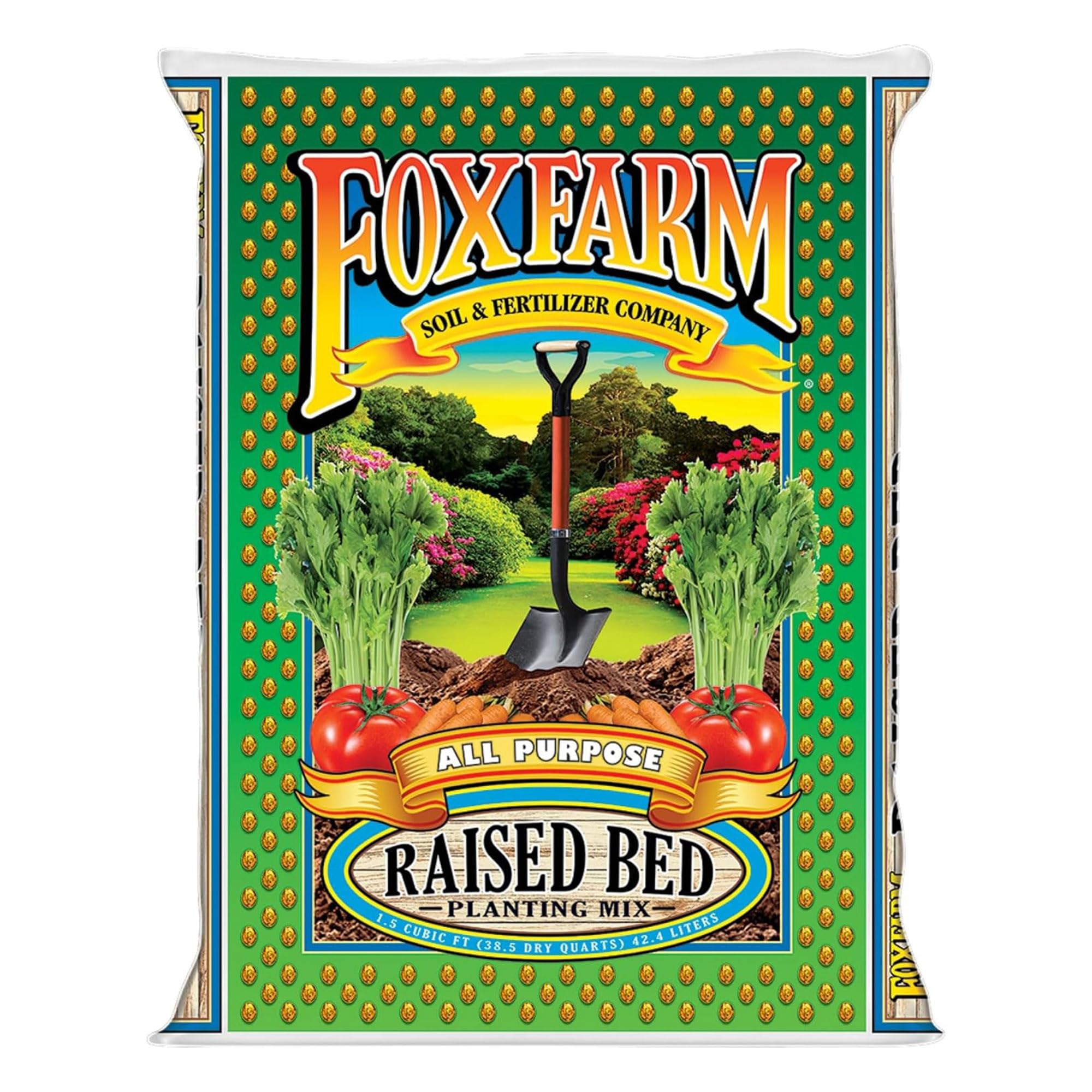
The FoxFarm Raised Bed Planting Mix is engineered specifically for open-bottom raised beds and large containers, not repurposed from a potting soil formula. With 50-60% aged forest products and sphagnum peat moss as the structural backbone, it holds moisture without turning into a solid block mid-season.
Earthworm castings supply a gentle nitrogen release, while oyster shell and dolomite lime buffer the pH around 6.3 to 6.8 — the sweet spot for most vegetables and fruiting plants. The 1.5-cubic-foot bag delivers more volume per bag than standard 1-cubic-foot offerings.
Owner feedback highlights how this mix stays fluffy after months of rain and watering, which reduces the need to aerate or amend mid-season. Users moving from cheap topsoil blends report noticeably fewer drainage issues and stronger root systems in peppers, tomatoes, and leafy greens.
What works
- Ready-to-use with zero mixing required.
- Excellent moisture retention without becoming waterlogged.
- High volume per bag reduces shipping waste.
What doesn’t
- Can be difficult to source locally in some regions.
- Bag weight (40 pounds) is heavy for some users to move.
2. Coast of Maine Castine Blend
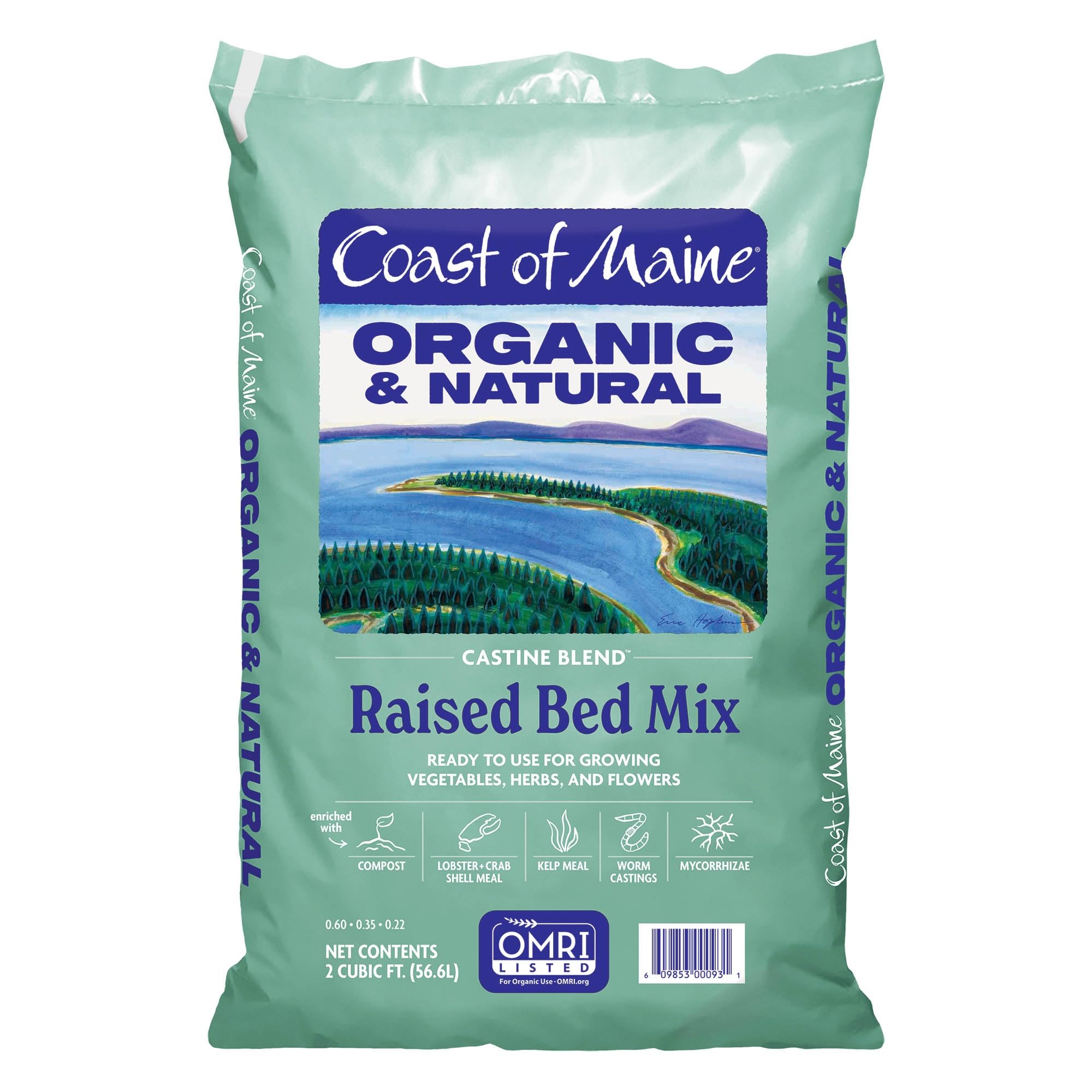
The Coast of Maine Castine Blend is built around biological density. Worm castings, mycorrhizal fungi, and biochar form the active core, while green sand and kelp meal supply trace minerals that synthetic blends lack. Biochar is especially useful in raised beds because it resists nutrient leaching during heavy rain.
At 2 cubic feet per bag, this is one of the highest-volume premium bags available, making it a strong candidate for larger beds. The texture is notably light and fluffy straight out of the bag, with no compaction in the packaging. It is designed to go straight into the bed without tilling or mixing with native soil.
Long-term users report that this blend supports strong yields for three consecutive seasons before needing a top-dress amendment, which speaks to the slow-release profile of the lobster and crab shell meal. The dark, crumbly appearance signals high organic content with few woody fines or inert fillers.
What works
- High biological activity from mycorrhizae and worm castings.
- Large 2-cubic-foot bag covers more area per purchase.
- Biochar resists nutrient leaching in open-bottom beds.
What doesn’t
- Bag weight exceeds 40 pounds, challenging for some gardeners.
- Premium price per cubic foot compared to basic potting mixes.
3. Coast of Maine Bar Harbor Blend
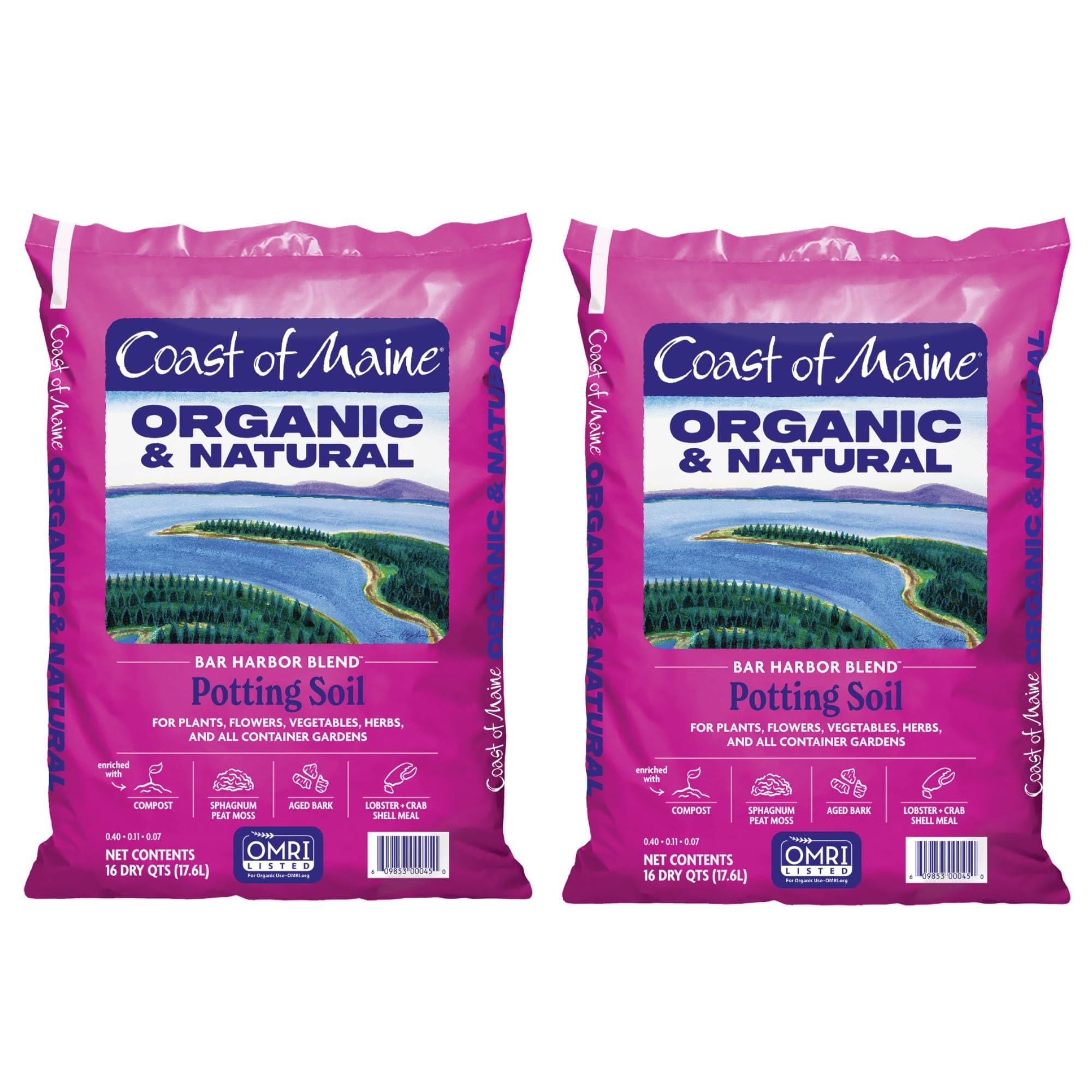
The Bar Harbor Blend from Coast of Maine uses sphagnum peat moss as the primary base but adds compost and perlite to improve drainage — a critical detail for raised beds that sit on clay or compacted subsoils. Lobster and crab shell meal provide a slow-release calcium and chitin source that supports soil food web organisms.
The 16-quart bag is sized for smaller raised beds or container-intensive setups. Many users combine this with bulk topsoil to stretch the volume while retaining the biological advantages of the shell meals. The mix arrives dark and moist, not dusty, indicating proper compost maturity before bagging.
Approved for organic gardening, this blend avoids synthetic nitrogen spikes while still delivering steady growth in flowering vegetables and herbs. Growers moving from standard peat-perlite potting soils consistently note that the compost component makes the mix feel denser and more stable in windy bed locations.
What works
- High-quality compost base with marine-derived nutrients.
- Excellent for indoor or outdoor raised systems.
- pH balanced without amendment guesswork.
What doesn’t
- Bag size is small for filling large beds.
- Moisture content adds shipping weight.
4. Miracle-Gro Potting Mix (3-Pack)

The Miracle-Gro Potting Mix three-pack bundles three 8-quart bags into a single order, which is convenient for smaller containerized raised beds or tower gardens. The formula includes a slow-release fertilizer that feeds potted plants for up to six months, reducing the need for supplementary liquid feed during the growing season.
The blend is designed primarily for outdoor containers, but many owners use it successfully in shallow raised beds (under 10 inches). The perlite content keeps the mix light and well-draining, and the absence of uncomposted wood fines reduces the risk of nitrogen tie-up.
Owner reviews consistently mention that this mix is ready to use with no clumps or sticks, and the resealable bag design keeps the unused portion from drying out between fills. Some gardeners note that the fertilizer charge is heavier than organic blends, so it is best matched to hungry feeders like tomatoes and squash.
What works
- Built-in slow-release feed lasts through the season.
- Good drainage structure for container environments.
- Resealable bags protect unused mix.
What doesn’t
- Not organic or OMRI-listed.
- Small bag size requires multiple orders for large beds.
5. Michigan Peat General All Purpose

The Michigan Peat General All Purpose blend is a bulk-oriented bag designed for gardeners filling large raised beds without paying a premium for boutique ingredients. It combines reed sedge peat (distinct from sphagnum peat) with perlite and sand to create a mix that drains faster than pure peat and holds structure longer than cheap topsoil blends.
This blend includes both a starter fertilizer and slow-release fertilizer, so it delivers immediate nutrition for new transplants plus sustained feeding for about four to six weeks. The 50-pound bag makes it one of the most economical options per cubic foot, especially for bottom-layer fill in deep beds.
Some customers report fungal gnat emergence when the bag is stored damp, so opening it over a tarp and aerating before use is wise. The mix works best when combined with compost or worm castings for long-term fertility, but it stands alone well for quick-season crops like radishes and lettuce.
What works
- High bag weight provides low per-volume cost.
- Includes quick and slow-release fertilizer.
- Ready to use with no mixing required.
What doesn’t
- Contains sand, making it heavier than peat-based alternatives.
- Potential for fungus gnat emergence in stored bags.
6. Midwest Hearth Premium Potting Soil Mix

The Midwest Hearth Premium Potting Soil Mix brings a professional-grower formulation into an affordable 8-quart bag. The inclusion of both perlite and vermiculite gives this mix a dual-action structure — perlite ensures large air pockets for drainage while vermiculite holds moisture and exchanges cations.
The pH is balanced for a broad range of plants, from acid-preferring flowers to neutral-loving vegetables. The blend arrives dry and fluffy, which is ideal for seed starting and for top-dressing small raised beds where a lighter texture is needed.
Users note that the mix requires a thorough initial soak, because dry peat can repel water and create dry spots in the bed. After the first wetting cycle, the moisture retention improves noticeably. For budget-conscious growers using half-barrels or small 2×2-foot beds, this bag delivers reliable performance at a low entry point.
What works
- Balanced perlite and vermiculite for aeration and moisture.
- pH-controlled for versatile plant compatibility.
- Excellent texture for seed starting and cuttings.
What doesn’t
- Needs thorough pre-soaking to overcome water repellency.
- Small volume limits use to small containers only.
7. Avalution Premium Organic Coir Bricks
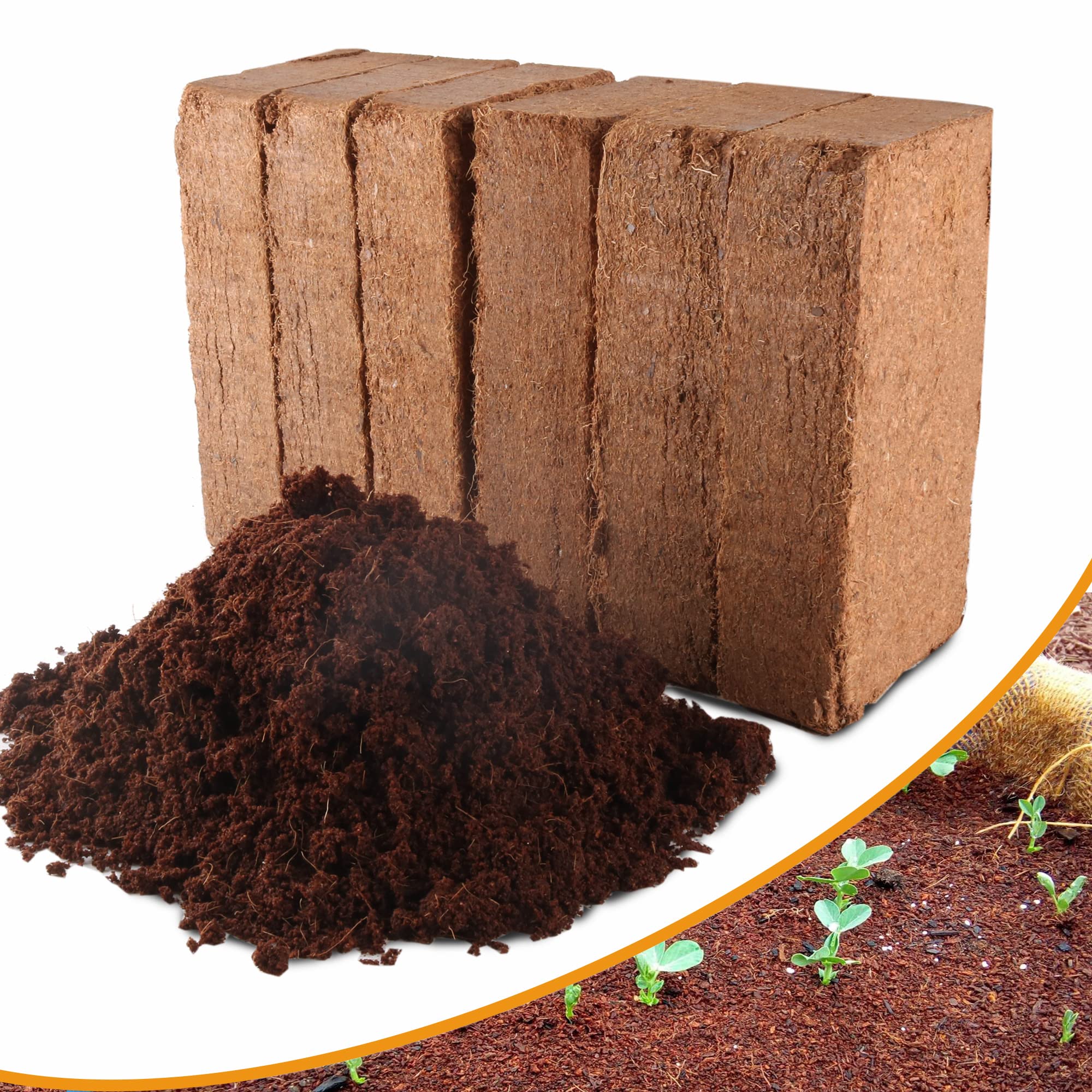
The Avalution Premium Organic Coconut Coir Bricks offer a lightweight, compressible base for gardeners who want to build custom raised bed mixes without hauling heavy bags. Each brick expands to roughly 6 quarts when hydrated, and the six-brick pack totals 36 quarts — enough to fill a 2×3-foot bed about 4 to 5 inches deep.
Coir is naturally pH-balanced (around 5.5 to 6.5) and has a low electrical conductivity, making it a safe base for seedlings and for mixing with compost or worm castings. The fibers absorb up to ten times their weight in water, which reduces watering frequency in hot climates, especially when blended with perlite or pumice.
Users who combine these bricks with a bag of premium compost and aeration materials report excellent results for deep-rooted vegetables. The main caveat is that coir alone lacks nutrients, so it must be used as a base medium rather than a complete soil. Proper hydration — soaking each brick overnight — is non-negotiable for even expansion.
What works
- Extremely lightweight for shipping and storage.
- Low EC and stable pH for seed starting and sensitive plants.
- Excellent water-holding capacity for hot climates.
What doesn’t
- Must be mixed with compost or fertilizer for nutrition.
- Requires overnight soaking before use.
Hardware & Specs Guide
Aeration and drainage ratio
Raised bed soil performs best when it contains 25-35% air space after saturation. Blends with perlite, expanded shale, or coarse horticultural sand hold this air space longer than those relying on peat alone. The goal is a mix that drains within 4 to 6 hours after heavy rain, preventing root zone saturation that leads to pythium rot.
Organic matter percentage
Look for blends listing 30-50% organic matter in their ingredient breakdown. Lower percentages mean the bag is primarily mineral filler (sand, silt, clay) with limited microbial food. Higher organic matter percentages support a more active soil food web but also decompose faster, requiring annual top-dressing with compost or worm castings.
Cation exchange capacity
The CEC of a soil determines how well it holds onto positively charged nutrients like calcium, magnesium, and potassium. Biochar, worm castings, and high-quality compost raise CEC significantly. Sandy or bark-heavy blends have low CEC and will leach nutrients during heavy irrigation, requiring more frequent feeding.
pH range and buffering
A pH range of 6.0 to 6.8 is ideal for most vegetable crops. Blends pre-loaded with dolomitic lime or oyster shell flour provide buffering that resists pH drift. Mixes high in sphagnum peat may start around 4.5 to 5.5 and require lime amendment, while coir-based blends generally sit in the 5.5 to 6.5 range without amendment.
FAQ
Can I use regular topsoil in a raised garden bed?
How often should I replace the dirt in my raised garden bed?
What is the difference between potting soil and raised bed mix?
Final Thoughts: The Verdict
For most gardeners, the dirt for raised garden beds winner is the FoxFarm Raised Bed Planting Mix because it balances moisture retention, drainage, and nutrient density in a ready-to-use bag sized for serious bed volume. If you want a biologically active living soil with mycorrhizae and biochar, grab the Coast of Maine Castine Blend. And for a budget-friendly base that you can customize with your own compost, nothing beats the Avalution Organic Coir Bricks.