
Curved garden borders demand a material that marries flexibility with rigidity: enough give to sweep around a tree ring, enough backbone to keep mulch off the sidewalk after a downpour. The wrong choice means constantly resetting stakes or hiding wavy, warped edges that ruin the clean line you paid for.
I’m Rikta — the co-founder and writer behind Lawn Gear Lab. I’ve spent countless hours cross-referencing material tensile strengths, galvanization coatings, and real-owner feedback on dozens of edging profiles to isolate which ones actually hold a curve without kinking and stand up to a string trimmer’s abuse.
Whether you are defining a sweeping perennial border or corralling river rock around a patio, this analysis of the best curved garden borders will help you match the right gauge and material to your precise landscape layout.
How To Choose The Best Curved Garden Borders
Selecting a border for curved installations revolves around three core conflicts: how much flexibility you need without losing structural memory, how deep below the soil line you must go to stop rhizome invasion, and how much impact your trimmer string can deliver before the material cracks. Ignoring any of these three leads to a saggy, useless line within one season.
Material Memory vs. Curve Radius
Corrugated steel holds a set curve well because the ripples create a natural hinge point, but it can kink if bent tighter than its radius limit. HDPE plastic needs sun-warming to relax its coil memory; install it cold and it will fight to spring back straight. Resin faux-stone sections interlock at fixed angles, so you are limited to the joint’s pivot range — great for gentle arcs, frustrating for tight circle beds.
Below-Grade Height for Root Blocking
A 4-inch-tall border buried 1.5 inches leaves only 2.5 inches above ground — enough to define a line but useless against creeping Bermuda grass rhizomes. For serious weed suppression you need a 6-inch or taller panel that can sit 2 to 3 inches deep. Measure your target weed’s root depth, not just your mulch depth, before choosing a profile.
Stake Density and Anchor Design
A border is only as straight as its stakes. Budget kits often include one stake per 3 to 4 feet, which works for straight runs but leaves curves unsupported. For sweeping bends, you need a stake every 18 to 24 inches, preferably with barbed or T-shaped heads that resist frost heave. Metal stakes driven through pre-punched holes lock the edge more securely than plastic stakes wedged against the face.
Quick Comparison
On smaller screens, swipe sideways to see the full table.
| Model | Category | Best For | Key Spec | Amazon |
|---|---|---|---|---|
| Land Guard Corrugated 6″×50′ | Corrugated Metal | Tall, sweeping curves with heavy mulch | 6 in. tall x 50 ft. length | Amazon |
| Worth Pre-Rusted Wide 10″×20′ | Corrugated Steel | Deep-root weed barriers with rustic look | 10 in. tall x 20 ft. length | Amazon |
| Master Mark Terrace 5″×40′ Black | HDPE Plastic | Wood-grain aesthetics with flexible curves | 5 in. tall x 40 ft. length | Amazon |
| Master Mark Terrace 4″×40′ Brown | HDPE Plastic | Budget-friendly straight-to-curve transitions | 4 in. tall x 40 ft. length | Amazon |
| FunFanso 5″×40′ White Kit | PE Plastic | No-dig, high-visibility white borders | 5 in. tall x 40 ft. with 72 stakes | Amazon |
| Beuta Faux Stone Cobblestone | Resin Faux Stone | Decorative borders on gentle arcs | 2.25 in. H x 48 in. per section | Amazon |
| FunFanso 2″×66′ Kit | PE Plastic | Low-profile, high-stake-density edging | 2 in. tall x 66 ft. with 100 spikes | Amazon |
In‑Depth Reviews
1. Land Guard Corrugated Garden Edging Border, 6″×50′
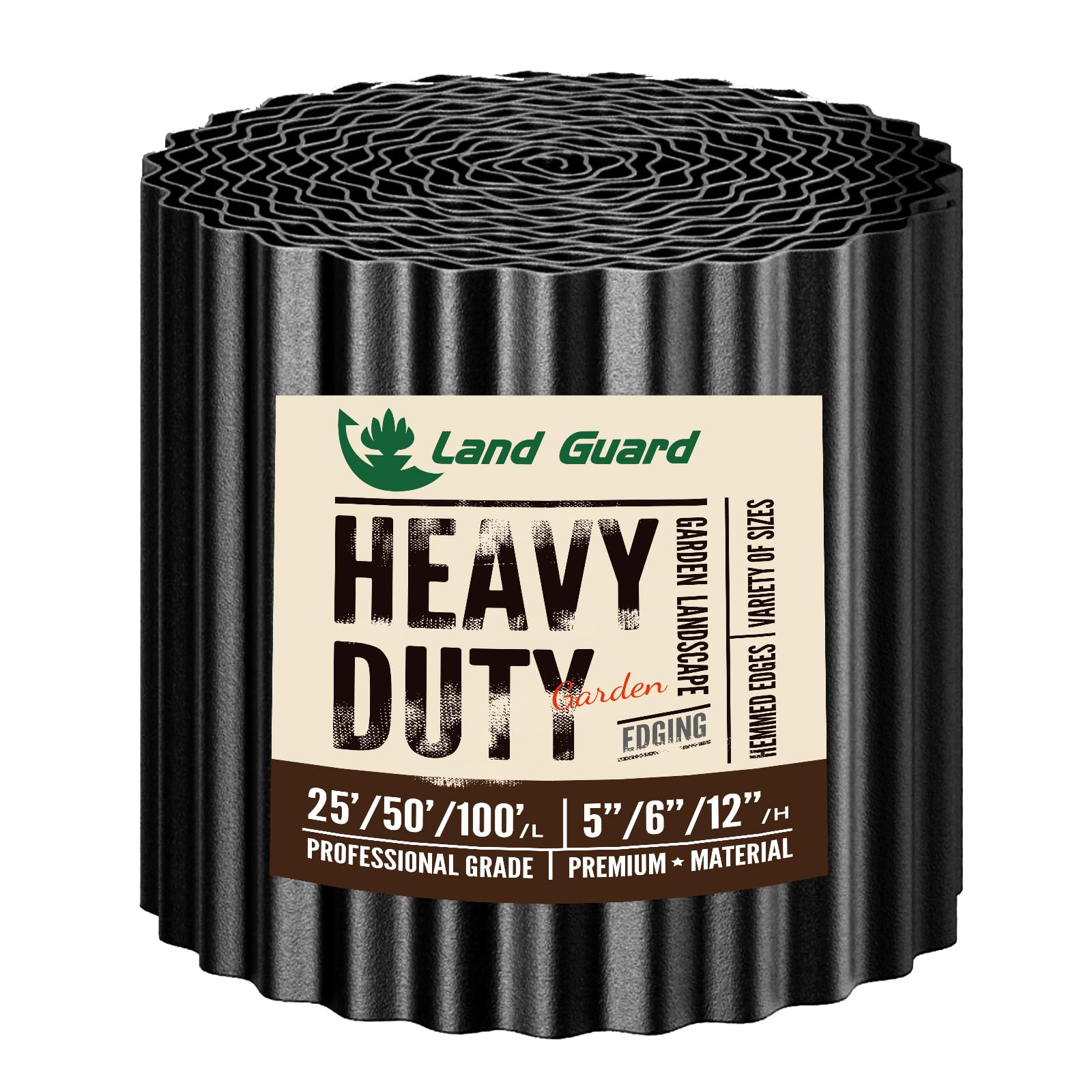
The Land Guard delivers the best height-to-coverage ratio in this class. At 6 inches tall and 50 feet long, it provides enough below-grade depth to block creeping roots while leaving a visible 3-to-4-inch lip above soil. The 3D ripple design made with high-precision CNC forming gives each corrugation consistent structural rigidity — the metal bends smoothly around a 2-foot-radius circle without kinking the way flat steel panels do.
Owners consistently report that the black galvanized coating holds up against string-trimmer strikes and direct soil contact without flaking. The 4.78-kilogram weight per coil feels substantial in hand, yet the metal is thin enough to cut with aviation snips if you need a custom length. The biggest practical advantage over plastic alternatives is the material’s memory: once you hammer it into a curve, it stays there without needing extra stakes to fight spring-back.
The natural limitation is that installation is not truly “no-dig” — you must trench or soak the soil before driving the edge. Rocky or heavily compacted clay requires a pre-dug slot, which adds labor compared to a stake-and-hammer plastic kit. But for anyone who values a permanent, trimmer-proof boundary that looks deliberate rather than temporary, the Land Guard justifies the extra effort.
What works
- CNC-formed corrugations create smooth curves without kinking
- 6-inch height buries deep enough to deter rhizome penetration
- Galvanized coating resists rust and weed-eater abrasion
What doesn’t
- Requires trenching or wet-soil technique for firm ground
- No stakes included — must purchase separately for curves
2. Worth Pre-Rusted Wide-Corrugated Garden Edging, 10″×20′

At 10 inches tall, the Worth panel is the tallest option here, making it the definitive choice for raised beds or borders that need serious below-grade bite against deep-rooted weeds. The pre-rusted surface skips the awkward “wait for it to patina” phase — you get a consistent rust-brown finish from day one that blends into naturalistic or cottage-style gardens without screaming “new metal.”
The alloy steel composition is thicker than standard corrugated strips; owners note it handles tight curves without cracking and stands up to repeated weedeater contact better than any plastic equivalent. The hemmed edges reduce the chance of cutting yourself during installation, though the raw cut ends after trimming still need gloves. After one year outdoors, testers report zero rust spots beyond the intentional patina and no warping from freeze-thaw cycles.
The shorter 20-foot length per coil is the main trade-off. Large-scale projects will need multiple coils and overlapping joints, which can create visible seams if not carefully aligned. The initial coil tension is also high — expect to wrestle the roll flat in the sun or under a heavy board for an hour before installation.
What works
- 10-inch depth is unmatched for blocking invasive root systems
- Pre-rusted patina eliminates natural weathering wait time
- Thick alloy steel resists denting and trimmer damage
What doesn’t
- 20-foot length requires multiple coils for larger perimeters
- Coil tension makes initial flattening difficult without warmth or weight
3. Master Mark Terrace Board, 5″×40′ (Black)

Master Mark’s 5-inch black terrace board bridges the gap between function and finish. The HDPE material carries a molded wood-grain texture that reads as natural timber from a few feet away but won’t rot, split, or require annual sealing. At 40 feet per coil with 10 stakes included, it covers a substantial border run without needing a second package for an average suburban lot.
The plastic’s flexibility is temperature-dependent. Owners consistently recommend laying the coil flat in direct sunlight for at least an hour before installation. Once warm, the HDPE bends into sweeping arcs without stress-whitening or cracking and holds the curve after cooling. The 5-inch height allows 1.5 inches of burial while still leaving a 3.5-inch above-grade wall strong enough to contain shredded bark or pea gravel.
The single most common complaint is stake count — 10 stakes for 40 feet leaves unsupported gaps, especially on curves. For a serpentine layout you will need to buy additional stakes or space them closer than recommended. The material also can look slightly wavy along long straight runs if not backfilled tightly, so precise trenching is necessary for a truly straight line.
What works
- Realistic wood-grain texture complements natural landscapes
- HDPE won’t rot, peel, or fade after multiple seasons
- Warm plastic bends easily into smooth, continuous curves
What doesn’t
- Insufficient stakes included for dense curve support
- Cold installation leads to spring-back and wavy lines
4. Master Mark Terrace Board, 4″×40′ (Brown)
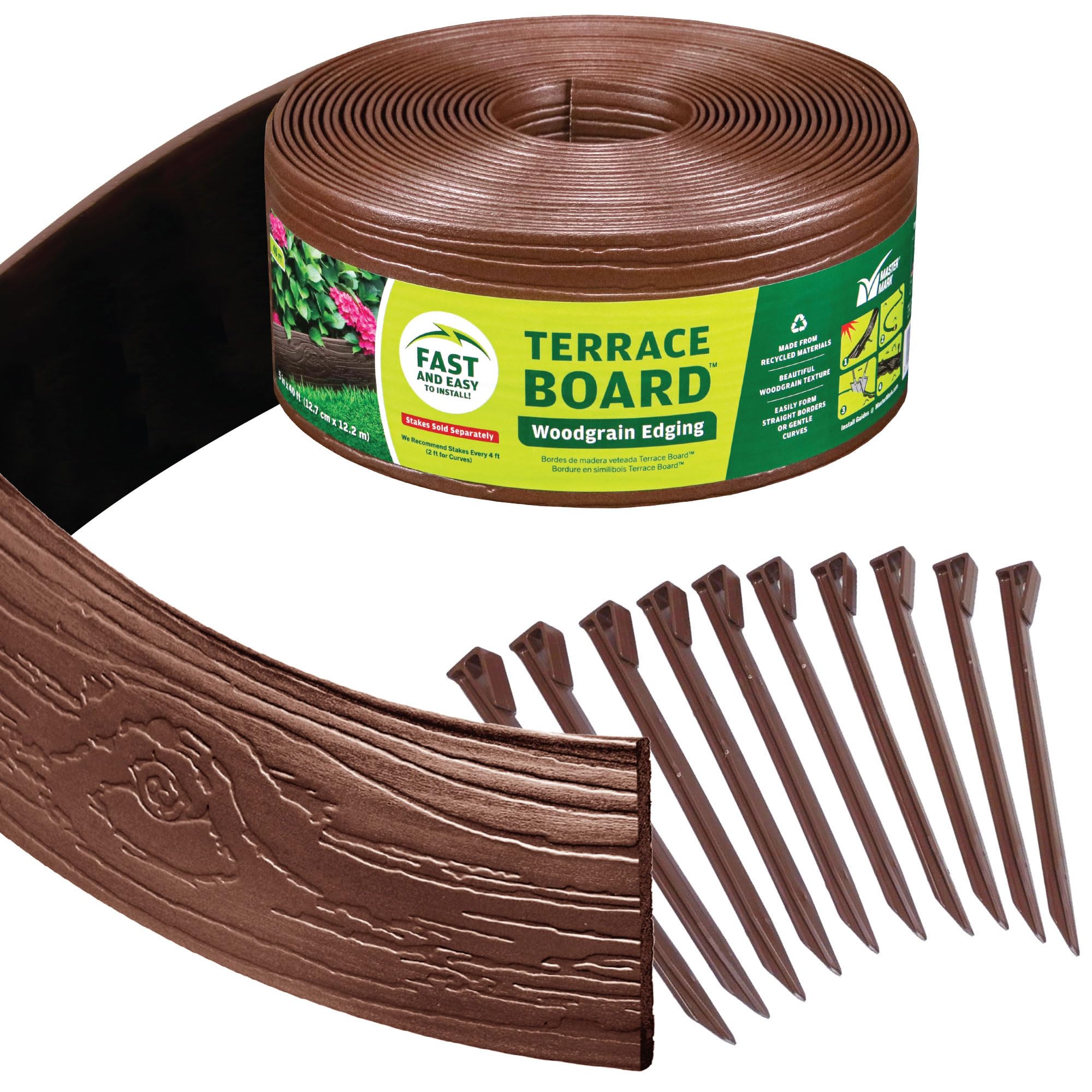
The 4-inch brown variant from Master Mark is the entry-level workhorse of the HDPE lineup. It shares the same recycled-plastic composition and wood-grain molding as the 5-inch black version but at a lower profile that works best for shallow bed definition rather than serious root blocking. The brown color blends into soil and mulch, making the border disappear visually while keeping grass and gravel separated.
At 40 feet of coverage for the same price point as shorter metal coils, this board offers the best linear-foot value in the comparison. Owners report using it for straight-to-curve transitions around existing trees and shrubs, noting that the 4-inch height is enough to catch a string trimmer without damage. The material cuts cleanly with hedge shears or a utility knife, so custom fit adjustments are quick.
The 4-inch height also means less than 3 inches of above-ground visibility after the required 1.5-inch burial, so it will not create a strong visual boundary for tall flowers or deep mulch layers.
What works
- Excellent cost-per-foot value for medium-scale projects
- Brown color hides naturally in soil and dark mulch
- Recycled HDPE construction with decades of brand reliability
What doesn’t
- 4-inch height limits visible definition and root blocking
- Requires additional stakes for secure curve anchoring
5. FunFanso 5″×40′ White Landscape Edging Kit
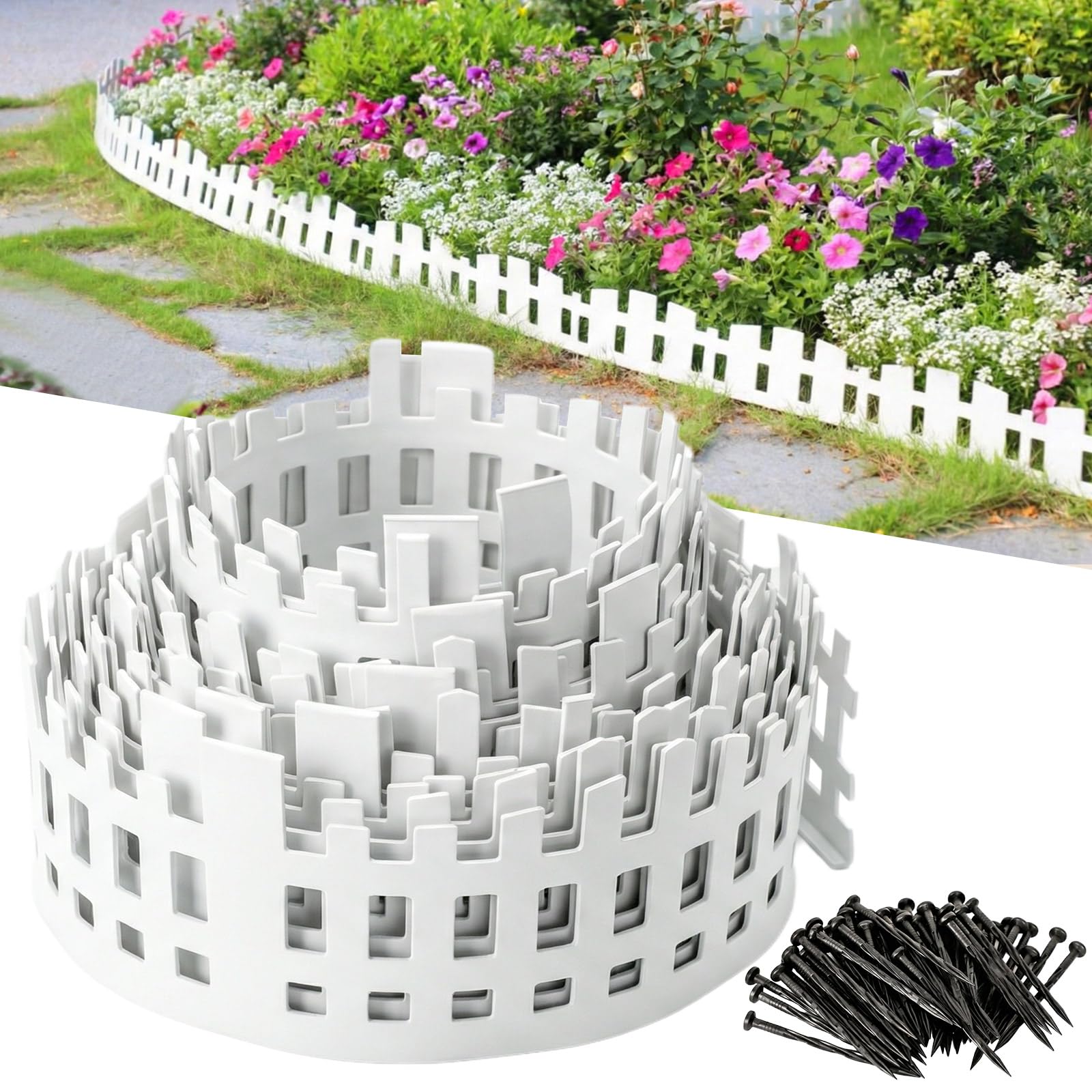
The FunFanso white kit prioritizes convenience and visual demarcation. At 5 inches tall with 72 included stakes, you get more than one stake per foot of edging — which is triple the density of most competitors. That stake count lets you pin down even tight serpentine curves every few inches, eliminating the unsupported gaps that cause plastic borders to wiggle after rain.
The thickened polyethylene material is UV-stabilized and designed for no-dig installation: you lay the strip on the surface along your desired line and hammer the spikes directly through the pre-punched holes. The white color creates high contrast against green turf and dark soil, making it ideal for formal gardens or pathways where you want the border itself to be a design element rather than a hidden barrier.
The downside is the same as other thin-profile plastics: the 5-inch height is vulnerable to cracking if hit at full speed by a metal-bladed edger. Owners also note that the white finish shows dirt splatter after rain and requires occasional hosing to maintain its crisp appearance. The included stakes have thin tips that can snap if you hit a root or stone during installation.
What works
- 72 stakes provide exceptional curve-holding support
- True no-dig installation saves hours of trenching labor
- White color creates clean, formal bed definition
What doesn’t
- White plastic shows dirt and needs periodic cleaning
- Stake tips snap easily in rocky or root-filled soil
6. Beuta Landscape Edging Faux Stone Bricks, Cobblestone
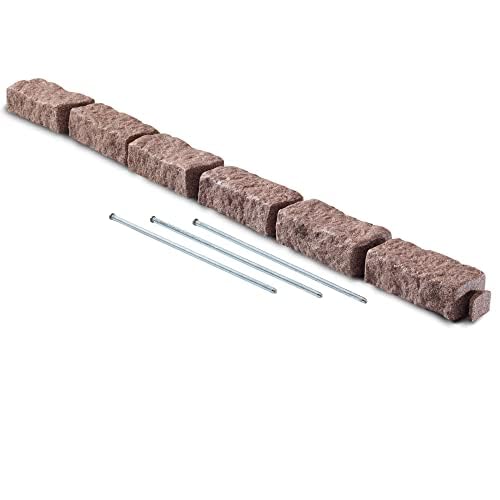
The Beuta system takes a fundamentally different approach to curves — rather than bending a continuous strip, it uses interlocking 48-inch sections of faux cobblestone that pivot at the joints. Each section contains six molded bricks fused to a resin base, creating the look of laid stone without the mortar or weight. The realistic texture and warm gray tone fool the eye at normal viewing distance, giving a permanent masonry appearance for a fraction of the cost.
Installation is straightforward: stake each section through the pre-drilled holes with the included spikes, then connect the next section via the tongue-and-groove joint. The pivot range allows for modest curves — think gentle arcs around a patio or sweeping bed outlines — but it cannot handle the tight radius of a 3-foot-diameter tree ring without significant gap exposure.
The 2.25-inch height is the lowest of any product here, making this purely a surface-level visual border rather than a functional barrier. Mulch or soil will wash over the top in heavy rain, and rhizomatous weeds will slide right underneath. Owners consistently praise the appearance but note that the price per linear foot is higher than any continuous roll option, and the end caps of each run lack stake holes, requiring an additional spike package for a complete installation.
What works
- Realistic cobblestone look provides high-end curb appeal
- Interlocking sections install quickly without cutting
- Withstands foot traffic and string trimmer contact
What doesn’t
- 2.25-inch height offers no functional root or mulch barrier
- Pivot range too limited for tight radius curves
7. FunFanso 2″×66′ Landscape Edging Border Kit
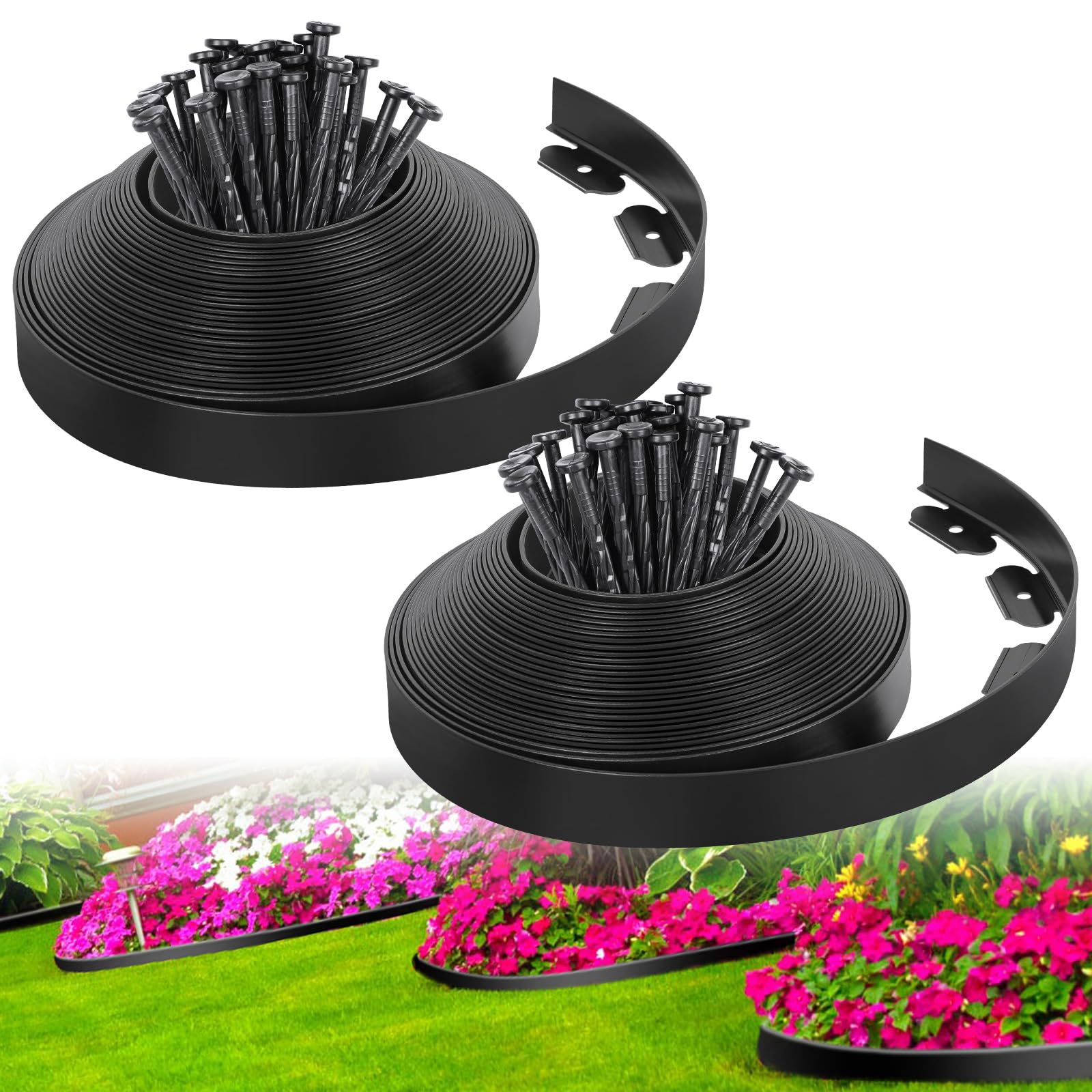
The 2-inch-tall FunFanso kit covers 66 linear feet and includes 100 stakes — the highest linear-foot value in this entire comparison. The polyethylene strip sits barely above ground level, making it ideal for situations where you want a subtle separation between turf and bed without a visible barrier. Think of it as a below-grade grass stopper rather than a traditional border.
Installation is as simple as laying the strip along your edge and hammering the included spikes through the pre-punched holes. The 100-stake count means you can place a spike every 8 inches on curves, creating a rigid pinned line that holds even in sandy or loose soil. The material cuts effortlessly with scissors or a utility knife, so custom path layouts are quick to execute.
The trade-off is that this profile cannot contain mulch, define a raised bed, or stop anything with roots deeper than 2 inches. It is strictly a grass-to-soil separator. Owners also note that the spike tips are prone to bending when driven into compacted or rocky soil, and the 2-inch height disappears completely if you apply a 3-inch layer of fresh mulch, requiring you to memorize where the edge runs.
What works
- 66 feet of coverage at lowest cost per foot
- 100 spikes allow dense pinning on complex curves
- Trims quickly with basic household tools
What doesn’t
- 2-inch height offers no visible border after mulching
- Spike tips deform easily in hard or rocky ground
Hardware & Specs Guide
Gauge & Corrugation Pitch
Steel edging thickness is not always listed in millimeters, but the corrugation pitch — the distance from one ridge peak to the next — determines how tightly the strip can bend. A 1.5-inch pitch allows 12-inch-radius curves; a 2-inch pitch is stiffer and better suited to gentle sweeping arcs. HDPE boards have no corrugation but rely on material thickness (typically 0.1 to 0.15 inches) and sun-warming to achieve flexibility. Thicker HDPE resists cracking but requires more heat to bend.
Anchoring Stake Profile
Stakes vary from thin L-shaped wire pins to heavy-duty T-bars. The thin stakes included with budget kits are adequate for loose soil but buckle against clay or roots. Upgrading to 8-inch galvanized steel stakes with a barbed shaft increases pull-out resistance by roughly 40 percent. For curved installations, staggering stakes on alternating sides of the border (inside the curve and outside the curve) locks the shape more effectively than a straight-line pattern.
FAQ
Can I use curved garden borders to contain bamboo or aggressive runners?
How deep should I bury a curved garden border to prevent frost heave?
Does corrugated steel rust through faster than flat steel edging?
Final Thoughts: The Verdict
For most gardeners, the best curved garden borders winner is the Land Guard Corrugated 6″×50′ because it combines the ideal 6-inch height for both root blocking and visible definition with a CNC-formed corrugation that bends smoothly without kinking. If you want a pre-aged, high-visibility statement with maximum below-grade depth, grab the Worth Pre-Rusted 10″×20′. And for a low-effort, no-dig project that still delivers tight curve control on a budget, nothing beats the FunFanso 2″×66′ Kit with its 100 included stakes.