
Rhubarb is a heavy feeder that demands a steady supply of organic matter to push out those thick, tart stalks season after season. Choosing the wrong compost can lead to poor yields, weak growth, or even nutrient burn that sets your patch back for months.
I’m Rikta — the co-founder and writer behind Lawn Gear Lab. I’ve spent countless hours dissecting soil science, comparing NPK ratios, studying decomposition methods, and cross-referencing thousands of owner reports to find the exact compost blends that rhubarb crowns actually thrive on.
Whether you’re planting a new bed or rejuvenating an established one, finding the right compost for rhubarb means balancing nitrogen for leaf growth with calcium and potassium for stalk strength without risking root burn or nutrient lockout.
How To Choose The Best Compost For Rhubarb
Rhubarb is a perennial that pulls heavy nutrients from the soil every year. The right compost replenishes what the stalks remove while building long-term soil structure. The wrong one can stall growth or create a toxic environment around the crown.
Check the NPK Ratio for Stalk Production
Rhubarb needs a moderate nitrogen level to fuel leaf expansion but higher potassium and phosphorus to support stalk thickness and root storage. Look for ratios near 3-4-4 or 6-2-4 — formulas that emphasize fruit and flower development actually work well because rhubarb stalks behave like fruit stems.
Prioritize Calcium and Micronutrients
Calcium is critical for cell wall structure in rhubarb stalks. Composts with added calcium carbonate, oyster shell, or crab meal help prevent hollow, weak stalks. Micronutrients like iron and magnesium from kelp or seaweed prevent interveinal chlorosis on mature leaves.
Decide Between Slow-Release and Liquid Feeds
Granular composts release nutrients slowly as soil microbes break them down, making them ideal for top-dressing around crowns in early spring. Liquid composts provide an immediate boost when plants show stress or after a heavy harvest. Both have a place in a rhubarb feeding schedule.
Quick Comparison
On smaller screens, swipe sideways to see the full table.
| Model | Category | Best For | Key Spec | Amazon |
|---|---|---|---|---|
| Espoma Organic Land and Sea | Premium Compost | Established beds & transplanting | Lobster + crab meal, mycorrhizae | Amazon |
| Sustane All Natural Vegetable Food | Granular Fertilizer | Long-term soil building | 5 lb, pelletized chicken manure | Amazon |
| Espoma Organic Garden-Tone 3-4-4 | Granular Fertilizer | Balanced monthly feeding | 3-4-4 ratio with 5% calcium | Amazon |
| GS Plant Foods Root Ruckus | Liquid Bio-Stimulant | Quick recovery & root growth | Liquid, humic acid + kelp | Amazon |
| R&M Organics Premium Compost | Manure Compost | Moisture retention & all-purpose | 10 lb bag, dairy cow manure | Amazon |
| Brut Cow Compost | Pure Manure Compost | Odor-free indoor & raised beds | 10 quart, OMRI listed | Amazon |
| Down To Earth Fruit Tree 6-2-4 | Fruit Tree Fertilizer | Calcium boost for stalk strength | 6-2-4, OMRI listed powder | Amazon |
In‑Depth Reviews
1. Espoma Organic Land and Sea Gourmet Compost

Espoma’s Land and Sea is a ready-to-use planting mix that combines lobster and crab meal for a calcium and chitin boost — exactly what rhubarb needs to build thick, rigid stalks. The 24-pound bag spreads easily as a top-dressing around crowns or mixes into beds at transplant time. Myco-Tone mycorrhizae in the formula help roots access nutrients deeper in the soil profile.
This compost works well as a soil conditioner because it improves both drainage in heavy clay and moisture retention in sandy soils. The marine-based ingredients deliver trace minerals like zinc and copper that standard manure composts often lack. For rhubarb beds that have been producing for three years or more, this mix replenishes micro-nutrients that annual fertilizers skip.
Owners report noticeable improvements in hosta size and vegetable yields, and the smell is mild and earthy rather than overpowering. The only real trade-off is the larger bag size — not ideal for a single small raised bed unless you have other plants to feed.
What works
- High calcium from crustacean meals strengthens stalks
- Mycorrhizae improve long-term soil biology
- Works as both planting mix and side dressing
What doesn’t
- Bag may be bulky for small spaces
- Not a concentrated fertilizer — use as compost supplement
2. Sustane All Natural Flower and Vegetable Plant Food

Sustane uses composted poultry manure as its base, delivering a complete nutrient profile without synthetic fillers. Independent trials show it produces more fruits and blooms than standard organic fertilizers, which translates directly to rhubarb stalk mass when used as a spring top-dressing. The 5-pound bag covers roughly 50 square feet at the recommended rate.
Granules break down steadily over 8-10 weeks, providing consistent feeding through the main growing season without the risk of a nitrogen flush that can cause splitting. Mixing a half-cup into the top six inches of soil around each crown gives rhubarb access to both immediate and slow-release nutrients. The microbial biodiversity boost also helps break down existing organic matter in the bed.
Reviewers consistently report explosive growth in raised beds and soilless mixes, with one gardener regrowing over 150 onion scraps in water with Sustane in under two weeks. On the downside, the pelleted form can attract surface moisture clumping if stored in humid conditions, so keep the bag sealed.
What works
- Pelletized format meters nutrients slowly
- Proven results in raised bed vegetable trials
- Encourages beneficial soil microbe activity
What doesn’t
- Granules may clump if bag is left open
- Requires incorporation into soil for best effect
3. Espoma Organic Garden-Tone 3-4-4 (Pack of 2)

Garden-Tone’s 3-4-4 analysis is nearly ideal for rhubarb — higher phosphorus and potassium than nitrogen supports stalk density while keeping leaves from getting overly lush and prone to fungal issues. The 5% calcium content is a standout for a granular fertilizer at this tier, directly addressing the hollow-stalk problem that plagues rhubarb in acidic or calcium-poor soils.
The Bio-tone formula includes endo and ecto mycorrhizae plus beneficial bacteria that colonize the root zone. Applying one cup per 10 square feet every month during the growing season maintains steady nutrient availability without burning crowns. The two-pack gives enough material to feed a six-foot by four-foot bed for an entire season.
Experienced gardeners on the reviews call Espoma their go-to year after year, noting that even accidental over-application doesn’t scorch plants. The smell is earthy but stronger than mineral fertilizers — work it into the soil surface to keep the scent contained.
What works
- Calcium content prevents weak, hollow stalks
- Forgiving formula resists burning roots
- Two-bag pack covers full season
What doesn’t
- Has a noticeable organic odor
- Requires monthly reapplication
4. GS Plant Foods Root Ruckus Liquid Compost
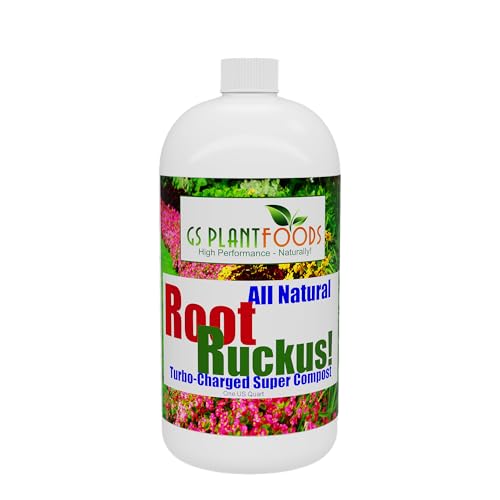
Root Ruckus is a liquid bio-stimulant that combines humic acid, liquid kelp, and mycorrhizae into a concentrated formula you dilute at 1-4 ounces per gallon. For rhubarb crowns recovering from transplant shock, cold damage, or heavy harvest stress, this delivers an immediate root-zone boost that granular composts can’t match. The humic acid improves nutrient uptake from whatever soil you already have.
Use it as a soil drench in early spring when the first leaf buds break and again after the main harvest to help the plant store energy for next year. The kelp provides natural cytokinins that stimulate cell division, directly supporting stalk elongation. Users report reviving cold-shocked tomato plants overnight, which mirrors the recovery a stressed rhubarb crown would experience.
The concentrate is cost-efficient — a 32-ounce bottle makes up to 32 gallons of solution. The only catch is that it’s a supplement, not a complete fertilizer, so you’ll still need a granular compost for baseline nutrition throughout the season.
What works
- Fast-acting liquid for stress recovery
- Humic acid unlocks existing soil nutrients
- High dilution ratio extends bottle life
What doesn’t
- Must be paired with a base fertilizer
- Needs measuring and mixing
5. Down To Earth Fruit Tree Fertilizer 6-2-4

Though labeled for fruit trees, this 6-2-4 formula works exceptionally well on rhubarb because it delivers a higher nitrogen front-end for leaf expansion while the calcium carbonate and langbeinite supply potassium and magnesium for stalk rigidity. Feather meal and fish bone meal provide long-chain proteins that break down gradually over 4-6 weeks.
Apply it in early spring when the soil temperature reaches 40°F and again just after the first harvest to push a second round of stalk production. The powder texture mixes easily into the top two inches of soil around each crown. OMRI listing means it’s certified for organic production, which matters if you’re selling rhubarb at farmers markets.
Reviews highlight its ability to revive cold-damaged trees, and several users mention using it on fruiting canes and shrubs with excellent results. The one drawback is the powder can form dust clouds when poured — wear a dust mask in dry conditions.
What works
- High calcium content for sturdy stalks
- Certified organic and OMRI listed
- Suitable for early spring and post-harvest feeding
What doesn’t
- Powder can become airborne during application
- Needs incorporation into soil surface
6. Brut Cow Compost – OMRI Listed Manure

Brut Cow Compost is pure composted cow manure, finely sifted to a uniform texture that spreads evenly around crowns without large clumps. It’s OMRI listed and completely additive-free, making it one of the safest options for edible crops. The fully aerobic composting process eliminates the ammonia smell typical of raw manure, leaving a neutral earthy scent suitable for indoor and outdoor use.
For rhubarb, this works best as a top-dressing applied in fall or early spring, allowing winter frosts to work the nutrients into the root zone. The organic matter content improves water retention in sandy soils and drainage in clay, both critical for preventing crown rot. Mixing it in a 3:2 ratio with potting soil gives container-grown rhubarb a rich, loose medium.
First-time growers on reviews report planting seeds into a Brut-compost blend and seeing rapid growth within weeks. The only limitation is that it’s a general soil amendment rather than a targeted nutrient mix — you’ll want to supplement with a balanced granular feed during peak production.
What works
- Zero odor, suitable for indoor use
- Fine, sifted texture spreads easily
- OMRI certified organic
What doesn’t
- Needs supplementation during peak growth
- Bag size covers only small to medium beds
7. R&M Organics Premium Organic Compost
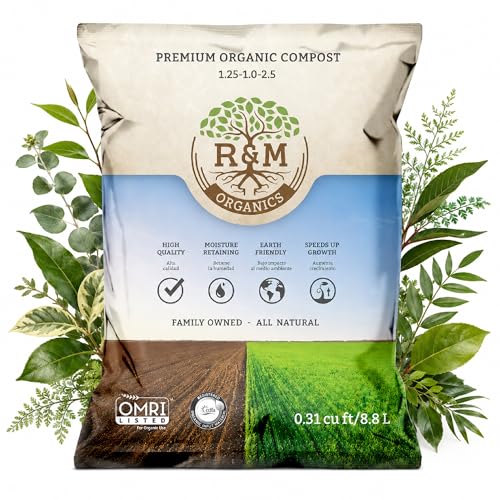
R&M Organics compost comes from fully composted dairy cow manure processed with continuous aeration to minimize odors and break down impurities. The final product has a clean, soil-like texture that doesn’t clump or cake, making it easy to work into established rhubarb beds. A quarter-inch layer applied around the crown base provides enough nutrients for a full season with reduced watering frequency.
The moisture retention advantage is significant — users report needing fewer waterings after incorporating this compost into raised beds, which is especially valuable during dry summer months when rhubarb can bolt if stressed. It’s labeled for both indoor and outdoor use, so it works equally well for potted rhubarb grown on patios or in greenhouse beds.
Reviews mention a Master Gardener recommendation for saving azaleas after chemical damage, underscoring its gentleness on sensitive root systems. Rhubarb crowns are hardy, but new divisions benefit from this low-risk organic boost. The 10-pound bag is compact but covers a surprising area when used as a thin top-dressing.
What works
- Low odor, works indoors or outdoors
- Fine texture won’t mat or clump
- Improves moisture retention in dry beds
What doesn’t
- Primary source is manure — not a complete nutrient blend
- Small bag for larger gardens
Hardware & Specs Guide
Understanding NPK Ratios for Rhubarb
Rhubarb responds best to a ratio where potassium and phosphorus equal or exceed nitrogen. A 3-4-4 analysis provides enough N for leaf expansion without sacrificing stalk strength. Ratios like 6-2-4 work for spring kick-start but should be followed with a balanced feed mid-season to avoid nitrogen overload that produces soft, flopping stalks.
Calcium’s Role in Stalk Integrity
Calcium is the structural backbone of rhubarb stalks. Composts containing calcium carbonate, crab meal, or oyster shell provide the 5-8% calcium content needed to prevent hollow stems and tip burn. Soils below pH 6.0 lock up calcium, so test your bed’s pH and aim for 6.0-6.8 before applying calcium-rich amendments.
FAQ
Can I use standard vegetable compost on rhubarb?
How often should I apply compost to my rhubarb bed?
Is fresh manure safe for rhubarb?
Final Thoughts: The Verdict
For most gardeners, the compost for rhubarb winner is the Espoma Organic Land and Sea Gourmet Compost because the marine-based calcium and mycorrhizae address both immediate stalk strength and long-term soil biology. If you want a precise, measurable NPK ratio with forgiving application, grab the Espoma Organic Garden-Tone 3-4-4 two-pack. And for reviving a stressed crown or giving new divisions a fast start, nothing beats the GS Plant Foods Root Ruckus liquid concentrate.