
The difference between a tray of thriving tomato seedlings and a wilted, leggy disaster often comes down to one choice you make before the first seed ever touches soil. Vegetable seeds demand a medium that is fine-textured enough for tiny roots to penetrate, light enough to prevent compaction, and sterile enough to ward off damping-off disease — conditions that standard potting soil simply cannot deliver. Getting this wrong means wasting weeks of prime growing time on weak transplants that never recover.
I’m Rikta — the co-founder and writer behind Lawn Gear Lab. I spend hundreds of hours each season cross-referencing spec sheets, studying germination trials, and analyzing thousands of owner reports to isolate the core differences between soilless blends, peat-based mixes, and compressed coir bricks so you know exactly what your vegetable starts need.
Selecting the right growing medium is the single most important step toward a strong harvest, and this guide breaks down the best options among the current crop of seed starting mix for vegetables to help you match the right texture and ingredients to your specific setup and skill level.
How To Choose The Best Seed Starting Mix For Vegetables
Vegetable seeds are tiny and their first roots are fragile. A mix that works for repotting a mature houseplant can smother a germinating pepper seed. Focus on texture, water behavior, and whether the medium is sterile before you worry about nutrients.
Texture and Particle Size
Seedlings do not need the chunky bark or coarse perlite that benefits larger container plants. A premium vegetable starter mix feels almost like fine sand or dry coffee grounds — uniform enough that every seed makes consistent contact with the medium. Large pieces create air pockets that cause roots to dry out before they can establish. Stick with mixes that list no ingredients larger than 3–4 millimeters.
Moisture Absorption vs. Drainage
The best seed starting formula holds water like a wrung-out sponge — damp but never pooling at the bottom of the tray. Peat moss can hold up to 20 times its weight in water, while coconut coir offers slightly faster drainage with less compaction over time. Vermiculite soaks up three to four times its volume and releases moisture slowly. A blend of two or three of these materials usually outperforms any single ingredient.
Nutrient Content and pH
Most vegetable seeds contain enough stored energy to germinate without added fertilizer. Too much nitrogen too early encourages weak, leggy growth. Look for a mix with no synthetic plant foods or slow-release granules. The pH should fall between 5.5 and 6.5 — slightly acidic, which favors most common vegetables like tomatoes, peppers, and leafy greens. Lime is occasionally added to buffer peat-based mixes, which helps prevent the medium from turning too acidic.
Quick Comparison
On smaller screens, swipe sideways to see the full table.
| Model | Category | Best For | Key Spec | Amazon |
|---|---|---|---|---|
| Espoma Organic Seed Starter | Premium Soilless | Organic gardeners needing mycorrhizae | 16 qt (2-pack) with endo/ecto mycorrhizae | Amazon |
| Black Gold 8-Quart Seedling Mix (2-Pack) | Fine-Textured Premium | Consistent germination without woody debris | 8 qt (2-pack) with very fine texture | Amazon |
| Hoffman Seed Starter 10qt | Six-Component Blend | High moisture absorption with added lime | 10 qt with wetting agent and lime | Amazon |
| Soil Sunrise All Natural 8-Quart | Hand-Blended Organic | Heirloom & organic seed compatibility | 8 qt with worm castings and coarse sand | Amazon |
| Jiffy Natural & Organic 10 QT | Classic Peat-Vermiculite | Root ball cohesion for transplanting | 10 qt with peat, vermiculite, and lime | Amazon |
| MODELLOR Coco Coir 4-Pack (5 lb) | Compressed Coir Brick | Space-saving storage & high yield | Expands to 36 qt, pH-balanced, triple-washed | Amazon |
| Burpee Organic Coconut Coir 16qt | Single-Brick Coir | Budget-friendly, renewable peat alternative | 16 qt from 1 compressed brick, OMRI listed | Amazon |
In‑Depth Reviews
1. Espoma Organic Seed Starter Premium Potting Soil Mix (2-Pack)
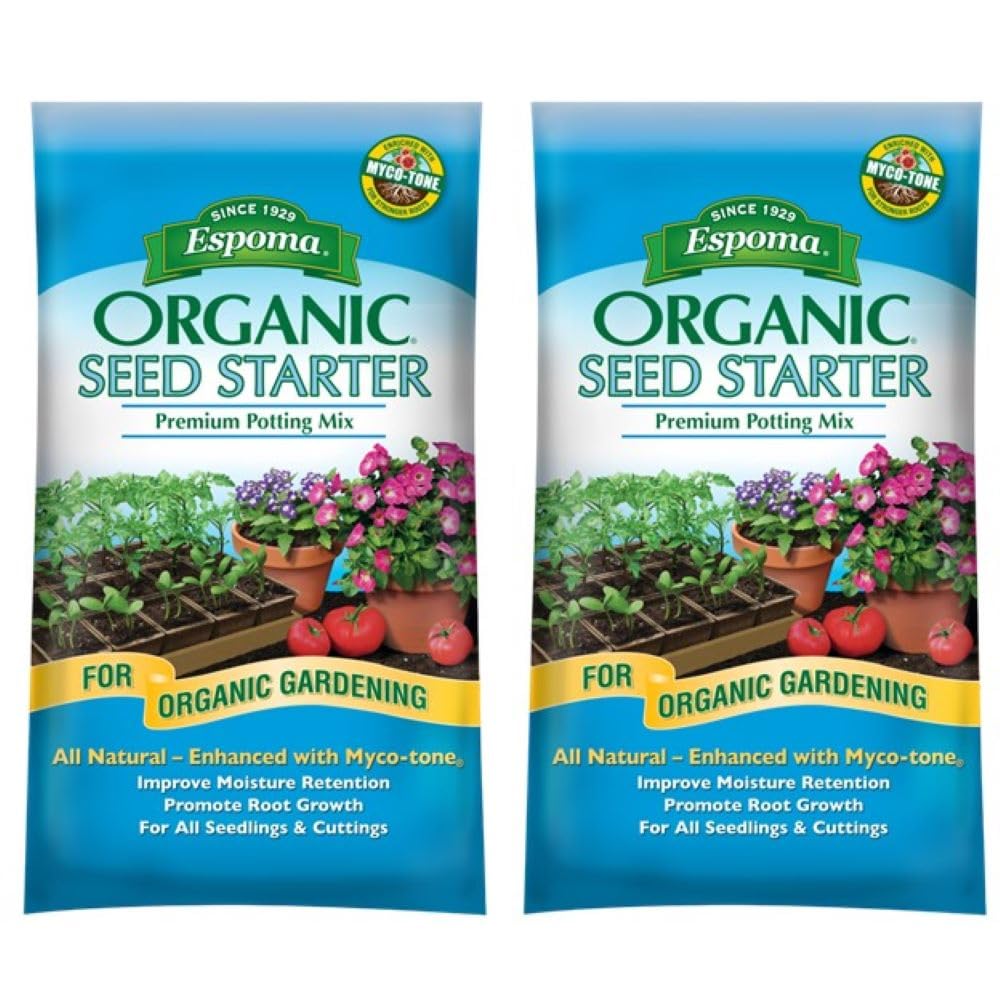
Espoma’s premium offering stands apart because it incorporates both endo and ecto mycorrhizae — beneficial fungi that colonize seedling root systems early, improving nutrient uptake before the first true leaves even unfold. The base blend of sphagnum peat moss and perlite provides the light, fluffy texture that vegetable seeds need, while yucca extract acts as a natural wetting agent to ensure the medium rehydrates evenly rather than beading up on the surface. The two-pack delivers 32 total quarts, which is enough to fill multiple 72-cell trays without needing to supplement with a second bag.
In germination trials, the mix consistently produces strong, uniform seedlings with minimal damping-off, largely because the sterile sphagnum peat base resists the fungal pathogens that plague dirt-cheap potting soil. Reviewers report that one 16-quart bag completely fills five standard 10×20 seed trays, giving each cell about the same air-to-water ratio. The addition of lime brings the pH into the 5.5–6.5 sweet spot, so vegetable species from broccoli to basil germinate without yellowing or stalling.
The medium’s fine particle size means it holds together well enough to move transplants without crumbling, which is critical when you are moving young tomato or pepper starts to larger containers. Keep in mind that the mycorrhizae are living organisms — store the sealed bag in a cool, dry place and avoid heat exposure that could kill the fungal network before you open it.
What works
- Live mycorrhizae improve early root development and transplant survival
- Fine, uniform texture with no large wood chunks or debris
- Excellent moisture retention without waterlogging cells
What doesn’t
- Premium price per quart compared to generic blends
- Mycorrhizae lose viability if bag is stored in extreme heat for long periods
2. Black Gold 1311002 8-Quart Seedling Mix (2 Pack)

Black Gold’s seedling mix earns its reputation from the near-complete absence of bark, twigs, and other oversized particles that plague many mass-market starter soils. The texture is so fine that it resembles damp brown sugar, allowing even the smallest lettuce or carrot seed to establish contact with moisture on all sides. The two-pack format gives you 16 quarts total, which is a practical volume for a single-season home vegetable garden without requiring storage space for a massive bale.
User reports consistently highlight germination rates above 90 percent across a wide range of vegetable species, from slow-to-start parsley to fast-sprouting radishes. The blend is lightweight and stays aerated even after repeated watering cycles, which directly reduces the risk of the root-rot issues that appear when peat-based mixes compact over two to three weeks. One minor complaint is that, compared to a homemade mix with added compost, seedling growth can initially appear slightly slower — but this is by design, as the medium has no heavy fertilizer that could burn tender radicles.
Transplanting is straightforward because the fine particles cling to the root ball without shaking loose, reducing transplant shock. If you are starting a large number of seeds across multiple flats, this mix offers a consistent, repeatable result batch after batch. Just be prepared to begin a dilute fertilizer regimen once the first true leaves appear, since the mix itself provides minimal nutritional support beyond the germination phase.
What works
- Extremely fine, consistent texture with no visible wood or debris
- Holds together well during transplant, reducing root disturbance
- Germination rates consistently above 90 percent in owner reports
What doesn’t
- Small seedling size can lag behind mixes with added worm castings
- Dries out faster than coir-heavy blends if humidity is low
3. Hoffman Seed Starter Potting & Planting Mix 10qt

Hoffman blends six separate components — a proprietary mix that includes peat moss, vermiculite, perlite, lime, and a wetting agent — to create a soilless medium engineered specifically for seed germination. The wetting agent is the standout feature here: many peat-dominant mixes become hydrophobic when they dry out, forcing growers to soak trays for hours just to get the top layer moist. Hoffman’s additive ensures water penetrates immediately on the first watering, saving time and preventing dry pockets that kill newly germinated roots.
The fine, uniform consistency makes this mix ideal for shallow seed trays where root space is at a premium. Users who compared it side-by-side with pure coconut coir noted that the Hoffman blend produced sturdier, more vigorous vegetable seedlings, likely because the combination of vermiculite and perlite provides better aeration than coir alone. The added lime buffers the pH to a range that suits most vegetable crops, eliminating the need to adjust acidity before planting. A typical 10-quart bag fills three standard 1020 trays with cells, giving you ample coverage for a moderate garden.
Keep in mind that the medium contains virtually no fertilizer — the manufacturer explicitly advises starting a feeding schedule after the first set of true leaves emerges. A few reviewers noted that the bag lacks a resealable closure, so either transfer the unused portion to a sealed container or use it quickly to maintain sterility.
What works
- Wetting agent prevents hydrophobic dry spots and ensures even moisture
- Six-component blend balances aeration and water retention precisely
- Fine consistency with minimal dust or large particles
What doesn’t
- No built-in nutrients require early supplemental feeding
- Bag design lacks a resealable closure after opening
4. Soil Sunrise All Natural Seed Starting Mix 8-Quart
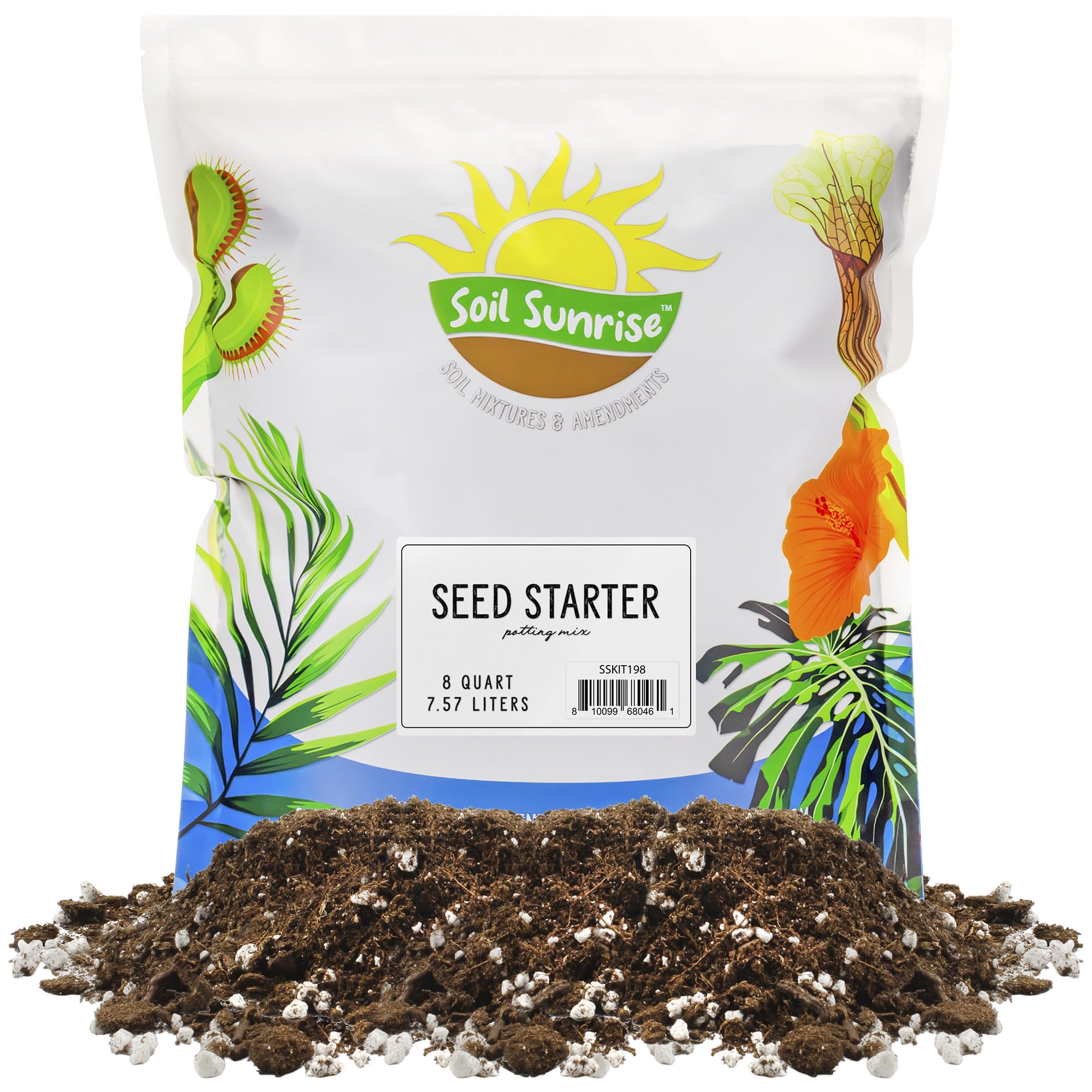
Soil Sunrise takes a different approach by including worm castings and coarse sand alongside the standard peat and perlite base. The worm castings introduce a gentle, slow-release nutrient profile that sustains seedlings from germination through the first transplant without the risk of chemical burn — a meaningful advantage for heirloom and organic vegetable growers who want to avoid synthetic inputs entirely. The coarse sand improves drainage and adds weight, helping the mix stay in place during bottom-watering routines.
The hand-blended formula also incorporates coconut coir and lime, creating a medium that retains moisture longer than pure peat while maintaining the fluffy structure that tender roots need to spread. Reviewer feedback is remarkably consistent: seeds germinate quickly, sprouts appear stocky rather than leggy, and the medium holds together during transplant without falling apart. The 8-quart volume is compact enough to fit small indoor growing setups but still covers three to four standard seed-starting trays.
One practical difference with this blend is that the worm castings add a darker color to the mix, making it slightly harder to judge soil moisture by appearance alone — you will need to lift a cell to feel the weight. The coarse sand component also means the mix is slightly heavier than pure peat or coir, so factor that in if you plan to move trays frequently.
What works
- Worm castings provide gentle, organic early nutrition for healthy seedlings
- Retains moisture well without becoming soggy or compacting
- Great for heirloom and organic vegetable varieties
What doesn’t
- Dark color makes moisture reading by sight less reliable
- Heavier than pure soilless blends due to sand content
5. Jiffy Natural & Organic Seed Starting Soil Mix 10 QT

Jiffy’s mix is the classic reference point for vegetable seed starting, combining sphagnum peat moss, vermiculite, and lime in proportions that have been trusted for decades. The peat provides the water-holding capacity — up to 20 times its weight — while the vermiculite prevents the medium from compacting into a dense brick after repeated watering. The result is a medium that feels almost fluffy in the hand and encourages roots to spread laterally through the cell rather than circling the bottom.
The fine particle size is a major asset for tiny vegetable seeds like carrots and lettuce, which need consistent surface contact to germinate reliably. Reviewers consistently note that this mix produces excellent germination rates and that the root ball holds together firmly when it is time to move seedlings into larger containers or the garden bed. The added lime eliminates the guesswork of pH adjustment, keeping the medium in the 5.5–6.5 range that peppers, tomatoes, and brassicas favor.
The main trade-off is that peat-based mixes can become slightly hydrophobic if allowed to dry out completely. Pre-wetting the mix in a bucket before filling your trays solves this issue, and the organic designation makes it compatible with OMRI-listed growing practices. As with most pure germination media, plan to begin liquid fertilizer approximately two weeks after emergence.
What works
- Classic, proven three-component formula for consistent germination
- Root ball stays intact during transplant, reducing shock
- Fine texture works well for tiny vegetable seeds
What doesn’t
- Peat can become hydrophobic if the medium dries out completely
- No added nutrients require early supplemental fertilizer
6. Burpee Organic Coconut Coir Concentrated Seed Starting Mix 16 Quart

Burpee’s compressed coir brick is the entry-level champion for vegetable growers who want a renewable, peat-free alternative without sacrificing performance. Each brick expands to 16 quarts when hydrated, and the dehydrated form takes up a fraction of the shelf space that bagged soil requires — a real advantage for apartment gardeners or those with limited shed room. The coir is OMRI listed and certified organic, making it suitable for certified organic vegetable production.
Coconut coir naturally resists fungal pathogens and remains structurally stable longer than peat, which slowly breaks down and compacts over a growing cycle. Users who pair this coir with grow lights and heating mats report rapid, vigorous growth, though several experienced growers warn that pure coir lacks the calcium and magnesium that young vegetable seedlings need. Supplementing with a dilute balanced fertilizer or mixing in worm castings solves this within a week of germination. The eco-friendly aspect — recycled coconut husks from a renewable source — is a genuine differentiator for sustainability-conscious gardeners.
One practical tip: hydrate the brick in warm water using a 5-gallon bucket and break it apart by hand after about 15 minutes. The finished texture is light but holds moisture effectively when covered with a humidity dome. However, if the tray is left uncovered in low humidity, coir dries out faster than peat, requiring more frequent bottom-watering.
What works
- Compact, lightweight storage until rehydration saves significant space
- Renewable, OMRI-listed organic material with natural disease resistance
- Excellent moisture retention under humidity domes
What doesn’t
- Pure coir lacks calcium and magnesium needed for strong vegetable seedlings
- Dries out faster than peat when not covered or in low humidity
7. MODELLOR Coco Coir Bricks 4-Pack (5 lb)
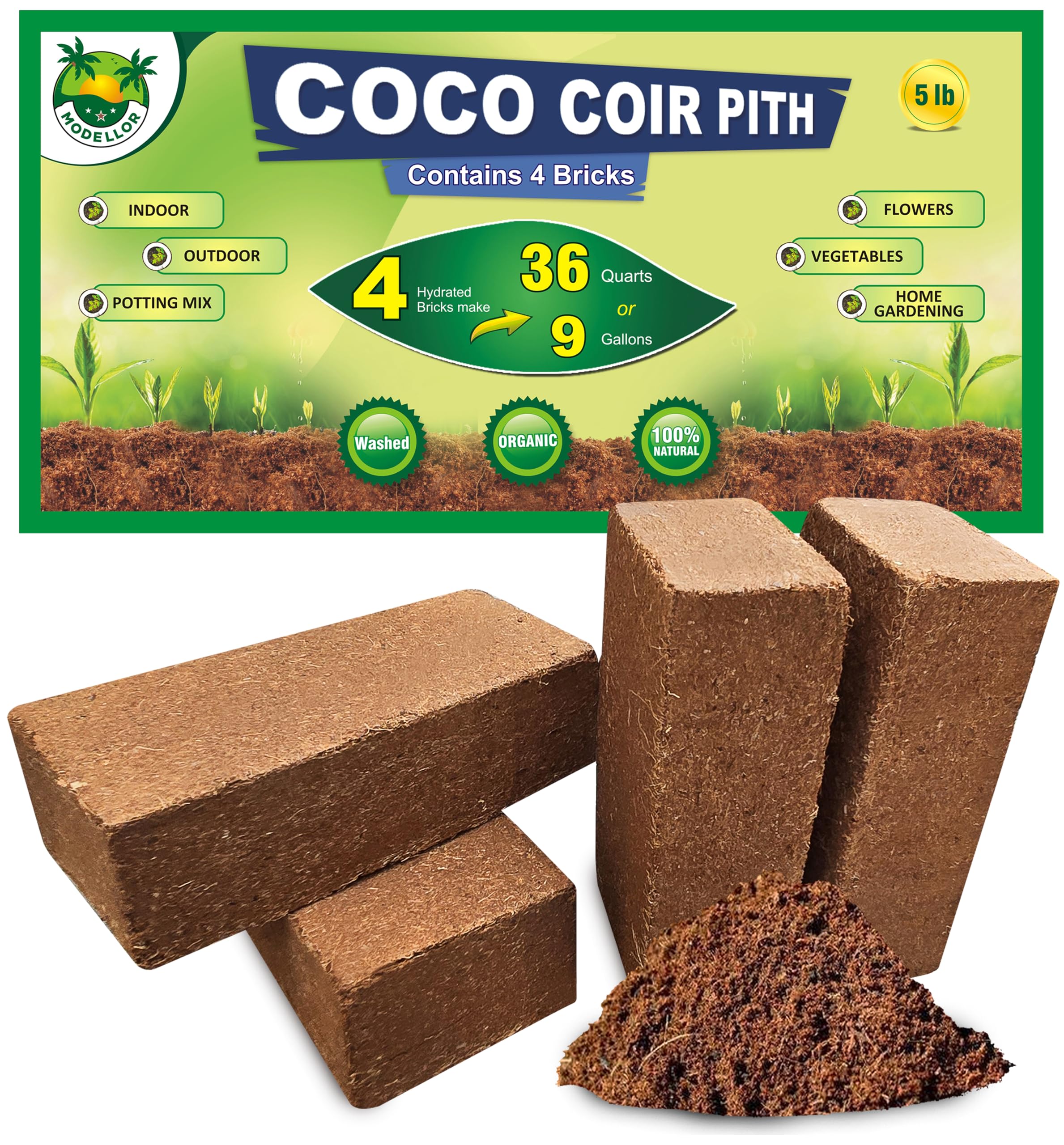
MODELLOR’s 4-pack of coco coir bricks brings the highest yield per dollar in this lineup — each 5-pound set expands to approximately 36 quarts of growing medium, enough to fill an entire season’s worth of seed trays, plus extra for potting mixes. The triple-washing process is the differentiator here: low-quality coir often carries high salt levels that stunt seedlings, but this batch is pre-buffered to a low electrical conductivity, meaning the medium is ready to use right after hydration without needing extra flushing.
The texture is consistent across all four bricks, with no odor or visible debris, and the airy structure promotes fast root penetration and excellent drainage. Vegetable growers using this coir for microgreens report rapid, uniform shoot development, while home gardeners note that it holds moisture without becoming soggy — a property that reduces the risk of damping-off in densely seeded flats. The compact brick format also makes it easy to store several packs in a small closet without the bulk of pre-moistened bagged soil.
Keep in mind that, like all pure coir, this medium has no built-in nutrients. Seedlings will need a diluted feeding within the first two weeks. The pre-washed, pH-balanced nature of this product makes it an ideal blank canvas for growers who prefer to customize their nutrient program, but beginners should be aware that it requires a feeding schedule rather than a “plant and forget” approach.
What works
- Triple-washed and pre-buffered reduces salt-related seedling problems
- Highest yield per dollar — 36 quarts from a compact 5-lb pack
- Clean, uniform texture with no odor or debris
What doesn’t
- No nutrients — requires a feeding schedule after germination
- Bricks must be fully soaked and broken apart which takes time
Hardware & Specs Guide
Peat vs. Coir: The Great Moisture Debate
Sphagnum peat moss can absorb up to 20 times its dry weight in water, which makes it the most water-retentive ingredient in seed starting mixes. The trade-off is that peat becomes hydrophobic when it dries out completely, requiring a wetting agent or pre-soaking to rehydrate. Coconut coir, on the other hand, absorbs about 8 to 10 times its weight and releases water more readily, making it harder to overwater. For moisture-sensitive vegetable seeds like lettuce or basil, coir provides a safer margin of error. For long-rooting crops like tomatoes and peppers, peat’s slower moisture release can sustain seedlings longer between waterings.
Understanding Soilless Blends and Sterility
A soilless mix contains no garden soil or compost — only peat, coir, vermiculite, perlite, and sometimes lime. This matters because garden soil carries fungal spores that cause damping-off disease, which kills seedlings at the soil line within days. Soilless blends are steam-treated or otherwise processed to eliminate pathogens, giving vegetable seedlings a sterile starting environment. The trade-off is that soilless blends contain almost no nutrients, so you must begin feeding with a diluted liquid fertilizer once the first true leaves appear — typically 10 to 14 days after germination.
FAQ
Can I reuse seed starting mix for a second batch of vegetable seedlings?
Should I add fertilizer to seed starting mix before planting vegetable seeds?
Final Thoughts: The Verdict
For most gardeners, the seed starting mix for vegetables winner is the Espoma Organic Seed Starter because its mycorrhizae inject a biological advantage into the root zone that no other bagged mix provides at this volume. If you want a consistent, debris-free experience with high germination rates, grab the Black Gold 8-Quart Seedling Mix (2 Pack). And for budget-conscious growers who need maximum yield from compact storage and prefer a sustainable peat alternative, nothing beats the MODELLOR Coco Coir 4-Pack.