
A flower bed isn’t just a hole in the ground — it’s a living system where texture, pH, aeration, and nutrient density determine whether your annuals explode with color or struggle to push out a single bud. The difference between a thriving bed and a stagnant patch of weeds often comes down to a single decision: what you fill it with. Most bagged soils are either too dense, too acidic, or stripped of organic matter, leaving roots gasping for air and starving for trace minerals.
I’m Rikta — the co-founder and writer behind Lawn Gear Lab. I’ve spent hundreds of hours cross-referencing soil composition data, studying organic amendments, and analyzing thousands of verified owner reports to separate the living soils from the glorified dust.
Whether you are amending native clay, refreshing raised beds, or building a new border from scratch, finding the right best dirt for flower bed means matching the specific texture and nutrient profile to your plants — and most generic mixes simply don’t cut it.
How To Choose The Best Dirt For Flower Bed
Flower bed soil is not a one-size-fits-all commodity. The ideal mix balances drainage, moisture retention, nutrient availability, and pH within a range your specific plants can actually access. Ignoring any of these variables can turn a season of color into a season of disappointment.
Texture: The Drainage vs. Retention Trade-off
Roots need oxygen. Heavy clay soil suffocates them; pure sand drains so fast that water-soluble nutrients wash away before roots can drink. The best flower bed soils use a blend of sphagnum peat moss or coco coir for moisture-holding capacity, perlite or aged bark for pore space, and compost for crumb structure. A loose, crumbly texture that holds together when squeezed but breaks apart easily is the visual benchmark for good aeration.
pH Range: Acid-Loving vs. Neutral Preference
Most flowering annuals and perennials thrive in a slightly acidic to neutral range of 6.0 to 7.0. However, specific plants like azaleas, rhododendrons, blueberries, and hydrangeas demand a lower pH around 4.5 to 5.5. Using a general-purpose mix for acid lovers locks up essential micronutrients like iron and manganese, causing yellowing leaves and stunted growth. Always check the bag’s intended pH target before pouring it into your bed.
Organic Matter: The Difference Between Dirt and Soil
Organic matter — composted manure, worm castings, kelp meal, and aged bark — feeds the microbial life that breaks down nutrients into plant-available forms. A bag that lists only peat moss, perlite, and synthetic fertilizer is a sterile growing medium, not a living soil. Look for OMRI-listed organic labels or visible compost chunks in the mix. The darker and more earthy the smell, the richer the biological activity.
Quick Comparison
On smaller screens, swipe sideways to see the full table.
| Model | Category | Best For | Key Spec | Amazon |
|---|---|---|---|---|
| Coast of Maine Bar Harbor Blend | Organic Potting Soil | Container & raised beds | 16 qt volume, lobster/crab meal | Amazon |
| Coast of Maine Acid-Loving Soil | Acid Mix | Azaleas, blueberries, rhododendrons | 20 qt, low pH formulation | Amazon |
| Espoma Organic Vegetable & Flower Soil | In-Ground Mix | Transplanting into native soil | 1 cu ft, mycorrhizae added | Amazon |
| Great Big Roses Liquid Fertilizer | Liquid Booster | Soil activation for roses | 32 oz, 70 trace minerals | Amazon |
| Old Potters Organic Compost | Pure Compost | Amending heavy clay soil | 24 qt, plant-based compost | Amazon |
| Avalution Organic Coco Coir Bricks | Coco Coir | Seed starting & moisture control | 6 bricks expand to 36 qt | Amazon |
| UBICON Coco Coir Bricks | Compressed Coir | Erosion control & top dressing | 4 bricks expand to 10 gal | Amazon |
In‑Depth Reviews
1. Coast of Maine Bar Harbor Blend Potting Soil
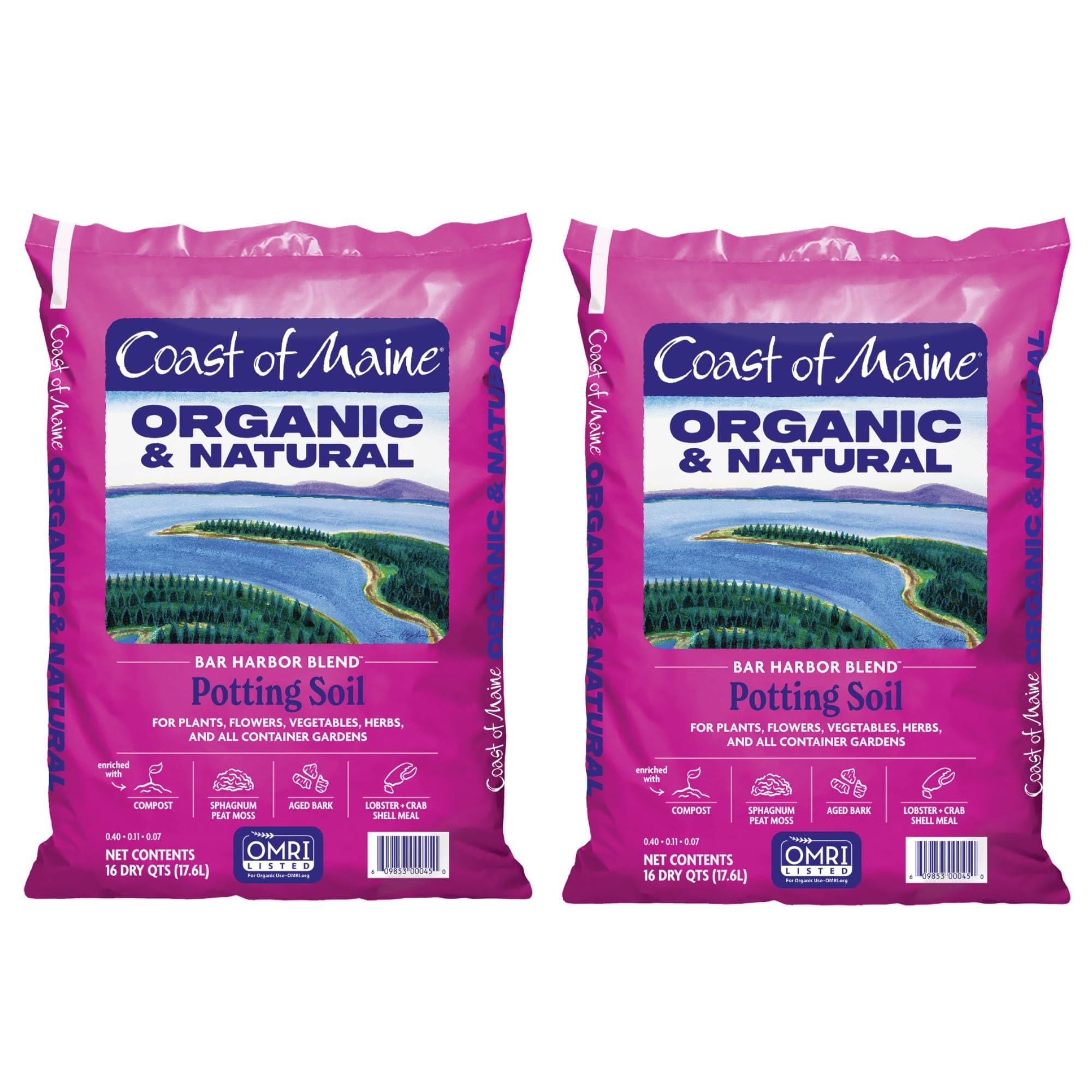
This is the benchmark for organic potting soil in flower beds. The Bar Harbor Blend combines sphagnum peat moss, compost, perlite, and the brand’s signature lobster and crab shell meal — a slow-release calcium and chitin source that suppresses soil-borne fungal pathogens while feeding microbial activity. The texture is uniformly dark and crumbly, with visible perlite flecks ensuring water doesn’t pool around root crowns.
At 16 quarts per bag, it is dense with nutrients compared to generic mixes that are mostly peat filler. Verified buyers consistently mention that container plants — from tomatoes to petunias — show visibly greener foliage and earlier bloom sets compared to top national brands. The kelp meal provides a natural cytokinin boost that stimulates root branching, which is critical for flower beds where you want quick establishment.
The only hesitation is the premium tier cost, but given that this mix requires no additional fertilizer for the first 6 to 8 weeks, you are paying for a complete growing medium rather than a bare base. For gardeners who want one bag that works across raised beds, hanging baskets, and in-ground borders, this is the most versatile pick on this list.
What works
- Marine-based organic ingredients provide long-term slow-release nutrition
- Excellent aeration and drainage balance for container and raised beds
- Consistently bug-free with no invasive weed seeds reported
What doesn’t
- Higher cost per quart compared to basic peat-based mixes
- 16-qt bag covers a limited area for large in-ground beds
2. Coast of Maine Organic Planting Soil for Acid Loving Plants

If your flower bed is home to rhododendrons, azaleas, blueberries, or hydrangeas, standard neutral soil will starve them of iron and manganese. Coast of Maine’s acid-loving formula uses a low-pH blend of sphagnum peat moss, composted manure, and aged bark to keep pH reliably in the 4.5 to 5.5 range. The texture is lighter than in-ground topsoil, with enough organic bulk to hold moisture without becoming anaerobic.
Verified buyers report rapid greening and increased flower bud count on blueberries and azaleas within a single growing season. Unlike some acid mixes that rely on chemical sulfur to drop pH — which can burn roots if over-applied — this formula uses natural peat acidity and organic compost to maintain the low-pH environment steadily. The 20-quart bag is generous enough to top-dress several mature shrubs or fill a half-dozen 12-inch containers.
One caveat: this is not designed for neutral-loving plants like most vegetables or annuals. Using it as a general mix for marigolds or zinnias would lock out essential nutrients. Stick to your acid-loving species and this soil delivers exceptional performance.
What works
- Reliable biologically acidic pH without harsh chemical additives
- Lightweight, well-aerated texture ideal for shrub borders
- OMRI-listed organic ingredients with no synthetic fillers
What doesn’t
- Not suitable for neutral or alkaline-preferring plants
- Bag volume is modest for large-scale in-ground amendments
3. Espoma Organic Vegetable & Flower Garden Soil

Espoma’s in-ground mix is designed specifically for transplanting into native flower beds — not as a standalone potting medium. It is a rich blend of peat moss, earthworm castings, and a proprietary Myco-Tone inoculant containing both endo and ecto mycorrhizae. These beneficial fungi form a symbiotic network around root systems, extending the root’s effective reach into surrounding soil to access water and phosphorus.
Owners consistently note that plants set into beds amended with this mix outperform those grown in generic topsoil, even when the native soil is heavy clay or sandy loam. The 1-cubic-foot bag — roughly 7.5 gallons — covers a significant area when tilled into a 4×8 foot bed at a 2:1 native-to-amendment ratio. The organic ingredients are certified to OMRI standards, meaning no synthetic chemicals or sludge byproducts.
The trade-off is that this soil is meant for blending, not standalone use. If you pour it straight into a container without adding perlite or drainage components, it can compact over time. Use it as an amendment to upgrade your existing ground soil, and it delivers professional-grade results at a reasonable cost per cubic foot.
What works
- Mycorrhizal inoculant dramatically improves root access to native soil nutrients
- Large bag size offers the best cost-per-cubic-foot value
- Worm castings provide immediate biological activity without burning
What doesn’t
- Requires mixing with native soil rather than standalone use
- Texture can compact in containers without additional perlite
4. Great Big Roses Liquid Fertilizer Booster
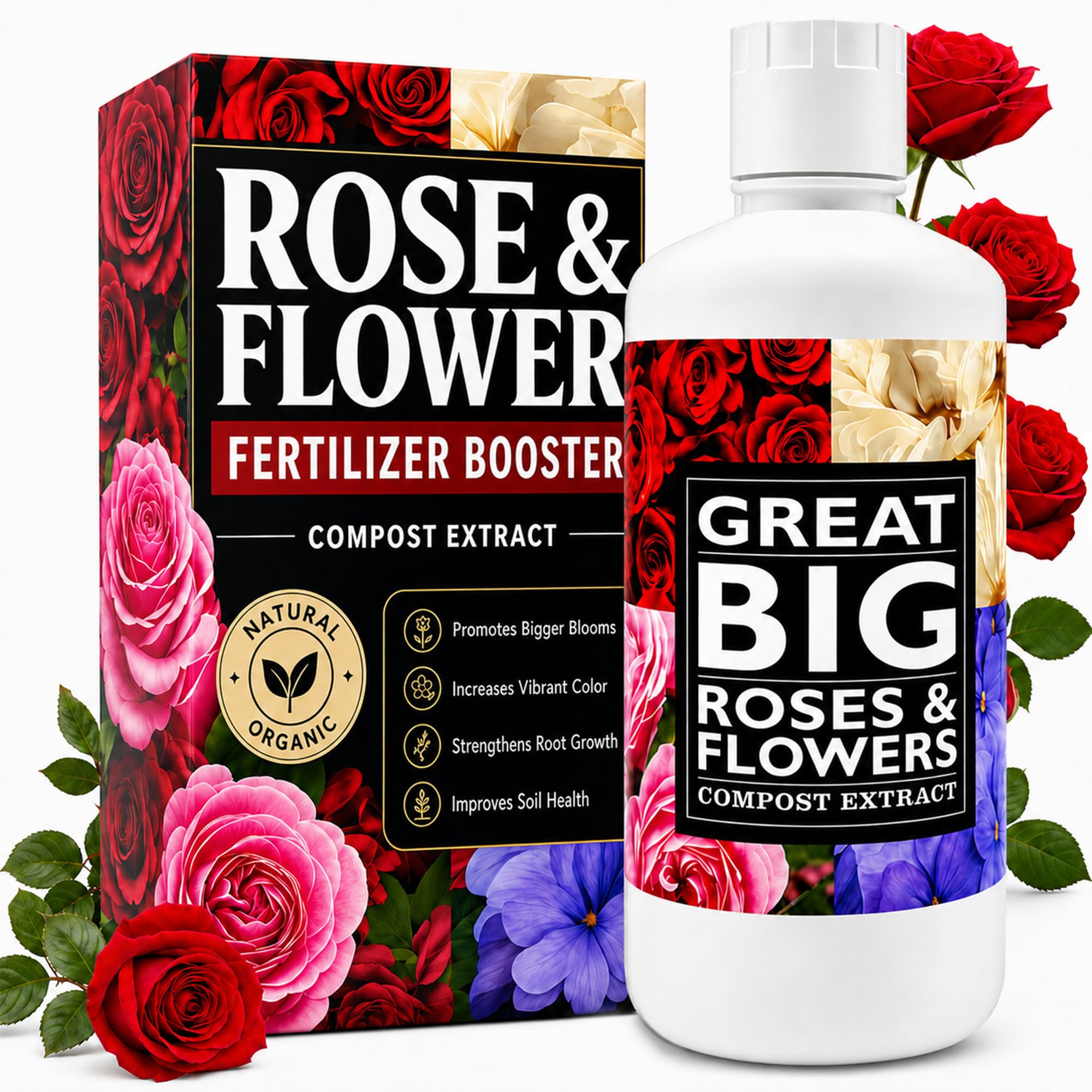
This is not a bagged soil — it is a liquid soil activator designed to unlock nutrients already present in your flower bed. The formula delivers humic acids, seaweed extract, chelated iron, and over 70 trace minerals directly into the rhizosphere. For established beds where the soil has become depleted or nutrient-locked due to high pH or salt buildup, this booster can revive what is already there rather than requiring a full soil replacement.
Verified reviews are emphatic: rose bushes that had not bloomed in years produced multiple flushes within weeks of the first application. The 32-ounce concentrate mixes at 4 ounces per gallon of water and covers an entire growing season for most gardens. It works alongside organic fertilizers like fish emulsion and bone meal, amplifying their effectiveness without risk of chemical burn.
The main drawback is the packaging — the wide-mouth jug makes measuring into a watering can messy, and some users report spilling the expensive concentrate. Additionally, it requires consistent monthly application to maintain results, so it is an ongoing investment rather than a one-time soil fix.
What works
- Revives nutrient-locked soil without requiring a full bed replacement
- Proven results on roses, hydrangeas, and citrus trees
- Compatible with all organic fertilizer programs
What doesn’t
- Wide-mouth jug design causes spillage during measuring
- Requires repeated monthly applications for sustained results
5. Old Potters Organic Compost
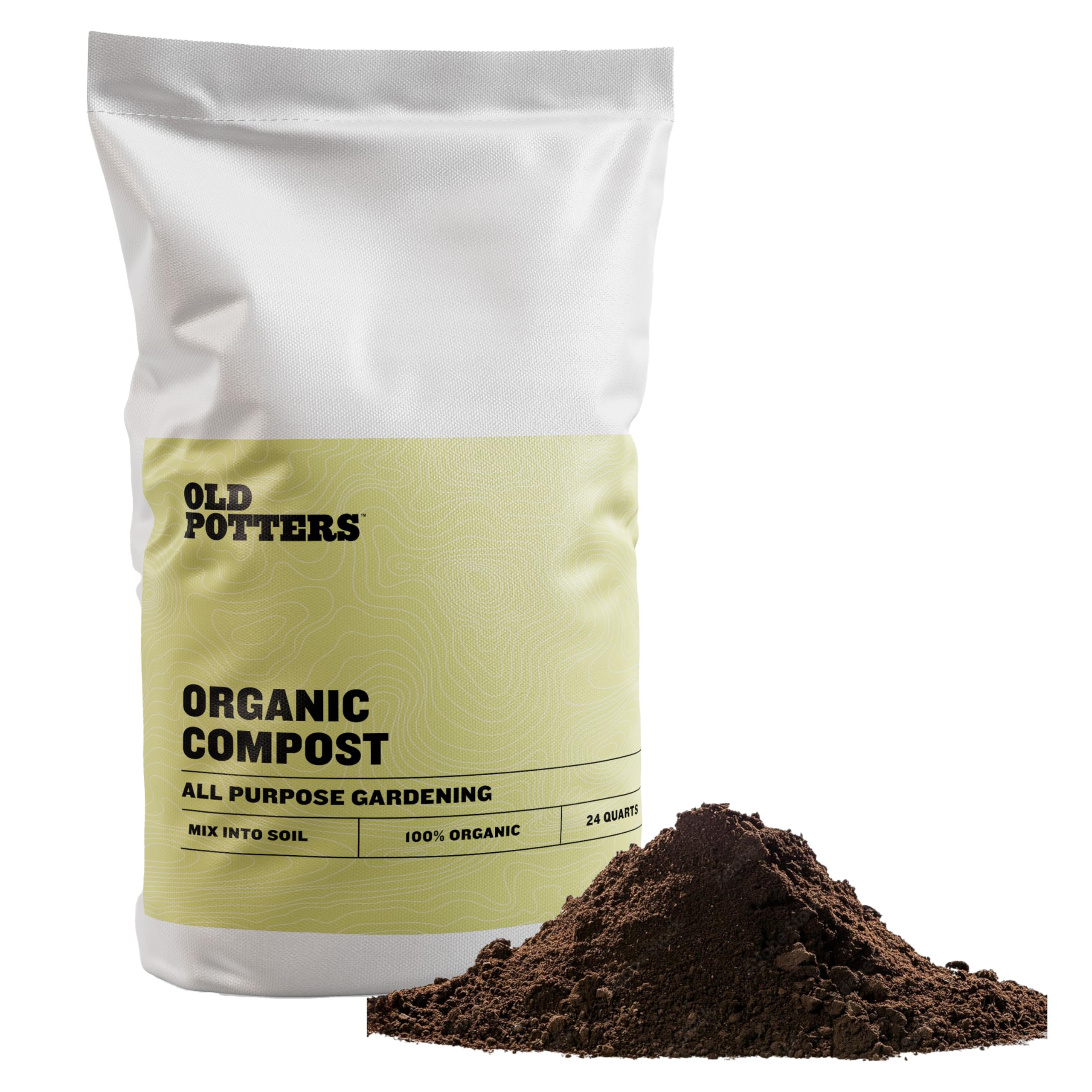
For gardeners who already have a decent structural base but need a heavy dose of organic matter, Old Potters delivers pure plant-based compost at a volume that can actually make a difference. The 24-quart bag provides roughly 3 cubic feet of dark, nutrient-rich material — enough to amend a 4×4 foot bed with a 2-inch top-dressing or mix into several large containers. The material is derived entirely from plant sources, so there is no risk of introducing animal-borne pathogens or excess salts.
Users in heavy clay zones report that mixing this compost into their native soil dramatically improved both drainage and root penetration. The texture is dark and crumbly, though some batches arrive with clumpy, clayish aggregates that require manual breaking. It is OMRI-listed and chemical-free, making it a safe choice for edible flowers and pollinator beds.
This is not a complete potting soil — it is a pure compost amendment. If you try to use it as a standalone growing medium without adding perlite, peat, or topsoil, it will hold too much moisture and lack the structure for healthy root growth. Pair it with a base of coco coir or native soil for best results.
What works
- High volume per bag offers excellent coverage for in-ground beds
- Plant-based composition is safe for edible flowers and vegetables
- Significantly improves clay soil drainage and aeration
What doesn’t
- Can arrive clumpy with clayish aggregates needing manual break-up
- Not suitable as a standalone potting medium
6. Avalution Organic Coco Coir Bricks (6-Pack)
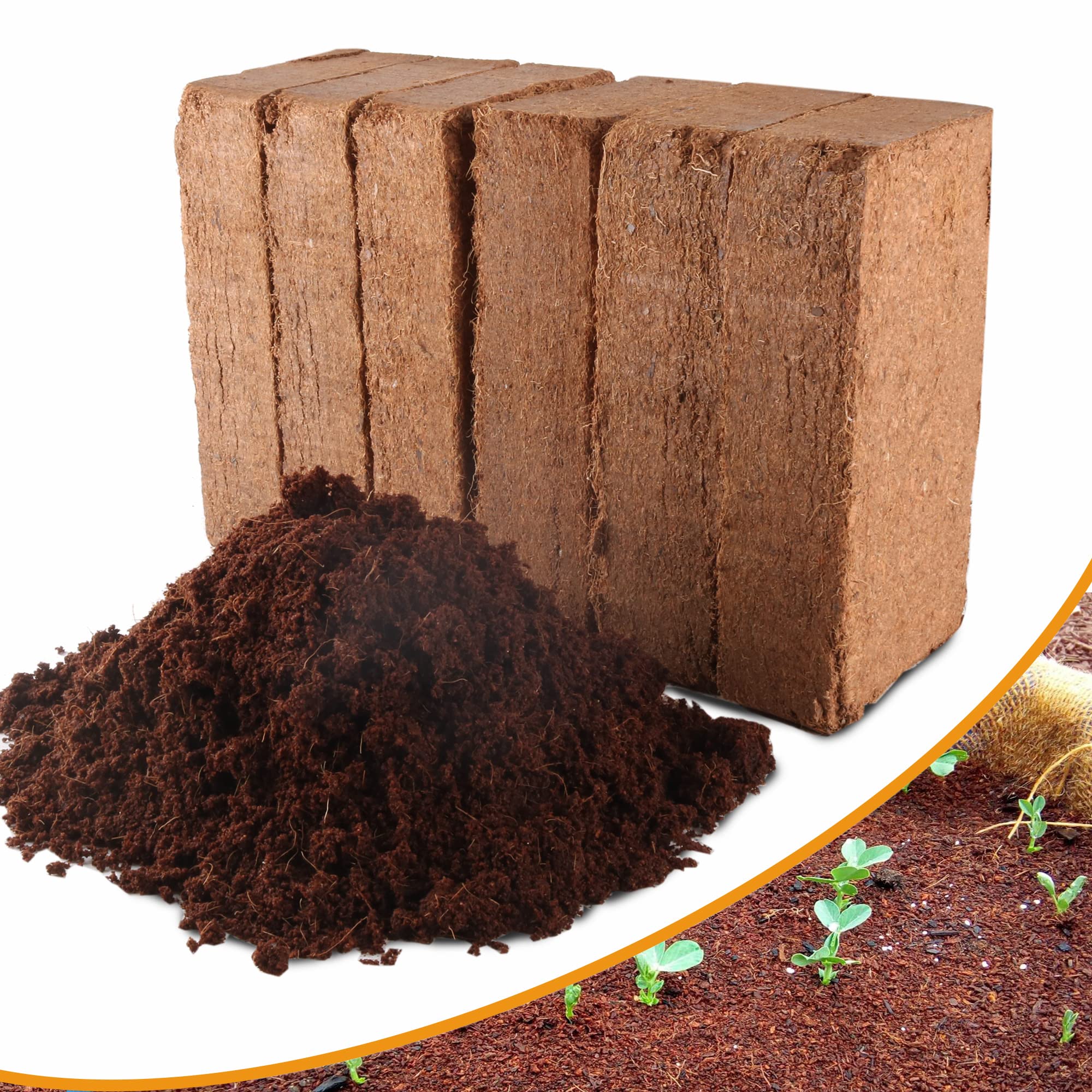
Coco coir is the backbone of modern flower bed mixes because it rehydrates reliably, holds 8 to 10 times its weight in water, and has a naturally neutral pH around 5.5 to 6.5. Avalution’s 6-pack of compressed bricks expands to 36 quarts when hydrated — a massive volume that can fill several containers or amend a 4×6 foot bed when blended with compost and perlite. The low EC (electrical conductivity) means it won’t introduce excess salts that burn sensitive flower roots.
Verified buyers praise the ease of hydration: each brick requires 4 to 5 quarts of water and a few hours to fully expand. The resulting material is fluffy and fibrous, providing excellent pore space for root oxygenation. Unlike sphagnum peat moss, coco coir is a renewable byproduct of coconut processing and rewets easily after drying out, making it ideal for flower beds that experience inconsistent irrigation.
The drawback is that coco coir contains virtually no nutrients on its own — it is a structural amendment, not a food source. You must add compost, worm castings, or a balanced organic fertilizer to turn these bricks into a complete flower bed medium. Skip that step and your plants will struggle despite the perfect texture.
What works
- Expands dramatically — 6 bricks yield 36 qt of growing medium
- Neutral pH and low EC prevent root burn and nutrient lockout
- Superior water-holding capacity reduces watering frequency
What doesn’t
- Contains no inherent nutrients — requires blending with compost/fertilizer
- Bricks require advance planning to hydrate properly
7. UBICON Coco Coir Organic Top Soil (4 Bricks)

UBICON’s 4-brick set is a slightly more compact alternative to the Avalution pack, expanding to 10 gallons (roughly 40 quarts) total — enough to fill two standard 10-inch containers or top-dress a small raised bed. The bricks are smaller and easier to hydrate individually compared to larger blocks, making them ideal for gardeners who do not want to commit to a massive volume all at once. The coco coir is pH-balanced around 5.8 to 6.5 and is free of chemical residues, weed seeds, and fungal spores.
Users specifically note that the smaller brick size accelerates hydration — each brick absorbs water fully in about 20 minutes rather than requiring overnight soaking. This makes it a practical choice for weekend gardeners who want to mix soil on the same day they plant. The material also works well as a top-dressing to suppress weeds and retain moisture in existing flower beds without disturbing established root systems.
Like all pure coco coir products, it lacks nutritional content. You will need to blend in compost, slow-release fertilizer, or worm castings to provide sustained feeding for flowering plants. Also, the 10-gallon total volume is modest for larger in-ground projects — budget for multiple sets if you are filling a substantial bed.
What works
- Small bricks hydrate quickly — usable in under 30 minutes
- Weed-free and sterile with no chemical additives
- Excellent for erosion control and moisture retention as a top dressing
What doesn’t
- Total 10-gallon volume limits use for larger beds
- Requires added nutrients — not a complete growing medium
Hardware & Specs Guide
pH Range
The pH of flower bed soil directly controls nutrient availability. Most annuals need 6.0–7.0; acid-loving plants (azaleas, blueberries, hydrangeas) require 4.5–5.5. A 0.5 shift outside the target range can lock up iron, phosphorus, or zinc. Bagged mixes like Coast of Maine’s acid formula specify their pH target — always verify before planting.
Organic Matter Percentage
Flower bed soil should contain at least 30–40% organic matter by volume for optimal microbial activity. Peat moss and coco coir provide the carbon structure, while composted manure, worm castings, and kelp meal supply the nutrients. Low organic matter means rapid nutrient leaching and poor water-holding capacity, forcing more frequent fertilizing.
Water Retention vs. Drainage
Coco coir retains 8–10 times its weight in water and rewets easily, while perlite and aged bark create pore spaces for oxygen exchange. A flower bed mix must balance both — too much retention causes root rot; too much drainage starves roots. Look for visible perlite or bark chunks in the blend. Coir bricks give you total control to dial in the ratio.
Mycorrhizal Inoculants
Endo and ecto mycorrhizae are beneficial fungi that colonize root systems and extend the root’s effective reach by up to 100 times. Products like Espoma’s Myco-Tone inoculate the soil at planting time, helping plants access phosphorus and water that would otherwise be out of reach. This is especially valuable in poor native soils or when transplanting stressed nursery stock.
FAQ
Can I use pure coco coir as my flower bed soil?
How do I lower pH in an existing flower bed?
What does OMRI-listed mean for flower bed soil?
How often should I replace flower bed soil?
Final Thoughts: The Verdict
For most gardeners, the best dirt for flower bed winner is the Coast of Maine Bar Harbor Blend because it delivers a complete, nutrient-dense organic mix with lobster meal, kelp, and perlite already balanced — no additional blending required. If you are planting acid-loving species like azaleas or blueberries, grab the Coast of Maine Acid-Loving Soil. And for budget-conscious gardeners who want to upgrade their native soil structure, the Avalution Coco Coir Bricks combined with a bag of Old Potters Compost gives you full control over texture and nutrition at the lowest cost per cubic foot.