
A layer of mulch on a raised bed vegetable garden is the single most effective tool for reducing watering frequency and suppressing competitive weeds, yet the wrong organic material can leach soil nitrogen or introduce aggressive grass seed. The distinction between a mulch that builds soil biology and one that starves your crops comes down to the carbon-to-nitrogen ratio and the source material. For vegetable growers, the ideal mulch must be clean, weed-free, and slow to decompose while still allowing water to percolate.
I’m Rikta — the co-founder and writer behind Lawn Gear Lab. My recommendations here come from cross-referencing material density, decomposition timelines, and hundreds of owner reports on moisture retention and soil impact for raised bed vegetable systems.
I’ve analyzed over a dozen organic mulch materials and thousands of user experiences to bring you this guide to the best mulch for raised bed vegetable garden applications that improve soil health and crop yield without introducing weed issues or nutrient lockout.
How To Choose The Best Mulch For Raised Bed Vegetable Garden
Selecting the right organic mulch is a balance between moisture retention, decomposition speed, and weed seed contamination. The wrong choice can starve your plants of nitrogen or turn your beds into a grass patch.
Carbon-to-Nitrogen Ratio and Nutrient Impact
Fresh wood chips and uncomposted sawdust have a high C:N ratio, causing soil bacteria to consume available nitrogen as they break down the material. This nitrogen drawdown can temporarily stunt leafy greens and heavy feeders like tomatoes and corn. Straw and fully composted bark present a lower C:N risk, while coconut husk chips have a near-neutral pH and minimal nitrogen impact, making them a safer choice for active vegetable beds.
Weed Seed Purity
Not all “natural” straw is created equal. Hay contains seed heads of grasses and broadleaf weeds, while straw — the hollow stalks left after grain harvest — carries far fewer viable seeds. Certified weed-free straw or coco coir products eliminate the headache of hand-pulling volunteer grass from your beds every week.
Lifespan and Refreshing
Materials like wheat straw break down fully within one growing season, which adds organic matter to the soil but requires annual reapplication. Coco chips and larger bark nuggets last 12 to 24 months, offering better long-term coverage but releasing fewer nutrients to the soil. For deep-mulch systems, a two-inch layer of a slower-decomposing material is the most efficient approach.
Quick Comparison
On smaller screens, swipe sideways to see the full table.
| Model | Category | Best For | Key Spec | Amazon |
|---|---|---|---|---|
| Back to the Roots Coco Husk | Expanding Brick | Large raised beds needing volume | 2 cu ft expanded per block | Amazon |
| HealthiStraw GardenStraw | All-Natural Straw | Nitrogen-safe top dressing | 3 cu ft compressed bale | Amazon |
| Plantonix Coco Chips | Compressed Block | Soil aeration and drainage | 15 gallons expanded | Amazon |
| GROW!T Coco Coir Chips | OMRI Block | Potting mix and top cover | 0.05 cubic meters | Amazon |
| Out-Grow Wheat Straw | Natural Straw | Entry-level moisture control | 1 cubic foot compressed | Amazon |
| R&M Organics Compost | Manure-Based | Soil amendment and mulch | 10 lb bag, 0.31 cu ft | Amazon |
| Rio Hamza Houseplant Mulch | Small Bark Chips | Decorative top dressing | 8 quarts bag | Amazon |
In‑Depth Reviews
1. Back to the Roots 100% Organic Mulch
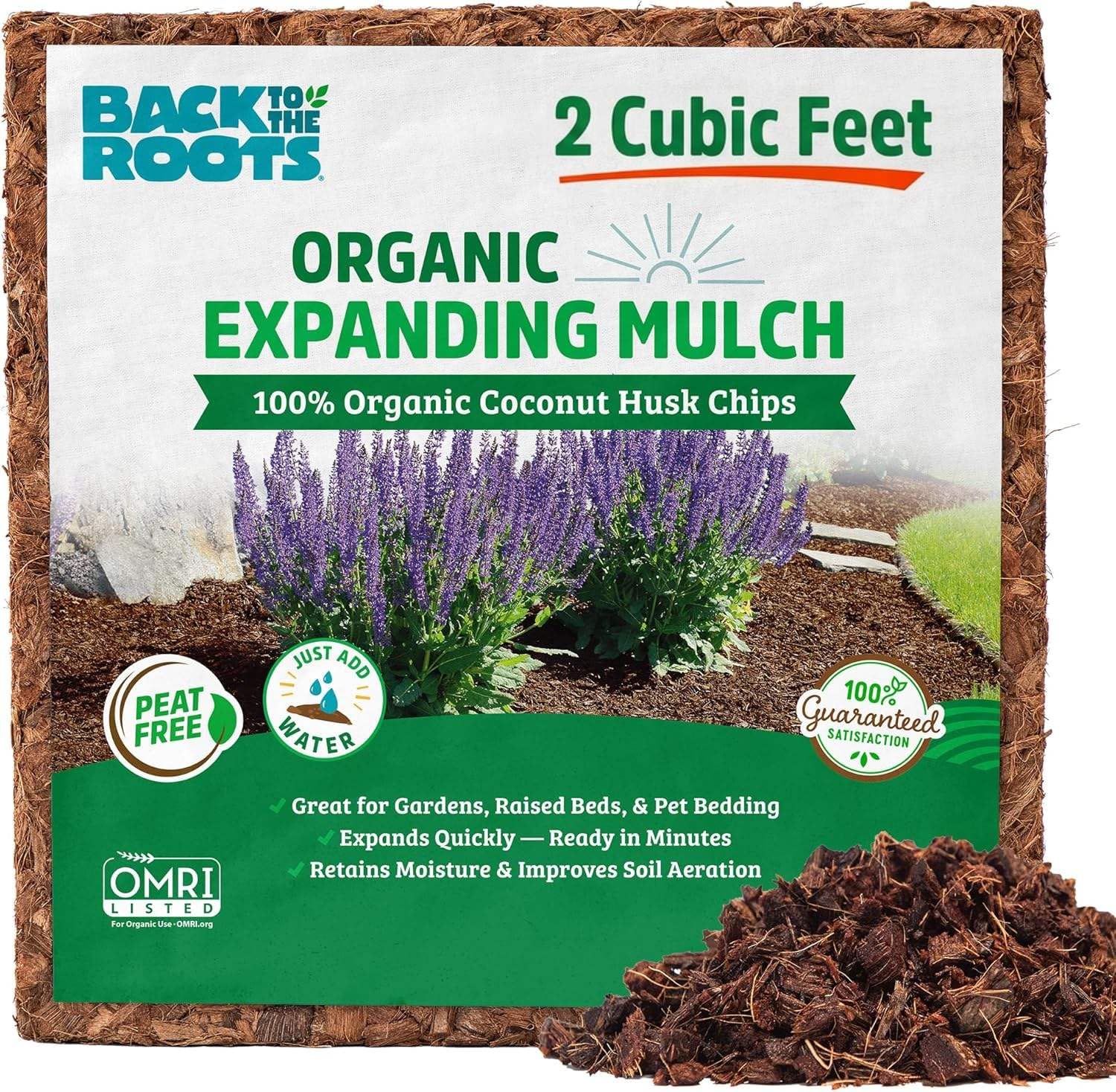
This compressed coconut husk block delivers the highest volume-to-weight ratio in the lineup: a 10-pound brick expands to more than 2 cubic feet of mulch when hydrated. For a standard 4×8-foot raised bed, a single block provides a two-inch layer that retains moisture without becoming waterlogged. The OMRI listing confirms it is approved for organic vegetable production, so there is no risk of synthetic chemical residues near edible crops.
Users consistently note that the block expands dramatically with water — filling a wheelbarrow or kiddie pool — which saves back strain compared to hauling heavy wet bags. The coconut fiber has a neutral pH and does not draw down soil nitrogen like fresh wood chips can. Gardeners also report that the material stays light and fluffy, preventing the crusting and compaction seen with some bark mulches.
The only operational consideration is that you must rehydrate the block in a large container before spreading. The expanded chips also tend to float if heavy rain hits before the bed is well-established. Once settled, however, the coverage is even and the weed suppression is excellent for the entire growing season.
What works
- Highest expanded volume per pound — covers 2+ cubic feet from a 10-lb block
- OMRI Listed, making it safe for organic vegetable gardens
- Neutral pH and high CEC prevent nutrient lockout common with wood-based mulches
What doesn’t
- Requires a large bucket or wheelbarrow for rehydration before spreading
- Lightweight chips can float to the surface after heavy downpours
2. HealthiStraw GardenStraw
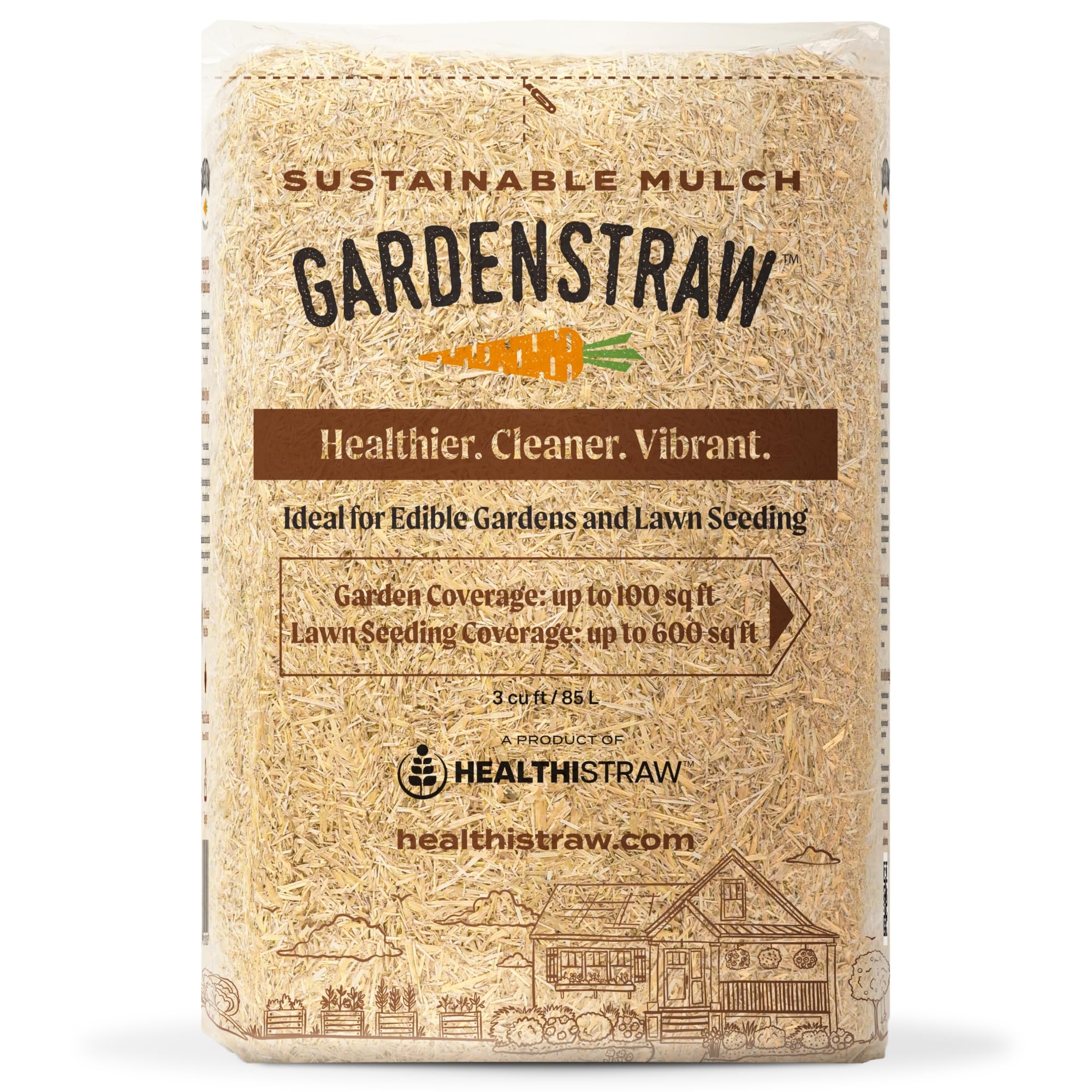
HealthiStraw delivers the largest physical coverage of any product here — one 3-cubic-foot compressed bale covers up to 100 square feet at the recommended 2–3 inch depth. The straw is mechanically cleaned to remove dust, dirt, and the majority of weed seeds, a major upgrade over standard bale straw that often contains viable grass seed. The rough-cut fibers interlock when watered, resisting wind scatter without chemical binders.
Growers focused on soil health will appreciate that wheat straw breaks down within a single growing season, contributing carbon to the compost cycle and improving tilth for the next planting. The breathable structure prevents surface crusting, so water infiltrates freely while the straw layer slows evaporation. Multiple reviewers confirm that the weed seed load is drastically lower than loose straw from feed stores.
On the downside, a few users have reported finding small amounts of grass seed in their bale, which suggests that “cleaned” does not guarantee 100 percent sterile. The bale is also bulky to handle and may require cutting the bag open in the garden bed rather than carrying it far.
What works
- Massive 3-cu-ft bale covers 100 sq ft at proper depth
- Low weed-seed count compared to conventional straw
- Breaks down in one season, adding organic carbon to soil
What doesn’t
- Some user reports of grass seeds still present
- Bulky packaging is difficult to maneuver into tight garden spaces
3. Plantonix Organic Coco Chips

Plantonix produces a 10-pound compressed block that expands to 15 gallons of coconut husk chips — roughly half the volume of the Back to the Roots product but with substantially larger chip sizes. These chips create distinct air pockets in the soil profile, making them ideal for raised beds that suffer from compaction or heavy clay. The material absorbs up to ten times its weight in water and releases it gradually, reducing the watering cycle significantly during hot months.
The high cation exchange capacity (CEC) of coconut coir ensures that nutrients remain available in the root zone rather than leaching out. Gardeners mixing these chips into the top two inches of their beds report better aeration for root crops like carrots and radishes. The chips are also buffered to prevent bacterial issues that can occur with unbuffered coir — a recurring concern mentioned by experienced users.
The main tradeoff is the smaller expanded volume relative to some competitors, meaning you may need two blocks for full coverage on a standard 4×8 bed. Additionally, the compressed brick requires thorough soaking and manual breaking apart to avoid dry pockets that repel water.
What works
- Large chip size improves aeration and drainage in compacted raised bed soil
- High CEC prevents nutrient leaching, better for heavy feeders
- Buffered processing eliminates common bacterial and nutrient-absorption issues
What doesn’t
- 15-gallon expanded volume is moderate — may need two blocks for full bed coverage
- Compressed brick must be broken apart manually after rehydration to avoid dry spots
4. GROW!T JSCC2 Organic Coco Coir Chips

Hydrofarm’s GROW!T block is distinguished by its extremely consistent chip size and near-zero dust content — a notable improvement over some coir products that can contain fine particles that form a crust. The 11-pound block expands significantly in a bucket of water and produces thick, uniform fibers that resist mold and fungal growth, a critical feature for raised beds that stay damp from drip irrigation. The OMRI Listed organic certification makes it a clean option for edible crops.
Users who grow tropical ornamentals and heat-sensitive vegetables appreciate how the chips hold humidity without creating anaerobic conditions. One verified buyer noted that after switching to this coir, pest pressure dropped noticeably — likely because the consistent chip size left no compacted pockets for fungus gnats to breed. The block also ships with no musty odor, a problem that has plagued other coir brands.
The chips can be too chunky for incorporating into seed-starting mixes, though they are ideal as a top-dressing layer. Some users also wish the block expanded to slightly more volume for the weight, as the 0.05-cubic-meter rating covers less area than anticipated for deeper mulching.
What works
- Uniform chip size with very little dust — reduces surface crusting
- Mold and fungus resistant, a key feature for consistently damp beds
- No unpleasant musty odor upon opening the package
What doesn’t
- Expanded volume is modest — 0.05 cubic meters may require multiple blocks for large beds
- Chunks are too large for fine seed-starting mixes
5. Out-Grow 100% Natural Wheat Straw

Out-Grow’s wheat straw offers a budget-friendly entry point into straw mulching without the massive bale size that intimidates new gardeners. The 1-cubic-foot box is manageable for small raised beds, container gardens, or topping off thin spots in larger beds. The material is labeled as 100 percent natural with minimal dust and reduced weed seed load compared to hay, though it is not certified weed-free.
The straw performs its primary function well: it slows soil evaporation and keeps the root zone cool during summer heat waves. Users report that their plants stay hydrated noticeably longer after applying a two-inch layer, and the straw breaks down sufficiently by spring to be tilled into the soil as green carbon. Multiple customers also use it for feral cat shelters, confirming that the straw repels moisture rather than absorbing it and freezing.
A small number of reviews note the occasional foreign object or clump of seeds in the box, which is a common risk with lower-cost natural straw. The coverage area is also limited — a 1-cubic-foot bale covers roughly 4 to 6 square feet at a two-inch depth, so gardeners with larger beds will need to order multiple boxes.
What works
- Compact 1-cu-ft box is easy to carry and store for small-space gardeners
- Effective moisture barrier that keeps soil cool without becoming soggy
- Breaks down fully in one season, adding carbon to the vegetable bed
What doesn’t
- Coverage is limited — one box covers roughly 4–6 sq ft at proper depth
- Not certified weed-free; occasional reports of foreign objects or seeds
6. R&M Organics Premium Organic Compost
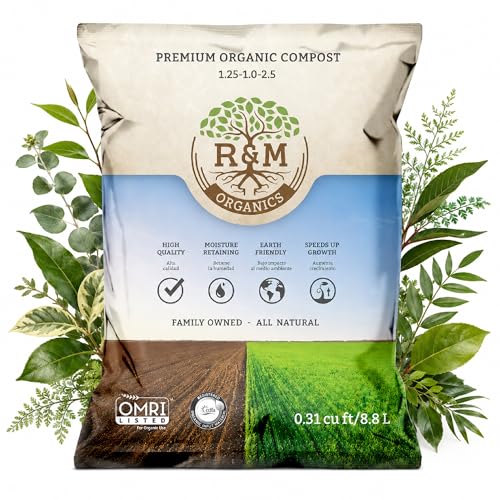
R&M Organics delivers a fully composted dairy manure product that functions as both a soil amendment and a thin mulch layer. The material has a fine, soil-like texture with near-zero odor — a significant advantage over raw manure that can burn plant roots or attract flies. A quarter-inch layer applied around plants adds a quick boost of organic matter and micronutrients, making it especially effective for reviving nitrogen-starved vegetable beds mid-season.
Master Gardener–recommended, the compost has rescued ailing tomato, honeysuckle, and azalea plants according to verified buyer accounts. The 10-pound bag is compact enough to store in a garage or shed, and the 5:1 mixing ratio allows gardeners to blend it with existing soil for new plantings. It works well as a side-dressing for heavy feeders like peppers and corn.
However, the volume is low — 0.31 cubic feet — so it is not a practical primary mulch for covering the surface of a full raised bed. It is best used as a concentrated nutrient booster underneath a more voluminous straw or coir mulch layer. Some users also note that the bag can settle during shipping, making the actual volume feel even smaller.
What works
- Fully composted, low-odor dairy manure instantly improves soil nutrient content
- Fine texture spreads easily as a thin top-dressing without clumping
- Compact 10-lb bag is convenient for targeted bed repair
What doesn’t
- 0.31 cu ft volume is too small to serve as a primary surface mulch
- Bag settling during shipping can reduce the apparent volume upon arrival
7. Rio Hamza Trading Houseplant Mulch

This 8-quart bag of small bark chips is primarily designed for indoor and patio potted plants, but it can serve as a decorative top layer on small raised beds or container vegetable gardens. The chips are uniform in size and provide a clean, attractive soil covering that resists breakdown longer than straw. The material holds moisture effectively in contained spaces and does not attract pests according to buyer reports.
Indoor growers have used it successfully as a soil amendment for aeration and drainage, while outdoor users appreciate that the bag arrives free of bugs, mold, or chemical smells. The small chip size is easy to pour and spread without creating a mess on patios or indoor floors. For a raised bed that doubles as a display garden, this mulch adds visual consistency.
The major limitation is the quantity — 8 quarts covers roughly 2 to 3 square feet at a one-inch depth, making it impractical for full-bed mulching. The price per quart is also higher than bulk straw or coir options. It is best suited for accent coverage on small herb pots or seedling trays rather than large-scale raised bed application.
What works
- Clean, uniform chips with no visible debris or pest contamination
- Easy to pour and spread, ideal for small container or patio gardens
- Longer-lasting surface appearance compared to biodegradable straw
What doesn’t
- Only 8 quarts — insufficient for covering any standard raised vegetable bed
- Higher cost per quart than bulk straw or coco coir options
Hardware & Specs Guide
Moisture Retention Capacity
This is the single most important metric for a vegetable bed mulch, measured by how much water the material can hold relative to its dry weight. Coconut coir chips absorb up to ten times their weight in water, while wheat straw holds roughly three to four times its weight. Bark chips sit in between, holding about five times their weight. Higher retention means less frequent watering during hot months, but it also means the mulch surface stays damp longer — a tradeoff when managing fungal issues in humid climates.
C:N Ratio and Decomposition Rate
The carbon-to-nitrogen ratio determines whether a mulch will temporarily steal nitrogen from your soil as it decomposes. Fresh wood chips can have a C:N ratio of 400:1 or higher, causing measurable nitrogen drawdown in the root zone. Wheat straw is around 80:1, which is safer but still demands extra nitrogen if incorporated into soil. Coconut coir measures between 30:1 and 50:1, making it the safest option for direct contact with vegetable roots. Decomposition speed also varies: straw breaks down in one season, bark takes two to three seasons, and coir lasts one to two years depending on chip size.
FAQ
Can I use wood chips from a local tree service on my raised vegetable beds?
How thick should I apply mulch to a raised bed vegetable garden?
Does organic mulch attract slugs and pests to vegetable beds?
Final Thoughts: The Verdict
For most gardeners, the best mulch for raised bed vegetable garden winner is the Back to the Roots 100% Organic Mulch because it combines the highest expanded volume per pound with a neutral C:N ratio that will not steal soil nitrogen from your vegetables. If you want a straw option that spreads quickly and breaks down to feed the soil, grab the HealthiStraw GardenStraw. And for improving soil aeration and drainage in heavy raised beds, nothing beats the Plantonix Organic Coco Chips.