
Garden boots take the brunt of every wet morning, muddy bed, and manure pile, and the difference between a boot that crumbles after one season and one that seals out moisture for years comes down to the rubber compound, the neoprene thickness, and the shank construction hidden inside the sole. A floppy, paper-thin boot leaves your feet sore by noon and soaked by the first puddle, while a properly built pair with a steel shank and 6mm neoprene keeps you dry, stable, and comfortable through hours of kneeling, stomping, and hauling.
I’m Rikta — the co-founder and writer behind Lawn Gear Lab. I’ve spent hours comparing rubber formulations, neoprene density ratings, outsole tread patterns, and shank materials across dozens of garden boot models, then cross-referencing those specs with aggregated owner feedback from hundreds of real-world users to build this guide.
Whether you’re hauling compost in the rain or working a muddy homestead path, the right pair of best garden boots will stop water at the shaft and keep your feet stable on uneven ground without rubbing your heels raw after two hours.
How To Choose The Best Garden Boots
Garden boots are not fashion statements — they are protective gear against mud, moisture, sharp tools, and cold concrete. Picking the wrong pair means wet socks, aching arches, or blistered heels by lunchtime. Here are the three specs that actually separate a durable work boot from a disposable rain shoe.
Neoprene Thickness & Insulation
Neoprene is the foam layer between the rubber shell and your foot. Boots with 4mm neoprene are fine for quick garden chores in mild weather, but 6mm neoprene adds noticeable warmth, cushioning, and structural integrity. If you work in sub-40°F conditions, standing water, or snow, the extra 2mm prevents cold from seeping through the shaft and keeps the boot from collapsing around your ankle during deep bends.
Steel Shank vs. No Shank
A steel shank is a rigid strip embedded in the midsole that prevents the boot from flexing upward when you step on a rock, a shovel blade, or a root. Boots without a shank force your arch to bear the full load, causing fatigue within an hour on uneven terrain. If you spend any time on packed dirt, gravel, or concrete, a steel shank is non-negotiable for all-day comfort.
Outsole Tread Depth & Rubber Hardness
Shallow, soft rubber treads wear flat within one season on asphalt and offer no grip on wet grass or muddy slopes. Look for deep, widely spaced lugs (at least 5mm depth) made from a durometer-hard rubber compound. A harder compound resists punctures from thorns and nails, while the deep channels shed mud rather than packing it solid, preserving traction hour after hour.
Quick Comparison
On smaller screens, swipe sideways to see the full table.
| Model | Category | Best For | Key Spec | Amazon |
|---|---|---|---|---|
| Trudave Steel Shank | Mid Calf | All-day muddy work | 6mm neoprene + steel shank | Amazon |
| HISEA NINGO Steel Toe | Wellington | Construction & welding | Steel toe + full-grain leather | Amazon |
| Rubber Work Boots (Steel Toe) | Neoprene | Cold wet job sites | 6mm neoprene + 800g Thinsulate | Amazon |
| Showave Garden Boots | Mid Calf | Barn & yard chores | Thick rubber + fold-down cuff | Amazon |
| Men’s Rubber Work Boots | Neoprene | Flooded yard & concrete | Steel shank + vulcanized seam | Amazon |
| Trudave Rubber Boots | Mid Calf | Light garden & dog walks | Mid-calf + easy on/off handles | Amazon |
| Sloggers Ankle Boot | Ankle | Quick garden trips | Half-sizer insoles + wide fit | Amazon |
In‑Depth Reviews
1. Trudave Rubber Boots for Women with Steel Shank
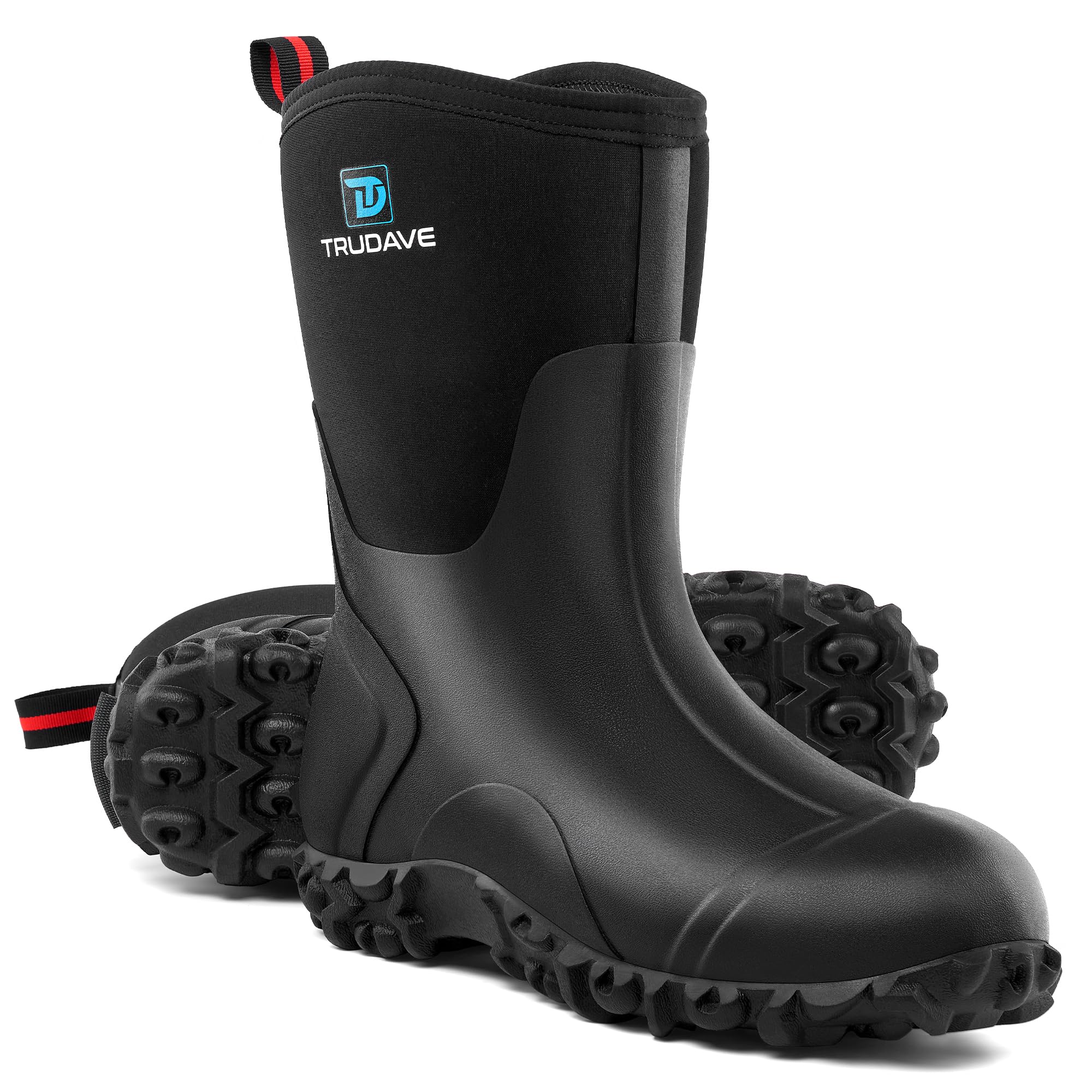
This mid-calf boot combines 6mm neoprene with a built-in steel shank, creating a level of underfoot support that most garden boots in this range completely ignore. The shank prevents the sole from buckling when you stand on a shovel edge or walk a rocky path, so your arch stays stable hour after hour. The neoprene lining is breathable enough to keep sweat from pooling inside, but thick enough to insulate in cold mud.
Owners consistently report that the boot fits true to size, accommodates wider calves without binding, and the reinforced protective toe with deep anti-slip lugs handles wet grass, creek beds, and snow without losing grip. The back kick tab and heel step-on ridge make removal easy even with muddy hands, and the rubber shell wipes clean in seconds.
For the price, this boot offers the closest thing to a heavy-duty work boot in a garden-friendly mid-calf profile. The only caveat is that some users with very narrow heels find the fit slightly loose around the ankle, but that can be remedied with a thicker sock or an aftermarket insole.
What works
- Steel shank eliminates foot fatigue on uneven ground.
- 6mm neoprene keeps feet warm and dry in cold mud.
- Excellent tread grip on wet grass and snow.
What doesn’t
- Ankle fit can feel loose for narrow heels.
- Not available in half sizes above 9.
2. HISEA NINGO Steel Toe Work Boots
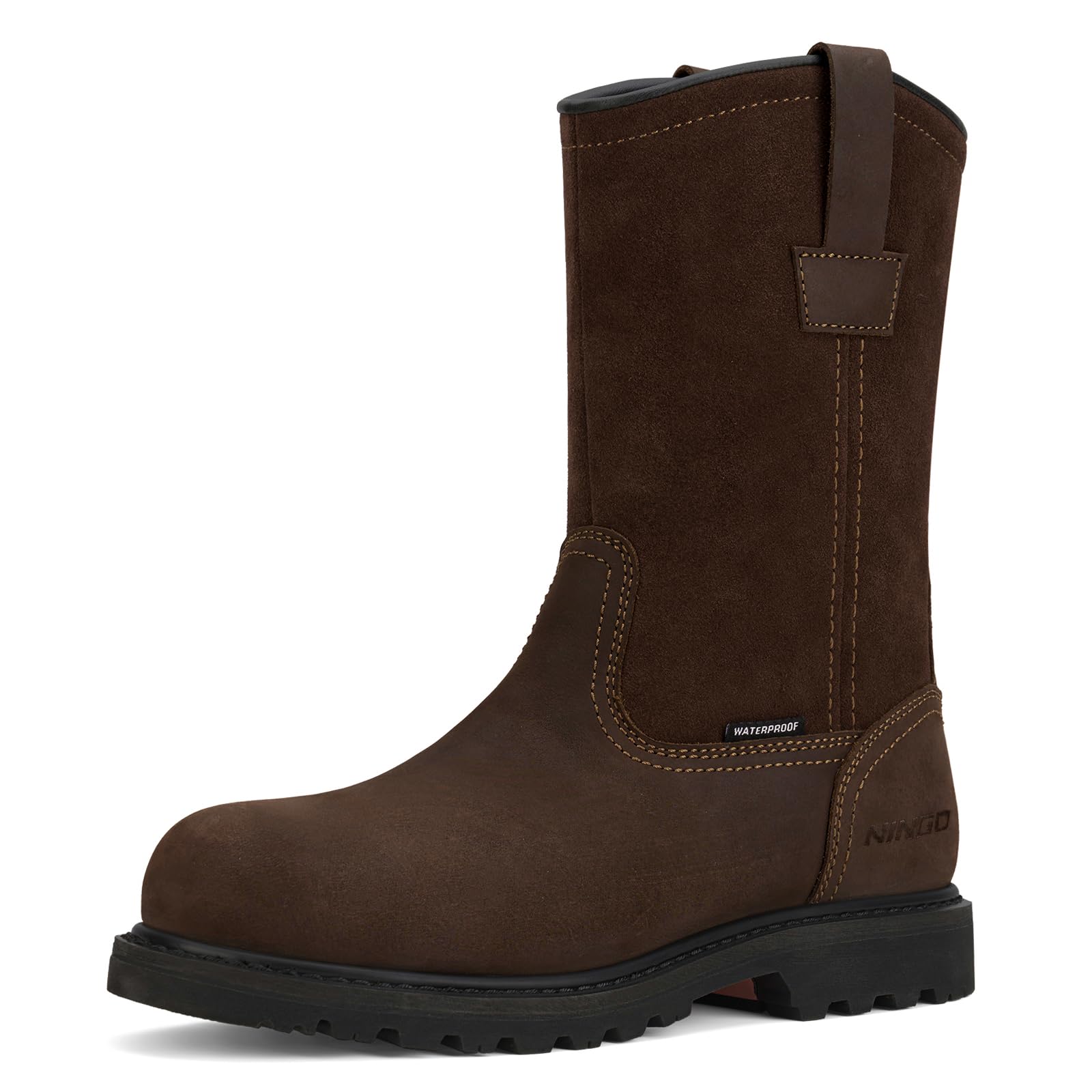
This Wellington-style boot brings full-grain leather upper construction with a steel toe cap, making it a legitimate crossover boot for the gardener who also needs protection on construction sites, welding jobs, or any environment where dropped tools and sharp debris are daily threats. The slip-on pull-on design is fast to get in and out of, and the oil-and-slip-resistant outsole handles wet concrete and greasy shop floors without hesitation.
Owner reviews highlight the fact that these boots are comfortable straight out of the box — no weeks-long break-in period — and that the steel toe does not pinch or rub even during a full workday. The waterproof-treated model keeps feet dry in puddles, though the leather requires occasional conditioning to maintain the water seal over time.
Where these boots diverge from standard garden boots is the higher shaft height and the stiffer construction. They are less flexible for deep knee bends and prolonged kneeling, but they offer superior puncture resistance and toe protection that a neoprene boot cannot match.
What works
- Steel toe protection for heavy garden tools and debris.
- Full-grain leather is durable and weathers well with care.
- Oil and slip resistant sole for slick surfaces.
What doesn’t
- Tight around the calf for wider legs.
- Leather needs regular conditioning to stay waterproof.
3. Rubber Work Boots with Steel Toe & Shank

This boot is engineered for the coldest, wettest conditions you will encounter in a garden or job site. The 6mm neoprene shell is backed by 800g 3M Thinsulate insulation, which keeps feet functional in sub-freezing temperatures without making them overheat during active work. The steel toe and steel shank are both present, with the shank extending through the full midsole to prevent fatigue on concrete or frozen ground.
Customer feedback from seafood packing plants and wastewater facility workers confirms that these boots stay bone-dry through an entire 12-hour shift in standing water. The thick rubber outsole uses deep, widely spaced lugs that shed heavy mud rather than packing it, so traction holds up even after hours of walking through saturated clay. The back gusset design accommodates different calf sizes, and the kick tab makes removal effortless.
The trade-off is weight — these boots are noticeably heavier than a standard mid-calf garden boot, and the extra insulation can feel too warm for summer use. They are best suited for fall-through-spring work or for northern climates where cold mud and snow are the norm.
What works
- 800g Thinsulate insulation for extreme cold.
- Steel shank prevents arch fatigue on hard surfaces.
- Deep self-cleaning lugs for heavy mud.
What doesn’t
- Heavy compared to non-insulated garden boots.
- Too warm for hot-weather use.
4. Showave Women’s Garden Boots
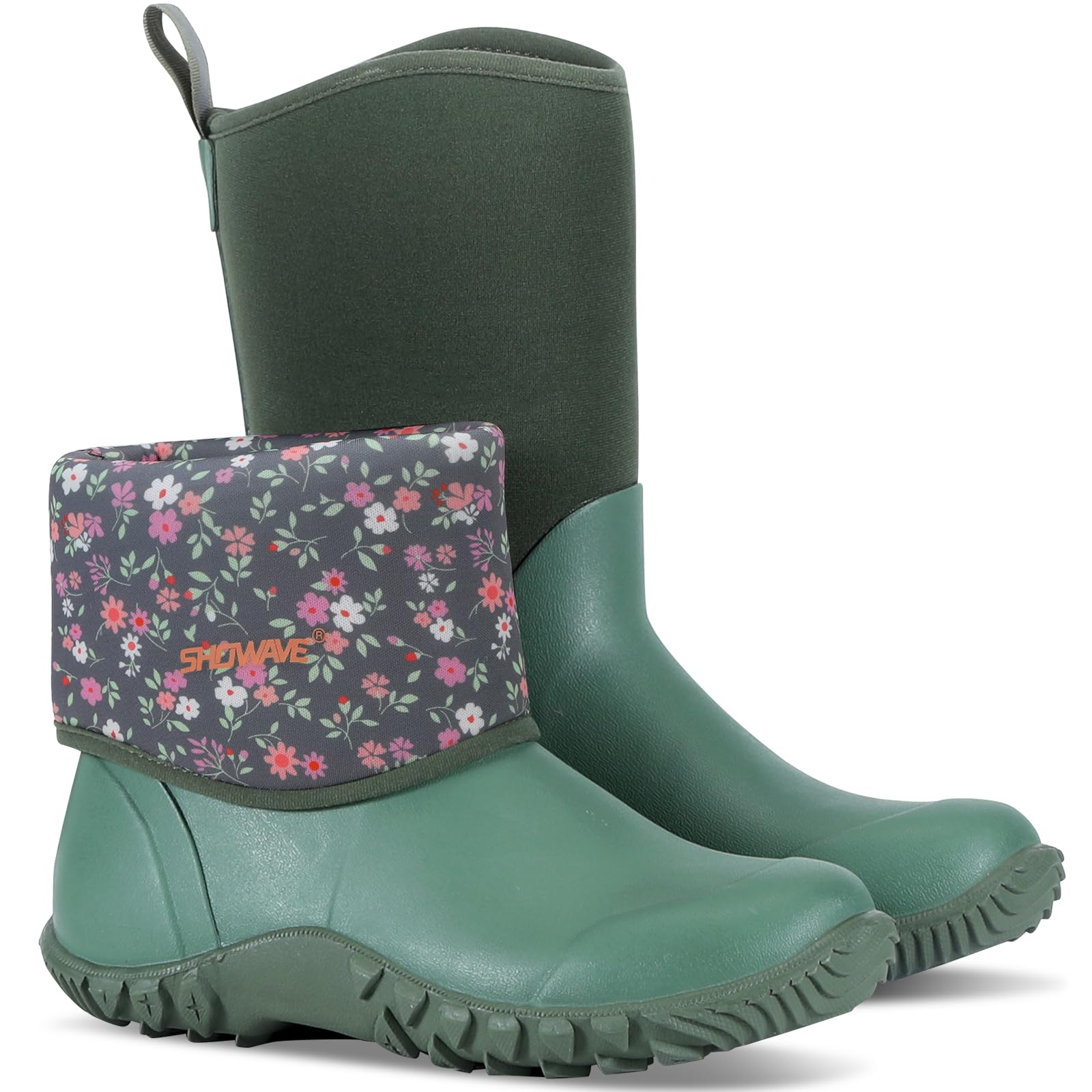
This boot is a dedicated barn and garden tool, built with thick rubber that resists punctures from thorns, briars, and stray nails. The fold-down cuff gives the option to wear the boot at ankle height when the weather is mild, then pull it up to mid-calf when rain or mud rolls in. The wide toe box and generous calf opening make these boots a strong pick for anyone who struggles with narrow boots rubbing or pinching.
Real-world testing from Pacific Northwest spring conditions confirms that the deep tread handles wet grass and sloping paths without slipping, and the thick sole is stiff enough that blackberry vines do not penetrate the rubber. Owners report that after months of heavy barn use, the boots show minimal wear, and the waterproof seal holds despite daily hosing.
The main drawback is the inner seam where the rubber meets the neoprene — some users find it rough against the ankle if worn without tall socks. Also, the loose fit at the top means small debris can occasionally enter the shaft during deep scooping motions.
What works
- Thick puncture-resistant rubber shell.
- Fold-down cuff offers two height options.
- Wide toe box and calf accommodate larger feet.
What doesn’t
- Rough inner seam may rub bare ankles.
- Loose top allows debris in during deep work.
5. Men’s Rubber Work Boots with Steel Shank
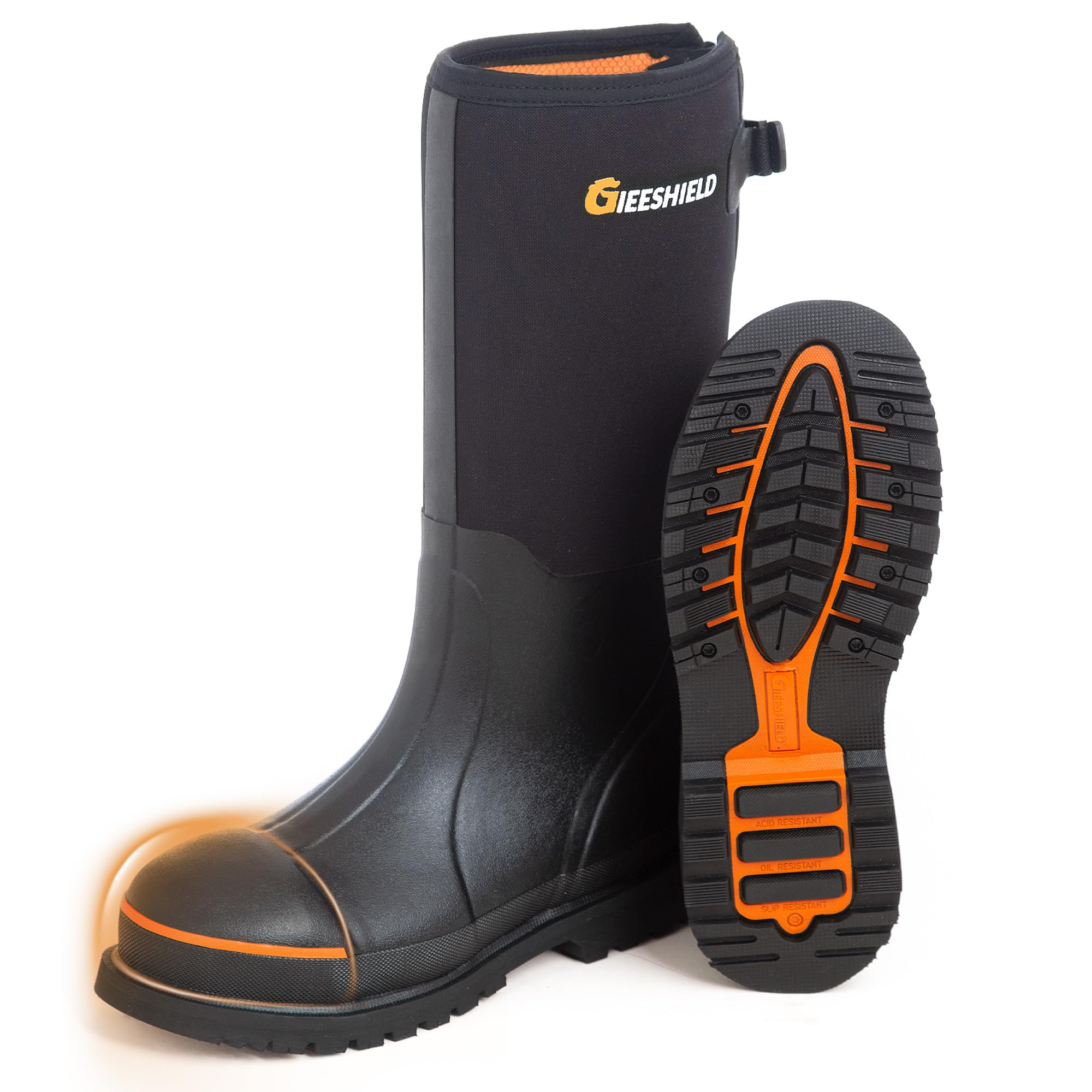
These boots use vulcanized seams rather than simple glued joints, which creates a permanent bond between the rubber shell and the neoprene lining that cannot delaminate even after repeated soaking and drying cycles. The steel shank extends through the full length of the footbed, providing rigid arch support that is particularly welcome when standing on concrete or hard-packed soil all day. The 6mm neoprene lining adds warmth without bulk, and the rubber outsole uses deep lugs that bite into loose gravel and wet mud equally well.
Field reports from users describe standing in four inches of water for hours without a single leak, and the boots surviving daily contact with wet concrete, mud, and rain without any degradation. The heel kick tab and wide opening make them easy to pull on and off, even with work gloves on.
The primary downside is that these boots run heavy — the steel shank and thick rubber add noticeable weight compared to unshanked boots. For gardeners who only do light watering and weeding, this may be overbuilt, but for anyone doing serious outdoor labor, the durability justifies the heft.
What works
- Vulcanized seams prevent leaking at attachment points.
- Steel shank provides rigid arch support.
- Deep lugs provide excellent grip in mud.
What doesn’t
- Heavy build not ideal for casual short chores.
- Stiff sole reduces flexibility for kneeling.
6. Trudave Rubber Boots for Women
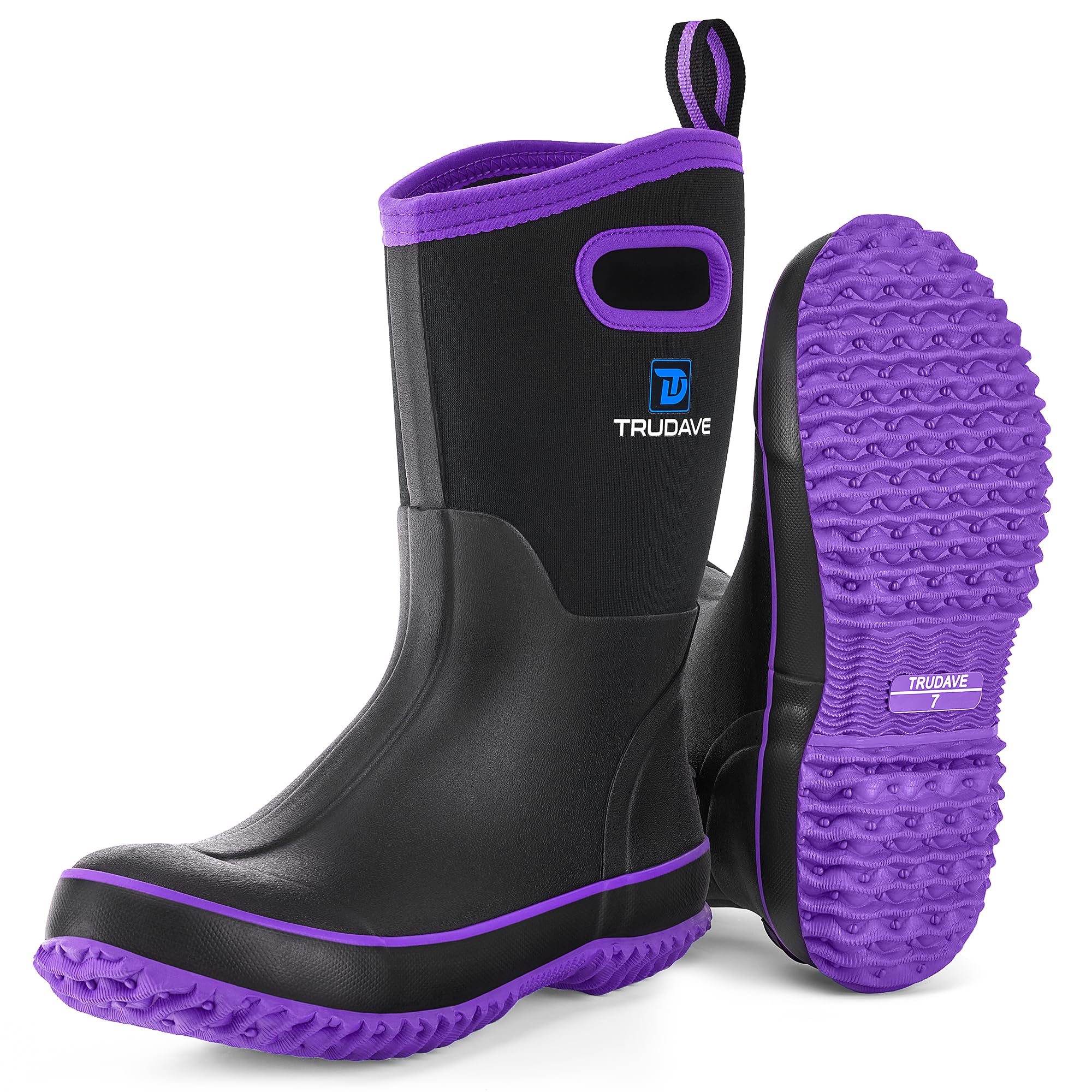
This is the entry-level workhorse in the Trudave lineup — no steel shank, no thick insulation, but a solid 100% waterproof mid-calf boot that gets the job done for light to moderate garden use. The rubber shell is flexible enough to allow natural foot movement while still providing enough structure to keep mud and water out. Integrated pull handles at the top make sliding the boots on and off quick, and the non-slip outsole provides confident footing on wet decks and damp grass.
Users consistently note that the boots fit true to size, accommodate wider calves without rubbing, and survive daily wear in snow, mud, and creek crossings without leaking. The cute chicken print is a bonus for those who want a bit of personality in the garden, and the removable insole allows for custom orthotics if needed.
The limitation is that without a steel shank, the boot flexes more under load, so standing on a shovel for extended periods or walking on rocky terrain will cause arch fatigue sooner than a shank-equipped boot. This is a great pick for quick chores, dog walks, and light farming, but less ideal for all-day heavy labor.
What works
- Comfortable true-to-size fit with wide calf room.
- Easy on and off with pull handles.
- Waterproof seal holds up to snow and creek water.
What doesn’t
- No steel shank leads to arch fatigue on hard ground.
- Not insulated for deep cold use.
7. Sloggers Women’s Rain and Garden Ankle Boot

This ankle-height boot is the lightest, most flexible option in this roundup, designed for quick trips to the garden, dog walks, and light barn work where full mid-calf coverage is unnecessary. The boot is made from a single-piece rubber construction with no lining, making it extremely easy to rinse off and fast to dry. The included half-sizer insoles allow you to dial in the fit if you are between sizes, and the cushioned insole provides decent comfort for short-duration wear.
Long-term owners report that these boots survive five-plus years of college, barn work, and city walking without tearing, thanks to the durable clear gel coat over the printed fabric. The wide toe box is a relief for those with flat, wide feet, and the heel tab makes removal simple. The boot is waterproof enough for wet grass and shallow puddles.
The major shortcoming is the lack of ankle support and the low shaft height — kneeling in wet soil will let water pour in over the top, and there is no insulation for cold weather. The rim can also rub the ankle painfully when worn without socks, making this strictly a warm-weather, quick-task boot.
What works
- Lightweight and easy to clean in seconds.
- Lasts years with normal wear.
- Wide toe box suits flat, wide feet.
What doesn’t
- Ankle rim rubs painfully without socks.
- Low shaft lets water in during deep kneeling.
- No thermal insulation for cold weather.
Hardware & Specs Guide
Neoprene Grade & Thickness
Neoprene thickness is measured in millimeters. A 4mm neoprene boot is adequate for mild-weather garden work, but offers minimal insulation and dents easily under pressure. 6mm neoprene is the standard for serious outdoor work boots — it provides noticeable cushioning, retains body heat, and resists collapsing around the ankle when you squat or kneel. Some high-end boots use 800g Thinsulate in addition to 6mm neoprene for sub-freezing conditions.
Steel Shank & Toe Protection
A steel shank is a flat bar embedded in the midsole that prevents the boot from bending upward at the ball of the foot. Without a shank, the boot flexes under load, which forces your arch to bear weight and leads to fatigue within an hour on hard or uneven ground. Steel toe caps are rated to withstand up to 2500 pounds of impact, offering protection when dropping heavy tools, pavers, or equipment.
Outsole Tread & Rubber Hardness
The outsole rubber durometer (hardness) and lug depth directly determine traction and wear life. Softer rubber (lower durometer) grips wet surfaces better but wears flat quickly on concrete or asphalt. Harder rubber (higher durometer) resists abrasion and punctures from thorns or nails but can be slick on smooth wet floors. Lugs should be at least 5mm deep and spaced widely enough that mud falls out instead of packing in.
Seam Construction
The most common failure point on garden boots is the joint between the rubber shaft and the neoprene liner. Glued seams eventually delaminate after repeated moisture cycles. Vulcanized seams use heat and pressure to chemically bond the materials into a single unit, creating a permanent waterproof seal that will not separate. Boots with vulcanized construction typically cost more but last significantly longer under wet, heavy use.
FAQ
How should garden boots fit in the calf and ankle?
Can I wear garden boots in freezing weather?
How do I clean and maintain rubber garden boots?
What is the difference between garden boots and rain boots?
Final Thoughts: The Verdict
For most gardeners, the best garden boots winner is the Trudave Rubber Boots with Steel Shank because the 6mm neoprene, steel shank, and deep tread cover every base from cold mud to all-day standing without exceeding a mid-range price. If you need steel toe protection for heavy tools and construction debris, grab the HISEA NINGO Wellington Boots. And for the most demanding winter job sites with standing water, nothing beats the Rubber Work Boots with 800g Thinsulate for warmth and puncture resistance.