
Container vegetables live a high-stakes life. Every root is confined, every drop of water depends on the mix, and every nutrient is borrowed from the bag you bought. One wrong choice — a soil that compacts, drains poorly, or lacks organic matter — and your tomatoes, peppers, or basil spend the season fighting for oxygen. The right potting soil does the exact opposite: it holds moisture without drowning roots, feeds plants steadily, and stays light and airy for months. This guide isolates the best options by measuring how they handle those specific demands.
I’m Rikta — the co-founder and writer behind Lawn Gear Lab. My research process for this guide involved cross-referencing ingredient lists against container-gardening requirements, evaluating aeration components like perlite versus vermiculite, and dissecting hundreds of verified buyer reports on drainage performance, nutrient burn, and pest introduction.
After sorting through premium organic blends and budget-friendly mixes, I landed on the seven formulations that consistently deliver for pots, planters, and raised containers. Below is the definitive breakdown for any gardener searching for the best soil for vegetables in pots.
How To Choose The Best Soil For Vegetables In Pots
Not every bag labeled “potting soil” works for vegetables. The key is understanding which physical and chemical properties matter most when roots are confined to a container. Below are the four factors that separate a thriving pot of cherry tomatoes from a disappointing harvest.
Drainage and Aeration: The Non-Negotiable Foundation
A container has no natural drainage path — it relies entirely on the soil structure to move water away from roots. Look for a mix that lists perlite, vermiculite, pumice, or coarse sand in the first few ingredients. These particles create air pockets that let oxygen reach the root zone and prevent waterlogging, which is the most common cause of root rot in potted vegetables. Dense soils that clump when squeezed are a red flag for container use.
Organic Matter and Nutrient Charge
Vegetables are heavy feeders. A strong potting mix includes compost, aged bark, worm castings, or meals (alfalfa, kelp, feather) that release nutrients gradually. Avoid mixes that rely solely on synthetic fertilizers with a fast-release profile — they can burn young roots and require precise reapplication. Organic-certified blends typically provide a more stable nutrient curve over a growing season, though some premium conventional mixes with controlled-release technology perform well too.
pH Range and Texture
Most vegetables prefer a slightly acidic soil pH between 6.0 and 6.8. A mix that is too alkaline (above 7.0) locks up iron and manganese, causing yellowing leaves. The texture should feel light and crumbly, not heavy or sticky. If the bag feels like a solid brick, the mix likely contains too much fine peat or compost without enough structural aggregate to stay loose in a pot.
Bag Size and Value per Container
A single 10-inch pot needs roughly 5 to 6 quarts of soil, and a 14-inch container needs about 12 to 14 quarts. Buying one large bag is almost always more economical than multiple small ones. However, the per-quart cost matters less than whether the mix actually works — a cheap, dense bag that compacts after three weeks forces you to repot or constantly amend, which costs more in time and replacement plants than buying a quality mix upfront.
Quick Comparison
On smaller screens, swipe sideways to see the full table.
| Model | Category | Best For | Key Spec | Amazon |
|---|---|---|---|---|
| Coast of Maine Bar Harbor Blend | Organic Premium | Long-season heavy feeders in pots | 16 Qt, lobster/crab shell meal + kelp | Amazon |
| Espoma Organic Potting Mix | Organic Premium | Indoor/outdoor containers & herbs | 1 cu ft, Myco-Tone + worm castings | Amazon |
| Miracle-Gro Potting Mix (3-Pack) | Conventional | Quick results, feeds up to 6 months | 8 Qt x 3, feeds 6 months | Amazon |
| Coast of Maine Veg & Tomato | Organic Mid-Range | Heirloom tomatoes needing drainage | 20 Qt, composted manure + peat | Amazon |
| Espoma Organic Vegetable & Flower | Organic Amender | Mixing with native soil in raised beds | 1 cu ft, earthworm castings | Amazon |
| Midwest Hearth Premium Potting Mix | Entry-Level | Seed starting and small pots | 8 Dry Qt, pH controlled | Amazon |
| Black Gold All Organic Potting Soil | Budget Organic | Houseplants and small container gardens | 8 Qt (2-pack), all organic | Amazon |
In‑Depth Reviews
1. Coast of Maine Bar Harbor Blend Potting Soil
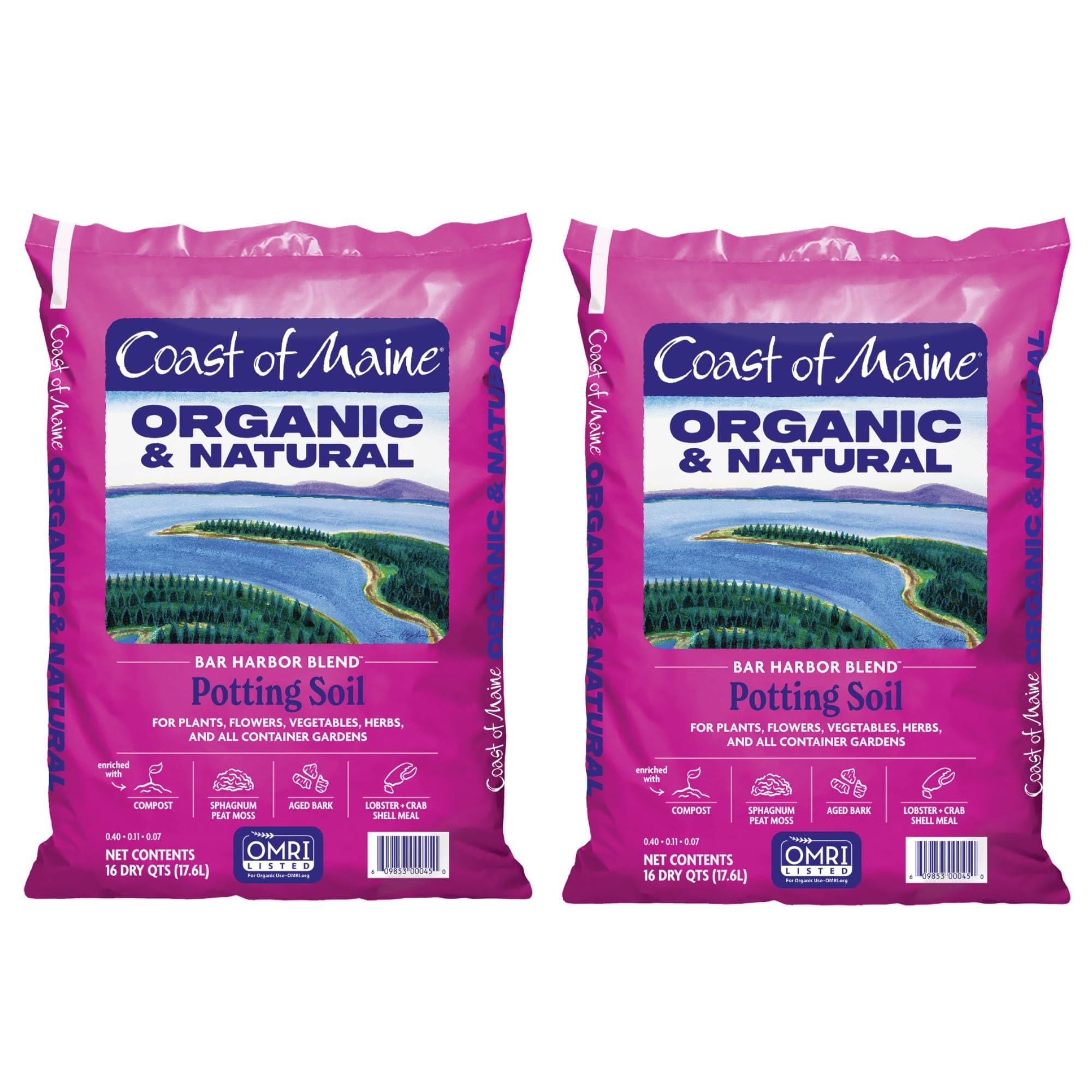
The Bar Harbor Blend uses a rich composted base with sphagnum peat moss, perlite for aeration, and a unique addition of lobster and crab shell meal alongside kelp meal. That marine-derived nitrogen source gives this mix a slight edge in slow-release feeding that lasts well beyond what standard peat-perlite blends can manage. The texture is darker and heavier than typical peat-dominant mixes because of the compost content, but it stays loose — reviewers consistently note no compaction issues even after weeks of watering.
Multiple verified buyers report that this is the only soil that kept their patio tomatoes and container potatoes thriving through an entire season without supplemental fertilizer. The mix is OMRI-listed for organic gardening and works equally well for indoor herbs and outdoor hanging baskets. The 16-quart two-pack covers roughly three 12-inch pots, making it a smart volume for serious container gardeners who rotate seasonal crops.
The bigger bag size and specialized ingredients do push this into a higher price tier than conventional potting soil, but the performance feedback from users is overwhelmingly positive — with many saying they abandoned long-time brand loyalty after using this blend. The dark compost base can smell earthy when first opened, but the smell dissipates quickly after watering.
What works
- Slow-release marine nitrogen for sustained feeding
- Loose structure resists compaction in pots
- No weeds or unwanted seedlings reported
What doesn’t
- Compost-heavy texture feels denser than peat mixes
- Earthy smell may be noticeable indoors initially
2. Espoma Organic Potting Soil Mix

Espoma builds this mix around sphagnum peat moss, perlite, humus, and a strong lineup of organic amendments: earthworm castings, alfalfa meal, kelp meal, and feather meal. The inclusion of Myco-Tone (a proprietary blend of endo and ecto mycorrhizae) gives it a biological advantage for root colonization that few competitors match at this price point. The 1-cubic-foot bag is one of the largest organic volumes available, providing enough material for multiple large containers.
Verified buyers consistently describe this as the mix that outperformed store-brand organic alternatives side by side — particularly for vegetables and herbs. The moisture retention is balanced well; users note that it holds water without turning into a soggy mass. Several reviewers who were wary of fungus gnats reported zero insect issues after using this mix indoors, though a small number of outdoor users observed gnats, likely from storage rather than the soil itself.
The absence of synthetic fertilizer means this mix requires you to add your own feeding plan after the first few weeks, which experienced organic growers will appreciate. For beginners, the lack of built-in fertilizer could lead to underfeeding if they expect the bag to provide a full season of nutrition without supplementation.
What works
- Mycorrhizae blend improves root uptake
- Large 1-cu-ft bag suits multiple containers
- Balanced moisture retention for pots
What doesn’t
- No included fertilizer requires supplemental feeding
- Some bags may need pre-moistening before use
3. Miracle-Gro Potting Mix (3-Pack)

Miracle-Gro’s conventional potting mix is the most widely available option and, for many container gardeners, the simplest. It employs a synthetic controlled-release fertilizer that feeds for up to six months, removing the guesswork of when to add plant food. The 8-quart three-pack gives you three manageable bags instead of one heavy sack, which makes it easier to store and use incrementally — especially for apartment dwellers or small-space gardeners.
Reviewers repeatedly mention that plants grow visibly larger and faster compared to unfed alternatives, which aligns with Miracle-Gro’s claim of doubling growth versus unfed plants. The texture is light and well-draining, and users note that it doesn’t compact into a hard block over time — a common failure point in budget potting soils. The smaller bag size is a particular advantage for those who have struggled lugging 40-pound bags up stairs.
Because this is a synthetic-feed mix, it is not suitable for gardeners who require OMRI organic certification. The fast-release fertilizer can also cause nutrient burn if you overwater or if the plant is very young. Additionally, some organic-oriented users dislike the presence of chemical fertilizers in their soil, even if the performance results are strong.
What works
- Built-in feeding lasts 6 full months
- Light texture resists compaction
- Small 8-qt bags are easy to handle and store
What doesn’t
- Synthetic feed not certified organic
- May cause nutrient burn if overwatered
4. Coast of Maine Organic & Natural Planting Soil for Vegetables & Tomatoes

This Coast of Maine formulation is specifically designed for heavy feeders like tomatoes and peppers, using composted cow manure and sphagnum peat moss as its structural base. The composted manure provides a strong initial nutrient charge that supports vigorous early growth, and the peat helps retain moisture without becoming waterlogged. The 20-quart bag is a generous single-bag volume for a few large containers or a single raised bed.
Buyers consistently praise this mix for producing visible growth within days of transplanting. One reviewer noted that their heirloom tomato seeds germinated and thrived with no extra fertilizer for months. The mix is OMRI-listed and contains cedar and aromatic wood particles that reportedly deter some soil insects — a useful bonus for outdoor containers. Many users who had switched from cheaper brands called this the best soil they had ever used.
The downside reported most often is the presence of fungus gnats in the initial bag, though most reviewers controlled them with neem oil or by letting the soil dry slightly between waterings. The cost per quart is higher than general-purpose mixes, so it is not ideal for filling many large containers on a strict budget.
What works
- High nutrient charge from composted manure
- Cedar/wood particles help deter insects
- OMRI-listed organic formula
What doesn’t
- Fungus gnats reported in some bags
- Expensive for large-scale container gardens
5. Espoma Organic Vegetable & Flower Garden Soil

Espoma’s Vegetable & Flower Garden Soil is technically an in-ground planting mix, but its rich organic composition — earthworm castings, compost, and Myco-Tone mycorrhizae — makes it an effective amendment for container soil blends. When mixed 50/50 with a light potting base like peat or coco coir, it adds significant microbial activity and slow-release nutrients that standard potting soils lack. The 1-cubic-foot bag provides ample material for blending.
Users who used this mix for container gardens reported that their tomatoes and marigolds significantly outperformed plants in an organic competitor’s standard potting soil. The structure is described as rich and well-aerated, with excellent moisture retention. Several reviewers specifically noted that the bags arrived free of pests, a common concern with organic soil products. The price point is mid-range, making it an economical amendment option.
The primary limitation is that this product is not designed to be used alone in containers — its density is too high for pure potting use, and it lacks the perlite or vermiculite needed for proper aeration in a confined pot. Using it straight in a container can lead to compaction over time. It works best as a booster for lighter mixes rather than a standalone solution.
What works
- Rich in earthworm castings and mycorrhizae
- No pest issues reported in sealed bags
- Excellent as a nutrient-dense soil amendment
What doesn’t
- Too dense for solo use in containers
- Lacks aeration components like perlite
6. Midwest Hearth Premium Potting Soil Mix

Midwest Hearth offers a straightforward three-part blend of peat moss, vermiculite, and perlite with pH levels controlled to suit a wide range of plants. This is a no-frills mix that prioritizes aeration and moisture control over nutrient density — there are no added composts, meals, or synthetic fertilizers. The result is a light, fluffy texture that professional growers rely on for seed starting and transplanting delicate root systems.
Verified buyers who used this for germinating petunias and other seeds praised its consistency and lack of contaminants. The bag is resealable, which helps keep the remaining mix fresh between uses. The texture is notably airy; reviewers who used it for houseplants reported excellent drainage and no root rot issues. Some users did note that the mix requires thorough pre-soaking before use because dry peat can initially repel water.
The main trade-off is the small 8-quart volume and the lack of any significant nutrient charge. Plants growing in this mix will need consistent fertilizer from week one, as the blend provides only structure and pH balance, not food. It is best suited for short-term uses like seed starting or for growers who prefer to control their own feeding regimen precisely.
What works
- Excellent aeration with perlite and vermiculite
- pH balanced for broad plant compatibility
- No weeds, bugs, or contaminants reported
What doesn’t
- No nutrient content — requires immediate fertilizing
- Small 8-qt bag is not economical for large pots
7. Black Gold 8-Quart All Organic Potting Soil (2 Pack)

Black Gold’s all-organic potting soil comes as a two-pack of 8-quart bags, offering a total of 16 quarts of certified organic material at an entry-level price point. The formula avoids synthetic ingredients and provides a dark, moisture-retentive base that many houseplant owners and small-space vegetable growers find effective. The organic certification makes it a reliable option for gardeners who need to keep their growing methods chemical-free.
The strongest signal from verified user reviews is the absence of fungus gnats — a consistent pain point with organic soils. Multiple buyers who usually dread opening a new bag of organic mix specifically noted that this soil was clean. The texture is described as rich and moist, and users report that it doesn’t compact or cause standing water in containers. Several reviewers who maintain container gardens of herbs and salad greens said everything they planted thrived in this mix.
The two 8-quart bags are convenient for small-scale use but limit the value for larger projects — you get 16 quarts total for a price that could buy a single 20-quart bag of a more robust mix. Additionally, some users noted that the soil may need to be mixed with perlite or a lighter base for plants that require very sharp drainage, such as succulents or some Mediterranean herbs.
What works
- No fungus gnats reported by multiple buyers
- Organic certification for chemical-free growing
- Moisture-retentive without compacting
What doesn’t
- Small total volume (16 qt) for the price
- May require additional perlite for very sharp drainage
Hardware & Specs Guide
Perlite vs. Vermiculite vs. Peat Moss
Perlite is volcanic glass that expands under heat, creating white, porous granules. In potting soil, it provides physical aeration — it keeps the mix from compacting and allows excess water to drain. Vermiculite is a mineral that also expands, but it acts more like a sponge, absorbing water and nutrients and releasing them slowly. Peat moss is partially decomposed sphagnum moss; it holds water well and adds organic bulk but has a naturally acidic pH (around 3.5 to 4.5). The best container vegetable mixes balance all three: perlite for drainage, vermiculite for moisture retention, and peat moss as a structural base that is typically pH-adjusted with lime.
NPK and the Role of Meals
NPK stands for Nitrogen (N), Phosphorus (P), and Potassium (K). In organic container mixes, these nutrients often come from meals: alfalfa meal (high in N for leafy growth), bone meal (high in P for root and flower development), kelp meal (high in K for overall plant health and stress resistance), and feather meal (slow-release N). Unlike synthetic fertilizers that dissolve instantly and risk burning roots in a confined pot, meals break down slowly through microbial activity. A mix with visible meal particles is generally a good sign that the manufacturer has prioritized steady, long-term feeding over a quick green-up.
pH and Lime Content
Most container vegetables grow best in soil with a pH between 6.0 and 6.8. Peat moss is naturally acidic, so quality mixes add agricultural lime (calcium carbonate) to raise the pH into the optimal range. A bag that does not list lime or dolomitic lime among its ingredients may produce a mix that is too acidic for vegetables, leading to stunted growth and nutrient lockout. If you are using a high-peat mix, always check that the manufacturer has addressed pH balancing — or plan to add lime yourself at a rate of about 1 tablespoon per gallon of soil.
Organic Certification (OMRI Listing)
OMRI (Organic Materials Review Institute) listing means the product has been reviewed and approved for use in certified organic production. This is significant for container vegetable growers because it guarantees that no synthetic pesticides, herbicides, or genetically modified ingredients were used in the soil. However, OMRI listing does not automatically mean the soil is high-performing — it only speaks to the absence of prohibited substances. A non-OMRI mix can still be excellent for vegetables; the key is reading the ingredient list for synthetic additives versus natural components.
FAQ
Can I use garden soil from my yard in a vegetable pot?
How often should I replace the soil in my vegetable pots?
Why does my potting soil have fungus gnats?
What is the difference between potting mix and potting soil?
Final Thoughts: The Verdict
For most gardeners, the best soil for vegetables in pots winner is the Coast of Maine Bar Harbor Blend because it delivers a proven organic nutrient profile with marine-based slow-release nitrogen and a structure that stays loose in containers throughout a full growing season. If you want a controlled synthetic feed that requires zero thought about fertilizing, grab the Miracle-Gro Potting Mix (3-Pack). And for organic purists who want the biological advantage of mycorrhizae and large volume for the money, nothing beats the Espoma Organic Potting Soil Mix.