
Nothing stings more than watching your tomato plants stretch tall and green, only to find the first fruits rotting from the bottom. Cucumbers, too, often turn bitter or fail to size up when the nutrient supply is off. The difference between a mediocre harvest and an overflowing basket of juicy, deep-flavored produce often comes down to one decision: the precise combination of nitrogen, phosphorus, and potassium you put into the soil.
I’m Rikta — the co-founder and writer behind Lawn Gear Lab. For this guide, I spent dozens of hours comparing NPK ratios, scrutinizing calcium percentages, cross-referencing organic certifications, and sorting through thousands of verified owner reports to identify which products actually deliver better fruit set and larger yields for both tomatoes and cucumbers.
Whether you grow in raised beds, large containers, or traditional rows, choosing the right granular or water-soluble mix can save you an entire season of disappointment. After weeks of deep research, I built this ranking of the best fertilizer for tomatoes and cucumbers to help you make a confident, data-backed selection.
How To Choose The Best Fertilizer For Tomatoes And Cucumbers
Tomatoes and cucumbers are both heavy feeders that benefit from a phosphorus boost during flowering, but they respond differently to nitrogen levels. Choosing a balanced formula that supports root development, fruit set, and high yields without triggering excessive foliage growth is the key.
NPK Ratio — The First Decision
A middle number (phosphorus) around 6-8 and a higher potassium number (4-6) with moderate nitrogen (3-5) works best for both crops. High first-number nitrogen formulas push leaves at the expense of fruits, which is the most common mistake home gardeners make.
Calcium Content — Blossom End Rot Protection
Tomatoes are notoriously prone to blossom end rot when calcium is lacking at fruit set. Look for a mix that lists calcium in the guaranteed analysis — 5% to 8% by weight is effective. Cucumbers also benefit from calcium for stronger cell walls and firmer fruit.
Form — Granular vs. Water-Soluble
Granular organic fertilizers feed slowly over 4-6 weeks and are ideal for pre-planting incorporation or top-dressing established plants. Water-soluble powders deliver immediate nutrition for hydroponics, drip irrigation, or corrective feeding when you spot a deficiency early in fruit development.
Quick Comparison
On smaller screens, swipe sideways to see the full table.
| Model | Category | Best For | Key Spec | Amazon |
|---|---|---|---|---|
| FoxFarm Happy Frog 5-7-3 | Granular | Heavy fruiting & rot prevention | 5-7-3 + Calcium + Mycorrhizae | Amazon |
| Espoma Tomato-Tone 3-4-6 | Granular | Large tomato harvests | 3-4-6 + 8% Calcium | Amazon |
| Greenway Biotech 4-18-38 | Water-soluble | Hydroponics & high-potassium | 4-18-38 + Chelated Micronutrients | Amazon |
| Alaska Fish Fertilizer 5-1-1 | Liquid | Vegetative growth & soil microbes | 5-1-1 OMRI Listed | Amazon |
| Down To Earth 4-6-2 | Granular | Gentle all-purpose feeding | 4-6-2 OMRI Listed | Amazon |
| Espoma Garden-Tone 3-4-4 | Granular | Value twin-pack for mixed gardens | 3-4-4 + Bio-tone | Amazon |
| Big A Tomato 1-1 with Kelp | Powder | Quick kelp-based feeding | 1-1 Base + Amino Acids & Kelp | Amazon |
In‑Depth Reviews
1. FoxFarm Happy Frog Tomato & Vegetable Fertilizer 5-7-3

FoxFarm formulated this 5-7-3 granular blend specifically for vigorous feeders, and the numbers align almost perfectly with what tomato and cucumber plants need during fruit set. The phosphorus level (7) is noticeably higher than most general-purpose organics, which directly supports abundant flower development and early fruit formation. The inclusion of mycorrhizal fungi is a genuine advantage — these beneficial root symbionts increase water and nutrient uptake efficiency, especially in containers where root space is limited.
Calcium is added to prevent blossom end rot, a recurring issue for tomato growers that causes the bottom of the fruit to turn black and leathery. Multiple owners report seeing baby fruit set within days of application on bag-grown plants. The formula also works on peppers, leafy greens, and root crops, making it a true multi-purpose tool for the edible garden. The granular texture is easy to side-dress and does not produce the strong fishy odor associated with some organic fertilizers.
The 4-pound bag covers a modest area, so large-scale row gardeners may need multiple bags per season. Some users note the per-pound cost sits above entry-level alternatives, though the yield improvements and rot prevention justify the premium for serious home growers. For gardeners who want one reliable granular feed that tackles both heavy fruiting and common physiological disorders, this is the most complete package available.
What works
- High phosphorus (7) targets fruit set directly
- Calcium content helps prevent blossom end rot reliably
- Mycorrhizal fungi improve root efficiency in containers
- No offensive fishy smell; water-soluble granules work easily
What doesn’t
- Smaller bag size limits value for large row gardens
- Premium price point per pound compared to basic blends
2. Espoma Organic Tomato-Tone 3-4-6

Espoma’s Tomato-Tone is a category staple for a reason — the 3-4-6 NPK skews deliberately low in nitrogen to avoid the leaf-over-fruit problem that plagues many home tomato patches. The 8% calcium content is the highest among all granular organic fertilizers in this comparison, and that matters enormously for gardeners in humid climates where blossom end rot flares up during prolonged wet periods. The Bio-tone microbial blend further enhances nutrient cycling in the root zone.
This is a true no-mix, ready-to-use granular that you sprinkle around the drip line every two weeks during the growing season. The 18-pound bag provides exceptional value per pound, easily covering large in-ground plots or multiple raised beds across an entire season. Cucumber plants respond well to the same feeding schedule, producing firmer fruit with better storage life. Owners in the Southeast report that Tomato-Tone outperforms other organic options for both Roma and beefsteak varieties in heavy clay soils.
The only limitation is that the granular form works best when soil is moist before application; dry soil can slow the breakdown rate. Some users switching from water-soluble fertilizers find the slower release less satisfying, though the consistent long-term feeding actually reduces the risk of nutrient burn.
What works
- 8% calcium provides strong blossom end rot prevention
- Low nitrogen (3) directs energy into fruits, not leaves
- 18-pound bag offers excellent season-long value
- Bio-tone microbes improve soil biology over repeated use
What doesn’t
- Granules require moist soil for optimal activation
- Slower release may frustrate growers wanting instant correction
3. Greenway Biotech Tomato Fertilizer 4-18-38
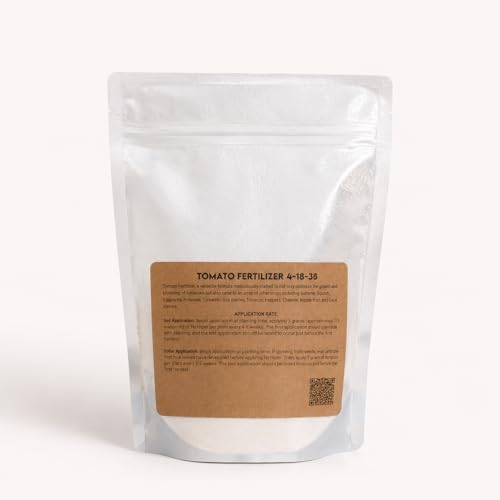
Greenway Biotech’s 4-18-38 formula targets a completely different growth stage than the granular blends above. With a staggering 38% potassium, this water-soluble powder is designed to maximize fruit size, flavor, and shelf life during the ripening phase. The low nitrogen (4) ensures the plant stops pushing foliage and channels energy into the developing fruit. This is not a general-purpose feed — it is a specialized finisher for growers who want heavy, dense tomatoes and crisp cucumbers with minimal seed cavity.
The micronutrient package is comprehensive: iron, manganese, zinc, and copper are all EDTA-chelated to remain available across a wide pH range (4-9), which is critical for hydroponic systems and container growers dealing with pH drift. The powder dissolves completely without clogging drip emitters, making it suitable for NFT, DWC, and Dutch bucket setups. Soil growers can also use it as a foliar spray or soil drench at 1-2 teaspoons per gallon every 1-2 weeks once flowers appear.
The major caution is potency — several owners report burning plants when they underestimated the concentration. Beginners should start at half the recommended rate and observe leaf response before increasing. The 1-pound bag is also compact relative to granular options, though a little goes a very long way. For hydroponic or advanced soil growers looking to push fruit quality to its ceiling, this is the most effective finisher on the list.
What works
- 38% potassium drives exceptional fruit size and flavor
- EDTA-chelated micronutrients prevent lockout in variable pH
- 100% soluble — no clogging in drip or hydroponic systems
- All-in-one nightshade formula works for peppers and eggplant too
What doesn’t
- Extremely concentrated — easily burns plants if over-applied
- Small bag size offers less visual value per dollar
4. Alaska Fish Fertilizer 5-1-1
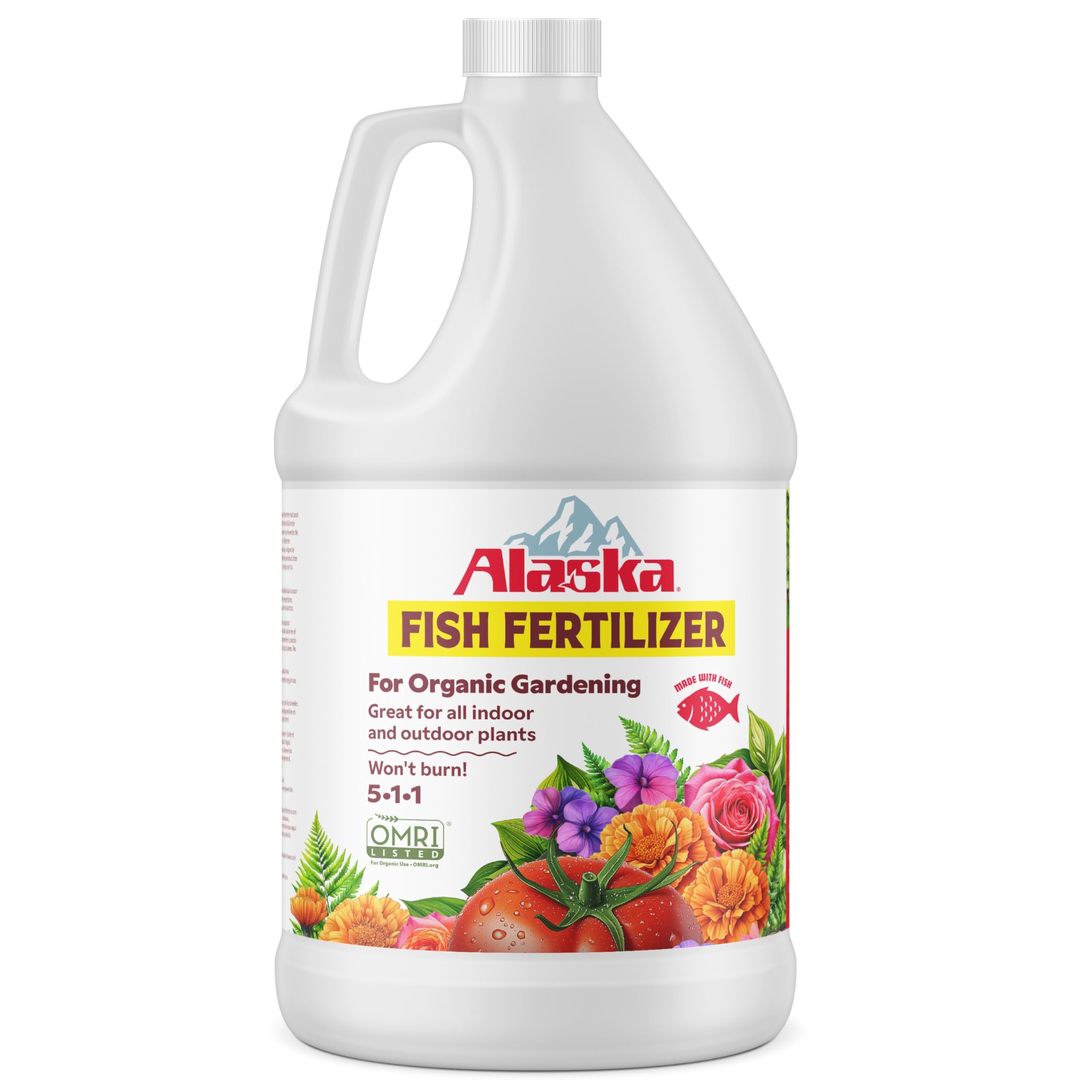
Alaska Fish Fertilizer occupies a distinct role — it is a gentle, cold-processed liquid nitrogen source that excels during the early vegetative stage. The 5-1-1 ratio is deliberately nitrogen-forward to fuel rapid leaf and stem development in spring, making it ideal for cucumber seedlings that need to establish a strong canopy before fruiting. The OMRI listing assures organic growers that no synthetic additives are present, and the cold-pressed method preserves natural micronutrients and amino acids that support soil microbial activity.
For tomatoes, this works best as a complementary feed during the first 3-4 weeks after transplant, before switching to a bloom formula. Gardeners who use it as a standalone feed through the entire season often report lush vines but fewer flowers, confirming the need to pair it with something higher in phosphorus and potassium later. The liquid concentrate mixes easily with water and can be applied every three weeks. The 115-ounce jug covers a large area and provides good value for gardeners with diverse plantings beyond just tomatoes and cucumbers.
The fishy odor is the most frequently mentioned drawback — while it dissipates within a day outdoors, applying it in enclosed greenhouses or near living spaces can be unpleasant. Some users also note that pets are attracted to the smell and may dig around treated plants. When used as intended for early-season growth, this is a reliable, soil-friendly nitrogen source that complements higher-phosphorus granular blends.
What works
- Gentle nitrogen source safe for seedlings and transplants
- Cold-pressed process preserves natural micronutrients
- Large liquid volume provides broad coverage for mixed gardens
- OMRI listed — meets organic production standards
What doesn’t
- Strong fishy odor lingers for about 24 hours after application
- Very low phosphorus and potassium — must be paired with a bloom formula
5. Down To Earth All Natural 4-6-2

Down To Earth’s 4-6-2 All Purpose Mix is a straightforward, no-nonsense granular fertilizer built on a foundation of fish bone meal, blood meal, feather meal, rock phosphate, langbeinite, greensand, humates, and kelp meal. The ingredient list reads like a soil amendment catalog, providing not just NPK but also trace minerals and organic matter that build long-term soil fertility. The 5-pound box is compact, but the formula is potent enough that a single application every 4-6 weeks keeps tomatoes and cucumbers productive through the season.
The 4-6-2 ratio hits a balanced middle ground — it supplies enough phosphorus for flower initiation without the aggressive potassium spike that some growers reserve for late-season finishing. Multiple owners report that pale, floppy tomato plants rebound within two weeks after application, regaining deep green color and setting new flowers. Cucumber plants respond with vigorous vine growth and higher fruit set. The OMRI listing confirms compliance with organic production standards, and the non-burning formula makes it safe for container plants when applied according to the label.
The primary trade-off is the box size — 5 pounds runs out faster than the larger Espoma bags for serious gardeners. Some users also note a strong organic smell during application, though it dissipates within a few days. For growers who value ingredient transparency and want a single multi-purpose blend that works across vegetables, herbs, and flowers without overcomplicating their feeding routine, this is the best value entry point.
What works
- Transparent, whole-food ingredient list with kelp and humates
- Gentle formula won’t burn plants when used as directed
- OMRI listed for certified organic gardens
- Quick visual recovery reported on stressed tomato plants
What doesn’t
- 5-pound box is small for large in-ground gardens
- Noticeable organic smell during application
6. Espoma Organic Garden-Tone 3-4-4 (Pack of 2)

Espoma’s Garden-Tone shares the same Bio-tone microbial technology as the Tomato-Tone line but uses a 3-4-4 NPK profile that is slightly more general-purpose, with a bit less potassium and no elevated calcium guarantee. The pack of two 4-pound bags gives you 8 pounds total, which is a practical quantity for gardeners managing a mix of tomatoes, cucumbers, peppers, leafy greens, and herbs across several raised beds. The granules are ready to use — just sprinkle around the drip line monthly and water in.
The 3-4-4 formulation is deliberately balanced to support both vegetative growth and fruit development without pushing excessive leaf mass. Owners who grow multiple crop families appreciate not having to switch products between their tomato patch and cucumber trellis. The Bio-tone microbes help release nutrients already present in the soil, reducing the total amount of fertilizer needed over time. Multiple verified buyers report achieving harvests of 400 pounds of tomatoes and 100 pounds of carrots from a single season using Espoma products, crediting the consistent feeding schedule.
The lack of a calcium boost is the main difference from the Tomato-Tone variant — gardeners in regions prone to blossom end rot may still need a calcium supplement or should opt for the Tomato-Tone 3-4-6 instead. The 4-pound individual bag size also means more frequent reordering for large plots. For mixed vegetable gardens where convenience and microbial soil health are priorities, this twin-pack delivers reliable performance at an approachable entry cost.
What works
- Pack of two provides 8 pounds for extended coverage
- Balanced 3-4-4 works across multiple crop families
- Bio-tone microbes enhance native soil nutrient availability
- Ready-to-use granules require no mixing
What doesn’t
- No elevated calcium level — may need supplement for rot-prone areas
- Individual bag size is small for large-scale row planting
7. Big A Tomato Premium Organic Fertilizer with Kelp

Big A Tomato takes a different approach — rather than a high-NPK fertilizer, it is a concentrated organic powder built around North Atlantic sea kelp, humic acid, amino acids, and a full spectrum of micronutrients including iron, copper, boron, and zinc. The NPK base is listed as 1-1, meaning this is not a standalone heavy feeder but rather a biostimulant that enhances nutrient uptake and stress tolerance. It is designed to be used alongside a complete fertilizer or as a weekly supplement to keep plants metabolically active during fruiting.
For tomatoes and cucumbers, growers report using one scoop per plant weekly and seeing large, juicy fruit develop even in hot climates. The kelp provides natural growth hormones (cytokinins and auxins) that support root branching and flower retention. The powder dissolves quickly in water and can be applied as a soil drench or foliar spray. Owners in Zone 7 report starting tomatoes from seed in July, feeding weekly, and harvesting substantial fruit by mid-October — an impressive turnaround for a late-season planting.
The 12-ounce bag is the smallest container in this comparison by weight, and some users express disappointment at the quantity for the price. It is also more of a supplement than a complete feed, so beginners expecting a full NPK program may need to pair it with a balanced granular or liquid fertilizer. For experienced organic growers looking for a kelp-based metabolic booster to maximize fruit quality and stress resilience, this is a focused and effective specialty tool.
What works
- North Atlantic kelp provides natural growth hormones
- Full micronutrient profile with amino and humic acids
- Highly soluble — works for soil drench and foliar spray
- Effectiveness reported in late-season and hot-climate plantings
What doesn’t
- Small 12-ounce bag runs out quickly for weekly applications
- Low NPK base requires pairing with a complete fertilizer
Hardware & Specs Guide
NPK Ratio Explained
The three numbers on any fertilizer label represent Nitrogen (N) — for leaf growth, Phosphorus (P) — for root and flower development, and Potassium (K) — for fruit quality and disease resistance. For tomatoes and cucumbers, a ratio with the middle number (P) between 4 and 8 and the last number (K) between 4 and 6 works best during fruiting. Avoid high-first-number formulas (above 8) during bloom or you will get giant plants with few fruits.
Calcium & Blossom End Rot
Blossom end rot appears as a dark, sunken lesion on the bottom of tomato fruit and is caused by calcium deficiency at the growing tip during rapid fruit expansion. Fertilizers with 5-8% calcium in the guaranteed analysis provide a direct supply. Inconsistent watering also impairs calcium uptake, so pair a calcium-rich feed with even soil moisture for best prevention.
Organic Certification
OMRI (Organic Materials Review Institute) listing means the product has been reviewed and approved for use in certified organic production. The Espoma Bio-tone and Down To Earth ingredients qualify under these standards. Non-OMRI organic products may still be natural, but the certification provides a third-party guarantee that no synthetic pesticides, sewage sludge, or prohibited fillers are present.
Granular vs. Water-Soluble Timing
Granular organic fertilizers release nutrients over 4-6 weeks as soil microbes break them down, making them ideal for pre-plant incorporation and monthly top-dressing. Water-soluble powders provide immediate nutrition within 24 hours, which is valuable for correcting deficiencies mid-season or for hydroponic systems. Many experienced gardeners use a granular base feed and supplement with water-soluble products during peak fruiting.
FAQ
Can I use the same fertilizer for both tomatoes and cucumbers?
How often should I fertilize tomatoes and cucumbers in containers?
What NPK ratio prevents blossom end rot without overfeeding?
Should I stop fertilizing when fruit starts ripening?
Final Thoughts: The Verdict
For most gardeners, the fertilizer for tomatoes and cucumbers winner is the FoxFarm Happy Frog 5-7-3 because its high phosphorus level, added calcium, and mycorrhizal fungi directly target the two biggest problems: low fruit set and blossom end rot. If you want a massive bag that lasts all season with proven calcium protection, grab the Espoma Tomato-Tone 3-4-6. And for hydroponic growers or anyone chasing maximum fruit size and flavor during the ripening phase, nothing beats the Greenway Biotech 4-18-38 water-soluble finisher.