
Root rot is the number one killer of indoor plants, and most potting soils straight from the bag hold far too much moisture for succulents, cacti, and other drought-tolerant species. The missing ingredient that separates thriving plants from slowly drowning ones is the right coarse, gritty additive that creates air pockets and forces excess water out of the pot. Whether you are mixing your own custom blend, improving drainage in heavy clay garden beds, or top-dressing a bonsai, the underlying need is the same: you need a mineral aggregate that physically opens up your soil structure.
I’m Rikta — the co-founder and writer behind Lawn Gear Lab. My approach to this guide involved cross-referencing particle size ratings, drainage rates, and pH neutrality claims from seven distinct products while stacking them against hundreds of verified owner accounts to see which materials actually deliver measurable improvements in soil porosity.
After sorting through straight horticultural sand, pumice, perlite, zeolite, and lava rock across different price tiers, the clear winners are those that combine consistent particle grading with minimal dust and no chemical additives. This guide breaks down the best options for any gardener looking for the best sand for gardening that actually performs.
How To Choose The Best Sand For Gardening
Choosing the right gritty soil amendment is not as simple as grabbing the cheapest bag. Particle size, porosity, weight, and chemical composition all dictate how the material interacts with water and plant roots. Understanding these variables prevents the frustration of buying a product that either compacts into concrete or floats to the top of your pot after the first watering.
Particle Size and Consistency
The single most important spec is the size range of the granules. For most succulents and cacti, particles between 1/8 inch and 3/8 inch create the ideal balance of air space and water channeling. Dust and fine particles, which are common in low-grade horticultural sand, fill those air pockets and ruin drainage. Look for products that state a specific screen size on the bag, like “3/8 x 1/4 inch.”
Porosity and Moisture Retention
Not all gritty materials behave the same way with water. Pumice and lava rock are highly porous and hold moisture within their own structure, slowly releasing it back to the roots — ideal for plants that appreciate a bit of residual humidity. Perlite is also porous but tends to float and can break down over time. Zeolite actively absorbs and holds onto nutrient cations, which can reduce fertilizer leaching. Straight horticultural sand is non-porous and purely mechanical in its drainage function.
pH and Chemical Neutrality
Most plants prefer a slightly acidic to neutral pH range, and the mineral aggregate you add should not shift that balance. Perlite typically sits at pH 7.0, making it perfectly neutral. Pumice and lava rock can vary slightly depending on the source. Zeolite has a high cation exchange capacity and can affect the availability of certain nutrients. For sensitive plants like carnivorous species or certain orchids, pH neutrality and lack of soluble salts are critical.
Quick Comparison
On smaller screens, swipe sideways to see the full table.
| Model | Category | Best For | Key Spec | Amazon |
|---|---|---|---|---|
| Horticultural Pumice 14 qt | Pumice | Bonsai & succulent soil mixes | Screened 3/8″ x 1/4″ granules | Amazon |
| Planterhoma Lava Rocks 18 lb | Lava Rock | Top dressing & hydroponics | 5–8 mm mixed color grit | Amazon |
| Rosy Soil Cactus Mix 4 qt | Premixed Soil | Immediate potting of succulents | Peat-free chunky organic blend | Amazon |
| GARDENWISE Fine Sand 3 qt | Horticultural Sand | Seed starting & top dressing | Fine-grain, soft texture | Amazon |
| Rurtsva Organic Perlite 10 qt | Perlite | General soil aeration | 10-quart lightweight vol. | Amazon |
| Voulosimi Perlite 10 qt | Perlite | Large tropical plants & aroids | Coarse, chunky nuggets | Amazon |
| ARDEN LINE Zeolite 6 lb | Zeolite | Bonsai mixed blends & odor control | 1/8″–1/4″ screened rocks | Amazon |
In‑Depth Reviews
1. Horticultural Pumice – 14 Dry Quarts

This 14-dry-quart bag of natural mined pumice is specifically screened to a 3/8 x 1/4 inch granule size, which is the sweet spot for succulent and bonsai soil amendments. The bright white color makes it easy to visually assess your mix ratio, and the lightweight porous structure holds moisture internally while still allowing free drainage around the roots. Multiple verified buyers with aeoniums and other sensitive succulents confirm that switching to this larger grain pumice eliminated the persistent wet soil issues they had with finer materials.
Unlike perlite, which can float to the surface and degrade over time, pumice stays put in the pot and does not break down. The product arrives dried and pre-screened, with minimal dust compared to most bagged pumice options on the market. Owners consistently note that the particle size is consistently uniform across multiple purchases, with no debris or organic contamination found in the bags.
For gardeners mixing their own custom soil batches, this bulk size offers excellent value per quart compared to smaller retail bags. The pumice works as a standalone rooting medium, a soil amendment blended at a 1:3 ratio with potting mix, or a clean top dressing for finished pots. If you need a reliable, pH-neutral mineral aggregate that does the same job as horticultural sand but with better moisture management, this is the product to beat.
What works
- True-to-size 3/8 x 1/4 inch grading with minimal fines
- Porous structure retains moisture without waterlogging roots
- Bulk 14-quart volume provides excellent per-quart value
What doesn’t
- Heavier weight per volume compared to perlite
- Initial dust may require rinsing before use
2. Planterhoma Horticultural Lava Rocks – 18 lb
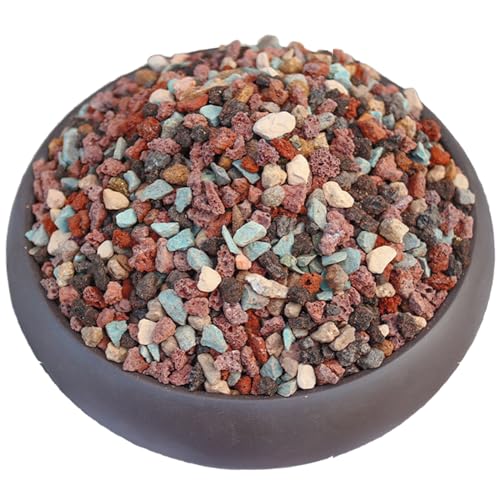
These mixed-color horticultural lava rocks come in a substantial 18-pound bag with a granular size range of 5 to 8 millimeters, making them suitable for everything from hydroponic net cups to succulent top dressing. The porous surface area of volcanic lava rock promotes colonization by beneficial microbes and provides excellent anchorage for root systems. Verified buyers report using this product as a standalone substrate in semi-hydro setups, a gritty additive for bonsai soil, and a decorative top layer that prevents soil erosion during watering.
The irregular shape of the individual granules creates natural air pockets when packed, which is superior to rounded sands that can settle and compact over time. Owners note that the mixed color palette — ranging from deep charcoal to reddish-brown — adds an attractive natural aesthetic to potted displays and terrariums. The rocks are heavy enough to stay in place during bottom watering but not so dense that they crush delicate root structures.
Several long-term users confirm that the lava rock holds up well after months of continuous use in self-watering pots, with no signs of degradation or dust generation. The 18-pound bag covers a generous volume, making it a cost-effective choice for gardeners maintaining multiple large planters or extensive bonsai collections. The product ships ready to use straight from the bag, though a quick rinse removes any residual dust from shipping.
What works
- Porous volcanic structure provides excellent root aeration
- Mixed colors offer attractive decorative top dressing
- Heavy enough to stay in place during watering
What doesn’t
- Shipping weight makes delivery slower than lighter options
- Particle size may be too large for very small pots
3. Rosy Soil Cactus & Succulent Mix – 4 qt
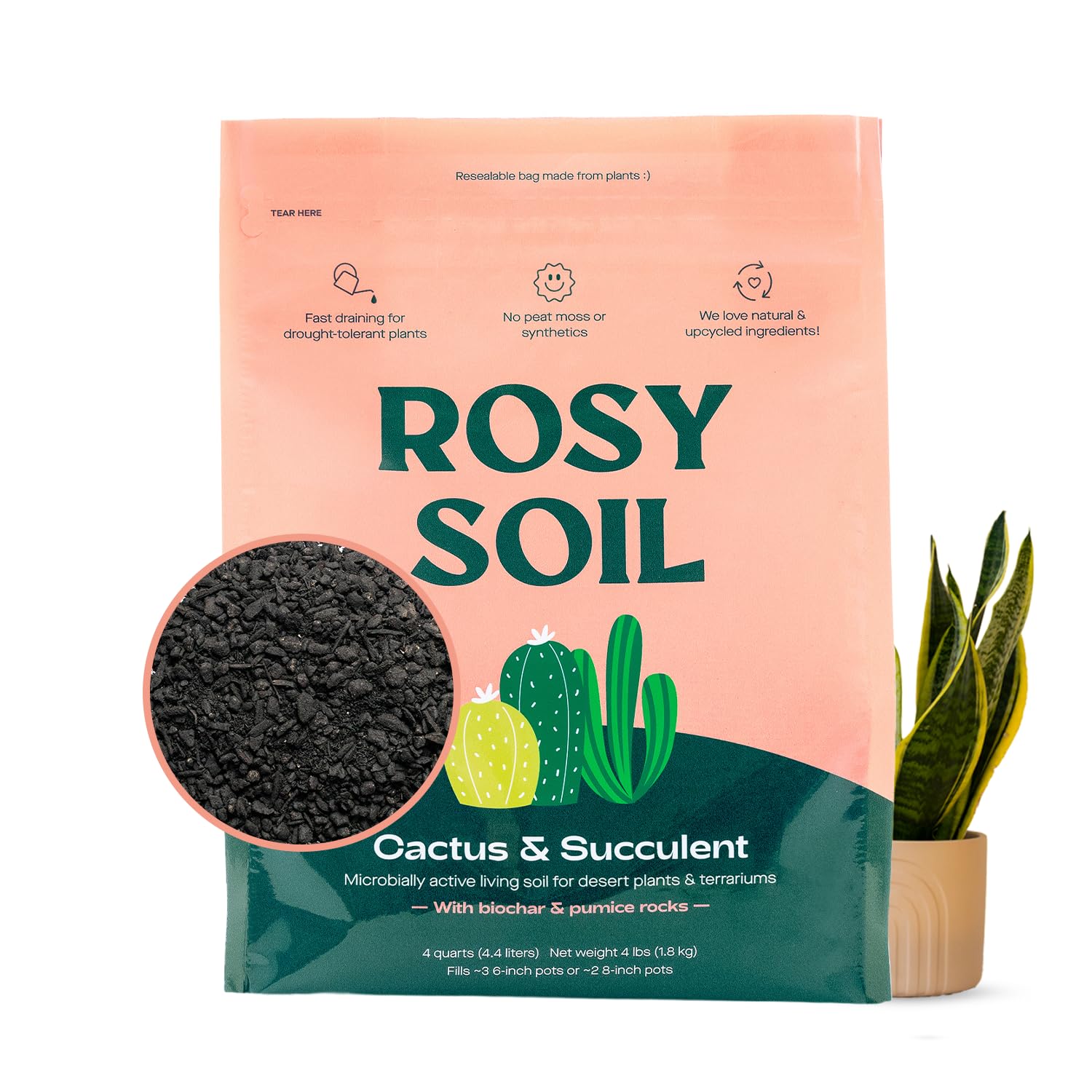
This pre-mixed cactus and succulent soil from Rosy Soil skips peat moss entirely, opting for a chunky, fast-draining blend that stays loose and airy straight out of the bag. The formula includes pre-loaded beneficial microbes and organic worm castings, which create a living soil ecosystem that feeds roots without synthetic fertilizers. Multiple verified buyers report their succulents and ZZ plants thriving after a month in this mix, with zero evidence of pests, fungus gnats, or soil compaction.
The 4-quart resealable bag is designed for convenience, with clear planting instructions printed directly on the package. Owners note that a single bag fills approximately two to three standard 4-inch pots, making it ideal for small-scale repotting sessions. The texture is consistently dark and even, with visible gritty components that provide the mechanical drainage succulents require. Users with aloe vera, jade, and snake plants confirm the mix holds its structure without turning to mush after repeated watering cycles.
While the mix works well straight from the bag, experienced succulent growers recommend adding additional perlite or pumice for older plants that require extra-dry conditions. The peat-free formulation is a significant advantage for environmental sustainability and for preventing the overly moisture-retentive behavior of conventional potting soils. If you want a ready-to-use foundation that already contains the drainage properties of horticultural sand without the guesswork of DIY blending, this is a strong choice.
What works
- Peat-free formula drains faster and stays loose longer
- Pre-loaded microbes and worm castings support root health
- Resealable bag keeps unused mix fresh between uses
What doesn’t
- Needs additional grit for very drought-sensitive species
- Bag seal can be difficult to close securely
4. GARDENWISE Fine Sand – 3 Quarts
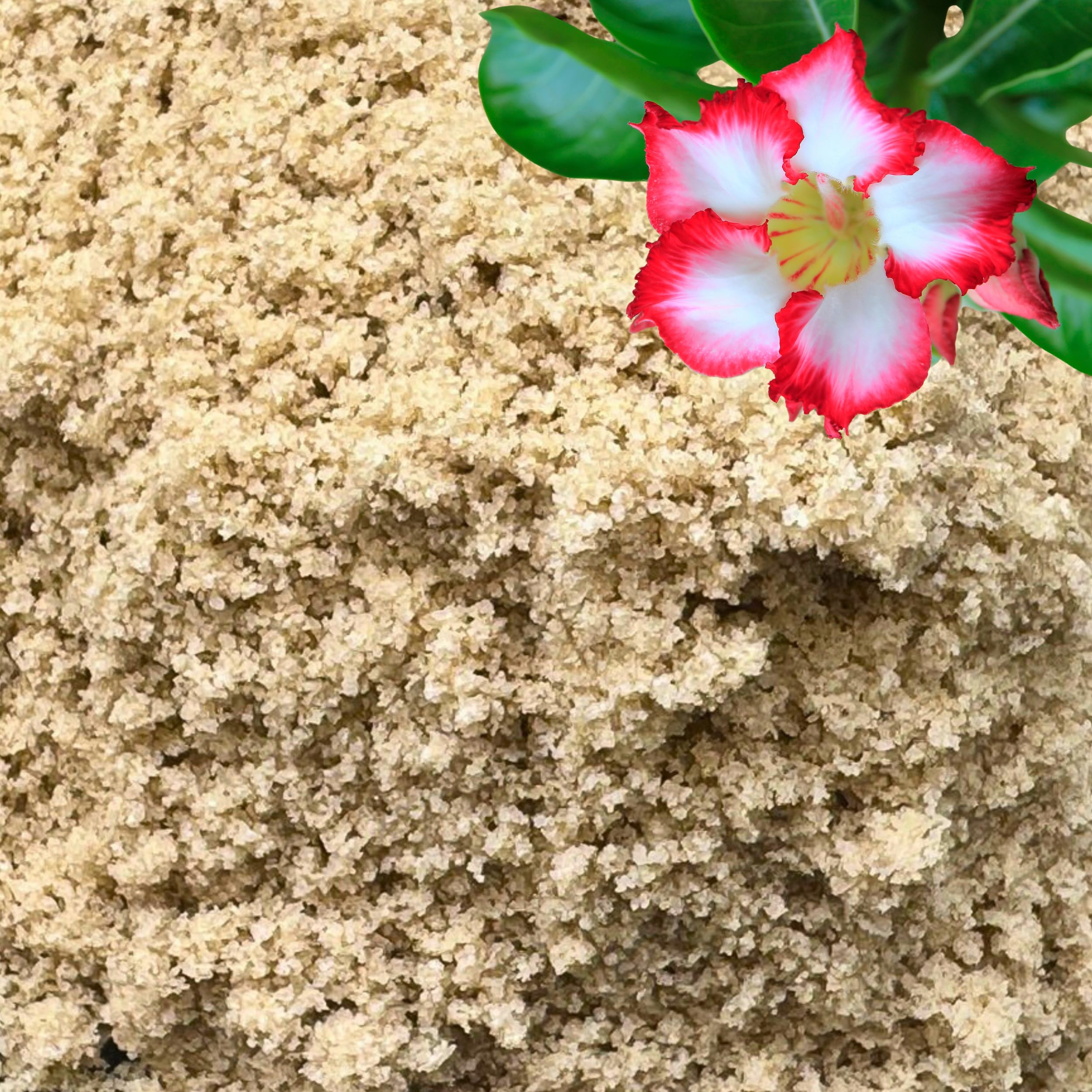
This soft, fine-grain horticultural sand from GARDENWISE is made from finely crushed natural stone with no chemical additives, making it safe for use around pets and children. The tan-colored particles serve double duty as both a soil amendment and a decorative top dressing for Zen gardens, terrariums, and fairy gardens. The 3-quart bag delivers 8.4 pounds of material, which is dense enough to provide genuine weight and structure when blended into potting mixes.
As a mechanical amendment, the fine sand creates gentle aeration within indoor potting soil by physically separating clay and organic particles. It blends well with peat or perlite to create seed-starting mixes that give seedlings a firm, breathable base. Owners appreciate that the product does not produce excessive dust clouds when pouring, and the natural tan color blends invisibly into most potting applications without looking artificial.
The sand is specifically formulated to boost drainage for succulents, cacti, and other dry-climate plants that are prone to root rot in standard potting soil. When used as a top dressing, it provides a clean, polished finish while also preventing soil from splashing out during watering. For gardeners who want a straightforward, no-nonsense horticultural sand that serves both functional and decorative roles at an affordable price point, this product delivers exactly what it promises.
What works
- Fine grain texture integrates easily into existing potting mixes
- Natural tan color works as a clean decorative top dressing
- No chemical additives — safe for indoor use
What doesn’t
- Fine particles can settle and compact over time in heavy mixes
- Does not provide the internal porosity of pumice or perlite
5. Rurtsva Organic Perlite – 10 Quarts
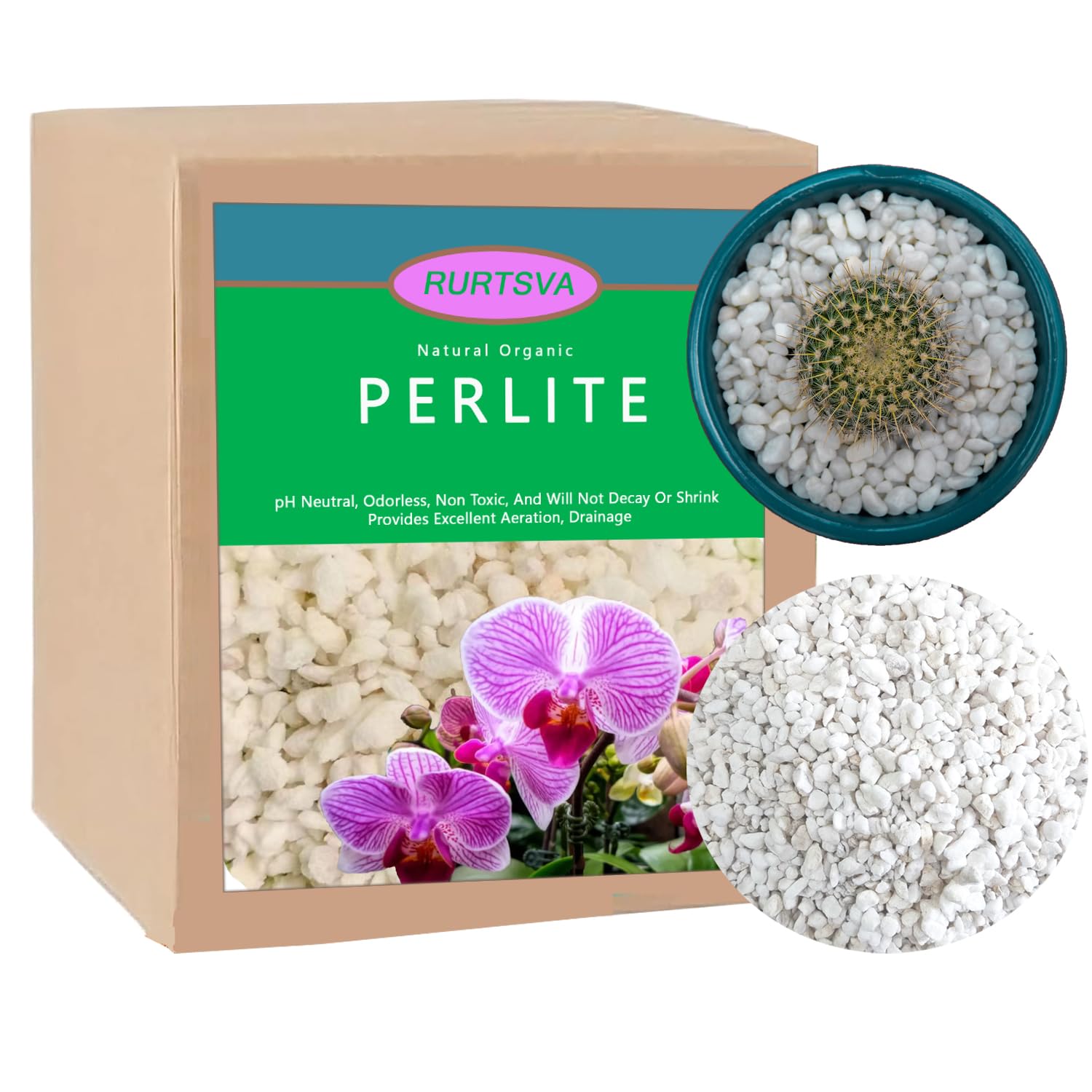
This 10-quart bag of natural organic perlite from Rurtsva provides a lightweight, pH-neutral soil amendment that adds porosity to both potting mixes and soilless hydroponic systems. The white granules have a neutral pH of 7.0 and do not decompose over time, making them a stable long-term addition to any container garden. Verified buyers use this perlite for everything from starting seedlings to amending soil for orchids, succulents, and tropical houseplants.
The perlite functions by creating air channels within the soil that allow excess water to drain rapidly while still retaining some moisture and nutrients within its porous structure. It is particularly useful for preventing soil compaction in containers that are watered frequently. Users confirm that the product mixes well with standard potting soil and does not float excessively to the surface after watering, though some floating is inherent to perlite’s lightweight nature.
For gardeners who propagate from cuttings, this perlite works as a standalone rooting medium that keeps cuttings hydrated without waterlogging. The 10-quart size is sufficient for multiple large pot repottings or for amending an entire raised bed. Owners note that the packaging consists of a plastic bag inside a box, so transferring to a sealable container is recommended for long-term storage. If you need a classic, reliable perlite at a competitive per-quart cost, this is a solid mid-range option.
What works
- Neutral pH 7.0 makes it safe for sensitive plants
- Lightweight and easy to mix into any soil blend
- Does not decompose or break down in the soil
What doesn’t
- Can float to the surface during heavy watering
- Bulk box packaging is not resealable for long-term storage
6. Voulosimi Perlite – 10 Quarts

This 10-quart bag of perlite from Voulosimi stands out for its large, chunky granule size specifically designed for aroid plants, monsteras, and large tropical specimens. Standard fine-grade perlite can be too small to create meaningful air pockets for big root systems, but these coarse nuggets maintain structural integrity and visible pore space even in deep pots. Verified buyers consistently highlight the generous quantity and the fact that the pieces are noticeably larger than typical store-bought perlite.
The chunky texture prevents the soil from compacting around thick root structures, allowing oxygen to reach deeper zones of the root ball. Users with monsteras and philodendrons report that the large perlite pieces mix well with bark and coir to create the airy, well-draining environment these epiphytic plants require. While some dust is present — standard for any perlite shipment — the overall quality of the nuggets is rated highly across multiple purchases.
One trade-off with this coarse grade is that it is less suitable for small succulents or seed-starting applications where finer particle sizes are preferred. The large chunks can also be visually prominent if used as a top dressing. However, for gardeners specifically targeting aroid and tropical plant mixes that need maximum aeration, this chunky perlite delivers precisely what the standard fine-grade cannot. It is a niche tool for a specific job, but within that job it excels.
What works
- Large, coarse nuggets create superior aeration for aroid roots
- Generous 10-quart volume for multiple repottings
- Minimal powder dust relative to other perlite brands
What doesn’t
- Too large for small succulent or seed-starting mixes
- Chunky texture is visually noticeable as a top dressing
7. ARDEN LINE Zeolite – 6 lbs
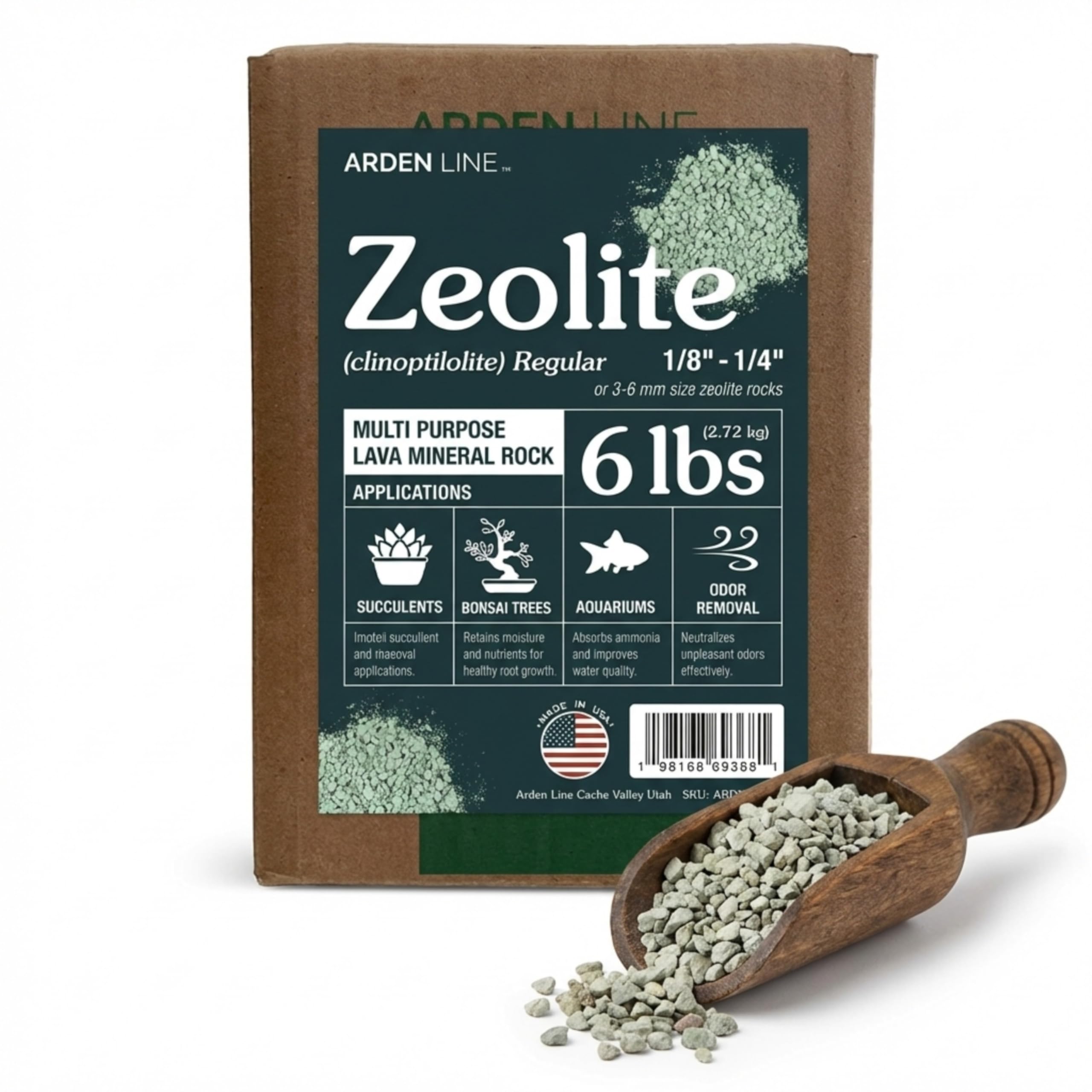
This 6-pound bag of natural clinoptilolite zeolite from ARDEN LINE offers a dual-purpose mineral that works both as a soil amendment and as a passive odor-control medium. The regular-size granules are screened to approximately 1/8 to 1/4 inch, placing them squarely in the functional range for mixing into bonsai and succulent soil recipes. Zeolite’s unique crystalline structure gives it a high cation exchange capacity, meaning it holds onto ammonium, potassium, and other positively charged nutrients and releases them slowly to plant roots.
Verified buyers report using this zeolite blended with pumice and LECA for semi-hydro plant setups, where it helps regulate water availability and prevents root systems from drying out too quickly between watering cycles. The same buyers note that a small amount goes a long way — the 6-pound bag is sufficient for multiple custom soil batches or for treating several indoor plant collections. Beyond plants, users place the zeolite in breathable bags or shallow bowls to absorb moisture and neutralize odors in compost buckets, laundry rooms, and pet areas.
The product arrives in a single kraft paper bag with minimal dust, and the granules hold up well to repeated rinsing and reuse in non-consumable applications. For gardeners who want a soil amendment that does more than just drain — actively improving nutrient efficiency — zeolite fills a unique niche that neither perlite nor pumice can match. It is the most specialized product on this list, but for bonsai enthusiasts and semi-hydro growers, its benefits are substantial.
What works
- High CEC improves nutrient retention and reduces fertilizer leaching
- Dual-purpose use as both soil amendment and odor absorber
- Sturdy granules withstand rinsing and reuse
What doesn’t
- Not as lightweight as perlite for bulk soil mixing
- Higher cost per pound compared to straight horticultural sand
Hardware & Specs Guide
Particle Size Grading
Particle size is the single most consequential spec for any mineral soil amendment. Materials screened to a specific range — such as 3/8 x 1/4 inch — ensure consistent drainage and aeration. Fine sands below 1/16 inch can fill pore spaces and counteract the drainage you are trying to achieve, while particles above 1/2 inch may create voids too large for root contact. Always check whether the product lists a screen size; if it only says “fine” or “coarse” without measurement, the batch may vary from bag to bag.
Porosity and Water Behavior
Pumice and lava rock are naturally porous materials that hold water within their internal structure, releasing it slowly to roots. Perlite is also porous but more brittle and prone to floating. Zeolite has a microporous crystalline structure that traps water and nutrient ions at the molecular level. Horticultural sand is non-porous — its drainage function is purely mechanical, relying on particle shape and size to create gaps. Matching the porosity of your aggregate to the water needs of your specific plant is essential for avoiding overwatering or underwatering.
FAQ
Can I use regular play sand from a hardware store for my succulents?
What is the difference between perlite and pumice for soil drainage?
How much sand or grit should I mix into potting soil for cactus?
Does zeolite replace the need for perlite or pumice in my mix?
Final Thoughts: The Verdict
For most gardeners, the sand for gardening winner is the Horticultural Pumice 14 qt because its precise 3/8 x 1/4 inch screen size, excellent internal porosity, and neutral composition make it the most versatile and reliable soil amendment for succulents, bonsai, and container plants alike. If you want a ready-to-use mix that skips the DIY blending, grab the Rosy Soil Cactus Mix. And for large tropical aroids that need maximum root aeration, nothing beats the chunky nuggets of the Voulosimi Perlite.