
Nothing kills the momentum of a thriving vegetable garden or a flowering trellis like watching a heavy tomato branch sag or a climbing rose whip loose in a gust of wind. The best solution isn’t messy twine or time-consuming twist ties—it’s a purpose-built clip that secures the stem without damaging the plant tissue and lets you adjust the position in seconds as the vine grows.
I’m Rikta — the co-founder and writer behind Lawn Gear Lab. I’ve spent hundreds of hours cross-referencing plastic formulations, spring-guage tolerances, and real-world durability reports from home gardeners who put these clips through an entire growing season on tomatoes, cucumbers, blackberries, and flowering vines.
Whether you are training indeterminate tomatoes up a string line or tying a climbing hydrangea to a trellis, the right fastener makes all the difference between tangled chaos and controlled upward growth. Below you’ll find the most reliable, budget-conscious, and heavy-duty options currently available as we break down the best climbing plant clips for every type of gardener and trellis system.
How To Choose The Best Climbing Plant Clips
The market is saturated with cheap packs of plastic clips that either snap under light pressure or fail to grip a slippery stem. Knowing the three specs that separate a lasting clip from a brittle throwaway will save you time and frustration.
Material and UV Resistance
Most entry-level clips are made from a standard polypropylene that degrades and becomes brittle after a few months of direct sun exposure. Premium clips add a UV stabilizer to the plastic, which extends the usable life through a full growing season and often beyond. Spring steel wire inside the hinge must be either galvanized or coated to resist rust; bare metal exposed to overhead irrigation or rain will corrode by mid-summer and lose clamping force.
Clip Design and Holding Force
Two main designs exist: the spring-loaded pinch clip (operated by squeezing two handles) and the fixed buckle ring (a single loop that snaps around the stem). Pinch clips offer faster repositioning as the vine grows and work well on trellises and stakes. Buckle rings are simpler, cheaper, and better for permanent attachment to a taut string line. The key metric is the inner opening diameter—a 1.2-inch (30 mm) ring fits most mature tomato stems, while a 2-inch ring accommodates thick squash vines or multiple stems running together.
Quantity vs. Quality
A 300-count pack at a rock-bottom price often means thinner plastic walls and weaker springs that break during the first application. Mid-range packs (80 to 120 pieces) tend to use thicker plastic and heavier steel wire, yielding a higher percentage of clips that survive removal and re-clipping. For a small vegetable garden, 80–100 quality clips are ample; for a high-tunnel operation or a massive trellis wall with roses and blackberries, the larger pack sizes justify themselves as long as the per-unit quality holds up.
Quick Comparison
On smaller screens, swipe sideways to see the full table.
| Model | Category | Best For | Key Spec | Amazon |
|---|---|---|---|---|
| Fasmov 160 Piece | Pinch Clip | Large mixed gardens | 2-in / 1-in sizes | Amazon |
| RayLynn 100 Large | Pinch Clip | Heavy fruit canes | 1.6 oz weight | Amazon |
| Hydrofarm Mega Twine | Buckle Clip | String-line trellising | 25 mm round | Amazon |
| Piteno 300-Pack | Buckle Ring | High-volume tomatoes | 30 mm inner dia | Amazon |
| GXXMEI 100-Pack | Pinch Clip | Dual-size versatility | 1.6 x 1.2 inch | Amazon |
| ROYHOO 120-Pack | Pinch Clip | Blackberry/raspberry | 1.6 x 1.2 inch | Amazon |
| GXXMEI 80-Pack | Pinch Clip | Mixed small gardens | 1.77 x 2.36 inch | Amazon |
In‑Depth Reviews
1. Fasmov 160 Piece Gardening Plant & Flower Spring Clips

The Fasmov set delivers the best blend of quantity, size variety, and one-handed ease of use. With 80 large 2-inch clips and 80 small 1-inch clips in a single box, you have enough hardware to manage a mixed garden of tomatoes, cucumbers, beans, and flowering vines like climbing hydrangea or bougainvillea without leaving gaps. The heavy-duty spring steel wire and waterproof plastic body resist rust and UV degradation noticeably better than ultra-cheap packs, which means a larger percentage of these clips survive removal and repositioning deep into the season.
The pinch-to-open action is genuinely a one-hand operation: squeeze the handles, position the stem inside the jaws, and release. That quick motion makes it realistic to train a new leader shoot every day without frustration. A few users report that roughly 5 percent of the clips may crack if forced open at the wrong angle, but the overall failure rate is well below the commodity 300-count rings that snap on the first application.
For the home gardener who wants a single, future-proof purchase that covers everything from flimsy pea shoots to heavy fruit-laden tomato branches, the Fasmov 160-piece kit hits the sweet spot of holding force, size range, and long-term reusability. The mix of sizes also means you can use the large clips on blackberry canes and the small clips on pepper plants without buying two separate products.
What works
- True one-hand operation—squeeze, clip, release in under two seconds per stem.
- Balanced 80/80 split of large and small sizes covers nearly every common garden vine.
- UV-stabilized plastic and rust-resistant spring steel hold up across multiple seasons.
What doesn’t
- Pushing the hinge to an extreme angle can crack the plastic on a few clips.
- The black/gray color blends into dark soil, making dropped clips harder to spot.
2. RayLynn Products 100 Piece Garden Plant and Vine Support Clips (Large)

The RayLynn large clips are the standout choice for gardeners who need brute holding force on thick, heavy canes. Each clip is beefier than the standard spring-loaded design—the plastic walls are thicker and the steel spring carries noticeably more tension, allowing it to securely clamp a 1.5-inch blackberry cane or a multi-stem tomato branch without slipping. The clear terracotta finish blends into wood stakes and natural twine, which keeps the visual focus on the plant rather than a wall of green plastic.
Professional users, including wedding-venue operators managing thousands of rose canes on chicken-wire trellises, specifically call out the RayLynn clips as the only ones that hold up under repeated tension and weather exposure. The weather-resistant plastic has proven to survive an entire season of direct sunlight with minimal brittleness, and the metal springs rarely show rust even in consistently damp conditions. The 100-piece count is enough for 8 to 12 tall tomato plants or a long row of trellised cucumbers.
The only trade-off is that the higher clamping force makes the clip slightly harder to squeeze for gardeners with reduced hand strength, and the larger footprint means they are overkill for delicate seedlings or thin-stemmed peas. For any application where a stem is thick enough to justify it, though, these clips provide the most secure grip in this comparison.
What works
- Extra-heavy plastic and steel spring deliver the strongest hold of any clip tested.
- Terracotta tint blends into natural garden materials and trellis structures.
- Proven multi-season durability even under direct sun and frequent rain.
What doesn’t
- Stiff spring requires more hand strength to pinch open.
- Large size is impractical for small herbs, peas, or thin flower stems.
3. Hydrofarm Mega Twine Clips, 25 mm, Terracotta, 100 Pack

The Hydrofarm Mega Twine Clip uses a fundamentally different mechanism from the pinch-style clips above. Instead of squeezing handles, you wrap twine or string line around the clip’s terracotta body and snap the lid closed, trapping the line inside. The plant stem is then held by the loop created around it. This design is the gold standard for commercial greenhouse string-trellis systems where you lower or raise the twine as the plant grows—the clip stays on the string and slides freely until you snap it onto the next section of stem.
Buildup is remarkably durable: the terracotta material resists UV degradation far longer than standard polypropylene, and users report reusing the same clips for three to four growing seasons without cracking or losing grip. The 25 mm (roughly 1-inch) inner diameter is optimized for single tomato stems, pepper plants, and cucumber leaders. It pairs best with thin synthetic mason line (3/32-inch or smaller) rather than thick jute twine, because the hinge gap can’t accommodate bulky cordage.
If your garden runs on string-line trellising—either Florida weave for tomatoes or an overhead grid for vining crops—the Hydrofarm clip is the most efficient and long-lived option available. It is not designed for cage-style support or for staking branches to wooden stakes, but inside its intended use case it outperforms every other clip in this guide.
What works
- Terracotta material survives several seasons of direct sunlight without degradation.
- Slides freely on twine for adjustable-height trellising without untying.
- Fast snap-close operation saves time on large plantings compared to twist ties.
What doesn’t
- Only works with thin synthetic twine; thick jute or paracord won’t fit the hinge.
- Single fixed diameter (25 mm) limits use to stems of that specific thickness.
4. Piteno 300Pcs Tomato Clips, Plastic Trellis Clips

The Piteno 300-pack offers the lowest per-clip cost of any product reviewed here, and for gardeners managing a high-volume vegetable patch—imagine 30 tomato plants or a long row of climbing beans—that economy matters. The clips are a simple buckle ring: you slide the open end around the stem and snap it shut, creating a fixed loop that attaches to a stake, string, or trellis wire. The translucent plastic keeps them nearly invisible against green foliage, and the 30 mm inner diameter (1.2 inches) accommodates mature tomato stems without pinching.
Customers consistently confirm that these clips hold heavy tomato clusters, cucumber vines, and muscadine grape runners. The plastic is thick enough to survive a full season of sun exposure before becoming brittle, and the buckle latch snaps positively enough that you hear it lock. The main trade-off is disposability: after one season the plastic loses flexibility, so most users pull them off at the end of the year and throw them away rather than trying to reuse them. At this price point, that’s an acceptable sacrifice.
For the budget-conscious grower who needs to clip several hundred stems right now without worrying about multi-year reusability, the Piteno 300-pack delivers consistent holding force at the best dollar-per-clip ratio. It is also a smart choice for community garden plots where clips inevitably walk away or get lost in the soil.
What works
- Lowest per-unit cost in this guide—ideal for large gardens and community plots.
- 30 mm opening fits mature tomato stems and squash vines without constriction.
- Translucent plastic blends with foliage and trellis string for a clean look.
What doesn’t
- Plastic becomes brittle and cracks after a single season’s UV exposure.
- Buckle design is less convenient to remove and re-position than pinch clips.
5. GXXMEI 100PCS Plant Clips Garden Clips for Tomato Cage
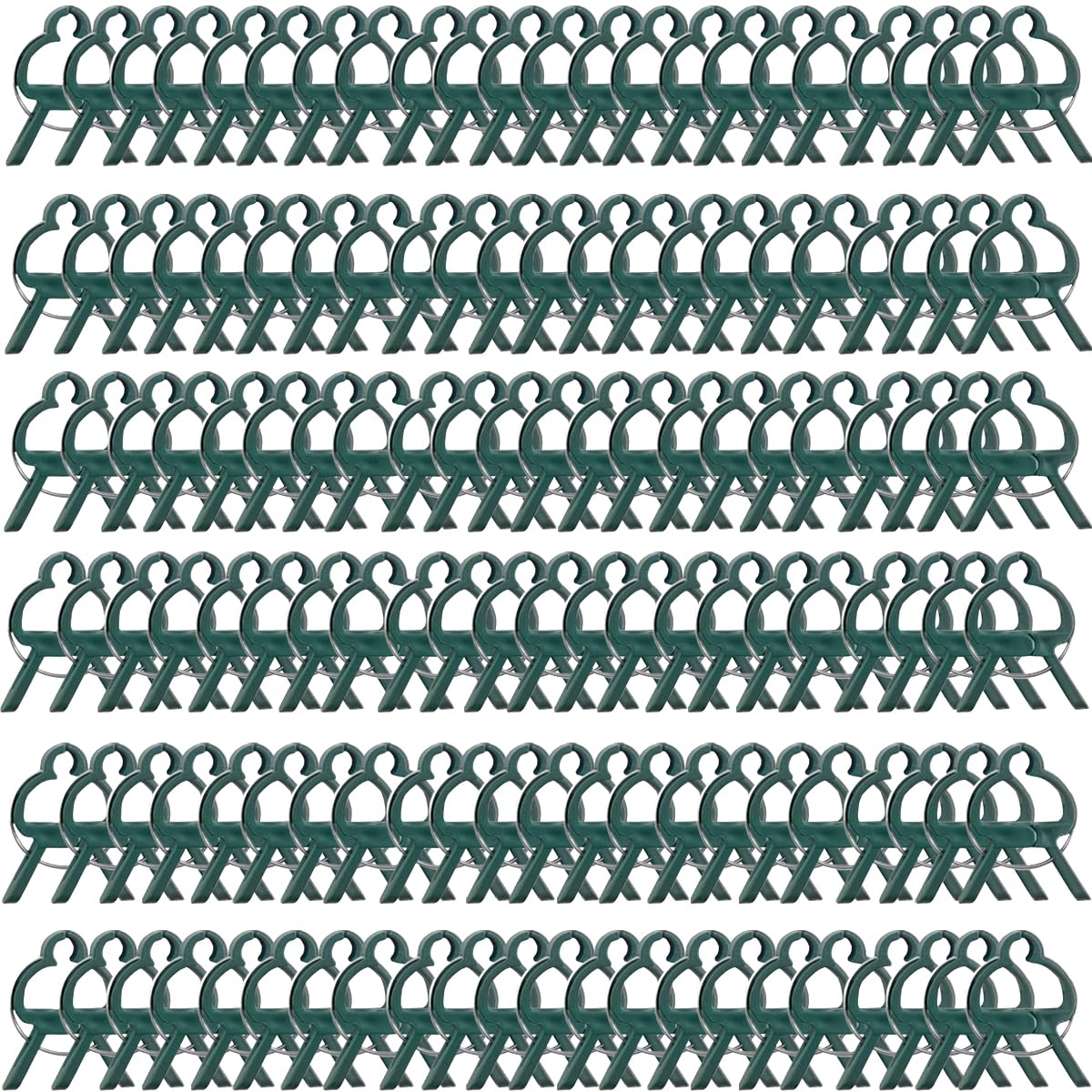
The GXXMEI 100-pack refines the classic pinch-clip design with a slightly wider jaw opening—1.6 x 1.2 inches—that provides a touch more room for thicker stems and multiple leaders running in parallel. The construction uses a combination of plastic and spring steel wire, and the steel is treated to resist rust through at least one full season. Gardeners who use these on rigid square tomato cages or bamboo stakes note that the wide mouth settles over the stake without having to fight the clip open to its maximum angle.
Feedback from long-term users highlights two consistent themes: the clips are excellent for training clematis, climbing roses, and other flowering vines where stem visibility matters, but the metal spring can begin to show surface rust if the garden sees daily overhead irrigation or heavy rain. The plastic itself holds up decently through the season but is less UV-resistant than the RayLynn or Hydrofarm options, which means some brittleness appears by late summer.
If you are running a moderate garden of 10 to 20 plants and prefer the convenience of a pinch clip that you can reposition as the vine grows, the GXXMEI 100-pack offers a solid mid-range price with the right size ratio for mixed plantings. Just plan to rotate in fresh clips every two seasons if you garden in persistently wet conditions.
What works
- Wider jaw (1.6 x 1.2 inch) handles thick stems and multiple leaders comfortably.
- Lightweight and easy to pinch open for repetitive daily training.
- Good versatility across tomatoes, clematis, roses, and bean vines.
What doesn’t
- Spring steel can develop surface rust under frequent water contact.
- Plastic loses flexibility and becomes brittle by late season in full sun.
6. ROYHOO 120PCS Plant Support Clips, Gentle Flower Plant Clamps
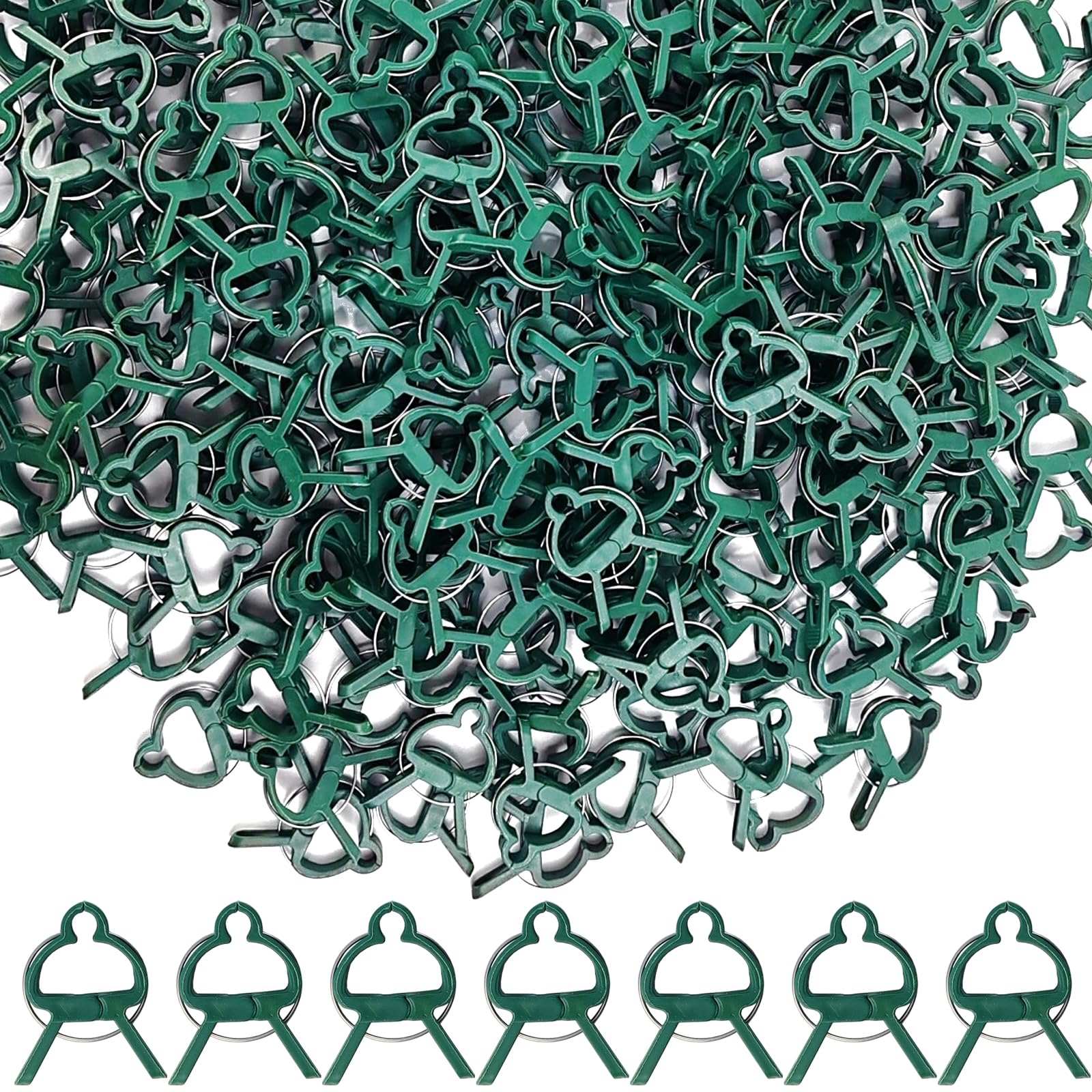
The ROYHOO 120-pack enters the value tier with a straightforward promise: a reliable, non-rusting spring clip at a competitive per-unit cost. The 1.6 x 1.2 inch jaw matches the GXXMEI proportions, but the plastic formulation here includes a bit more flex, which means the clips feel slightly less brittle during the first few weeks of use. Gardeners training blackberries and raspberries on 12-gauge trellis wire report that these clips grab the wire securely and hold canes upright even through gusty spring storms.
Where the ROYHOO clips occasionally fall short is quality control during manufacturing. A small but consistent number of units—maybe 3–4 per 120-pack—arrive with hairline cracks in the handle or a bent spring that prevents the jaw from closing evenly. This is a known risk when buying at this price tier, but the functional clips that pass quality control work exactly as expected and hold up well through a full season when used on vegetables and berry canes.
For the gardener who needs 120 clips for a medium-sized trellis system and is comfortable inspecting each unit before application, the ROYHOO set delivers good value. The clips shine on blackberry and raspberry support where the cane is thick enough to test the spring’s grip, and the non-rust claim holds true in practice as long as you don’t leave them submerged in water.
What works
- Solid grip on thick wires and cane stems—ideal for bramble support.
- Green color is unobtrusive against foliage and trellis netting.
- Flexible plastic resists cracking better than some budget alternatives.
What doesn’t
- Small percentage of clips arrive with pre-existing cracks or bent springs.
- Single-size jaw (1.6 x 1.2 inch) lacks a large option for extra-thick branches.
7. GXXMEI 80PCS Plant Clips 2 Sizes Adjusting Reusable

The entry-level GXXMEI 80-pack is the smallest and most affordable option in this lineup, making it a natural starting point for the new gardener or anyone who only needs to clip a handful of tomato plants and a few pea trellises. The package includes 20 large clips (1.77 x 2.36 inches) and 60 small clips (1.57 x 1.18 inches), giving you the size variety to handle both thick tomato stems and thin pea shoots from the same box.
Build quality is adequate for one season of light to moderate use. The plastic and spring steel wire construction is identical to the GXXMEI 100-pack reviewed above, and the same caveats apply: the metal spring will show surface rust under persistent moisture, and the plastic becomes noticeably more brittle by late summer. Owners report that the clips are very easy to operate one-handed and that the two sizes reduce the need to buy separate products for different crops. The most common complaint is insufficient clamping force on windy days, where a few clips pop loose from smooth-stemmed plants like peppers.
If you are dipping your toe into trellis management for the first time or are setting up a small raised-bed garden, the GXXMEI 80-pack offers the lowest entry point with the added benefit of two size options. Plan to replace them after one growing season for best performance, and consider stepping up to the Fasmov or RayLynn options if you find yourself needing more grip and longer reusability.
What works
- Two sizes in one box—large clips for tomatoes, small clips for peas and flowers.
- Smooth burr-free surface won’t abrade stems even in windy conditions.
- Simple pinch-open design works fine for gardeners of any skill level.
What doesn’t
- Clamping force is weaker than premium alternatives; clips pop off in high wind.
- Spring steel wire rusts noticeably if exposed to frequent rain or irrigation.
Hardware & Specs Guide
Inner Jaw Diameter
The most critical numeric spec for climbing plant clips is the inner opening width when the jaw is fully open. A 1.0-inch (25 mm) jaw is tight for mature tomato stems that can reach 1.2 inches across; a 1.6-inch (40 mm) jaw accommodates those stems plus a secondary leader running alongside. For blackberry canes and squash vines, look for clips with at least 1.8 inches of clear opening to avoid crushing the plant tissue.
Spring Steel Wire Gauge
Thicker wire means more clamping force and longer fatigue life. Entry-level clips use 1.2 mm to 1.5 mm wire that can bend permanently if over-stressed. Premium clips use at least 1.8 mm wire, sometimes with a galvanized or epoxy coating that prevents the rust that causes the spring to lose tension mid-season. A clip with visibly thicker wire will survive twice as many open-close cycles before the hinge loosens.
UV Stabilizer Additive
Plain polypropylene begins to crack after roughly 60 days of full-sun exposure. UV-stabilized polypropylene (often labeled “UV-resistant” on the packaging) extends that lifespan to 120 to 180 days—enough to cover a full growing season from transplant to harvest. The additives raise the manufacturing cost by about 15 percent, which is why the cheapest packs degrade faster even when the plastic appears identical at purchase time.
Buckle vs. Pinch Mechanism
Buckle-ring clips (like the Piteno and Hydrofarm designs) slide around the stem and latch closed. They are faster to apply when the stem is already positioned against the trellis, but require unclipping the buckle to reposition. Pinch clips (like the Fasmov and RayLynn designs) use a spring-loaded hinge that opens and closes with finger pressure, allowing infinite repositioning without removing the clip entirely. Pinch clips are better for actively growing vines that need daily adjustment; buckle rings suit static trellis systems where the stem stays in one place for weeks.
FAQ
What size climbing plant clip do I need for a 1.5-inch tomato stem?
Can I reuse plant clips from one season to the next?
Why do my plant clips keep popping off when it gets windy?
Are buckle-ring clips or pinch clips better for string-line trellising?
Final Thoughts: The Verdict
For most gardeners, the climbing plant clips winner is the Fasmov 160-Piece Set because it blends a generous size split (80 large, 80 small), reliable one-handed operation, and enough UV and rust resistance to survive a full season and be reused the next. If you need maximum holding force for thick blackberry canes or heavy squash vines, grab the RayLynn 100 Large Pack. And for commercial-style string-line trellising where the clip must slide on twine and stay locked for months, nothing beats the Hydrofarm Mega Twine Clip.