
Feeding a vegetable garden means more than just planting seeds—it requires balancing organic matter, microbial life, and nutrient density in the root zone. Bagged compost simplifies this process by delivering a pre-aged, concentrated source of humus and beneficial bacteria straight to your raised beds or containers without the waiting time of a backyard pile. The difference between a mediocre harvest and a thriving one often comes down to what goes into the soil before the first transplant touches the ground.
I’m Rikta — the co-founder and writer behind Lawn Gear Lab. I’ve spent countless hours studying horticultural data, cross-referencing NPK ratios, analyzing particle size distribution, and tracking verified owner feedback to determine which bagged composts deliver measurable soil improvement for edible gardens.
After reviewing the most popular options on the market, I’ve narrowed the field down to seven serious contenders. My goal is to help you find the absolute best bagged compost for vegetable garden soil that matches your specific planting style and budget.
How To Choose The Best Bagged Compost For Vegetable Garden
Not all bagged compost is created equal. Some are fully decomposed and ready to feed your tomatoes; others contain unfinished matter that can stunt growth. Focus on these four criteria to avoid wasting money on bags that look dark but lack substance.
Organic Certification and Input Purity
OMRI-listed or USDA Organic seals confirm that the compost contains no synthetic additives, biosolids, or prohibited fillers. For vegetable gardens where you intend to eat the produce, this certification is your baseline guarantee that the compost won’t introduce heavy metals or chemical residues into the food chain. Products labeled “natural” without certification often lack third-party oversight.
Particle Size and Texture
Vegetable roots need loose, well-aerated soil to spread and access nutrients. Compost that is screened to a consistent fine-to-medium particle size (quarter-inch or smaller) integrates smoothly into existing soil without creating air pockets or compaction layers. Coarse compost with visible wood chips or large chunks works better as a mulch than a direct soil amendment.
Finished vs. Unfinished Decomposition
Fully finished compost has a dark, crumbly texture and smells earthy rather than sour or ammonia-like. Unfinished compost contains active microorganisms that continue breaking down carbon, which can temporarily tie up soil nitrogen and stunt vegetable growth. Heat-treated or aged compost eliminates weed seeds and pathogens while stabilizing the nutrient profile.
Moisture Retention and Drainage Balance
Old, sandy soils benefit from compost that holds moisture, while heavy clay soils need compost that improves drainage. The ideal vegetable garden compost balances water retention with aeration, allowing roots to stay hydrated without sitting in waterlogged conditions that promote root rot. Look for formulations that mention both moisture retention and aeration in the same specification.
Quick Comparison
On smaller screens, swipe sideways to see the full table.
| Model | Category | Best For | Key Spec | Amazon |
|---|---|---|---|---|
| Coast of Maine Organic Tomatoes & Vegetables | Potting Mix | Container vegetables & heirloom tomatoes | 20 Qt bag with cedar insect deterrent | Amazon |
| Espoma Organic Land and Sea | Gourmet Compost | In-ground beds & shrubs | Lobster & crab meal with Myco-Tone | Amazon |
| Michigan Peat Baccto Wholly Cow | Manure Blend | Raised bed vegetable gardens | 40 Qt with peat & composted animal manure | Amazon |
| R&M Organics Premium Compost | All-Purpose | Indoor & outdoor containers | 10 lb bag with 0.31 cu ft volume | Amazon |
| Brut Cow Compost | Pure Manure | Seedlings & delicate blooms | 10 Qt bag, OMRI listed, odor-free | Amazon |
| Black Kow Nitrogen Phosphate Cow Manure | Soil Amendment | Sandy & clay soil conditioning | 8 Qt bag with 1:1 mixing ratio | Amazon |
| Back to the Roots Organic Worm Castings | Vermicompost | Seed starting & sensitive plants | 5 lb bag with beneficial microbes | Amazon |
In‑Depth Reviews
1. Coast of Maine Organic & Natural Planting Soil for Vegetables & Tomatoes

This Maine-based blend combines composted manure with sphagnum peat moss and finely ground cedar, creating a lightweight medium that drains freely while holding enough moisture for thirsty tomato roots. The cedar component acts as a natural insect deterrent, which is a clever addition for growers battling fungus gnats or soil-borne pests in containers. At 20 quarts, the bag provides enough material to fill several 10-gallon grow bags or amend a small raised bed without leaving you with half a bag of leftover mix.
Heirloom tomato growers particularly appreciate the balanced drainage profile: the peat and compost work together to avoid the waterlogged conditions that trigger blossom end rot in varieties like Brandywine or Cherokee Purple. Multiple verified buyers report that seeds started indoors in this mix germinate faster and produce sturdier transplants than generic potting soils. The lightweight texture also makes it easy to work with for gardeners with limited mobility or those filling elevated beds.
A few users noted that the cedar scent, while pleasant and functional, may be stronger than expected for indoor starting trays. Additionally, the price per quart runs higher than bulk compost options, making it a premium choice better suited for finishing containers rather than filling entire in-ground plots. For targeted use with high-value crops, however, the results justify the investment.
What works
- Balanced moisture retention and drainage ideal for container vegetables
- Natural cedar component deters soil pests
What doesn’t
- Higher cost per quart than bulk compost blends
- Cedar scent can be strong for indoor germination trays
2. Espoma Organic Land and Sea Gourmet Compost

Espoma’s Land and Sea stands apart because it incorporates marine-derived ingredients—lobster and crab meal—into the compost matrix, delivering a unique profile of chitin and calcium that strengthens plant cell walls while feeding beneficial soil fungi. The lightweight 1-cubic-foot bag packs a punch in nutrient density, making it effective as a topdressing for established shrubs or as a soil amendment for heavy-feeding vegetables like corn, squash, and brassicas. The proprietary Myco-Tone blend of endo and ecto mycorrhizae further colonizes the root zone, improving phosphorus uptake during the critical flowering and fruiting stages.
Gardeners who have used this product for three consecutive seasons report visibly denser foliage on hostas and more prolific flowering on perennials, but the real strength shows in vegetable beds where the slow-release marine proteins sustain growth without the sudden nitrogen spikes associated with raw manure. Users mixing it into potting soil for indoor vegetable gardens appreciate that the compost feeds for weeks without additional synthetic fertilizer. The granulated form spreads evenly and integrates quickly into existing soil without clumping.
The primary drawback is the subtle marine odor that some indoor growers find off-putting, though it dissipates within a few days of incorporation. The price point also puts this in the premium tier, so budget-conscious gardeners with large plots may find it more economical to use it sparingly as a concentrated amendment rather than a bulk soil replacement.
What works
- Marine-based ingredients provide calcium and chitin for plant strength
- Myco-Tone mycorrhizae improve phosphorus uptake
What doesn’t
- Marine scent noticeable during application
- Premium pricing limits use for large-scale garden beds
3. Michigan Peat Baccto Wholly Cow Horticultural Compost and Manure
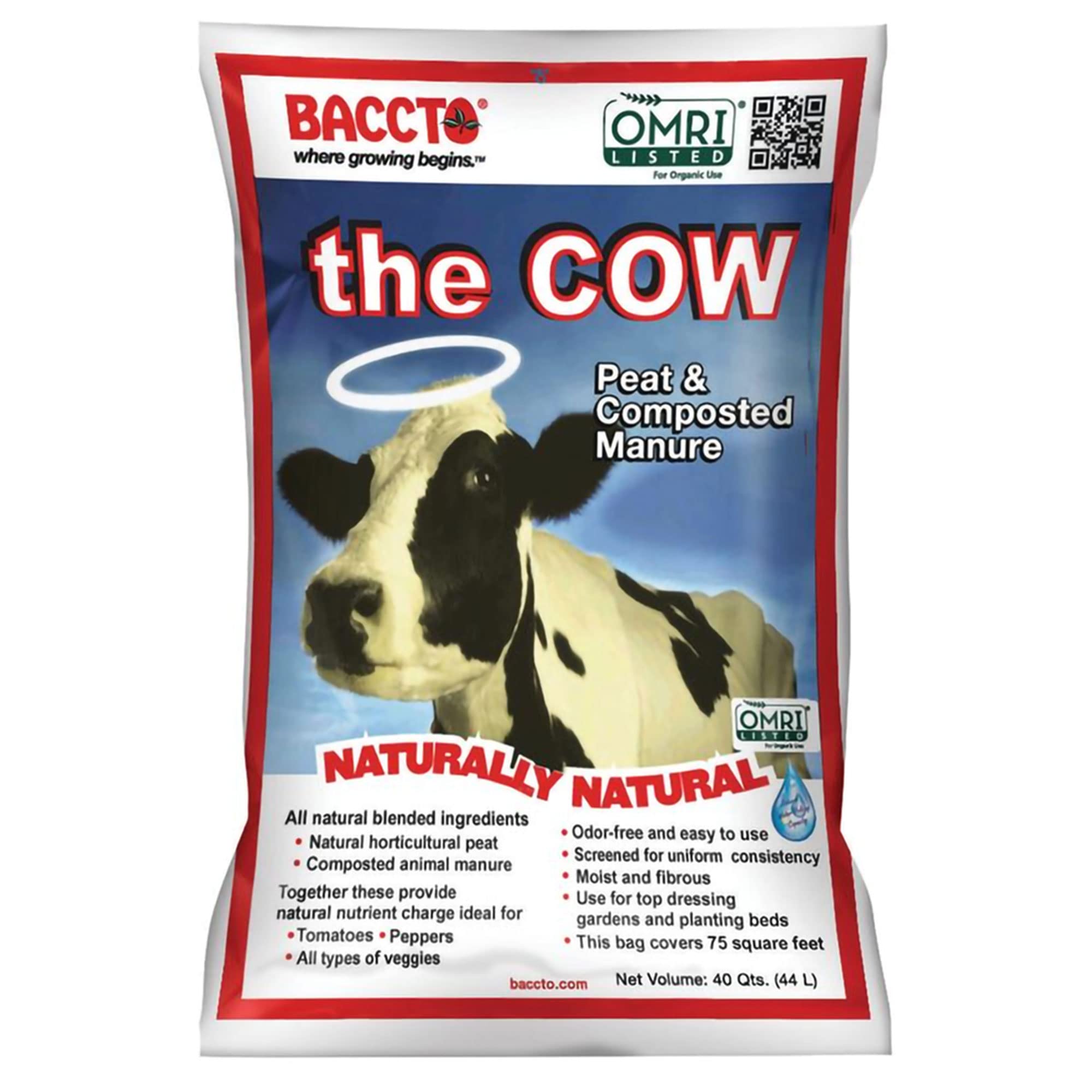
Wholly Cow delivers one of the best volume-to-quality ratios in the bagged compost category. The 40-quart bag is screened to a uniform, fluffy texture that feels more like dark, crumbly soil than coarse manure, and the blend of peat and composted animal manure creates a consistent moisture-holding capacity that benefits sandy or river-bottom soils. Users report that even large raised beds can be amended with a single bag, and the product arrives free of the unpleasant ammonia smell that sometimes plagues fresh manure-based composts.
Growers who use Wholly Cow as a substrate for mushroom cultivation praise its high manure concentration and minimal debris—only one to three small sticks per bag, compared to competitors that often contain wood chunks or undecomposed material. For vegetable gardeners, the balanced nutrient release supports steady growth across tomatoes, peppers, and leafy greens without the burn risk associated with raw manure. The price per quart ranks among the lowest in this comparison, making it practical for gardeners who need to amend large areas multiple times per season.
Some users note that the bag can be heavy at 34 pounds, which may be a concern for gardeners with mobility limitations. The moisture content is also higher than dryer composts, so users mixing it into containers should adjust their watering schedule initially to avoid oversaturation.
What works
- Exceptional volume-to-price ratio for large garden beds
- Odor-free, fluffy texture with minimal debris
What doesn’t
- Bag is heavy (34 lbs) and awkward to carry
- Higher moisture content requires watering adjustment
4. R&M Organics Premium Organic Compost
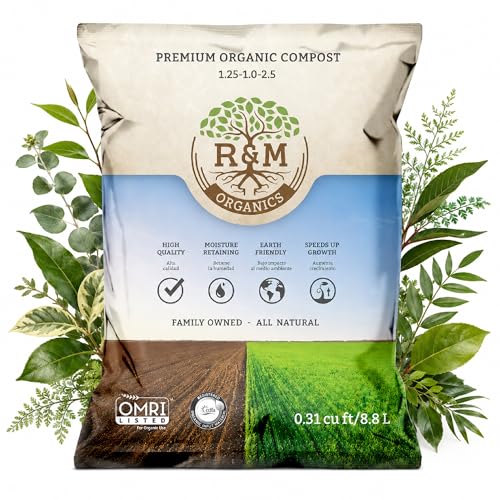
R&M Organics uses a complete aerobic composting process on dairy cow manure, resulting in a product that feels more like rich topsoil than raw manure. The fine particle size and near-absence of odor make it a strong candidate for indoor container gardening, where smell is often a dealbreaker. A 10-pound bag covers roughly 0.31 cubic feet, which is enough to amend a few 27-gallon planters or top-dress a small raised bed without overwhelming the space.
Verified buyers have documented remarkable plant recovery stories: one user rescued azaleas damaged by enzymatic roof cleaner runoff, and another revived a tomato plant with yellowing leaves within a week of mixing this compost into the planter. The high moisture retention capability is a double-edged sword—it keeps roots hydrated between waterings but requires careful monitoring in pots without drainage holes. The inclusion of beneficial bacteria accelerates the breakdown of organic matter in the root zone, which helps container plants access nutrients more efficiently over the growing season.
The main limitation is the bag size: at 10 pounds, it works best for small to medium applications rather than full garden overhauls. The price per pound is higher than bulk alternatives, making it more suitable for targeted use on struggling plants or premium containers.
What works
- Excellent moisture retention supports container plants between waterings
- Fine texture and low odor ideal for indoor use
What doesn’t
- Small bag size limits coverage for large garden beds
- High moisture retention can cause overwatering in pots without drainage
5. Brut Cow Compost – Nutrient-Rich Composted Cow Manure

Brut Worm Farms has positioned this compost as a pure, additive-free soil amendment that skips the fillers and focuses on finished cow manure. The OMRI-listed certification confirms that no synthetic agents or biosolids were introduced during the composting cycle, and the product is aerated and tested for safety before bagging. The finely sifted texture allows for even incorporation into seed-starting mixes without clumping, which is critical for tiny vegetable seeds that need consistent moisture contact to germinate.
First-time growers using Brut compost in a 3:2 ratio with standard potting soil reported that tomato seeds planted on March 1 produced transplant-ready seedlings by late April—a growth rate that suggests the compost provides steady nitrogen availability without the harsh spikes that burn tender roots. The odor-free formulation makes it viable for both indoor and outdoor use, and the 10-quart bag size is manageable for top-dressing several containers or a small raised bed. Experienced rose growers also note visible improvements in bloom density after side-dressing established plants.
Some users felt the bag could offer more volume for the price, particularly when compared to larger bags from Michigan Peat or Coast of Maine. The product is best viewed as a concentrated amendment rather than a bulk soil substitute, so gardeners covering large areas should plan for multiple bags.
What works
- OMRI certified with no synthetic additives or fillers
- Gentle on seedlings with steady nitrogen release
What doesn’t
- Smaller bag size yields less volume per dollar
- Best suited for targeted amendment rather than bulk soil replacement
6. Black Kow Nitrogen Phosphate Composted Cow Manure

Black Kow is a well-known name among southern gardeners who deal with heavy clay soils, and this composted cow manure formulation specifically targets soil structure issues. The 8-quart bag fits neatly into planting holes for fruit trees, bulbs, and perennials, providing an immediate source of organic matter that helps break up compacted clay while improving moisture retention in sandy soils. The 1:1 mixing ratio recommendation makes it simple to blend with existing native soil without guesswork.
Long-term users report that fruit trees—peaches, apples, and pawpaws—show increased vigor and fruit set when Black Kow is incorporated into the planting hole and reapplied as a spring topdressing. The million-plus beneficial bacteria per gram accelerate the conversion of nitrogen and other nutrients into plant-available forms, which is particularly helpful for heavy feeders like corn and squash. However, several reviews note a strong manure odor that, while indicative of active microbial life, can be unpleasant during application.
The main constraint is the odor, which some indoor or balcony gardeners find objectionable. The 8-quart volume is also on the smaller side, so gardeners with extensive vegetable plots will need multiple bags to achieve meaningful soil improvement. The product is best used as a targeted planting-hole amendment rather than a broadcast soil conditioner.
What works
- Beneficial bacteria improve nutrient availability for heavy feeders
- Effective for breaking up clay soil and improving moisture retention in sand
What doesn’t
- Strong manure odor during application
- Small bag size requires multiple purchases for large beds
7. Back to the Roots Organic Worm Castings

Worm castings differ fundamentally from manure-based composts because they pass through an earthworm’s digestive system, which breaks down organic matter into a finer, more concentrated form of humus rich in plant-available nutrients and beneficial microbes. Back to the Roots packages pure vermicompost sourced from US-based worm farms, offering a burn-free soil amendment that can be mixed directly into seed-starting mixes or sprinkled around established vegetables without fear of nitrogen burn. The 5-pound resealable bag is easy to store and dispense, and the product contains no synthetic additives, fillers, or chemical fertilizers.
Users report that worm castings improve soil structure in chunky mixes containing coco coir, perlite, and charcoal without compacting, while providing a steady slow-release nutrient supply that supports healthier leaf development and stronger root systems. One reviewer who grows milkweed for monarch butterflies noted that the castings provided safe, effective nutrition without harming the caterpillars. The high moisture-holding capacity of castings means gardeners should monitor their watering schedule initially, but the trade-off is fewer waterings for container plants during hot weather.
The primary limitation is concentration: castings are more potent than compost, so a 5-pound bag covers less volume than a similar-sized bag of manure compost. Gardeners amending large beds will need to supplement with bulk organic matter, using the castings as a nutrient booster rather than a soil base. The price per pound is also higher than traditional compost, reflecting the labor-intensive vermicomposting process.
What works
- 100% pure worm castings with no burn risk for seedlings
- Improves drainage and moisture retention in chunky soil mixes
What doesn’t
- 5-pound bag covers less area than bulk compost options
- Higher cost per pound due to vermicomposting process
Hardware & Specs Guide
Organic Matter Content
Compost with organic matter content above 40% provides sustained food for soil microbes and slow-release nutrients for vegetable roots. Lower percentages often indicate dilution with sand, peat, or undecomposed wood fibers that contribute less to long-term soil fertility. Look for products that specify “high organic matter” directly on the bag or in the technical specifications.
Carbon-to-Nitrogen Ratio
The ideal C:N ratio for vegetable garden compost falls between 10:1 and 20:1. Ratios below 10:1 risk ammonia volatilization and potential root burn, while ratios above 30:1 cause nitrogen tie-up as microbes consume soil nitrogen to break down excess carbon. Finished compost with a balanced ratio smells earthy and crumbles easily when squeezed.
Particle Size Distribution
Screened compost with particles between 1/8 and 1/4 inch integrates evenly into garden soil without creating air pockets or compaction zones. Compost containing particles larger than 1/2 inch, such as visible wood chips or bark, is better suited as a mulch than a soil amendment for vegetable roots.
Moisture Holding Capacity
Well-aged compost should hold 50-70% of its weight in water while maintaining aerobic conditions. Compost that feels soggy or releases water when squeezed has poor drainage and may compact in containers. Compost that feels dry and powdery may not have been stored properly and could be slow to rehydrate in the soil.
FAQ
Can I use bagged compost directly in seed-starting trays without mixing?
How often should I apply bagged compost to my vegetable garden?
Does bagged compost expire if left unopened in the garage?
Is OMRI-listed compost always superior for vegetable gardens?
Final Thoughts: The Verdict
For most gardeners, the best bagged compost for vegetable garden winner is the Coast of Maine Organic & Natural Planting Soil because it combines excellent drainage, natural pest deterrence, and an OMRI-listed certification in a versatile 20-quart bag that works for both containers and in-ground beds. If you want the most volume for your money and plan to amend large raised beds, grab the Michigan Peat Baccto Wholly Cow. And for targeted plant rescue or indoor container gardening where odor and texture matter most, nothing beats the R&M Organics Premium Compost.