
Aloe vera has a shallow, spreading root system that despises sitting in soggy soil. A pot meant for a philodendron will trap moisture at the bottom and rot your aloe within weeks, so choosing the right container with sharp drainage is the single most important decision you make for this succulent.
I’m Rikta — the co-founder and writer behind Lawn Gear Lab. I spend hours comparing material density, drainage-hole coverage, and saucer-fill ratios across dozens of planters to pinpoint which designs actually keep aloe roots dry between waterings.
After reviewing seven contenders by their material, drainage architecture, size options, and owner-reported survival outcomes, I’ve zeroed in on the containers that give aloe vera the best shot at thriving. This is the complete best aloe vera pot guide for indoor and outdoor growers alike.
How To Choose The Best Aloe Vera Pot
Aloe vera stores water in its leaves, so the root zone must dry out completely between waterings. A pot that holds moisture against the roots guarantees rot. Focus on three variables that control this.
Drainage Hole Size and Layout
One small hole in the centre is not enough. Aloe roots spread laterally, so a grid of multiple holes or a single large opening — at least ½ inch in diameter — lets excess water escape instead of pooling at the bottom. Mesh pads prevent soil loss without blocking flow.
Material Breathability
Unglazed terracotta wicks moisture away from soil, drying a pot out fastest. Glazed ceramic slows evaporation but looks cleaner indoors. Thick plastic — 5 mm or more — works if the drainage layout is aggressive. Avoid thin, flexible nursery pots for permanent housing.
Width Over Depth
Aloe vera’s roots grow outward, not straight down. A pot that is wider than it is tall — or at least equal in both dimensions — allows the root ball to spread naturally. A 6-inch diameter with matching height gives a young offset room for two years of growth.
Quick Comparison
On smaller screens, swipe sideways to see the full table.
| Model | Category | Best For | Key Spec | Amazon |
|---|---|---|---|---|
| LE TAUCI Ceramic Set | Premium Ceramic | Growing aloe pups in two sizes | 5.1 + 6.4 inch diameter | Amazon |
| HERDUK 6 Inch Cylinder | Premium Porcelain | Modern indoor display | 6″D x 6″H cylinder | Amazon |
| UOUZ 12 Inch Plastic | Large Plastic | Mature aloe with big root mass | 12″ wide, 5.8mm thick | Amazon |
| SQOWL 6 Inch Blue Ceramic | Mid-Range Ceramic | Single aloe with saucer catch | 6″ x 4.6″ with mesh pad | Amazon |
| D’vine Dev 4 Inch Stoneware | Compact Ceramic | Small aloe offset on a desk | 4.3″ OD, stainless mesh | Amazon |
| Goproauto 6 Inch Plastic 5-Pack | Budget Plastic | Multiple aloe pups on a budget | 6″ x 6″, polypropylene | Amazon |
| EPFamily 6 Inch Succulent Bowl | Shallow Ceramic | Shallow-rooted aloe varieties | 2.6″ tall, 5.3″ ID | Amazon |
In‑Depth Reviews
1. LE TAUCI Ceramic Plant Pots Set

This two-piece set from LE TAUCI delivers real ceramic density — 1.88 kg total — with a reactive glaze finish that resists fading and chipping. The larger 6.4-inch pot gives a mature aloe plenty of lateral root space, while the smaller 5.1-inch container suits offsets just separated from the mother plant. Both come with drainage-hole nets and silicone plugs so you can dial in moisture control.
The footed base lifts the pot off the surface, improving air circulation under the drainage hole — a small detail that reduces standing-water risk when the saucer overflows. Owners consistently note the ceramic feels substantial without being overly heavy, and the glazed interior prevents the pot from absorbing moisture that could encourage algae growth on the outside.
For growers who want a cohesive look across different aloe sizes, having two matching pots at once eliminates the hunt for a second container later. The ¾-inch drain holes are large enough to pass excess water quickly, and the smooth glazed surface wipes clean with a damp cloth after soil spills. Pair the larger pot with a standard 6-inch aloe and the smaller with a pup — both will stay dry enough to thrive.
What works
- Real ceramic construction with thick walls resists thermal cracking
- Includes both drainage net and silicone plug for moisture control
- Footed design lifts the pot to improve airflow underneath
What doesn’t
- Silicone plug may not fit every drainage hole snugly
- Larger size may still be tight for a heavily rooted 12-inch aloe
2. HERDUK 6 Inch Cylinder Planter

The HERDUK cylinder is a single-piece porcelain pot with a crackled green glaze over a beige base. At 6 inches tall and 6 inches wide, it matches the ideal 1:1 ratio for aloe vera root spread. The included drainage mesh pad stops soil from washing out while still letting water pass through the single hole, and the saucer snaps flush against the bottom for a clean silhouette.
Porcelain fires at higher temperatures than standard ceramic, giving this pot a denser body that is less likely to craze or absorb water over time. Owners praise the precise fit between pot and saucer — the two components look like one seamless unit. The broad, flat base provides stability even when the aloe grows top-heavy with thick leaves.
The crackled finish adds texture without creating sharp edges that scratch surfaces. While the single drainage hole works well for a pot this size, the cylinder shape is slightly taller than a traditional succulent bowl, so growers should use a very gritty soil mix to speed drying through the bottom. For a single aloe that lives on a windowsill or patio table, this pot combines visual elegance with functional root management.
What works
- High-fired porcelain is denser and more durable than standard ceramic
- Perfect 1:1 diameter-to-height ratio suits aloe root structure
- Saucer fits seamlessly for a clean, modern look
What doesn’t
- Single drainage hole may be insufficient for heavy overwatering
- 16-ounce weight is light; can tip if leaves grow very large
3. UOUZ 12 Inch Large Plastic Planter

The UOUZ 12-inch pot is made from 5.8 mm thick polypropylene with a matte granite-texture finish that mimics stone without the weight. For a mature aloe that has outgrown a 6-inch nursery pot, the 12-inch diameter gives roots room to spread laterally without circling. The grid-shaped drainage holes — a pattern of multiple openings rather than one central hole — provide exceptional water release and prevent the single-clog problem that kills succulents.
At 5 gallons of soil capacity, this pot is heavy enough when filled to anchor a large aloe with 18-inch leaves. The detachable saucer snaps on securely so you can water thoroughly on a balcony or patio without runoff staining the floor. Owners note the plastic does not become brittle in freezing temperatures, making it suitable for year-round outdoor use in moderate climates.
The wide, shallow form factor — 12 inches wide by only 7.5 inches tall — actively discourages deep water pooling at the bottom. Aloe roots hit air long before they hit standing water. For anyone who has killed an aloe in a narrow, deep pot, switching to this wide plastic container is a direct corrective measure. The matte finish hides scratches and soil smudges better than glossy plastic does.
What works
- Grid drainage system prevents root rot better than a single hole
- Very wide 12-inch diameter suits mature aloe root spread
- Thick plastic won’t crack in cold weather
What doesn’t
- Plastic does not wick moisture like unglazed ceramic
- Saucer snaps on tightly but can collect dust underneath
4. SQOWL 6 Inch Blue Ceramic Planter

The SQOWL 6-inch pot uses a high-fired ceramic body with a peacock-blue glazed finish that is both vivid and durable. The 5.8-inch diameter and 4.6-inch height create a slightly wider-than-tall profile that naturally encourages lateral root growth. A matching ceramic saucer catches overflow, and the included drainage mesh pad prevents soil loss through the hole while maintaining unrestricted water flow.
Owners consistently describe the glaze as eye-catching without being gaudy — the blue tone complements both green aloe leaves and neutral decor. The 1.4-pound weight gives it enough heft to stay put on a desk or kitchen counter, and the smooth ceramic surface resists staining from mineral deposits in tap water. The drainage hole is centred and measures roughly ½ inch, which is adequate for a pot this size.
One caveat: the mesh pad can shift when you add soil, so seat it against the hole before filling. Ceramic retains heat longer than plastic, which can be beneficial for aloe vera in cooler rooms, but the glazed interior means the pot does not participate in wicking moisture away — the drying depends entirely on your soil mix and watering schedule. For a single small aloe that you water sparingly, this pot offers a strong balance of aesthetics and function.
What works
- Vibrant glaze adds decorative value to any room
- Wider-than-tall shape discourages deep water pooling
- Includes matching ceramic saucer and mesh pad
What doesn’t
- Mesh pad shifts during soil filling if not positioned carefully
- Drip tray could be 1 inch larger for overflow margin
5. D’vine Dev 4 Inch Embossed Stoneware
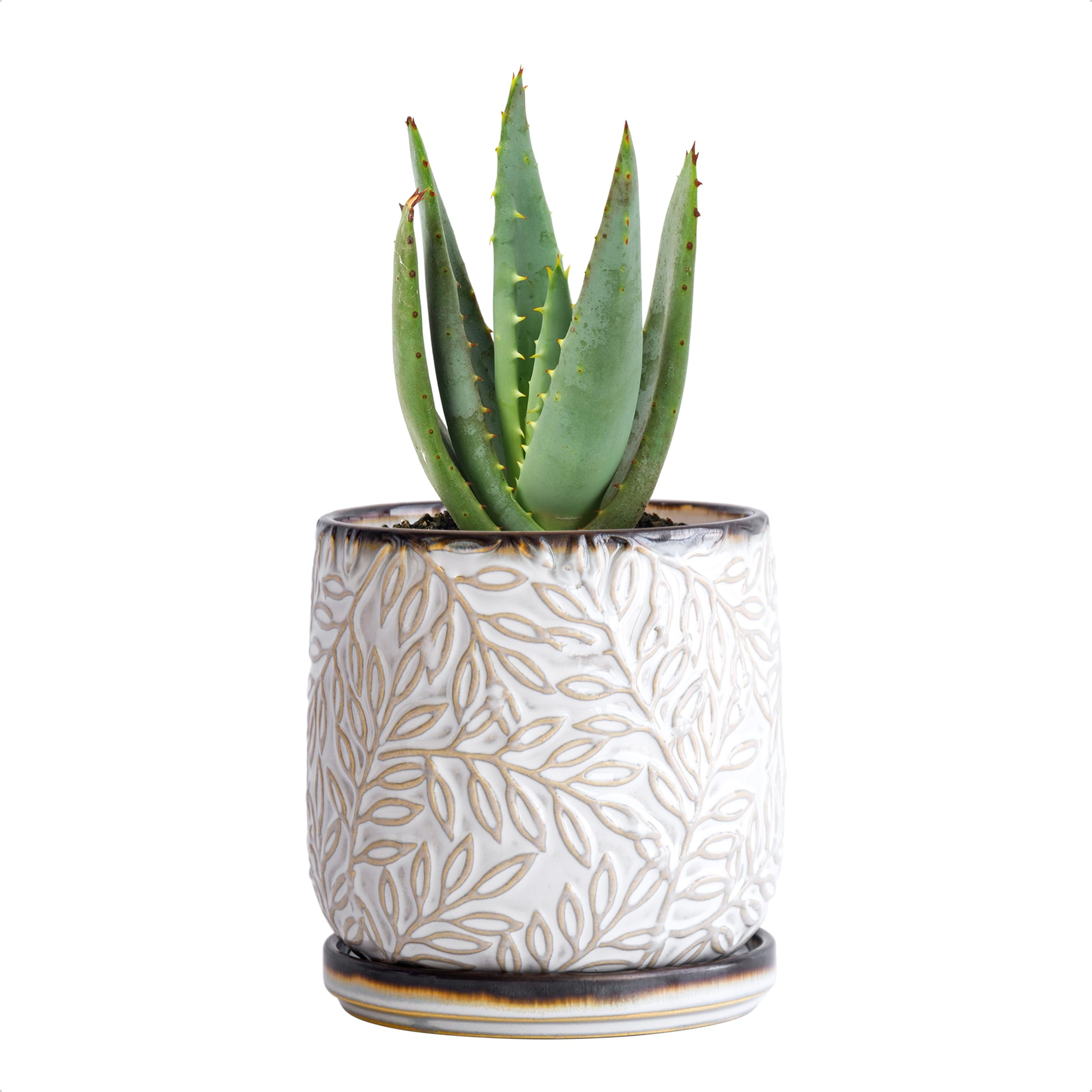
The D’vine Dev 4-inch stoneware pot is built for small aloe offsets or desk-sized specimens. At 4.3 inches outside diameter and 4.8 inches tall, the proportions are nearly square, giving a young aloe root ball enough depth without excessive volume that stays wet too long. The embossed leaf pattern on the side ties directly to succulent aesthetics, and the smoked-white glaze blends into any workspace.
What sets this pot apart is the included stainless steel drainage mesh and a padded felt pad for the bottom of the saucer. The mesh is rigid enough that it will not collapse under wet soil, and the felt protects your desk or windowsill from scratches. Owners report the ceramic is heavy enough — 1.9 pounds — to resist being knocked over by cats or drafts, despite the small footprint.
The single pre-drilled drainage hole is paired with a matching ceramic saucer that fits closely. Stoneware fires harder than earthenware, so this pot resists chipping if you bump it during cleaning. For aloe vera, the small size means you must repot within 6-12 months as the offset grows, but the build quality and included extras make it a solid starter home for a fresh pup.
What works
- Stainless steel drainage mesh included prevents soil loss
- Heavy stoneware resists tipping on small surfaces
- Felt pad protects furniture from scratches
What doesn’t
- 4-inch size requires repotting within a year for most aloe
- Single drainage hole can clog if mesh is not used
6. Goproauto 6 Inch Plastic 5-Pack
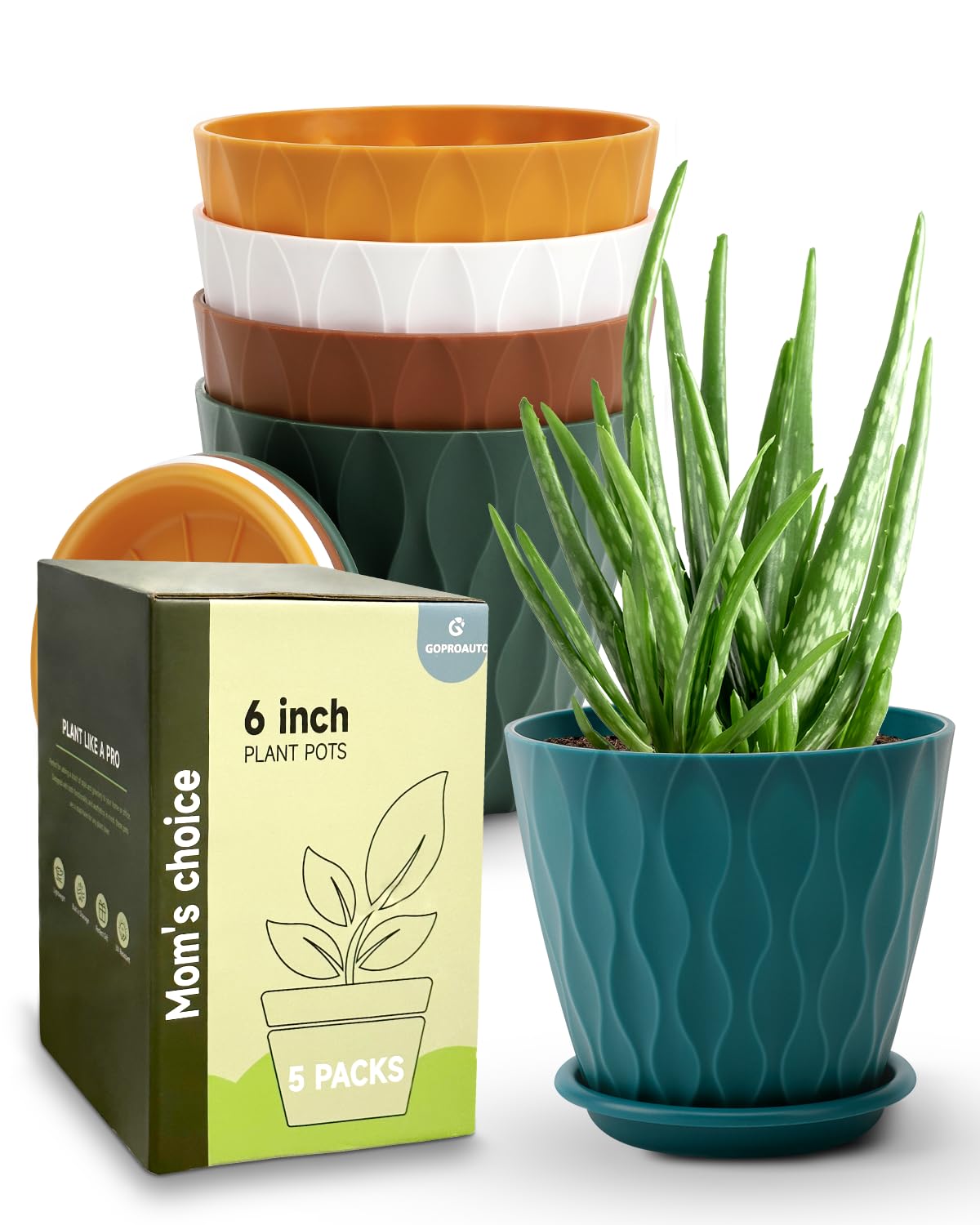
These Goproauto 6-inch plastic pots come in a 5-pack with vibrant spring-season colours, making them a practical entry-level choice when you have multiple aloe pups or want to propagate offsets at once. Each pot measures 6 inches in diameter and 6 inches tall, matching the ideal square proportion. The polypropylene material is thick enough to resist deformation under soil weight, and the detachable saucers catch excess water cleanly.
The diamond-pattern exterior adds grip and visual texture without feeling cheap. Owners remark that these look better than basic nursery pots and hold up well on tiered plant stands or outdoor shelves. The drainage holes are positioned at the bottom of the pot in a standard layout, and the clear saucers make it easy to see when water has drained through — a helpful visual cue for watering discipline.
Plastic does not breathe, so you must use a very gritty, fast-draining aloe soil mix and avoid letting water sit in the saucer for more than 15 minutes. The lightweight construction (1.39 pounds per pot when empty) means a top-heavy aloe could tip the pot if the leaves become large. For staging a collection of young aloe plants on a budget, this 5-pack delivers reliable drainage at a very low per-pot cost.
What works
- Five pots for the price of one ceramic — excellent value for propagation
- Thick polypropylene resists cracking and deformation
- Bright colours make it easy to identify different offsets
What doesn’t
- Lightweight plastic can tip with a large aloe top
- Non-breathable material requires careful watering discipline
7. EPFamily 6 Inch Ceramic Succulent Bowl
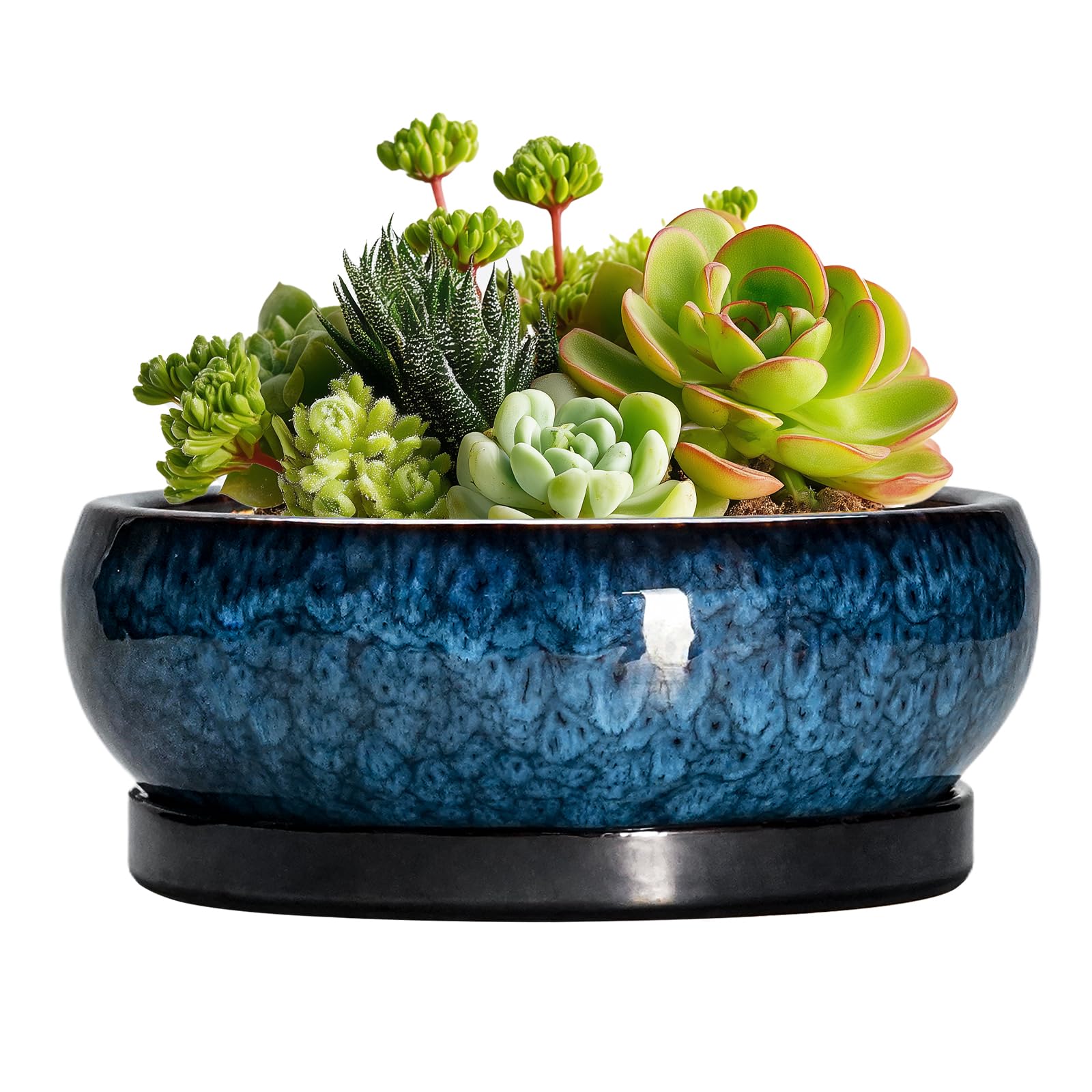
The EPFamily succulent bowl is a shallow ceramic dish designed specifically for plants with tight, fibrous root systems. At only 2.6 inches tall with a 5.3-inch inner diameter, this pot forces the soil depth to a minimum — exactly what aloe vera needs to avoid deep moisture pockets. The glazed blue finish gives it a polished look suitable for a coffee table or office desk.
A 9-mm drainage mesh sits inside the bottom hole to keep soil in while letting water escape freely, and the matching ceramic saucer catches drips without looking like an afterthought. Owners note the bowl is sturdy and well-proportioned for small succulents and bonsai, and the jade-green colour option is particularly popular. The low height makes it easy to check soil moisture by touch — you simply stick a finger straight to the bottom.
The trade-off is limited vertical root space. A standard aloe vera will quickly outgrow this 2.6-inch depth and need transplanting into a deeper pot within 6-8 months. Use this bowl for dwarf aloe varieties or freshly separated offsets that need a shallow starter tray. The ceramic construction holds temperature steady, which helps root development in cooler indoor environments.
What works
- Extremely shallow profile eliminates standing water risk
- 9-mm mesh pad retains soil without blocking drainage
- Attractive glazed finish complements office or home decor
What doesn’t
- 2.6-inch depth restricts growth to small or young plants only
- Matching saucer may warp if water sits for extended periods
Hardware & Specs Guide
Drainage Hole Diameter
Aloe vera roots suffocate when water pools against them. The minimum effective drainage hole for a 6-inch pot is ½ inch in diameter. Pots with grid-style multiple holes — like the UOUZ 12-inch — distribute water release across the entire base, reducing the risk of a single clog stopping all flow. Mesh pads help, but they should never be so fine that they trap water behind them.
Pot Material and Glaze
Unglazed terracotta dries fastest because moisture evaporates through the porous walls. Glazed ceramic and porcelain trap moisture inside, so they rely entirely on the drainage hole and soil mix to remove excess water. Thick polypropylene plastic (5 mm or thicker) does not breathe at all, but it is lightweight and shatterproof. For aloe, the best material is one that matches your watering habits — forgetful waterers benefit from terracotta, while precise waterers can use any glazed or plastic pot with good drainage.
FAQ
Does aloe vera need a pot with drainage holes?
Is a deep pot or a wide pot better for aloe vera?
Should I use a plastic or ceramic pot for my aloe vera?
Final Thoughts: The Verdict
For most gardeners, the aloe vera pot winner is the LE TAUCI Ceramic Set because it gives you two well-proportioned, real-ceramic pots with drainage nets and silicone plugs for moisture control. If you want a single showpiece container, grab the HERDUK 6 Inch Cylinder for its dense porcelain and crackled glaze. And for a large, mature aloe that needs serious root space, nothing beats the UOUZ 12 Inch Plastic Planter with its wide form and grid drainage system.