
Standard rain boots buckle fast when you’re digging into wet soil, kneeling in wet grass, or walking through a muddy garden path. You need a waterproof shell, reliable traction that grabs in slick conditions, and a design that hoses clean after every session. The right pair keeps you dry and working without interruption.
I’m Rikta — the co-founder and writer behind Lawn Gear Lab. I’ve spent dozens of hours studying the rubber compound thickness, neoprene insulation ratings, steel shank reinforcement, and tread patterns that separate functional garden boots from disposable ones, then cross-referenced these specs against hundreds of owner reports to compile this guide.
After reviewing the full specs and long-term feedback for the top models on the market, this breakdown of the best boots for gardening highlights the ones that deliver consistent waterproofing, solid foot support, and easy maintenance for real garden work.
How To Choose The Best Boots For Gardening
Garden boots face a unique set of demands: constant moisture, mud, soil compaction, kneeling, and bending. Choosing the right one comes down to material, insulation, underfoot support, and sole design. Here are the key specs to prioritize.
Shaft Height and Calf Fit
Mid-calf boots (around 12–15 inches) offer the best balance for gardening, keeping mud and water out while staying light enough for easy movement. A gusseted calf or adjustable elastic panel ensures a snug fit without restricting circulation, especially when wearing thick socks for cooler months.
Underfoot Support: Steel Shank and Insole
Standing on a shovel or walking on uneven garden rows puts strain on the arch. A steel shank provides structural rigidity across the boot sole, preventing flex and reducing fatigue. Look for boots with a molded insole or removable cushioned insert — this makes a significant difference during extended weeding or planting sessions.
Tread Pattern and Grip
Wet grass, loose mulch, and clay-heavy mud require deep, multi-directional lugs for reliable traction. A shallow or smooth sole will send you sliding the first time you step onto a wet slope. Prioritize a sole with substantial spacing between tread blocks to allow mud to release rather than pack solid.
Quick Comparison
On smaller screens, swipe sideways to see the full table.
| Model | Category | Best For | Key Spec | Amazon |
|---|---|---|---|---|
| Edgewater Original Men’s 15″ Field Boot | Premium | All-day comfort in wet conditions | 15-inch shaft; 4.5 lbs | Amazon |
| Hunthor Rubber Work Boots (Steel Toe) | Heavy Duty | Puncture-proof safety and warmth | 800g Thinsulate; steel toe | Amazon |
| Showave Men’s Ankle Rain Boots | Mid-Range | Lightweight slip-on garden chores | Ankle height; steel shank included | Amazon |
| Trudave Women’s Rubber Boots (Steel Shank) | Mid-Range | Insulated warmth with arch support | 6mm neoprene; built-in steel shank | Amazon |
| Showave Classic Men’s Rubber Boots (Insulated) | Value | Budget-friendly neoprene work boot | Insulated neoprene; steel shank | Amazon |
| HISEA Women’s Ankle Rain Boots | Compact | Quick on/off for warm weather | Ankle height; 1 lb per boot | Amazon |
| HISEA Women’s Duck Chelsea Rain Boots | Budget | Entry-level waterproof garden boot | Short shaft; 2 lb total weight | Amazon |
In‑Depth Reviews
1. Edgewater Original Men’s 15″ Field Boot

The Edgewater from The Original Muck Boot Company is the benchmark for a true garden boot. Its 15-inch shaft provides ample coverage against splashes, wet soil, and mud while the flexible rubber shell moves naturally with your legs during kneeling and bending. The breathable airmesh lining and slip-resistant outsole add confidence on damp grass and uneven paths.
Owner feedback confirms these boots remain fully waterproof after a year of daily use in wet woods, farm fields, and yard work. The rubber shell is lightweight enough for all-day wear yet thick enough to resist punctures from twigs and sharp stones. The calf-hugging fit keeps water and debris out without feeling restrictive.
While the fit leans toward a snug calf circumference and the boots come at a premium price point for the category, the long-term durability across seasons makes this the most reliable investment for regular gardeners. They perform in everything from spring planting to rainy autumn cleanup.
What works
- Durable waterproof shell lasts through repeated heavy use
- Good grip on wet and slippery surfaces
- Lightweight for the shaft height
What doesn’t
- Calf fit runs snug for wider calves
- Premium price for the garden boot class
2. Hunthor Rubber Work Boots (Steel Toe & Shank)

The Hunthor Rubber Work Boots bring industrial-level protection to the garden. The combination of a steel toe, steel shank, and 800-gram Thinsulate insulation means these boots are built for cold, wet work where you need serious foot protection. The 6mm neoprene upper adds warmth without sacrificing flexibility, while the puncture-proof rubber shell handles rough terrain.
Reviews from users working in cold seafood packing and wastewater treatment confirm these boots keep feet dry and comfortable for 12-hour shifts in standing water. The slip-resistant outsole grips well in mud and on wet concrete, and the back kick tab makes removal quick. The steel toe provides essential protection when handling heavy pots or garden tools.
The downsides are the weight — these are the heaviest boots in the roundup — and some units arrive with minor glue residue on the exterior. For cold-weather gardening, heavy construction, or any scenario requiring steel toe safety, this is the best performing pair on the list.
What works
- Impressive warmth for cold garden work
- Steel toe and shank provide real protection
- Comfortable for extended standing shifts
What doesn’t
- Heavier than standard garden boots
- Some cosmetic imperfections out of the box
3. Showave Men’s Ankle Rain Boots

The Showave Ankle Rain Boots fill a niche that many garden boots miss: a low-profile waterproof boot that slides on in seconds and keeps mud off your pant cuffs. The shaft stops at the ankle, which gives you unrestricted movement for kneeling and squatting while still providing a sealed waterproof shell. The steel shank provides rigidity that most ankle-height rain boots lack, reducing foot strain during shoveling.
User reports confirm these boots resist leaks and tears even after a full year of yard work and dog walks. The pull tabs and back heel ledge make it easy to step in and out, and the removable insole offers good cushioning. The tread is aggressive enough for mud, snow, and ice, outperforming many taller boots on wet traction.
The no-half-size sizing means some buyers need to size down a full unit for a snug fit, and the ankle cut leaves you vulnerable to standing water deeper than a few inches. For dry-day weeding, potting, and light muddy chores, they offer a convenient alternative to full-height garden boots.
What works
- Excellent for quick slip-on sessions
- Steel shank adds support absent in most ankle boots
- Great traction on wet and icy ground
What doesn’t
- No half sizes; fit requires attention
- Limited protection against deep puddles
4. Trudave Women’s Rubber Boots (Steel Shank)
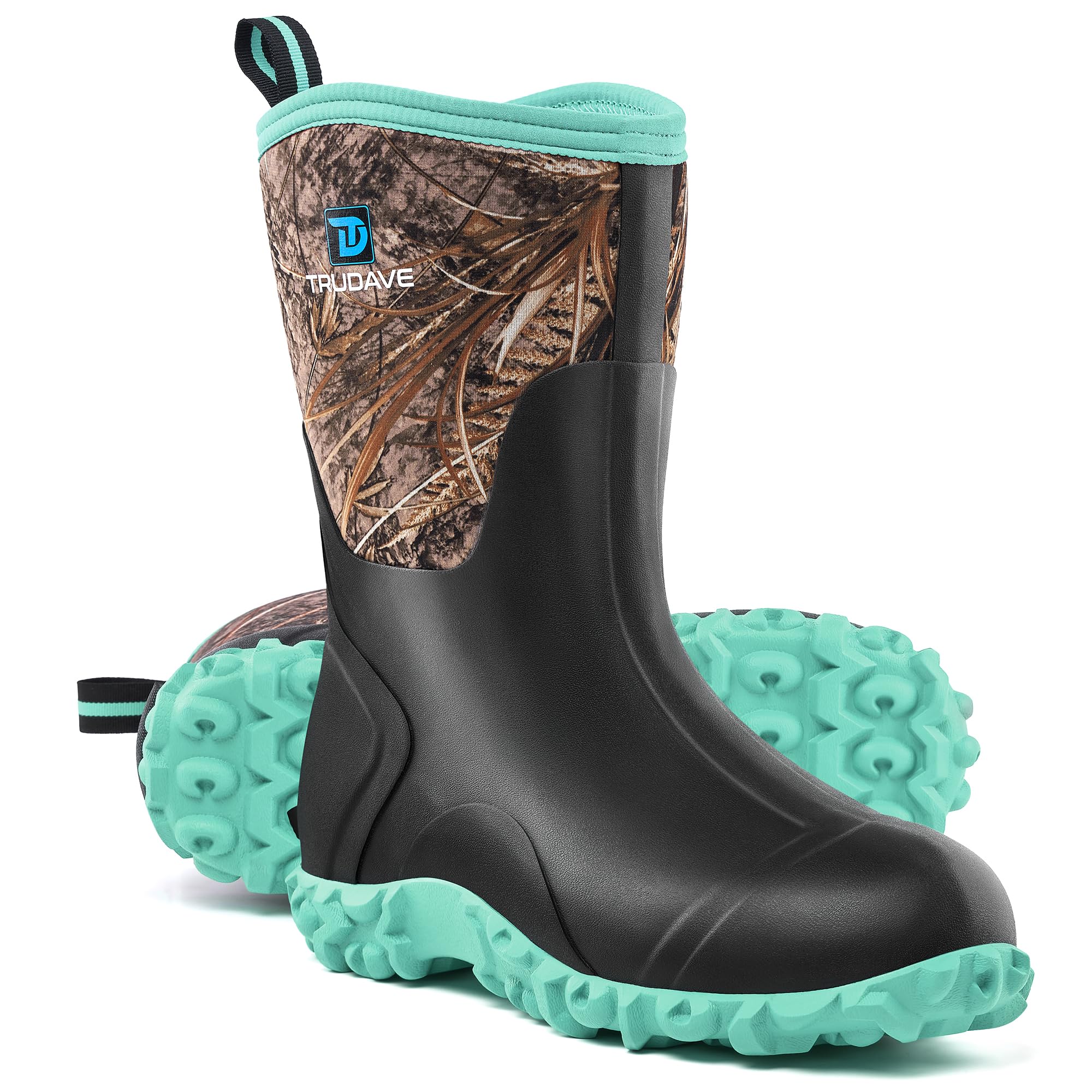
The Trudave Women’s Rubber Boot hits a sweet spot between insulation and weight. The 6mm neoprene lining provides substantial warmth for cold mornings without making the boot too heavy for all-day garden wear. The steel shank running through the sole gives the rigidity needed for digging and shoveling, and the deep-tread outsole delivers consistent grip in mud and snow.
Owner reviews highlight the boot’s ability to keep feet dry and warm in snow while staying breathable enough to prevent sweat buildup. The pull tab and step-on heel ridge make donning and removal easy, even with thick socks. Sizing is true to US fit, and the mid-calf height keeps mud and water from splashing over the top during normal use.
The boot runs warm in summer due to the neoprene insulation, and the calf diameter may feel snug for some. For three-season gardening — spring, fall, and mild winter — the Trudave delivers comfort and support that rival boots costing much more.
What works
- Warm insulated neoprene for cold weather
- Steel shank reduces foot fatigue
- Easy on/off with heel tab
What doesn’t
- Too warm for hot summer gardening
- Calf fit could be wider for some
5. Showave Classic Men’s Rubber Boots (Insulated)
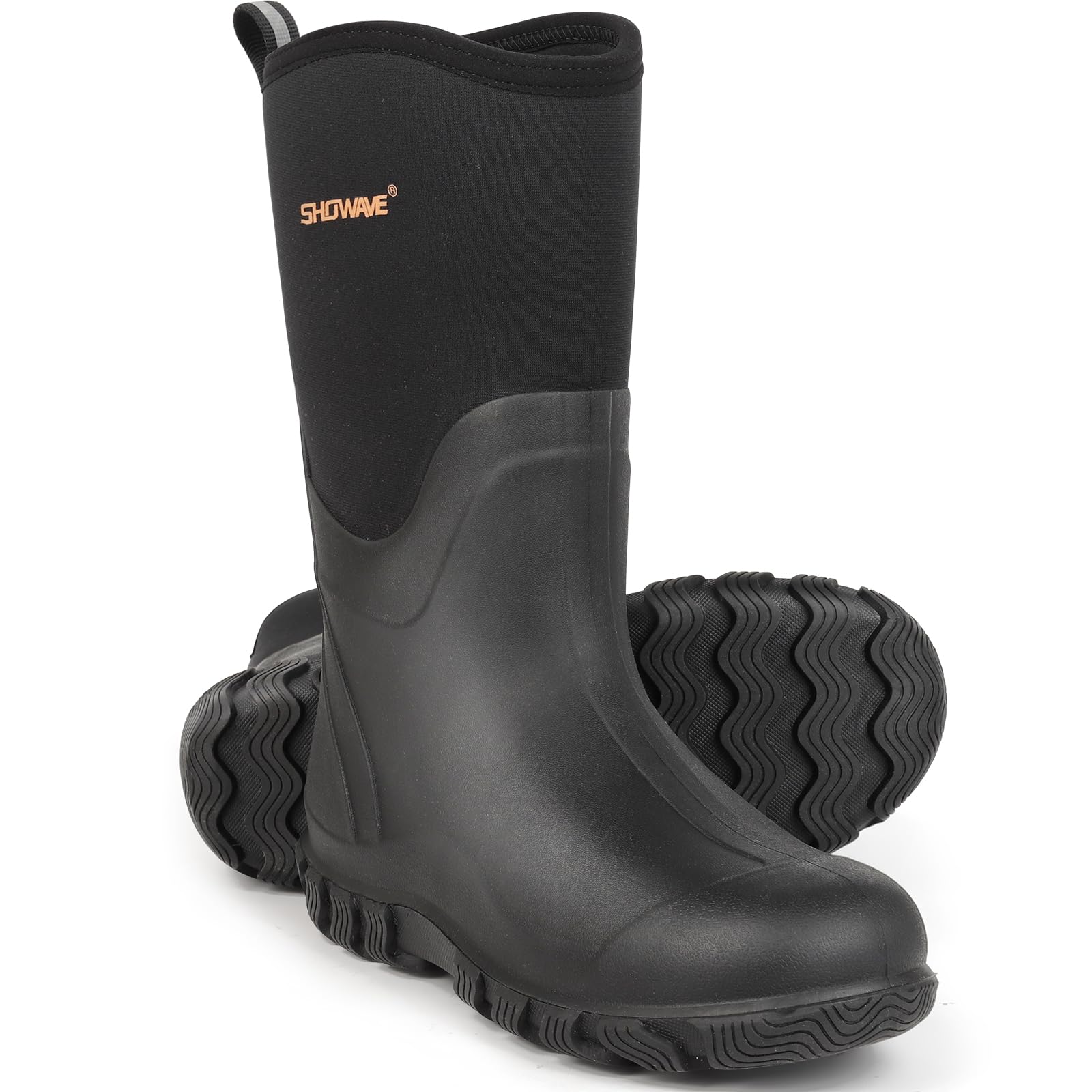
The Showave Classic Men’s Rubber Boots deliver insulated neoprene construction and steel shank support at an entry-level price point. The mid-calf height is practical for garden work, and the rubber shell is easy to rinse clean after heavy mud exposure. The neoprene lining adds warmth and cushioning without the bulk of heavier insulated boots.
Buyers using these for farm chores, dog walking, and daily garden maintenance report that the boots remain waterproof and comfortable month after month. The outsole provides good traction in mud and on wet grass, and the boots are noticeably lighter than traditional rubber work boots, reducing leg fatigue during longer sessions.
The boot runs large for some users, and the calf area can be tight if you wear thick winter socks. For a gardener seeking a functional, warm, and waterproof boot without overspending, the Showave Classic represents a solid cost-to-performance ratio.
What works
- Good value for insulated waterproof performance
- Lightweight for a mid-calf rubber boot
- Durable enough for daily heavy use
What doesn’t
- Sizing can be inconsistent
- Calf may be tight with thick socks
6. HISEA Women’s Ankle Rain Boots

The HISEA Ankle Rain Boots are purpose-built for quick trips into the garden when you don’t need full calf coverage. The low height lets you move freely, and the reinforced rubber shell stays fully waterproof through marshy or wet conditions. The molded outsole with curve support and memory foam insole provide a surprising level of comfort for an ankle-height boot.
Customer feedback confirms they work well for fly fishing, muddy fields, and light gardening. The reflective pull straps make them easy to pull on, and the rubber construction is simple to hose off. The wide toe box allows natural splay, and the neoprene lining adds some breathability and warmth.
These boots are not suitable for deep water or heavy winter wear, and some buyers report the fit runs slightly large, requiring a downsize. For warm-weather gardening, quick inspections, or wet grass, the HISEA ankle boots offer a lightweight, convenient alternative to full-size garden boots.
What works
- Lightweight and easy to slip on
- Comfortable memory foam insole
- Wide toe box for natural foot position
What doesn’t
- Not warm enough for winter use
- Sizing runs large; order down
7. HISEA Women’s Duck Chelsea Rain Boots
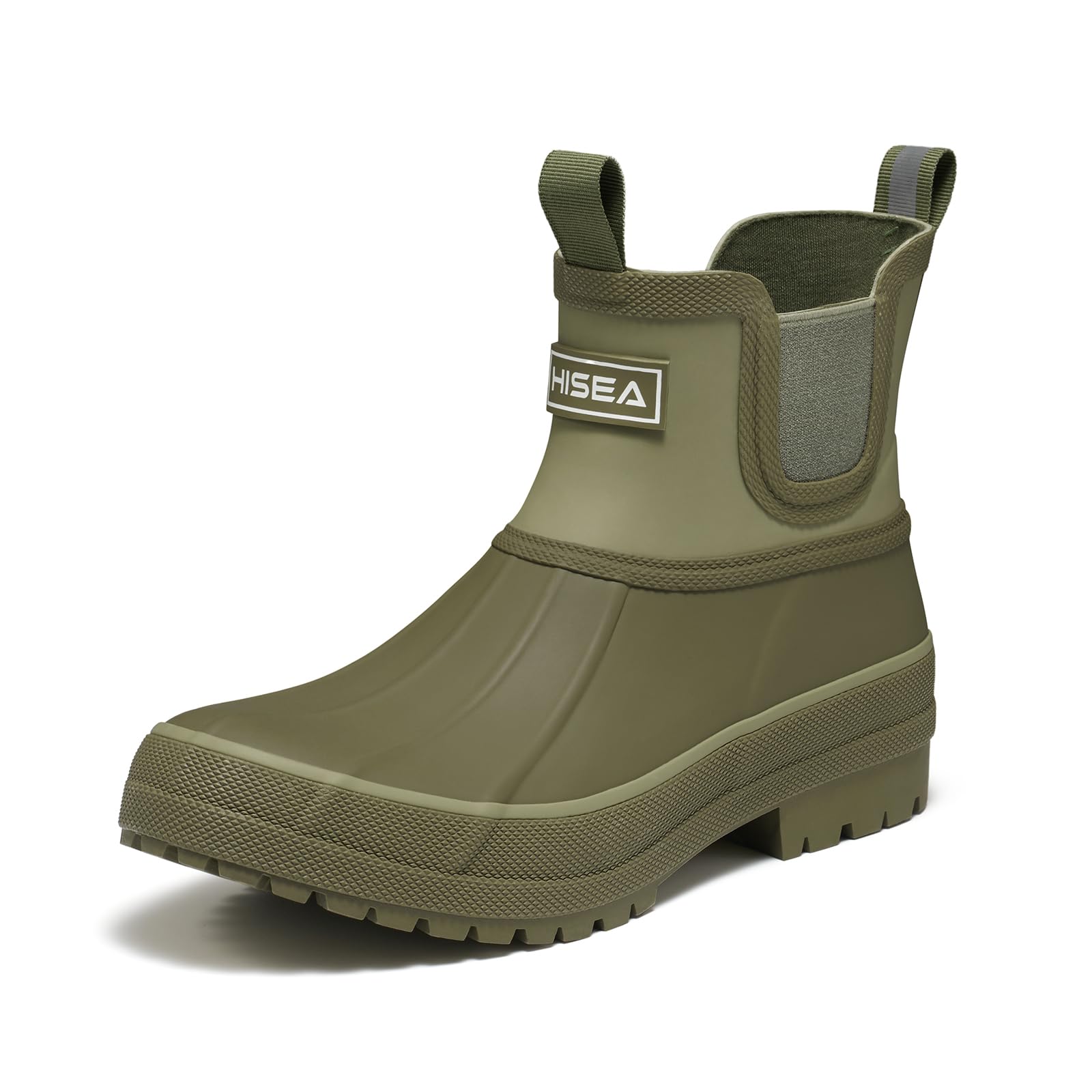
The HISEA Duck Chelsea Rain Boots provide a low-cost entry into waterproof garden footwear. The short Chelsea style means they slip on quickly and take up minimal storage space. The rubber construction holds up well in mud, keeps feet dry in shallow puddles, and cleans off easily with a hose or wipe down.
Buyers using them for duck chores, egg collection, and casual gardening report they are comfortable, lightweight, and easy to wear for extended periods. The lack of a steel shank means they flex more than reinforced boots, but the trade-off is significantly less weight. Owners with narrow feet find the fit works well with an arch insert.
The main drawback is the absence of ankle support and the fact that the short shaft offers no protection against deeper mud or water splashes. For a lightweight summer garden boot for light tasks, the HISEA Chelsea boots deliver adequate performance at the lowest cost in this roundup.
What works
- Very affordable entry price
- Lightweight and easy to clean
- True-to-size with room for thin inserts
What doesn’t
- No ankle support for rough terrain
- Short shaft limits mud and water protection
Hardware & Specs Guide
Neoprene Thickness
Garden boots with neoprene uppers use a thickness rating typically between 4mm and 8mm. A 6mm neoprene layer balances warmth retention and leg flexibility — you get enough insulation for early morning or fall work without feeling like walking in tire tubes. Thinner neoprene (4mm) is better for warm-season use but sacrifices cold protection.
Steel Shank Rigidity
The steel shank is a flat piece of steel embedded in the sole that prevents the boot from bending under the arch. This is critical when you are standing on a shovel, pushing a wheelbarrow, or stepping on a narrow garden edge. Boots without a shank will flex uncomfortably under these loads, causing foot strain over time.
FAQ
How does neoprene thickness affect garden boot performance?
Do I need a steel shank in a gardening boot?
How should garden boots fit with thick socks?
Final Thoughts: The Verdict
For most gardeners, the boots for gardening winner is the Edgewater Original Men’s 15″ Field Boot because it delivers proven long-term waterproofing, all-day comfort, and reliable traction across all garden conditions. If you need steel toe protection and heavy insulation, grab the Hunthor Rubber Work Boots. And for a lightweight, slip-on solution that handles quick muddy chores without the bulk, nothing beats the Showave Men’s Ankle Rain Boots.