
A commercial greenhouse isn’t just a bigger backyard model—it is a structural investment in year-round, high-volume plant production. The difference between a structure that survives its first winter and one that collapses under snow load comes down to the frame gauge, panel thickness, and bracing strategy. A true commercial-grade unit must deliver predictable thermal performance, withstand wind shear, and allow for internal zoning of crops, all while requiring a realistic assembly commitment measured in days, not hours.
I’m Rikta — the co-founder and writer behind Lawn Gear Lab. I’ve spent hundreds of hours cross-referencing aluminum extrusions, polycarbonate R-values, snow load ratings, and anchoring systems to separate genuine professional-grade greenhouses from glorified pop-ups that simply carry a high price tag.
Whether you need a propagation house for a nursery operation or a walk-in space large enough to feed a family through the cold months, this guide breaks down every load rating, panel spec, and ventilation flaw so you can confidently pick the right commercial greenhouse for your growing goals.
How To Choose The Best Commercial Greenhouse
Buying a commercial greenhouse commits you to a structure that must perform under load, manage internal climate, and survive for years. Beginners often fixate on square footage while ignoring the frame’s ability to shed snow or the panel’s insulation value. Prioritize these four factors before making a decision.
Frame Material: Aluminum versus Cedar
Aluminum extrusion frames offer the highest strength-to-weight ratio, zero rot, and integrated T-slot channels for shelving and accessories. Look for a minimum wall thickness of 1.5 mm on the main rafters. Cedar wood frames provide natural insulation and a more aesthetic look but require annual sealing and a solid foundation to prevent ground-contact decay. For commercial-grade duty cycles, aluminum with galvanized steel base plates is the standard.
Polycarbonate Panel Gauge and Construction
Panel performance is measured by both thickness and gram weight per square meter. Twin-wall 6mm panels are the baseline for heat retention. Heavier 10mm panels (like those found in the highest-tier models) nearly double the R-value. Gram weight matters: a 720g panel is standard; 1100g panels are noticeably more rigid and resist panel bowing under snow pressure. Always verify if the panel has a UV-resistant coating on one side—install that side facing the sun.
Snow Load and Wind Rating
Every greenhouse should specify its snow load in pounds per square foot (PSF) and wind rating in miles per hour. For a mid-size structure, look for at least 20 PSF snow load and 70 mph wind resistance. Larger footprints demand 30 PSF or more, especially in northern climates. These numbers determine whether gutters collapse or rafters bow under a 12-inch snowfall.
Ventilation and Access
Passive roof vents alone are insufficient for greenhouses larger than 100 square feet. Look for models that include multiple roof vents, operable side windows, or provision for an exhaust fan. A powered intake fan is a near necessity for summer heat management. Door design matters too: double sliding doors allow wheelbarrow access, while a low threshold prevents tripping when moving flats in and out.
Quick Comparison
On smaller screens, swipe sideways to see the full table.
| Model | Category | Best For | Key Spec | Amazon |
|---|---|---|---|---|
| Backyard Discovery Bellerose XL | Premium Kit | All-in-one turnkey setup | 100 mph wind rating | Amazon |
| Palram Canopia Glory 8×20 | Premium Kit | High insulation value | 10 mm twin-wall panels | Amazon |
| CDCASA 32x10x10 FT | Large Aluminum | Maximum square footage | 7 roof vents | Amazon |
| HOWE 10x18x8.4 FT | Heavy Duty | High snow load regions | 30 PSF snow load | Amazon |
| Jocisland 16x12x9.5 FT | Aluminum Hybrid | Tall side walls for shelving | 6 ft. wall height | Amazon |
| WACASA 20x10x10 FT | Large Aluminum | Zoned growing areas | 200 sq ft footprint | Amazon |
| CDCASA 24x10x10 FT | Large Aluminum | Modular expansion layout | 5 adjustable roof vents | Amazon |
| AMERLIFE 10x18x8.4 FT | Aluminum Hybrid | Sliding door access | 1512 cu ft interior | Amazon |
| Yardenaler 8×16 FT | Wood Frame | Surviving extreme coastal wind | 6 mm polycarbonate | Amazon |
| AirWire 8×16 FT Wooden | Wood Frame | Aesthetic back garden use | Slide-in panel system | Amazon |
| MUPATER 8×14 FT | Wood Frame | Pure cedar construction | 383 lb build weight | Amazon |
| 10×12 FT WUKHG | Aluminum Alloy | Budget entry-level commercial | 720g PC panels | Amazon |
| Sylviera 12×12 FT T-Shape | Aluminum Alloy | Square footprint layout | 1100g double-wall panels | Amazon |
In‑Depth Reviews
1. Backyard Discovery Bellerose XL 13×11 FT

This is the most complete turnkey commercial greenhouse available at this scale. The Bellerose XL combines a 100% cedar wood frame with commercial-grade four-wall polycarbonate roof panels that improve heat retention by 30 percent over standard twin-wall designs. Rated to withstand 100 mph winds and 9,200 pounds of snow load, it delivers structural confidence that few competitors match. The integrated temperature-activated exhaust fan, two opening windows, and both interior/exterior hose hook-ups eliminate the need for most aftermarket modifications.
The interior is equally well thought out: 143 square feet of floor space includes 33 linear feet of lower staging shelves, 15 feet of upper shelves, and eight plant hooks. A built-in workstation and a patented PowerPort with three electrical outlets and three USB ports let you run heat mats, lights, and fans without extension cords snaking through doors. Assembly is still a multi-day project, but pre-cut, pre-drilled, and pre-stained pieces combined with the BILT interactive app make the process manageable for two motivated builders.
For a grower who wants a single purchase that includes ventilation, water supply, power, shelving, and a pergola for climbing vines, this is the benchmark. The 5-year warranty backs the investment. The only real trade-off is weight—this unit approaches 1,400 pounds and absolutely requires a concrete slab or a very robust gravel base.
What works
- Complete system with fan, electric, plumbing, and shelving
- 100 mph wind rating with proper anchoring
- Cedar frame resists decay naturally
What doesn’t
- Very heavy—requires a slab foundation
- Soft cedar wood can strip screw threads easily
- Assembly reported to take up to two weeks
2. Palram Canopia Glory 8×20 FT
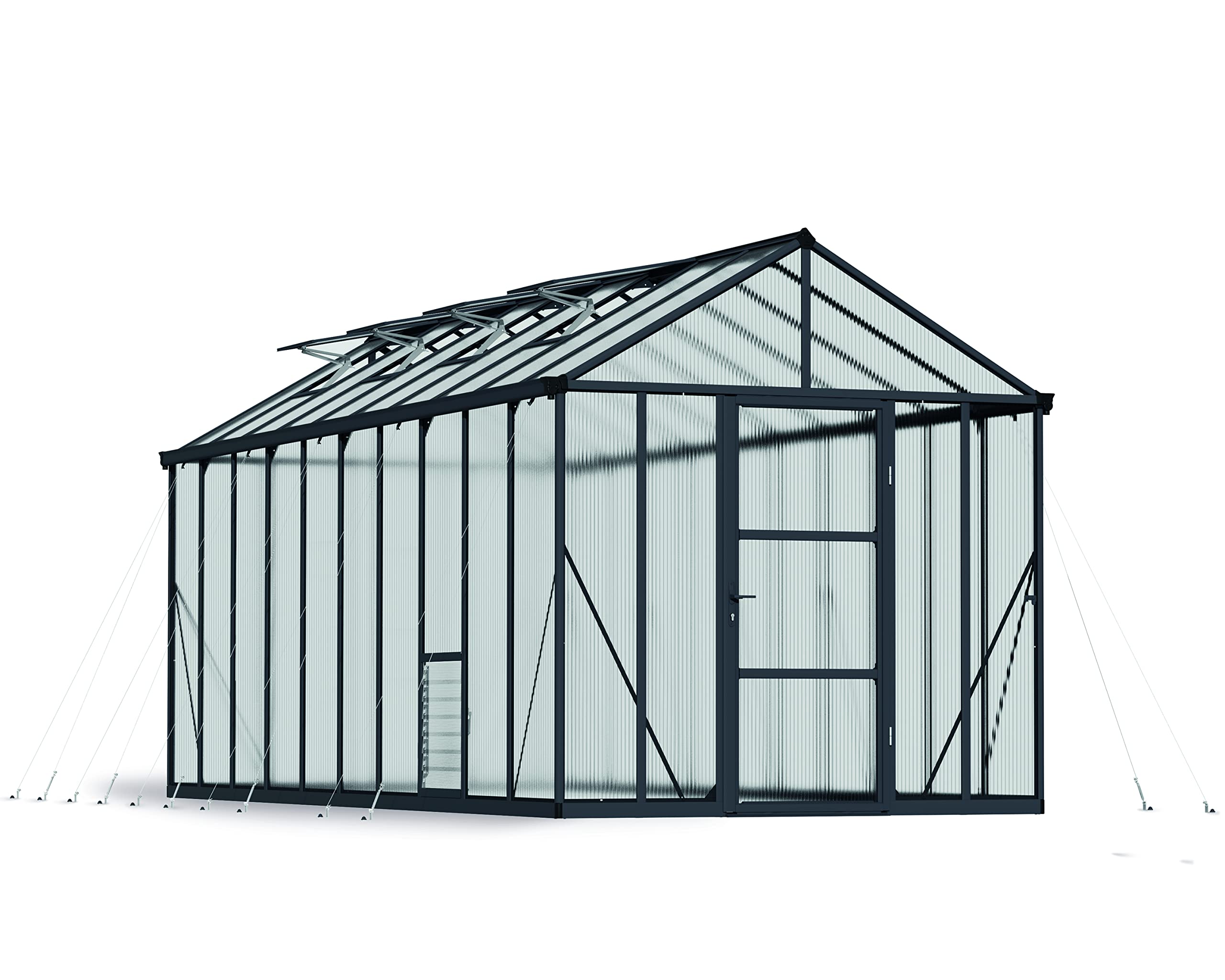
The Palram Canopia Glory uses 10 mm twin-wall polycarbonate panels—substantially thicker than the 4 mm to 6 mm panels found on most kits. This extra thickness delivers noticeably better insulation and structural rigidity. The powder-coated aluminum frame sits on a galvanized steel base, eliminating ground-contact rot and adding lateral stability. An included automatic vent opener regulates temperature without manual intervention, and the large closed gutters channel rainwater for collection.
Assembly uses a sliding-panel system that simplifies panel installation compared to screw-in methods. Even so, builders report a realistic build time of 6 to 12 hours with two people. The 8-foot width and 20-foot length provide a long, narrow footprint that works well for bench propagation or row cropping. The 10-year limited warranty is the longest in this comparison, reflecting the manufacturer’s confidence in the aluminum and panel durability.
Where this model falls short is the manual. Instructions are diagram-only with no written steps, which frustrates first-time builders. Some users also note that the rubber door seals can slip out of the track, requiring adhesive to secure them. For growers who prioritize panel thickness and a proven brand with decades of greenhouse manufacturing, this is a strong long-term investment.
What works
- 10 mm twin-wall panels for superior insulation
- Galvanized steel base adds stability
- 10-year limited warranty
What doesn’t
- Diagram-only instructions can be confusing
- Door seals may need adhesive to stay in track
- Narrow 8-ft width limits interior layout flexibility
3. CDCASA 32x10x10 FT
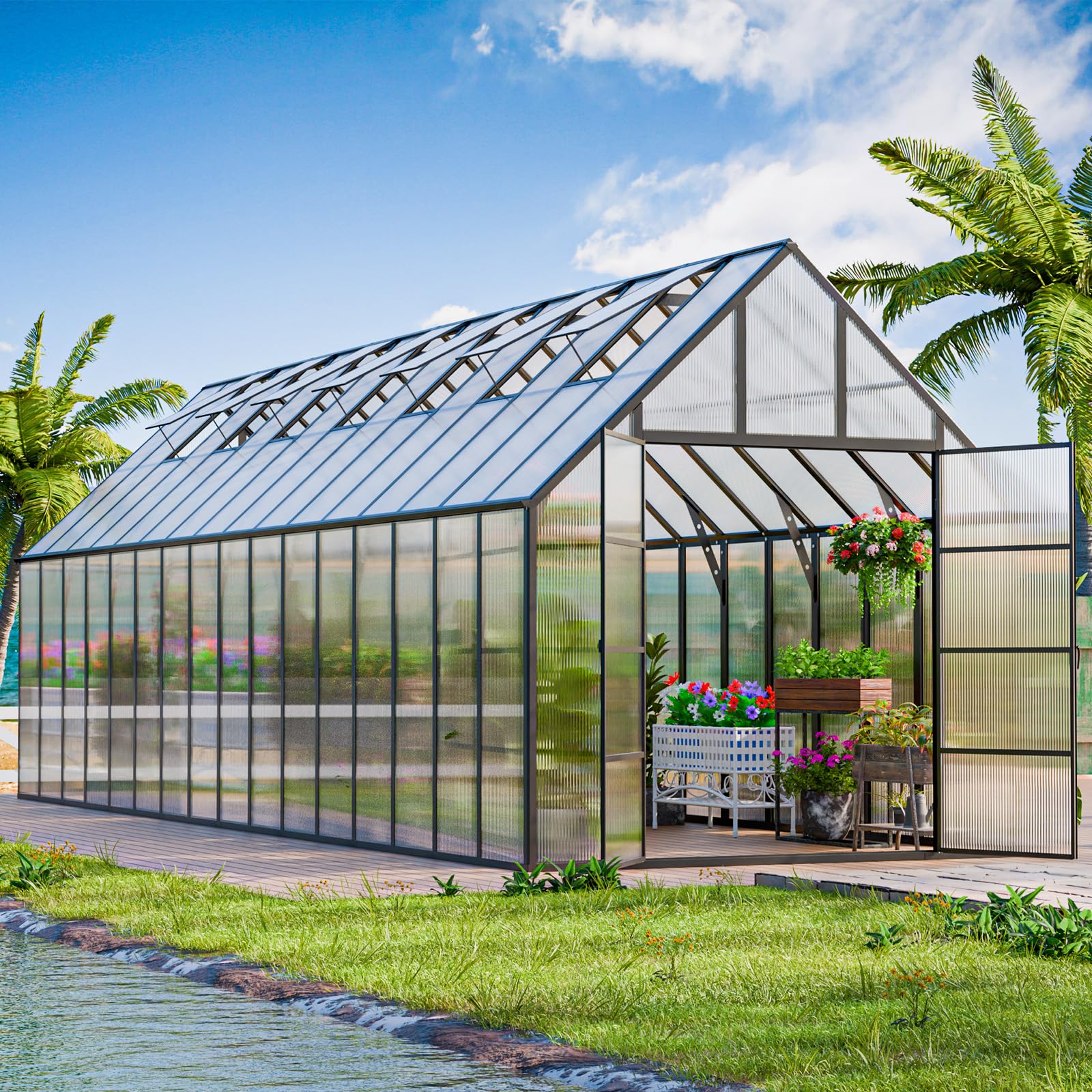
The CDCASA 32x10x10 FT model offers the largest usable footprint in this guide at 320 square feet. The aluminum frame uses a patented quick-connect system that the manufacturer claims cuts assembly time by 50 percent compared to traditional bolted frames. With seven roof vents and a swing door, this unit provides passive ventilation across a very long structure. The 4 mm twin-wall polycarbonate panels allow 70 percent light transmission while blocking 99.9 percent of UV radiation.
At this size, the 20 PSF snow load rating becomes the critical spec. For heavy snow zones, this unit will need additional internal bracing or more frequent snow removal. The frame is designed to be anchored into soil or concrete, and the modular design means sections can be added incrementally. Builders report a 10 to 15 hour assembly time for a team of three, but the instructions lack step-by-step clarity, causing disassembly and rework for many users.
The primary limitation across all large CDCASA units is instruction quality. Multiple verified reviews confirm missing hardware orientation notes and vague descriptions. The included Allen key is also undersized. Plan for extra time and a ratcheting screwdriver with Allen bits. For growers who need maximum square footage on a budget and have the patience for a challenging build, the sheer volume of this structure is unmatched.
What works
- 320 sq ft of growing space
- Quick-connect frame speeds assembly
- Seven roof vents provide excellent airflow
What doesn’t
- Poor instructions cause significant rework
- 20 PSF snow load is marginal for heavy snow regions
- Thin 4 mm polycarbonate panels
4. HOWE 10x18x8.4 FT
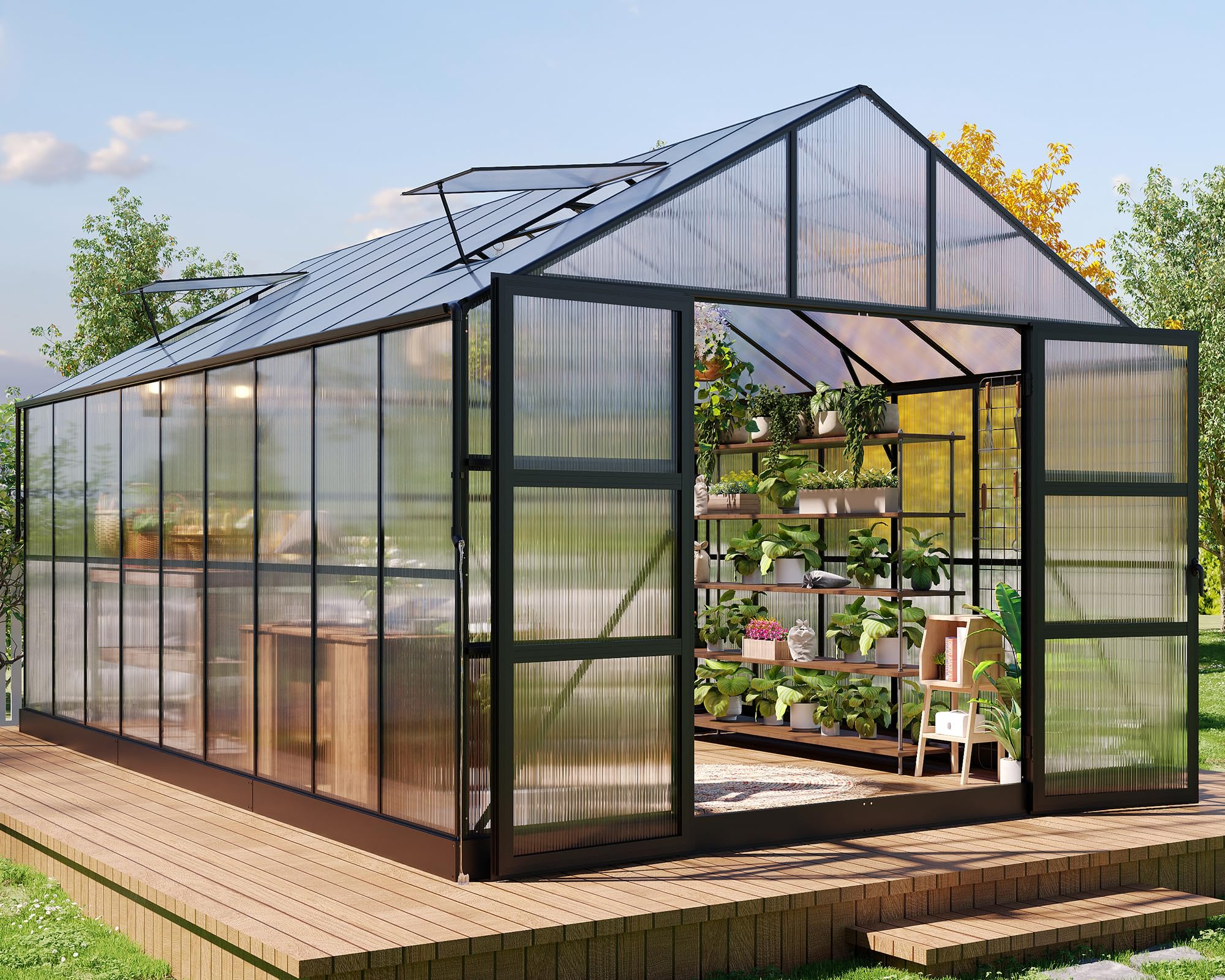
The HOWE 10x18x8.4 FT greenhouse addresses the structural weakness that plagues many aluminum kits: insufficient snow load capacity. Rated at 30 PSF with a 70 mph wind rating, this unit uses reinforced aluminum frames, triangular brackets, and expansion screws with ground anchors. The 5.6-foot-high walls and double hinged doors provide easy access, and 1008 cubic feet of interior volume is generous for a mid-size greenhouse.
The four roof vents and integrated drainage pipes with gutter attachment manage both temperature and precipitation. Builders note that the instructions lack orientation details for the first wall assembly, which can lead to disassembly and restarting. The frame uses metric M6 threaded bolts with English 3/8-inch heads, requiring both metric and standard tools. Once assembled correctly, the structure feels solid, and owners in zone 5b report it handles early-season snow without visible panel stress.
A recurring minor issue is that one or two roof vents may pop off in high gusts unless weighted or secured with an added latch. The hardware kit is also slightly sparse—expect to supplement with extra washers or bolts for total confidence. For regions that see 18 inches or more of seasonal snowfall, this is one of the few kits in the mid-range that actually advertises a meaningful snow load number.
What works
- 30 PSF snow load rating—best in its class
- 4 roof vents for passive cooling
- 1008 cu ft of usable space
What doesn’t
- Instructions lack clear orientation details
- Mixed metric and standard hardware
- Roof vents may blow off in high wind
5. Jocisland 16x12x9.5 FT
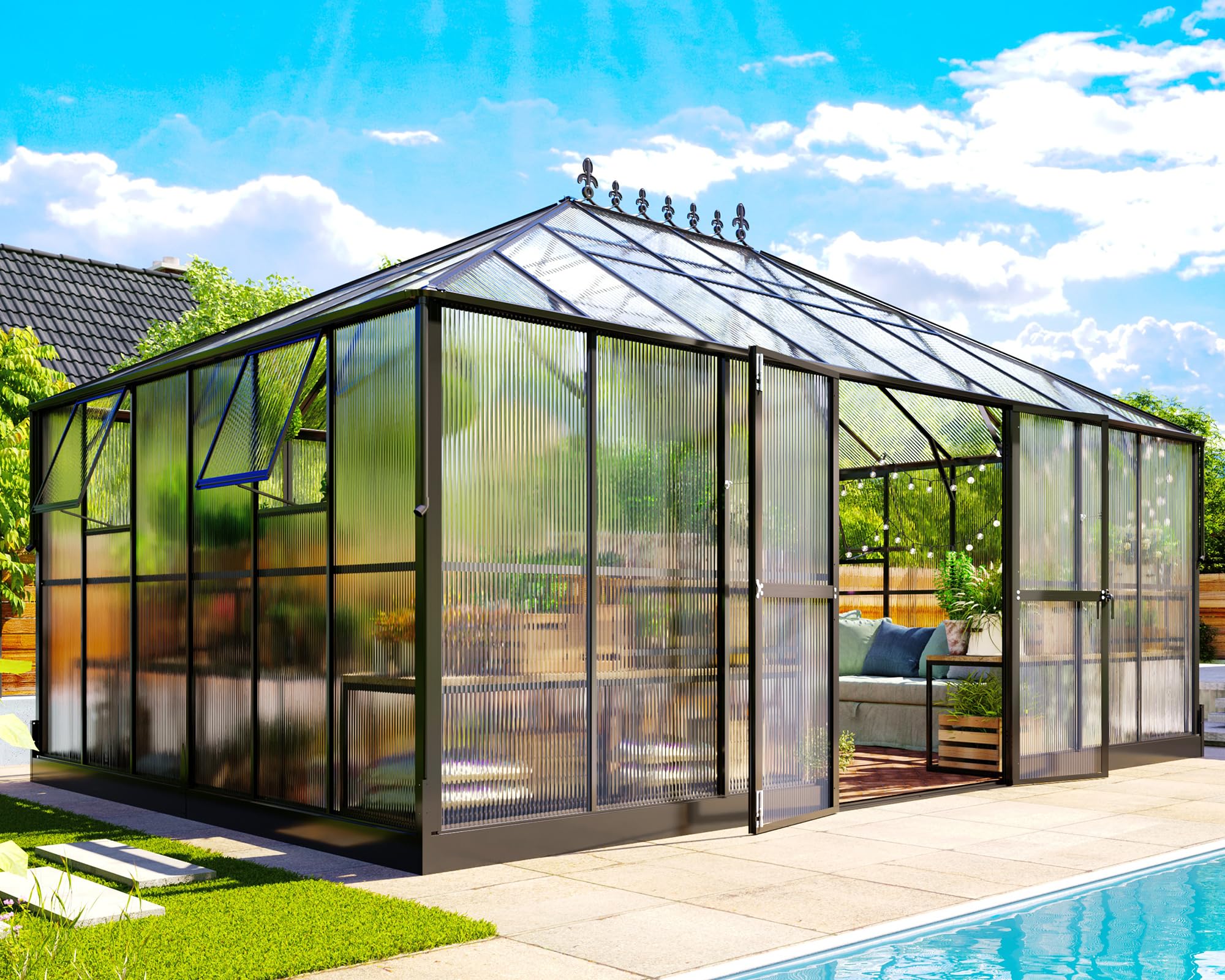
The Jocisland 16x12x9.5 FT distinguishes itself with 6-foot-high wall panels, which are a full 12 inches taller than most competitors. This extra wall height allows for tall shelving units, hanging plants, and comfortable standing room near the edges where roof slope reduces headroom. The frame uses 4 thickened aluminum corner posts and ground stakes that anchor the structure into soil or concrete. The 6 mm twin-wall polycarbonate panels provide 99.99 percent UV protection and reasonable insulation.
Four ventilation windows and a rain gutter system manage airflow and drainage. The spear-like roof peak is a functional design detail that discourages bird perching. With 1170 cubic feet of interior volume, this greenhouse can accommodate multiple growing zones. Assembly still challenges builders due to part number errors in the manual, but the overall quality of the aluminum extrusions and panel fitment is above average for this price tier.
The wind rating of 56 mph is lower than the WACASA or HOWE models, meaning this unit is better suited to sheltered backyards than exposed field locations. The snow load rating of 18 PSF is also moderate. For growers in mild climates who prioritize standing height and the ability to arrange multi-level shelving, the Jocisland offers the best vertical clearance in the aluminum category.
What works
- 6 ft wall height for full standing room
- Thickened aluminum corner posts
- Bird-deterrent roof peak design
What doesn’t
- 56 mph wind rating is below average
- 18 PSF snow load is marginal
- Part number errors in assembly manual
6. WACASA 20x10x10 FT
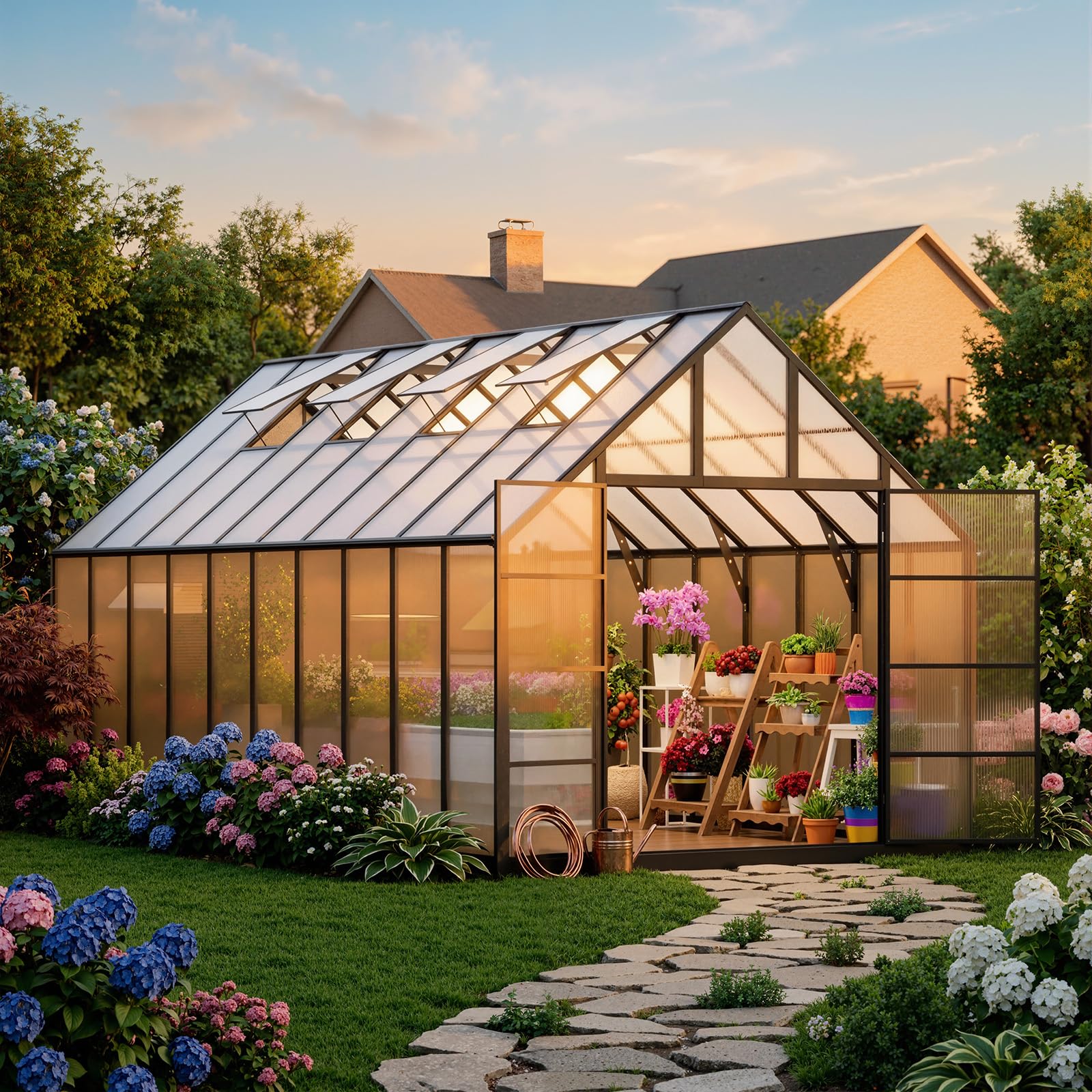
The WACASA 20x10x10 FT greenhouse delivers a 200-square-foot footprint with a 10-foot peak height, allowing for zoned growing areas for seedlings, vegetables, and storage within a single structure. The 4 mm twin-wall polycarbonate panels fit into a rust-resistant aluminum frame, and the four adjustable roof vents plus the swing door provide reasonable passive ventilation for the volume. Side rain gutters direct water to the ends for easier collection or drainage planning.
Assembly complexity is a major factor here. The kit ships in six separate packages that may arrive on different days. Builders report that the official video has minor sequencing errors compared to the printed manual, requiring careful cross-referencing. Several owners needed to add concrete fasteners, L-brackets, and steel bar corner bracing to achieve wind stability. The unit survived a small tornado in one owner’s experience, but only after adding cemented corner anchors and 18-inch ground anchors with marine cables.
The most common complaint is that many polycarbonate panels are cut slightly too short, leaving gaps at the roof and wall joints that require silicone or tape to seal. For the price per square foot, this is one of the most affordable ways to get 200 square feet under cover. But plan for to in aftermarket anchoring and sealing materials to make it truly wind-tight.
What works
- Large 200 sq ft at competitive cost per square foot
- Four roof vents for airflow
- Aluminum frame resists rust
What doesn’t
- Panels often cut too short, leaving gaps
- Needs significant aftermarket anchoring
- Instructions have sequencing errors
7. CDCASA 24x10x10 FT
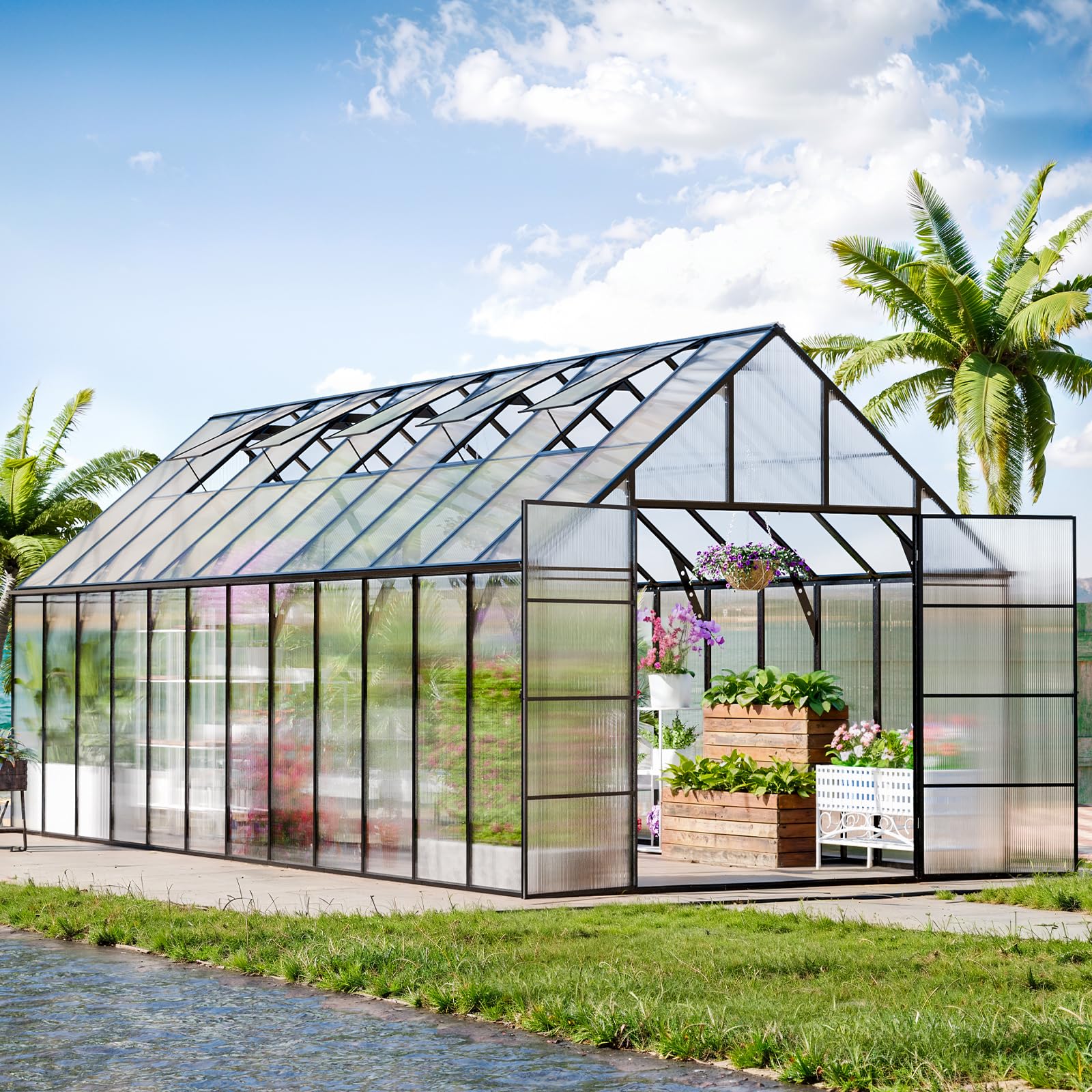
The CDCASA 24x10x10 FT model balances footprint and ventilation with five roof vents that have five adjustable angles each, giving fine-grained control over airflow. The 4 mm twin-wall polycarbonate panels transmit 70 percent of available light—ideal for leafy greens and herbs that don’t need full direct sun. The rust-resistant aluminum frame uses a quick-connect design that CDCASA claims saves 50 percent in assembly time, though real-world reports suggest the time savings come only after you figure out the vague manual.
The swing door with a snap-on handle creates a tight seal, and the rain gutters on both sides channel water away from the foundation. Builders consistently report that the instructions lack critical hardware orientation notes—for example, which side of a bracket faces inward. This leads to disassembly of the first wall once the orientation becomes clear during the second wall. The 20 PSF snow load rating is adequate for moderate snow zones but not for heavy northern snow belts without frequent clearing.
Once assembled, the structure feels solid and looks professional. The 240-square-foot floor plan is large enough to separate a propagation area from a fruiting area. For growers who are comfortable with puzzle-like assembly and can supplement the vague manual with online resources, this unit offers the best square footage-to-price ratio in the CDCASA lineup.
What works
- Five vents with adjustable angles
- Snap-closing swing door
- Quick-connect aluminum frame
What doesn’t
- Poor instruction clarity
- Thin 4 mm polycarbonate panels
- Multiple packages may arrive separately
8. AMERLIFE 10x18x8.4 FT
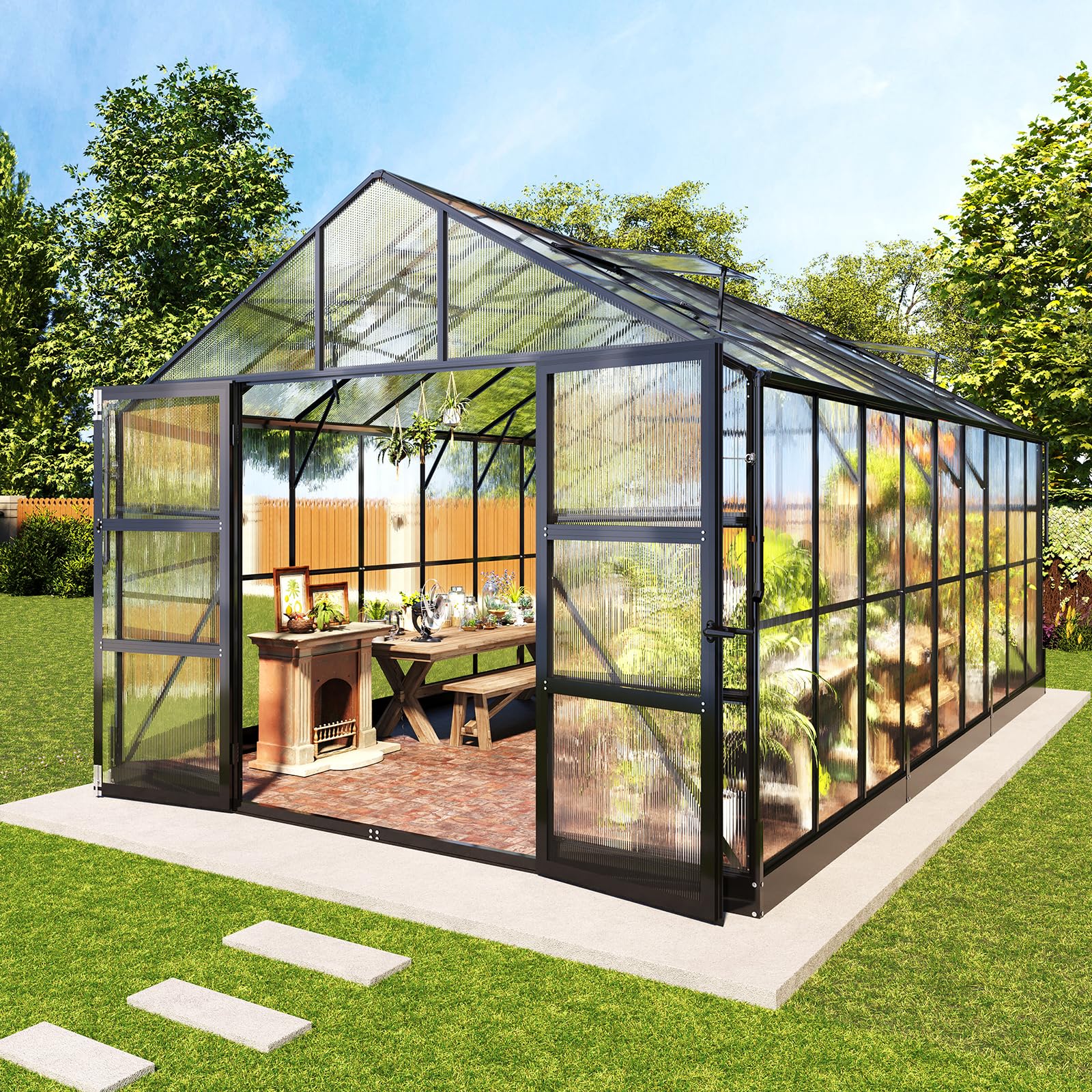
The AMERLIFE 10x18x8.4 FT greenhouse uses a sliding door mechanism that saves interior floor space compared to swing-out doors—a meaningful advantage when staging potted plants near the entrance. The aluminum frame integrates thickened corner posts, ground stakes, expansion bolts, and fixed steel plates for anchoring into either concrete or soil. The 6 mm polycarbonate panels provide a noticeable improvement in insulation over 4 mm panels, with users measuring a 40-degree difference between outside temperature and interior temperature on sunny winter days.
The four adjustable skylights and the rain gutters on both sides manage airflow and precipitation. At 1512 cubic feet, the interior volume is substantial and can accommodate tall indeterminate tomato varieties or a small potting bench. Assembly mirrors the challenging experience of other large aluminum kits: builders report a 15-hour build time for three people, with much of that time spent deciphering the step order from a poorly translated manual.
The gutter strips are the weakest physical component. They are thin plastic and tend to bend during installation. The downspout pieces are similarly fragile. For the price, this unit competes directly with the HOWE but trades a higher wind rating for a larger door and slightly more interior volume. Choose this if you need a sliding door for tight access and can tolerate a finicky gutter install.
What works
- Sliding door saves valuable floor space
- 6 mm polycarbonate for good insulation
- 1512 cu ft of usable volume
What doesn’t
- Fragile gutter strips bend during install
- Poorly translated assembly manual
- Long 15-hour build time
9. Yardenaler 8×16 FT Wooden
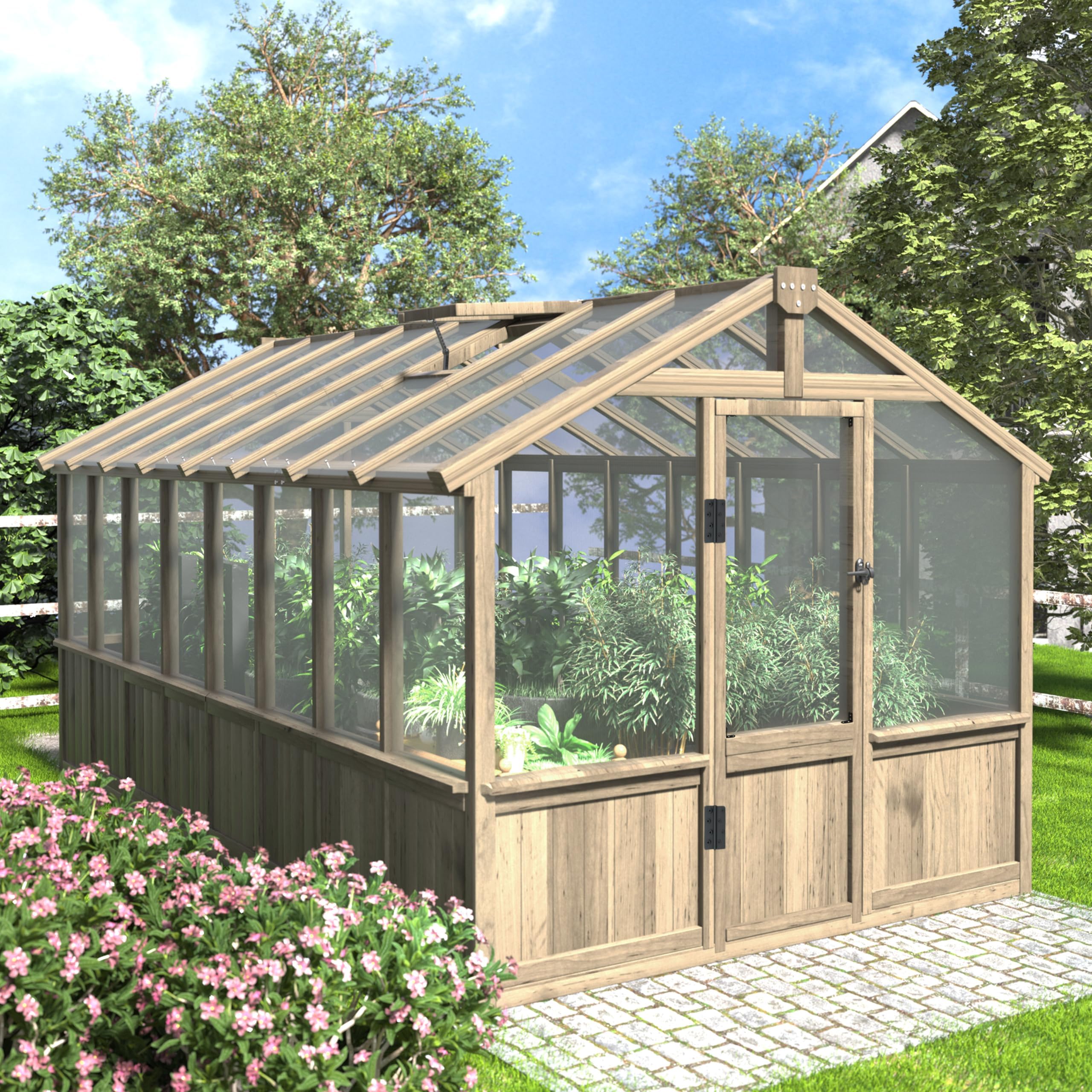
The Yardenaler 8×16 FT wooden greenhouse uses a solid pine timber frame reinforced with an aluminum alloy substructure. This hybrid approach gives the thermal and aesthetic benefits of wood with the corrosion resistance of aluminum where it contacts the panels. The adjustable roof can open up to 45 degrees, providing significant ventilation control. The 6 mm multi-layer polycarbonate panels balance light transmission with UV protection.
Builders consistently praise the labeling system and instruction clarity—a rare positive note in this category. The 427-pound weight and sturdy base support make it feel planted even in exposed locations. The lockable door and two roof vents provide adequate security and airflow for the 128-square-foot footprint.
The primary frustration is that the frosted film on some polycarbonate panels does not adhere well and starts peeling after a few months. Caulking all seams is also essential to prevent leaks around the vent windows. For growers in coastal or high-wind zones who prefer a wood look with structural credibility, the Yardenaler offers the best wind survivability in the wood-frame category.
What works
- Survives 60-70 mph winds with anchoring
- Clear instructions and well-labeled parts
- Hybrid wood and aluminum frame
What doesn’t
- Frosted panel film peels over time
- Seams require silicone sealing
- Lower 427 lbs weight may feel light before anchoring
10. AirWire 8×16 FT Wooden
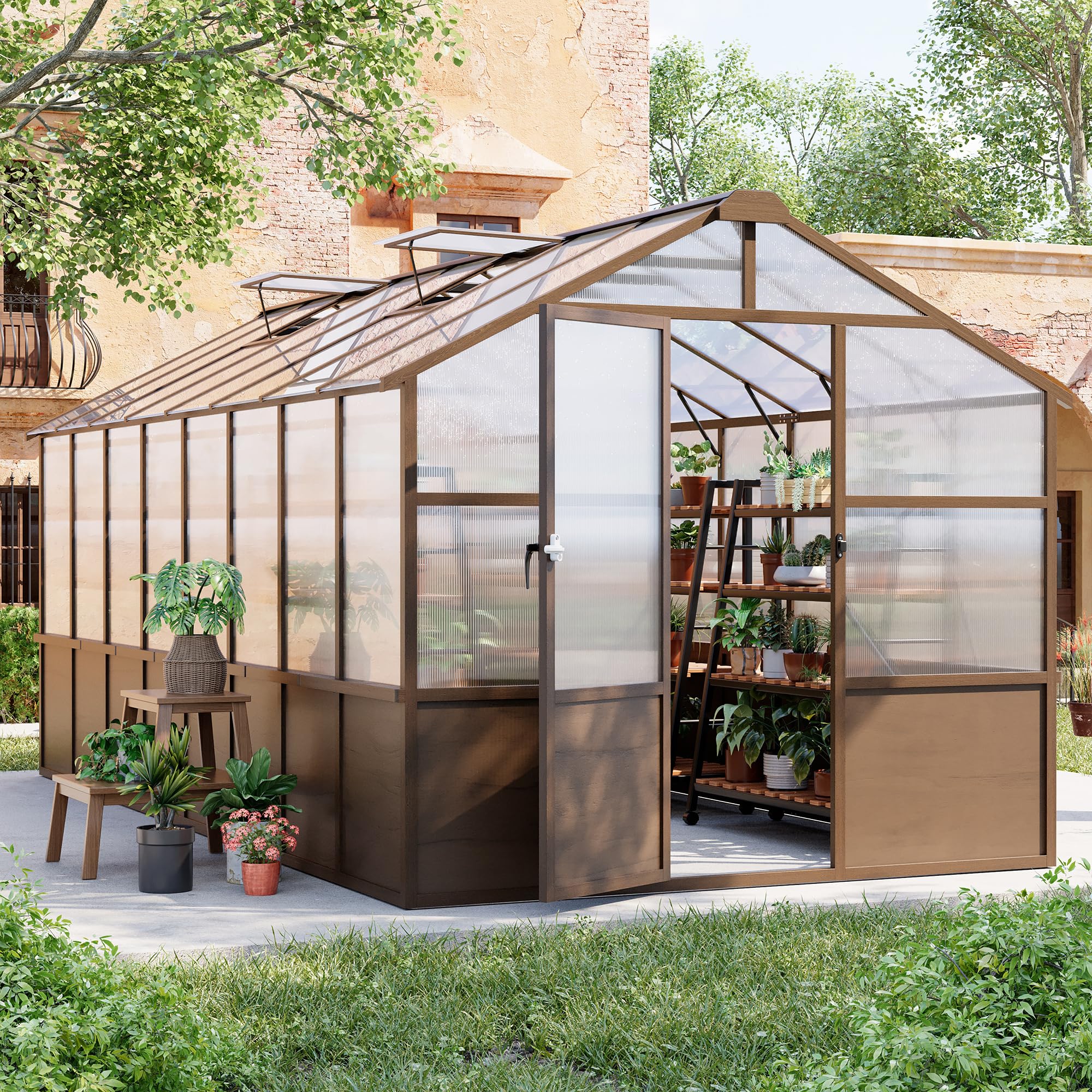
The AirWire 8×16 FT wooden greenhouse is constructed from solid pine timber with high-quality hardware, and its slide-in polycarbonate panel system reduces installation time by roughly 20 percent compared to screw-in panel designs. The 6 mm polycarbonate sheets carry a specialized UV coating providing 99.99 percent protection. The lockable door and two roof vents provide basic ventilation and security for a 128-square-foot growing area.
Builders are split on the assembly difficulty. Some report a straightforward one-day build with clearly labeled parts and detailed instructions, while a master carpenter with an assistant found the assembly extremely difficult, needing to add bracing for coastal wind conditions. The door on early units arrived warped, requiring a hook-and-eye latch and future reinforcement with a wood block. The interior fits a narrow table, a bench, and about nine 5-gallon nursery pots—tight for a 16-foot length.
The wood frame retains heat noticeably better than aluminum alone, with owners reporting a 20-degree temperature buffer during cold nights with a small heater. But the thin pine panels benefit from reinforcement with 2×2 beams, especially in the roof. For the grower who wants a wood-frame greenhouse that goes together faster than average and is willing to make minor structural upgrades, this is a solid mid-range choice.
What works
- Slide-in panels speed up assembly
- Wood frame offers natural insulation
- Lockable door and two roof vents
What doesn’t
- Door may arrive warped
- Thin wood needs reinforcement for wind zones
- Interior feels narrow for the length
11. MUPATER 8×14 FT Cedar

The MUPATER 8×14 FT greenhouse uses pure cedar wood for the frame—a natural choice for growers who want a structure that resists rot and insects without chemical treatment. The cedar is lighter and softer than pine, which simplifies drilling but also means pilot holes are essential to avoid splitting. The adjustable top vents and lockable door provide basic climate control and security for the 112-square-foot footprint.
Assembly feedback is mixed. Some owners report a clean build with clear instructions and a tight final fit, while others encountered misaligned pre-drilled holes that caused screws to protrude inside the greenhouse. Sorting through five separate boxes and identifying unnumbered parts added to the assembly time. Sealing all panel seams with silicone after assembly is universally recommended to prevent water ingress during rain.
At 383 pounds, this is a heavy kit that feels substantial once assembled. The cedar frame, if sealed annually, will outlast aluminum frames that corrode at connection points. For the organic-minded grower who values natural materials and is prepared to spend time on detailed alignment, the MUPATER delivers a classic greenhouse aesthetic with functional commercial-grade space.
What works
- Pure cedar frame with natural rot resistance
- Heavy 383 lb build feels solid
- Adjustable top vents for temperature control
What doesn’t
- Pre-drilled holes can be misaligned
- Soft cedar splits easily without pilot holes
- Multiple boxes may arrive on different days
12. WUKHG 10×12 FT Polycarbonate
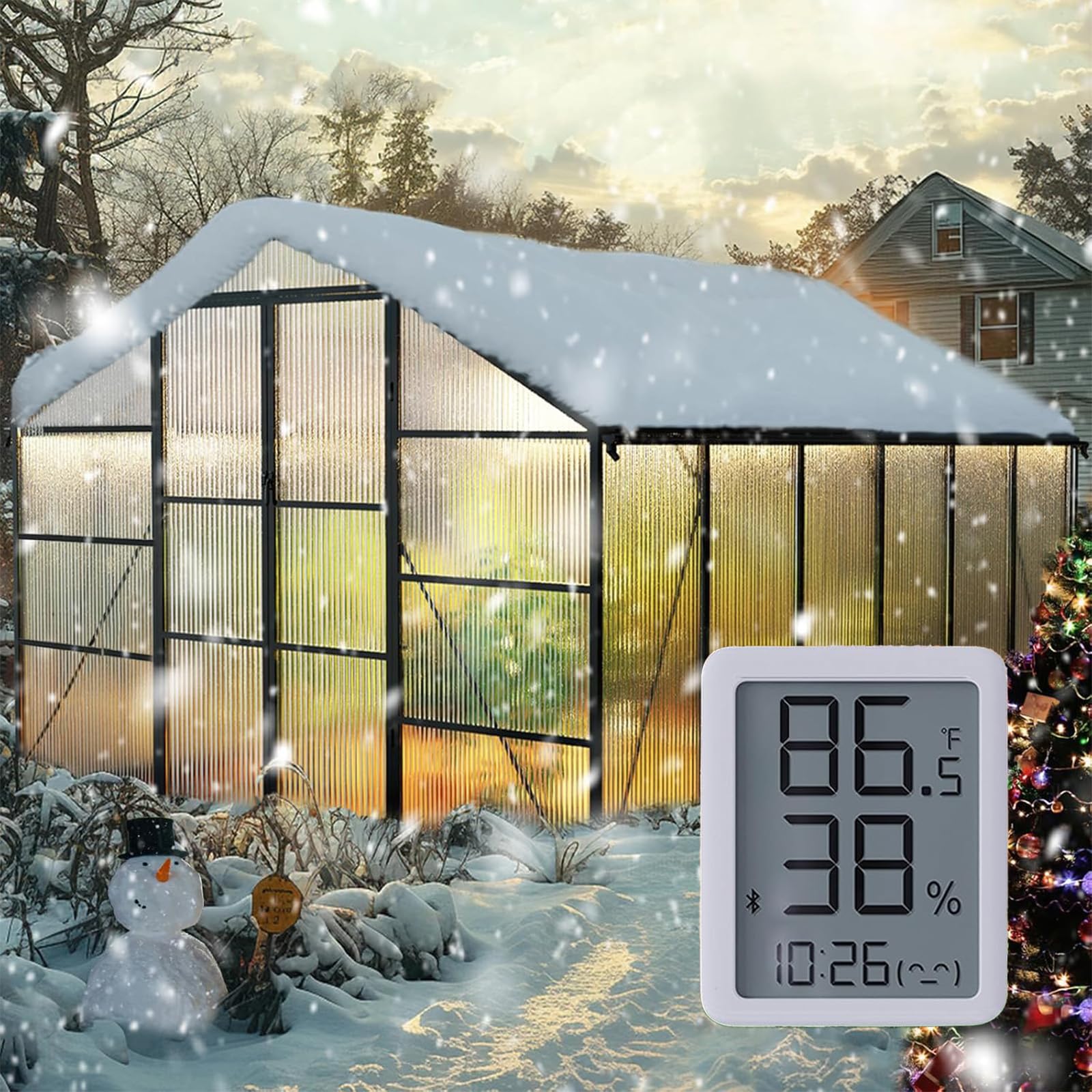
The WUKHG 10×12 FT greenhouse is the most affordable entry point into a polycarbonate-walled structure that still qualifies as commercial-scale. The aluminum alloy frame is rated for 35 mph winds and 20 PSF snow load—numbers that place it firmly in the light-commercial category. The 4 mm twin-wall polycarbonate panels at 720-gram weight provide adequate light diffusion and UV protection for season extension and seedling production.
With two doors, three roof vents, and a built-in gutter system, this unit offers more access points than many kits costing double. The 122-by-144-inch footprint provides enough room for several raised beds or a combination of shelving and floor pots. Assembly is challenging in part identification—the parts are marked with symbols, but some symbols are small or easy to confuse. Builders consistently recommend having three people and a full day available.
The most critical flaw is that the roof windows can blow out in windy conditions unless they are additionally secured. Several owners reported losing a window on the first or second night. The instructions could also benefit from clearer step sequencing. For growers on a strict budget who need a semi-permanent structure with real polycarbonate panels rather than a polyethylene film tunnel, this unit provides a viable starting point that can be upgraded with additional sealing and anchoring over time.
What works
- Best value for a real polycarbonate structure
- Two doors and three vents for access
- Built-in gutter system for water collection
What doesn’t
- Roof windows blow open in wind
- Complex assembly with 3 people needed
- Some parts may be mislabeled
13. Sylviera 12×12 FT T-Shape
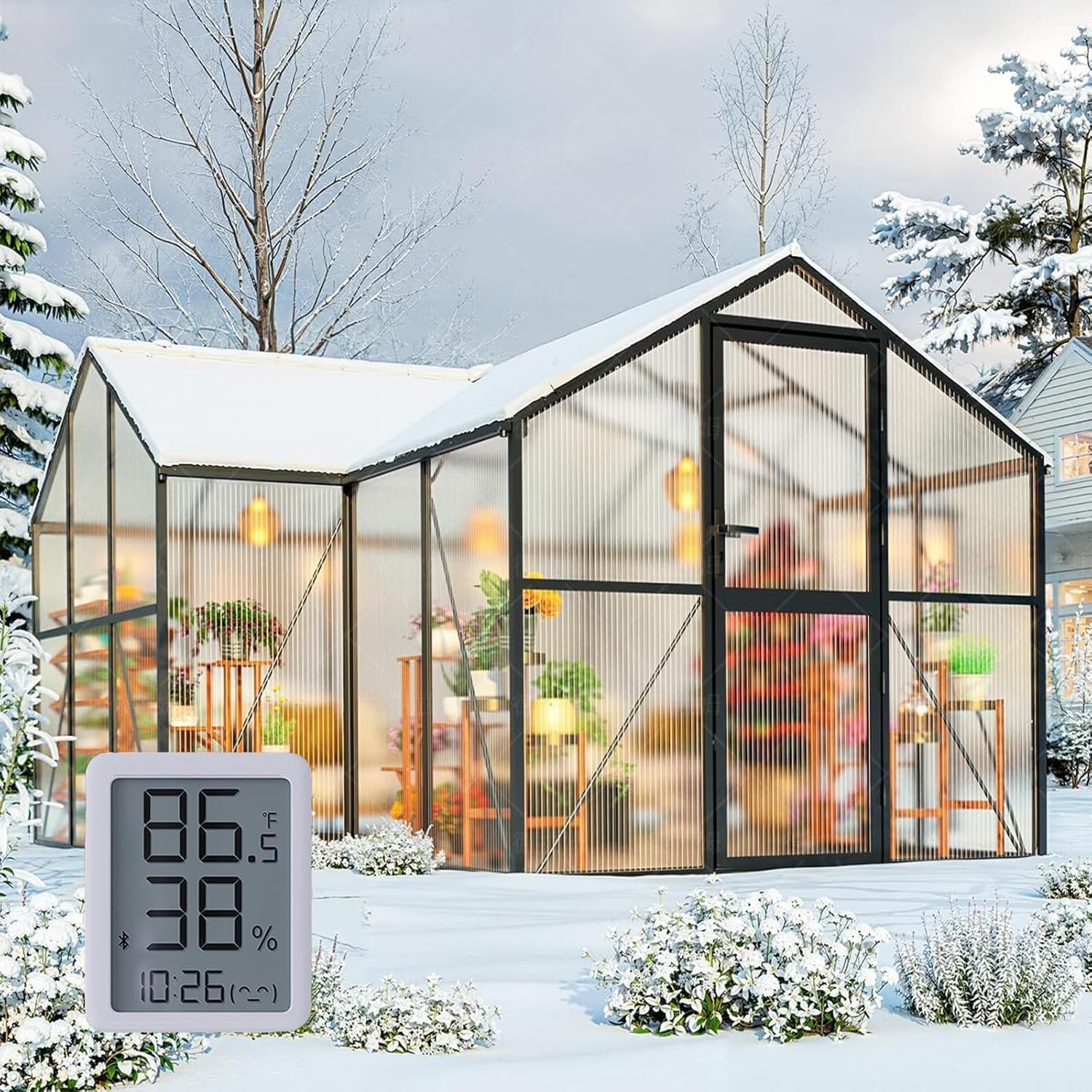
The Sylviera 12×12 FT T-Shape greenhouse offers a unique square footprint with 6 mm double-wall polycarbonate panels at an 1100-gram weight—significantly heavier and more rigid than the 720-gram panels on competing models. The T-shape design provides interior wall space for vertical growing or shelving without creating awkward corner dead zones. The reinforced aluminum alloy frame and strengthened corner brackets give the structure good lateral stability.
The adjustable roof vents and lockable door provide functional climate control, and the UV-resistant panels help maintain a stable interior temperature. A built-in hygrometer is a thoughtful addition for monitoring conditions at a glance. Assembly mirrors the challenges of other large kits: the protective film on both sides of the polycarbonate panels must be removed before installation—a step not clearly highlighted in the manual. Missing this step traps the film permanently under the aluminum channels.
The main concern is inconsistent panel fitment. Some owners report that panels do not properly seat in their slots, requiring tape to hold them in place and seal against insects. The door also has reported gap issues at the top and bottom. For growers who value heavy-gauge panels and a square layout that maximizes usable bench space, this unit offers strong material quality that is let down by manufacturing tolerance issues.
What works
- 1100g polycarbonate panels are very rigid
- Square T-shape layout maximizes usable space
- Built-in hygrometer included
What doesn’t
- Panel fit can be inconsistent
- Door may have significant gaps
- Protective film removal not mentioned in manual
Hardware & Specs Guide
Snow Load (PSF)
Snow load is measured in pounds per square foot and indicates how much weight the roof can support. A 10-foot by 12-foot greenhouse with a 20 PSF rating can theoretically support 2,400 pounds of snow across the entire roof. For zone 4 and above, look for 25 PSF minimum. The HOWE 10×18 leads this category at 30 PSF, while several units at 18-20 PSF will require manual snow clearing during heavy winter storms.
Polycarbonate Gram Weight
Gram weight per square meter is a more reliable indicator of panel quality than thickness alone. Standard panels are 720g/m². The upgrade to 1100g/m² (found on the Sylviera 12×12) delivers noticeably better rigidity, less bowing under wind pressure, and marginally better insulation. The premium tier jumps to 10 mm twin-wall panels at even higher gram weights, such as the Palram Canopia Glory, which approach the insulation value of double-pane glass.
FAQ
What size foundation do I need for a 10×12 commercial greenhouse?
Can I build a commercial greenhouse on grass or bare soil?
How many roof vents do I need for a 200-square-foot greenhouse?
Is aluminum or wood a better frame material for commercial greenhouses?
What is the difference between twin-wall and four-wall polycarbonate panels?
Final Thoughts: The Verdict
For most serious gardeners, the commercial greenhouse winner is the Backyard Discovery Bellerose XL because it arrives as a nearly complete system with power, water, ventilation, and shelving—no aftermarket upgrades required. If you want maximum panel insulation and a 10-year warranty, grab the Palram Canopia Glory 8×20. And for the highest snow load capacity and raw structural confidence, nothing beats the HOWE 10x18x8.4 FT.