
The single biggest mistake indoor plant owners make is treating their houseplants like outdoor garden beds. Standard garden soil compacts in a pot, trapping water against delicate roots and creating the perfect environment for rot and fungus gnats. A proper indoor mix must balance moisture retention, aeration, and drainage — three forces that work against each other in a closed container.
I’m Rikta — the co-founder and writer behind Lawn Gear Lab. I’ve spent hundreds of hours cross-referencing bag labels, studying the aeration profiles of different amendments, and analyzing thousands of owner reports to understand which potting blends actually deliver on their promises for container-grown houseplants.
Whether you’re nursing a finicky Monstera or a collection of succulents on a bright windowsill, the right soil for indoor plants determines whether your plants merely survive or actively push out new growth every month.
How To Choose The Best Soil For Indoor Plants
Indoor potting blends are engineered for a closed ecosystem. Unlike garden soil that relies on earthworms and microbes deep underground, a potted mix must do everything itself — drain excess water, hold enough moisture for roots to drink, and remain light enough for oxygen to reach the root zone. Here are the four specs that separate a great indoor mix from a soggy, bug-infested bag.
Texture and Aeration
Feel the bag before you buy — or read the ingredient list. A high-quality indoor mix feels coarse and crumbly, not dense and muddy. The presence of perlite (white volcanic glass chips), pumice, or coarse sand creates air pockets. Without these, water pools at the bottom of the pot and roots suffocate. For tropicals like pothos and philodendrons, aim for a mix that includes at least 15–20% perlite or pumice by volume.
Water Retention vs. Drainage
This is the central tension of any indoor potting blend. Coco coir and sphagnum peat moss hold water like a sponge, which is good for ferns and peace lilies that want consistently moist soil. Vermiculite also holds water but releases it slowly. Succulents and cacti need the opposite — fast-draining ingredients like sand, calcined clay, and pine bark. Check whether the bag specifies “for succulents” or “moisture control” and match it to your plant’s natural habitat.
Fungus Gnat Prevention
Fungus gnats lay eggs in consistently wet, organic-rich soil. Many indoor blends now explicitly note “no compost or bark” because uncomposted bark is a common gnat breeding ground. Blends that use peat moss, coco coir, and perlite without raw bark tend to be gnat-free out of the bag. If you already have gnats, a top dressing of sand or a blend with a higher mineral content can break their life cycle.
Nutrient Content and pH
Most indoor mixes include a starter charge of fertilizer that feeds the plant for 4–6 months. Blends labeled “organic” rely on slow-release sources like worm castings or compost. Check the bag for pH — most houseplants prefer a slightly acidic range of 5.5 to 6.5. Some specialty blends for African violets include garden lime to adjust pH for flowering performance. If you plan to supplement with liquid fertilizer, a neutral, low-nutrient base mix gives you full control.
Quick Comparison
On smaller screens, swipe sideways to see the full table.
| Model | Category | Best For | Key Spec | Amazon |
|---|---|---|---|---|
| Perfect Plants Indoor Plant Soil | Premium All-Purpose | Bug‑free repotting of common houseplants | Pine bark + coco coir + perlite blend | Amazon |
| Miracle-Gro Indoor Potting Mix (2‑Pack) | Mid-Range All-Purpose | General houseplant care with 6‑month feed | Peat moss + coco coir + perlite | Amazon |
| Espoma African Violet Mix | Specialty Flowering | African violets and flowering houseplants | Sphagnum peat + humus + perlite | Amazon |
| Midwest Hearth Premium Potting Soil Mix | Professional Base Mix | Seed starting and balanced all‑purpose use | Peat moss + vermiculite + perlite (pH controlled) | Amazon |
| Back to the Roots Worm Castings | Organic Amendment | Adding slow‑release nutrients to any mix | 5 lb pure vermicompost (no odor) | Amazon |
| Soil Sunrise Cactus & Succulent Mix | Specialty Succulent | Cacti, succulents, desert terrariums | Pine bark + silica sand + calcined clay | Amazon |
| Grow Queen All-in-One Organic Plant Food | Fertilizer Add-In | Quick feeding for 200+ plant collections | 7 single‑serve packets (treats 14 gallons) | Amazon |
In‑Depth Reviews
1. Perfect Plants Indoor Plant Soil

This professional-grade blend uses pine bark, coco coir, perlite, sand, and garden lime to create a texture that drains sharply while retaining just enough moisture for tropical houseplants. Owners consistently report zero fungus gnats — a direct result of the bark being fully composted and the mix lacking raw organic debris that attracts pests. The pH is buffered for a broad spectrum of plants including Monstera, Aloe, and Spider Plants.
The 4-quart bag is smaller than commodity brands, but the quality per quart is noticeably higher. The mix feels light and airy straight out of the bag, with no clumping or dust clouds. Because it drains quickly, you can water more frequently without fear of waterlogging, which makes it forgiving for newer plant parents who tend to overwater.
Some users find the bag size limiting for larger repotting projects — you’ll need two bags for a 10-inch pot. But for anyone who has battled gnats from cheaper big-box mixes, the premium is justified. This is the blend that experienced houseplant collectors reach for when they want reliable, consistent results from a single bag.
What works
- Bug-free out of the bag — no fungus gnats reported even after weeks of storage
- Light, airy texture that balances drainage and moisture retention for tropicals
- Pre-buffered pH eliminates the need for additional lime or acid adjustments
What doesn’t
- 4-quart bag is small for multiple large pots
- Premium-priced compared to mainstream brands on a per-quart basis
2. Miracle-Gro Indoor Potting Mix (2-Pack)
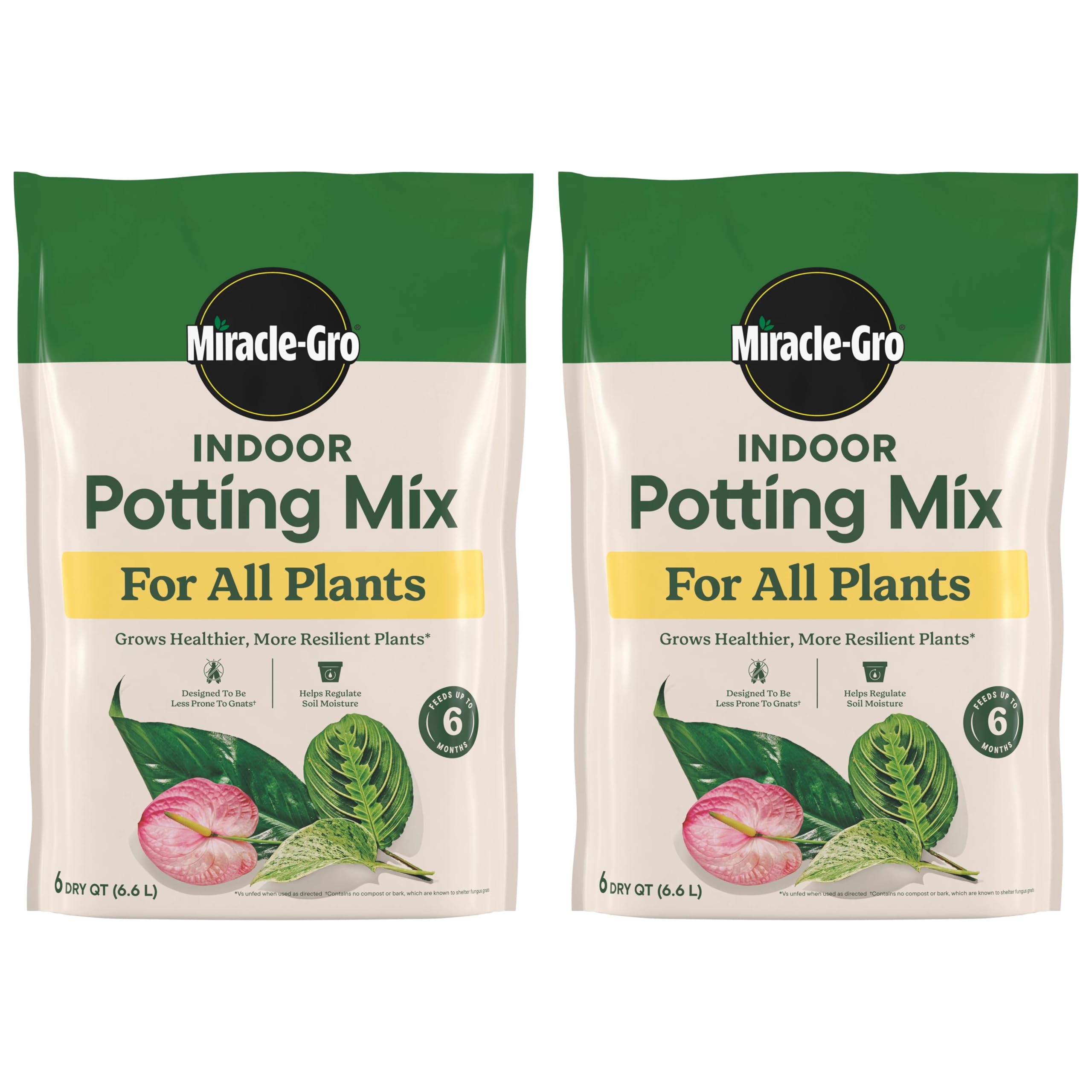
The go-to for many indoor gardeners because of its consistent, dependable texture and built-in fertilizer that feeds for up to six months. The blend of sphagnum peat moss, coconut coir, and perlite creates a lightweight medium that holds moisture well without becoming heavy or muddy. Unlike Miracle-Gro’s outdoor mixes, this indoor formula explicitly omits compost and bark to minimize the risk of fungus gnat eggs arriving in the bag.
Owners note that the texture is fine and fluffy, making it easy to work with during repotting. Plants settle quickly and show visible greenup within a week. The 6-quart bags are a practical size for filling four 6-inch pots, and the two-pack gives you a healthy reserve for seasonal repotting. Users transitioning from dense garden soil notice immediate improvement in root health.
Some bags arrive dusty, and a small number of users report consistent dustiness throughout the entire bag. The mix is also too moisture-retentive for cacti or succulents — stick to plants that like consistently damp roots. For broadleaf tropicals and foliage houseplants, this is the most reliable budget-friendly option on the market.
What works
- Built-in slow-release fertilizer eliminates the need to feed for six months
- Light, uniform texture that drains well without waterlogging for most houseplants
- No compost or bark significantly reduces the chance of bringing home gnats
What doesn’t
- Some bags are excessively dusty during handling
- Too moisture-retentive for succulents, cacti, and plants that prefer dry cycles
3. Espoma Organic African Violet Mix

Espoma has been formulating organic soil blends since 1929, and this African Violet Mix is a testament to that experience. The blend uses sphagnum peat moss, humus, perlite, and yucca extract — a natural wetting agent that helps water penetrate evenly rather than channeling down the sides of the pot. This is critical for shallow-rooted African violets that need consistent moisture at the crown level.
Reviews from long-time violet growers report that repotting into this mix alone can revive a 20-year-old plant that has stopped blooming. The pH is naturally acidic, which matches what flowering houseplants prefer for nutrient uptake. Because it contains no synthetic chemicals, it is safe for organic gardening setups. The 4-quart size is perfect for a few violet pots or a mix of small flowering houseplants.
The downside is narrow specialization — this is not a universal indoor mix. It works beautifully for African violets, begonias, and other flowering houseplants, but it retains too much moisture for succulents and lacks the aeration needed for large tropicals like Monstera. Stick to its intended use and your flowering plants will reward you with persistent blooms.
What works
- Yucca extract prevents water channeling and ensures even moisture distribution
- Rich organic formula revives struggling violets and promotes constant flowering
- No synthetic chemicals — fully compatible with organic gardening practices
What doesn’t
- Too moisture-retentive and dense for succulents or arid-loving plants
- 4-quart bag is a niche size, not economical for large-scale repotting
4. Midwest Hearth Premium Potting Soil Mix

This is the same formulation used by professional growers, and it shows in the ingredient precision. The blend of peat moss, perlite, and vermiculite is pH-controlled to a broad neutral range, making it suitable for everything from seed starting to mature houseplants. The 8-quart bag is a generous size for the price, and the resealable packaging keeps the mix fresh between uses.
Users describe the texture as light and fluffy — it does not harden around roots over time, which is a common failure of cheaper mixes. The vermiculite component adds a slow-release moisture buffer that is especially useful for plants in dry indoor air or for growers who cannot water daily. Germination tests with petunias and herbs showed fast, even sprouting with no damping-off.
No weeds, no bugs, and no strong odor are consistent themes in owner feedback. The bag is well-sealed and arrives fresh. The only caution is that this is a base mix with limited built-in fertilizer — you will need to supplement with liquid feed after the first few weeks. This gives experienced growers full control over their feeding schedule.
What works
- Professional-grade formulation with balanced pH for a broad range of plants
- Light, fluffy texture that resists compaction and supports vigorous root growth
- Resealable bag preserves moisture and prevents contamination during storage
What doesn’t
- No slow-release fertilizer included — requires supplemental feeding after transplant
- Some users find the price per quart higher than mass-market alternatives
5. Back to the Roots Organic Worm Castings

Worm castings are not a standalone soil but rather a soil amendment that transforms an average base mix into a nutrient-rich growing medium. This 5-pound bag of pure organic vermicompost provides a slow-release source of nitrogen, phosphorus, and potassium along with beneficial microbes that protect roots from pathogens. Because worm castings do not burn roots — even when used generously — they are safe for seedlings and sensitive houseplants.
The texture is fine and granular, blending easily into chunky mixes of coco chips, perlite, and charcoal without compacting the structure. Owners report noticeably greener leaves and stronger stem growth within a few weeks of mixing castings into their standard potting blend. The bag is resealable and stores well without losing potency.
Worm castings hold substantial moisture, so you must adjust your watering frequency when adding them to a mix. Overuse can make a blend too heavy for arid-loving plants. This product is best used as a 10–20% amendment to your base soil, not as a full replacement.
What works
- No-burn formula is safe for direct use with seedlings and sensitive roots
- Adds slow-release macro- and micronutrients that support sustained growth
- Mixes seamlessly into chunky or fine indoor blends without altering texture
What doesn’t
- Holds significant moisture — requires watering adjustments when added to mixes
- Not a complete potting solution; must be blended with a base soil or soilless mix
6. Soil Sunrise Cactus and Succulent Potting Mix
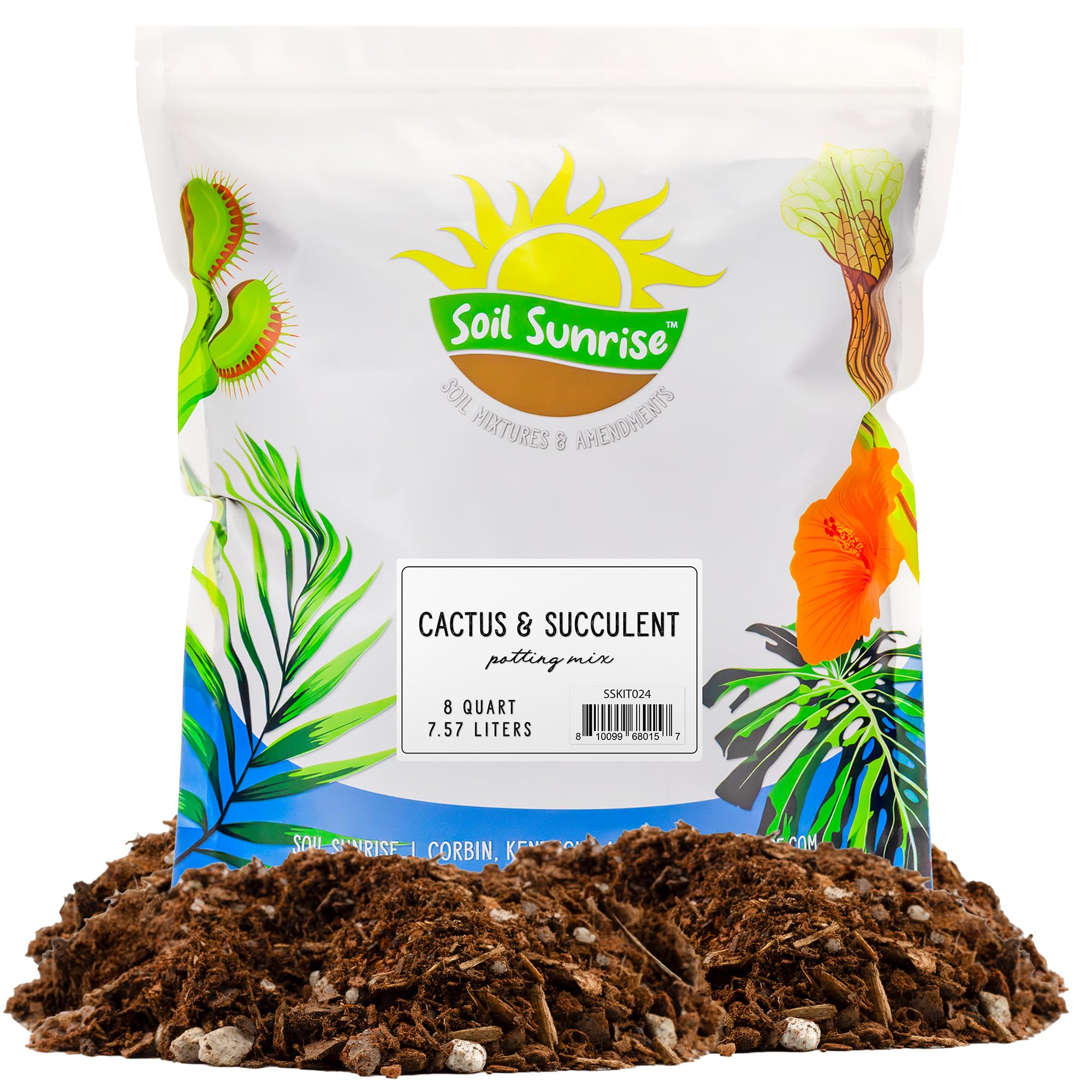
Mass-market cactus soils often look like regular potting soil with a bit of extra sand — this is not that. Soil Sunrise’s blend is a true gritty mix composed of pine bark, silica sand, calcined clay, and pumice. The particles are coarse and angular, creating large air gaps that drain water in seconds rather than minutes. This is the texture that mimics the rocky, fast-draining soil of a succulent’s native desert habitat.
Reviews from cactus collectors note that this mix requires no additional amendments — it is ready to use straight from the bag for most Echeveria, Haworthia, and barrel cacti. The 8-quart bag fits a 12-inch pot, giving you enough volume for a substantial container garden. Owners praise the total absence of gnats, funky smells, or mold, even when the bag is stored for weeks.
The coarse texture is not suitable for tropicals like ferns or calatheas that need consistent moisture. If you try to use this for a moisture-loving plant, it will dry out too quickly. For succulents, it is one of the best pre-mixed options available at this volume.
What works
- True gritty composition with pumice and calcined clay — not just sand-dyed potting soil
- Drains rapidly, preventing root rot even in deep succulent pots
- Hand-mixed quality control ensures consistent particle size and no pest eggs
What doesn’t
- Dries too fast for moisture-loving indoor plants like ferns or tropicals
- Premium-priced compared to standard cactus mixes from big-box brands
7. Grow Queen All-in-One Organic Plant Food

This is not a soil but a targeted fertilizer additive designed for plant owners who want precise feeding without mixing liquid concentrates. Each single-serve packet treats 1–2 plants or up to 14 total gallons of soil when used across the full box. The powder formula is organic and works as both a soil drench and a microbe inoculant that reduces transplant shock.
Users with large collections — the reviews mention collections of 200-plus plants — report quick, luscious growth after switching to this system. The packets are pre-measured, removing the guesswork that leads to overfeeding and root burn. Because it is a powder that you top-dress onto the soil surface, it works with any existing potting mix regardless of brand or texture.
The biggest limitation is that it only feeds — it does not improve aeration, drainage, or soil structure. If your base mix is compacted or waterlogged, this fertilizer will not fix it. It is an excellent companion product for use with any of the soils reviewed above, especially after the built-in fertilizer in those mixes has been depleted.
What works
- Pre-measured packets eliminate the need for mixing ratios or measuring spoons
- Organic formula supports strong root growth and reduces transplant shock
- Works with any soil type — no need to change your base mix to switch fertilizers
What doesn’t
- Only provides nutrients — does not improve soil aeration or drainage
- 7 packets run out quickly for large collections or multiple repotting sessions
Hardware & Specs Guide
Base Ingredients
Sphagnum peat moss, coco coir, and perlite form the foundation of most all-purpose indoor mixes. Peat moss is acidic and holds water well; coco coir is more pH-neutral and renewable; perlite adds physical air pockets. Blends heavy in bark or uncomposted organic matter carry a higher risk of introducing fungus gnat larvae. Premium mixes use fully composted pine bark or skip bark entirely.
pH and Nutrient Availability
Most houseplants prefer a soil pH between 5.5 and 6.5. Below 5.5, nutrient lockout — especially of calcium and magnesium — can cause leaf deformities. Above 7.0, iron and manganese become unavailable, causing chlorosis. Many premium mixes include garden lime to buffer pH upward or elemental sulfur to lower it. Always check the bag’s stated pH range before committing to a brand.
Fertilizer Charge Duration
All-purpose indoor mixes often include a starter fertilizer that feeds for 4 to 6 months. This charge is usually in the form of controlled-release coated prills or composted organic matter. After the charge depletes, you must supplement with liquid or granular fertilizer. Organic base mixes typically have a lower initial nutrient load but last longer when amended with worm castings or compost.
Moisture Management Additives
Vermiculite absorbs several times its weight in water and releases it slowly — ideal for ferns and plants in low-humidity homes. Sand, calcined clay, and pumice do the opposite: they create large pores that let water drain freely, which is essential for succulents and cacti. The ratio of these additives determines whether a mix is “moisture control” or “fast draining.”
FAQ
Can I use outdoor garden soil for my indoor potted plants?
Why do fungus gnats appear in some bagged potting mixes?
How often should I repot my houseplants with fresh soil?
What is the difference between perlite and vermiculite in a soil mix?
Final Thoughts: The Verdict
For most indoor gardeners, the soil for indoor plants winner is the Perfect Plants Indoor Plant Soil because it delivers a bug-free, professionally balanced texture that works across a wide range of popular houseplants without requiring amendments. If you want reliable performance at a lower price per pot, grab the Miracle-Gro Indoor Potting Mix (2-Pack). And for succulent enthusiasts who need gritty, fast-draining conditions, nothing beats the Soil Sunrise Cactus and Succulent Mix.