
A newly planted shrub wilting within days or a tray of seedlings stalling after transplant — these failures often trace back to a single bottleneck: underdeveloped root systems. A root stimulator delivers the specific hormones, vitamins, or beneficial microbes that drive root elongation and feeder-root density, which directly determines how well a plant uptakes water and nutrients during its most vulnerable establishment phase. Choosing the right formula requires matching the product’s mechanism to your specific planting scenario.
I’m Rikta — the co-founder and writer behind Lawn Gear Lab. My research on root stimulators involves cross-referencing formulation ratios, microbial spore counts, and active hormone concentrations against thousands of verified owner reports to find what actually reduces transplant stress and accelerates rooting across different plant types.
Whether you are starting seeds, transplanting perennials, or trying to save a struggling tree, this guide ranks the seven most effective formulas currently available to help you find the best root stimulator for plants for your specific growing conditions and budget.
How To Choose The Best Root Stimulator For Plants
Root stimulators fall into three distinct categories based on their active mechanism: synthetic rooting hormones, nutritional vitamin solutions, and biological inoculants. Each targets a different phase of root development, and the right choice depends on whether you are rooting cuttings, transplanting established plants, or building long-term soil biology.
Identify Your Primary Application
For vegetative cuttings and seed starting, synthetic hormones containing Indole-3-Butyric Acid (IBA) deliver the fastest measurable rooting response. For transplanting perennials, trees, and shrubs into the ground, a complete solution that combines IBA with a low-nitrogen, high-phosphorus fertilizer (such as a 4-10-3 ratio) supports both root initiation and early root energy. For building a resilient soil ecosystem, powdered mycorrhizal fungi and nitrogen-fixing bacteria create a symbiotic root network that persists long after a single application.
Check The Concentration And Mixing Ratio
The mixing ratio tells you how far a bottle goes. A concentrated liquid like SUPERthrive requires just 1/4 teaspoon per gallon, making a small bottle treat dozens of plants. Fertilome’s 32-ounce concentrate uses 3.5 tablespoons per gallon, which translates to roughly 12 gallons of finished solution. Powdered inoculants such as Xtreme Gardening Mykos apply at a rate of 1 tablespoon per transplant hole, with a 12-ounce bag covering hundreds of plants.
Evaluate The Nutrient Profile
Look for a low nitrogen content and a higher middle number (phosphate) in the N-P-K ratio during the root establishment phase. Nitrogen promotes leafy top growth, which shifts energy away from root expansion. A ratio like 4-10-3 provides enough phosphorus for root cell division without forcing unnecessary foliage. Biological products like Big Foot Gold and Mykos contain no synthetic fertilizer and instead rely on microbial partnerships that naturally boost nutrient uptake efficiency.
Quick Comparison
On smaller screens, swipe sideways to see the full table.
| Model | Category | Best For | Key Spec | Amazon |
|---|---|---|---|---|
| Fertilome 4-10-3 Concentrate | Liquid Hormone+Feed | Transplanting trees and shrubs | 1 Gal concentrated; 4-10-3 ratio | Amazon |
| Xtreme Mykos WP | Mycorrhizal Powder | Building long-term root networks | 12 oz; 4 species endo-mycorrhizae | Amazon |
| Xtreme Azos | Bacterial Inoculant | Nitrogen fixation between feeds | 12 oz; nitrogen-fixing bacteria | Amazon |
| Big Foot Gold Mycorrhizae | Powder Inoculant | High-value value per plant treated | 1 oz; 950 million spores/gram | Amazon |
| SUPERthrive Vitamin Solution | Liquid Vitamin Concentrate | Reducing transplant shock | 4 oz; 1 drop per 4 oz water | Amazon |
| Garden Safe TakeRoot Hormone | Powder Rooting Hormone | Rooting cuttings | 2 oz; 0.1% IBA powder | Amazon |
| Fertilome 10645 Starter Solution | Liquid Hormone+Feed | Entry-level transplant success | 32 oz; 3.5 tbsp per gallon rate | Amazon |
In‑Depth Reviews
1. Fertilome (10650) Root Stimulator & Plant Starter Solution 4-10-3

This gallon-sized concentrate delivers the most complete root support package for serious transplanting work. The formula combines Indole-3-butyric acid (IBA) — a synthetic auxin that directly triggers root cell division — with a balanced 4-10-3 fertilizer ratio that supplies phosphorus for energy transfer without pushing excessive top growth. The low nitrogen content prevents the leafy flush that often stresses newly planted trees and shrubs before their root systems can support it.
Owner reports consistently highlight its effectiveness on challenging sites. Users dropped a wilted, dug-up plant into diluted Fertilome and saw new growth within a week, while others credited it with finally triggering fruit production on a mature fig tree that had never produced before. The concentrated mixing ratio — 0.25 tablespoons per pint of water — makes this economical for large-scale planting projects, from vegetable gardens to orchard installations.
The 9.7-pound gallon jug is substantial, but the liquid formulation requires careful measuring and thorough mixing to avoid uneven application. Some users noted that the smell is strong, though it dissipates quickly after soil contact. For gardeners planting multiple trees, shrubs, or perennial beds each season, this represents the highest overall value in the root-stimulator category.
What works
- Dual-action IBA hormone plus phosphorus-rich feed accelerates root initiation and early energy.
- Gallon concentrate treats a high volume of plants at a low cost per dose.
- Proven performance reviving stressed transplants in poor clay soil.
What doesn’t
- Liquid concentrate must be measured precisely and can be messy to mix.
- The strong chemical odor may be off-putting in enclosed spaces.
2. Xtreme Gardening Mykos WP
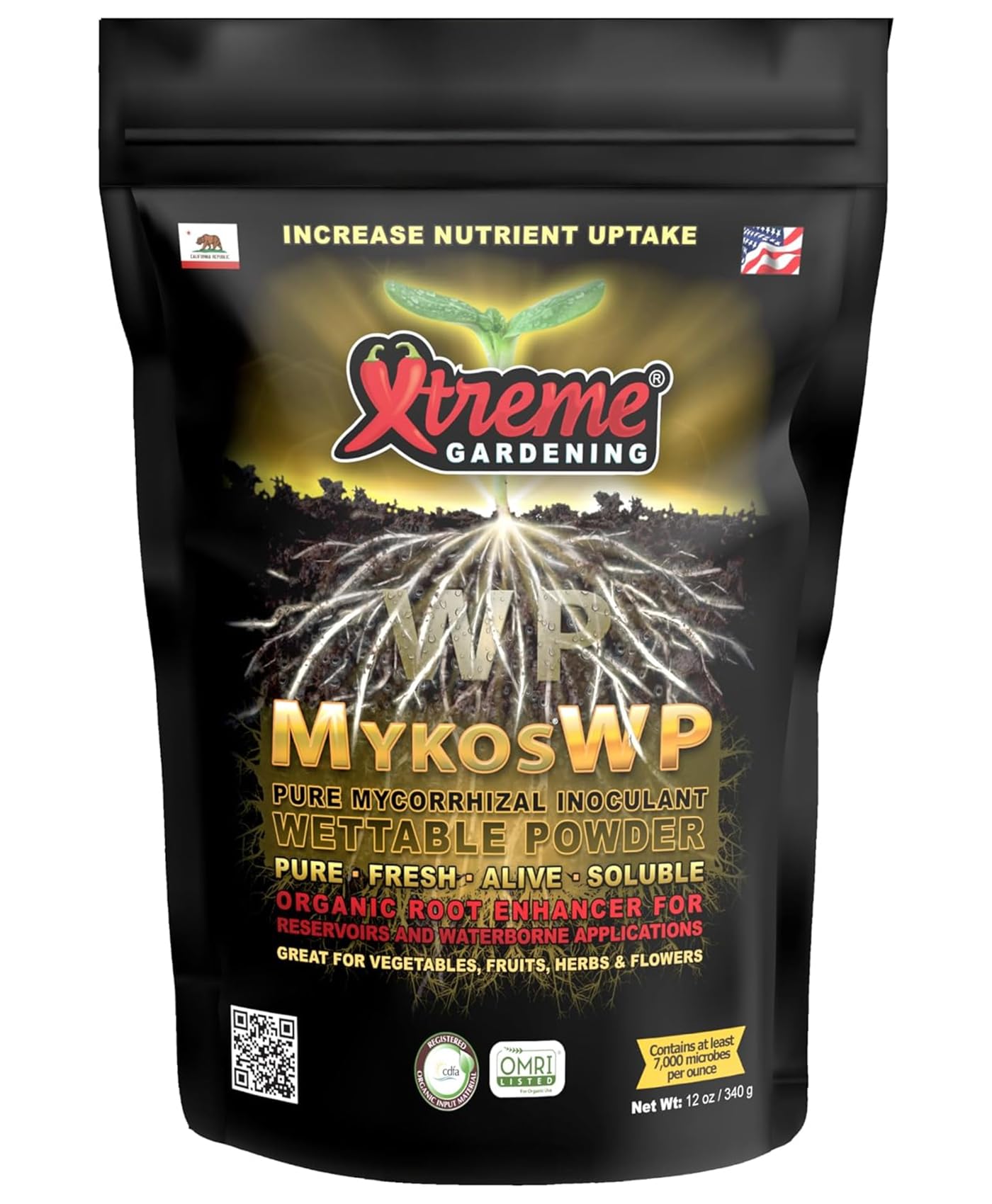
Xtreme Gardening Mykos WP is the benchmark for mycorrhizal inoculants in the home-garden market. This water-soluble powder contains multiple species of endomycorrhizal fungi that colonize root tissue and extend the plant’s effective root zone by orders of magnitude. The fungi trade water and phosphorus to the plant in exchange for carbohydrates, creating a symbiotic network that persists for the plant’s lifetime after a single application.
Verified owners report that this product delivers explosive root development when applied at transplant. Users mixing it into reservoir systems saw roots burst out of four-gallon autopots to the point where trimming was needed to prevent valve clogs, while greenhouse growers noted that plants established noticeably faster compared to untreated controls. The powder form allows direct root dipping or drench application, making it suitable for bare-root trees, seedlings, and hydroponic mediums.
The 12-ounce bag is the most cost-effective size, with a single application per transplant hole providing season-long benefits. Because Mykos is a biological product, it requires contact with the root zone at planting — you cannot simply top-dress it later. The powder is best kept dry between uses, and it should not be mixed with products containing Trichoderma, which feeds on mycorrhizal fungi.
What works
- Single application creates a permanent symbiotic root-fungal network that lasts the plant’s life.
- Water-soluble formulation works in soil, soilless mixes, and hydroponic reservoirs.
- Massive root response reported in both pots and in-ground applications.
What doesn’t
- Requires direct root contact at transplant; cannot be effectively applied later.
- Incompatible with Trichoderma-containing products if applied simultaneously.
3. Xtreme Gardening AZOS
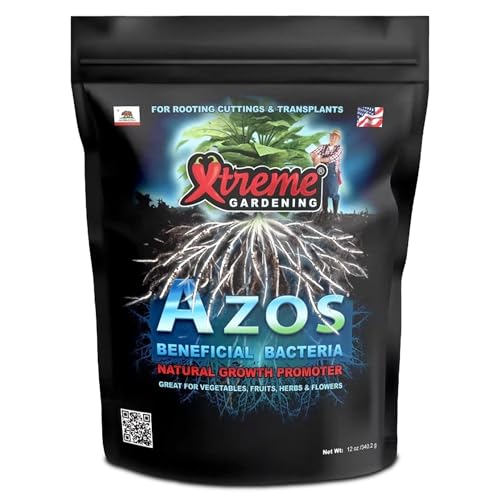
Azos addresses a different bottleneck than hormone formulas and mycorrhizal fungi: atmospheric nitrogen conversion. This powdered bacterial inoculant contains beneficial microbes that capture nitrogen gas from the air and convert it into a plant-usable form, effectively moderating nitrogen levels between fertilizer applications. For growers who want steady, consistent growth without the boom-and-bust cycle of synthetic nitrogen feeds, Azos provides a biological buffer.
Users report that Azos works best as a companion to Mykos rather than a standalone product. The two are frequently applied together — Mykos for phosphorus and water access, Azos for steady nitrogen — which creates a complete biological support system. Verified transplant logs show that plants receiving both treatments grew larger and remained consistently healthier across the full growing season compared to untreated plants. The product also reduces transplant shock when applied to the root ball during repotting.
The 12-ounce bag has a long shelf life if kept dry, and the application rate is economical. One potential drawback is that bacterial inoculants are less immediately dramatic than hormone-based stimulators — the effects are cumulative over weeks rather than visible in days. This product is best suited to gardeners who are already using biological soil management and want to add nitrogen-fixing capacity to their regimen.
What works
- Provides steady biological nitrogen fixation between synthetic fertilizer applications.
- Pairs synergistically with mycorrhizal inoculants for complete root support.
- Reduces transplant shock and promotes consistent growth across the season.
What doesn’t
- Results are gradual and less visually dramatic than synthetic hormone formulas.
- Requires proper storage to maintain bacterial viability.
4. Big Foot Gold Mycorrhizal Fungi 3-in-1
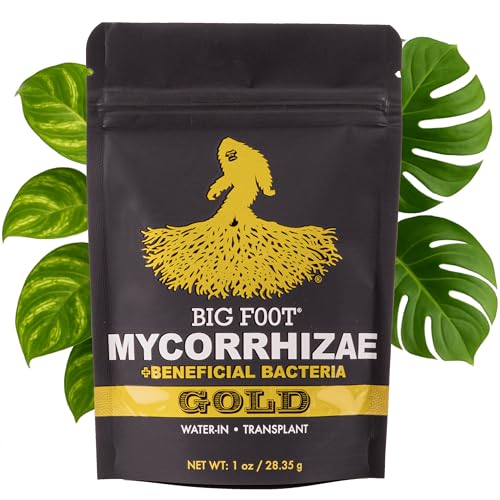
Big Foot Gold positions itself as the highest-concentration mycorrhizal product on the market, with 950 million bacillus and mycorrhizal fungi spores per gram — significantly higher than many competitors. This one-ounce powder is designed to treat up to 1,100 four-inch plants, making it the most space-efficient option for small-space gardeners who need maximum coverage from a tiny package. The formula is compatible with soil, hydroponics, and soilless mediums.
Verified users report that Big Foot Gold creates an extensive root web that noticeably boosts nutrient and water uptake. The product is made in the USA by a company with over 35 years of mycorrhizal research, and the company specifically markets its product without Trichoderma based on research that Trichoderma can feed on mycorrhizae when applied simultaneously. Users in the Pacific Northwest noted visible white mushroom fruiting in treated soil, confirming active fungal colonization.
The one-ounce bag mixes at a rate of one teaspoon per two gallons of water. While the concentration is impressive, the small package means you are paying a premium per ounce compared to the larger Xtreme Gardening Mykos bag. For gardeners with very large planting areas, the 12-ounce Mykos bag offers a better cost-to-volume ratio. Big Foot Gold is ideal for container growers and those who prioritize absolute spore-count-per-plant metrics.
What works
- Highest spore concentration per gram among top mycorrhizal products.
- One-ounce bag treats over 1,100 small plants — excellent for seed starts.
- Compatible with hydroponic and soilless growing systems.
What doesn’t
- Small package has a higher cost per ounce than larger mycorrhizal options.
- Fungal colonization requires consistent moisture for best establishment.
5. SUPERthrive The Original Vitamin Solution

SUPERthrive is not a rooting hormone in the traditional sense — it is a plant vitamin solution that includes kelp-derived nutrients and hormones designed to reduce transplant shock and build overall plant vigor. The concentration is extreme: one drop per four ounces of water, or one-quarter teaspoon per gallon. This makes the four-ounce bottle last through an entire season of regular maintenance applications, which explains why it has remained a staple in serious plant care for decades.
Owner reports describe dramatic recovery effects. One user brought Ligustrum shrubs back from freeze damage and reported grass growing so aggressively they needed goats to manage it. Another described plants looking noticeably greener and more turgid the day after application. The solution works across indoor and outdoor settings, making it versatile for houseplant enthusiasts and vegetable gardeners alike. Users combining it with Leca (lightweight expanded clay aggregate) for hydroponic propagation noted faster rooting times.
SUPERthrive does not have an N-P-K fertilizer value, so it functions as a supplement rather than a complete feed. The strong smell is a consistent complaint, though it fades quickly. For pure root initiation from cuttings, an IBA-based product will produce faster results. SUPERthrive shines as a recovery aid and general metabolic booster for stressed or newly transplanted plants throughout the season.
What works
- Extreme concentration makes a small bottle last a full season for multiple plants.
- Effective at reducing transplant shock and aiding recovery from freeze or drought stress.
- Safe for both indoor houseplants and outdoor landscape plants with no fertilizer burn risk.
What doesn’t
- Strong ammonia-like odor during mixing can be unpleasant.
- Not a standalone rooting hormone for cuttings; works best as a supplement.
6. Garden Safe Take Root Rooting Hormone

Garden Safe Take Root is the dominant entry-level rooting hormone in the consumer market, and its popularity is earned through simplicity. The powder contains 0.1% Indole-3-Butyric Acid (IBA), the same synthetic auxin used in professional cloning operations, at a concentration that is safe for home use with most common plant varieties including roses, African violets, philodendrons, and woody ornamentals. The process is straightforward: cut a stem, dip the wet end into the powder, and plant it in growing medium.
Verified owner feedback reveals a split in performance expectations. Users who dip cuttings directly into the powder and place them in a moist medium report consistent success, especially with rose cuttings. However, experienced propagators note that Take Root works best when combined with a gel rooting compound to create a paste — one user achieved a 100% success rate with that method but rated the powder as mediocre when used alone. The product dissolves quickly when mixed into water for soaking transplanted tree roots, with one user reporting that all four of their pencil holly and fig tree transplants survived a summer drought.
The two-ounce canister is compact and easy to store, but the powder can clump if moisture gets inside. Gardeners who want a single product that handles both cuttings and transplant drenches may find the Fertilome liquid concentrates more versatile. For pure vegetative propagation, however, this remains one of the most accessible and cost-effective options available.
What works
- Simple dip-and-plant application ideal for beginners rooting cuttings.
- Dissolves quickly when mixed with water for transplant drenching.
- Effective on a wide range of popular houseplant and garden species.
What doesn’t
- Powder can clump if exposed to humidity; requires careful storage.
- Performs noticeably better when combined with a gel rooting compound.
7. Voluntary Purchasing Group Fertilome 10645 Root Stimulator

This 32-ounce entry from Fertilome delivers the same core IBA-plus-fertilizer formula as the gallon-sized premium version but in a smaller, more accessible package. The 4-10-3 ratio provides the same phosphorus-focused root support, and the active ingredient is the same Indole-3-butyric acid that stimulates root cell division. The key difference is scale — this bottle uses 3.5 tablespoons per gallon of water, yielding roughly 12 gallons of finished solution, which is ideal for small to medium gardens with a few trees and shrubs.
Real-world owner reports confirm that this formula saves transplants from shock effectively. One user reported that Fertilome saved all eight transplanted Mexican palms from stress, whereas four of six previous palm transplants without the product had failed. Another user saved a volunteer maple sapling with poor roots by using the solution at planting and through the first winter; the tree leafed out fully by late April. The gentle formula works across multiple plant types including hydrangeas, annuals, and perennials.
At this size, the cost per gallon of mixed solution is slightly higher than buying the gallon concentrate, but the entry point is lower for gardeners who only need a season’s worth. The mixing ratio requires careful measurement, and the liquid can be messy to pour. For gardeners expanding their planting area or establishing multiple new beds each year, the premium gallon version offers better long-term economies of scale.
What works
- Proven IBA-plus-fertilizer formula that reliably reduces transplant shock.
- Gentle enough for a wide range of plants including sensitive perennials.
- Smaller bottle ideal for gardeners with modest planting needs each season.
What doesn’t
- Higher cost per gallon of mixed solution compared to the larger gallon concentrate.
- Liquid measuring and mixing can be messy without a dedicated container.
Hardware & Specs Guide
IBA Concentration Levels
Indole-3-Butyric Acid (IBA) is the synthetic auxin most commonly used in root stimulators. Consumer products typically range from 0.1% IBA in powder rooting hormones (Garden Safe Take Root) to higher concentrations in liquid formulas like Fertilome. Higher IBA percentages accelerate root initiation on cuttings but risk stem damage on sensitive softwood species, which is why most liquid fertilizers keep IBA at a level optimized for drench application rather than dip use. Always check the active ingredient percentage before using on delicate plants.
Mycorrhizal Spore Counts
Biological inoculants are measured by spores per gram or propagules per gram. Big Foot Gold advertises 950 million spores per gram, while other products like Xtreme Gardening Mykos list propagule counts that vary by batch. More spores per gram means less physical product needed per transplant hole, but spore viability depends on storage conditions — heat and humidity degrade fungal propagules rapidly. Store powder inoculants in a cool, dry location and use within one growing season for best colonization rates.
FAQ
Can I use a root stimulator on all types of plants?
How often should I apply a root stimulator to new transplants?
What is the difference between mycorrhizae and rooting hormone?
Final Thoughts: The Verdict
For most gardeners, the root stimulator for plants winner is the Fertilome 4-10-3 Concentrate because it combines a proven IBA rooting hormone with a phosphorus-focused fertilizer in a gallon-sized concentrate that delivers the best cost-per-plant value. If you want to build long-term soil biology and root resilience, grab the Xtreme Gardening Mykos WP for its permanent mycorrhizal colonization. And for rooting vegetative cuttings on a budget, nothing beats the simplicity of the Garden Safe Take Root Hormone.