
Aroids — Monsteras, Philodendrons, Alocasias, and Anthuriums — evolved clinging to tree bark in tropical forests, not sitting in dense, waterlogged bagged soil. The difference between a plant that pushes out fenestrated leaves within weeks and one that slowly develops yellowing, mushy stems is almost always the mix you choose. A chunky, well-aerated substrate that drains fast while retaining enough moisture between waterings isn’t a luxury for these plants; it’s the single most critical factor determining whether their roots breathe or rot.
I’m Rikta — the co-founder and writer behind Lawn Gear Lab. I’ve spent hundreds of hours cross-referencing ingredient compositions, particle size distributions, and aggregated owner feedback on moisture retention, pest issues, and plant growth response across the most popular aroid soil blends on the market.
After researching dozens of formulas, I’ve narrowed the field to the seven mixes that deliver the right balance of drainage, aeration, and nutrition. This guide breaks down everything you need to find the best aroid soil mix for your specific collection and watering habits.
How To Choose The Best Aroid Soil Mix
Selecting an aroid-specific mix means moving past general-purpose potting soil. Aroids require open, chunky structures that mimic their natural epiphytic habitat — clingy roots that need high oxygen exchange and the ability to dry out between waterings. The wrong mix leads to compaction, poor drainage, and eventual root rot. Here are the three core factors to evaluate.
Ingredient Profile & Particle Size
The ideal aroid blend includes a mix of large, irregular particles that create air pockets: pine bark fines, coco chips, pumice, lava rock, or LECA (clay pebbles). Fine materials like coco coir and peat moss belong in the mix only as moisture-holding components, not as the majority. A ratio of roughly 50–60% chunky material to 40–50% fine organic matter is the sweet spot. Blends that feel dusty or look uniform like coffee grounds lack the drainage structure aroids demand.
Peat-Free vs. Peat-Based Formulas
Many premium aroid mixes have moved away from peat moss due to environmental concerns related to peat harvesting from sensitive wetlands. Peat-free alternatives use coco coir, biochar, or tree fern fiber as the primary moisture-retentive base. These alternatives often provide better pH neutrality (around 6.0) and superior re-wettability compared to peat. However, some growers still prefer peat-based blends for their consistent moisture buffering — the choice depends on your watering frequency and environmental values.
Added Nutrition & Biological Activity
High-quality aroid soils often include slow-release nutrients like worm castings, mycorrhizal fungi, and compost. These components reduce the need for immediate fertilizing and support healthy root microbiomes. Beware of mixes that rely on synthetic fertilizer salts, which can burn sensitive aroid roots. A blend with visible organic matter and no chemical smell is a strong indicator of quality. For most aroids, a nutrient-rich mix that feeds for at least four to six weeks post-repotting is ideal.
Quick Comparison
On smaller screens, swipe sideways to see the full table.
| Model | Category | Best For | Key Spec | Amazon |
|---|---|---|---|---|
| Craft Aroid Mix (Grow Queen) | Premium Mix | Peat-free, pH-neutral blend | NZ Tree Fern Fiber, Pumice | Amazon |
| DUSPRO 7-in-1 Mix | Mid-Range | Versatile all-purpose aroid use | 7 Ingredients + Gypsum | Amazon |
| DUSPRO 8-in-1 Recycle Mix | Mid-Range | Open structure for heavy feeders | Coco Chips, LECA, Zeolite | Amazon |
| Rosy Soil Aroid Mix | Premium Mix | Microbially active living soil | Biochar, Mycorrhizae, 4qt | Amazon |
| Top Tier Genetics Aroid Blend | Premium Mix | Root & foliage growth boost | Biochar, Mycorrhizae, Orchid Bark | Amazon |
| Perfect Plants Aroid Mix | Premium Mix | Large repotting projects | 8qt Bag, Charcoal + Sponge Rock | Amazon |
| Sol Soils Chunky Mix | Premium Mix | Peat-free sustainable choice | LECA, Recycled Forest Products | Amazon |
In‑Depth Reviews
1. Craft Aroid Potting Mix (Grow Queen)
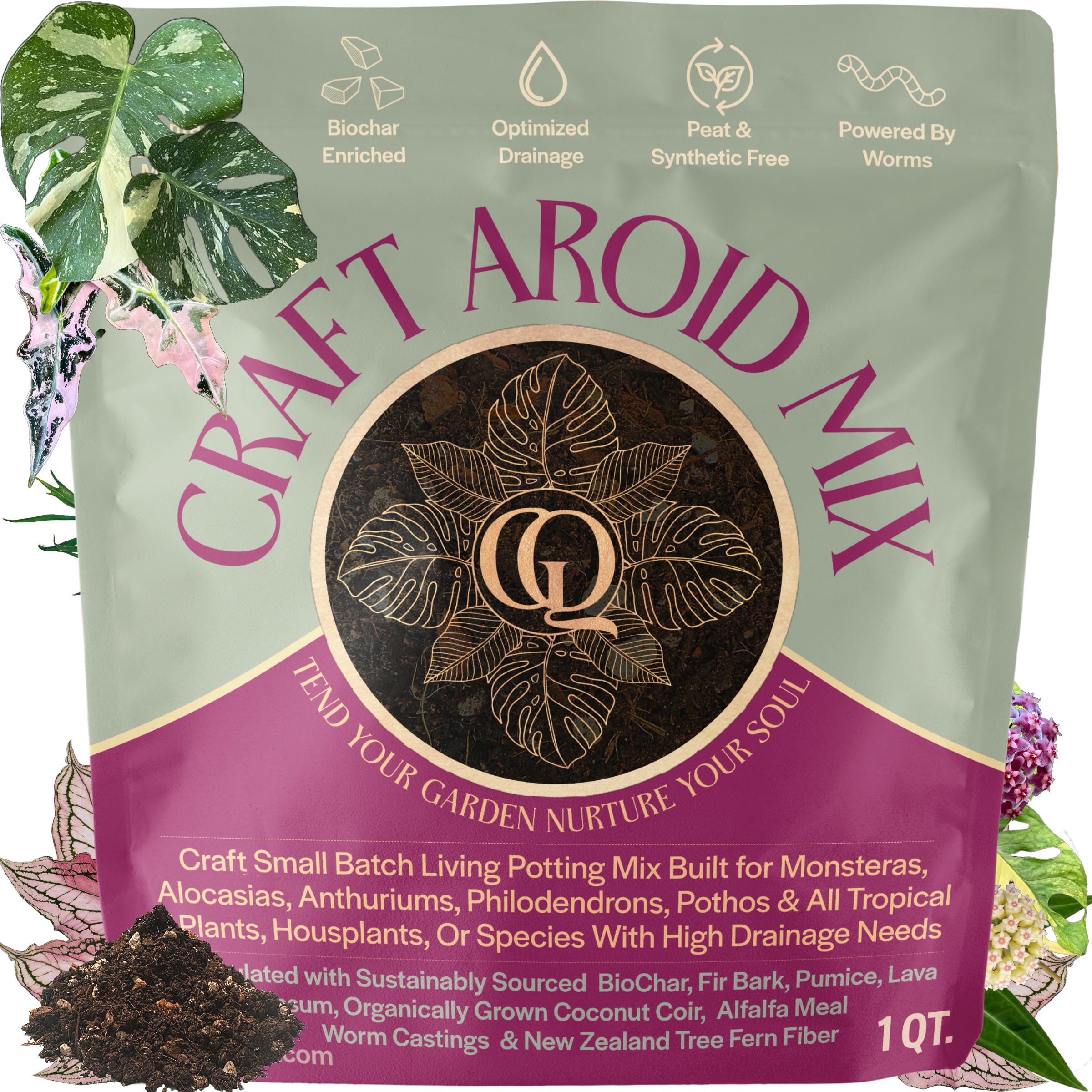
This blend from Grow Queen is a standout for growers who want a fully peat-free, perlite-free formula that still delivers outstanding drainage and moisture balance. The inclusion of New Zealand Tree Fern Fiber is a rare and potent addition — it acts as a natural soil conditioner while pulling the pH down to 6.0, matching the native acidity aroids evolved with. Pumice and lava rock replace perlite entirely, offering heavier, non-floating particles that stay evenly distributed in the pot rather than migrating to the surface each time you water.
Owner feedback consistently highlights the fluffy, chunky texture straight out of the bag — users report no dust, no compaction, and visible root colonization within a few weeks. The coco coir base is sourced from certified organic farms and triple-washed to remove salt residues, a common source of browning leaf tips in cheaper mixes. It also comes pre-moistened and ready to use, saving the messy step of hydrating dry coco coir yourself. The 1-quart size is compact but ideal for repotting two to three 6-inch pots.
The only real constraint is the bag volume — for large 8-inch or bigger pots, you’ll need multiple bags, which raises the overall cost. But for the quality of ingredients and the convenience of a mix that requires zero amending, this is the most thoughtfully formulated option available for aroid collectors who prioritize a clean, bioactive, peat-free substrate.
What works
- New Zealand Tree Fern Fiber neutralizes pH and conditions soil naturally
- Peat-free and perlite-free with pumice and lava rock for stable structure
- Triple-washed, certified organic coco coir with no salt residue
What doesn’t
- 1-quart bag size requires multiple purchases for larger pots
- Premium price point per quart compared to bulk options
2. DUSPRO 7-in-1 Pre-Mixed Aroid Potting Mix
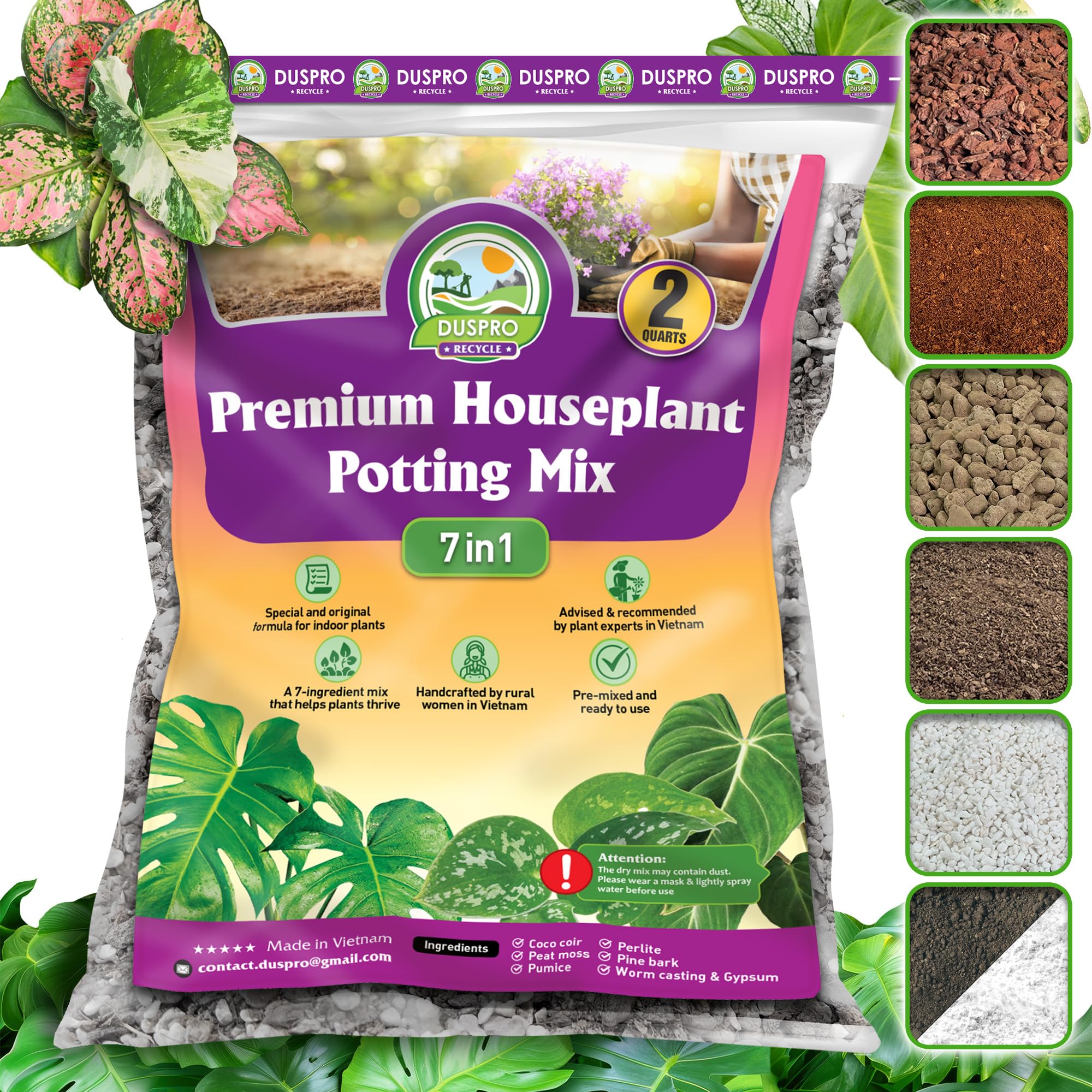
DUSPRO’s 7-in-1 blend is the most complete mid-range option, combining coco coir, peat moss, perlite, pumice, worm castings, pine bark, and gypsum into a single, ready-to-use bag. The inclusion of gypsum is a smart touch — it provides calcium and sulfur while improving soil structure and helping to neutralize excess sodium that can accumulate in indoor pots. The mix is hand-crafted and shipped directly from Vietnam, which explains the slightly longer delivery window but also the careful consistency.
Users praise its ability to hold moisture without becoming soggy — coco coir and peat handle the retention side, while pumice and perlite create the drainage channels. Reviews note that Monsteras and Philodendrons show new growth within weeks, and the blend supports a wide range of plants beyond aroids, including herbs and flowering annuals. The 2-quart size is practical for a few pots, and the 8-quart and 20-quart options scale affordably for larger collections.
The main drawback reported is dustiness — the mix can produce fine particles that settle at the bottom of the bag. Shaking it well before use and misting lightly during potting minimizes the issue. Some owners also note that the peat content means it’s not a fully peat-free mix, which may be a consideration for eco-conscious buyers.
What works
- 7-ingredient formula with gypsum for structure and calcium
- Available in sizes from 1 quart to 20 quarts for all collection scales
- Hand-blended for consistency across batches
What doesn’t
- Noticeable dust from fine particles in the bag
- Not peat-free, which may conflict with sustainability goals
3. DUSPRO 8-in-1 Recycle Aroid Mix
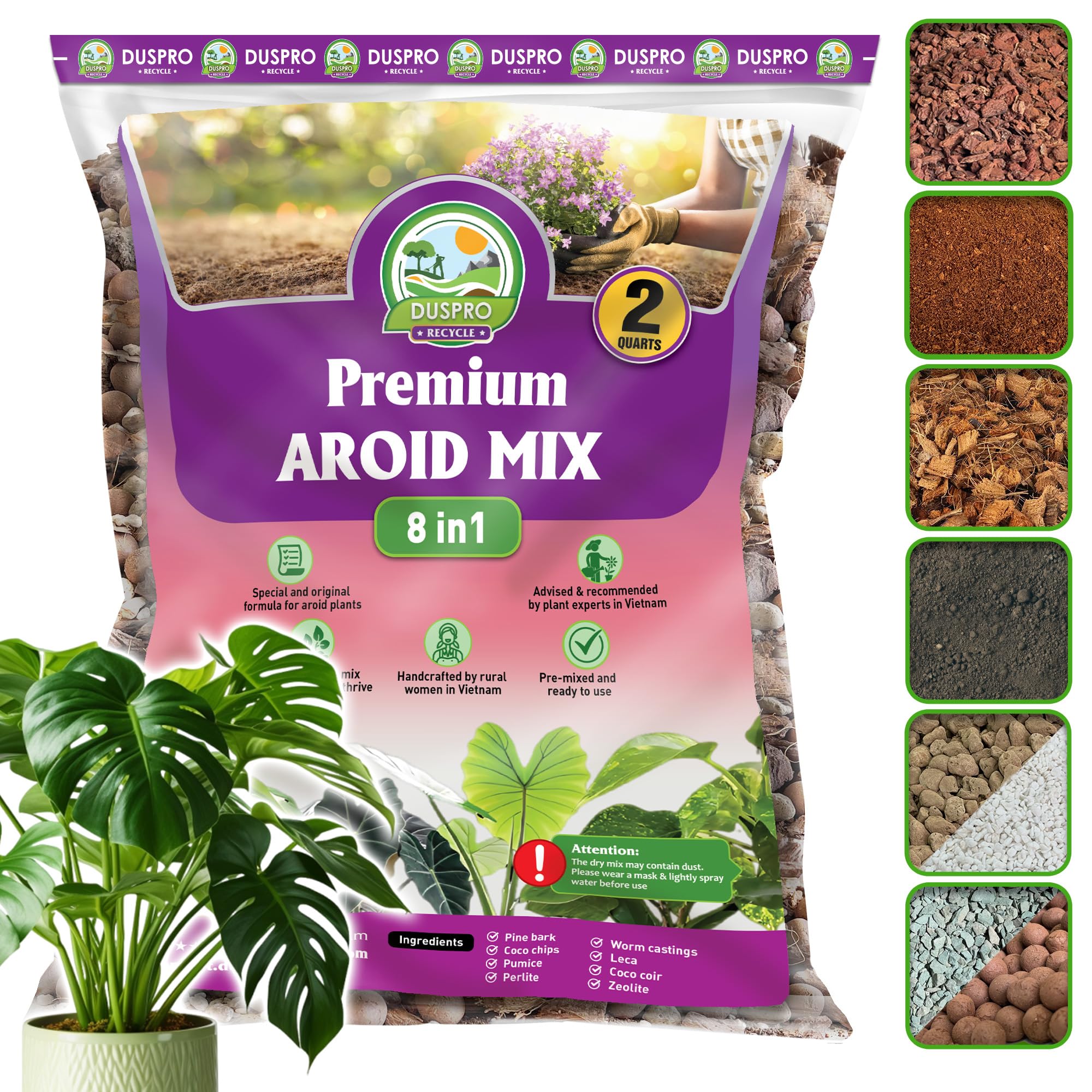
This 8-in-1 iteration from DUSPRO pushes the chunky factor further than the 7-in-1 sibling by incorporating coco chips, LECA (clay pebbles), and zeolite alongside the standard pine bark and pumice. The inclusion of LECA is notable — these lightweight clay pebbles create visible air pockets throughout the pot, which benefits aroids with thick, fleshy root systems like Alocasias and Anthuriums that are especially sensitive to compaction. Zeolite acts as a natural mineral that traps nutrients and slowly releases them, reducing the frequency of fertilizing.
Feedback from owners reflects strong satisfaction with this blend for faster-growing aroids — multiple reviews mention new leaves unfurling within three to four weeks of repotting. The mix is notably dry and open out of the bag, which means it’s ideal for growers who tend to water on the heavier side, since the excess moisture drains through quickly. The 2-quart bag is economical and stretches further than expected because of the fluffy particle structure.
The trade-off is that this mix is so open and fast-draining that it may dry out too quickly for growers in very low-humidity environments or those who prefer long intervals between watering. A small percentage of the bag may also contain fine dust toward the end — wearing a mask during potting is sensible. For those who prioritize maximum aeration over moisture retention, this is the most structurally open blend in the lineup.
What works
- LECA and coco chips create exceptional air pockets for thick roots
- Zeolite provides sustained nutrient release and pH buffering
- Very forgiving for over-waterers due to rapid drainage
What doesn’t
- Dries out quickly in dry indoor air or low humidity
- Some dust toward the bottom of the bag
4. Rosy Soil Aroid Soil Mix
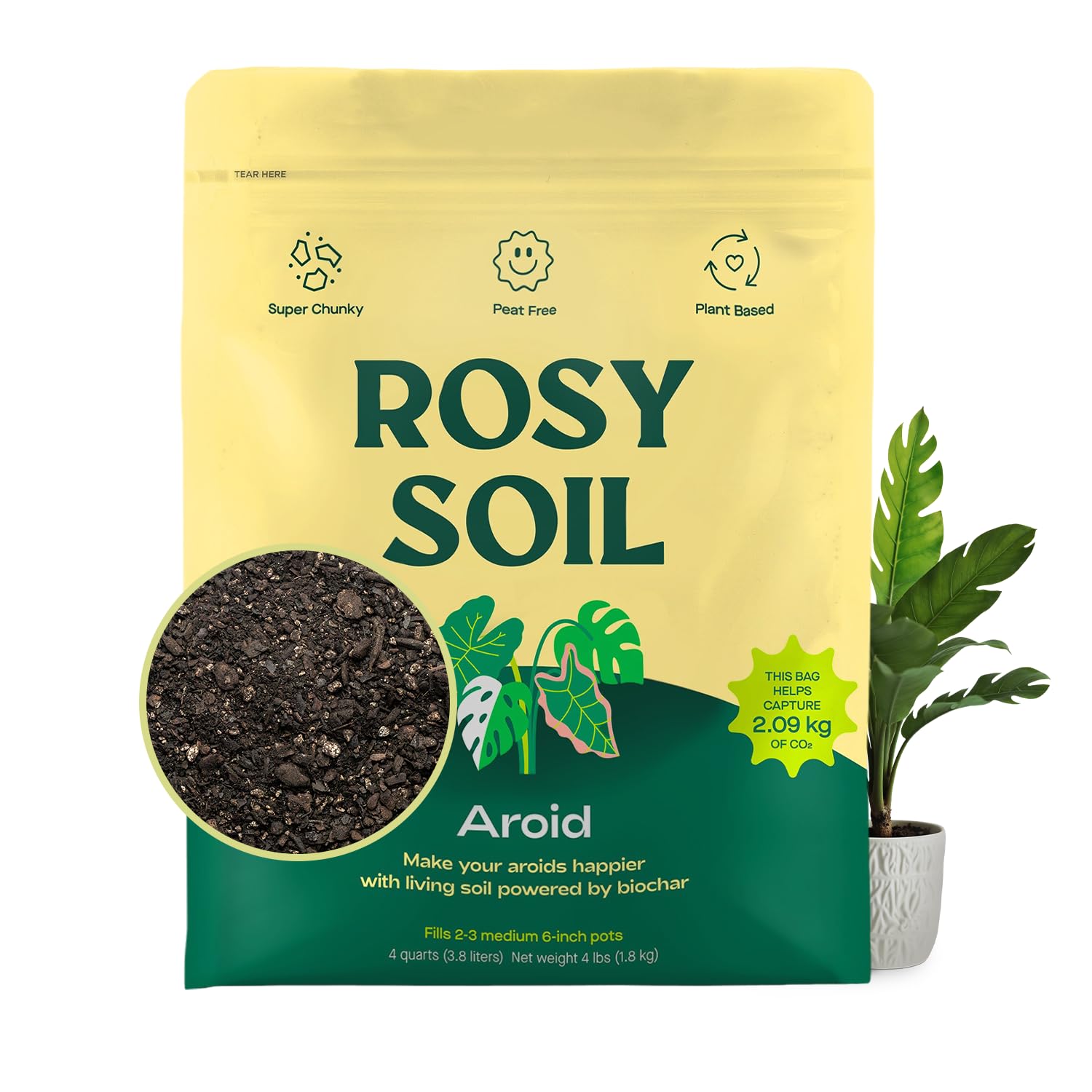
Rosy Soil takes a biologically-driven approach to aroid mixes by enriching their blend with horticultural biochar, mycorrhizal fungi, compost, and worm castings. Biochar is the standout ingredient here — it’s a form of charcoal that hosts beneficial microbes in its porous structure while sequestering carbon from the atmosphere, making this one of the few carbon-negative potting soils available. The blend is peat-free, using pumice and pine bark fines to create a chunky but not massive particle profile.
Owner reviews consistently highlight rapid recovery in plants that were previously struggling — one user described a stagnant Philodendron that put out new growth within a week of switching to this soil. The mix also appears to suppress fungus gnat infestations, likely due to the living microbial community outcompeting pest larvae. The 4-quart resealable bag is a thoughtful detail, as it preserves moisture and freshness between uses, and the size fills two to three 6-inch pots comfortably.
Some owners note that the texture is not as aggressively chunky as some other blends — it resembles a rich, dark garden soil with visible particles rather than a loose bark-based mix. This means it retains slightly more moisture than the most open blends, which could be an issue for growers who are especially heavy-handed with watering. But for those who want a bioactive, peat-free mix that feeds the soil food web as much as the plant itself, Rosy Soil is the most ecologically advanced choice.
What works
- Biochar and mycorrhizae create a living, self-regulating soil environment
- Carbon-negative production with no peat moss
- Resealable bag maintains moisture and freshness between uses
What doesn’t
- Less chunky texture than some other premium aroid blends
- Higher cost per quart compared to simpler mixes
5. Top Tier Genetics Aroid Soil Blend
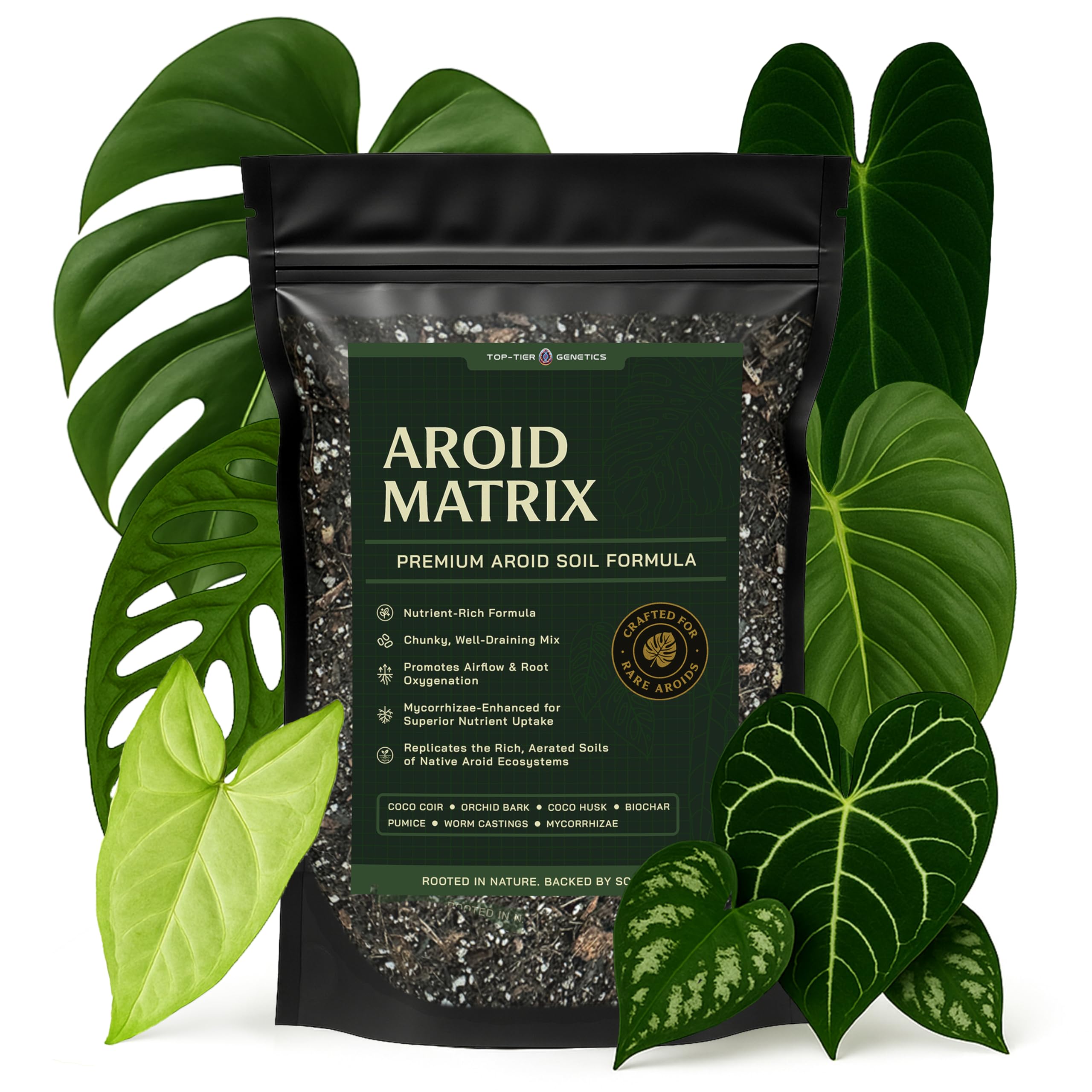
Top Tier Genetics has formulated this blend specifically for aroid enthusiasts who want maximum root and foliage growth stimulus. The mix incorporates orchid bark, coco husk, and pumice for drainage, while biochar and mycorrhizae provide the long-term biological support that drives vigorous root colonization. The formula is designed to be used straight out of the bag with no additional amendments, and the 2-quart size is well-suited for smaller to medium-sized collections.
Users report rapid turnaround after repotting — plants that were stagnant or slow-growing often show new leaves within a week, with root systems that aggressively fill the pot. The blend is airy and lightweight, with a visible bark content that creates distinct air channels without being too coarse for smaller pots. Many owners appreciate that it doesn’t require mixing in extra perlite or orchid bark, which is a common complaint with cheaper soils.
The primary limitation is bag size — at 2 quarts, you’ll need multiple bags for larger projects or deep pots. The price per quart is also on the higher side, reflecting the specialized ingredient list. But for growers who have struggled with weak growth or root issues in the past and want a blend that consistently pushes new development, this is the most targeted option for yield-focused indoor plant parents.
What works
- Orchid bark and coco husk create large, stable air pockets
- Mycorrhizae and biochar drive rapid root colonization
- Ready to use with zero additional amendments needed
What doesn’t
- Small 2-quart bag size limits value for large collections
- Premium per-quart cost may not suit budget-focused buyers
6. Perfect Plants Aroid Potting Mix
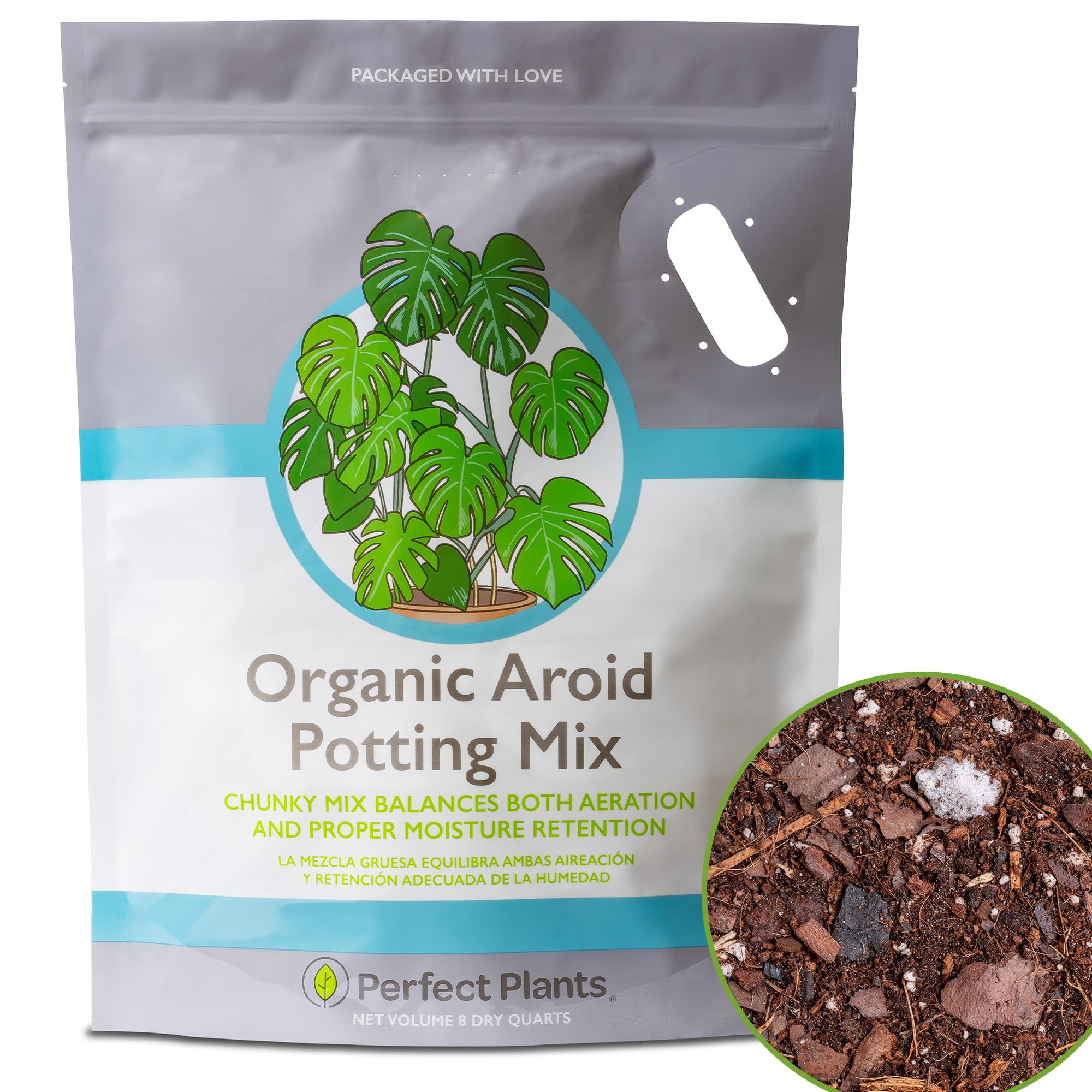
Perfect Plants delivers the largest bag in this roundup at 8 quarts, making it the obvious choice for growers with multiple large pots or an entire collection to repot. The formula uses horticultural charcoal and sponge rock (a lightweight volcanic aggregate) alongside locally sourced pine bark and perlite to create a chunky yet balanced texture. The inclusion of charcoal is beneficial beyond drainage — it absorbs impurities and helps filter the soil as water passes through, which can reduce the risk of bacterial issues in pots that stay slightly damp.
Owners consistently note that the mix strikes a very good balance between chunky and fine particles — not so coarse that small pots dry out instantly, but open enough that Monsteras and Philodendrons show strong root health. The 8-quart bag fills seven to eight 6-inch pots or three to four 8-inch pots, which represents the best raw volume-to-cost ratio in the premium tier. The resealable bag is a practical feature for storing leftover mix.
The main complaint is the bag itself — the resealable closure is finicky and tends to break or fail after a few openings, leading some users to transfer the soil to a separate container. Additionally, while the mix is available in only the 8-quart size for now, it’s still excellent value if you have enough plants to use it within a few months. For large-scale repotting sessions without sacrificing aeration quality, this is the most practical premium choice.
What works
- 8-quart bag provides the best volume among premium blends
- Horticultural charcoal filters impurities and supports clean soil chemistry
- Balanced chunkiness works for both large and small aroid pots
What doesn’t
- Resealable bag closure is unreliable and may break early
- Only available in one large size — no smaller trial option
7. Sol Soils Houseplant Chunky Mix
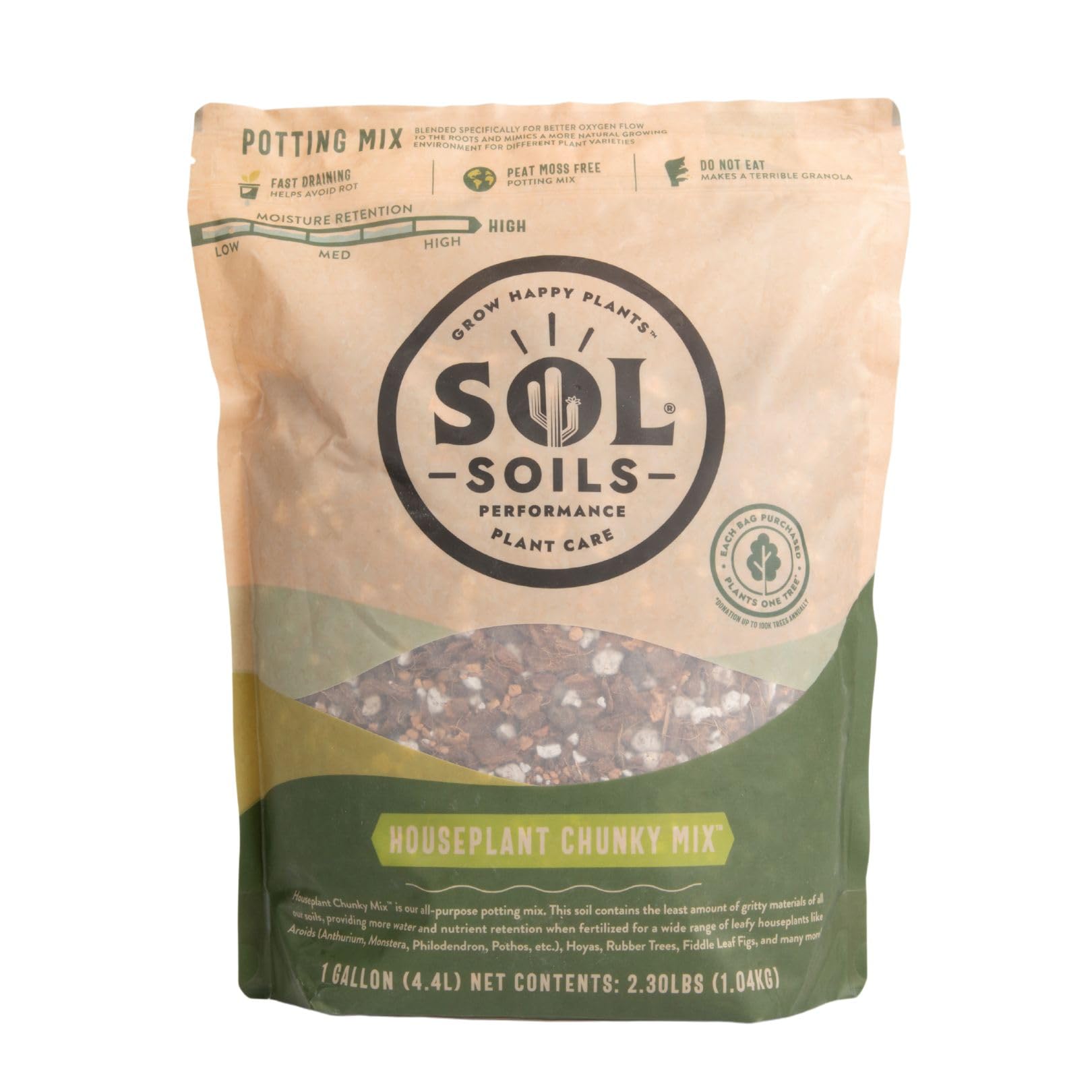
Sol Soils occupies the top price tier in this lineup, but the cost reflects a genuinely sustainable business model and premium ingredient sourcing. The blend uses coconut coir and husk chips as the primary base, replacing peat entirely, with perlite, pumice, pine bark, and LECA providing the chunky drainage structure. A portion of each sale goes toward reforestation projects, which adds an environmental incentive beyond just growing healthy plants.
Owner reviews are overwhelmingly positive, with many calling it the best soil they’ve ever used — particularly for Monsteras, Pothos, and Hoyas. The mix arrives noticeably dry and fluffy, which reduces the risk of mold, fungus gnats, and unpleasant smells that sometimes plague bagged soils. Users who struggled with pest issues from other brands report zero problems with Sol Soils. The 1-gallon bag is well-proportioned for a medium-sized collection, filling several 6-inch pots.
The significant downside is the price. At nearly double the cost per quart of some mid-range options, it’s a premium that only makes sense if you have a smaller, high-value collection or strongly prioritize environmental ethics. The small bag size also means large repotting projects can become very expensive. But for quality-driven collectors who want a peat-free, LECA-enhanced, reforestation-supporting soil that arrives clean and ready to use, this is the most thoughtful option available.
What works
- 100% peat-free with coconut coir base and LECA drainage
- No reported pest issues — clean, dry, and mold-free out of the bag
- Contributes to global reforestation with every purchase
What doesn’t
- Highest cost per quart in the lineup
- Small 1-gallon bag size limits value for large collections
Hardware & Specs Guide
Particle Size Distribution
The single most important physical property of an aroid soil mix is the ratio between chunky particles (bark, pumice, LECA, coco chips) and fine particles (coco coir, peat, worm castings). A mix that is >50% fines will compact quickly, suffocating aerial roots and trapping water. Premium blends consistently maintain a 55–65% chunky ratio, which you can gauge by shaking a sample on a flat surface — if it mostly consists of pieces larger than 3–4 mm, you’re in the right range.
pH Range & Buffering Capacity
Aroids prefer a slightly acidic range between 5.5 and 6.5. Ingredients like New Zealand Tree Fern Fiber and biochar naturally buffer the pH toward 6.0, while peat-heavy mixes tend to be more acidic initially. The best blends either incorporate pH-neutralizing amendments (gypsum, dolomitic lime) or use coco coir (pH 6.0–6.5) as the primary fine ingredient. A pH test strip or inexpensive soil meter can help you verify that your chosen mix falls within the safe zone before potting.
FAQ
Can I use regular potting soil for aroids?
How often should I water aroids in chunky soil?
Do I need to add fertilizer to premixed aroid soil?
What’s the difference between coco coir and peat moss in aroid mix?
Final Thoughts: The Verdict
For most gardeners, the best aroid soil mix winner is the Craft Aroid Potting Mix (Grow Queen) because it combines New Zealand Tree Fern Fiber, pumice, and triple-washed coco coir into a peat-free, pH-optimized blend that requires no amendments and delivers outstanding root aeration. If you want a biologically active living soil with carbon-negative credentials, grab the Rosy Soil Aroid Mix. And for large repotting projects that need consistent aeration at a better per-quart cost, nothing beats the Perfect Plants Aroid Potting Mix.