
Chasing that electric blue hydrangea bloom only to get pale pink or washed-out lavender? The color of your hydrangea is a direct chemical readout of your soil’s pH—above 6.0 locks the aluminum away and you get pink, below 5.5 unlocks it for that deep, saturated blue. The fix isn’t a random fertilizer splash; it’s a targeted pH adjustment using the right acidifier or acidic planting mix.
I’m Rikta — the co-founder and writer behind Lawn Gear Lab. I’ve spent hundreds of hours comparing soil amendment specs, studying horticultural pH chemistry, and analyzing aggregated owner feedback to pinpoint exactly which formulas deliver the fastest, most reliable acidification without harming root systems.
This guide walks you through the best granular acidifiers, liquid concentrates, and ready-to-use acidic soils for shifting your hydrangeas to that perfect blue range. Whether you’re planting new shrubs or correcting an established alkaline bed, you’ll find the right match in this breakdown of the best acidic soil for hydrangeas based on real-world pH performance and plant response.
How To Choose The Best Acidic Soil For Hydrangeas
Picking the right acidifier or acidic planting mix comes down to your starting soil pH, how fast you need results, and whether you’re amending existing beds or starting fresh in a container. Here are the three specs that matter most.
Aluminum Availability vs. Sulfur Longevity
Aluminum sulfate (like Hoffman Blue Magic) provides immediate aluminum ions that directly turn blooms blue, but it’s fast-acting and can accumulate in soil if overused. Elemental sulfur (like Espoma Soil Acidifier) works more slowly—bacteria must convert it to sulfuric acid over several weeks—but the pH drop lasts much longer. Choose aluminum sulfate for a quick mid-season color correction and elemental sulfur for a season-long shift.
Liquid vs. Granular Delivery
Liquid acidifiers (like Fertilome Soil Acidifier Plus Iron) penetrate the root zone immediately and are ideal for correcting iron chlorosis (yellowing leaves) on acid-loving plants. Granular products (most sulfur and aluminum sulfate formulations) release gradually and are better for pre-season soil prep or for gardeners who want a “set it and forget it” approach. For containers, liquids give you more control to avoid over-correction.
Pre-Mixed Acidic Soil vs. Amendment-Only
If you’re planting new hydrangeas in a bed or large pot, a bagged acidic planting mix like Coast of Maine Organic Planting Soil gives you an immediate low-pH root zone without needing to wait for an amendment to activate. This is especially useful in regions with naturally alkaline tap water or high-limestone soil. For established plants already in the ground, stick to amendments—digging up a mature shrub to replace its soil is impractical.
Quick Comparison
On smaller screens, swipe sideways to see the full table.
| Model | Category | Best For | Key Spec | Amazon |
|---|---|---|---|---|
| Espoma Organic Holly-Tone 4-3-4 | Fertilizer + Acidifier | Long-term feeding & acidifying | 36 lb bag, 5% sulfur | Amazon |
| True Organic Soil Acidifier (Case of 4) | Granular Acidifier | Organic soil acidification | 24 lb total, 6 lb per unit | Amazon |
| Bloom City Acid-Loving Liquid Fertilizer | Liquid Fertilizer | Container plants & quick correction | 1 gallon, 2-4 tsp per gallon | Amazon |
| Fertilome Soil Acidifier Plus Iron | Liquid Acidifier | Iron chlorosis & fast pH drop | 1 gallon liquid concentrate | Amazon |
| Espoma Organic Soil Acidifier (2-Pack) | Granular Acidifier | Slow-release, organic pH lowering | 12 lb total, elemental sulfur | Amazon |
| Coast of Maine Organic Planting Soil | Ready-to-Use Soil | New plantings & containers | 20 qt, low pH mix | Amazon |
| Hoffman Blue Magic Aluminum Sulfate | Aluminum Sulfate | Quick blue color change | 4 lb granules, fast-acting | Amazon |
In‑Depth Reviews
1. Espoma Organic Holly-Tone 4-3-4

Espoma Holly-Tone is the original acid-loving plant food for a reason—its 4-3-4 NPK analysis combined with 5% sulfur provides both a gentle fertility boost and a sustained pH drop that keeps hydrangeas in the blue zone all season. The 36-pound bag covers large beds of azaleas, rhododendrons, and blueberries, and the Bio-tone formula in the blend ensures steady nutrient release without the salt burn that synthetic fertilizers cause.
Customer reviews consistently report dramatically denser bloom sets on hydrangeas and richer foliage on evergreens after switching to Holly-Tone. The granular form is easy to broadcast around the drip line and requires no mixing—just apply in spring and again in fall for year-round acidic conditioning. For gardeners managing multiple acid-loving specimens, this is the most efficient single-product solution.
The main trade-off is that Holly-Tone is a maintenance acidifier rather than a rapid pH emergency fix; it works over weeks, not days, making it better suited to pre-season soil prep than mid-bloom crisis correction.
What works
- Long-lasting 4-3-4 fertility with sulfur for sustained pH
- 36 lb bag offers excellent coverage for large gardens
- Bio-tone microbes support healthy root development
What doesn’t
- Slow to show results—not for immediate color correction
- Bulky bag requires storage space
2. True Organic Soil Acidifier (Case of 4)
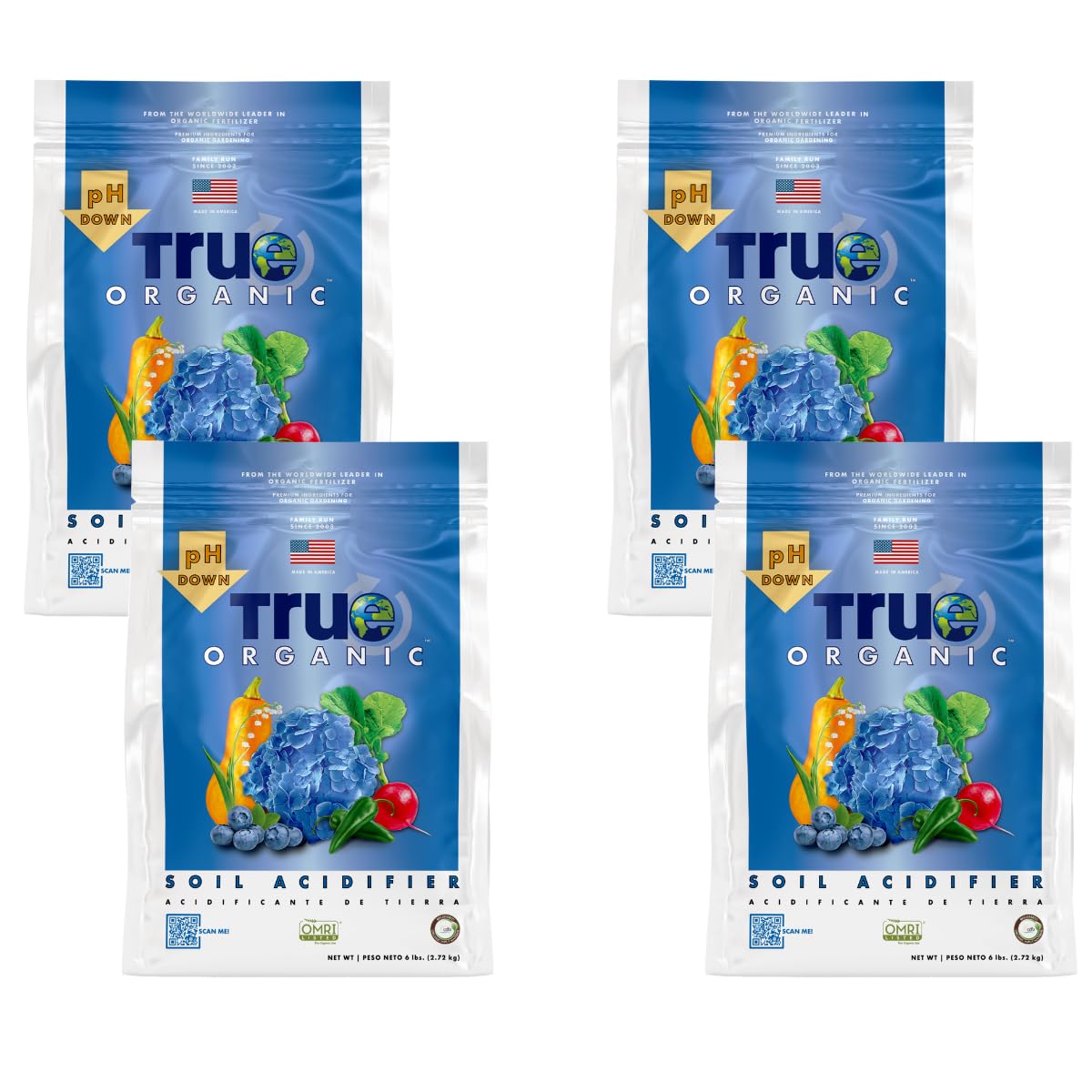
The True Organic Soil Acidifier comes as a case of four 6-pound bags, giving you 24 pounds total of OMRI-listed elemental sulfur for serious soil pH work. Because it relies on microbial conversion of sulfur to sulfuric acid, the pH drop is gradual and long-lasting—ideal for blueberry patches, azalea borders, and hydrangea beds where you want a single spring application to carry the entire growing season.
Reviews highlight how quickly it revived struggling blueberry bushes and brought new hydrangea starts into healthy growth, with several users noting their pH readings dropped by 1.5 to 2.0 points over 4–6 weeks. The organic certification makes it safe for edible berry plantings alongside ornamental shrubs, and the multi-pack format suits gardeners with multiple dedicated acid-loving zones.
The downside is the same as any elemental sulfur product: you cannot expect instant results. If your hydrangeas are already blooming pink and you need blue by next week, this is not the tool for that job—plan ahead.
What works
- 24 lb total volume at a strong per-pound value
- Organic-certified elemental sulfur is gentle on roots
- Slow release provides season-long acidification
What doesn’t
- Requires 4–6 weeks for full pH adjustment
- Multiple bags may be excessive for small gardens
3. Bloom City Acid-Loving Liquid Fertilizer
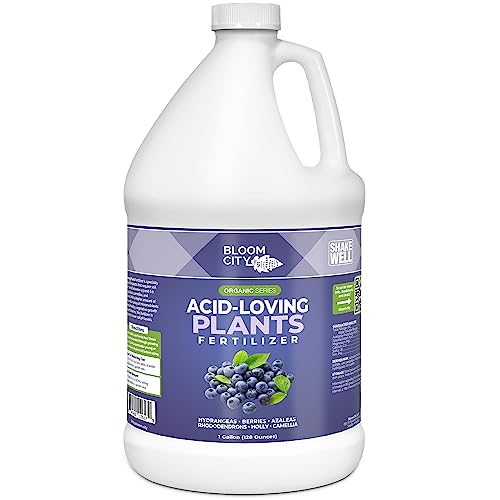
Bloom City’s liquid acid-loving fertilizer targets both soil pH and nutrient uptake simultaneously, delivering a balanced formula that feeds the plant while shifting the root zone toward the acidic side. At 2–4 teaspoons per gallon, a single gallon bottle stretches across many applications, making it a cost-effective choice for container hydrangeas, raised beds, or smaller garden plots where granular broadcast is less precise.
Growers report visible improvements in foliage green-up within two weeks and note that azaleas and gardenias respond with tighter bud sets and more vibrant blooms. The liquid format allows you to adjust pH incrementally—water with the solution weekly and stop once the blooms shift to the shade you want—which reduces the risk of over-correction that granule users sometimes experience.
The formula is not as potent as straight aluminum sulfate for a dramatic color swing, but for maintenance of an already-acidic bed or gentle correction of a slightly alkaline plot, it hits the sweet spot.
What works
- Easy incremental dosing—good for pH beginners
- Combined feeding and acidifying in one step
- Fast foliar and root uptake
What doesn’t
- Not strong enough for rapid blue color change
- Requires repeated weekly applications
4. Fertilome Soil Acidifier Plus Iron
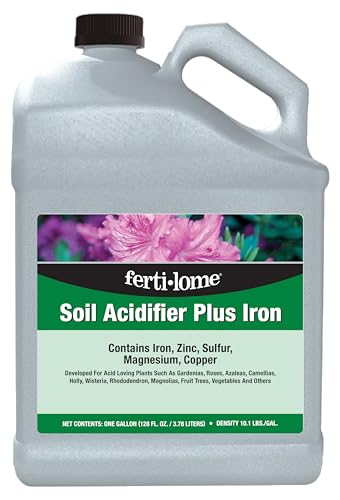
Fertilome’s Soil Acidifier Plus Iron stands apart because it packs a liquid punch of elemental sulfur plus chelated iron, zinc, and copper—essential trace elements that alkaline soils lock away. If your hydrangea or gardenia leaves are showing interveinal chlorosis (yellow with green veins), this formula corrects both the pH and the micronutrient deficiency in one drench. The label recommends 2 tablespoons per gallon of water, and it penetrates immediately.
Users rate this as the go-to rescue treatment for plants that have been struggling in high-pH water or limestone-heavy soil. One review noted it corrected iron deficiency on a lemon tree and hydrangeas after just two applications. The fast action is a double-edged sword, though—overuse can crash pH too quickly, especially in containers where buffering capacity is low.
For in-ground hydrangeas with visible yellowing or for gardeners dealing with hard alkaline tap water, this liquid acidifier delivers the most targeted fix of any product here.
What works
- Corrects iron chlorosis while acidifying
- Fast-acting liquid—visible results in 1–2 weeks
- Includes zinc and copper for full micronutrient support
What doesn’t
- Must be diluted carefully to avoid pH shock
- Liquid concentrate has a short shelf life once opened
5. Espoma Organic Soil Acidifier (2-Pack)
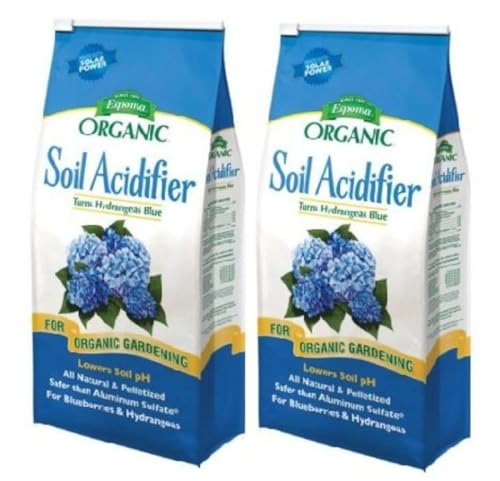
Espoma’s standalone Soil Acidifier strips out the fertilizer and focuses purely on pH reduction using elemental sulfur and gypsum. This 2-pack provides 12 pounds of material, giving you flexibility to treat hydrangeas, blueberries, and rhododendrons without introducing extra nitrogen or phosphorus that might interfere with bloom timing. The gypsum component improves soil structure in heavy clay, helping the sulfur work more evenly.
Users in arid regions with high-mineral irrigation water report that this product counteracts the alkalinity buildup better than aluminum sulfate because sulfur doesn’t contribute additional salts to the soil. The OMRI certification makes it a safe choice for organic gardens. For hydrangea owners who want to turn blooms blue while keeping their feeding program separate, this is the purest acidifier option.
The granular form takes several weeks to fully activate, and the pack of two requires combining or staggering use, which might be unnecessary for single-shrub gardens.
What works
- Pure elemental sulfur without added fertilizer
- Gypsum improves clay soil drainage
- OMRI-listed for organic production
What doesn’t
- Slow activation window (3–6 weeks)
- 2-pack format may be surplus for small gardens
6. Coast of Maine Organic Planting Soil

Coast of Maine’s Organic Planting Soil for Acid Loving Plants is a pre-mixed growing medium that combines composted manure, sphagnum peat moss, aged bark, and perlite in a low-pH blend ready for immediate planting. At 20 quarts, it is the right size for repotting a large container hydrangea or refreshing a small bed of rhododendrons and blueberries without needing to source separate amendments.
Reviews consistently mention that plants perk up noticeably within a week of transplanting, thanks to the balanced moisture retention and drainage from the perlite and peat. The OMRI listing and Maine-sourced compost appeal to gardeners who want a sustainable, single-bag solution for new installations. The texture is light and loose, making root establishment faster than heavy native soil.
The limitation is that this is a planting medium, not a treatment for existing in-ground hydrangeas. You apply it at planting time and then maintain acidity through top-dressing with sulfur—it won’t correct the pH of a bed that has drifted alkaline over time.
What works
- Immediate low-pH root zone for new plants
- Perlite and peat ensure drainage and moisture balance
- OMRI listed with sustainable Maine ingredients
What doesn’t
- Not a spot-treatment for established in-ground beds
- Single 20 qt bag may not cover large projects
7. Hoffman Blue Magic Aluminum Sulfate

Hoffman Blue Magic is the direct-acting aluminum sulfate formula that hydrangea growers turn to when they need visible color change within two weeks. The granules can be dissolved in water or sprinkled before rain, and the aluminum ions immediately become available to the plant—reviews show before/after photos of pink blooms shifting to purple then deep blue in about 10–14 days.
The main practical strength is speed: if your hydrangeas are already blooming pink in June and you want them blue by July, this is your best bet. It also conditions the soil for all acid-lovers including azaleas, gardenias, and camellias. For the price per treatment, it is the most affordable way to force a mid-season color pivot.
The biggest warning from users is that the dust is very fine and it does not dissolve completely in cold water, which can leave residue on foliage if applied as a spray. Use it on soil only, and avoid over-application in containers where aluminum can accumulate to toxic levels.
What works
- Fastest pH drop for immediate blue color
- Versatile—can be sprinkled or diluted
- Very economical per application
What doesn’t
- Dusty and doesn’t fully dissolve in water
- Can accumulate aluminum in container soil
Hardware & Specs Guide
Elemental Sulfur vs. Aluminum Sulfate
Elemental sulfur (found in Espoma Soil Acidifier and True Organic) relies on soil bacteria to convert it to sulfuric acid, which makes it slower but longer-lasting and safer for soil biology. Aluminum sulfate (Hoffman Blue Magic) delivers aluminum ions directly to the plant, enabling rapid blue color change but with lower residual pH effect. Choose sulfur for seasonal management and aluminum sulfate for spot corrections.
Liquid vs. Granular pH Adjustment
Liquid acidifiers (Fertilome, Bloom City) penetrate the root zone in hours and are useful for correcting iron deficiency or counteracting alkaline tap water. Granular products (all sulfur-based amendments and aluminum sulfate) require water to activate and distribute more slowly but provide a more uniform pH change across the entire root zone. For hydrangeas in containers, liquids reduce the risk of local pH pockets that can cause uneven bloom color.
FAQ
How low should I drop the soil pH to get blue hydrangeas?
Can I use aluminum sulfate on container-grown hydrangeas?
How long does it take for elemental sulfur to lower soil pH?
Final Thoughts: The Verdict
For most gardeners, the acidic soil for hydrangeas winner is the Espoma Organic Holly-Tone because it combines season-long pH management with balanced 4-3-4 nutrition in a single, large-format bag. If you want fast mid-season color correction, grab the Hoffman Blue Magic. And for an organic, slow-release maintenance program across multiple beds, nothing beats the True Organic Soil Acidifier case pack.