
Marigolds are famously unfussy, but feeding them the wrong N-P-K ratio often results in lush green leaves with hardly a flower in sight. The key is understanding that marigolds need a phosphorus-rich diet to push out those dense, vibrant blooms, not just a general-purpose feed.
I’m Rikta — the co-founder and writer behind Lawn Gear Lab. I spend my days comparing nutrient analyses, studying plant physiology, and analyzing thousands of owner reviews to separate the formulas that truly boost flowering from those that just fill a bag.
After evaluating dozens of products, seven distinct formulas stood up to the scrutiny. This guide cuts through the marketing to help you pick the right mix of phosphorus, potassium, and micronutrients for your specific marigold variety and growing conditions. Here is the best fertilizer for marigolds broken down by what actually matters.
How To Choose The Best Fertilizer For Marigolds
Marigolds are heavy feeders when it comes to phosphorus, but they are sensitive to too much nitrogen. Selecting the right formula means checking the N-P-K numbers first, then deciding between granular slow-release or water-soluble liquid for convenience.
N-P-K Ratio: The Middle Number Is King
For marigolds, you want a fertilizer where the middle number (phosphorus) is the highest. A ratio like 10-30-20 or 4-10-10 signals the formula is designed to promote flowering rather than leaf growth. Low-nitrogen blends prevent the plants from getting leggy and encourage buds instead of foliage.
Granules vs. Liquid: Release Speed Matters
Slow-release granules such as Osmocote or Espoma feed marigolds over weeks, which is ideal for beds and containers. Water-soluble powders like Jack’s Classic give you fast-acting control—perfect for correcting deficiencies or boosting a potted marigold that has stopped blooming mid-season.
Organic vs. Synthetic: Soil Health Versus Quick Fix
Organic options like Espoma Flower-Tone improve soil microbiology over time and are gentle enough that they rarely burn roots. Synthetic formulas deliver precise, immediate nutrient availability, but require careful measuring to avoid salt buildup that can damage marigolds.
Quick Comparison
On smaller screens, swipe sideways to see the full table.
| Model | Category | Best For | Key Spec | Amazon |
|---|---|---|---|---|
| Farmer’s Secret Rose Booster | Liquid Concentrate | Intense bloom production | Super concentrated, 1 tsp/gal | Amazon |
| Great Big Roses & Flowers | Liquid Booster | Boosting existing fertilizers | 70 minerals + humic acid | Amazon |
| Osmocote Smart-Release | Slow-Release Granules | Set-and-forget feeding | 14-14-14, 80 sq. ft. coverage | Amazon |
| Jack’s Classic Blossom Booster | Water-Soluble Powder | Maximizing bloom count | 10-30-20 high phosphorus | Amazon |
| Espoma Flower-Tone | Organic Granules | Organic cultivation | 3-4-5, Bio-tone formula | Amazon |
| Miracle-Gro Performance Organics | Organic Granules | Convenient organic feeding | 5-7-10, OMRI listed | Amazon |
| Lilly Miller Bulb & Bloom | Powder | Bulb-adjacent flowering | 4-10-10 slow release | Amazon |
In‑Depth Reviews
1. Farmer’s Secret Rose Booster Fertilizer
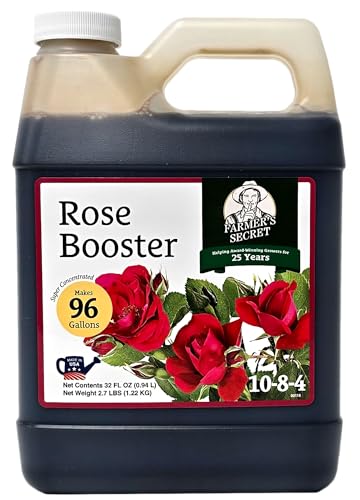
Farmer’s Secret brings a professional-grade formulation to the home garden with an extremely concentrated liquid that requires only two teaspoons per gallon of water. This makes the 32-ounce bottle stretch surprisingly far—users report feeding dozens of plants for an entire season on a single bottle. The formula is designed specifically for roses but the high-phosphorus profile works superbly on marigolds, which are equally hungry for bloom-enhancing nutrients.
Owner feedback consistently highlights the speed of visible change: marigold plants that were barely holding on begin producing buds within a month, and established plants see a dramatic increase in flower count, with one reviewer noting over 500 blooms across 50 rose bushes. The sulfur smell is noticeable during mixing but dissipates quickly after watering in. The concentrate is so potent that you must measure carefully—over-application can stress plants, though the safety margin is generous compared to synthetic salt-based powders.
For marigold growers who want maximum flowers with minimal product waste, this liquid booster is the most efficient option. The weekly feeding schedule fits easily into a regular watering routine, and the results are consistent across all marigold varieties from French Dwarf to African Tall. It earns the top spot for its unmatched potency and proven track record in demanding flowering plants.
What works
- Extremely concentrated—small bottle lasts entire season
- Rapid visible improvement in bloom size and count
- Gentle enough for weekly use without burning
What doesn’t
- Strong sulfur odor during mixing
- Some reports of damaged seals on delivery
- Higher upfront cost per bottle
2. Great Big Roses and Flowers Liquid Fertilizer Booster
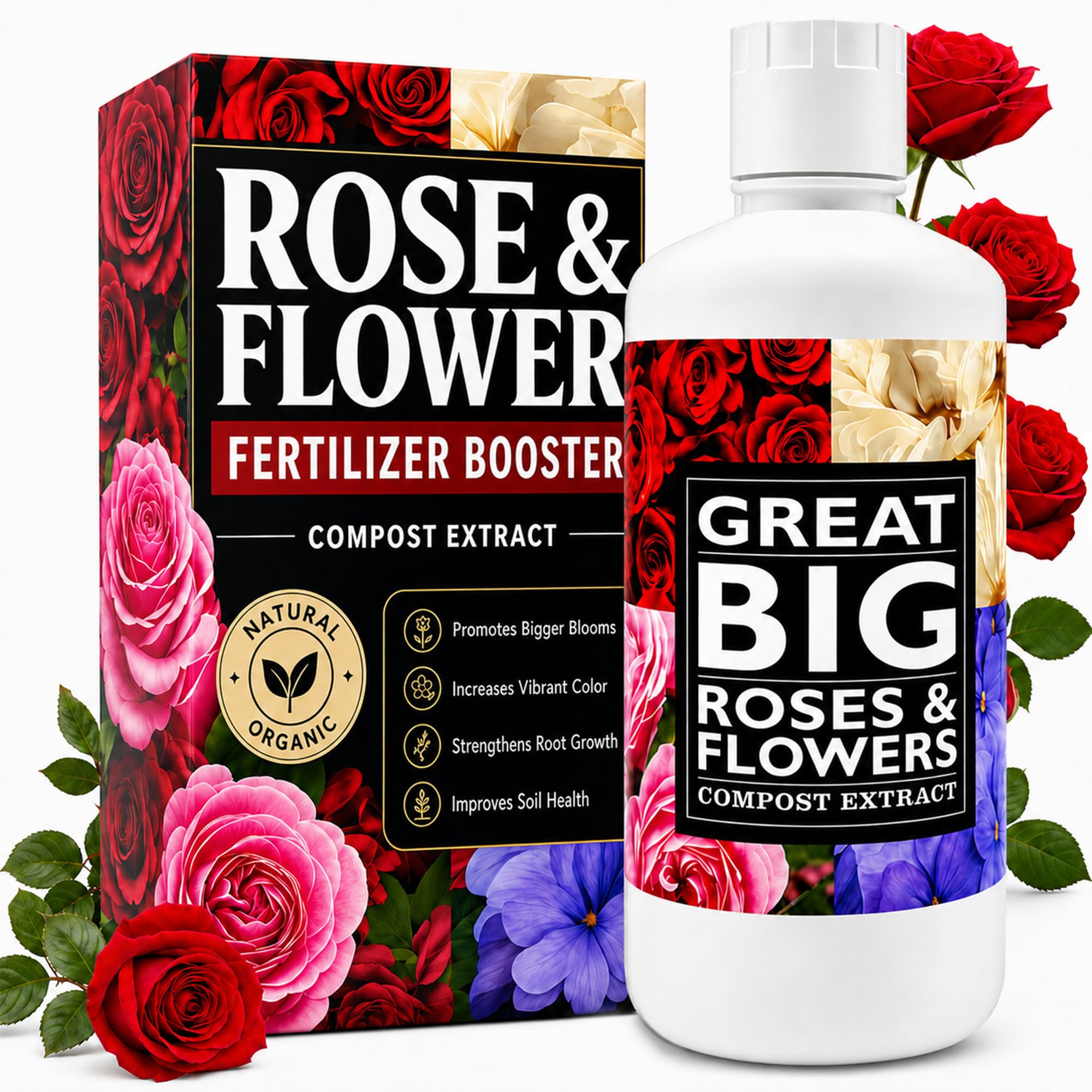
This product is less a standalone fertilizer and more a soil activator and amplifier. It delivers humic acids, seaweed extract, and over 70 chelated trace minerals directly into the root zone, helping marigolds access nutrients already locked in the soil. For marigold beds that have been fed with general-purpose formulas, this booster can unlock the full potential of residual nutrients without adding more nitrogen.
Gardeners report rose bushes that refused to bloom for years producing flowers within weeks after the first application. For marigolds, the effect is similar: plants that looked pale or stunted perk up dramatically, and the flowers are noticeably larger and more intensely colored. The liquid mixes easily at 4 ounces per gallon of water, and one bottle covers an entire growing season for most gardens. The only downside is the jug design—the wide mouth makes pouring into a watering can messy, and any spillage feels expensive given the price point.
For marigold growers who want to supercharge an existing feeding regimen without changing their base fertilizer, this booster is an excellent addition. It pairs well with any organic or synthetic program and addresses micronutrient deficiencies that marigolds often show as interveinal chlorosis or weak stems. It is the best choice for those who treat fertilizer as a system rather than a single feed.
What works
- Revives plants that have stopped blooming
- Full spectrum of trace minerals and humic acids
- Works with any existing fertilizer program
What doesn’t
- Expensive for a single bottle
- Jug design causes messy pouring and spillage
- Results depend on existing soil nutrient levels
3. Osmocote Smart-Release Plant Food 14-14-14

Osmocote is the long-standing champion of slow-release feeding, and its 14-14-14 balanced formula is a staple for container marigolds. The coated granules release nutrients based on soil temperature—warmer soils trigger faster release, which aligns naturally with marigold peak growing season. This temperature-dependent release makes it nearly impossible to over-feed; the manufacturer claims you can apply up to three times the recommended rate without burning roots.
For marigolds in patio pots or raised beds, one application lasts two to three months. The 2-pound bag covers roughly 80 square feet, which is enough for a substantial container garden. Owners consistently praise its ease of use: simply mix into the top inch of soil at planting or sprinkle around established plants, then water normally. The balanced N-P-K works well for marigolds because it provides enough phosphorus for blooms without the excess nitrogen that causes foliage overgrowth.
While the 14-14-14 ratio is not a dedicated bloom booster, its reliability and safety margin make it the best choice for gardeners who want a single fertilizer that handles every stage of marigold growth. It lacks the high phosphorus punch of a dedicated 10-30-20 formula, but for general-season feeding, it is hard to beat. The inclusion of a measuring scoop simplifies application, though users in small pots should use half the recommended amount to avoid excess.
What works
- Almost impossible to burn plants even if over-applied
- Single application feeds for up to 3 months
- Temperature-controlled release matches plant needs
What doesn’t
- Not a specialized bloom booster ratio
- Requires mixing into soil for best results
- Recommended rate may be too strong for small pots
4. Jack’s Classic 10-30-20 Blossom Booster
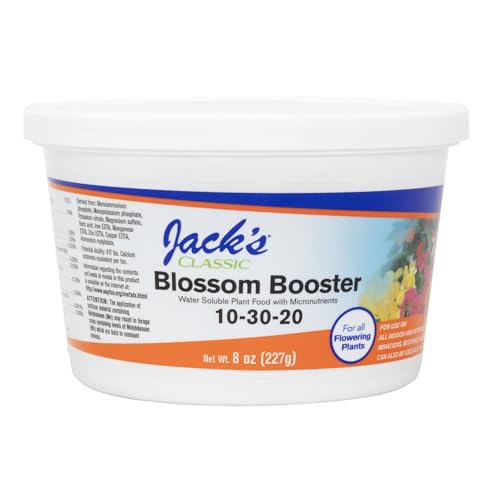
Jack’s Classic Blossom Booster is the definitive high-phosphorus water-soluble fertilizer for marigold growers who obsess over flower size and quantity. The 10-30-20 ratio delivers a powerful phosphorus punch while keeping nitrogen low enough to avoid excessive leafy growth. The powder dissolves completely in water and can be applied as a root drench or foliar spray, giving you flexibility in delivery.
Users see a marked increase in bloom count within two weeks of starting a weekly feeding program. Marigolds treated with this formula produce flowers that are both bigger and more intensely colored, with stronger stems that hold up better in wind and rain. The included measuring spoon helps dial in the correct dilution, but the 8-ounce container is relatively small—heavy users with large flower beds may exhaust it quickly, especially if following the recommended weekly schedule. One reviewer noted the entire container was used in a single day for outdoor beds.
For marigold enthusiasts who want to push their plants to peak performance, this is the bloom booster to buy. The high phosphorus content is exactly what marigolds crave during the flowering stage, and the water-soluble format allows for precise feeding adjustments. Just be aware that the small tub size means you will need to buy multiple units for a full season of weekly feeds across multiple beds.
What works
- Highest phosphorus ratio for maximum blooms
- Works as root drench or foliar spray
- Fast visible results within two weeks
What doesn’t
- Small container runs out quickly for large gardens
- May cause skin irritation without gloves
- Requires weekly mixing and application
5. Espoma Organic Flower-Tone 3-4-5

Espoma Flower-Tone is the gold standard for organic marigold feeding. The 3-4-5 analysis is naturally low in nitrogen, making it safe to use throughout the flowering season without risking excessive green growth. The Bio-tone formula introduces beneficial microbes that improve root health and nutrient uptake over time, building soil structure rather than just dumping salts.
Gardeners consistently report that Flower-Tone produces the most abundant blooms they have ever seen on peonies, roses, and marigolds alike. The granules are applied to the soil around the drip line and watered in—there is no mixing required, which simplifies the feeding process significantly. The 2-pack provides 8 pounds total, which covers a large flower bed or multiple containers for an entire season. The only notable drawback is the strong organic manure smell, which can be unpleasant when first applied and may attract pets or wildlife if not watered in thoroughly.
For organic-focused marigold growers, this is the clear winner. It is OMRI-listed, made in the USA, and backed by nearly a century of Espoma expertise. The slow, gentle feeding schedule of monthly applications works beautifully with marigolds’ natural growth rhythm, and the results in terms of bloom density and color intensity rival synthetic formulas without the risk of chemical burn.
What works
- Organic ingredients safe for edible gardens
- No mixing required—just sprinkle and water
- Improves soil biology over time
What doesn’t
- Strong manure smell when first applied
- Slower acting than synthetic formulas
- May attract pets if not watered in thoroughly
6. Miracle-Gro Performance Organics Blooms 5-7-10

Miracle-Gro brings its mass-market reliability to the organic segment with Performance Organics Blooms. The 5-7-10 ratio is specifically designed for flowering plants, with phosphorus and potassium elevated over nitrogen to support bud development and disease resistance. The granules are OMRI-listed, meaning they meet organic standards while still offering the consistent results Miracle-Gro is known for.
Marigold owners report seeing noticeable improvements within one to two weeks, with plants that refused to bloom suddenly producing large, vibrant flowers. The 2.5-pound bag covers up to 165 square feet, making it an economical choice for large beds. Applying the granules is straightforward—sprinkle around the base of the plants every four to six weeks and water in thoroughly. Some users noted the paper lid seal under the plastic cap can be loose, which raises concerns about moisture exposure during storage.
This is the sweet spot for gardeners who want organic certification without paying premium organic prices. The coverage per dollar is excellent, and the 5-7-10 ratio is well-suited to marigolds’ flowering needs. It may not offer the soil-building benefits of Espoma’s Bio-tone, but for straightforward, effective feeding of annual marigold beds, it delivers reliably.
What works
- Excellent coverage—165 sq. ft. per bag
- OMRI-listed organic ingredients
- Quick visible results in 1-2 weeks
What doesn’t
- Loose paper seal may allow moisture in
- Not as soil-enriching as premium organic brands
- Requires reapplication every 4-6 weeks
7. Lilly Miller Bulb & Bloom Food 4-10-10

Lilly Miller’s 4-10-10 Bulb & Bloom Food is a specialized low-nitrogen formula that shines on flowering plants, including marigolds. The phosphorus and potassium ratio is intentionally skewed to support blooming, and the slow-release nature means a single application feeds for weeks. The 4-pound bag offers generous coverage for its price tier, making it an accessible entry point for gardeners testing bloom-specific fertilizers for the first time.
Users report excellent results on amaryllis and other bulbs, with several noting that it outperformed generic 10-10-10 formulas in bloom volume. Marigolds respond similarly, with more dense flower clusters and stronger color. The granules are easy to sprinkle around the base of plants, and because the nitrogen content is low, there is little risk of burning leaves or stunting flowers. Some owners wish it were easier to find in local stores, but online availability solves that issue.
For cost-conscious gardeners or those with large marigold beds, this is a solid performer. The 4-10-10 ratio is nearly ideal for flowering annuals, and the slow release minimizes the need for frequent reapplication. It lacks the micronutrient package of premium brands, but for straightforward, effective bloom feeding on a budget, it gets the job done without fuss.
What works
- Low nitrogen prevents excessive leaf growth
- Slow-release reduces application frequency
- Good value for large beds
What doesn’t
- Limited availability in retail stores
- Lacks comprehensive micronutrient profile
- Results vary more than premium formulas
Hardware & Specs Guide
N-P-K Ratios Explained
The three numbers on a fertilizer label represent Nitrogen (N), Phosphorus (P), and Potassium (K) in that order. For marigolds, the middle phosphorus number is the most critical for flower production. A high-middle ratio like 10-30-20 or 4-10-10 signals a bloom-boosting formula, while balanced numbers like 14-14-14 are general purpose. Low-nitrogen is key because excess nitrogen forces leaf growth at the expense of flowers.
Release Mechanisms: Granules vs. Liquid
Slow-release granules such as Osmocote and Espoma Flower-Tone rely on soil moisture and temperature to meter nutrients over weeks or months. This is ideal for marigolds in beds or larger containers. Water-soluble powders and liquid concentrates like Jack’s Classic or Farmer’s Secret deliver nutrients immediately, allowing precise feeding but requiring weekly mixing. Liquid forms are better for potted marigolds where you want fast correction of nutrient deficiencies.
FAQ
What happens if I use a high-nitrogen fertilizer on marigolds?
How often should I fertilize marigolds in containers?
Can I use rose fertilizer on marigolds?
Final Thoughts: The Verdict
For most gardeners, the best fertilizer for marigolds winner is the Farmer’s Secret Rose Booster because its super-concentrated liquid formula delivers a massive phosphorus punch in a tiny dose, stretching a single bottle across an entire season of weekly feeds. If you want the unmatched bloom density of a dedicated 10-30-20 water-soluble powder, grab the Jack’s Classic Blossom Booster. And for organic gardeners who want to improve soil health while feeding, nothing beats the Espoma Flower-Tone for gentle, long-lasting results.