
The ritual of yanking a starter cord first thing on a Saturday morning—often ten, fifteen, sometimes twenty pulls before the engine sputters to life—is a pain point the electric start lawn mower was designed to erase. Beyond the convenience of a simple push or turn-key ignition, this category fundamentally changes the mowing cadence: no priming, no choke, no bruised knuckles. For homeowners managing yards between a quarter and three-quarters of an acre, the decision to go electric start means trading an unpredictable mechanical dance for a reliable, consistent power-on experience that respects your time and patience.
I’m Rikta — the co-founder and writer behind Lawn Gear Lab. I’ve spent countless hours cross-referencing engine displacement, battery voltage curves, deck fabrication materials, and long-term owner feedback to separate the genuinely reliable electric start systems from the marketing gloss.
Whether you’re done fighting with a pull cord or simply want a cleaner, quieter start every time, this guide to the best electric start lawn mower will walk you through the real-world specs that make one model outlast another.
How To Choose The Best Electric Start Lawn Mower
Not every “electric start” system is built the same. Gas models use a small battery and starter motor to spin the engine—a setup that adds weight and complexity but delivers raw cutting power. Battery-powered models use a push-button to engage the motor instantly, offering quieter operation with fewer moving parts. Your yard size, terrain, and tolerance for maintenance determine which architecture fits your reality.
Deck Width and Engine/Motor Power
A 21-inch deck is the standard sweet spot for most residential lawns. Anything smaller saves storage space but increases mowing time. On the gas side, look for at least 150cc to 200cc of displacement—this translates to roughly 3.5 to 5 HP—enough to power through damp or tall grass without bogging down. For cordless models, a 40V to 60V brushless motor with at least 6.0 ft-lbs of torque will match a mid-range gas engine in cut quality while eliminating emissions and pull-start fatigue.
Self-Propulsion: Front-Wheel vs. Rear-Wheel Drive
Front-wheel drive (FWD) models pull the mower forward, making them lighter and easier to pivot around flower beds and trees—ideal for relatively flat yards. Rear-wheel drive (RWD) models push from behind, providing superior traction on slopes and inclines because the weight of the mower and operator sits over the drive wheels. If your property has any significant grade, RWD is the safer, more effective choice. Single-speed drive trains are simpler and cheaper; variable-speed systems let you match your walking pace precisely.
Cutting Height Range and Adjustability
A wider cutting height range—ideally from 1.25 inches up to 4 inches—gives you seasonal flexibility. You want a low cut in spring to remove dead growth and a higher setting during summer heat to avoid stressing the grass. Single-lever adjustments beat individual wheel cranks for speed and consistency. Seven positions is the modern minimum for fine-tuning across different grass types and weather conditions.
Deck Material and Build Quality
Steel decks are heavier but more durable, resisting cracks from rock strikes and warping from heat. Stamped steel is standard; 16-gauge stamped steel, as used in premium models, adds significant rigidity. Polypropylene or composite decks are lighter and won’t rust but are more prone to stress fractures over years of use. For gas mowers, a steel deck is strongly preferred. For battery-powered units, a reinforced steel deck balances weight and longevity better than plastic.
Quick Comparison
On smaller screens, swipe sideways to see the full table.
| Model | Category | Best For | Key Spec | Amazon |
|---|---|---|---|---|
| YARDMAX YG4761 | Gas / RWD | Large yards & hills | 24″ deck, 201cc, CVT 6-speed | Amazon |
| EGO LM2114SP | Battery / Self-Propelled | Premium cordless power | 56V, 6.0Ah, 6.0 ft-lbs torque | Amazon |
| Milwaukee 2823-20 | Battery / Dual M18 | Pro-grade cordless cut | 21″ steel deck, dual battery | Amazon |
| Yard Force YF22 | Gas / RWD | Dependable gas traction | 150cc B&S, 22″ steel deck | Amazon |
| Greenworks MO60L516 | Battery / Push | Gas-like torque, zero emissions | 60V, 3200 RPM, 21″ steel deck | Amazon |
| SKIL SM4910C | Battery / Self-Propelled | Variable-speed self-propel | 40V, 6.0Ah, 20″ deck | Amazon |
| SENIX G-H-FIVE | Gas / RWD | Budget large-yard gas | 201cc, 22″ deck, single speed | Amazon |
| WORX WG752 | Battery / Push | Expandable battery platform | 40V, 2×5.0Ah, 21″ Aerodeck | Amazon |
| SENIX A025054-A | Gas / FWD | Budget entry-level gas | 170cc, 21″ deck, 3.8 HP | Amazon |
In‑Depth Reviews
1. YARDMAX YG4761 24 in. 201cc Electric Start
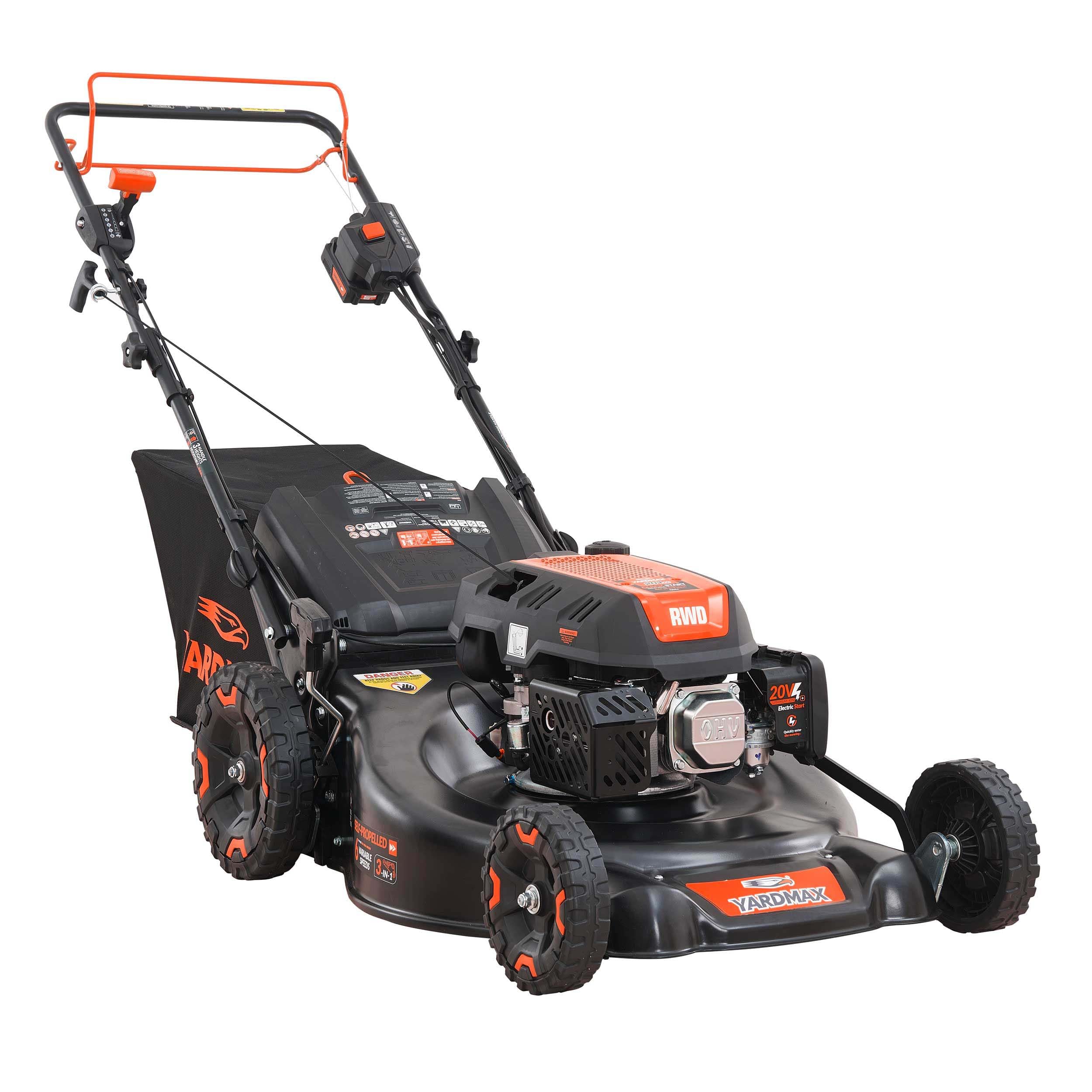
The YARDMAX YG4761 is the most muscular electric start lawn mower in this lineup, pairing a genuine electric starter motor with a 201cc engine and a 24-inch cutting deck—the widest deck reviewed here. The exclusive CVT (continuously variable transmission) with a 6-speed shift lever lets you dial in the exact ground speed without clutching or gear grinding, a rare feature that genuinely reduces operator fatigue on larger properties. The one-piece seamless steel deck (16-gauge stamped) minimizes vibration at full throttle, and the MAXFlow volute spiral deck design optimizes airflow for cleaner mulching and bagging.
Owners report that the push-button start fires reliably even after the mower has been sitting for weeks, and the included battery provides numerous restart cycles across a full mowing session. The rear-wheel drive system delivers strong traction on moderate slopes—the 24-inch deck and high-torque transmission make quick work of overgrown grass that would stall lesser machines. Assembly is straightforward, though at over 100 pounds, this mower demands respect for its heft.
The main trade-off is that the wide deck and heavy steel construction make the YG4761 feel cumbersome in tight fenced areas or gardens with narrow gates. Some reviewers noted that the motor can struggle and cut off in extremely tall, damp grass if the deck isn’t raised to a higher setting. But for anyone with a half-acre or more of open, varied terrain who wants a turn-key gas experience, this is the most capable pick in the class.
What works
- True electric start with reliable push-button ignition.
- CVT transmission offers unmatched speed control for a gas mower.
- 24-inch deck drastically reduces mowing time on large lawns.
What doesn’t
- Heavy build makes it tough to maneuver through narrow spaces.
- Engine can bog down if cutting very tall grass on the lowest height setting.
2. EGO POWER+ LM2114SP 56V Self-Propelled
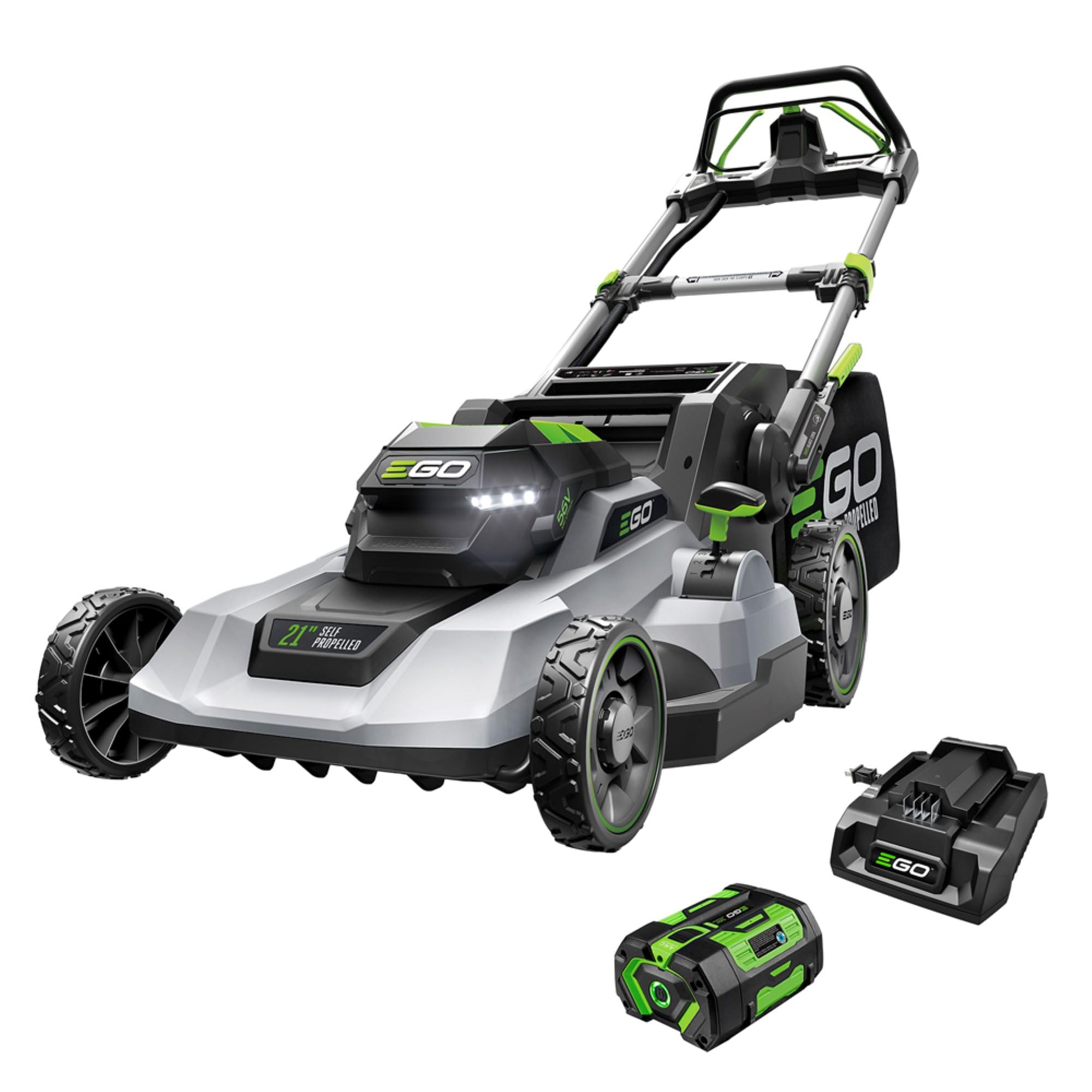
The EGO LM2114SP is the benchmark for cordless electric start convenience in this guide, delivering 6.0 ft-lbs of cutting torque—enough to match or exceed many 150cc gas mowers. The push-button start is instant and silent; there’s no starter motor whir, just the brushless motor spooling up to its rated speed. The high-efficiency brushless motor and 56V ARC Lithium 6.0Ah battery provide up to 50 minutes of runtime on a single charge, and the dual-toggle handleset lets you engage self-propulsion with either hand without shifting your grip.
The 21-inch deck is made from reinforced plastic, which keeps the overall weight manageable for its self-propelled class. Owners consistently note that it’s lighter and more maneuverable than the gas mowers it replaces. The seven-position single-lever height adjustment (1.25 to 4 inches) covers the full range of seasonal needs, and the integrated LED headlights genuinely help when mowing in fading evening light. The included 320W charger tops up the 6.0Ah battery in a reasonable time frame.
The main limitation is that the self-propulsion system, while smooth, runs at a fixed speed that some users find too fast for tight trimming areas. The plastic deck is durable but won’t absorb rock strikes the same way a steel deck would. Owners of larger lawns (above a half-acre) may find the single battery barely sufficient and will likely want a second battery to avoid charging delays mid-mow.
What works
- Instant push-button start with zero gas or oil maintenance.
- Torque output competes with gas mowers in thick grass.
- Lightweight frame and adjustable handle make it easy to push.
What doesn’t
- Plastic deck may not hold up as long as steel under heavy use.
- Single battery may not finish a full half-acre on one charge.
3. Milwaukee 2823-20 M18 FUEL 21″ Dual Battery

The Milwaukee 2823-20 is built for the user who already owns M18 tools and wants a mower that integrates into an existing high-output battery ecosystem. The push-button start is instantaneous, and the dual M18 battery configuration provides the voltage and runtime needed to push through thick turf without performance drop-off. The 21-inch stamped steel deck is one of the most rigid in the cordless class, and the high-RPM brushless motor delivers cut quality that rivals gas units.
Owners with lawns between a quarter and three-quarters of an acre report finishing the job on a single charge with self-propulsion engaged, though runtime varies significantly with grass conditions and speed settings. The self-propelled drive is smooth and responsive, and the mower folds for vertical storage that takes up minimal garage floor space. The alloy steel deck gives it a heft that inspires confidence when cutting uneven ground or tackling stray weeds.
The major drawback is that this mower is sold as a bare tool—no batteries or charger included. If you’re not already invested in the M18 platform, the initial cost becomes prohibitive. Some users reported missing small assembly pieces in the box, which suggests quality control at the packing stage could be tighter. For dedicated Milwaukee users, however, this is the most satisfying cordless electric start experience available.
What works
- Exceptional build quality with a rigid steel deck and high-RPM motor.
- Dual M18 battery system provides consistent power without sag.
- Compact vertical storage design saves space.
What doesn’t
- Sold as bare tool—requires separate purchase of M18 batteries and charger.
- Occasional reports of missing hardware in the packaging.
4. Yard Force YF22 150cc Briggs & Stratton RWD

The Yard Force YF22 uses a Briggs & Stratton 150cc engine with ReadyStart technology, which eliminates the need for priming or choking—just pull the lever and start. While it’s not a true electric start system (the engine still uses a pull cord), the ReadyStart mechanism is the next best thing for users who want gas power without the cold-start hassle. The 22-inch stamped steel deck is paired with a 21-inch blade, and the rear-wheel drive self-propulsion system provides excellent traction on inclines.
The seven-position single-lever height adjustment offers a range from 1.25 to 3.75 inches, covering most seasonal mowing needs. The 12-inch rear wheels roll smoothly over uneven ground, and the 8-inch front wheels offer good maneuverability. Owners praise the engine’s power, noting that it cuts through thick grass and light brush without slowing down. The self-propelled drive is strong enough that the user primarily steers rather than pushes.
On the downside, the assembly instructions are minimal, and some owners found the side discharge vent easily knocked off. A small number of units arrived with starting issues, and the warranty repair process reportedly involves long wait times. For the price point, the YF22 delivers strong engine performance and reliable self-propulsion, but the lack of a true battery-powered starter means it’s not a full electric start solution.
What works
- Briggs & Stratton ReadyStart eliminates choke/prime steps.
- Strong RWD traction on slopes and uneven terrain.
- 22-inch steel deck offers good durability for the price.
What doesn’t
- Not a true electric start—still requires a pull cord.
- Warranty support and parts availability can be slow.
5. Greenworks MO60L516 60V 21″ Brushless

The Greenworks MO60L516 pushes the cordless envelope with a 60V brushless motor that spins the blade at 3200 RPM—matching the blade speed of a typical 150cc gas mower. The push-button start is instant, and the 5.0Ah battery provides up to 60 minutes of runtime, enough for a half-acre lawn in most conditions. The standout feature here is the SmartCut self-sharpening dual-blade system, which automatically adjusts power delivery to prevent bogging in tall or wet grass.
The 21-inch steel deck is both heavy-duty and rust-resistant, with an IPX4 waterproof rating that allows mowing in damp conditions without worry. Oversized 10-inch rear wheels and 8-inch front tires provide solid ground clearance, and the LED headlights genuinely extend usable mowing hours into twilight. The 4-in-1 functionality includes a turbo leaf mode for fall cleanup, and the dual-port auto-switch technology seamlessly swaps to a second battery when the first drains—a workflow that keeps you moving.
The main drawback is that the mower is a push model—there’s no self-propulsion system. On flat yards this is fine, but on any slope above a gentle grade, you’ll be doing all the work. Some users also noted a slight gear noise when pulling the mower backward, though this doesn’t affect forward cutting performance. For those who want gas-matching power without the emissions or maintenance, this is a top contender.
What works
- Blade speed matches 150cc gas mowers for even, fast cuts.
- Self-sharpening dual blades maintain cut quality over time.
- IPX4 waterproof rating and steel deck handle damp conditions.
What doesn’t
- No self-propulsion system—manual push only.
- Minor noise when pulling backward, though not performance-impacting.
6. SKIL SM4910C 40V Self-Propelled

The SKIL SM4910C delivers a well-rounded cordless electric start experience with variable-speed self-propulsion—a feature typically reserved for higher-priced models. The push-button start is crisp and reliable, and the 40V 6.0Ah battery provides up to 55 minutes of runtime, according to the manufacturer. The digital brushless motor offers efficient power delivery, and the seven-position single-lever height adjustment (1.5 to 4 inches) covers a broad range of cutting preferences.
The 20-inch deck is slightly narrower than the 21-inch standard, which can be an advantage when navigating tight spaces around gardens and fences. Owners consistently praise how lightweight and easy to maneuver the SM4910C feels compared to gas mowers. The self-propulsion system offers variable speed control via a dial, allowing you to match your walking pace exactly. The telescoping handle folds for compact vertical storage, a nice space-saving touch.
Some users report that the battery drains fully when mowing thick or tall grass on the lowest height setting—this isn’t a fault of the mower, but realistically, the 40V platform has less headroom than a 56V or 60V system. The self-propel dead-man switch can snag on loose clothing. For lawns up to a quarter-acre, the SKIL is a nearly perfect fit; for anything larger, you’ll want the extra battery capacity of a higher-voltage model.
What works
- Variable-speed self-propulsion matches your walking pace exactly.
- Lightweight frame and compact folding design save storage space.
- Quiet brushless motor with no gas or oil maintenance.
What doesn’t
- 40V system may not provide enough runtime for lawns over a quarter-acre.
- Self-propel dead-man switch can snag on clothing during operation.
7. SENIX G-H-FIVE 22″ 201cc RWD Gas
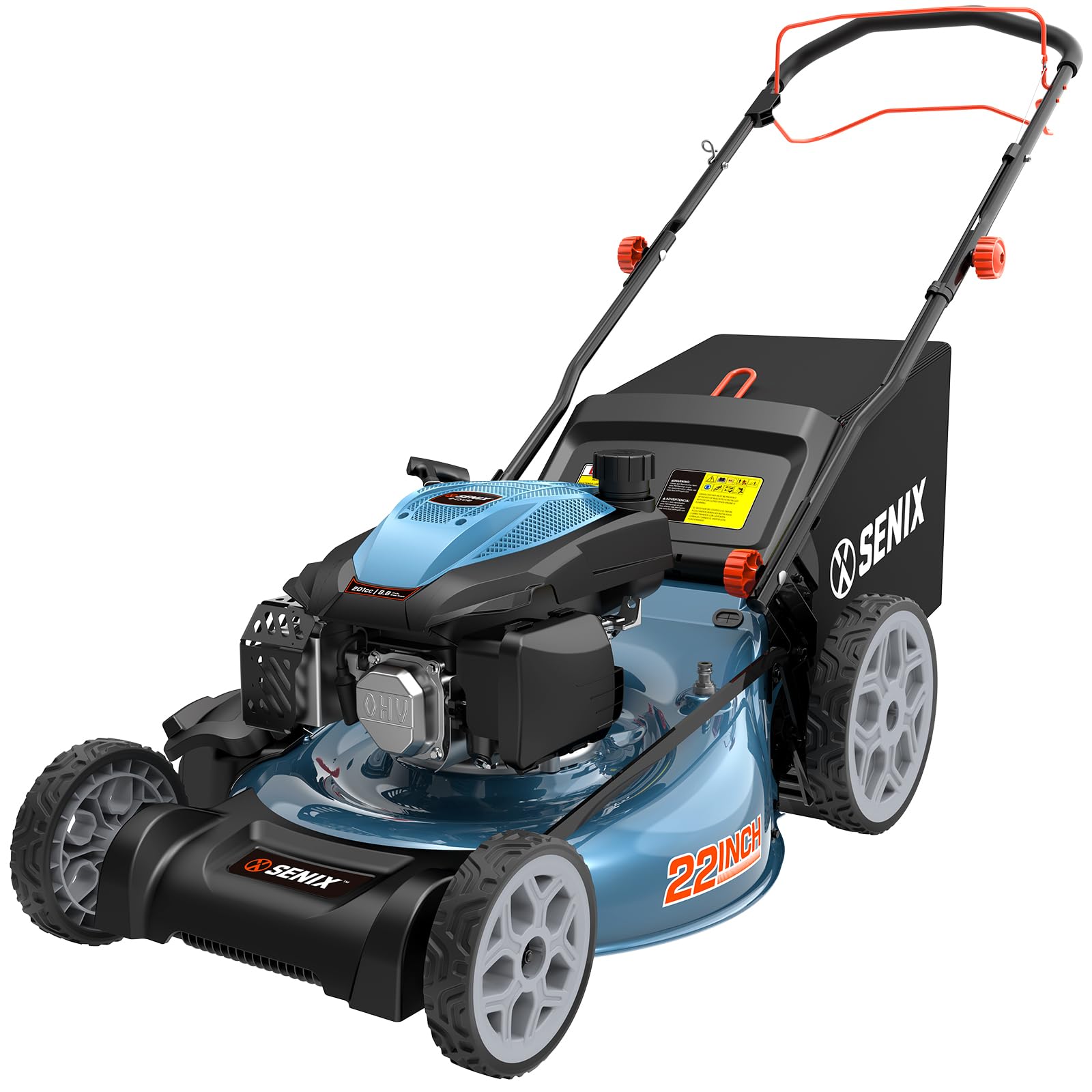
The SENIX G-H-FIVE brings a legitimate 201cc OHV engine—rated at 4.7 HP and 8.8 ft-lbs of torque—to a rear-wheel drive self-propelled platform at a price point that undercuts most competitors by a significant margin. This isn’t an electric start model in the push-button sense; it uses a recoil starter, but the engine design and single-speed RWD system make it a strong contender if you prioritize raw cutting power over ignition convenience. The 22-inch steel deck with a vortex tunnel airflow design minimizes grass buildup and improves discharge efficiency.
The single-speed self-propulsion reaches 2.9 MPH, which is a brisk walking pace that covers large yards quickly. The six-position central height adjustment ranges from 1.25 to 4 inches, offering good seasonal flexibility. Owners note that the mower is surprisingly quiet for a gas engine, and the foldable handle design supports compact storage. The manganese steel alloy blades (45–50 HRC hardness) hold their edge longer than standard blades.
The trade-offs are notable: some owners reported that the wheels can detach after a few uses if not properly secured during assembly. The pull cord on some units has been described as tight, and the handle can flex during operation, creating a ringing sound. For the torque and deck size you’re getting, the G-H-FIVE represents excellent value, but the inconsistent quality control means you should inspect your unit thoroughly upon arrival.
What works
- Powerful 201cc engine delivers strong torque for thick grass.
- Rear-wheel drive offers good traction on slopes and uneven terrain.
- 22-inch deck with vortex airflow reduces clogging significantly.
What doesn’t
- Pull cord can be stiff; not a true electric start system.
- Quality control issues reported with wheel retention and handle flex.
8. WORX WG752 40V 21″ Nitro Brushless

The WORX WG752 is a battery-powered push mower that relies on intelligent control systems—specifically Aerodeck and IntelliCut technology—to maximize efficiency from its 40V platform. The Aerodeck uses a vented design that increases air volume inside the cutting deck, preventing clogs and clumping while improving bag collection. IntelliCut automatically increases blade speed when the mower encounters thick grass and reduces it in sparse areas to conserve runtime. The push-button start is simple: press and hold the button while lifting the bail bar.
The 21-inch deck is made from polypropylene, keeping the overall weight at just over 55 pounds—among the lightest in this guide. The two included 5.0Ah PowerShare Pro batteries provide enough runtime for a quarter-acre yard, and the dual charger tops them both simultaneously. The batteries are compatible with over 140 WORX tools, making this a strategic choice if you’re building a cordless outdoor power tool ecosystem. The 3-in-1 functionality (mulch, bag, rear discharge) covers standard mowing needs.
The main limitation is that the 40V system doesn’t match the torque of higher-voltage competitors—owners report that it handles normal grass well but can struggle in very thick or wet conditions. The batteries are also somewhat difficult to remove from the mower, requiring firm pressure. There are no replacement blades widely available yet, which could become an issue for long-term ownership. For flat, small to medium lawns, the WORX is a smart, lightweight option with excellent ecosystem value.
What works
- Aerodeck technology prevents grass clumping and improves cut quality.
- IntelliCut adapts power consumption to grass density automatically.
- Lightweight design and batteries compatible with 140+ WORX tools.
What doesn’t
- 40V motor lacks torque for very thick or damp grass.
- Batteries are difficult to remove; replacement blades not widely available.
9. SENIX A025054-A 21″ 170cc FWD
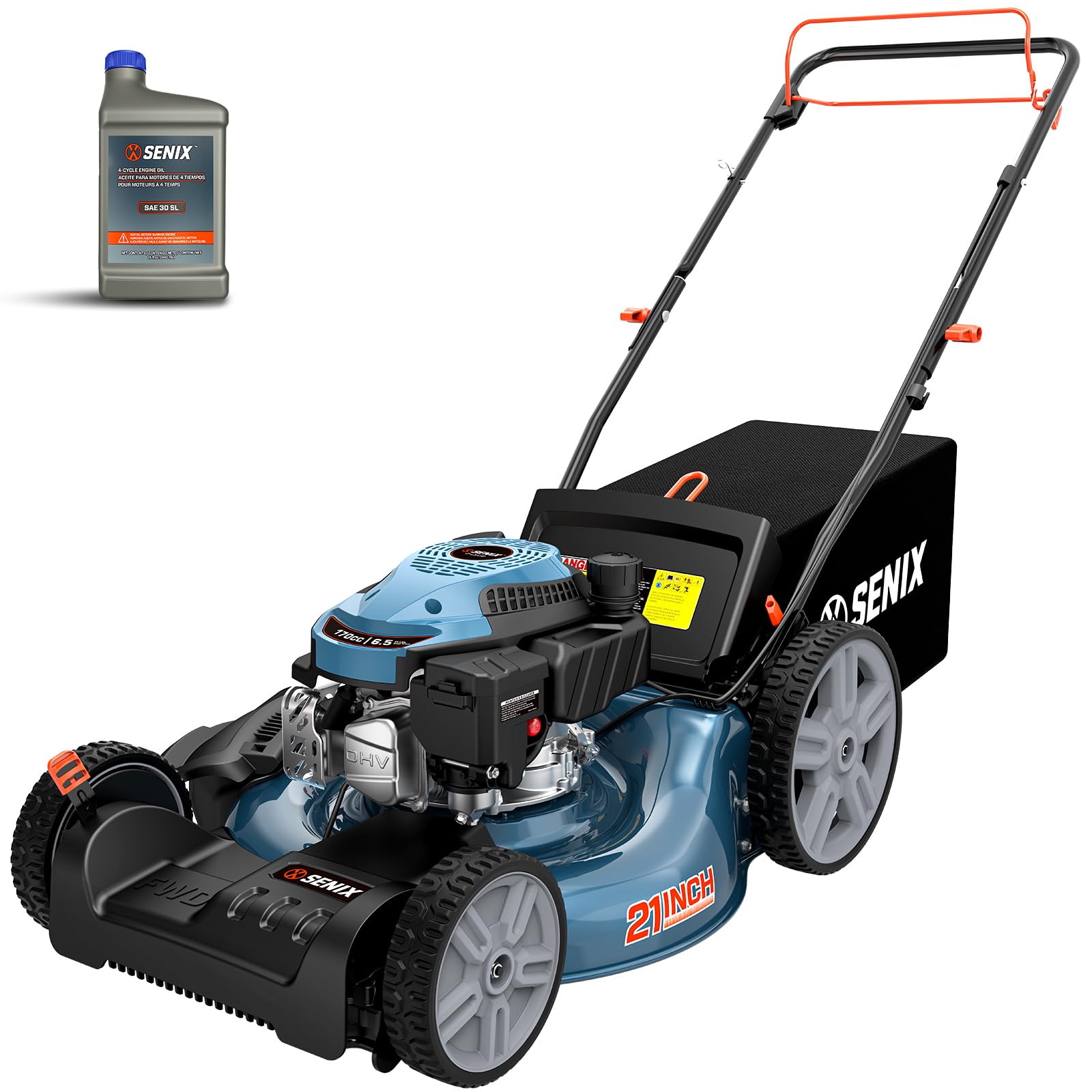
The SENIX A025054-A is an entry-level front-wheel drive gas mower that brings self-propulsion and a 170cc OHV engine (3.8 HP) to a budget-friendly price. It’s not an electric start model—it uses a traditional recoil starter—but the pre-filled oil and 4-cycle OHV engine are designed for quick, low-vibration startups. The 21-inch high-strength steel deck and 3-in-1 cutting system (bagging, mulching, side discharge) offer functional versatility for small yards up to a third of an acre.
The six-position dual-lever height adjustment ranges from 1.25 to 3.75 inches. The front-wheel drive system pulls the mower forward, making it easier to pivot around trees and flower beds than a heavier rear-drive machine. Owners who reviewed the mower positively noted that assembly takes about 15 minutes, the cuts are smooth and even, and the fuel consumption (approximately 27 ounces per hour) is reasonable for the power output. The 1.7-bushel grass bag is adequate for regular weekly mowing.
The negative reviews highlight a critical reliability concern: some units develop a metal knocking noise and then die completely, refusing to restart. Others report that the starter cord sticks after 15-20 pulls, making the “easy start” claim feel misleading. The engine and driveshaft appear vulnerable to damage if the blade hits a rock, with some users reporting that replacing the entire mower every two years is cheaper than repairing it. For the price, the SENIX offers attractive initial value, but the failure rate among units is higher than we’d like to see.
What works
- Lightweight steel deck and FWD make it easy to maneuver in tight spaces.
- Quick assembly and smooth cutting performance for small yards.
- 3-in-1 system provides basic mowing flexibility at a low entry cost.
What doesn’t
- High rate of engine failure reported after a few uses.
- Starter cord can stick, defeating the purpose of easy starting.
Hardware & Specs Guide
Electric Start Types
Gas-powered electric start models use a dedicated 12V battery and starter motor to crank the engine—similar to a car. This adds weight (typically 5-8 pounds for the battery and starter) but eliminates pull-cord strain entirely. Battery-powered mowers use a simple push-button that engages the motor directly; no starter motor or secondary battery is needed. The trade-off is that gas electric start requires periodic battery maintenance and replacement every 2-3 seasons, while battery mowers simply use their main battery for starting.
Self-Propulsion Drivetrains
Front-wheel drive (FWD) is lighter and easier to pivot, making it ideal for flat yards with obstacles like flower beds and trees. Rear-wheel drive (RWD) provides better traction on slopes because the drive wheels are under the mower’s weight plus the operator’s pushing force. Variable-speed transmissions (CVT or belt-drive with multiple gears) let you match your walking speed exactly; single-speed systems are simpler and cheaper but force you to adapt your pace to the mower.
Deck Material and Gauge
Stamped steel decks are the standard for gas mowers due to their impact resistance and heat dissipation. The gauge thickness matters: 16-gauge steel (0.0598 inches) is substantially stronger than standard 20-gauge (0.0359 inches) and resists cracking from rock strikes. Polypropylene decks are lighter and rust-proof but can develop hairline cracks over years of use, especially in hot climates. Composite decks with fiberglass reinforcement offer a middle ground but are less common in this price range.
Cutting Height and Deck Design
A broader height range—preferably from 1.25 inches to 4 inches—accommodates seasonal grass management. Lower cuts in early spring remove dead thatch; higher cuts in summer preserve root moisture. Single-lever adjustments are far more practical than four individual wheel levers. Deck airflow design (vortex tunnels, Aerodeck, MAXFlow) directly affects how well the mower lifts grass for an even cut and how efficiently it directs clippings into the bag or out the discharge chute without clogging.
FAQ
Is an electric start lawn mower worth the extra cost over a standard pull-start model?
Do battery-powered electric start mowers have enough power to replace a gas mower?
How long does the battery last in a gas-powered electric start system?
What maintenance is required for an electric start gas mower that I don’t need for a battery mower?
Final Thoughts: The Verdict
For most gardeners, the best electric start lawn mower winner is the YARDMAX YG4761 because it combines a reliable electric starter with a wide 24-inch deck, a 201cc engine, and a CVT transmission that makes large-yard mowing genuinely less tiring. If you want instant push-button silence with gas-matching torque, grab the EGO LM2114SP. And for pro-grade cordless performance within the Milwaukee M18 ecosystem, nothing beats the Milwaukee 2823-20.