
A bag of cheap topsoil can turn your prized Monstera into a yellow mess or leave your vegetable bed waterlogged within a week. The difference between a plant that survives and one that thrives often comes down to fractions of an inch in particle size and the ratio of aeration to moisture retention. Gardeners waste countless dollars on mixes that compact, harbor fungus gnats, or lack the structural porosity roots need to breathe.
I’m Rikta — the co-founder and writer behind Lawn Gear Lab. I’ve spent hundreds of hours dissecting the ingredient labels, analyzing particle-size distribution, comparing organic certifications, and sifting through thousands of owner reports to separate the high-performing blends from the overpriced fillers in this category.
This guide breaks down seven distinct contenders by their physical composition — from chunky aroid bark blends to nutrient-dense compost mixes and everything in between — so you can confidently pick the right soil mix for your specific plants without wasting another dollar on the wrong bag.
How To Choose The Best Soil Mix
Not all bags labeled “potting soil” are created equal. The single most important variable is particle-size distribution — the ratio of large, medium, and fine particles determines whether water flows through freely or turns your pot into a swamp. Layered on top of that are the nutrient profile, pH, organic certification, and whether the mix includes slow-release fertilizer.
Match the Texture to the Plant Type
Succulents and cacti need a gritty, sharply draining mix with at least 50% inorganic material like pumice, lava rock, or coarse sand. Aroids — Monsteras, Philodendrons, Alocasias — require a chunky, bark-heavy blend that holds some moisture yet never stays soggy. Tropical foliage plants and ferns prefer a finer, more moisture-retentive base of peat or coir with perlite. Vegetables and annuals need a richer compost-based mix with balanced water-holding capacity. Using the wrong texture is the fastest way to rot roots or stunt growth.
Check for Organic Certification and Hidden Additives
If you grow edibles or want to avoid synthetic wetting agents, look for an OMRI-listed label or a clear ingredient list free of chemical fertilizers. Many mass-market mixes contain non-renewable peat moss (which has environmental trade-offs) or synthetic moisture crystals that can release unwanted salts. Some premium blends use sustainable coconut coir and volcanic rock, which offer more consistent long-term structure than peat alone.
Quick Comparison
On smaller screens, swipe sideways to see the full table.
| Model | Category | Best For | Key Spec | Amazon |
|---|---|---|---|---|
| Craft Aroid Potting Mix | Aroid | Tropical aroids & Monsteras | 2 Qt bag, bark + pumice + lava rock | Amazon |
| Midwest Hearth Premium Potting Soil | All‑Purpose | Seed starting & general potting | 8 Dry Quarts, peat + vermiculite + perlite | Amazon |
| Coast of Maine Bar Harbor Blend | Organic All‑Purpose | Containers & raised beds | 16 Qt, compost + crab meal + kelp | Amazon |
| Coast of Maine Tomato & Vegetable | Vegetable | Tomatoes & edibles | 20 Qt, composted manure + peat moss | Amazon |
| Perfect Plants Indoor Plant Soil | Indoor All‑Purpose | Houseplants & African Violets | 4 Qt, pine bark + coco coir + perlite | Amazon |
| Miracle-Gro Potting Mix (3-Pack) | All‑Purpose | High-volume container gardening | 3 x 8 Qt, feeds up to 6 months | Amazon |
| Avalution Horticultural Lava Rock | Gritty Amendment | Succulents & bonsai drainage | 2.4 lb bag, volcanic rock pebbles | Amazon |
In‑Depth Reviews
1. Craft Aroid Potting Mix
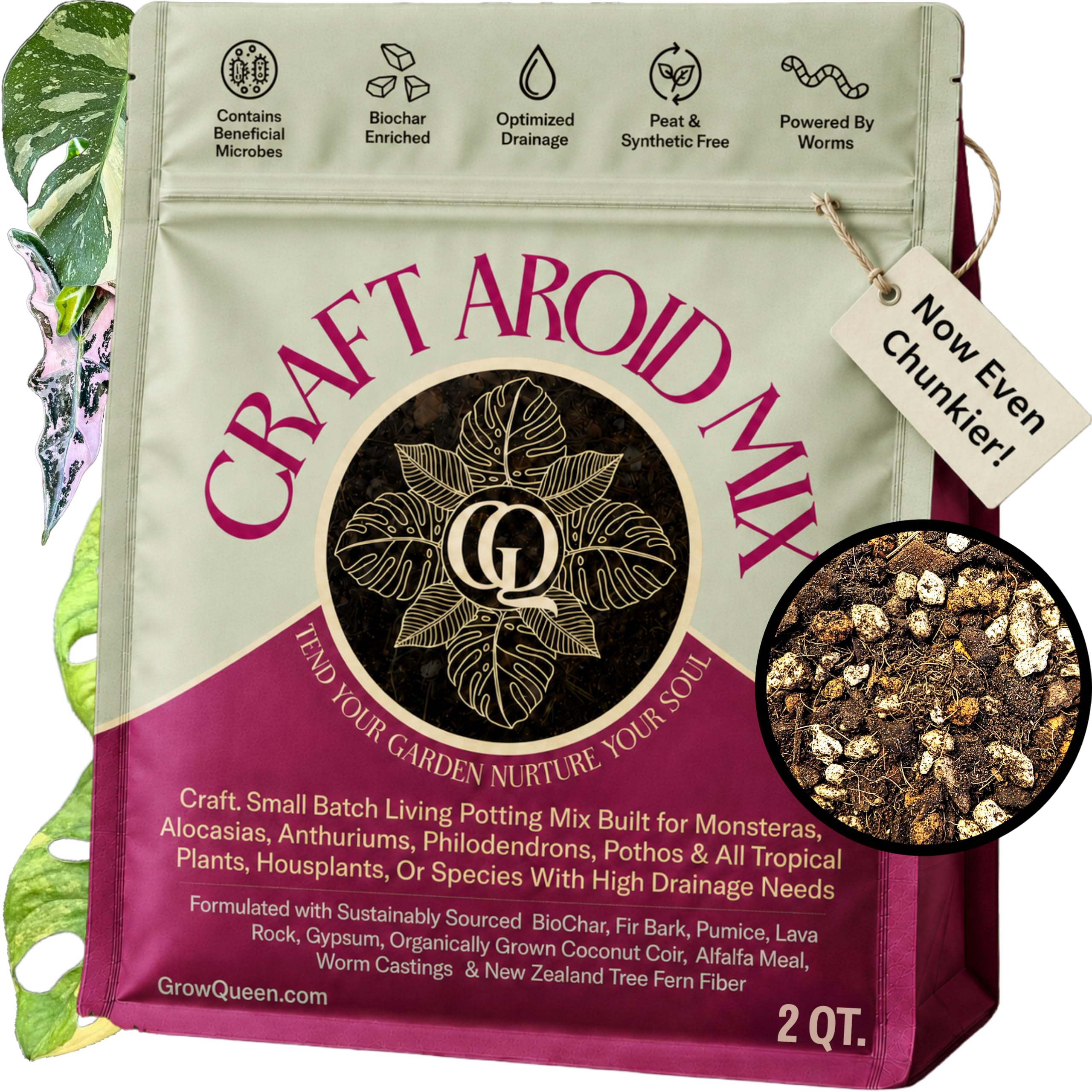
This blend from Grow Queen is a masterclass in aroid-specific formulation — it uses large Douglas fir bark fines, lava rock, pumice, and New Zealand Tree Fern Fiber instead of the peat and perlite found in standard mixes. The particle sizes are intentionally chunky, creating macro-pores that let oxygen reach roots while still holding enough moisture to prevent desiccation. The certified organic coco coir base is washed more thoroughly than most competitors, which eliminates the salt buildup that can burn sensitive Monstera or Alocasia roots.
Owners consistently report zero fungus gnats, no mold, and no compaction even after several months — a strong sign that the structural integrity of the bark and pumice holds up to repeated watering cycles. The inclusion of worm castings and living beneficial microbes provides a gentle, sustained nutrient supply without the risk of chemical burn. It arrives pre-moistened and ready to use, so there is no dusty pre-mixing required before potting.
At 2 quarts, the bag volume is modest, and some users with large collections may need multiple bags for a single large pot. The price per quart runs higher than conventional blends, but the formulation density — heavy on lava rock and bark — means a little goes further than fluffy peat-based soil. For tropical plant enthusiasts who prioritize root health and drainage, this is the most carefully engineered option on the list.
What works
- Exceptional aeration from chunky bark and volcanic rock
- Zero pests or mold reported after months of use
- Peat-free and perlite-free for eco-conscious growers
What doesn’t
- Small bag size limits value for large containers
- Higher per-quart cost than standard potting soils
2. Midwest Hearth Premium Potting Soil Mix

Midwest Hearth delivers a classic three-part formulation — sphagnum peat moss for moisture holding, perlite for drainage, and vermiculite for aeration — that mirrors what professional greenhouse growers use. The texture is noticeably light and fluffy straight out of the resealable bag, which makes it excellent for seed starting and for delicate root systems that struggle to push through compacted soil. The manufacturer states the pH is balanced for a broad spectrum of plants, and multiple owners confirm it matches the neutrality required for most houseplants and annuals.
Customer feedback highlights two recurring strengths: the absence of weed seeds or insect pests, and the soil’s resistance to hardening into a crust after drying. Unlike some bagged mixes that develop a hydrophobic surface when they dry out, this blend re-wets readily when pre-soaked. Many users note that their petunias, tomatoes, and indoor foliage plants showed faster root establishment compared with generic big-box brands.
The 8-quart bag size works well for several medium pots or a single large container. Some gardeners have pointed out that the mix drains quickly enough that it benefits from a pre-soak or bottom-watering technique to retain adequate moisture for thirsty plants. It is not fortified with added fertilizer, so you will need to supplement feeding after the first few weeks. For seed starting and general-purpose potting where control over nutrition matters, this is a clean, consistent base.
What works
- Light, fluffy texture perfect for delicate seedlings
- No weeds, gnats, or pests reported
- Resealable bag keeps unused soil fresh
What doesn’t
- Requires pre-soaking for consistent moisture retention
- No built-in fertilizer included
3. Coast of Maine Bar Harbor Blend Potting Soil
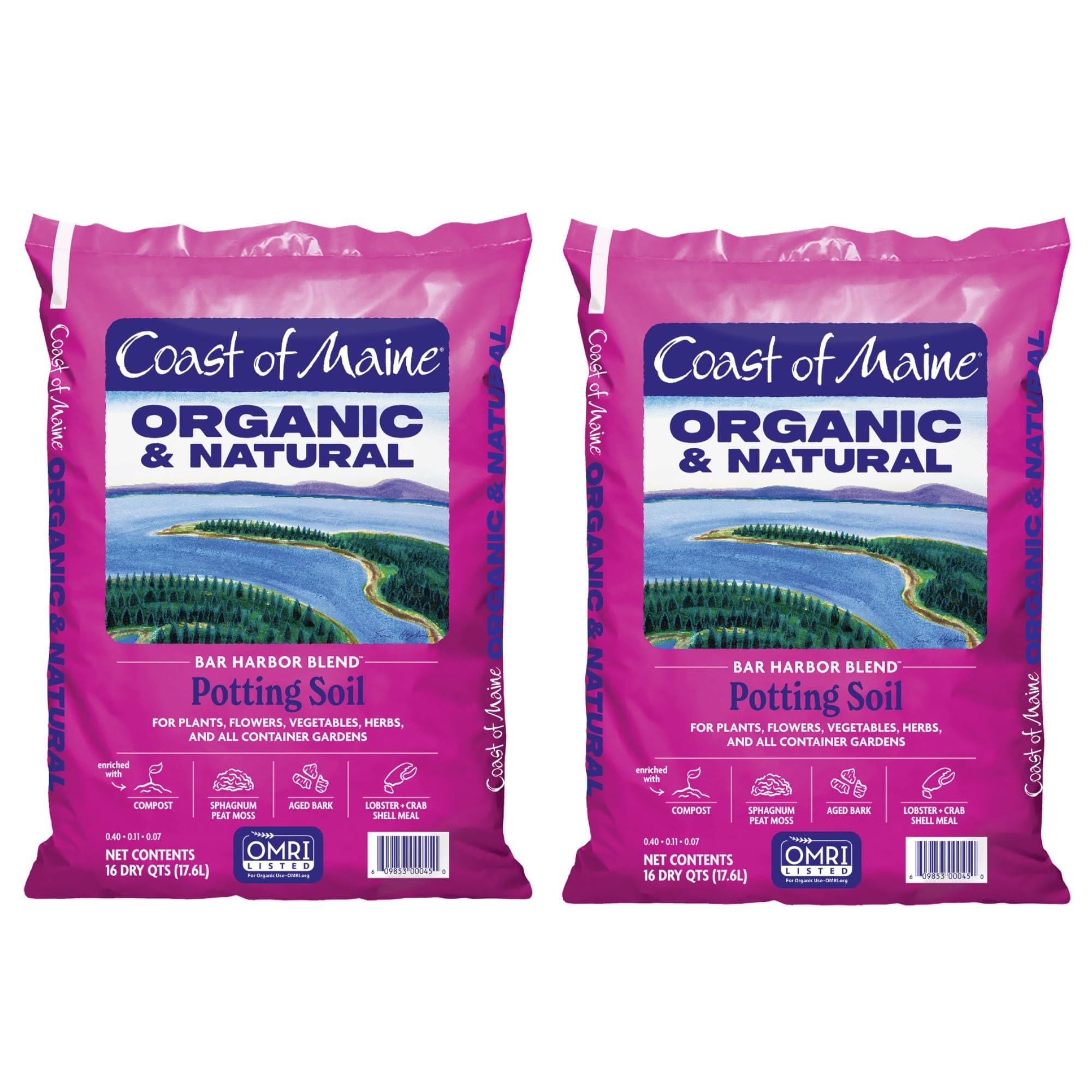
Coast of Maine’s Bar Harbor Blend is a nutrient-dense organic mix built around compost, sphagnum peat moss, perlite, lobster and crab shell meal, and kelp meal. The shell meals provide a slow-release source of calcium and chitin, which many gardeners find discourages soil-borne pests such as fungus gnats. The texture is darker and heavier than a typical peat-lite mix because the compost base adds mass, yet perlite keeps the pore space adequate for container drainage.
Users report exceptional results with heavy-feeding crops like tomatoes, peppers, and potatoes in containers and raised beds. The organic nitrogen from the compost and kelp feeds plants steadily without the burn risk associated with synthetic fertilizers. Multiple owners specifically mention that this soil outperformed their previous go-to brands, citing stronger stem development and darker leaf color over the course of a full growing season.
The 16-quart two-pack provides ample volume for medium-scale container gardening, though the weight per bag is higher than peat-dominant mixes due to the compost and mineral content. Some users note that the higher organic matter means the soil can settle more over time, requiring periodic top-dressing. If you prioritize organic inputs and want a mix that supports vigorous edible growth right out of the bag, this blend delivers measurable results.
What works
- Nutrient-rich compost base with slow-release shell meals
- Visible improvement in tomato and pepper growth
- OMRI-listed for organic gardening
What doesn’t
- Heavier than peat-based alternatives
- Can settle and compact over a long season
4. Coast of Maine Tomato & Vegetable Planting Soil

This mix from Coast of Maine targets tomatoes and vegetables specifically, using composted cow manure, sphagnum peat moss, and a small percentage of cedar or aromatic wood fines that help deter soil insects. The 20-quart bag offers generous volume for in-ground bed amendment or for filling several large containers. It is OMRI-listed, so you can confidently use it in an organic vegetable garden without worrying about synthetic residues.
Gardener reviews are consistently positive regarding plant performance — heirloom tomatoes, in particular, benefit from the blend’s balance of moisture retention and drainage. The composted manure provides a soluble nutrient boost in the first few weeks, giving seedlings a strong start. Several users note that the mix contains some wood chunks that float to the surface after watering, but these are the insect-deterring cedar fines that break down slowly over the season.
A minority of owners have reported fungus gnat emergence after potting, though a neem oil drench resolves the issue quickly. The soil’s structure is slightly heavier than an all-purpose potting mix, making it less ideal for small indoor pots where drainage is critical. For the price per quart, this is one of the most economical organic options for edible gardeners who want a single bag that works both as a container fill and as a ground amendment.
What works
- Cost-effective volume for large garden projects
- Composted manure provides immediate nutrition
- Lightweight for its nutrient density
What doesn’t
- Wood fines may float to the surface
- Potential for fungus gnats in some batches
5. Perfect Plants Indoor Plant Soil

Perfect Plants uses a simple, transparent recipe — pine bark, coco coir, perlite, sand, and garden lime — that creates a light, airy texture suited for common houseplants like Monstera, Pothos, Spider Plants, and African Violets. The pH is buffered by the garden lime, and the sand adds just enough weight to stabilize taller pots. Multiple owners explicitly compare this mix to Miracle-Gro and state this is reliably free of the gnats that plague those larger brands.
The blend drains well but retains enough moisture through the coco coir to avoid needing frequent watering. Users report that plants adjust quickly after repotting, with minimal transplant shock and noticeable new growth within two weeks. The resealable bag is a practical touch for those who repot in stages, keeping the remaining soil fresh and dust-free between uses.
The 4-quart volume is compact — fine for a few medium pots but not economical for large-scale projects. Some buyers wish the bag were larger since the quality is high. Price per quart sits in the mid-range, but the reliable absence of pests and the balanced drainage make it a solid everyday choice for indoor plant owners who do not want to mix their own soil.
What works
- Consistently free of gnats and mold
- Fluffy, well-aerated texture that doesn’t compact
- Resealable bag for easy storage
What doesn’t
- Small bag size limits value per project
- Dries out relatively fast in plastic pots
6. Miracle-Gro Potting Mix (3-Pack)

Miracle-Gro’s classic potting mix needs little introduction — the formula includes a continuous-release plant food that feeds for up to six months, making it a turnkey solution for outdoor container flowers, vegetables, and shrubs. The three-pack provides 24 total quarts, enough to fill roughly six 8-inch pots, and the individual bags are manageable sizes that do not require a wheelbarrow to move around the garden.
The texture is consistently light with visible perlite throughout, and it drains reliably in plastic, terracotta, and fabric pots. Many gardeners appreciate that the built-in fertilizer eliminates the need to remember a feeding schedule for the first half of the growing season. Owners of annuals and perennials report vigorous growth with minimal effort, which is exactly the target use case for this product.
Where this mix loses ground is the user experience around unwanted passengers — multiple reviews across platforms mention fungus gnat infestations, which is a common trade-off with mass-market soil that is stored in warm warehouses. If you are growing indoors, you may want to sterilize the mix or combine it with a gnat control strategy. For outdoor container gardening on a budget, the convenience and total volume are hard to beat.
What works
- Built-in fertilizer feeds container plants for 6 months
- High total volume at a competitive price per quart
- Proven track record for outdoor flowers and vegetables
What doesn’t
- Fungus gnats are a recurring concern for indoor use
- Contains synthetic wetting agents and additives
7. Avalution Horticultural Lava Rock Pebbles

This product is not a standalone soil mix — it is a bag of volcanic lava rock pebbles designed to be blended into potting mixes or used as a top dressing. The 2.4-pound bag contains small, porous stones that create immediate drainage channels and prevent compaction in succulent, cactus, and bonsai containers. The reddish-grey color provides a natural aesthetic that works well as a decorative top layer for terrariums and fairy gardens.
Owners who use this as an amendment report that it effectively turns a dense commercial potting soil into a fast-draining succulent mix. The porous surface area of the lava rock also provides a home for beneficial bacteria and can help buffer soil pH over time. A few buyers note that the pebbles arrive quite dusty and require a thorough rinse before use — after washing, the true color emerges and the stones settle into a clean, uniform layer.
As a standalone substrate, it is too porous and nutrient-poor to support most plants without additional organic matter. Its value is as a structural component rather than a complete soil. For succulent enthusiasts who prefer to build their own gritty mix, or for anyone needing a non-compacting top dressing that reduces evaporation from the soil surface, this is an effective and visually appealing solution at a modest cost.
What works
- Excellent drainage amendment for succulents and cacti
- Porous structure supports beneficial bacteria colonization
- Attractive natural color for top dressing
What doesn’t
- Requires thorough rinsing to remove dust
- Not a complete growing medium on its own
Hardware & Specs Guide
Particle Size and Soil Structure
The single most important physical property of any potting mix is the distribution of particle sizes. Large particles (bark chips, pumice, lava rock) create macro-pores that allow water to drain and air to reach roots. Fine particles (peat, coir, sand) fill the spaces in between and retain moisture. A mix that is too fine holds water too long and suffocates roots; one that is too coarse dries out within hours. For succulents, aim for at least 50% particles larger than ⅛ inch. For aroids, aim for a visible chunkiness where bark pieces are ¼ to ½ inch wide. For general houseplants, a uniform texture with visible perlite is usually sufficient.
Organic Matter and Nutrient Density
The source of organic matter determines how long the soil feeds plants and how it breaks down over time. Peat moss provides structure and acidity but decomposes after one season and is non-renewable. Coconut coir is more sustainable, resists compaction longer, and re-wets more easily. Compost, worm castings, and manure provide immediate nutrients and microbial life but increase weight and can introduce weed seeds if not properly processed. Blends with lobster or crab shell meal add slow-release calcium and chitin, which some growers believe triggers plants’ natural pest defenses. For long-term container gardening, look for a mix where the organic base is augmented with stable aeration materials rather than composed entirely of fine peat.
FAQ
Can I use a succulent gritty mix for my Monstera?
Why does my bagged soil have white fuzzy mold on top?
How often should I replace potting soil in containers?
Final Thoughts: The Verdict
For most gardeners, the soil mix winner is the Craft Aroid Potting Mix because its chunky, peat-free formulation delivers the ideal balance of aeration and moisture retention for the widest range of indoor tropical plants. If you want a versatile organic base for vegetables and heavy feeders, grab the Coast of Maine Bar Harbor Blend. And for seed starting or clean general-purpose potting without pest worries, nothing beats the Midwest Hearth Premium Potting Soil.