
A pothos vine might survive in a glass of water for months, but the real explosion of growth — those foot-long tendrils and dinner-plate-sized leaves — happens when the roots are locked into a properly aerated, chunky substrate that mimics their native forest floor. The wrong soil suffocates the root system, leading to yellowing leaves, stunted vines, and the dreaded root rot that kills from the bottom up. The difference between a plant that merely exists and one that thrives comes down to a single decision at potting time.
I’m Rikta — the co-founder and writer behind Lawn Gear Lab. This guide is the result of cross-referencing dozens of proprietary aroid-mix ingredient lists, analyzing particle-size distribution, and studying hundreds of owner-reported outcomes on drainage, aeration, and long-term soil structure for pothos plants.
Whether you’re potting a fresh cutting or upgrading an overgrown golden pothos, choosing the right substrate for pothos determines whether your plant pushes out vibrant new leaves or slowly declines in compacted, waterlogged soil.
How To Choose The Best Substrate For Pothos
Pothos roots are thick, fleshy, and prone to rot in dense, moisture-locked soil. The ideal substrate balances water retention with rapid drainage and high air porosity. Every component in the bag has a job — bark provides structure, coco coir holds moisture, and pumice or perlite creates air pockets. Here are the three make-or-break factors.
Particle Size and “Chunkiness”
The single most important spec is the physical size of the largest particles. A true aroid or pothos mix will contain visible bark chips, pumice stones, or lava rock — pieces at least ¼ inch across. These create macro-pores that let oxygen reach the roots and water drain freely. If the substrate looks like fine coffee grounds or uniform sand, it will compact and drown the root system within weeks.
Drainage vs. Moisture Retention Balance
A pothos substrate must drain quickly — within 10 to 15 seconds after watering — while still holding enough moisture to keep the roots hydrated for several days. This balance comes from the ratio of water-holding ingredients (coco coir, peat moss, worm castings) to drainage agents (perlite, pumice, orchid bark, lava rock). A mix that is 60–70% drainage material and 30–40% moisture-retentive material is the sweet spot for pothos.
Organic Nutrients and pH Stability
Pothos are moderate feeders, not heavy feeders. The best substrates include a slow-release organic nutrient source like worm castings or biochar, which feed the plant without burning roots. Gypsum, garden lime, or tree fern fiber help buffer the pH to the 6.0–6.5 range that pothos prefer. Avoid mixes that rely on synthetic time-release fertilizer pellets — pothos roots are sensitive to salt buildup.
Quick Comparison
On smaller screens, swipe sideways to see the full table.
| Model | Category | Best For | Key Spec | Amazon |
|---|---|---|---|---|
| Perfect Plants Organic Pothos Soil | Pothos Blend | Pothos-specific mix | 4 qt bag; pine bark + coco coir | Amazon |
| Top Tier Genetics AROID Soil | Aroid Blend | Explosive root growth | 4 qt bag; mycorrhizae + biochar | Amazon |
| DUSPRO 7-in-1 House Plant Soil | Premium Blend | Versatility across plants | 2 qt bag; 7-ingredient blend | Amazon |
| Craft Aroid Potting Mix | Eco-Friendly | Peat-free sustainability | 1 qt bag; pumice + lava rock | Amazon |
| Gardenera Premium Monstera Potting Soil | Sterile Mix | Pest-free repotting | 1 qt bag; biochar + worm castings | Amazon |
| Midwest Hearth Premium Potting Soil | General Purpose | Budget-friendly starter | 4 qt bag; peat + perlite + vermiculite | Amazon |
| Midwest Hearth African Violet Soil | Specialty Mix | Lightweight alternative | 4 qt bag; pH-controlled blend | Amazon |
In‑Depth Reviews
1. Perfect Plants Organic Pothos Soil
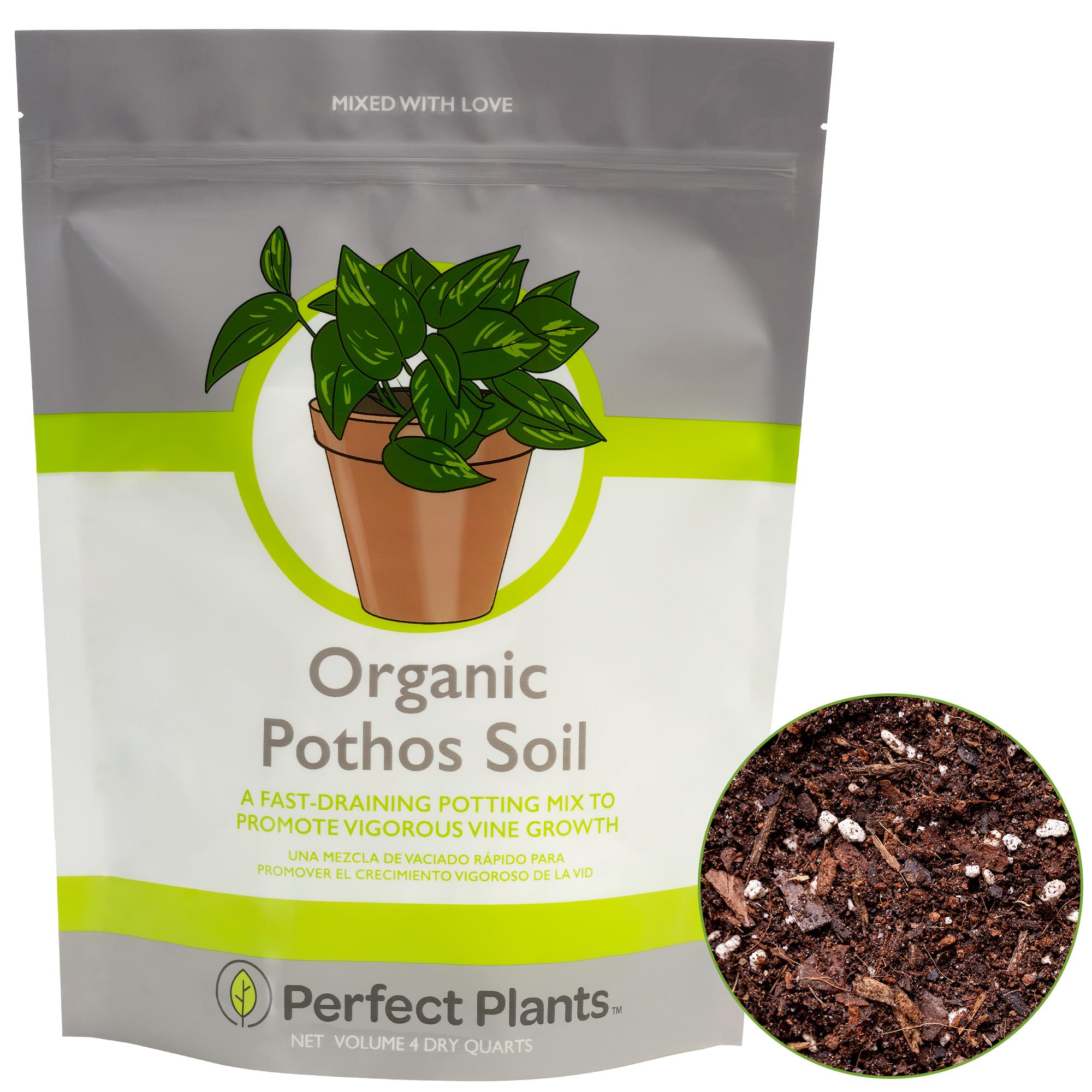
This is the only substrate on the market built specifically for pothos and it shows in the formulation. The blend uses coconut coir as its water-management base rather than standard peat moss, paired with pine bark fines and perlite for structure. The presence of garden lime in the ingredient list is a smart move — it buffers the coir’s naturally low pH to the 6.0–6.5 sweet spot that pothos roots prefer. The 4-quart bag size is enough to repot three to four standard 6-inch pots.
Owners consistently report that pothos transplants show no shock and begin pushing new growth within two weeks. The mix drains freely enough that you can water on a regular schedule without checking for soggy bottom layers. Several long-term reviewers noted the appearance of mushrooms in the pot — a strong indicator of active, healthy soil biology rather than sterilized dead media.
One minor point: the bag contains visible sand particles, which add weight and some drainage but can settle to the bottom of the pot over time. For deep containers, you may want to stir the mix before filling. The lack of added fertilizer means you’ll need to start a liquid feeding routine after about 8 weeks, but this also gives you full control over nutrient concentration.
What works
- Formulated specifically for pothos with a balanced coco coir base
- Garden lime buffers pH for optimal nutrient uptake
- Active soil biology supports long-term root health
What doesn’t
- Sand particles can settle and reduce aeration in deep pots
- No slow-release nutrients require supplemental feeding after 8 weeks
2. Top Tier Genetics Premium AROID Soil Blend
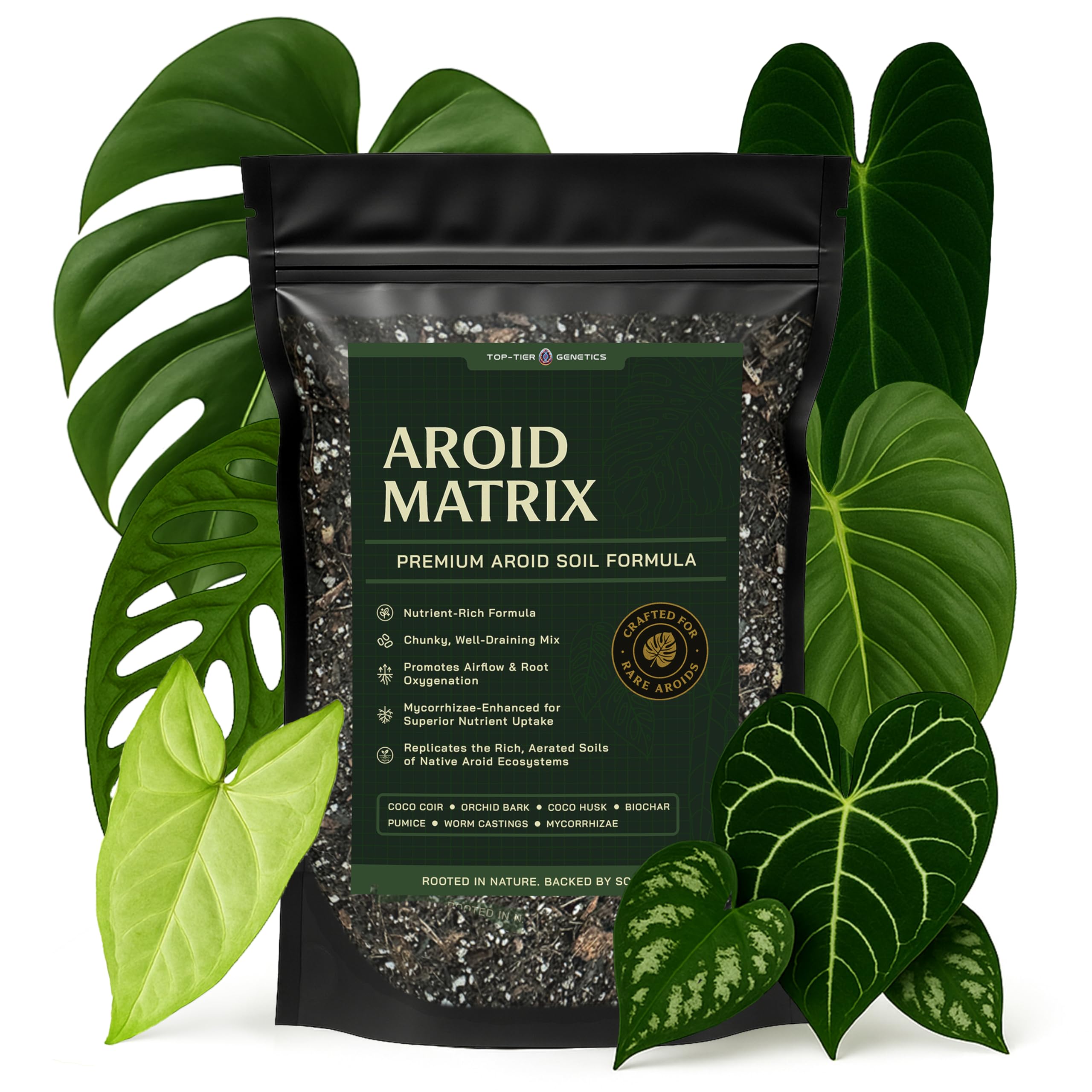
This blend differentiates itself with two high-end biological amendments: mycorrhizal fungi and biochar. The mycorrhizae form a symbiotic network around pothos roots, extending the root system’s effective reach for water and nutrients — a serious advantage for a trailing plant that pushes out long runners. The biochar acts as a long-term nutrient bank, holding onto cations and releasing them on demand. The orchid bark, coco husk, and pumice create a genuinely chunky texture with excellent air porosity.
Reviewers note that pothos plants repotted into this mix show visible new root growth within days, not weeks. The texture is described as “airy” and “fresh” out of the bag, with no compaction even after several months of watering. The 4-quart volume is appropriate for a single large 8-inch pot or two medium-sized hanging baskets. The mix comes ready to use with no additional amendments required for the first 8 to 12 weeks.
The bag size, at 4 quarts, is modest — if you are repotting multiple large containers, you will need two or three bags. The biological additives are live organisms, so you should store the bag in a cool, dark place and use it within a few months of purchase. Some users found the bark chunks slightly large for very small 4-inch pots, though this is a non-issue for standard pothos containers.
What works
- Mycorrhizae and biochar create a biologically active, nutrient-retentive root environment
- Chunky texture with orchid bark and pumice prevents compaction
- No mixing needed — use straight from the bag
What doesn’t
- Bark chunks may be oversized for small 4-inch nursery pots
- Live biological components limit shelf life in storage
3. DUSPRO 7-in-1 Pre-Mixed House Plant Soil
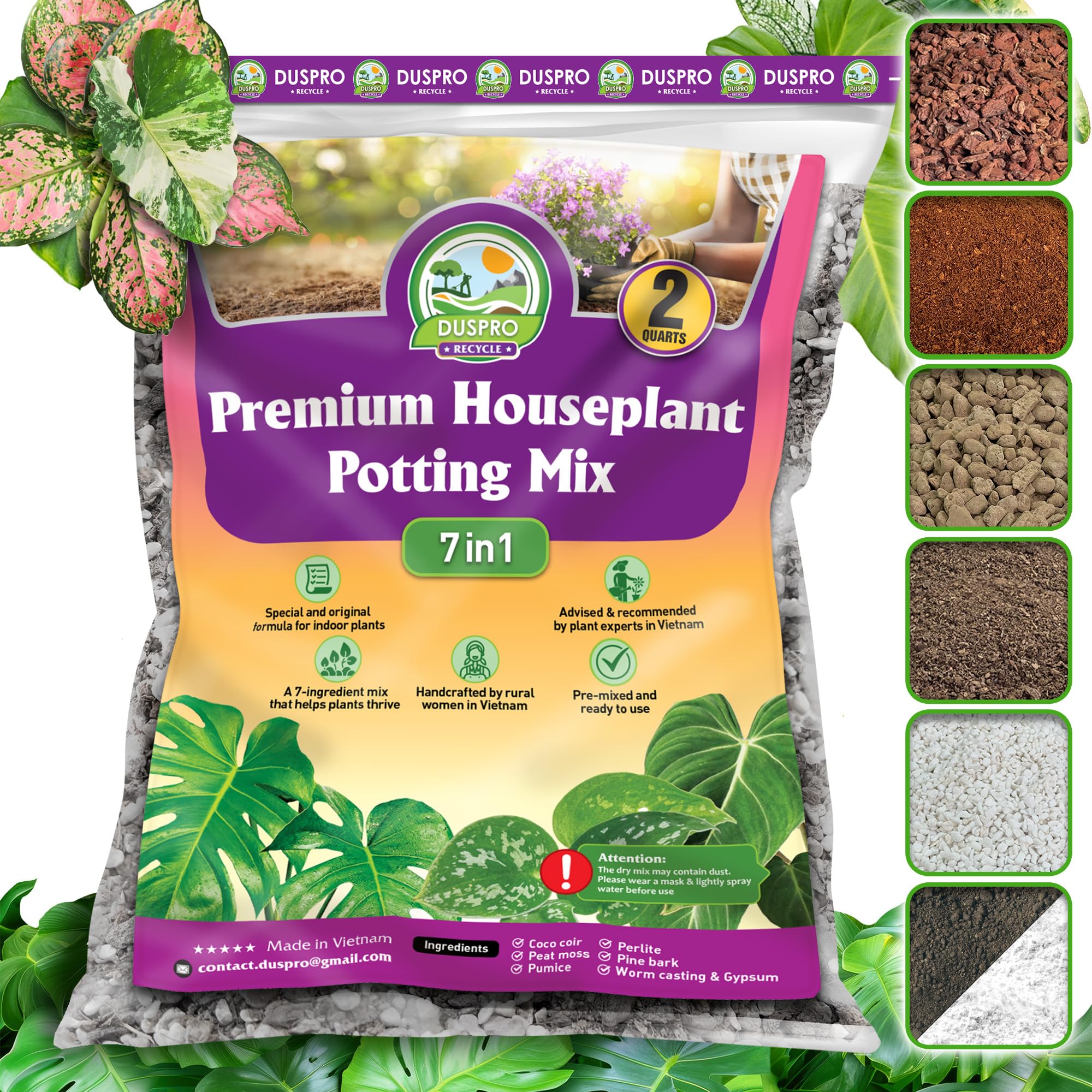
The DUSPRO blend brings seven distinct ingredients together in a proprietary formula developed with Vietnamese plant specialists. The key innovation is the inclusion of gypsum alongside coco coir, peat moss, perlite, pumice, worm castings, and pine bark. Gypsum acts as a natural soil conditioner, improving aggregation and preventing the clay-like compaction that can develop in high-organic mixes. The result is a substrate that stays fluffy and porous even after repeated watering cycles.
Owners report excellent moisture management: the coco coir and peat moss hold enough water for 10–14 day intervals in medium pots, while the pumice and perlite ensure excess water drains within seconds. Dust from the bag is noted by multiple reviewers — the finer particles settle during shipping. Shaking the bag thoroughly before use and misting the dry mix lightly will reduce airborne particles. The 2-quart size is enough for two 4-inch pots but runs out quickly for larger plantings.
The hand-crafted production method means batch consistency can vary slightly. The resealable bag is a welcome feature for storing leftover mix, but the zip closure is not heavy-duty and may fail after multiple openings. For a single large pothos or several small pots, this is a fantastic plug-and-play blend. For extensive collections, you may want the larger sizes the brand offers.
What works
- Gypsum improves long-term soil structure and prevents compaction
- Excellent moisture retention with rapid drainage
- Versatile across many plant types beyond pothos
What doesn’t
- Dusty out of the bag; needs shaking and misting before use
- 2-quart bag is small; larger pots require multiple bags
4. Craft Aroid Potting Mix (Grow Queen)
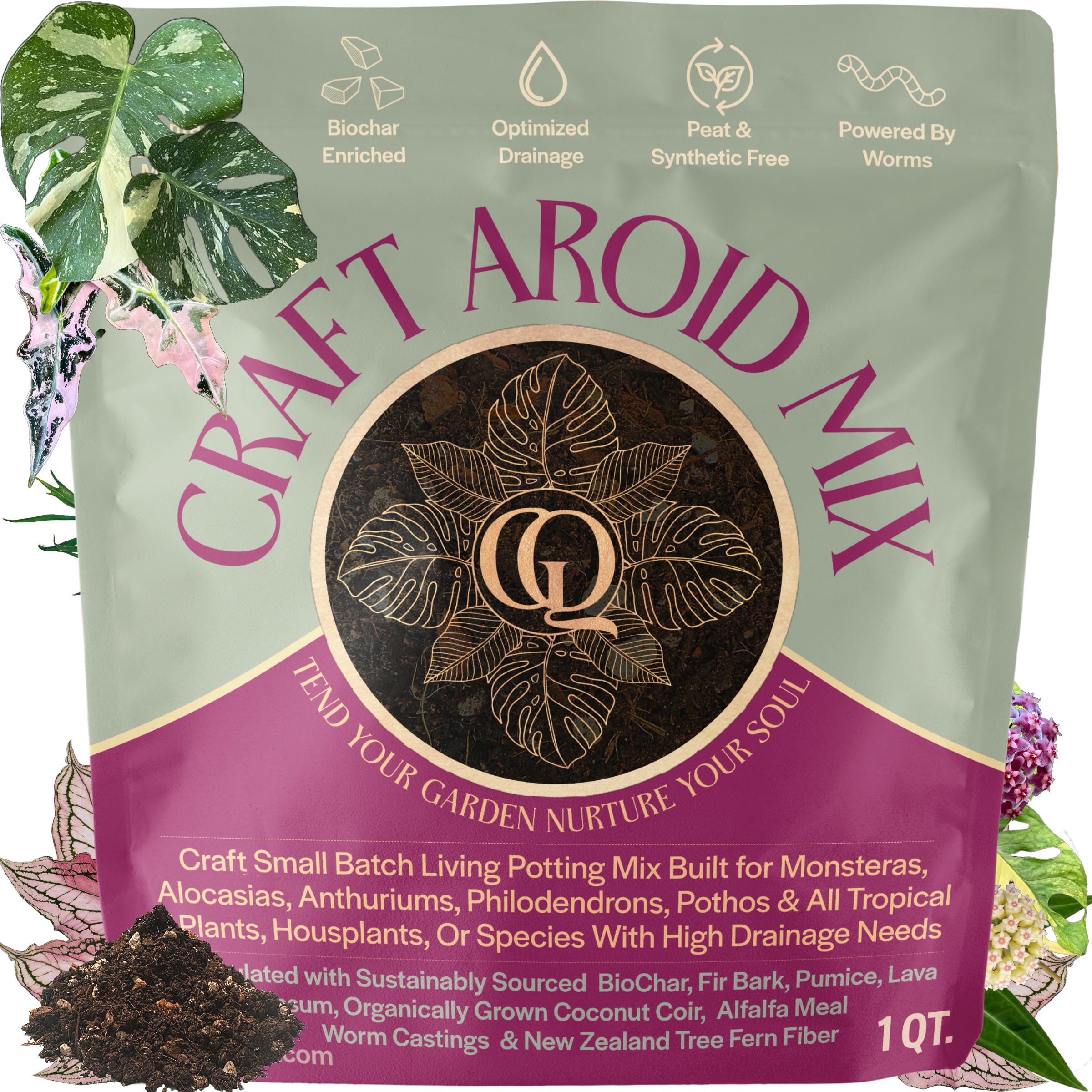
This mix takes a strong environmental stance by replacing both peat moss and perlite with sustainable alternatives. Instead of peat — whose harvesting releases stored carbon — the base uses certified organic coco coir. Instead of energy-intensive perlite, the drainage component is a blend of pumice and lava rock, both naturally occurring volcanic materials that require no processing. New Zealand tree fern fiber is added as a pH buffer, bringing the mix to pH 6.0, ideal for pothos.
Owner feedback consistently praises the texture: “light yet chunky,” with large Douglas fir bark fines providing structural integrity. Multiple reviewers mention zero pest or mold issues after a month of use — a testament to the high-quality, well-washed coco coir that contains minimal salts. The mix holds moisture without becoming soggy, and pothos roots respond with vigorous growth. The ready-to-use moist consistency eliminates the need to pre-wet the substrate before potting.
The 1-quart bag volume is the smallest among the top-tier options — enough for one 5-inch pot or two 4-inch pots. For a single pothos plant, this is adequate. For a collection, the cost-per-quart is higher than larger bag alternatives. The worm castings provide an initial nutrient boost, but you will need to supplement with liquid fertilizer after about 6 weeks for sustained growth.
What works
- Peat-free and perlite-free with sustainable pumice and lava rock
- Tree fern fiber buffers pH to the pothos-ideal 6.0 range
- High-quality coco coir with low salt content prevents root burn
What doesn’t
- 1-quart bag is very small for the price per quart
- Needs supplemental feeding sooner than some blends
5. Gardenera Premium Monstera Potting Soil

Gardenera’s substrate is sterilized during production, making it the best choice for growers who have experienced fungus gnat infestations or soil-borne pathogens in the past. The blend uses aged bark, coco coir, perlite, biochar, and worm castings — a formula that mirrors many high-end aroid mixes but with the added safety of a sterile baseline. The IBI-certified biochar is a standout component, providing long-term nutrient retention for nitrogen and phosphorus that supports pothos vine growth.
Multiple reviewers note a mild “mushroomy” smell when opening the bag — a sign of healthy, active soil biology that develops after the sterilization process cools. The texture is chunky enough for a 5-inch pot of Monstera or a similarly sized pothos, with visible bark pieces and perlite. Water absorption is described as “phenomenal” — the mix holds moisture evenly without creating dry pockets or soggy zones. One 1-quart bag fills a single 5-inch pot comfortably.
The cost-per-quart is higher than any other product on this list, which is a significant consideration for anyone repotting multiple plants. The bag features a resealable zipper for storage, but the 1-quart volume means you will use most or all of it in one go. The formula is marketed primarily for Monstera, but the ingredient ratios are identical to what pothos needs — just confirm the chunkiness level is to your preference.
What works
- Sterilized production eliminates risk of pests and pathogens
- IBI-certified biochar improves long-term nutrient retention
- Excellent water absorption without waterlogging
What doesn’t
- Premium pricing per quart adds up for multiple repottings
- 1-quart bag only fills one 5-inch pot
6. Midwest Hearth Premium Potting Soil Mix

This is a straightforward, no-frills potting mix built on the classic triple blend of peat moss, perlite, and vermiculite. The peat provides moisture retention, the perlite adds drainage channels, and the vermiculite contributes both aeration and a modest cation-exchange capacity for nutrient holding. The pH is pre-balanced for a broad spectrum of plants, which includes the 6.0–6.5 range pothos prefers. The 4-quart bag at this price point offers the lowest cost-per-quart of any product reviewed here.
Reviewers praise the light, fluffy texture that stays loose around roots rather than hardening into a dense mass. The absence of weed seeds and soil-borne pests is noted by multiple users who have had trouble with big-box store bagged soils. The bag is resealable, which helps maintain moisture levels for leftover media. As a seed-starting mix or general-purpose houseplant soil, it performs well, and pothos will grow in it without immediate problems.
The major limitation is the absence of large bark chunks or pumice. The particle size is uniformly fine — the largest components are the perlite beads, which measure 2–4 mm. This means the substrate lacks the macro-pores that pothos roots prefer. Over a period of months, the peat can break down and compact, reducing air porosity. If you use this mix, consider amending it with 30–40% orchid bark or coarse perlite to bring it to a proper aroid-grade chunkiness.
What works
- Lowest cost-per-quart of any option reviewed
- Sterile bag with no weed seeds or pests reported
- Resealable bag keeps leftover mix fresh
What doesn’t
- Fine particle size compacts over time without added bark
- Not an aroid-grade texture out of the bag — needs amendment
7. Midwest Hearth African Violet Natural Potting Soil

African violet potting soil shares many of the same structural requirements as pothos substrate: high aeration, excellent drainage, and a slightly acidic pH. This Midwest Hearth blend uses peat moss as the primary organic base, with perlite and vermiculite providing the porosity. The pH is controlled specifically for African violets, which falls in the 5.8–6.2 range — perfectly within pothos tolerance. The texture is noticeably lighter and softer than standard potting soil, making it easy to work with.
Owners report successful use with pothos, noting that the substrate stays fluffy and does not form a crust on top like some heavier peat mixes. The 4-quart bag provides generous volume for the money, enough to repot four to five standard 4-inch pothos pots. The mix is pre-moistened, which helps it absorb water evenly after potting rather than repelling it the way dry peat can. The lightweight nature makes it ideal for hanging baskets where weight matters.
The blend lacks the chunky bark or pumice that defines a dedicated aroid mix. For pothos, this means the substrate will drain adequately but will not have the large air pockets that thick pothos roots prefer to grow through. Users who repotted into this mix directly found the roots grew primarily around the surface rather than throughout the pot. Amending with orchid bark or coarse perlite at a 2:1 ratio transforms this into a very capable pothos substrate.
What works
- pH-balanced in the ideal range for pothos
- Lightweight texture reduces hanging basket weight
- Pre-moistened for even water absorption after potting
What doesn’t
- No large particles for macro-pore aeration
- Needs bark or pumice amendment for long-term root health
Hardware & Specs Guide
Particle Size Distribution
The most overlooked spec in potting soil is the range of particle sizes. A proper pothos substrate should have a visible fraction of particles between ¼ inch and ½ inch — bark chips, pumice stones, or lava rock. These create the macro-pores that allow oxygen to diffuse to the root zone and water to drain freely. Mixes that are uniformly fine (all particles under ⅛ inch) will compact over time, reducing air porosity from an ideal 20–30% down to below 10% within three months.
Water-Holding Capacity vs. Drainage Rate
The ideal substrate for pothos drains at a rate of roughly 10–15 seconds per cup of water poured through a 6-inch pot. Faster drainage means you need to water more frequently but virtually eliminates root rot risk. Slower drainage holds moisture longer but increases the probability of anaerobic conditions. The best premixed aroid blends strike this balance by combining water-holding coco coir or peat with drainage-focused pumice, perlite, and bark in roughly a 40:60 ratio.
FAQ
Can I use standard potting soil for pothos without amending it?
How do I know if my pothos substrate needs replacement?
Is coco coir or peat moss better for pothos?
Final Thoughts: The Verdict
For most gardeners, the substrate for pothos winner is the Perfect Plants Organic Pothos Soil because it is the only bag formulated specifically for pothos with a balanced coco coir base and pH-buffering garden lime. If you want explosive root growth with biological amendments, grab the Top Tier Genetics AROID Soil Blend. And for the most sustainable option with peat-free ingredients, nothing beats the Craft Aroid Potting Mix from Grow Queen.