
Rain, runoff, and gravity conspire against bare soil on any incline, turning a manageable slope into a muddy mess that washes away seed, topsoil, and your weekend hard work. The right geotextile or blanket locks everything in place long enough for deep-rooted vegetation to take over, saving you from repeat reseeding and costly regrading.
I’m Rikta — the co-founder and writer behind Lawn Gear Lab. I spend hours comparing the tensile strength, flow rates, and biodegradable lifespans of erosion fabrics, cross-referencing material specs against real owner experiences on pitches from gentle grades to near-vertical hillsides, to find the solutions that actually hold.
Below, I break down the woven, non-woven, jute, and straw-coconut blankets that dominate this category, so you can pick the right erosion control for steep slopes without trial-and-error.
How To Choose The Best Erosion Control For Steep Slopes
Not every erosion product handles the same angle, water velocity, or soil type. Choosing wrong means you waste money on fabric that tears, blankets that wash out, or material that blocks water instead of filtering it. Focus on these three factors first.
Tensile Strength and Fabric Weight
On a slope steeper than 3:1, the downward pull from gravel, runoff, and installation tension requires a fabric rated well above 200 lb of tensile strength. An 8-oz non-woven fabric with a 205-lb rating provides substantial puncture resistance. A lighter 3.5-oz or 4-oz woven fabric can still work for stabilization if the structural load is distributed, but you want a high grab-tensile number if any heavy aggregate sits on top.
Permeability vs. Filtration
Water must pass through the fabric, but you cannot let soil particles wash with it. Non-woven fabrics deliver flow rates in the range of 80 to 140 GPM per square foot, excellent for french drains and around retaining walls. Woven fabrics, especially those advertised as “zero permeable,” work best when you want to direct water to a specific outflow point, such as channeling rainwater toward a drain rather than letting it soak evenly into the slope.
Biodegradable Life Span vs. Permanent Installation
If you are reseeding a hillside and want a temporary cover to protect germinating grass, an all-natural blanket of straw, coconut coir, or jute breaks down in six to 24 months and enriches the soil. That is ideal for native landscaping. For a permanent solution under gravel roads, paver patios, or retaining walls, you need a UV-stabilized synthetic geotextile engineered to last 50 years when buried and out of sunlight.
Quick Comparison
On smaller screens, swipe sideways to see the full table.
| Model | Category | Best For | Key Spec | Amazon |
|---|---|---|---|---|
| Super Geotextile Woven Geotextile Fabric 4×100 | Woven Polypropylene | Driveway & road stabilization | 4 oz weight, zero-permeable | Amazon |
| Sandbaggy 8 oz Non-Woven Fabric 3×25 ft | Non-Woven Polypropylene | Drainage & filter layers | 205 lb tensile strength | Amazon |
| DWALE Driveway Fabric 6×300 ft | Woven Polyethylene | Large-area gravel coverage | 800 lb tensile strength | Amazon |
| Curlex II Erosion Control Fabric 4ft x 112-1/2ft | Straw Blanket | Moderate slopes up to 1.5:1 | 0.73 lb per sq yd | Amazon |
| Farm Plastic Supply Biodegradable Blanket 8′ x 112.5′ | Straw/Coconut Blanket | Seeded hills & riverbanks | 70% straw / 30% coconut | Amazon |
| Super Geotextile Woven Fabric 17.5×60 | Woven Polypropylene | Large paver & road projects | 4 oz weight, ships folded | Amazon |
| Sandbaggy Jute Netting Roll 4 ft x 225ft | Natural Jute Fiber | Steep slopes & drainage restoration | Lasts 6-24 months | Amazon |
In‑Depth Reviews
1. Super Geotextile Woven Geotextile Fabric 4×100

This 4-oz woven polypropylene fabric is built like a truck tarp — it is dimensionally stable, tear-resistant, and designed to last 50 years when buried properly. Weavers using a plain weave give it very low permeability, meaning water runs off the top rather than soaking through, which is precisely what you want when directing slope runoff toward a drainage channel or french drain.
Customers consistently report that no weed root penetrates this material, even under several inches of gravel or paver base. On a steep driveway or under a retaining wall, the woven structure holds against the shifting weight of aggregate without stretching or snapping. The 4×100 size provides 400 square feet, enough for a substantial slope section or a single long driveway cut.
Multiple owners call it “heavy and wonderful” for ground stabilization. The only catch is its low permeability — if your goal is to let water slowly infiltrate the soil beneath, this fabric will not do that. It is a solid barrier, not a filter. For french drains that need water to pass, this fabric blocks rather than drains.
What works
- Near-zero permeability reliably channels water to designated drainage points
- Woven construction resists tearing under heavy gravel loads on a slope
- Rated for up to 50 years of performance when buried out of sunlight
What doesn’t
- Very low permeability makes it unsuitable for filter or drainage applications
- Larger rolls arrive folded, requiring careful flattening before installation
2. Sandbaggy 8 oz Non-Woven Geotextile Fabric – 3×25 ft Roll
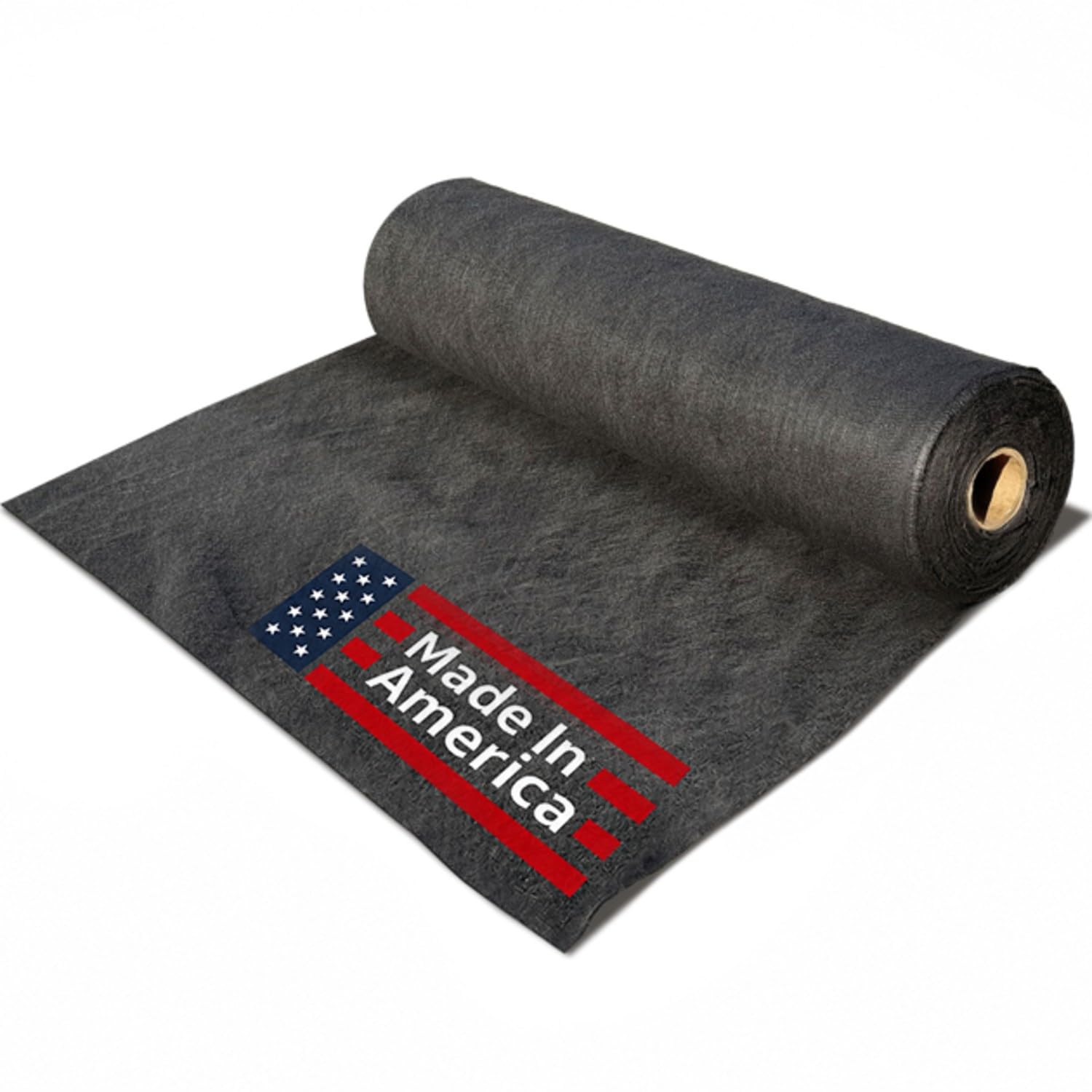
At 8 oz per square yard with a 205-lb grab tensile strength, this non-woven fabric is twice as thick as standard landscape fabrics. The felt-like texture conforms tightly to uneven slope surfaces, creating a continuous filter layer that allows water to pass at 140 GPM per square foot while trapping soil particles behind it.
That high flow rate makes this the go-to option for french drains, blanket drains, and retaining wall backfill on slopes where groundwater buildup is the main erosion trigger. Owners report that it holds up to prolonged outdoor exposure without degrading — one verified buyer kept it exposed for months in Texas heat and noted no structural loss, though the manufacturer recommends burying with at least three inches of cover for the full 50-year life span.
The fabric ships folded, not rolled, which can introduce creases you must flatten. A few customers noted packaging staples confusingly taped to the roll, but the customer service team responded quickly to resolve issues. For anyone needing a heavy-duty drainage fabric made in America, this is the clear choice for steep slope filter layers.
What works
- Exceptional 205 lb tensile strength resists puncture from sharp rocks and roots
- High flow rate of 140 GPM per sq ft prevents water pooling behind retaining walls
- Manufactured in the USA with durable non-woven polypropylene construction
What doesn’t
- Folded packaging causes creases and tangling that complicate unrolling
- Heavier weight (93 kg per roll) makes handling more physically demanding
3. DWALE Driveway Fabric 6×300 ft

With an 800-lb tensile strength rating, this 3.5-oz woven polyethylene fabric punches far above its weight class. The 6-foot width and 300-foot length cover 1,800 square feet in a single run, making it the most square-footage-efficient option for large slope projects where you need to lay fabric across a wide expanse without multiple seams.
The double-cloth weave is highly permeable and breathable, so water percolates through rather than pooling. Owners report using it as a weed barrier under mulch on hillsides and as a stabilization layer beneath gravel pads. The fast unrolling and easy cutting with sharp shears reduce installation time significantly compared to narrower rolls that require many overlapping strips.
A few users mention that the woven threads can come undone at the cut edges, which is typical for this weave type but can be messy during installation. Also, the fabric ships folded to a 3-ft width, so you need to unfold and flatten it carefully to avoid permanent wrinkles. Considering the coverage and strength per dollar, this is the practical choice for budget-conscious buyers with large acreage.
What works
- Massive 6×300 ft coverage reduces cutting and overlapping labor on wide slopes
- High 800 lb tensile strength supports heavy gravel loads without tearing
- Excellent permeability prevents water pooling beneath driveway surfaces
What doesn’t
- Cut edges tend to unravel woven threads during installation handling
- Folding packaging can leave persistent creases that require flattening
4. Curlex II Erosion Control Fabric 4ft x 112-1/2ft

Curlex II is the recognized standard for roadside and ditch-lining erosion control. It features a biodegradable wood-fiber blanket sandwiched between two layers of extruded plastic netting, giving it structural integrity in high-water channels with flow velocities up to 9 fps. It is rated for slopes as steep as 1.5:1, which covers the majority of residential hillsides and construction embankments.
The green dye provides immediate visual evidence of coverage, and at 0.73 lb per square yard it is light enough for one person to handle a full roll. Owners use it to hold grass seed on steep slopes, prevent mud tracking from dogs, and protect shoreline edges. The top netting degrades by the end of the growing season, while the wood fiber breaks down naturally, leaving established roots as the permanent erosion solution.
Several customers report excellent germination results even during dry spells, attributing the moisture retention to the blanket’s thickness. The biggest drawback is the cost — at this price point, covering a large area adds up quickly. Additionally, the plastic netting can snag on vegetation or debris if not trimmed flush after installation.
What works
- Double net construction handles channel flow up to 9 fps without tearing
- Biodegradable wood fiber retains moisture for improved seed germination on slopes
- Lightweight at 0.73 lb per sq yd, easy for solo installation on steep terrain
What doesn’t
- High per-roll cost for buyers needing coverage of very large slope areas
- Plastic netting can catch on equipment or debris during installation and removal
5. Farm Plastic Supply 100% Biodegradable Blanket 8′ x 112.5′

This blanket combines 70% agricultural wheat straw with 30% organic coconut fiber, held together by a brown poly net that biodegrades after roughly 90 days. The straw provides bulk for immediate soil coverage, while the coconut fiber adds structural longevity — coir breaks down slower than straw, extending the blanket’s protective window through the critical first growing season on a steep slope.
Customers report excellent results on steep backyard hills where reseeding grass was the primary goal. The blanket keeps seed in place during rain events and prevents birds from eating the seed. It also doubles as a mud-control solution for pet owners — multiple reviews mention that after watering or rain, dogs no longer track mud into the house because the blanket holds the soil surface together.
The 8-foot width (shipped as 7.5 ft for packaging) covers a generous swath of hillside per roll. Some users note that occasional sections of the blanket are thinner than others, requiring offcuts from the end of the roll to patch spots. The biodegradable netting means no plastic waste to remove at season’s end — it all disappears into the soil.
What works
- Coconut fiber component extends blanket life longer than pure straw alternatives
- Wide 8 ft roll reduces the number of seams needed on broad slopes
- Biodegradable netting eliminates post-season cleanup of synthetic materials
What doesn’t
- Roll-to-roll thickness consistency can vary, requiring patching of thin spots
- Last few feet of each roll can be difficult to unroll without tearing
6. Super Geotextile Woven Fabric 17.5×60
This is the oversized sibling of the first product — same 4-oz woven polypropylene composition but in a massive 17.5-foot by 60-foot sheet. The extreme width allows you to cover a very wide slope or driveway apron with a single piece, eliminating all longitudinal seams. That seam-free installation is critical on steep slopes where overlapping fabric creates weak points where water can get under and wash the soil beneath.
Like the smaller roll, this fabric is essentially impermeable, making it ideal for directing surface water to a specific outlet rather than letting it infiltrate. Owners have used it to line French drain trenches, create a solid base for paver patios on sloped lots, and even channel rainwater away from building foundations. The 50-year life expectancy when buried is a selling point for permanent installations.
The trade-off is that due to shipping restrictions, this size ships folded rather than rolled. The folded creases can be persistent and require weighting down or sun-heating to flatten before installation. Two people are recommended to handle the unfolded sheet — at 12.6 kg it is manageable but awkward in windy conditions. For large commercial or residential projects where seam elimination is worth the extra prep, this fabric delivers.
What works
- Massive 17.5 ft width eliminates seams for uninterrupted slope coverage
- Impermeable surface reliably channels runoff water to designated drainage paths
- Commercial-grade 4 oz woven construction with 50-year underground durability
What doesn’t
- Folded packaging creates persistent creases that require time to flatten
- Requires two people to handle the full unfolded sheet in any breeze
7. Sandbaggy Jute Netting Roll 4 ft x 225ft

This 100% natural jute netting is the most environmentally pure option in the lineup — no synthetic fibers, no plastic netting, just biodegradable jute fibers woven into an open-grid structure. The 1-inch gaps allow grass, wildflowers, or native shrubs to grow through freely while the jute holds loose soil particles in place against rain impact and surface runoff.
Engineered to last six to 24 months depending on soil moisture and microbial activity, the jute decomposes into organic matter that feeds the emerging vegetation. Retired erosion professionals and contractors specifically recommend this for stabilizing steep reclaimed slopes and drainage areas where long-term synthetic fabric removal would be impractical. Owners report successful use on 30-degree driveway slopes and pond edges, with proper installation requiring a 6-inch anchored trench at the top edge to prevent water getting behind the netting.
The 225-foot length is generous, but the natural fiber does not come cheap. Multiple buyers note the cost as the main barrier to covering very large areas. Additionally, the jute can be vulnerable to wildlife — one reviewer mentioned armadillos tearing through sections, which is a risk with any natural organic mulch blanket in areas with burrowing animals.
What works
- Fully biodegradable jute enriches soil as it decomposes over 6-24 months
- Open 1-inch grid allows robust vegetation growth through the netting
- Approved for DOT and contractor-scale slope restoration projects
What doesn’t
- High per-roll cost for covering large slopes or multiple project areas
- Natural jute can be torn by burrowing wildlife before vegetation establishes
Hardware & Specs Guide
Woven vs. Non-Woven Geotextiles
Woven fabrics, made by weaving polypropylene or polyethylene strands together, provide high tensile strength and low permeability — best for separation and stabilization under gravel or pavers. Non-woven fabrics, created by bonding fibers together with heat and pressure, offer higher permeability (up to 140 GPM per sq ft) and are the standard for drainage, filtration, and french drain applications. On steep slopes, the choice hinges on whether you need water to pass through or run off the surface.
Tensile Strength and Fabric Weight
Tensile strength, measured in pounds (lb) of grab strength, indicates how much pulling force the fabric can withstand before tearing. A 3.5-oz woven fabric might boast 800 lb of tensile strength due to its dense weave structure, while an 8-oz non-woven fabric typically rates around 205 lb but offers superior puncture resistance and conformability. For slope stabilization, aim for a fabric with at least 200 lb grab tensile and a weight of 4 oz per square yard or more.
Flow Rate and Permeability
Measured in gallons per minute per square foot (GPM/sq ft), flow rate tells you how fast water moves through the fabric. Non-woven geotextiles typically flow between 80 and 140 GPM/sq ft. Woven fabrics range from nearly zero to around 30 GPM/sq ft, depending on weave density. For drainage-focused erosion control behind retaining walls or around french drains, choose a non-woven fabric with a flow rate above 100 GPM/sq ft to prevent hydrostatic pressure buildup.
UV Degradation and Life Expectancy
Synthetic geotextiles are vulnerable to ultraviolet light — most lose structural integrity within one year when exposed to direct sunlight. When buried under at least three inches of gravel, soil, or mulch, the same fabrics are engineered to last 50 years or more. Biodegradable blankets (straw, coconut, jute) have no UV rating because they are designed to decompose; their effective life ranges from 90 days to 24 months depending on material and environmental moisture. Permanent installations require full burial; temporary seed applications need only surface cover.
FAQ
What tensile strength do I need for a 2:1 slope erosion project?
Can I use biodegradable jute netting on a slope steeper than 1.5:1?
Is a woven or non-woven geotextile better for a rocky slope behind a retaining wall?
Final Thoughts: The Verdict
For most gardeners, the erosion control for steep slopes winner is the Super Geotextile Woven Geotextile Fabric 4×100 because its zero-permeable woven design reliably channels runoff and supports heavy gravel loads on a steep grade for half a century. If you need superior drainage and filtration behind a retaining wall, grab the Sandbaggy 8 oz Non-Woven Fabric. And for an entirely natural, biodegradable solution that feeds the soil while protecting a seeded hillside, nothing beats the Sandbaggy Jute Netting Roll.