
Every peony grower knows the frustration: lush green foliage that refuses to produce the massive, fragrant blooms you waited all year to see. The difference between a plant that just survives and one that explodes with color often comes down to one decision — the specific phosphorus and potassium ratio you feed it. A generic all-purpose feed rarely delivers the stem strength and blossom density these heavy feeders demand.
I’m Rikta — the co-founder and writer behind Lawn Gear Lab. After cross-referencing dozens of NPK ratios, reading hundreds of verified owner experiences, and studying the specific nutritional demands of Paeonia lactiflora varieties, I’ve filtered the market down to the formulations that actually move the needle on bloom size and stem rigidity.
Whether you are planting bare-root divisions or nursing established clumps, finding the right blend saves you a full season of disappointment. This guide ranks the most effective options available now to help you find the best peony fertilizer for your specific garden conditions and goals.
How To Choose The Best Peony Fertilizer
Peonies are not particularly finicky plants, but they are extraordinarily sensitive to the balance of phosphorus and nitrogen. Getting the formulation wrong can produce leggy stems that flop over or dense leaves with zero buds. Here are the three factors that separate a productive feeding plan from a wasted application.
NPK Ratio: The Phosphorus Mandate
Peonies need a higher middle number (phosphorus) than most perennials because phosphorus drives bud initiation and root development. Look for a ratio where the second number is significantly larger than the first — such as 10-54-10 or 15-30-15. A balanced feed like 10-10-10 encourages leaf growth at the expense of flowers, which is precisely the opposite of what peony growers want.
Release Mechanism: Granular vs. Liquid
Granular slow-release formulas feed the root zone over several weeks and are ideal for a single spring application. Liquid fertilizers, on the other hand, deliver nutrients immediately and work well for supplemental feeding during bud swell. If you prefer a set-and-forget approach, choose granules. If you want to fine-tune feeding through the growing season, liquids give you more control.
Micronutrient Profile: Iron and Calcium
Beyond the primary NPK numbers, peonies benefit from added calcium to strengthen cell walls (reducing stem droop) and iron to prevent interveinal chlorosis. Some specialty formulations include kelp extract or humic acids to improve nutrient uptake. A fertilizer that only lists NPK without mentioning secondary elements may leave your peonies under supported during heavy bloom loads.
Quick Comparison
On smaller screens, swipe sideways to see the full table.
| Model | Category | Best For | Key Spec | Amazon |
|---|---|---|---|---|
| Schultz Bloom Plus | Water Soluble | Maximum bud count | 10-54-10 NPK | Amazon |
| Miracle-Gro Perf. Organics Blooms | Granular Organic | Organic gardening | 5-7-10 NPK | Amazon |
| Cz Garden 4-10-10 | Granular | Bulbs & perennials | 2% Iron content | Amazon |
| Grow More Super Bloomer | Water Soluble | Quick absorption | 15-30-15 NPK | Amazon |
| Espoma Organic Rose-Tone | Granular Organic | Established rose beds | 4-3-2 + 5% Calcium | Amazon |
| TPS Nutrients Peony Fertilizer | Liquid Organic | Container peonies | Low N + Kelp Extract | Amazon |
| Down To Earth Flower Garden | Powder Organic | Pollinator safety | 2-6-5 NPK | Amazon |
In‑Depth Reviews
1. Schultz Bloom Plus Water Soluble Plant Food 10-54-10

The Schultz Bloom Plus delivers an extreme 10-54-10 NPK ratio that is almost pure phosphorus with just enough nitrogen and potassium to support structural growth. For peonies that consistently underperform, this formulation acts as a targeted bud initiator rather than a general maintenance feed. The water-soluble powder dissolves quickly and can be applied as a soil drench or foliar spray during early spring emergence.
Users report seeing a measurable increase in bloom count within two weeks of the first application, especially on plants that previously produced only foliage. The concentrated formula means a single 1.5-pound bag stretches across many feedings, making the per-application cost very low despite the higher phosphorus density.
The main limitation is that this product is not organic and lacks secondary micronutrients like calcium or iron. For gardeners who prioritize soil biology and long-term microbial health, a gentler organic option may be more appropriate. But for pure bloom output per dollar, this formulation is hard to beat.
What works
- Extremely high phosphorus triggers budding even on stubborn plants
- Dissolves fully with no residue in sprayers
- Very cost-effective per feeding
What doesn’t
- No organic certification or listed micronutrients
- Can burn if overapplied to dry soil
2. Miracle-Gro Performance Organics Blooms Plant Nutrition 5-7-10

Miracle-Gro blends the convenience of their established granular system with OMRI-listed organic ingredients in this 5-7-10 formulation. The elevated potassium relative to nitrogen helps peonies develop thicker cell walls, which translates to stems that can hold those heavy dinner-plate blooms upright without staking. Each 2.5-pound bag covers up to 165 square feet, making it a practical choice for larger peony borders.
Gardeners who have switched from synthetic feeds to this organic granular report seeing improved soil texture after two seasons of use. The granules break down gradually over 4-6 weeks, providing steady nutrition rather than a sudden spike. This slow release pattern is especially beneficial for peonies because it reduces the risk of soft, rapid growth that attracts botrytis.
The downside is the phosphorus content is moderate compared to dedicated bloom boosters. If your peonies have never bloomed, a higher-P product may be needed as a one-time correction before switching to this maintenance feed.
What works
- OMRI-listed organic ingredients are safe for pollinators
- Slow-release granules reduce risk of overfeeding
- Covers large garden areas efficiently
What doesn’t
- Phosphorus level is moderate for stubborn non-bloomers
- Paper seal under lid can arrive loose
3. Cz Garden 4-10-10 Bulb and Bloom Fertilizer

Cz Garden delivers a 4-10-10 ratio that is ideal for peonies planted alongside bulbs and other spring perennials. The relatively low nitrogen prevents excessive leaf growth while the phosphorus and potassium work together to support root storage and flower bud formation. The inclusion of 2% iron addresses the chlorosis problem that often appears in peonies grown in alkaline soils.
The heavy-duty resealable pouch is a practical detail that keeps the granules dry between uses. A 4-pound bag provides enough material for multiple spring applications across a medium-sized peony collection. Users frequently note that even plants that had not bloomed in years produced flowers after switching to this formulation, likely due to the iron component unlocking nutrients already present in the soil.
Because this is a granular product, it requires incorporation into the top layer of soil and thorough watering to activate. It is not suitable for foliar feeding or for gardeners who prefer liquid application methods.
What works
- High iron content corrects chlorosis in alkaline soils
- Resealable packaging preserves freshness
- Excellent for bulb-heavy planting schemes
What doesn’t
- Granules need soil incorporation and watering
- Not water-soluble for spray application
4. Grow More Super Bloomer 15-30-15 Fertilizer

Grow More positions this 15-30-15 formula as a universal bloom catalyst, and the numbers back it up. The high phosphorus load is paired with chelated iron and manganese, two micronutrients that peonies use heavily during the bud swell phase. The water-soluble powder dissolves completely and can be applied through drip irrigation or hose-end sprayers without clogging.
Multiple owners report that peonies treated with this fertilizer produce blooms that are visibly larger and last longer in the vase compared to plants fed with standard balanced feeds. The formulation is built for rapid uptake, which is helpful when you need to correct a phosphorus deficiency mid-season. The 3-pound bag provides ample material for a full season of every-other-week feeding.
On the cautionary side, the high salt index means this product can burn roots if applied to dry soil or if the concentration is exceeded. It is best used on well-watered plants and should be avoided during the hottest part of the summer when peonies are entering dormancy.
What works
- Fast-acting water-soluble formula shows results within days
- Includes chelated iron and manganese for green leaves
- Works on flowering vines, shrubs, and vegetables too
What doesn’t
- High salt content risks root burn if misapplied
- Not suitable for organic gardening systems
5. Espoma Organic Rose-Tone 4-3-2 (Pack of 2)

Espoma’s Rose-Tone uses a 4-3-2 NPK ratio enhanced with 5% calcium and their proprietary Bio-tone microbial inoculant. While the phosphorus content is lower than dedicated bloom boosters, the calcium component is a strategic advantage for peonies. Calcium strengthens cell walls, which directly reduces the likelihood of stems snapping under the weight of fully opened blooms — a common frustration with large double-flowered peony varieties.
This pack of two 4-pound bags offers excellent value for organic growers who maintain mixed flowering borders. The slow-release granules feed for about a month per application, and the Bio-tone microbes help break down organic matter in the soil, improving long-term fertility. Gardeners using this product consistently note that their peonies require less staking after two seasons of regular application.
The natural ingredients produce a noticeable odor after application, which some users find unpleasant. This smell dissipates after watering, but it is something to be aware of if you are applying near outdoor seating areas.
What works
- Calcium reinforcement reduces stem breakage
- Bio-tone microbes improve soil health over time
- Approved for organic production
What doesn’t
- Strong organic odor until watered in
- Lower phosphorus may not correct severe deficiencies
6. TPS Nutrients Peony Fertilizer – Liquid 32 oz
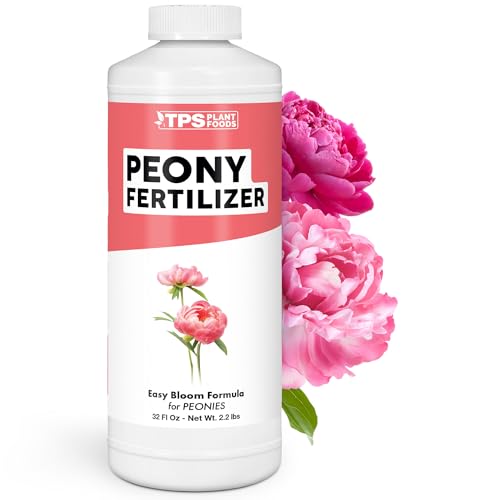
TPS Nutrients has formulated a liquid feed specifically for peonies, with a low-nitrogen profile that prevents the soft, sappy growth that attracts powdery mildew and botrytis. The addition of kelp extract provides natural growth hormones and trace minerals that support root development without forcing foliage. This formulation is particularly suited for peonies grown in containers where nutrient leaching is more frequent.
The liquid format allows for precise dosing through the growing season — one quart diluted at the recommended rate provides several feedings. Users with peonies that had produced only a single bloom for years reported dramatic increases in both stem count and bud formation after switching to this targeted feed. The calcium and magnesium in the blend also help buffer pH fluctuations common in potting mixes.
Because this product is not a high-phosphorus bloom booster, it may not be the best first choice for peonies that have never flowered. It functions best as a maintenance feed for plants that already have a solid bud set but need support to reach full expression.
What works
- Low nitrogen reduces disease pressure on foliage
- Kelp extract supports root vigor in containers
- Easy to measure and apply through watering cans
What doesn’t
- Not a high-phosphorus rescue feed for non-bloomers
- Small bottle may require multiple purchases for large borders
7. Down To Earth All Natural Fertilizers Flower Garden 2-6-5
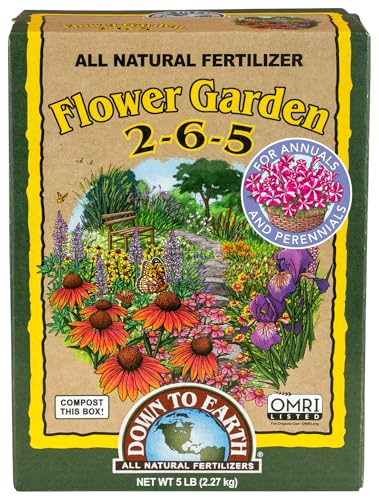
Down To Earth provides a 2-6-5 NPK formulation that is gentle enough for regular use without risk of burning, yet sufficiently rich in phosphorus and potassium to support consistent flowering. The 5-pound box is priced competitively and uses only sustainably sourced natural ingredients. This product is also OMRI-listed, meaning it meets organic certification standards and is safe for bees and other beneficial insects.
The slow-release nature of this powder means nutrients become available gradually as soil microbes break them down. This aligns well with the peony growth cycle, which demands steady nutrition during the spring green-up and bud development phases. Users who apply this in early spring and again after bloom often report improved foliage color and more vigorous root growth heading into dormancy.
The main trade-off is the lower phosphorus concentration compared to synthetic bloom boosters. If your peonies are already healthy but not blooming, a higher-P product may be needed as a one-time correction. This feed is best used as a long-term maintenance strategy for established plants in good soil.
What works
- Safe for pollinators and beneficial insects
- Compostable packaging reduces plastic waste
- Effective on vegetables and herbs as well as flowers
What doesn’t
- Phosphorus level is low for bloom correction
- Slow release requires patience for visible results
Hardware & Specs Guide
NPK Ratio Explained
The three numbers on a fertilizer bag represent nitrogen (N), phosphorus (P), and potassium (K). For peonies, phosphorus is the critical driver of bloom formation. A ratio like 10-54-10 delivers a massive phosphorus spike ideal for bud initiation. A ratio like 4-3-2 provides more balanced nutrition for ongoing maintenance. Always match the middle number to your current goal: high for correction, moderate for maintenance.
Water-Soluble vs. Granular
Water-soluble powders dissolve and enter the root zone within hours, making them perfect for mid-season corrections or foliar feeding. Granules release nutrients over 4-8 weeks and require soil moisture and microbial activity to break down. Granular organic feeds are lower risk for burn and support long-term soil structure, while synthetics offer precise control for immediate results.
FAQ
When should I apply peony fertilizer in the spring?
Can I use a general 10-10-10 fertilizer on peonies?
Is liquid or granular fertilizer better for peonies in containers?
Final Thoughts: The Verdict
For most gardeners, the peony fertilizer winner is the Schultz Bloom Plus because its 10-54-10 ratio delivers the targeted phosphorus that transforms leafy plants into bloom machines. If you prefer an organic approach with added calcium for stem strength, grab the Espoma Organic Rose-Tone. And for container-grown peonies that need steady, low-nitrogen support, nothing beats the TPS Nutrients Peony Fertilizer.