
Growing potatoes in containers is a completely different game than burying them in a garden bed. The roots—or rather the tubers—need loose, well-aerated soil that drains freely but holds enough moisture to bulk up those spuds. Packed clay or heavy garden dirt will choke the root zone, leading to rot and a disappointing harvest. The right mix balances drainage, aeration, and a steady supply of nutrients to support that long bulking phase.
I’m Rikta — the co-founder and writer behind Lawn Gear Lab. I’ve spent countless hours cross-referencing soil specs, analyzing organic certifications, and reading through hundreds of verified owner reports to determine which bagged mixes actually deliver for container potato growers.
This guide breaks down the top contenders by composition, drainage profile, and nutrient longevity so you can confidently choose the best soil for potatoes in pots and set your container crop up for a heavy yield.
How To Choose The Best Soil For Potatoes In Pots
Container potatoes spend their entire life cycle in a confined volume of soil, so every ingredient in that bag matters. Here are the critical specs to check before you buy.
Drainage and Aeration Profile
Potato tubers are swollen underground stems that need oxygen to expand. A mix heavy on peat alone can become waterlogged and suffocate the roots. Look for visible perlite or pumice in the blend—those white specks are what create air pockets. A fluffy texture that doesn’t compact when squeezed is the goal.
pH Range
Potatoes prefer slightly acidic soil, ideally between 5.5 and 6.5. At this pH, the plant can efficiently take up the phosphorus and potassium needed for tuber development. If the pH climbs above 6.8, the risk of common potato scab increases significantly. Most quality potting mixes are pH-adjusted, but it’s worth verifying before planting.
Nutrient Content and Feeding Duration
Potatoes are heavy feeders, especially during the bulking phase. A mix that includes slow-release sources like worm castings, kelp meal, or alfalfa meal provides a steady nutrient stream without the burn risk of synthetic quick-release fertilizers. Some mixes claim to feed for up to six months, which can cover the entire growing cycle if you’re using a large enough container.
Quick Comparison
On smaller screens, swipe sideways to see the full table.
| Model | Category | Best For | Key Spec | Amazon |
|---|---|---|---|---|
| FoxFarm Ocean Forest | Premium | Immediate nutrient-rich start | 1.5 cu ft, aged forest products | Amazon |
| Espoma Organic Potting Mix | Premium | Consistent organic feeding | 2 cu ft, Myco-Tone blend | Amazon |
| Coast of Maine Bar Harbor Blend | Premium | Natural slow-release nitrogen | 16 QT, lobster & crab shell meal | Amazon |
| Brut Organic Potting Soil | Mid-Range | Filler-free organic blend | 21 QT, worm castings & trace minerals | Amazon |
| Miracle-Gro Potting Mix (3-Pack) | Mid-Range | Feeds up to 6 months | 3 x 8 qt, proprietary fertilizer | Amazon |
| Midwest Hearth Premium Potting Soil Mix | Budget | Small containers & seed starting | 8 Dry Quarts, pH controlled | Amazon |
| Xpatee 6 Pack Potato Grow Bags | Accessory | Complete container system | 15 Gal bags, harvest window | Amazon |
In‑Depth Reviews
1. FoxFarm Ocean Forest Potting Soil
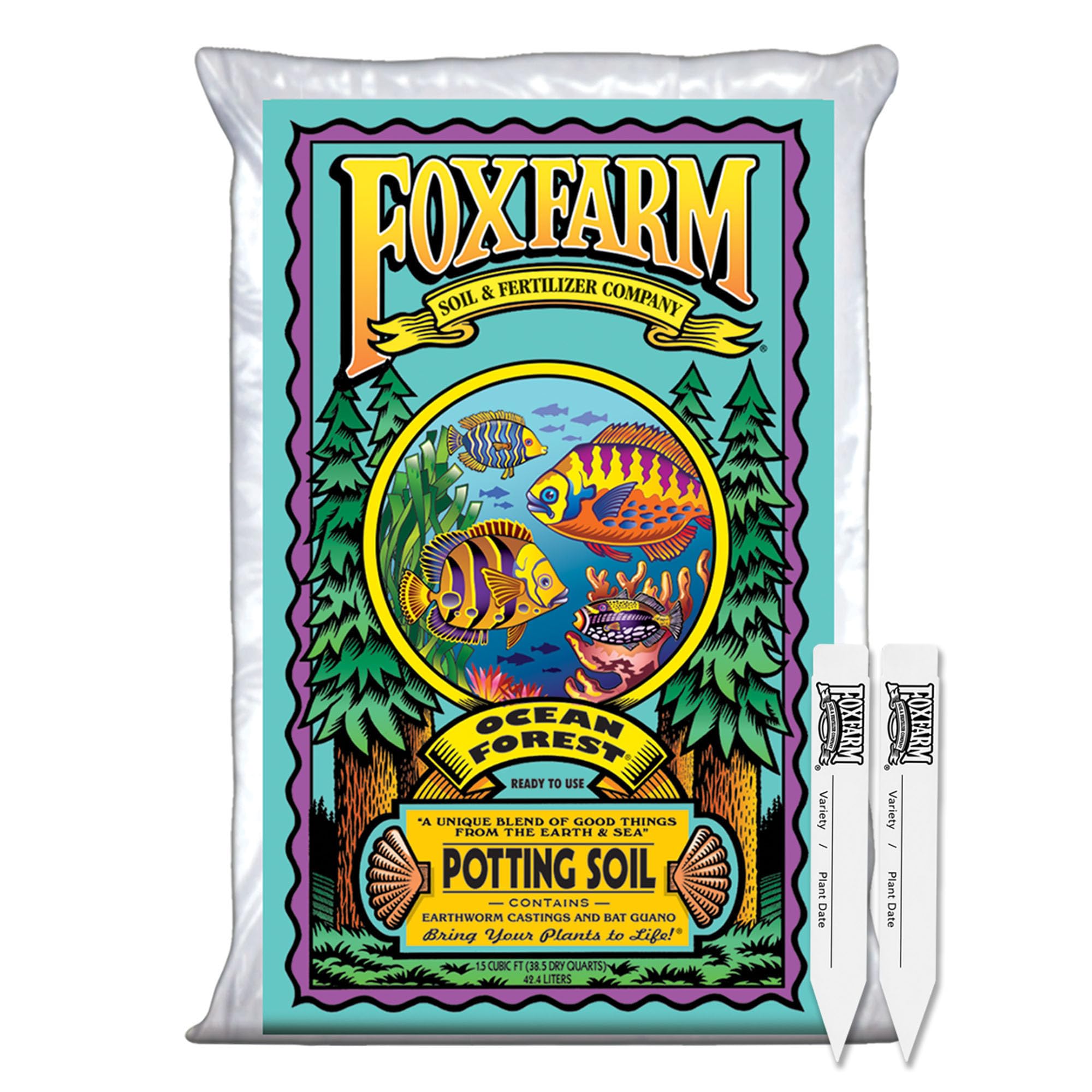
FoxFarm Ocean Forest is a benchmark in the potting soil category for good reason. The blend of aged forest products, sphagnum peat moss, and sandy loam creates a light, aerated texture that potatoes love. Water penetrates immediately rather than pooling on the surface—a sign the structure won’t turn into a mud pit during the long growing season. The nutrient package, derived from fish emulsion, crab meal, shrimp meal, and earthworm castings, provides a broad spectrum of organic inputs right out of the bag.
For container potatoes specifically, the sandy loam component is a standout. It improves drainage without sacrificing moisture retention, which means the soil stays damp but never soggy. Multiple verified owners report that transplants and seed potatoes establish faster in this mix compared to standard big-box brands. The two included plant tags are a nice touch for labeling potato varieties and planting dates, though they are a minor addition to an already strong product.
The volume (1.5 cubic feet) is generous—enough to fill one large grow bag or a couple of standard 10-gallon pots. Some users note the price has crept up over time, but the consensus remains that the performance justifies the cost. If you want a ready-to-use mix that requires no amending for potato containers, this is the top pick.
What works
- Light, aerated texture prevents tuber suffocation
- Immediate water absorption with no runoff pooling
- Rich organic nutrient blend feeds from day one
What doesn’t
- Higher cost per cubic foot than value brands
- Some bags may contain small mushrooms from organic matter
2. Espoma Organic Potting Soil Mix

Espoma’s Organic Potting Mix delivers a chunky, loamy texture that resists the crusting and compaction that plagues cheaper soils. The inclusion of sphagnum peat moss, humus, and perlite creates a balanced structure that drains freely while holding enough moisture for tuber expansion. What sets Espoma apart is the proprietary Myco-Tone blend—a mix of endo and ecto mycorrhizae that colonize the root zone and improve nutrient uptake. For potatoes, which develop a dense root system, this biological boost can translate to larger tubers.
Owners consistently highlight the absence of large wood chunks and filler material that plague other organic mixes. The soil maintains a uniform consistency that makes hilling—adding soil around the stems as the plant grows—easy and effective. The 2-cubic-foot bag offers excellent volume for the price, providing enough mix to fill several potato bags or a substantial raised bed section. The feather meal and alfalfa meal provide slow-release nitrogen that supports leafy top growth without the risk of burning tender roots.
The only trade-off is the weight of the bag, which at this volume can be cumbersome to move. But for serious container gardeners who prioritize organic inputs and root health, Espoma is a reliable workhorse that consistently produces strong growth across multiple plant types, not just potatoes.
What works
- Myco-Tone improves nutrient uptake for tuber development
- Filler-free texture ideal for hilling
- Large 2-cubic-foot bag provides excellent coverage
What doesn’t
- Heavy bag can be difficult to transport
- May need additional perlite for faster drainage
3. Coast of Maine Bar Harbor Blend
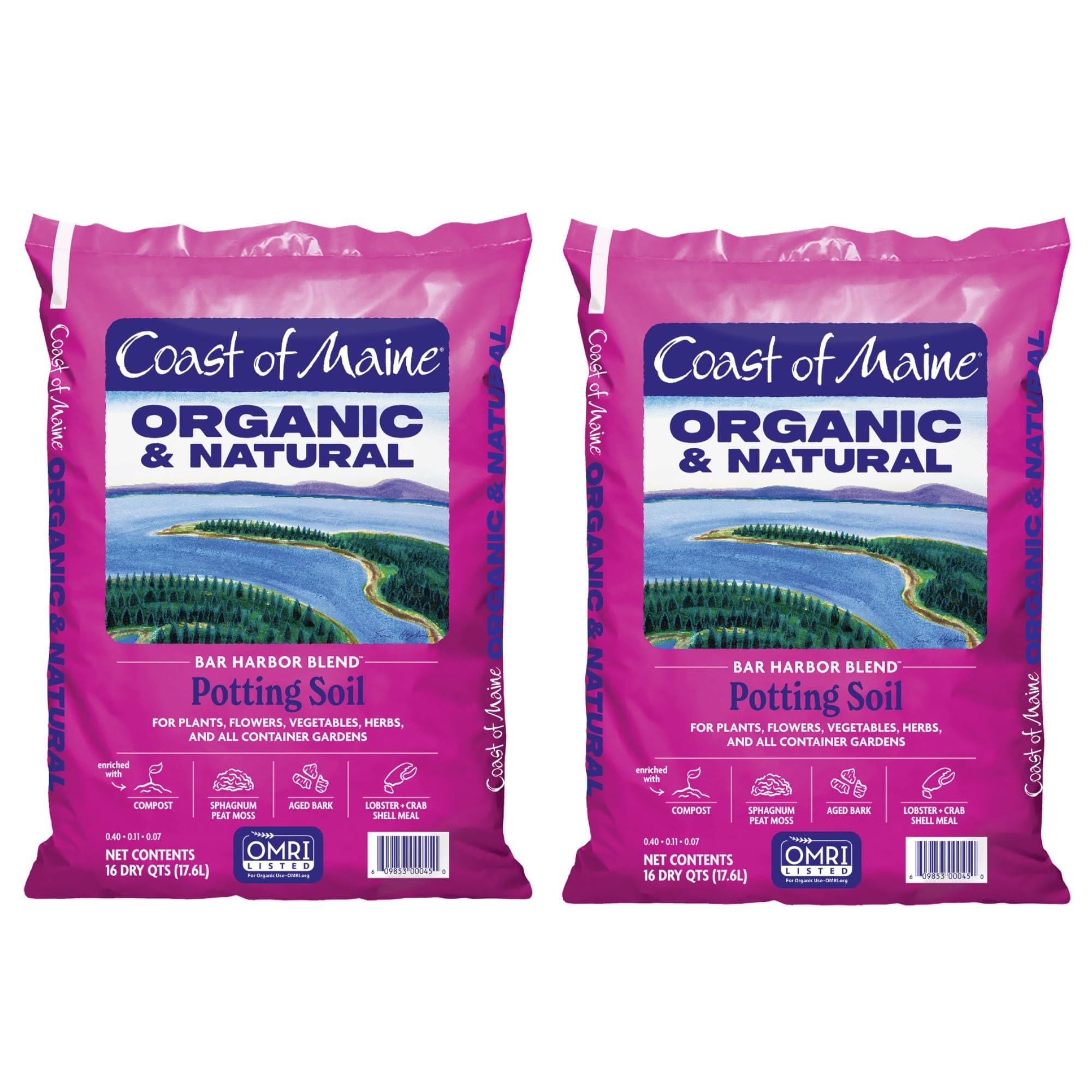
Coast of Maine’s Bar Harbor Blend brings a unique marine-derived nutrient profile that aligns well with potato cultivation. The combination of lobster and crab shell meal provides a slow-release source of calcium and chitin—calcium supports cell wall structure in developing tubers, while chitin encourages beneficial soil microbes that suppress fungal pathogens. The sphagnum peat moss and compost base create a dark, rich texture that multiple owners describe as noticeably darker and less peat-heavy than standard mixes.
Users who have planted potatoes and tomatoes in this mix report growth that exceeded expectations, with one owner noting that two bags were sufficient to mound up eight potato plants with enough leftover for additional planters. The blend of perlite ensures adequate drainage, while the kelp meal provides trace minerals and natural growth hormones that support root initiation. The slow-release nitrogen from the compost and organic meals means you likely won’t need supplemental fertilizer for the first several weeks of growth.
At 16 quarts per bag, the volume is slightly less than some competitors, but the density of organic matter means you get more nutrient content per scoop. If you want a mix that feeds steadily through the bulking phase and supports healthy soil biology, this coastal blend is a strong contender for potato containers.
What works
- Marine-based calcium and chitin for tuber health
- Rich, dark texture with less peat than standard mixes
- Slow-release nitrogen supports the full growing cycle
What doesn’t
- Higher cost per quart than value options
- Slightly smaller bag volume limits large-scale planting
4. Brut Organic Potting Soil
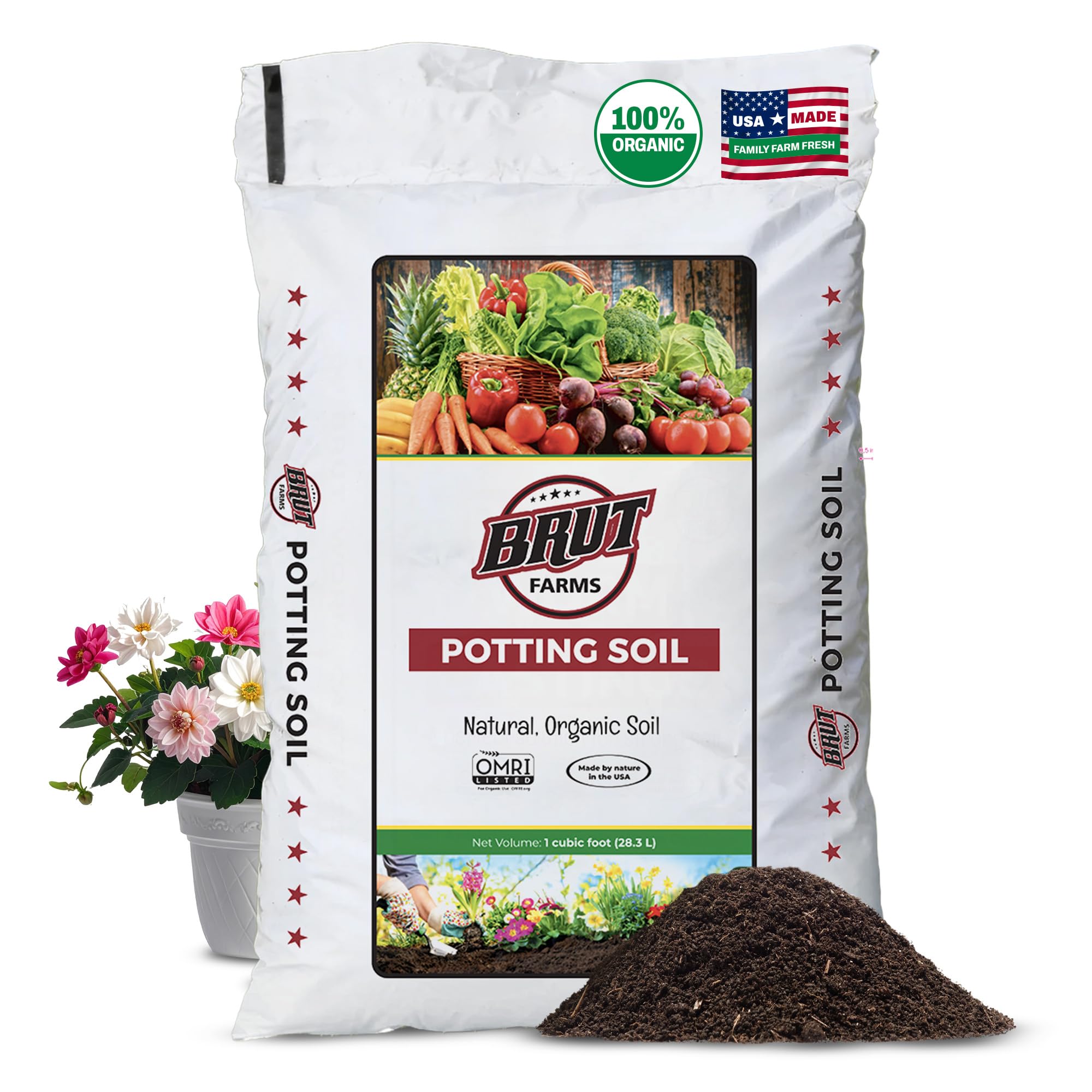
Brut Organic Potting Soil stakes its claim on purity—no sticks, wood chips, or synthetic fillers. The mix is a fine particulate blend of worm castings, trace minerals from Azomite, and kelp meal, creating a uniformly textured soil that’s easy to work with. The OMRI listing confirms it meets organic standards, which matters for gardeners who want to avoid chemical residues in their food crop. The pH is buffered between 6.3 and 6.5, perfectly within the ideal potato range.
What makes this a value standout is the 21-quart bag at a price point that undercuts many premium competitors. The microbe-rich worm castings provide a gentle, steady nutrient feed that potatoes respond well to, especially during the early rooting phase. Owners report strong germination and deep green foliage within days of planting. The fine texture means it integrates evenly with existing soil if you’re amending a partial fill, and it doesn’t develop a hard crust on the surface between waterings.
The downside is that the fine particulate structure may compact more quickly than chunkier mixes over a long growing season, particularly if you water heavily. Mixing in additional perlite or pumice can help maintain aeration for the full potato cycle. But for the price and organic certification, this is an excellent mid-range choice.
What works
- OMRI-listed organic with zero synthetic chemicals
- Fine, consistent texture with no woody filler
- pH balanced between 6.3 and 6.5 for potato health
What doesn’t
- Fine texture may compact over long growth cycle
- Requires additional perlite for optimal aeration
5. Miracle-Gro Potting Mix (3-Pack)

Miracle-Gro Potting Mix is the household name for a reason—it consistently delivers predictable results at a reasonable volume. This 3-pack provides 24 total quarts of soil infused with a proprietary fertilizer blend that feeds container plants for up to six months. For potato growers using large pots, this duration can cover the entire cycle from planting to harvest without requiring supplemental feeding. The mix drains well and stays loose enough to prevent the root binding that occurs in denser soils.
The three 8-quart bags are individually manageable, making it easy to use exactly what you need without hauling a massive bag around the yard. Each bag fills roughly two 8-inch containers, though for potatoes you’ll likely use one bag per standard 10-gallon grow bag. Owners consistently rate this as reliable soil that supports strong growth across vegetables, flowers, and herbs. The fertilizer component means you don’t need to mix in additional amendments unless you’re targeting a specific pH or nutrient profile.
For organic purists, the synthetic fertilizer may be a turnoff—it contains ammonium phosphate and other processed ingredients rather than natural meals. And the six-month feeding claim assumes ideal conditions; heavy rain or frequent deep watering can leach nutrients faster. But for conventional container growers who want an all-in-one solution with minimal effort, this pack delivers consistent performance.
What works
- Built-in fertilizer feeds for up to 6 months
- Convenient 3-pack of smaller bags for easy handling
- Consistent drainage prevents waterlogging
What doesn’t
- Synthetic fertilizer not suitable for organic growers
- Nutrients can leach faster in frequent watering
6. Midwest Hearth Premium Potting Soil Mix

Midwest Hearth offers a straightforward three-ingredient blend of peat moss, vermiculite, and perlite. The formulation mirrors what professional growers use—no fancy additives, just the core components for aeration and moisture control. The pH is controlled to suit a broad spectrum of plants, and the 8-quart bag is resealable, which helps keep the mix fresh if you aren’t using it all at once. This is a solid entry-level option for small-scale potato experiments or for starting seed potatoes in smaller containers.
Users praise the light, fluffy texture that doesn’t harden around roots—a common problem with cheaper soils that turn into a dense block. The vermiculite component is especially useful for moisture retention, ensuring that the soil doesn’t dry out completely between waterings. For a single 5-gallon potato pot, one bag provides a workable volume, though you’ll likely need a second bag for hilling later in the season.
The main limitation is the bag size. At 8 dry quarts, you’re paying a premium per quart compared to larger bags. The mix also lacks any added nutrition, so you’ll need to supplement with a balanced fertilizer or compost throughout the growing season. It works best as a base that you customize rather than a complete solution.
What works
- Light, fluffy texture prevents root hardening
- Resealable bag keeps unused mix fresh
- pH controlled for broad plant compatibility
What doesn’t
- Small bag size yields high cost per quart
- No added nutrients; requires supplementation
7. Xpatee 6 Pack Potato Grow Bags
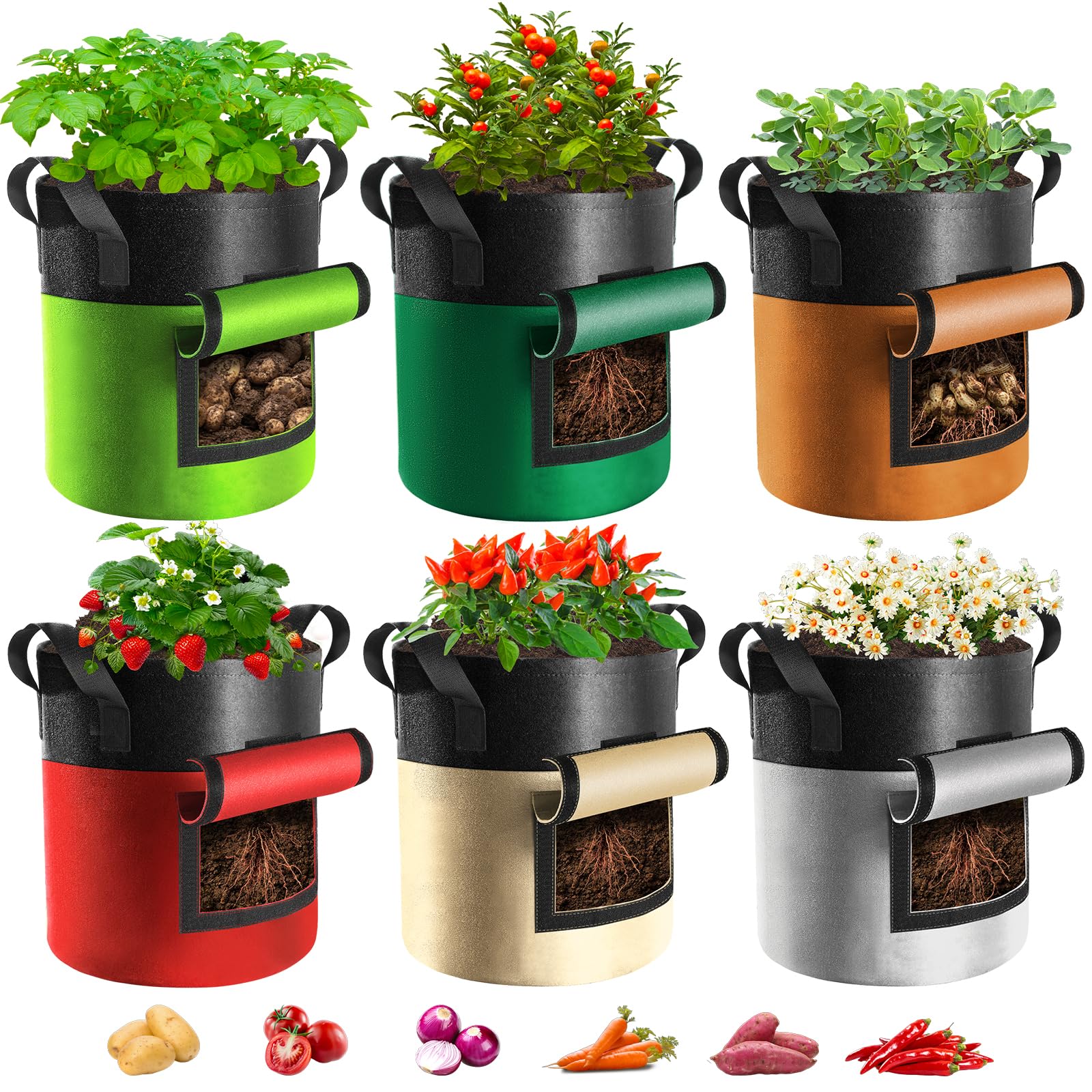
While this is not a soil product itself, the Xpatee grow bag set is the ideal companion for any of the potting mixes reviewed above. The 15-gallon nonwoven fabric bags provide the breathable environment potatoes need to develop strong root systems. The standout feature is the Velcro-sealed harvest window, which lets you check tuber development or harvest a few potatoes without dumping the entire container. This is a game-changer for container potato growers who want to monitor progress without disturbing the plant.
The three reinforced handles—two at the top and one lower for tilting—make it easy to move heavy bags around the patio or reposition them for optimal sunlight. The fabric construction prevents overwatering by wicking excess moisture, which reduces the risk of root rot. Owners report that the bags handle heavy rain well without retaining standing water. The multicolor design adds a decorative element to what is otherwise a utilitarian container.
The 6-pack provides plenty of capacity for a serious potato harvest, and the bags fold flat for off-season storage. They aren’t just for potatoes either—carrots, tomatoes, and peppers all perform well in these containers. If you’re starting from scratch, pairing these bags with a high-quality mix from this guide will give you a complete, efficient container potato system.
What works
- Harvest window allows mess-free tuber checking
- Breathable fabric prevents overwatering and rot
- Reinforced handles make moving heavy bags easier
What doesn’t
- Fabric bags require more frequent watering than plastic
- Light colors may show dirt stains over time
Hardware & Specs Guide
Perlite Ratio
Perlite creates air pockets that allow oxygen to reach developing tubers. A mix with visible perlite at roughly 15-20% volume ensures the soil stays fluffy through multiple waterings. If the bag looks like solid peat, add your own perlite before planting.
pH Buffer Range
Potatoes are sensitive to alkaline soil. A pH above 6.8 invites common scab, which mars the skin and reduces marketability. Most premium mixes are pH-adjusted to 5.5-6.5. If the bag doesn’t list a pH range, test a handful with a probe before committing your seed potatoes.
FAQ
Can I use regular garden soil for potatoes in pots?
How many bags of potting soil do I need for one potato plant?
Is organic potting soil necessary for potatoes?
Final Thoughts: The Verdict
For most gardeners, the best soil for potatoes in pots winner is the FoxFarm Ocean Forest Potting Soil because its light, aerated structure and immediate nutrient availability give tubers the ideal environment from day one. If you want consistent organic feeding with biological root boosters, grab the Espoma Organic Potting Soil Mix. And for a complete container setup that pairs perfectly with any of these mixes, nothing beats the Xpatee 15-Gallon Grow Bags with their convenient harvest window and breathable fabric.