
A lawn edging tool is defined by the clean, crisp line it carves between your turf and your hardscape—a line that string trimmers and mowers simply cannot match. The wrong tool leaves ragged edges that invite weeds and look sloppy; the right one creates a museum-ready border with each swing.
I’m Rikta — the co-founder and writer behind Lawn Gear Lab. I’ve spent hundreds of hours comparing blade geometries, handle ergonomics, and steel gauges across manual edgers to build a guide that cuts through the noise and delivers only the specs that actually matter for a perfect sidewalk, driveway, or flower-bed edge.
Whether you need a quiet, fuel-free solution for crisp garden borders or a heavy-duty model for thick sod and stubborn roots, the right best lawn edging tool saves you time, spares your back, and gives your yard a professional-grade finish without a gas engine.
How To Choose The Best Lawn Edging Tool
Not all manual edgers cut the same line. The geometry of the blade, the rigidity of the shaft, and the ergonomics of the handle determine whether you finish with crisp edges or a sore back. Here are the three specs to prioritize.
Blade Type: Serrated vs. Straight Edge
A serrated blade, often called a saw-tooth design, bites into dense turf and roots with less downward force—ideal for clay soils and overgrown borders where a straight blade would bounce or skip. A straight half-moon blade, by contrast, relies on a sharpened arc to slice through soft loam; it produces the cleanest line but struggles in compacted earth. For most homeowners with mixed soil conditions, a serrated or hybrid (serrated-plus-pointed-tip) blade delivers the best versatility.
Handle Length and Grip Comfort
Edgers under 36 inches force you to stoop, transferring cutting force to your lower back rather than your legs and core. Tools in the 39-to-40-inch range reduce bending and let you stomp vertically through thick sod. T-style steel grips offer maximum torque for turning tight corners, while padded rubber or ergonomic donut handles reduce fatigue during longer sessions. A wide footplate that accommodates a full boot length also distributes pressure evenly and prevents the blade from twisting mid-cut.
Blade Material and Gauge
Spring steel blades resist deformation and hold a sharp edge longer than standard carbon steel, though they are harder to resharpen at home. Carbon steel blades are easier to re-edge with a file but may rust if not wiped after use. Gauge number tells thickness: lower numbers equal thicker metal. A 12- or 13-gauge blade (as used by Bully Tools and Root Slayer) withstands rocky soil without bending, whereas lighter 15-gauge blades are fine for soft turf but may warp when you hit a buried stone.
Quick Comparison
On smaller screens, swipe sideways to see the full table.
| Model | Category | Best For | Key Spec | Amazon |
|---|---|---|---|---|
| Root Slayer 22611 | Serrated Half-Moon | Heavy clay & root cutting | Inverted V tip + 13-gauge blade | Amazon |
| Bully Tools 92251 | Round-Edge T-Style | Long straight runs & sod cutting | 12-gauge steel + 61.5-in length | Amazon |
| Radius Garden 25602 | Half-Moon Step Edger | Comfort & balance for all-day use | Carbon steel + donut handle | Amazon |
| CKLT 40in Manual Edger | One-Piece Serrated | No-assembly, small-to-mid yards | Spring steel + 40-in tube shaft | Amazon |
| AMES 2917200 | Saw-Tooth T-Grip | Curved edges & flower beds | 15-gauge serrated + 8.9-in blade | Amazon |
| Byhagern Professional Edge | Saw-Tooth Half-Moon | Budget bundles & soft soil | Carbon steel + wide footplate | Amazon |
| Corona GS 6750D | Handheld Bypass Shear | Tight spots & detail trimming | 4.5-in forged steel blades | Amazon |
In‑Depth Reviews
7. Root Slayer 22611 Serrated Garden Edger

The Root Slayer 22611 earns the top spot thanks to its inverted-V cutting tip and aggressive serrated teeth—a design that actively splits compacted soil and severs shallow roots rather than just pushing through them. The 13-gauge carbon steel blade is powder-coated for corrosion resistance, and the fiberglass shaft with a resin-encased steel core transfers force efficiently without flex. At 4.8 pounds, it carries noticeable heft, but that weight works in your favor when you need to punch through dry clay.
Owners consistently report that it cuts right through turf that stalled their previous edgers, and the half-moon blade shape allows both straight lines and smooth curves along sidewalks and flower beds. The non-latex grip is comfortable for extended sessions, though some users with smaller frames note that the weight becomes tiring after 30 minutes of continuous use. The serrated edge also leaves a slightly rougher line than a straight blade, so you may want to follow up with a trimmer for a finish that is truly razor-sharp.
For gardeners who battle heavy soil or overgrown borders, the inverted V tip makes this the most efficient manual edger on the list. It pairs aggressive cutting geometry with durable materials that should last a lifetime under normal residential use—provided you wipe the blade after each job and store it out of the weather.
What works
- Inverted V tip bites through compacted clay and roots
- Powder-coated carbon steel resists rust
- Fiberglass shaft with steel core eliminates flex
What doesn’t
- Heavier than many competitors (4.8 lbs)
- Serrated edge leaves rougher line than straight blade
6. Bully Tools 92251 Manual Lawn Edger

The Bully Tools 92251 is built around a 12-gauge steel edge—the thickest blade in this roundup—and a 61.5-inch overall length that keeps your back nearly straight during operation. The round-shaped head is designed for trenching and sod cutting as much as edging, and the detachable 36-inch head makes storage manageable despite the tool’s commercial scale. Made in the USA with a limited lifetime warranty, it is the clear choice for users who prioritize durability above all else.
Reviewers praise its ability to carve through dry, rocky soil without bending or chipping, and the wide foot platform accommodates a full boot size for stable stomping. The T-style steel grip provides excellent torque control when you need to pivot around a tight curve. The main trade-off is that the rubber handles are not permanently bonded to the steel; several owners report they slide off after 10–15 minutes of use, requiring a dab of adhesive to lock them in place.
If you maintain a large property with long sidewalk runs or need to cut new garden trenches from scratch, the Bully Tools 92251 delivers the leverage and blade thickness to handle years of abuse. Just budget a moment for handle reinforcement, and you’ll own an edger that outlasts most gas-powered alternatives.
What works
- 12-gauge steel edge is nearly indestructible
- 61.5-in length keeps back straight
- Detachable head for easier storage
What doesn’t
- Rubber handles slip off during use
- Round shape less precise for detail curves
5. Radius Garden 25602 Pro-Lite Carbon Steel Edger

Radius Garden’s 25602 rethinks the edger handle with a round donut-style grip that allows your hand to rest at a natural angle while delivering downward pressure. The extra-wide forward step provides a stable platform that supports your balance, making it easier to apply consistent force along long edges without weaving. The heat-treated carbon steel blade measures 9 x 5 inches—generous enough to create deep, clean trenches in a single pass.
Users with back issues frequently mention that the donut handle and elevated footstep reduce the twisting motion that aggravates the lower spine. The fiberglass shaft is lightweight (4 pounds) yet stiff, and the bright green color makes the tool easy to spot among foliage. A few owners note that the half-moon blade arrives not quite razor-sharp from the factory; a quick pass with a file remedies this and transforms the edger into a precision instrument for crisp, even borders along driveways and garden beds.
For anyone who spends more than 30 minutes edging at a time, the Radius Garden 25602 is the most ergonomic option here. The donut handle and balanced step design let you work longer with less fatigue, though you’ll want to sharpen the edge before your first big job to unlock its full potential.
What works
- Donut handle reduces wrist and back strain
- Extra-wide footplate for balance
- Lightweight fiberglass shaft
What doesn’t
- Blade may need sharpening out of the box
- Less effective in heavy clay than serrated models
4. CKLT 40in Manual Edger (Spring Steel)

The CKLT 40in Manual Edger arrives fully assembled—no bolts, no wrenches, no instructions to lose. The 3-cm-diameter manganese steel tube shaft and inserted handle design create a rigid one-piece frame that handles repeated stomping without wobbling. The spring steel blade is the standout feature: it resists deformation even when you hit buried rocks, and its serrated edge cuts through sod and roots with surprising ease.
Petite and senior users report that the 40-inch length lets them edge without excessive bending, and the signature blue rubber handle offers a secure grip even in damp conditions. The rust-resistant, water-resistant blade coating makes cleanup simple—just hose it off and dry it. Some users with heavy clay soil note that the spring steel blade is stiff and requires a solid stomp to penetrate, but once it bites, it cuts “like butter,” as one reviewer put it. The included protective strip is a thoughtful safety addition for storage.
This edger hits a sweet spot for homeowners who want a turnkey tool with no assembly, durable materials, and a blade that holds its edge longer than standard carbon steel. It works best in damp or moderately soft soil; for rock-hard summer clay, you may need to wet the ground first.
What works
- One-piece construction, no assembly required
- Spring steel blade resists deformation
- 40-in length reduces back strain
What doesn’t
- Stiff blade requires force in hard-packed soil
- Blade not replaceable if damaged
3. AMES 2917200 Saw-Tooth Border Edger

The AMES 2917200 combines a serrated 15-gauge steel blade with a T-grip handle and footplate in a package that balances affordability with real cutting power. The saw-tooth design bites into turf and crabgrass without the back-and-forth sawing motion some edgers require—just place the blade, step, and the serrations do the work. The blade measures 8.875 inches wide and 4.5 inches deep, providing a generous cutting face for most residential border tasks.
Reviewers who own this tool for two years or more report it remains sharp and straight with basic maintenance, and the T-grip gives you good leverage for curved edges around flower beds. The green paint finish holds up well against soil contact but not against prolonged moisture; storing it dry is essential to prevent surface rust. The 15-gauge steel is adequate for soft loam and regular turf but will flex if you encounter large stones or dense root mats—this is a tool for routine edging, not demolition.
If you are new to manual edging or have a small-to-medium yard with decent soil, the AMES 2917200 delivers reliable performance at a budget-friendly price. It is less suited for heavy clay or rock-laden ground, but for straight borders and clean lines along sidewalks, it gets the job done without breaking your budget.
What works
- Sharp serrations cut turf with minimal effort
- T-grip offers good leverage for curves
- Long track record of durability
What doesn’t
- 15-gauge steel can flex on rocky ground
- Prone to rust if not stored dry
2. Byhagern Professional Edge Lawn Tool
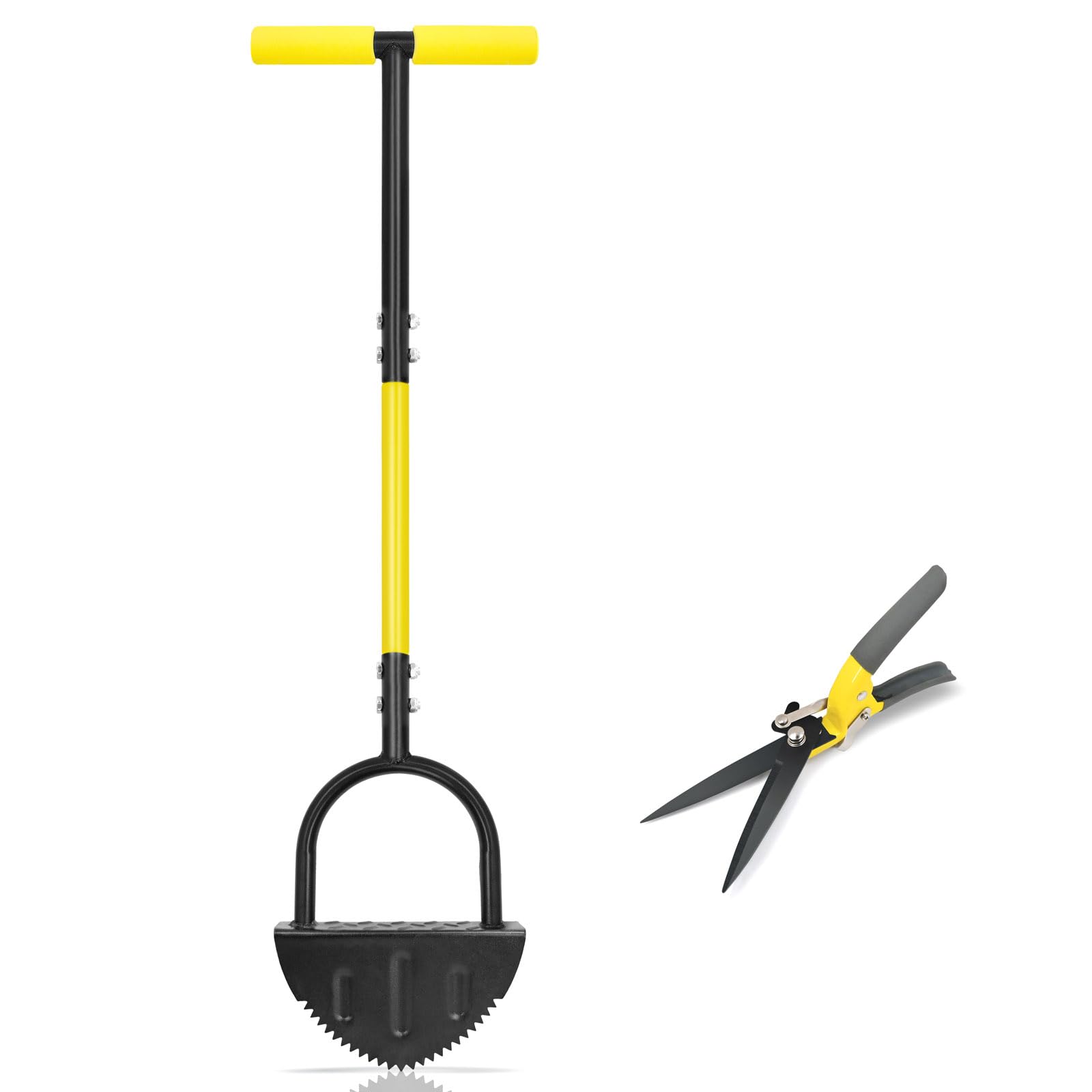
The Byhagern Professional Edge comes as a bundle that includes a manual edger, a pair of grass shears, and gloves—giving a new edger user everything they need in one shipment. The main tool features a curved half-moon blade with saw-tooth teeth that slice rather than push through grass and soil. The long handle, padded grip, and wide footplate aim to reduce back strain, and the steel welded construction feels solid for the price point.
In practice, the serrated blade works well in soft ground and damp soil, pulling weeds up by the roots as it cuts. Several users note that the blade is roughly 1/8-inch thick, which is thicker than ideal for clean turf cutting; taking a grinder or file to the teeth to narrow them dramatically improves performance in heavy grass. The plastic handle components feel less premium than all-metal competitors, but they hold up for seasonal use.
This bundle is a sensible starting point for homeowners who want to try manual edging without a large investment. The included shears are useful for detail trimming around fences and planters, and the edger itself, once slightly sharpened, produces respectable borders in average soil conditions.
What works
- Comes with bonus shears and gloves
- Serrated blade pulls weeds while edging
- Wide footplate provides stable leverage
What doesn’t
- Blade too thick for effortless turf cutting out of box
- Plastic handle components feel less durable
1. Corona GS 6750D ClassicCUT Grass Shear
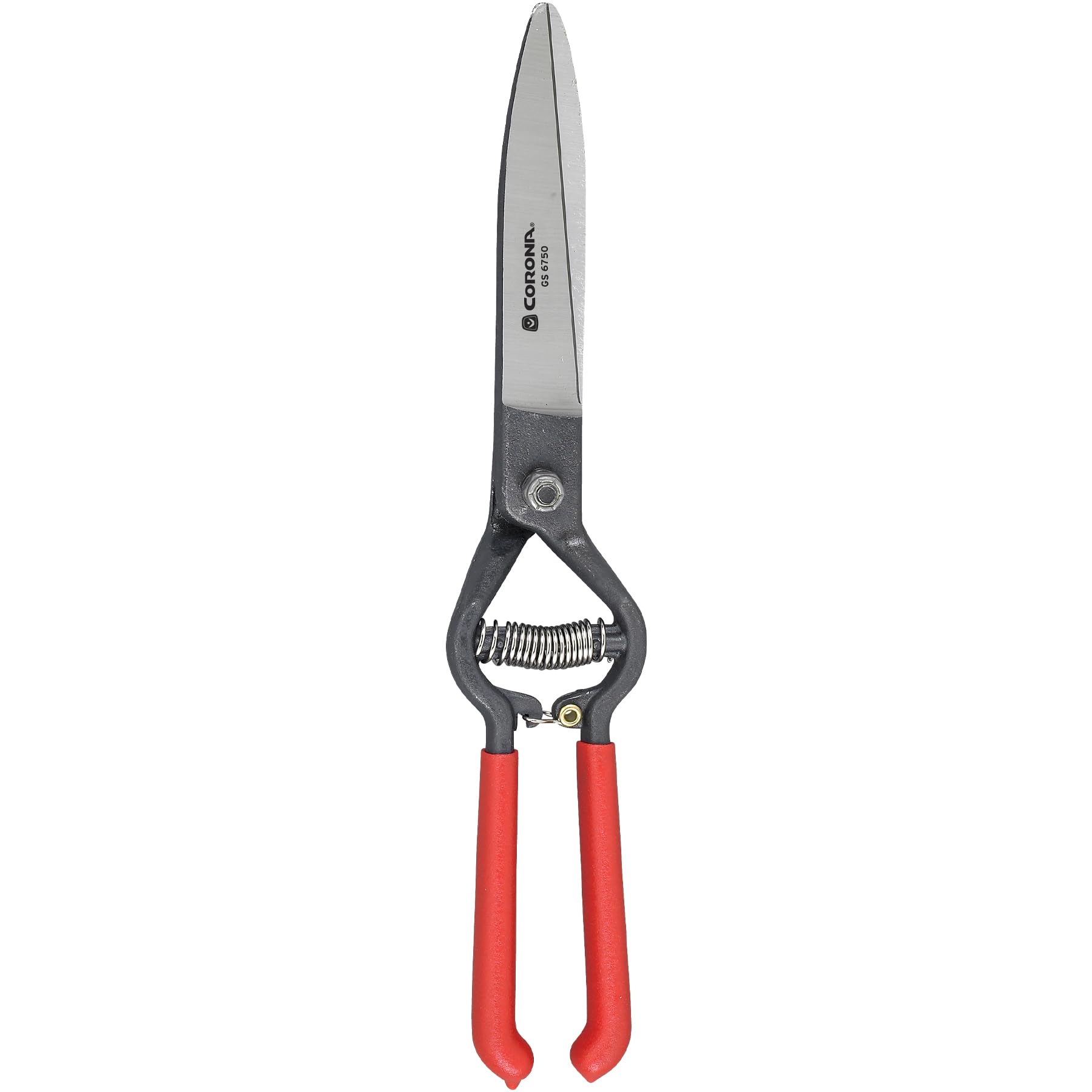
The Corona GS 6750D is not a full-size edger—it is a handheld bypass shear that excels where larger tools cannot reach. The 4.5-inch forged alloy steel blades deliver clean, scissor-like cuts along chain-link fences, under shrubs, and around tight corners where mowers and string trimmers leave ragged patches. The natural wood handles with vinyl coating provide a comfortable, ambidextrous grip that reduces hand fatigue during detail trimming sessions.
Owners consistently praise the all-metal build: no plastic parts to crack, and the re-sharpenable blades can be restored with a simple file. The spring action is firm enough to snap back reliably but may challenge users with smaller hands who need repeated squeezing. This tool is purpose-built for small, quick jobs—edging along a sidewalk border or trimming ground cover—not for cutting large swaths of turf.
If you already own a manual half-moon edger or a string trimmer, the Corona GS 6750D fills the critical gap for precise, hand-controlled trimming. It is the finishing tool that makes the difference between a good edge and a perfect one, especially in awkward spots that other tools simply cannot access.
What works
- Forged steel blades stay sharp with regular filing
- All-metal construction with no plastic parts
- Lightweight and ambidextrous for detail work
What doesn’t
- Not suitable for large lawn edging tasks
- Firm spring may fatigue smaller hands
Hardware & Specs Guide
Steel Gauge and Blade Thickness
Lower gauge numbers mean thicker, stronger steel. A 12-gauge blade (Bully Tools) withstands rocky soil and repeated stomping without warping, while 15-gauge (AMES) is lighter but may flex under heavy load. Spring steel (CKLT) resists deformation better than standard carbon steel of the same gauge because it returns to its original shape after bending. For regular residential edging in loamy soil, 14- or 15-gauge is sufficient; for heavy clay or demolition work, step up to 12- or 13-gauge.
Serration Patterns and Cutting Geometry
Straight half-moon blades produce the cleanest line and are best for soft, well-maintained turf. Saw-tooth serrations (AMES, Byhagern) bite into dense grass and roots but leave a slightly textured edge. Inverted-V tips (Root Slayer) concentrate force at a single point, splitting compacted soil before the blade edge follows through. Choose serrated patterns if you edge infrequently or have overgrown borders; choose straight blades if you maintain weekly edges in good soil.
FAQ
How deep should a manual lawn edger cut?
Is a serrated blade better than a straight blade for edging?
How often do I need to sharpen a manual lawn edger?
Can a manual edger handle roots?
Final Thoughts: The Verdict
For most gardeners, the best lawn edging tool winner is the Root Slayer 22611 because its inverted V tip and aggressive serrations power through compacted clay and roots with less effort than anything else at its price tier. If you prioritize ergonomics for long edging sessions, grab the Radius Garden 25602 with its donut handle and wide step platform. And for detail trimming along fences and tight corners where no full-size edger fits, nothing beats the Corona GS 6750D grass shear.