
A trellis that works for cucumbers or tomatoes can fail pole beans simply because the mesh spacing is too wide or the frame lacks the lateral rungs beans need to grab at every inch of growth. The narrow difference between a bumper crop of straight, clean pods and a frustrating mess of broken stems and soil-stained harvest comes down to the trellis architecture you choose — not the soil amendments or watering schedule.
I’m Rikta — the co-founder and writer behind Lawn Gear Lab. I’ve spent hundreds of hours cross-referencing structural specs, mesh density figures, and load-bearing claims against long-term owner feedback to identify which trellis designs actually keep pole beans vertical through a full season of rain and heavy fruiting.
Whether you are working a raised bed or a traditional row, this guide ranks the seven most effective structures to support climbing vines, with detailed analysis of material durability, assembly logic, and practical growing height. Read on for the definitive breakdown of the best trellis for pole beans.
How To Choose The Best Trellis For Pole Beans
Pole beans are vigorous climbers that require a different set of structural demands compared to peas or determinate tomatoes. The wrong trellis leads to toppling under wet foliage weight, vines that slide off smooth poles, or a harvest that sits on the ground rotting. Focus on these three criteria to narrow the field.
Climbing Surface & Mesh Geometry
Bean vines do not have tendrils that wrap around a single string; they twine around anything under about half an inch in diameter. A trellis with vertical string or smooth metal bars spaced wider than 6 inches forces the vine to bridge gaps without support, causing the growing tip to droop and set pods on the soil. Look for netting openings no larger than 4 inches by 4 inches, or a structure that offers horizontal cross-members every 6 to 8 inches. Bamboo poles arranged in a teepee or grid pattern provide the dense lattice that bean vines naturally grab.
Vertical Reach & Canopy Management
Most pole bean varieties reach 6 to 8 feet before they stop climbing and begin fruiting heavily at the top. A trellis shorter than 5 feet forces the plant to bush out at the top, creating a heavy, unstable canopy that catches wind and pulls the structure sideways. Aim for a minimum working height of 5 feet from the ground surface, with at least a foot of buried anchoring depth. For maximum pod set, a 6-foot support surface is ideal because it lets the main vine run its full genetic length.
Seasonal Anchor Stability & Material
Pole beans accumulate significant weight — a single healthy plant can carry several pounds of foliage, pods, and trapped rainwater. Lightweight plastic trellises with thin stakes or press-fit connectors often buckle mid-season when the canopy becomes saturated. Metal frames should use powder-coated or poly-coated steel tubes with a wall thickness that prevents flexing at the joints. Bamboo, when used in sufficient diameter (at least 0.5 inches at the base), offers natural grip and high strength-to-weight ratio, but must be heat-treated to resist splitting and rot in wet soil.
Quick Comparison
On smaller screens, swipe sideways to see the full table.
| Model | Category | Best For | Key Spec | Amazon |
|---|---|---|---|---|
| Yotoworth Arch Tunnel | Arch Tunnel | Large raised beds needing span height | 63″ H x 63″ L, 32 lbs capacity | Amazon |
| LeJoy Obelisk | Obelisk Tower | Container gardens and small patios | 75.6″ H, 4.9 lbs 100% metal | Amazon |
| SORANGEUN 63-Inch Cages | Triangular Cage | Individual plant support with 360° access | 63″ H, triangular steel tube | Amazon |
| K-Brands A-Frame | A-Frame | Quick install on standard raised beds | 50″ x 50″, tool-free assembly | Amazon |
| FOLLOOK U-Shape | U-Shape Arch | Budget-friendly raised bed tunnel | 48″ H x 48″ L, 3.5 lbs | Amazon |
| Gardgue Bamboo Poles | Natural Stakes | DIY teepee custom trellis builds | 70.5″ L, 15 pieces, heat-treated | Amazon |
| COLOtime Bamboo Stakes | Natural Stakes | High-volume planting requiring many poles | 72″ L, 20 pieces, fumigated | Amazon |
In‑Depth Reviews
1. Yotoworth 63-Inch Arch Tunnel Trellis
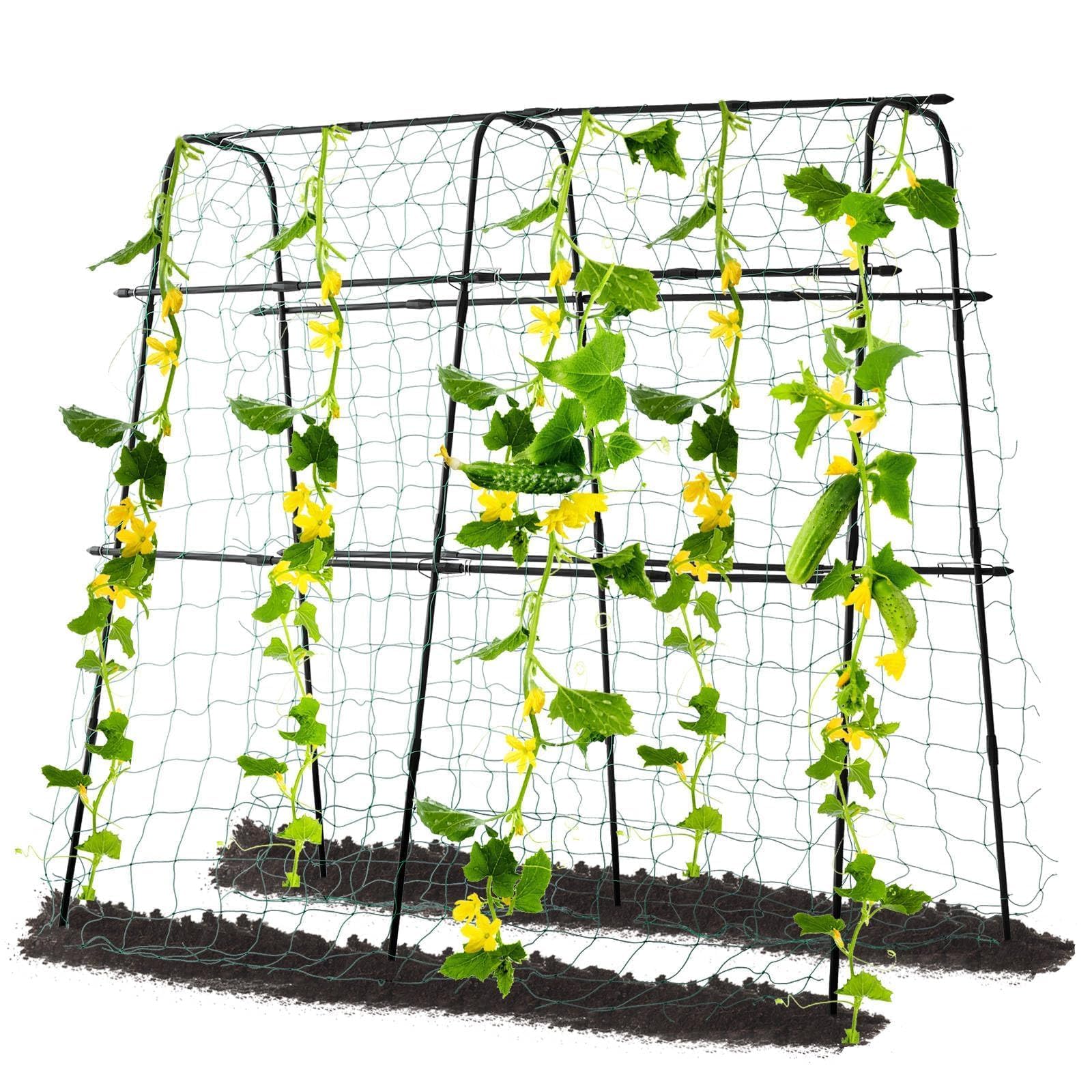
The Yotoworth arch tunnel hits the sweet spot of height and width that pole beans demand. At 63 inches tall and 63 inches long, with an adjustable width between 16 and 24 inches, it provides a full 5 feet of vertical climbing surface plus a generous overhead canopy area where vines can run horizontally once they top out. The poly-coated steel frame supports up to 32 pounds of wet foliage, which is enough for four to six mature pole bean plants without sagging at the apex.
Assembly takes under 20 minutes with no tools, and the legs stake 15 inches into the ground for lateral wind resistance. The nylon netting has an open grid that bean vines wrap around readily, and the arched shape sheds rainwater rather than pooling on top. Owners consistently report that this trellis holds heavy cucurbits and melons, so pole beans — which are lighter — pose no stability challenge.
The weakest point is the joint connectors, which require careful alignment to avoid looseness. Several reviewers noted that skipping the supplied clips during assembly caused the entire structure to collapse. Once properly clipped, the arch stands firm, but the plastic connectors are the part most likely to crack under repeated seasonal assembly and disassembly.
What works
- Poly-coated steel frame resists rust through wet seasons.
- Arch shape sheds rain and prevents canopy waterlogging.
- 15-inch ground stakes provide excellent wind resistance.
What doesn’t
- Joint clips are necessary for stability but easy to lose during storage.
- Netting hangs below the lowest crossbar, creating a gap that can trap small animals.
2. LeJoy Garden 6.3-Foot Obelisk Trellis

The LeJoy obelisk is a heavy-duty 100% metal tower that stands 75.6 inches tall, giving pole beans the full vertical runway they need without any top-heavy lean. The four vertical legs taper inward toward a decorative top finial, creating a self-supporting pyramidal structure that distributes bean vine weight evenly around the circumference. At 4.9 pounds, it is significantly heavier than most folding trellises, and the epoxy coating has shown excellent resistance to chipping through several growing seasons.
Assembly requires only a screwdriver, with pre-drilled holes ensuring the rungs align correctly. The open ring design allows beans to twine around the horizontal rings at every level, and the bottom legs include stakes that press into the soil or pot medium. Owners who placed it in large containers praised its ability to tame bougainvillea and climbing roses, proving the frame can handle the lateral pressure of heavy pole bean vines pulling outward during fruiting.
Because the obelisk is a closed vertical form, it only supports a single planting ring around its base — roughly four to six bean plants around the perimeter at most. The bronze finish, while durable, can develop surface rust after three years of continuous outdoor exposure, particularly at the threaded joints where the epoxy coating is thin.
What works
- 75.6-inch height accommodates indeterminate pole bean varieties fully.
- Sturdy 4.9-pound all-metal frame resists tipping in wind.
- Decorative design doubles as garden sculpture when not in use.
What doesn’t
- Limited to four to six bean plants per tower.
- Threaded joints may show rust after extended wet exposure.
3. SORANGEUN 63-Inch Heavy Duty Tomato Cages
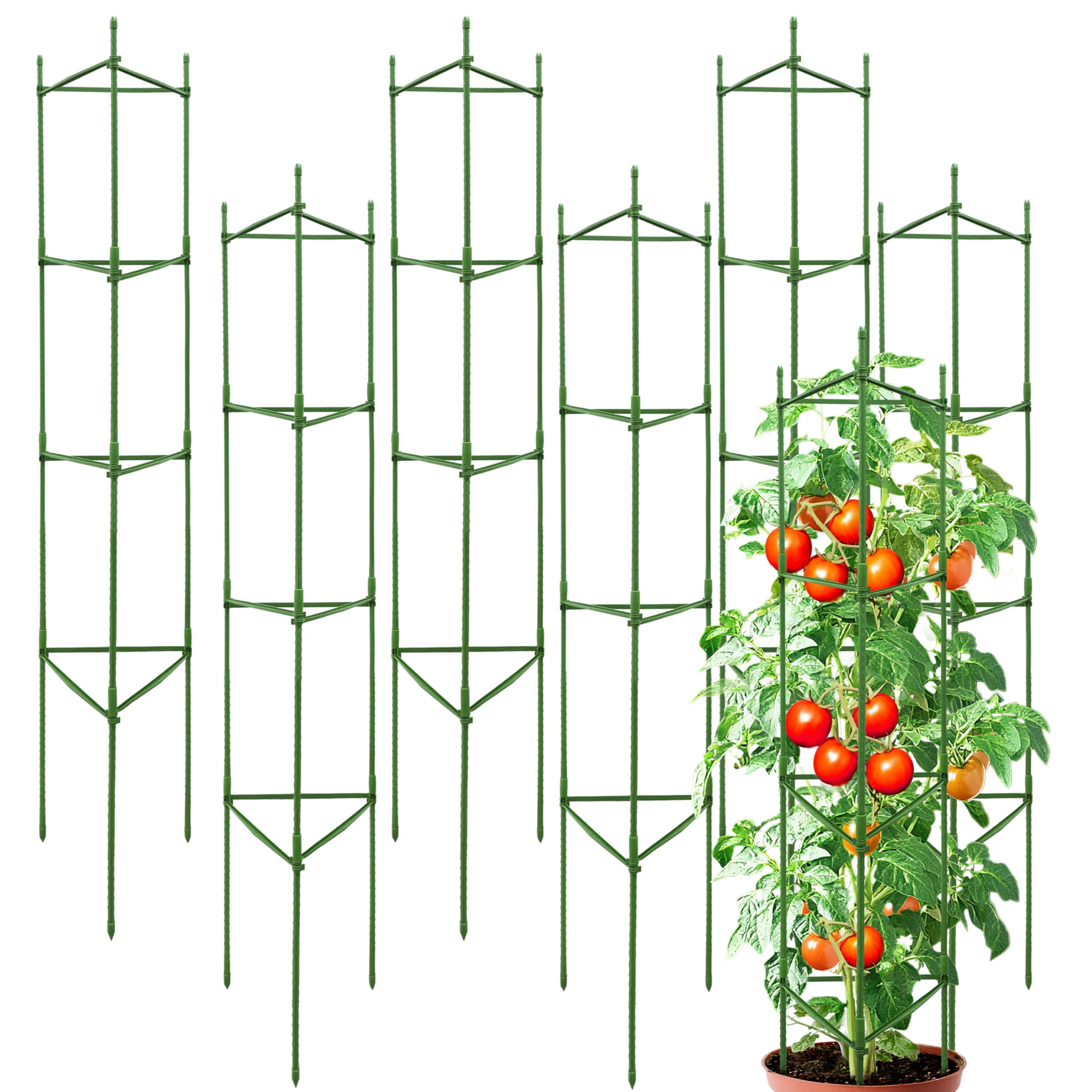
These SORANGEUN cages are a six-pack of 63-inch tall triangular frames built from thick steel tubes with a full rust-proof plastic coating. The height is critical: standard 48-inch cages leave pole beans bunching at the top, but these provide an extra 15 inches of vertical run. The three-sided design offers 360-degree support, allowing bean vines to spiral upward along all three faces, which distributes weight evenly and prevents the cage from tipping under a heavy canopy.
The plastic coating is thick and bonded to the steel core, resisting UV degradation and standing up to direct soil contact without corrosion. Each cage supports a single plant or a tight cluster of two to three bean plants, making this set ideal for a raised bed with 6 to 12 plants. Owners modified the triangular shape into a larger square by using four poles per cage, which indicates the connectors are robust enough to handle reconfiguration.
The assembly process is more complex than a simple arch frame — the cage uses multiple cross-bars that lock into corner connectors. Several reviewers reported that the connectors can snap apart if not fully seated, and a missing connector in one shipment required a tape repair. Once assembled correctly the frames are sturdy, but the manual is unclear on the positional order of the cross-bars.
What works
- 63-inch height prevents apical bunching for full-season pole beans.
- Thick plastic-coated steel resists rust and UV cracking.
- Six-pack gives excellent per-unit value for large garden installations.
What doesn’t
- Assembly is finicky and connectors may need adjustment.
- Triangular footprint is narrow for plants with wide lateral spread.
4. K-Brands 50×50 Cucumber Trellis A-Frame
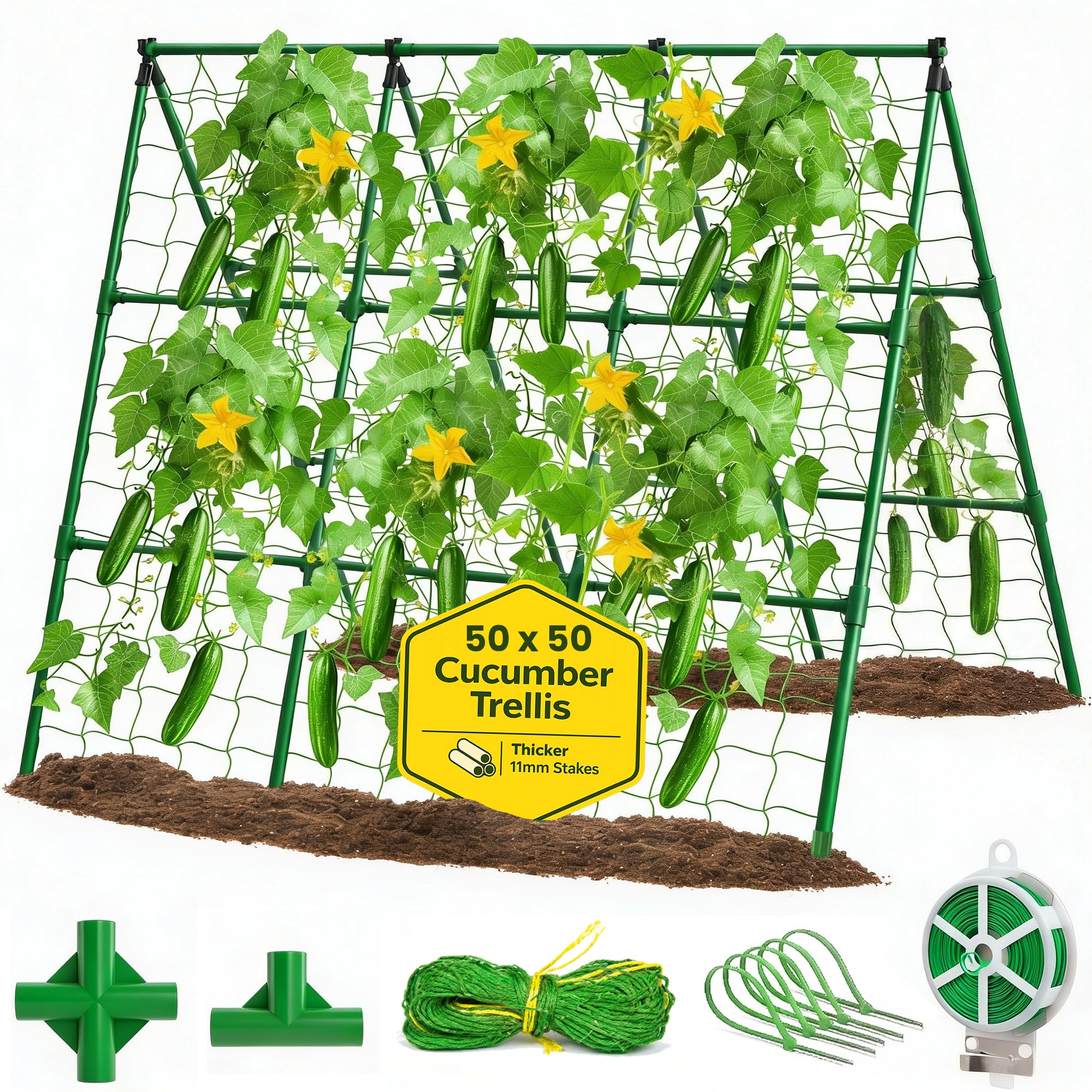
The K-Brands A-frame achieves an excellent balance of quick assembly and adequate height for pole beans at a price that lands in the mid-range. The 50-inch by 50-inch panels form a tent-like structure that offers two full climbing surfaces, one on each side, effectively doubling the planting capacity compared to a flat panel. The powder-coated steel frame has moderate weight at 3.6 pounds, but the A-frame geometry adds inherent stability because the legs angle outward against the soil.
The kit includes heavy-duty netting, twist ties, and 50 zip ties, which cover every attachment need for the season. The netting mesh size is tight enough that bean vines grab it immediately without slipping. Assembly is tool-free, using easy-connect joints, though the instructions are sparse and some owners reported 45-minute assembly times due to unclear diagrams. Once the A-frame is standing, the structure is easy to lift and reposition as the season progresses.
The primary limitation is the 50-inch height, which is 6 to 10 inches shorter than ideal for aggressive pole bean varieties. Once the main vine tops out, it will bush over the peak, creating a dense cap that shades the lower fruiting nodes. For bushier, shorter pole beans like ‘Blue Lake’ this works fine, but for ‘Kentucky Wonder’ or ‘Scarlet Runner’ the plants will outgrow the frame by mid-August.
What works
- Tool-free assembly with snap-lock joints and all accessories included.
- A-frame geometry provides natural stability without deep staking.
- Two climbing sides double the bean-plant capacity per footprint.
What doesn’t
- 50-inch height is too short for tall indeterminate pole bean types.
- Instructions are vague, increasing first-time assembly time.
5. FOLLOOK Cucumber Trellis U-Shape
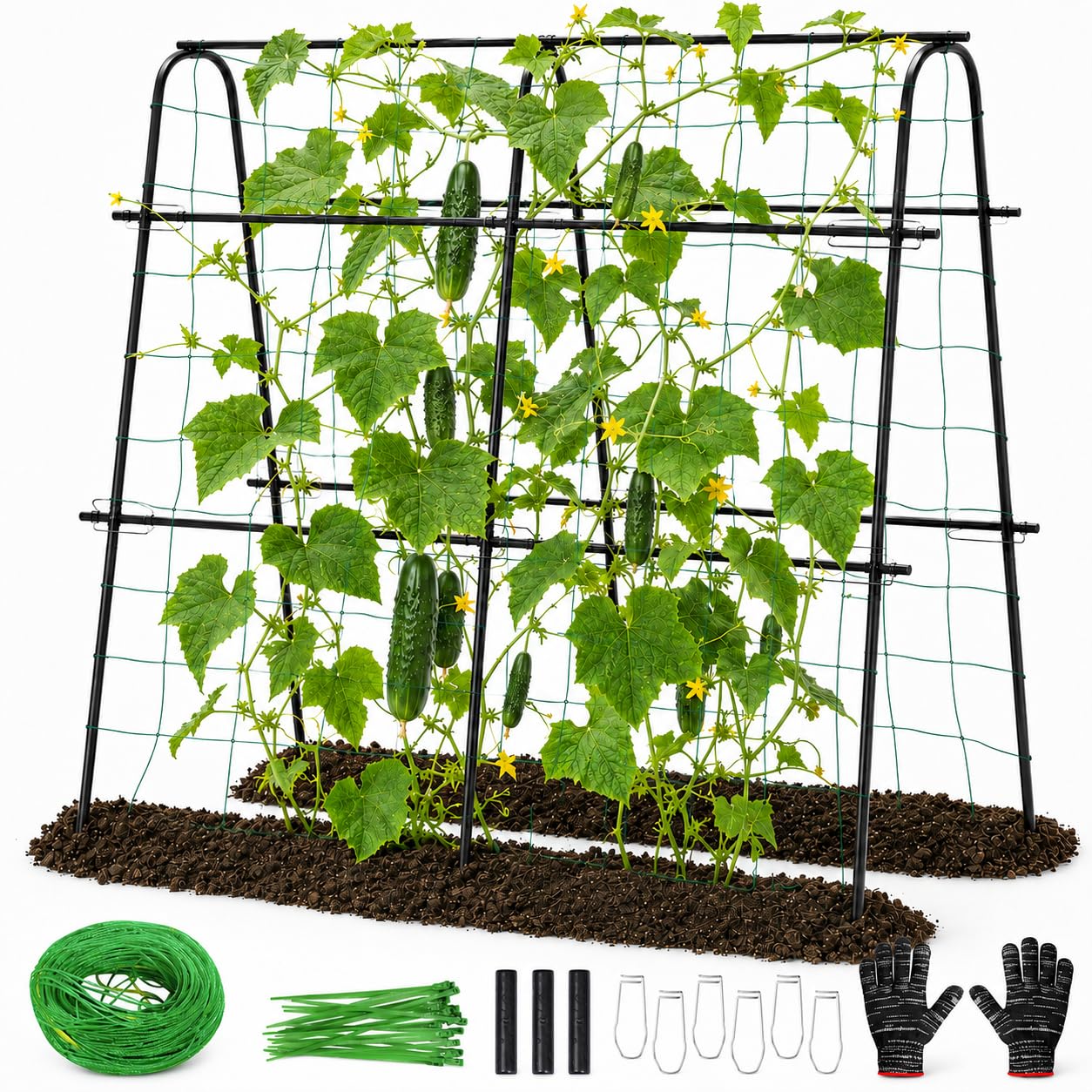
The FOLLOOK U-shaped arch is a lightweight entry-level option that works best for shorter pole bean varieties or as a temporary trellis for a single raised bed row. The 48-inch height matches a standard 4-foot raised bed frame, giving beans roughly 3 feet of climbing space above the soil line once the trellis legs are inserted 6 to 8 inches. The poly-coated steel core is plastic-coated to resist rust, but the U-shape legs are thinner gauge metal than arch designs, limiting its ability to support heavy, waterlogged vines.
Assembly is straightforward with included nylon netting that stretches across the arch. The mesh is fine enough for bean vines to grip reliably, and the open arch shape allows easy harvesting from both sides. The structure breaks down compactly for winter storage, which is a practical advantage for gardeners who rotate trellis locations each year.
The biggest drawback is the weak connection at the top bracket where the two U-sides meet. Several owners reported that the metal connector piece is poorly designed and requires two people to snap together, and the frame can collapse if the connector is not fully seated. The budget price reflects this: the trellis works for one season of light beans but may not survive disassembly and reassembly for a second year without the connectors loosening.
What works
- Lightweight at 3.5 pounds and breaks down flat for storage.
- Fine netting mesh is ideal for young bean tendrils to grip.
- Black finish blends into garden without visual clutter.
What doesn’t
- Top bracket connection is weak and prone to failure under heavy vines.
- 48-inch height is too short for aggressive pole bean varieties.
6. Gardgue Natural Bamboo Poles 6-Feet
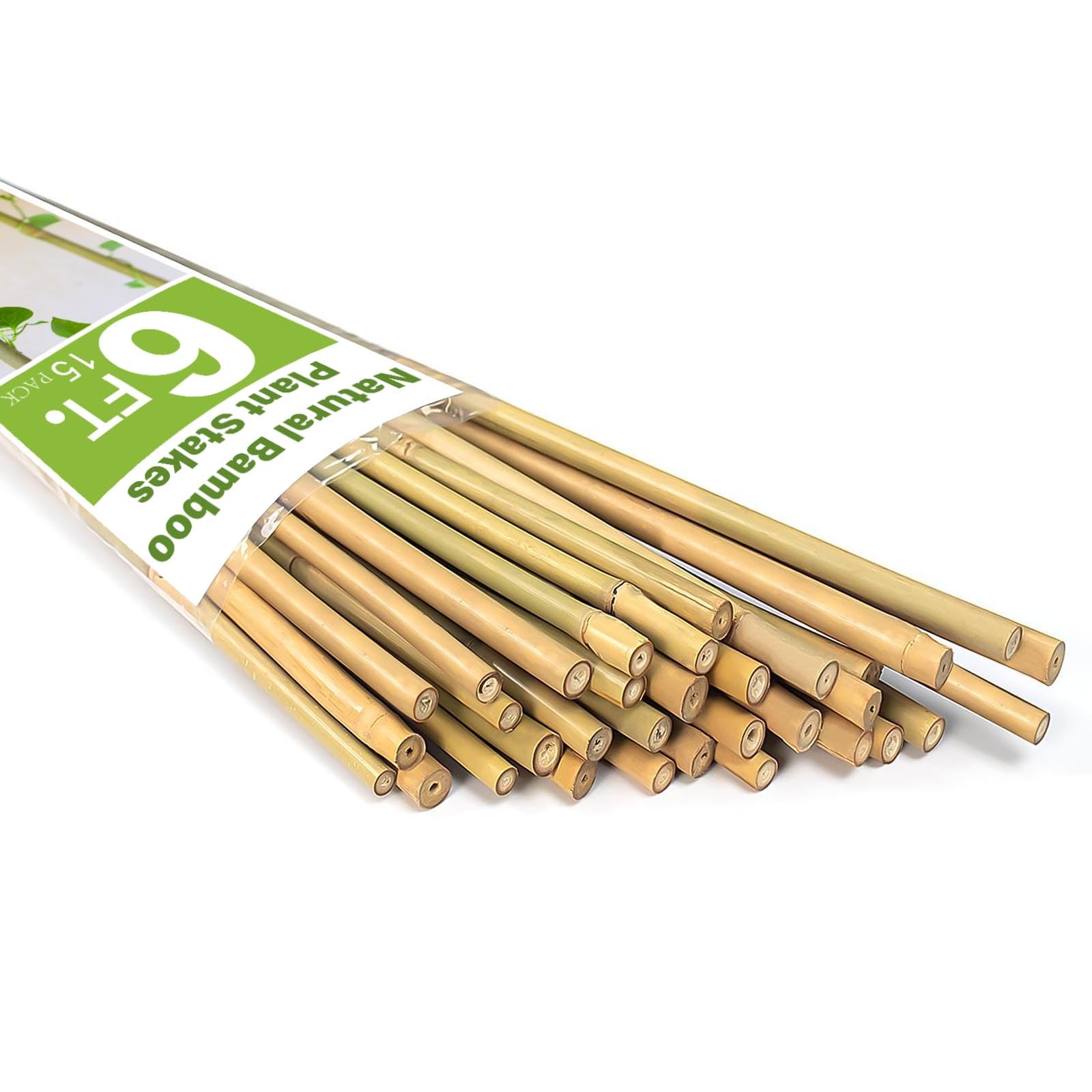
The Gardgue bamboo poles offer the most natural climbing surface for pole beans, with the textured bamboo surface providing better grip than smooth plastic or metal. At 70.5 inches long, they meet the height requirement for even the most vigorous ‘Scarlet Runner’ or ‘Rattlesnake’ pole beans. Each pole is hand-selected from subtropical bamboo, then heat-treated to drive out moisture and prevent rot during months of soil contact. The 15-pack quantity is enough to build a sturdy teepee trellis that supports at least 8 plants, or a double-row grid for a longer bean patch.
Bamboo poles have a distinct advantage over premade frames: you control the geometry. A traditional teepee with six to eight poles tied at the top creates multiple climbing surfaces with dense intersecting angles that beans will weave through naturally. The poles are lightweight at 2.8 pounds total, making them easy to arrange and reposition until the soil settles around them. Owners who used them for monsteras and dahlias praised their rigidity relative to the slim diameter.
The main limitation is that bamboo must be installed in warm, soft soil; hard or dry ground may crack the pole tips when driven in. Using a mallet or auger pilot hole is recommended. While the 15-count is good for small to medium gardens, large row plantings will require multiple packs, raising the total cost above a single prefabricated arch.
What works
- 70.5-inch length is ideal for full-season pole bean vertical growth.
- Natural bamboo texture gives vines better grip than metal or plastic.
- Heat treatment prevents rot and cracking through season-long soil contact.
What doesn’t
- Requires soil soft enough to push poles in without splitting the ends.
- 15-pack may not be enough for large row plantings.
7. COLOtime Bamboo Stakes 6-Feet

The COLOtime bamboo stakes offer the highest count per pack at 20 pieces, each 6 feet long, making them the most economical choice for gardeners planting long rows of pole beans. The bamboo is fumigated and heat-treated twice, which helps maintain straightness and resistance to mildew in humid climates. The stakes are roughly 0.5 inches in diameter at the base, tapering slightly toward the tip — a profile that is thick enough to remain rigid under vine weight but slim enough to insert into potting soil without displacing roots.
The primary use case for these stakes is constructing a custom A-frame or teepee trellis, or staking individual bean plants in a container garden. The 6-foot length is suitable for all pole bean varieties, providing a full growing season’s worth of vertical space. Owners noted that the stakes are sturdy enough to be driven into the ground with a mallet even in moderately compacted garden soil, though splitting can occur if the ground is frozen or rocky.
The wood finish is untreated, which is a benefit for organic gardeners, but it also means the stakes will slowly weather and degrade if left in the soil year-round. Some poles arrived with splits at the tip from shipping handling, reducing usable length slightly. At this price per stake, the 20-pack provides enough material for two large teepees or one long fence-style trellis row, making it the best per-dollar option for high-volume plantings.
What works
- 20 stakes per pack give the best per-unit cost for large gardens.
- Double heat and fumigation treatment prevents mildew and warping.
- Untreated bamboo is safe for organic vegetable production.
What doesn’t
- Thin ends can split during shipping or when driven into hard soil.
- Untreated bamboo will degrade if left in the ground over winter.
Hardware & Specs Guide
Mesh Density & Vine Acquisition
Pole bean vines climb by wrapping their stems around any support smaller than about 0.5 inches in diameter. A trellis netting or lattice that has openings larger than 5 inches creates gaps the vine cannot bridge, causing the growing tip to fall and set pods on the ground. The ideal mesh is between 3 and 4 inches per square opening, or a structure with horizontal rungs spaced 4 to 6 inches apart. Arch tunnels and A-frames with netting typically have 3.5-inch diamond mesh, which is the exact size beans need to twist around each intersection.
Load Capacity & Canopy Weight
A single mature pole bean plant can weigh 3 to 5 pounds when fully leafed out and carrying a full set of green pods. A trellis covering a 4-foot bed with 6 plants is supporting 18 to 30 pounds of biomass at peak season. After a heavy rain, that weight can double as water saturates the leaves and pods. Trellises rated under 20 pounds total will sag or collapse mid-season. Metal frames with poly-coating and wall thickness above 1 mm hold shape best, while bamboo with a base diameter less than 0.4 inches may bow over time.
FAQ
Can I use a cucumber trellis for pole beans?
How tall should a trellis be for Kentucky Wonder pole beans?
Is an A-frame or arch trellis better for beans?
How many pole bean plants fit on one trellis?
Final Thoughts: The Verdict
For most gardeners, the best trellis for pole beans winner is the Yotoworth 63-Inch Arch Tunnel because it delivers the full 5-foot-plus vertical height beans need, supports heavy wet canopies without sagging, and fits easily over standard raised beds. If you want a decorative, compact solution for a patio or large container, grab the LeJoy Obelisk. And for a high-volume organic garden where you want to customize the exact trellis geometry, nothing beats the Gardgue Bamboo Poles for their natural grip, full 6-foot length, and eco-friendly material.