
A bag of cheap, dense garden soil can strangle your tomato roots and leave your pepper plants yellow and stunted. The right potting mix for vegetables must balance drainage with moisture retention and deliver a steady supply of macro and micronutrients from the first true leaf to the final harvest. Finding that balance requires understanding what’s actually inside the bag, not just trusting the pictures on the front.
I’m Rikta — the co-founder and writer behind Lawn Gear Lab. I’ve spent countless hours cross-referencing NPK ratios, pH levels, ingredient labels, and real-world owner feedback to separate the genuinely effective mixes from the ones that are just expensive bags of peat.
This guide breaks down the seven most talked-about mixes and amendments on the market to help you confidently choose the correct potting soil for vegetables for your raised beds, containers, and garden plots without wasting money or time on subpar blends.
How To Choose The Best Potting Soil For Vegetables
Not all bags labeled “potting mix” are suitable for edible crops. Many general-purpose soils are designed for ornamentals and contain synthetic wetting agents or slow-release fertilizers with the wrong nutrient profile for vegetables. To choose wisely, you need to decode three primary categories: the base ingredients, the nutrient analysis, and the pH level. Each factor determines whether your zucchini will thrive or merely survive.
Base Ingredients: Peat vs. Coir vs. Compost
The foundation of any good vegetable mix determines how the soil behaves after repeated watering. Sphagnum peat moss provides excellent water retention and a fluffy texture but is acidic (pH 3.5–4.5) and requires lime to adjust pH. Coco coir is a renewable alternative that holds moisture well, resists compaction, and has a near-neutral pH, but it lacks inherent nutrients. High-quality vegetable mixes typically use a blend of aged compost or worm castings for slow-release nutrition, plus perlite for aeration. Avoid mixes heavy with large wood chips or bark fines, which rob nitrogen from your plants as they decompose.
NPK Ratios and Micronutrients
Nitrogen (N), phosphorus (P), and potassium (K) levels must match the life stage of your vegetables. A balanced ratio like 5-1-7 (as seen in the Miracle-Gro Raised Bed Plant Food) supports fruiting and flowering after transplant. Leafy greens benefit from higher nitrogen, while tomatoes and peppers need more phosphorus for fruit set. Organic mixes often derive their NPK from composted manure, bone meal, and kelp meal — these release slowly and won’t burn tender roots the way synthetic salts can.
Drainage and Aeration
Root rot is the fastest way to kill a container vegetable garden. A premium vegetable potting soil should contain perlite, pumice, or coarse sand to create pore spaces. When you squeeze a handful of moistened mix, it should hold its shape but crumble easily. If it forms a hard, muddy ball, the drainage is insufficient. Likewise, a mix that feels like dry beach sand will force you to water multiple times per day during hot weather. The ideal blend balances water holding capacity (WHC) with air-filled porosity (AFP) around 50–70 percent total porosity for healthy root respiration.
Quick Comparison
On smaller screens, swipe sideways to see the full table.
| Model | Category | Best For | Key Spec | Amazon |
|---|---|---|---|---|
| Coast of Maine Bar Harbor Blend | Premium Blend | Container & raised-bed veggies | 16 QT with crab & kelp meal | Amazon |
| Brut Organic Potting Soil | Premium | High-value container plants | 21 QT pH 6.3–6.5 w/ worm castings | Amazon |
| Coast of Maine Tomato & Vegetable | Organic Mix | Heirloom tomatoes & deep-root crops | 20 QT with composted manure | Amazon |
| Black Gold All Organic Potting Soil | Organic Mix | Houseplants & small container veggies | 8 QT 2-pack, fungus gnat safe | Amazon |
| Miracle-Gro Raised Bed Plant Food | Granular Feed | Refeeding established raised beds | 2 LB granules, 5-1-7 ratio | Amazon |
| Back to the Roots Worm Castings | Soil Amendment | Enriching any existing soil mix | 5 LB pure vermicompost | Amazon |
| Avalution Coco Coir Bricks | Base Substrate | DIY mix building & moisture control | 9-pack expands to 54 QT | Amazon |
In‑Depth Reviews
1. Coast of Maine Bar Harbor Blend (16 QT)
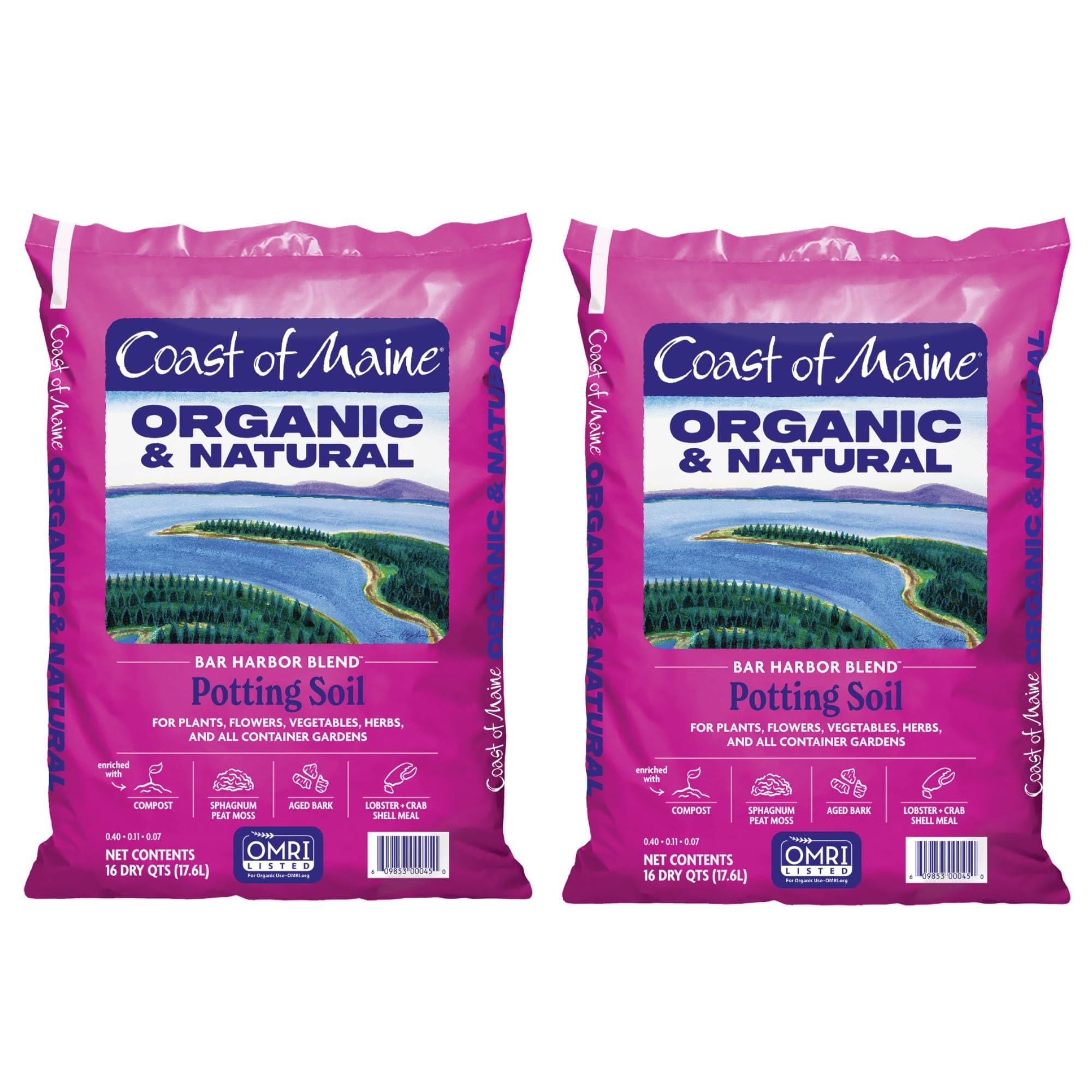
The Coast of Maine Bar Harbor Blend is the most complete ready-to-use potting soil in this lineup. Its base combines sphagnum peat moss, compost, and perlite, then boosts it with lobster and crab shell meal for natural chitin — which encourages beneficial soil microbes — plus kelp meal for trace minerals. Gardeners report that this mix supports explosive early growth in tomatoes, peppers, and potatoes without any additional fertilizer for the first four to six weeks. The dark, crumbly texture indicates a high compost-to-peat ratio, which provides better nutrient density than the pale brown mixes that are mostly peat.
What sets the Bar Harbor Blend apart is its biological activity. Owners consistently note that plants show deep green leaves within days of transplanting, and that root systems fill containers faster than with mainstream brands. The perlite distribution is generous, so you won’t see water pooling on the surface even after heavy rain on outdoor containers. The smell is earthy — not sour or ammonia-like — which confirms the compost was properly aged before bagging.
This mix is slightly heavier than a standard peat-based product because of the compost and shell meal components, so factor that in if you are filling large raised beds remotely. The price per quart sits in the premium tier, but given the biological activity and the fact that you rarely need to amend it mid-season, many users find the total cost of ownership lower than buying cheap soil plus frequent liquid feeds. This is the single bag to reach for when you want a true set-and-forget vegetable potting soil.
What works
- Nutrient-rich compost base reduces need for early-season fertilizing
- Excellent drainage and aeration from well-distributed perlite
- No weed seeds or wood filler chunks found by reviewers
What doesn’t
- Heavier than peat-only mixes due to compost and shell meal
- Premium price per quart compared to generic alternatives
2. Brut Organic Potting Soil (21 QT)
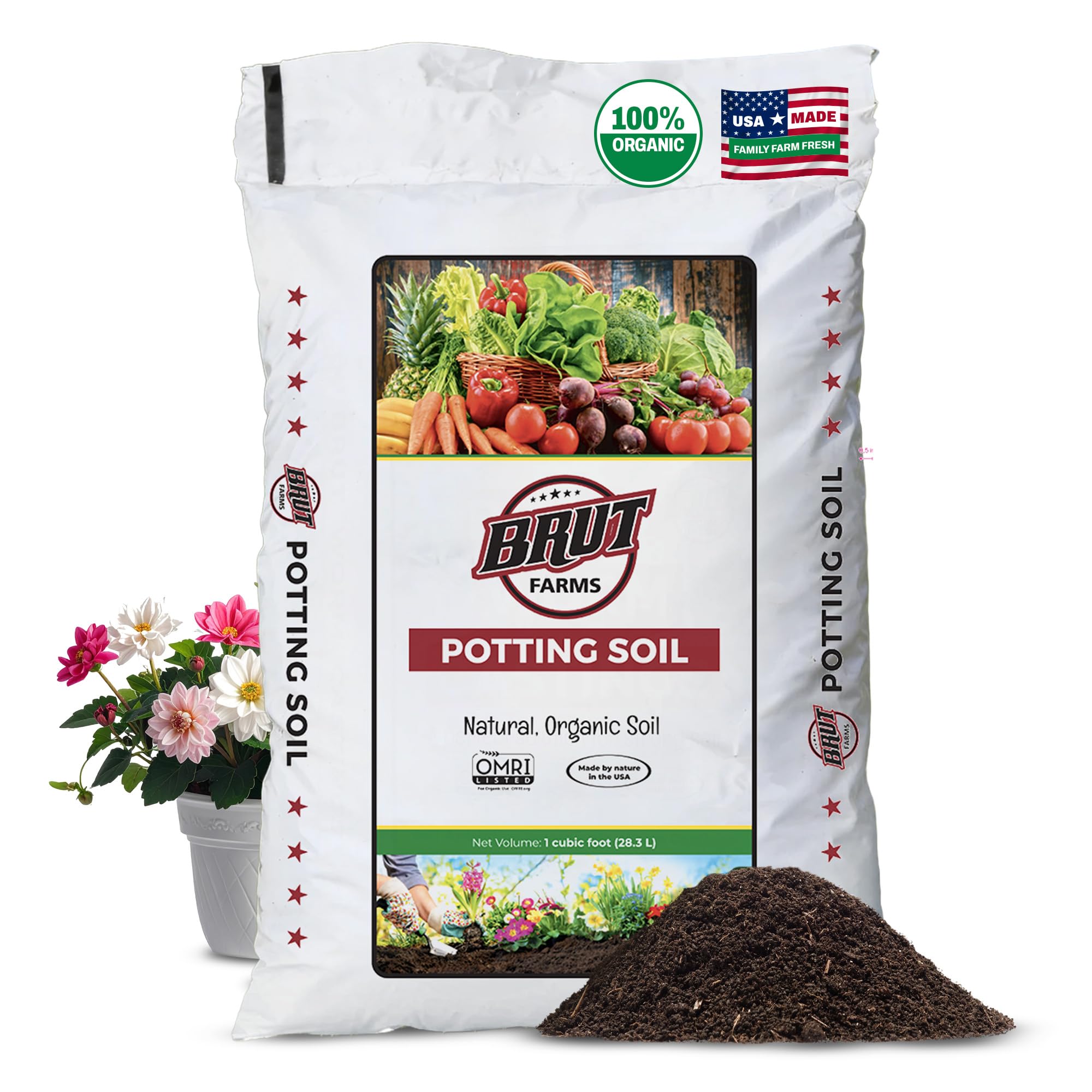
Brut Organic Potting Soil is a deliberately refined mix that eliminates the two biggest frustrations of budget soils: wood filler and unregulated pH. This product uses worm castings as its primary nutrient engine, fortified with azomite (volcanic mineral dust) and kelp for trace element diversity. The pH is locked between 6.3 and 6.5, which sits right in the sweet spot for most vegetables and allows immediate planting without worrying about lime adjustments. Multiple reviewers report that their tomato seedlings show deep green leaves and new growth within 48 hours of transplanting into this mix.
The texture is notably fine and consistent — no sticks, bark chips, or synthetic gel crystals that can degrade into slime. This homogeneity matters when you are starting seeds directly in containers, because large woody pieces create air pockets that dry out delicate root hairs. The worm castings are rich in beneficial bacteria and humic acids, which buffer nutrient availability and help plants weather inconsistent watering schedules. Gardeners using Brut in raised beds noticed that the soil stayed dark and friable for an entire growing season without the surface crusting that plagues cheaper mixes.
The main tradeoff is the cost. At roughly for 21 quarts, this is one of the most expensive bagged soils on the market, and it is not ideal for filling multiple large raised beds on a tight budget. Additionally, the fish and bone meal content can attract flies if the bag is left open outdoors, so reseal after use or cover with a thin layer of sand. If you are growing a small number of high-value container plants like heirloom tomatoes or bell peppers, this soil delivers premium results that justify the upfront spend.
What works
- No sticks, bark, or filler material — consistent fine texture
- Pre-balanced pH between 6.3–6.5 eliminates guesswork
- Rich microbial life from worm castings boosts early root growth
What doesn’t
- High cost per quart limits use to smaller containers
- Fish/bone meal aroma can attract outdoor pests if exposed
3. Coast of Maine Tomato & Vegetable Soil (20 QT)

Coast of Maine’s Tomato & Vegetable Soil is formulated specifically for heavy-feeding crops that demand high phosphorus levels for fruit set. The bag uses composted manure as its primary organic component, which delivers a richer nutrient load than standard peat-based mixes. Several reviewers noted that this soil performed exceptionally well with heirloom tomatoes, producing thick stems and vigorous flowering without the need for supplemental bloom boosters. The blend also contains cedar and aromatic wood fines that appear to deter soil gnats and other surface pests, a benefit not commonly advertised.
The moisture retention characteristics are a standout. Owners report that containers filled with this mix can go an extra day between waterings compared to lighter blends, which is a practical advantage during hot summer weeks. At the same time, the drainage remains adequate for deep-rooted vegetables — the compost provides enough structure to prevent the mucky compaction that occurs with pure manure or topsoil. The lightweight feel of the bag makes it easy to transport and pour into raised beds without straining your back.
There are two notable caveats. First, some users encountered fungus gnat eggs in fresh bags, likely introduced through the composted manure; freezing the soil for 48 hours or drenching with organic neem oil at planting time can mitigate this. For the home gardener growing a few high-value crops in containers or small raised beds, this soil delivers targeted nutrition that general-purpose mixes cannot match.
What works
- High phosphorus content from composted manure supports flowering
- Good moisture retention reduces watering frequency
- Contains aromatic wood to deter soil insects
What doesn’t
- Potential for fungus gnat eggs in fresh bags
- Cost per quart rises quickly for large-scale use
4. Black Gold All Organic Potting Soil (8 QT 2-Pack)

Black Gold All Organic Potting Soil earns its reputation among indoor and small-space gardeners because it reliably arrives free of fungus gnats — a problem that plagues many organic mixes stored in damp warehouses. The 2-pack of 8-quart bags gives you flexible volume for multiple small containers or one medium raised planter without committing to a massive bale. Users consistently confirm that this mix does not compact over time or create standing water issues, thanks to a well-judged perlite content and the use of aged bark fines that resist breaking down too quickly.
The texture strikes a practical compromise between moisture retention and drainage. When used as a standalone medium for container vegetables like bush beans, leaf lettuce, and compact pepper varieties, the soil holds enough water to support daily growth without turning into a soggy mess. Many gardeners also use Black Gold as a blending agent — mixing it with garden topsoil to revitalize tired raised beds, or combining it with extra perlite for seedlings that require sharper drainage. The organic certification means you avoid the synthetic wetting agents that can cause salt buildup over a long growing season.
The main limitation is the bag size. At 8 quarts each, the total volume (16 QT) is sufficient for a modest urban garden but will not cover a large raised bed. The price per quart is mid-range, and while the soil performs well, it does not contain the heavy nutrient load of a manure-based mix — you may need to supplement with liquid fish emulsion midway through the season for heavy feeders like indeterminate tomatoes. For the urban gardener who wants a clean, reliable organic soil that will not introduce pests into a living room environment, this is the safest bet.
What works
- Consistently fungus gnat free out of the bag
- Light texture resists compaction and standing water
- Works well as a standalone mix or as a soil amendment
What doesn’t
- Nutrient density is moderate — heavy feeders need mid-season supplementation
- Small bag size requires multiple purchases for larger projects
5. Miracle-Gro Raised Bed Plant Food (2 LB)

Miracle-Gro Raised Bed Plant Food is not a soil mix but a granular, slow-release food designed to replenish nutrients in raised beds after the initial soil charge has been depleted. Its 5-1-7 NPK ratio is skewed heavily toward potassium and nitrogen, which supports the fruiting and leaf development phases of vegetables like squash, cucumbers, and peppers. The manufacturer states that a single 2-pound bag feeds two 4-by-4-foot raised beds for up to three months, making it an economical way to extend the productivity of an existing bed without buying more bulk soil.
Gardeners who paired this product with an inert or low-nutrient base (like pure compost or coco coir) reported significant improvements in bloom count and fruit size compared to unfed controls. The granular format is easy to sprinkle evenly across the bed surface and requires only a light watering-in to activate. Unlike liquid feeds that demand weekly mixing, this product dissolves gradually over the season and reduces the risk of fertilizer burn as long as you do not over-apply. Added calcium supports blossom end rot prevention in tomatoes, a common frustration for container growers.
This product is not a standalone soil. If you are starting a new bed from scratch, you still need a high-quality base mix like the Coast of Maine Bar Harbor Blend or Brut Organic soil. The granules are also not suitable for seed starting — the salt index can damage delicate radicles. Use this as a strategic mid-season boost to reinvigorate beds that have been growing for six weeks or more, especially if you notice the lower leaves starting to yellow. For the price, it delivers one of the highest nutrient-to-dollar ratios in this guide.
What works
- Three months of feeding from a single application saves time
- High potassium content supports strong fruiting in vegetables
- Added calcium helps prevent blossom end rot in tomatoes
What doesn’t
- Not a complete soil — must be used with a base potting mix
- Salt content can damage seedlings if used during germination
6. Back to the Roots Worm Castings (5 LB)

Back to the Roots Organic Worm Castings deliver a concentrated dose of beneficial biology that transforms average potting soil into a biologically active growing medium. The castings are pure vermicompost — no fillers, synthetic components, or chemical additives — and they come from a domestic source with a known supply chain. Gardeners who have used this product describe it as a “rich, clean” additive that integrates easily into coco coir, perlite, chunky mixes, and even heavy garden clay without clumping.
The primary benefit reported by users is improved root health and resistance to transplant shock. When mixed into the planting hole at a ratio of roughly one part castings to four parts base soil, tomato and pepper transplants resume growth within 48 hours rather than sulking for a week. The castings also contain humic acids that chelate micronutrients, making iron and zinc more available to plants in alkaline or over-limed soils. Milkweed growers specifically noted that this product is safe for monarch caterpillars, confirming its low chemical residue profile.
One characteristic to manage is moisture retention. Worm castings hold a significant amount of water, and if you blend too much into a container mix that already has high peat content, you may end up with soggy conditions that promote root rot. Stick to a 10–20 percent ratio by volume, and always add extra perlite or pumice to compensate. The 5-pound bag is also small relative to the volume of soil needed for large raised beds — you will need multiple bags for anything beyond a few containers. For targeted root zone enrichment, however, this is the most effective biological amendment in the lineup.
What works
- Pure vermicompost with no synthetic additives or filler
- Reduces transplant shock and promotes rapid root development
- Contains humic acids that improve micronutrient availability
What doesn’t
- High moisture retention requires careful blending to avoid over-wetting
- Small bag size is inefficient for large-scale bed filling
7. Avalution Coco Coir Bricks (9-Pack)

Avalution’s 9-pack of compressed coco coir bricks is a smart budget-conscious foundation for gardeners who prefer to build their own custom vegetable mix rather than buying pre-blended bags. Each brick is made from pure coconut husk fiber with a low electrical conductivity (EC) reading — meaning it contains negligible soluble salts — and a balanced pH suitable for most vegetables once hydrated. When fully expanded, the nine bricks together yield approximately 54 quarts of substrate, matching or exceeding the volume of four standard 12-quart bags at a fraction of the shipping weight before hydration.
The most practical advantage of coco coir is its rewetting performance. Dry peat moss often becomes hydrophobic and repels water, but coir rehydrates readily even after long storage. Gardeners using this product as a base combined it with topsoil, compost, and worm castings to create a custom mix that outperformed many all-in-one bagged soils in terms of drainage and root penetration. The brick format also allows precise scaling — you can hydrate one brick for a small project and save the rest for later, which reduces waste compared to opening a full bag of pre-moistened soil that can mold before you use it all.
The main caveat is that coco coir, by itself, contains almost no plant-available nutrients. You must blend it with compost, worm castings, or a balanced granular fertilizer before planting vegetables. The bricks also require planning — you should soak them in 4–5 quarts of water each for several hours or overnight, and the blocks can be stubborn to break apart if you rush the process. For the DIY gardener who enjoys formulating mixes and wants the lowest cost per quart of any option here, this 9-pack is an intelligent base ingredient that leaves you in full control of the final nutrient profile.
What works
- Extremely compact shipping — 9 bricks expand to 54 QT of substrate
- Low EC and balanced pH provide a clean slate for custom mixing
- Rewets easily and resists hydrophobic dry-out better than peat
What doesn’t
- Completely nutrient-free — requires significant amendment before planting
- Bricks need overnight soaking and mechanical mixing to fully expand
Hardware & Specs Guide
Organic Certification (OMRI)
The OMRI (Organic Materials Review Institute) seal on a bag of potting soil means every ingredient inside — the compost, peat, perlite, and any nutrient amendments — has been reviewed and approved for use in certified organic production. For vegetable growers, OMRI listing matters because it guarantees the soil is free of synthetic pesticides, sewage sludge, and genetically modified organisms. Both Brut Organic and the Coast of Maine blends carry this certification, while Miracle-Gro’s Raised Bed Plant Food does not, which is relevant for gardeners committed to organic practices.
pH Level and Why It Matters
Vegetables absorb nutrients most efficiently within a soil pH range of 6.0 to 6.8. Below 6.0, phosphorus, calcium, and magnesium become less available, leading to stunted fruit and blossom end rot. Above 7.0, iron and manganese lock up, causing yellowing leaves. The Brut Organic mix locks in at pH 6.3–6.5, while peat-heavy blends start around 4.5 and require the addition of lime or dolomite. If you use a raw coco coir brick like Avalution, test the pH after hydration and adjust with a calcium-magnesium supplement if necessary.
FAQ
Can I reuse potting soil from last season for vegetables?
What is the difference between potting soil and potting mix for vegetables?
How often should I fertilize vegetables grown in premium organic potting soil?
Final Thoughts: The Verdict
For most gardeners, the potting soil for vegetables winner is the Coast of Maine Bar Harbor Blend because it combines rich compost, crab and kelp meal, and excellent drainage in a single bag that supports vigorous growth from transplant through harvest without requiring immediate amendment. If you want a precise pH and microbe-dense worm castings in a fine-textured mix, grab the Brut Organic Potting Soil. And for the budget-minded DIY gardener building large beds, nothing beats the value and versatility of the Avalution Coco Coir Bricks blended with your own compost.