
Oriental bittersweet doesn’t just climb—it strangles. This invasive woody vine wraps trunks, snaps branches under its weight, and spreads through root systems that laugh at simple mowing. A true eradication plan demands a selective herbicide that penetrates the bark or travels systemically through the leaves down to the rhizomes.
I’m Rikta — the co-founder and writer behind Lawn Gear Lab. I spent weeks cross-referencing chemical concentrations, reviewing application methods from cut-stump to basal bark, and analyzing owner reports from infestations ranging from fence lines to full woodlots to build this guide.
Whether you’re facing a single climbing vine or a sprawling thicket, the right chemistry applied with the right technique defines your success. This is your data-backed guide to the best herbicide for oriental bittersweet.
How To Choose The Best Herbicide For Oriental Bittersweet
Oriental bittersweet is a resilient perennial woody vine. Its deep taproot and aggressive rhizome network mean that a weak herbicide or a sloppy application method will only singe the leaves while the root system sends up new shoots within weeks. You need a systemic chemistry paired with the right technique.
Active Ingredient: Triclopyr vs. Glyphosate
Triclopyr is specifically formulated for woody plants and brush. It penetrates bark and moves through the vascular system to kill the root mass. Glyphosate is effective on annual weeds and grasses, but on established bittersweet vines with thick bark, triclopyr delivers a much higher root-kill rate. Look for triclopyr concentrations above 60% (like 4E formulations) for cut-stump or basal bark work.
Application Method: Foliar, Cut-Stump, or Basal Bark
Foliar spraying works on young, low-growing vines during active growth (late spring to early fall). For mature vines with trunks thicker than a pencil, cut-stump (apply concentrate to a fresh cut within minutes) or basal bark (spray the bottom 12-18 inches of the stem with an oil-based mix) is far more reliable. Cut-stump with triclopyr at 25% concentration is the gold standard for eradicating established bittersweet.
Concentration and Dilution Ratios
A 1-gallon jug of 61.6% triclopyr (Garlon 4 equivalent) can treat hundreds of stumps. Compare per-ounce cost of the active ingredient rather than bottle size. A low-concentration brush killer forces you to use more volume per application and may require repeat treatments, ultimately costing more in both product and labor.
Quick Comparison
On smaller screens, swipe sideways to see the full table.
| Model | Category | Best For | Key Spec | Amazon |
|---|---|---|---|---|
| ALLIGARE Agri Star Triclopyr 4E | Premium Concentrate | Cut-stump & basal bark on mature vines | 61.6% Triclopyr | Amazon |
| Remedy Specialty Herbicide | Premium Selective | Pasture & fence-line bittersweet control | Triclopyr Concentrate | Amazon |
| Southern Ag Crossbow | Mid-Range | Large-area foliar spraying | Triclopyr + 2,4-D | Amazon |
| Crossbow Herbicide (Tenkoz) | Mid-Range | Quick knockdown on mixed brush | 16.5% Triclopyr | Amazon |
| Roundup Poison Ivy Plus Tough Brush Killer | Entry-Level | Small patches & foliar on young vines | 2.5% Triclopyr Salt | Amazon |
| Albaugh Gly Star Plus | Value Glyphosate | Prepping ground before planting | 41% Glyphosate | Amazon |
| Ranger Pro Glyphosate 2-Pack | Bulk Glyphosate | Large-area total vegetation kill | 41% Glyphosate | Amazon |
In‑Depth Reviews
1. ALLIGARE Agri Star Triclopyr 4E
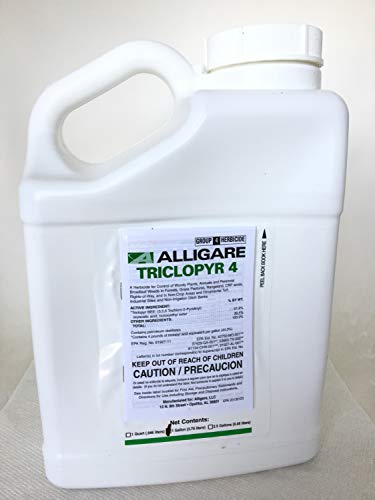
This is the concentrated triclopyr formulation that forestry and land-management pros reach for. At 61.6% triclopyr (equivalent to Garlon 4), it is potent enough for cut-stump application at a 25% mix ratio with basal oil or diesel—no need to buy a separate, weaker brush killer. Owners consistently report dead bittersweet roots within a month of a single cut-stump treatment.
The 1-gallon jug treats a substantial number of stumps, making it far more economical per active-ingredient ounce than retail-branded brush killers sold at big-box stores. Reviewers successfully used it on black locust, multiflora rose, and honey locust, all woody invasives with similar root tenacity to bittersweet.
One trade-off: the strong petroleum-like odor demands a respirator and proper ventilation during mixing. Also, volatile vapors can damage nearby sensitive trees like vine maples if applied as a foliar spray on windy days—stick to cut-stump or basal bark for maximum safety and efficacy.
What works
- Highest triclopyr concentration for deep root kill in woody vines
- Excellent per-ounce value compared to diluted consumer brands
- Trusted cut-stump formulation by professional land managers
What doesn’t
- Strong chemical odor requires PPE and outdoor mixing
- Volatile vapors can damage non-target woody ornamentals if applied carelessly
- Label instructions are minimal—requires some prior herbicide knowledge
2. Remedy Specialty Herbicide
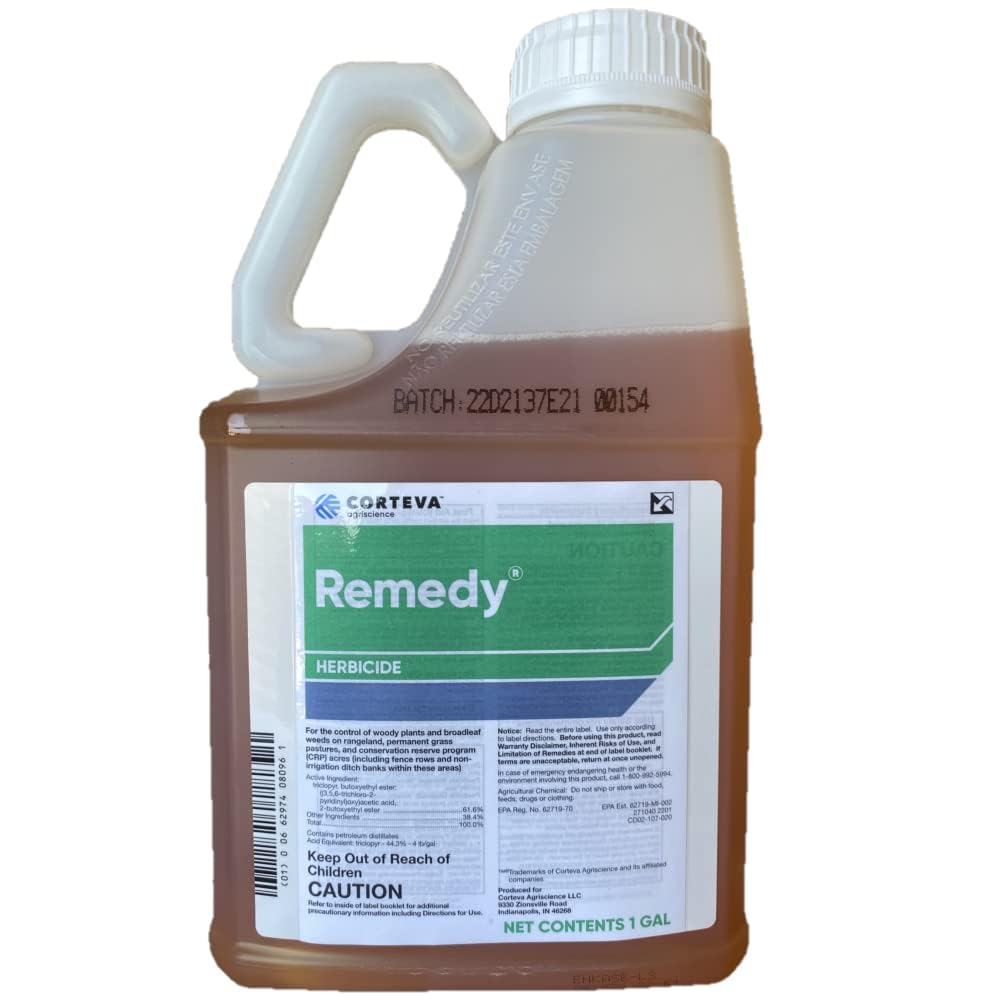
Remedy Ultra from Dow AgroSciences is a selective triclopyr-based herbicide designed for rangeland and pasture—meaning it kills broadleaf brush and woody vines without harming established grasses. For bittersweet vines weaving through a fence line or meadow, this selectivity is a huge advantage over a non-selective glyphosate that would leave bare dirt.
Owner reports highlight its effectiveness on multiflora rose, honey locust, and blackberry—all species with similar growth habits to bittersweet. The low-odor formula is a welcome improvement over the strong smell of generic triclopyr concentrates. For basal bark applications, mixing 1 part Remedy with 3 parts diesel and spraying the lower stem delivers reliable root kill without cutting the vine.
The sticker price is on the higher side, and some users noted it works slowly—taking up to two weeks to fully wilt leaves—but the root system is effectively starved during that time. It is also not effective on seasonal weeds or grasses, so pair it with a broad-spectrum product if you need total vegetation control.
What works
- Selectively targets woody brush while leaving grass untouched
- Low-odor formula for more comfortable application
- Excellent for basal bark and cut-stump mixes on established vines
What doesn’t
- Premium price per gallon compared to generic triclopyr
- Slow visual results—takes up to 2 weeks to show full wilting
- Not effective on grass or non-woody weeds
3. Southern Ag Crossbow Specialty Herbicide

Southern Ag Crossbow combines triclopyr and 2,4-D in a ready-to-mix concentrate that makes up to 96 gallons of spray solution—enough to blanket over two acres. This is the go-to for large-scale foliar applications where bittersweet is growing as a ground-level infestation rather than climbing mature trees.
User experiences vary significantly by soil and climate: owners in Ohio reported an 85% kill rate on brush, while those in Illinois saw only 30-35% efficacy due to wetter conditions. The 2,4-D component provides broadleaf knockdown, but the triclopyr percentage is lower than the pure concentrates, so for thick-stemmed bittersweet you may need a follow-up cut-stump treatment.
On the plus side, the three-day soil half-life makes it a relatively low-persistence option. One reviewer noted it killed poison ivy and even spider lilies within 48 hours at a 2-ounce flow rate. The strong odor is a common complaint, and some users found they needed to boost the triclopyr content with a separate Garlon addition for tough woody brush.
What works
- Massive coverage—treats over 2 acres per gallon
- Fast visual results on broadleaf weeds and young vines
- Low soil persistence reduces environmental footprint
What doesn’t
- Lower triclopyr concentration means weaker on mature bittersweet
- Efficacy varies significantly by climate and soil moisture
- Strong odor during application
4. Crossbow Herbicide Brush Killer (Tenkoz)
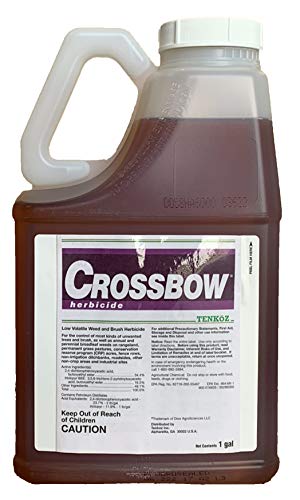
This Tenkoz-brand Crossbow is the same active-ingredient combination (triclopyr + 2,4-D) as the Southern Ag version but in a 16.5% triclopyr concentration. Farmers recommend it for quick knockdown of poison ivy, blackberry, and general brush—reporting visible shriveling by the next day and full death within 48 hours.
For light bittersweet infestations in fence rows or along property lines, this is a budget-friendly foliar option that can cover roughly an acre. The product label lists brush and tree killing as its primary use, and owners confirm it lasts up to two years in the soil for residual control of regrowth—handy for preventing bittersweet from resprouting from buried root fragments.
The 16.5% triclopyr level is noticeably weaker than the premium concentrates. One experienced reviewer noted they had to buy a separate gallon of pure Garlon (61.6% triclopyr) to boost the mix for heavy blackberry and woody brush. If your bittersweet has stems thicker than a finger, this product may require two applications or a supplementary cut-stump treatment.
What works
- Very fast visual results—often kills leaves within 24 hours
- Good value for foliar spraying large brushy areas
- Provides long soil residual to suppress regrowth
What doesn’t
- Triclopyr percentage is too low for reliable root kill on mature vines
- May need a booster concentrate for thick-stemmed bittersweet
- Very strong chemical odor
5. Roundup Poison Ivy Plus Tough Brush Killer₂

Roundup’s Poison Ivy Plus Tough Brush Killer is a convenient retail concentrate designed for homeowners dealing with poison ivy, kudzu, and mixed brush. It contains a low 2.5% triclopyr salt plus fluazifop and diquat for rapid leaf burn. For young bittersweet seedlings or small patches that haven’t developed thick bark, this can be an adequate foliar solution.
Owner reports confirm it kills poison ivy and invasive weeds dead when applied correctly—visible results in hours and rainproof in 30 minutes. Several users with acreage noted they wished it came in a larger size, suggesting the 32-ounce bottle runs out quickly on moderate infestations. The hack-and-squirt method with added cooking oil improved adhesion for one reviewer targeting woody stems.
The limitations are clear: the triclopyr concentration is a fraction of what you get in the premium products. On an established bittersweet vine with a trunk diameter over half an inch, this will likely singe the leaves while the root system survives. If you already have a large infestation, skip this and invest in a higher-concentration option for one-and-done results.
What works
- Easy to find and simple mixing instructions
- Very fast leaf burn—visible within hours
- Rainproof in 30 minutes for flexible application timing
What doesn’t
- Very low triclopyr concentration—weak on mature vines
- Small bottle size runs out quickly on large areas
- Not cost-effective per ounce of active ingredient
6. Albaugh Gly Star Plus Herbicide

Albaugh Gly Star Plus is a generic glyphosate concentrate at 41% with a built-in surfactant, matching the active ingredient of Roundup Ultra. It is a non-selective systemic herbicide that kills any vegetation it contacts. For bittersweet, glyphosate is a secondary weapon—useful for clearing the ground layer before applying a targeted triclopyr treatment to the woody vines.
Owners praise the value: a 2.5-gallon jug lasts a long time for large-scale ground prep. Results are visible in 2-4 days on annual weeds and 7+ days on perennials. The included surfactant improves leaf adhesion and rainfastness. One reviewer highlighted the excellent instruction booklet with detailed rates for many plant species.
The main drawback: this is a professional-use product not labeled for residential use, so it is best suited for acreage owners or those comfortable with commercial chemicals. Also, glyphosate is generally less effective on woody vines than triclopyr—bittersweet may show top kill but regrow from the roots. Use this as a ground prep tool, not a primary bittersweet eradicator.
What works
- Excellent cost per gallon for non-selective vegetation control
- Built-in surfactant improves performance over raw glyphosate
- Large 2.5-gallon size for extensive properties
What doesn’t
- Professional-use label restricts residential sale in some states (CA, MT, NV, OR, WA, WY)
- Glyphosate is less effective than triclopyr on woody bittersweet vines
- Takes 7+ days to fully kill perennial weeds
7. Ranger Pro Glyphosate 2-Pack

Ranger Pro is Monsanto’s professional-grade glyphosate concentrate at 41%, identical in active ingredient to the original Roundup Pro. This two-pack delivers 5 total gallons of concentrate—enough to mix hundreds of gallons of spray solution. For large-scale land clearing before a targeted bittersweet program, this is the most economical way to eliminate all competing vegetation.
Owner reviews confirm its potency: weeds and brush dry up within about two weeks at the highest recommended mix rate. Several users sprayed acres of fields and reported complete kill with a single application. The concentrate stores well for years without losing potency, making it a practical long-term investment for property managers.
The downsides mirror all glyphosate products for bittersweet: non-selective kill means you lose desirable plants, and woody vines often require higher rates or multiple applications. The 2.5-gallon jugs are heavy (over 15 pounds each) and require a sprayer with a large tank. Use this for ground prep, then follow up with a triclopyr product on the bittersweet stumps for total eradication.
What works
- Massive 5-gallon total volume at a competitive per-ounce cost
- Proven efficacy on a wide range of vegetation
- Long shelf life—stores well for years
What doesn’t
- Not selective—kills everything it touches
- Glyphosate alone is not ideal for woody vine root kill
- Heavy jugs require careful handling and a large sprayer
Hardware & Specs Guide
Triclopyr Concentration
The single most important spec for bittersweet. Premium formulas like Triclopyr 4E contain 61.6% active ingredient—enough to be diluted for cut-stump work. Retail brush killers often have only 2.5% to 16.5%, requiring much higher volume per stump and multiple reapplications for the same root kill.
Cut-Stump Mix Ratio
For established vines, mix a 61.6% triclopyr concentrate at 25% with basal oil or diesel (1 part chemical to 3 parts carrier). Apply immediately to a fresh cut—within 5 minutes—for the chemical to pull into the vascular system. For foliar spraying on young vines, a 2% mix (2.5 ounces per gallon of water) with surfactant is standard.
FAQ
Can I use glyphosate to kill Oriental Bittersweet?
What is the best time of year to apply herbicide to Oriental Bittersweet?
Do I need a surfactant when mixing triclopyr for Oriental Bittersweet?
Final Thoughts: The Verdict
For most gardeners, the herbicide for oriental bittersweet winner is the ALLIGARE Agri Star Triclopyr 4E because its high 61.6% triclopyr concentration delivers reliable root kill on established vines with a single cut-stump application. If you need selective control in pasture or fence lines without killing grass, grab the Remedy Specialty Herbicide. And for large-scale foliar spraying across acres of young bittersweet, nothing beats the coverage of Southern Ag Crossbow.