
The battle against invasive weeds and stubborn grass is a recurring chore for anyone maintaining a clean landscape or hardscape. A high-concentration formula is the most economical and potent weapon for tackling large infestations, from creeping vines along a fence line to crabgrass taking over a driveway crack.
I’m Rikta — the co-founder and writer behind Lawn Gear Lab. I evaluate herbicide concentrates by analyzing their active ingredient profiles, mixing ratios, residual soil activity, and real-world owner feedback to help you decide which chemistry fits your specific weed pressure and planting timeline.
After reviewing the data on seven top contenders, this guide ranks the best choices for every scenario using the term best weed and grass killer concentrate as a roadmap to understand performance tiers and application trade-offs.
How To Choose The Best Weed And Grass Killer Concentrate
A concentrate’s value lies in its mix rate and the chemistry inside the bottle. Understanding the difference between a non-selective total vegetation killer and a lawn-safe selective formula is the first decision point. The second is whether you need residual soil activity to prevent regrowth.
Active Ingredient: The Engine of the Formula
Glyphosate, at concentrations around 41%, moves systemically through the plant to kill roots and all. Diquat dibromide acts much faster — visible wilting in hours — but mainly burns foliage and may not fully kill deep taproots. Mesotrione offers a selective option for warm-season turf, bleaching broadleaf weeds while leaving grass largely unharmed. Match the active ingredient to your target vegetation and the surrounding plants you want to protect.
Mixing Ratio and Coverage Area
A 32-ounce bottle of concentrate can produce anywhere from 8 to 32 gallons of spray solution depending on the recommended ounces per gallon. Typically, non-selective glyphosate mixes at 6 to 8 oz per gallon, treating roughly 300 square feet per gallon. Higher concentration allows you to cover more area per dollar spent, but always follow the label rate to achieve the listed control spectrum.
Rainfast Time and Speed of Results
Rainfast windows vary from 15 minutes to a few hours. A shorter rainfast window gives you more confidence when applying before unpredictable weather. Speed of visible effect also varies — diquat-based products show leaf burn within hours, while glyphosate can take one to two weeks for full browning. If you need quick visual confirmation, a fast-acting option is better; if you care most about complete root kill, systemic takes the edge.
Quick Comparison
On smaller screens, swipe sideways to see the full table.
| Model | Category | Best For | Key Spec | Amazon |
|---|---|---|---|---|
| Roundup Dual Action | Non-selective + Preventer | Long-term hardscape control | 4-month prevention | Amazon |
| Liquid Harvest Mesotrione | Selective | Lawn-safe crabgrass control | Mesotrione 8 oz | Amazon |
| Ortho GroundClear Super | Non-selective | Fast-acting total kill | Rainfast in 15 min | Amazon |
| Roundup Concentrate 1 Gal | Non-selective | Large area bulk value | 128 fl oz total | Amazon |
| BioAdvanced Weed Killer | Selective | Lawn broadleaf control | 200+ weed types | Amazon |
| Control Solutions Eraser | Non-selective | Budget glyphosate | 41% Glyphosate | Amazon |
| Spectracide Concentrate | Non-selective | Fast visual results | Results in 3 hours | Amazon |
In‑Depth Reviews
1. Roundup Dual Action Weed & Grass Killer Plus 4 Month Preventer Concentrate

This concentrate stands out because it combines an immediate non-selective kill with a pre-emergent barrier that blocks new weeds for up to four months. The chemistry targets both emerged vegetation and germinating seeds, making it a true two-in-one product for hardscape maintenance rather than a one-time spot spray.
Owner feedback highlights its effectiveness on stubborn perennials like greenbriar and Virginia creeper along fence lines, with visible wilting beginning within 24 hours on many species. The rainfast window of 30 minutes is practical for quick application before an afternoon shower.
Because it prevents regrowth for an entire season on driveways, gravel paths, and mulched beds, the concentrate is cheaper per year than applying a separate killer and preventer. The only trade-off is the 4-month waiting period before planting new ornamentals, so plan your bed prep accordingly.
What works
- Kills existing weeds and prevents new ones for four months
- Fast visible results within hours on broadleaf weeds
- Rainproof in only 30 minutes
What doesn’t
- Pre-emergent barrier delays replanting by four months
- Does not differentiate between desirable plants and weeds
2. Liquid Harvest Mesotrione 8oz Concentrate

For homeowners who want to kill crabgrass, clover, and broadleaf weeds without damaging their centipede, tall fescue, or Kentucky bluegrass lawn, mesotrione is the go-to active ingredient. This 8-ounce bottle is a direct alternative to the branded Tenacity product but at a lower per-ounce cost.
The mode of action inhibits photosynthesis in susceptible plants, turning targeted weeds white before they die over a two- to three-week period. Because it is absorbed through both roots and leaves, even mature crabgrass plants are controlled when applied at the labeled rate of roughly one teaspoon per two gallons of water.
A critical detail is that mesotrione requires activation — if no rain falls within ten days, you must irrigate with about 0.15 inches of water. It also temporarily whitens the turf itself, which can be alarming but usually recovers with fertilization. Owners report excellent results on crabgrass and wild violet, though it should not be used on Bermuda, zoysia, or St. Augustine (except dormant Bermuda).
What works
- Selectively kills crabgrass and broadleaf weeds in cool-season turf
- Highly concentrated; tiny amount per gallon
- Seed-safe allows overseeding anytime
What doesn’t
- Temporarily bleaches lawn grass white
- Must be watered in if no rain within ten days
3. Ortho GroundClear Weed and Grass Killer Super Concentrate
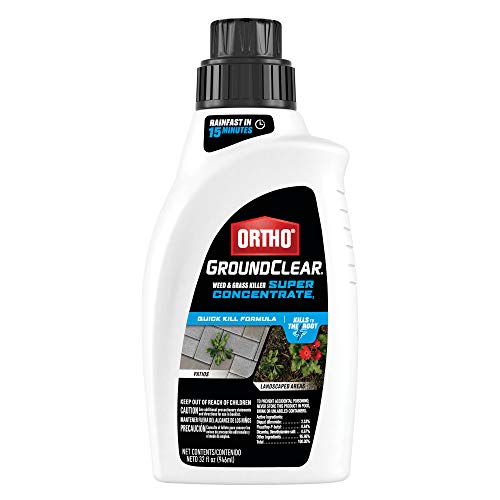
Ortho’s GroundClear Super Concentrate delivers a non-selective formula that starts working immediately and becomes rainfast in just 15 minutes. That short rainfast window is a major advantage for users who need to spray and trust the application before an unpredictable forecast.
Owner reports confirm that this concentrate produces noticeable browning in three to four days on tall grass and tough perennials like silverleaf nightshade. The 32-ounce bottle treats up to 1,120 square feet at the standard mix rate, though some owners recommend slightly increasing the concentration for woody weeds.
It is labeled for use around landscape plants, trees, and shrubs, but like all non-selective formulas, it will kill any green vegetation it contacts. The lack of residual soil activity means you can replant areas after the treated vegetation dies without waiting months.
What works
- Rainfast in only 15 minutes
- Fast visual results in 3-4 days on most weeds
- No long-term soil residual
What doesn’t
- Non-selective — kills any plant it touches
- Some users add extra concentrate for tougher weeds
4. Roundup Weed & Grass Killer₄ Concentrate, 1 Gallon

The one-gallon jug of Roundup Concentrate is the best value per ounce for large-scale clearing, from lawn replacement preparation to treating a full fence line. The active ingredient blend includes Triclopyr, which adds woody brush control, making it effective against poison ivy and thick vines.
Owner reviews consistently praise its speed and thoroughness, with many noting visible results within hours on annual weeds. The mixture rate of roughly 6 ounces per gallon of water delivers about 300 square feet per gallon of spray solution, meaning the full jug can treat a substantial area.
One important limitation is the absence of residual prevention — this concentrate kills what is growing but provides no pre-emergent barrier, so weeds will eventually return from the soil seed bank. Users also stress the need for protective gear, including a respirator, when handling the concentrated formula on windy days.
What works
- Best per-ounce value for covering large areas
- Controls tough woody vines and poison ivy
- Rainproof in 30 minutes
What doesn’t
- No residual prevention — weeds will return
- Requires careful handling and PPE
5. BioAdvanced Weed Killer for Lawns, Concentrate, 32oz

This selective formula from BioAdvanced (formerly Bayer Advanced) targets over 200 broadleaf lawn weeds including dandelion, clover, and dollar weed while leaving grass unharmed. It kills to the root and is effective on both northern and southern lawns, making it a versatile choice for homeowners who want a weed-free turf.
Owner experiences are mixed on nutgrass, with some reporting only partial suppression, but the product performs well on common broadleaf species. The 32-ounce bottle covers up to 16,000 square feet, which is exceptional coverage for a mid-range product.
The active ingredients (dicamba, MCPP-P, and 2,4-D) are standard for selective broadleaf control. Best results come when applying to actively growing weeds, and one owner noted that pairing it with a generic 13-13-13 fertilizer boosted efficacy. Avoid overspray onto ornamentals, as the selective chemistry can still damage desirable broadleaf plants.
What works
- Kills over 200 broadleaf weeds without harming lawn grass
- Excellent coverage — 16,000 sq ft per bottle
- Kills to the root for long-term control
What doesn’t
- Nutgrass suppression may require multiple applications
- Selective to grass only — damages broadleaf ornamentals
6. Control Solutions Eraser Weed & Grass Killer Concentrate, 1 Quart
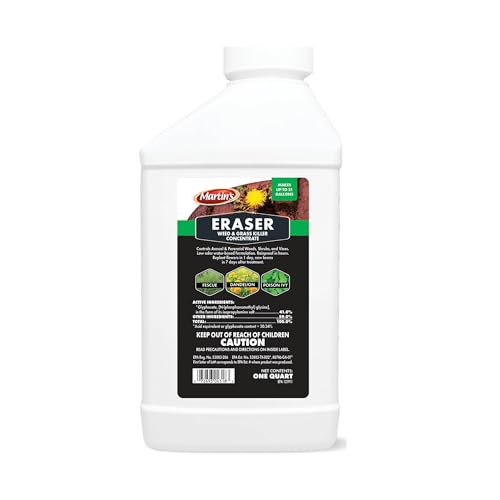
Control Solutions Eraser packs 41% glyphosate — the same active ingredient concentration as name-brand Roundup — at a much lower per-ounce cost. This is the clear budget choice for anyone needing a non-selective total vegetation killer without paying for marketing.
Users report that Eraser takes one to two weeks to fully brown weeds, which is typical for systemic glyphosate. The low-odor water-based formula is easier to handle than some petroleum-based alternatives. Many long-term users swear by this exact concentrate for seventeen years, calling it a reliable alternative for large-scale clearing.
Mix 8 ounces per gallon for general weed and grass control, or adjust higher for woody species like poison ivy. The lack of residual soil activity means you can replant as soon as the vegetation dies. The only real complaint is that it is slower than diquat-based products, requiring patience for full results.
What works
- Same 41% glyphosate as premium brands at lower cost
- Low-odor formula
- No soil residual for quick replanting
What doesn’t
- Slower visible results – up to two weeks
- May need reapplication on poison ivy
7. Spectracide Weed and Grass Killer Concentrate, 32 Ounces
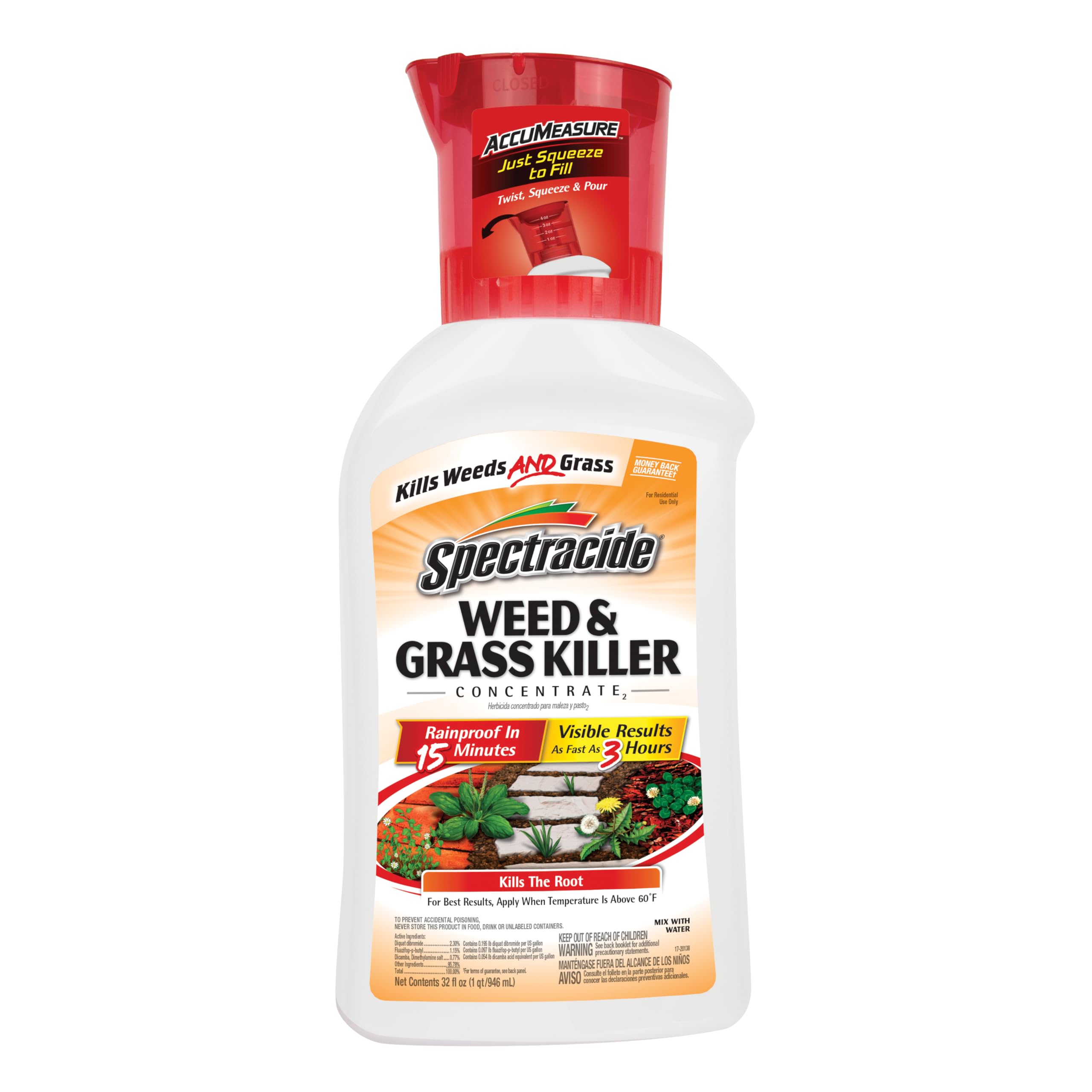
Spectracide is formulated with Diquat Dibromide, a contact herbicide that acts faster than glyphosate. Owners report visible leaf wilting within hours of application, making it ideal for anyone who wants quick confirmation that the spray is working.
The included Accumeasure cap is intended to simplify mixing, though several reviewers found it impractical and swapped it for a standard lid. Despite the cap design issue, the formula itself delivers reliable results on annual weeds and grasses along driveways and walkways.
Because Diquat is a contact killer rather than a systemic, it may not fully kill deep-rooted perennial weeds in one go. The product covers up to 1,350 square feet at the standard mix rate and is rainfast in 15 minutes, matching Ortho’s speed. For small, shallow-rooted weed problems where you want immediate visual progress, this is a solid pick.
What works
- Visible results in as fast as 3 hours
- Rainfast in 15 minutes
- Kills the root on many annual weeds
What doesn’t
- Contact herbicide may not kill deep perennial roots
- Accumeasure cap design criticized by many users
Hardware & Specs Guide
Glyphosate Concentrate (41%)
Systemic, non-selective, kills to the root. Application rate typically 6-8 oz per gallon of water. Slower visual results (1-2 weeks) but best for complete elimination of perennial weeds, vines, and established brush. Rainfast in 2-4 hours. No residual soil activity allows replanting within days.
Diquat Dibromide Contact Herbicide
Rapid foliar burn, visible effects in hours. Primarily controls emerged annual weeds and grasses. Shorter rainfast window (15 minutes). Less effective on deep-rooted perennials compared to systemic formulas. Often used in combination products that pair diquat with pre-emergent barriers.
Selective Herbicide (Mesotrione)
Targets broadleaf weeds and crabgrass in established cool-season turf. Requires rainfall or irrigation within 7-10 days for activation. Causes temporary whitening of grass before recovery. Safe for overseeding. Works via both root and foliar uptake.
Selective Herbicide (2,4-D / Dicamba / MCPP-P)
Standard broadleaf weed control for lawns. Kills clover, dandelion, dollar weed, and hundreds of other species with minimal harm to grass. Best applied when weeds are actively growing. Higher temperature (>60°F) improves efficacy. Avoid overspray onto ornamental plants.
FAQ
How long after applying a non-selective concentrate can I plant new grass or flowers?
What is the difference between a contact herbicide and a systemic herbicide?
Can I mix a selective lawn weed killer with a non-selective concentrate in the same sprayer?
Final Thoughts: The Verdict
For most gardeners, the best weed and grass killer concentrate winner is the Roundup Dual Action because it combines immediate kill with a four-month pre-emergent barrier, making it the most efficient option for hardscape maintenance. If you want a Liquid Harvest Mesotrione to selectively remove crabgrass and broadleaf weeds from your lawn without damaging the turf, that is the specialist pick. And for Roundup Concentrate 1 Gallon large-area bulk clearing where volume per dollar matters most, nothing beats the gallon jug.