
A lumpy, uneven lawn isn’t just an eyesore—it creates drainage issues, scalps your grass during mowing, and turns a simple walk into a tripping hazard. Finding the right material to fix those dips and depressions is surprisingly tricky, because not all sand is created equal for this job.
I’m Rikta — the co-founder and writer behind Lawn Gear Lab. Guide after guide, I dig into the granular details: sifting through hundreds of owner reports, comparing mesh sizes, analyzing silica content warnings, and sorting through the conflicting advice on what truly works for repairing lawn contours.
This guide breaks down the seven most common sand options on the market, separating the lawn-leveling winners from the material that belongs in a kid’s sandbox. My goal is to help you find the right sand to level lawn without wasting money on the wrong bag.
How To Choose The Best Sand To Level Lawn
Using the wrong sand can suffocate your grass or turn your lawn into concrete. You need a material that spreads easily, allows water to drain, and gives the soil structure enough grit to hold a new grade. Here’s what matters most.
Particle Shape: Sharp vs. Round
The biggest mistake beginners make is grabbing the cheapest play sand. Play sand is typically rounded and soft, which means it compacts poorly and can actually trap water against the grass roots. For lawn leveling, you want an angular, sharp particle—often found in river sand or masonry sand—that locks together and provides a stable base without smothering the turf.
Screening and Debris
Any sand you put on your lawn needs to be thoroughly screened. Rocks, sticks, or clumps of clay larger than a 1/4-inch will create new bumps instead of fixing old ones. Look for products that state they are “washed” or “screened” to ensure a consistent, fine texture that can be easily dragged into the low spots.
Volume and Bag Size
Sand is heavy. A standard 50-pound bag only covers about 10 square feet at a 1-inch depth. Buying a single bag is a waste of time if you have a big lawn; you need to scale up. Calculate your total cubic footage needed (length x width x depth) and buy accordingly. Also, consider the shipping cost—sand is heavy, so local pickup is often cheaper than delivery.
Silica Content
Many play sands contain crystalline silica, which is a known carcinogen when inhaled as a fine dust. While the risk is low for outdoor lawn work if you keep it damp, some products are safer than others. For the safest option, look for sand that is tested “silica-free” or “low dust,” especially if children or pets will be on the lawn soon after application.
Quick Comparison
On smaller screens, swipe sideways to see the full table.
| Model | Category | Best For | Key Spec | Amazon |
|---|---|---|---|---|
| Safe Sand Playsand (25 lb) | Premium Play Sand | Safe topdressing near play areas | Silica-free, fine white grain | Amazon |
| Quikrete Play Sand (50 lb) | Screened Sand | Large area leveling on a budget | Washed, dried, tan color | Amazon |
| Aqua Joe Filter Sand (50 lb) | Silica Sand | High drainage fill material | .45-.55 mm uniform grain | Amazon |
| All Natural Play Sand (50 lb) | Generic Sand | Adding weight to planters | Washed and screened brown | Amazon |
| All Purpose Pea Gravel (50 lb) | Gravel | Drainage base for low areas | Small pebbles, not sand | Amazon |
| Pool Filter Sand (50 lb) | Grade #20 Sand | Filling deep ruts | #20 grade, angular grains | Amazon |
| Sun Joe Play Sand (50 lb) | Ultra-Fine Sand | Small area surface smoothing | Ultra-fine white silica | Amazon |
In‑Depth Reviews
1. Safe Sand Playsand (25 lb Box)

This is the only product on the list that is explicitly tested and certified free of crystalline silica—a major health concern when working with dry sand. The fine, white grain is incredibly soft to the touch, almost like sugar, and produces virtually no airborne dust when poured. For lawn leveling near patios, play areas, or dog runs, this eliminates the worry of inhaling particulates.
The 25-pound box is smaller than a standard 50-pound bag, which makes it surprisingly manageable to carry and spread. Users consistently praise its cleanliness and safety, noting it doesn’t stain hands or clothes. It forms excellent sandcastles when wet, which is a good sign for its ability to hold shape as a leveling compound in shallow dips.
However, the premium safety comes at a higher per-pound cost and less volume. You’ll need to buy multiple boxes for any project larger than a few square feet. Some users also note it doesn’t clump well with water for sculpting, but for lawn filling, this granular consistency actually helps it settle evenly between grass blades.
What works
- Certified silica-free makes it the safest option for topdressing
- Very low dust, fine texture spreads and levels with ease
What doesn’t
- 25-pound box is small; bulk projects require multiple boxes
- Higher per-pound cost compared to standard play sand
2. Quikrete Sandbox Play Sand (50 lb)

Quikrete is a trusted name in aggregates, and this 50-pound bag represents the standard for budget-friendly lawn leveling. It comes pre-washed, dried, and screened, which means you won’t find sharp rocks or sticks hiding in the mix. The tan, natural color blends well with soil and won’t create a stark beach-like appearance on your lawn.
Users report the sand has a consistent, fine texture that is easy to drag into low spots with a rake or a leveling board. It’s heavy, as expected, but the bag is durable enough to hold up during transport. Many owners have used it successfully not just for sandboxes but as a filler for planter weights and vehicle traction, speaking to its versatility for any project that needs a clean, compacting fill.
One notable caveat is the potential for shipping damage—some bags arrive with holes, though customer support generally resolves this. Also, while it is screened, it is not certified silica-free, so using a mask during dry, dusty spreading is a wise precaution. For pure lawn leveling volume at a low price point, this is the go-to.
What works
- Large 50-pound bag provides the best volume for the cost
- Pre-washed and screened, free of debris and clumps
What doesn’t
- Not silica-free; mask recommended when working dry
- Shipping can occasionally result in torn bags
3. Aqua Joe Pool Filter Sand (50 lb)
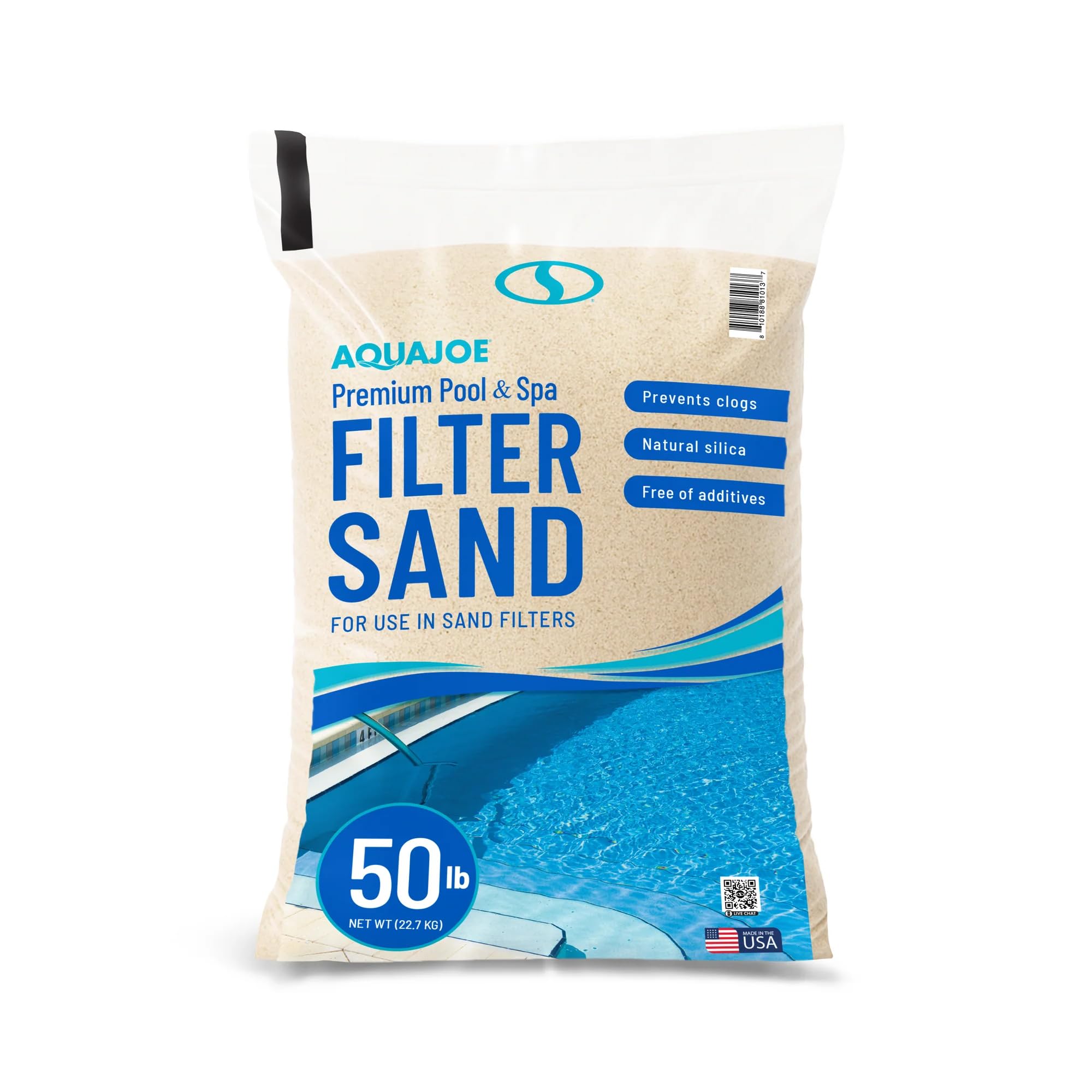
Pool filter sand is engineered to a strict specification: it has a uniform grain size (typically .45-.55 mm) that is angular rather than round. This angularity is exactly what you want for lawn leveling because the grains lock together, preventing the sand from simply washing away in the first rainstorm. The pre-washed, kiln-dried nature means it arrives clean and ready to work.
Users running sand filters report it keeps pool water crystal clear, which is a testament to its consistent grading and lack of fines. For lawn applications, this uniform size is ideal for backfilling small depressions where you need material to behave predictably without compacting into an impermeable layer. It also backwashes easily, meaning water drains through it freely.
The downside is that it is not marketed or certified for landscaping-topdressing contact with grass. The bag is branded for pool use, and while the physical properties are beneficial, you are paying for the pool-specific processing. Also, some users noted a small amount of fine dust at the very bottom of the bag that briefly clouded their pool, suggesting a quick rinse before lawn use may be beneficial.
What works
- Uniform, angular grain locks together and resists washout
- Excellent drainage characteristics prevent water pooling
What doesn’t
- Pool-specific branding may confuse buyers
- Minimal fine dust present in some bags
4. Pool Filter Sand #20 Grade (50 lb)

This #20 grade AquaQuartz sand is built to the ANSI/AWWA standard for pool filtration, guaranteeing a very specific, very clean grain size. Like the Aqua Joe, its angular particles are ideal for creating a stable, non-compacting base layer in your lawn. Users love that it doesn’t solidify over time, which translates directly to a lawn fill that won’t turn into hardpan clay.
Owner reviews are excellent, with many noting the sand went from cloudy pool water to crystal clear in 24 hours. The same filtering ability means it traps fine sediment in your lawn while letting water pass through freely. For deep ruts or areas with heavy clay soil, this material acts as a soil amendment, improving the structure of the topdressing layer.
One surprising use case from the reviews was for aquarium substrate, indicating the sand is exceptionally clean and free of chemical additives. However, the bag does not explicitly state it is safe for lawn or garden use, so the same silica considerations apply. It’s also a standard 50-pound bag, which is manageable but heavy for the average homeowner to haul around a large yard.
What works
- ANSI/AWWA certified for consistent, high-quality grading
- Angular grains prevent compaction and improve drainage
What doesn’t
- No explicit gardening or landscaping certification
- Standard weight is heavy for a single person to move far
5. Sun Joe Silica Play Sand (50 lb)
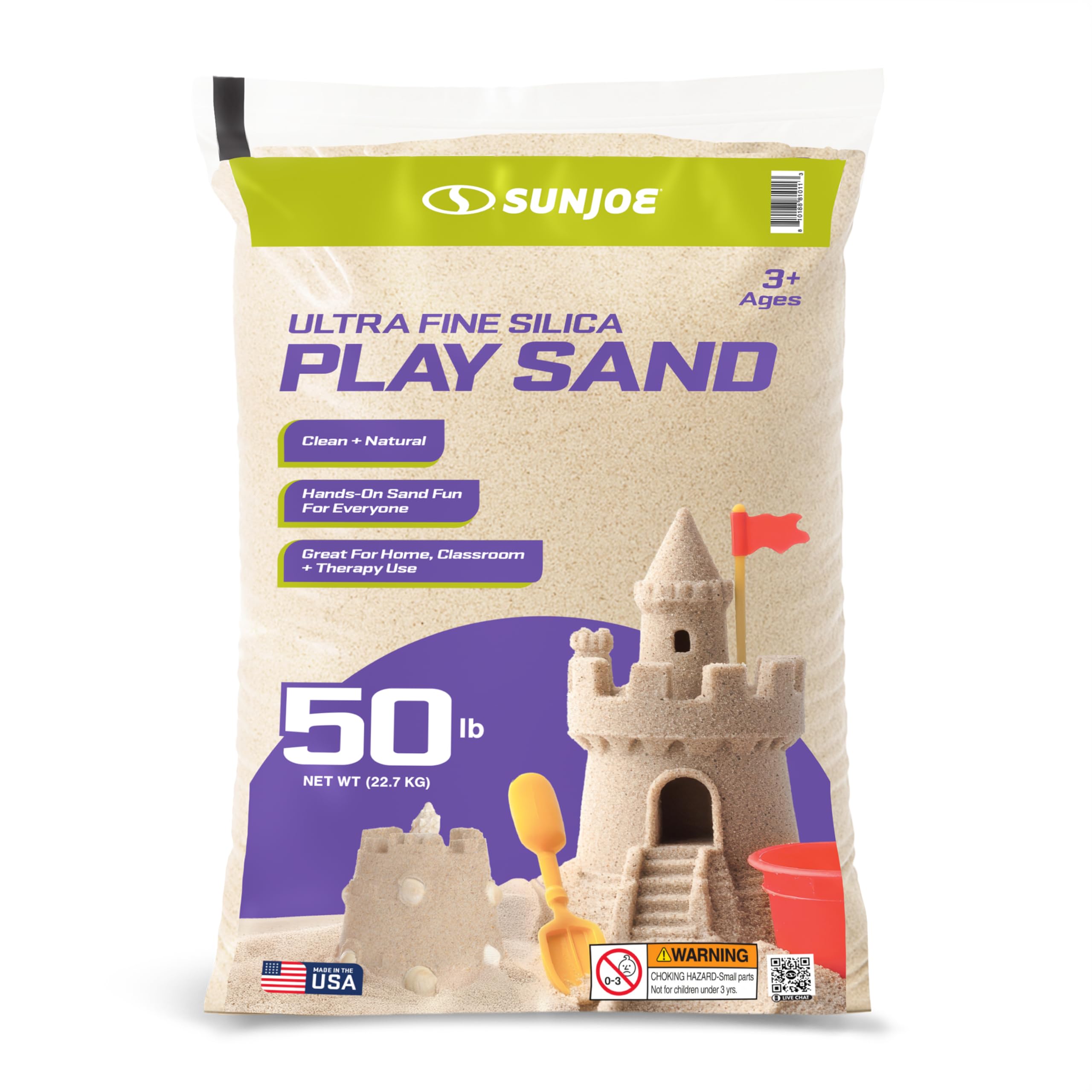
Sun Joe targets this sand at sensory tables and gardens, marketing it as “ultra clean” and “natural white.” The fine texture makes it easy to mold and shape, which is attractive for small-scale leveling work where you need to manipulate the sand into precise contours. The 50-pound bag is a standard size, but the clean, soft quality is noticeable compared to rougher construction sands.
Customer feedback is consistently positive about the material’s quality, with compliments on how soft it feels to the touch and how little dust it kicks up. One user reported a bag arrived damaged but the company support resolved it quickly—a sign of decent brand backing. For a homeowner looking to smooth out a few shallow divots in a small backyard, this is a viable option.
However, it is explicitly “not intended for sandblasting,” which is a legal disclaimer, but it does not carry any safety certification for lawn use. It is a silica sand, so the same dust warnings apply. Also, the ultra-fine grain, while good for sensory play, might settle too densely in a lawn application, potentially creating a smoother but more compacted surface that is less ideal for grass root penetration.
What works
- Very fine, soft texture is easy to manipulate and shape
- Good company support for resolving shipping issues
What doesn’t
- Ultra-fine grains may compact too much for lawn use
- No specific safety certification for landscaping application
6. All Natural Play Sand Brown (50 lb)

This generic-brand sand is promoted as washed and screened 100% natural, suitable for both sandboxes and landscaping. The brown color is a practical advantage for lawn leveling because it blends into the soil and existing thatch better than stark white sand. It is also explicitly marketed for use as traction or weight sand, indicating a robust, standard grain size.
Users find it works well for its listed purposes, with one using it to fill planter boxes for wind weight and another praising its quality for toddlers. The feedback suggests the sand holds up well over time if stored correctly. For a homeowner who needs a simple, no-frills bag of sand to fill a few holes, this product fits the bill.
The biggest drawback is the lack of brand reputation and detailed spec information. While the reviews are positive, there is no mention of the grain size, silica content, or specific filtering process. Additionally, one reviewer noted it is slightly pricier than some other generic brands, pushing it into a less competitive value tier. The bag also had a warning about a cancer-causing substance (Prop 65), which makes the “all natural” claim feel a bit contradictory.
What works
- Brown color blends naturally with lawn soil
- Washed and screened for a clean, consistent fill
What doesn’t
- Lacks detailed grain size and safety specifications
- Carries a Prop 65 warning for silica dust
7. All Purpose Pea Gravel (50 lb)

This product is not sand—it is small pea gravel. That makes it a completely different tool for lawn repair. Pea gravel is too large and too round to mix into a topdressing leveling layer. It will not settle between grass blades and will leave your lawn looking like a rocky riverbed. It belongs in pathways, patios, or drainage trenches, not on your turf.
Reviews confirm it is effective for non-lawn uses like holding down pool ladders or as an aquarium substrate. Some users found the “pebbles” to be significantly smaller than expected, which means the particle size is inconsistent with traditional pea gravel used for construction. This inconsistency makes it even less predictable for any precise leveling application.
Why is it on this list? Because if you buy this thinking it is a leveling sand, you will make a big mistake. It is a budget option for hardscaping, not a lawn repair material. The buyer who needs it for drainage in a low spot might find it useful, but for actually smoothing out an uneven lawn surface, this material will fail completely.
What works
- Effective for drainage trenches and paver bases
- Low cost for a large bag of aggregate
What doesn’t
- Not a sand—completely wrong for lawn topdressing
- Small, inconsistent pebble size makes leveling impossible
Hardware & Specs Guide
Grain Size Matters
The single most important spec for a leveling sand is its grain size or sieve rating. Pool filter sand uses a strict #20 grade (.45 to .55 mm), which is the sweet spot for drainage and stability. Play sand is typically finer (around .1 to .5 mm), which can trap water. For lawns, look for sand that is coarse enough to feel gritty but fine enough to settle between grass blades—a medium-coarse builder’s sand is ideal.
Compaction and Porosity
Sand with angular, sharp particles (masonry sand, river sand) compacts into a stable, interlocking matrix that resists movement. Sand with round particles (play sand, dune sand) settles more loosely, which can lead to erosion and does not provide a solid base. For a lawn that gets foot traffic, angular sand is the non-negotiable choice.
FAQ
Can I use pool filter sand to level my lawn?
How many 50-pound bags do I need for 100 square feet?
What is the difference between play sand and masonry sand for lawns?
Final Thoughts: The Verdict
For most gardeners, the sand to level lawn winner is the Quikrete Sandbox Play Sand because it offers the best balance of volume, cleanliness, and price for the vast majority of residential projects. If you want the absolute safest option for topdressing near children or pets, grab the Safe Sand Playsand. And for improving drainage and soil structure in a heavy clay lawn, nothing beats the uniform angular grains of the Aqua Joe Pool Filter Sand.