
Finding a planter wide enough to give your succulent collection room to spread without turning your windowsill into a swamp is harder than it looks. Most standard pots are either too deep, trapping moisture around sensitive roots, or too narrow, forcing a constant cycle of repotting. This guide focuses on containers that prioritize horizontal spread—the single metric that matters most for rosette-forming succulents and shallow-rooted cacti.
I’m Rikta — the co-founder and writer behind Lawn Gear Lab. My approach involves cross-referencing material composition, drainage geometry, and dimensional ratios across dozens of product listings to identify which planters genuinely solve the overwatering problem rather than just claiming to.
Whether you need a wide ceramic bowl for a centerpiece arrangement or a long rectangular trough for a windowsill collection, finding a best big succulent planter means prioritizing width over depth, drainage over decoration, and material breathability over pure aesthetics.
How To Choose The Best Big Succulent Planter
Selecting a planter for succulents is different than choosing one for ferns or tropicals. The wrong dimensions or material can kill a plant within weeks, regardless of how carefully you water. These three criteria will help you narrow down options that prioritize plant health over pure decoration.
Prioritize Width and Shallow Depth
Succulents and cacti have root systems that grow horizontally just beneath the soil surface. A planter that is 10 to 14 inches wide but only 3 to 5 inches deep mimics their natural growing conditions. Deep pots hold excess moisture in the lower soil layers, which promotes root rot even when the top inch feels dry. Look for dimensions where the width is at least three times the depth.
Drainage Geometry Matters
A single drainage hole is better than none, but the most effective succulent planters use a hole paired with a mesh screen or a raised foot design that prevents the drainage opening from sealing against a saucer. The saucer itself should be removable for cleaning. Planters that rely solely on a layer of pebbles or charcoal under the soil are inferior to those with a properly placed hole at the low point of the bowl.
Material Affects Moisture Evaporation
Unglazed terracotta is the most breathable option, wicking moisture away from the soil through the walls, which helps soil dry faster between waterings. Glazed ceramic slows evaporation and retains more moisture, which can be beneficial in dry climates but risky in humid environments. Plastic-stone composites offer freeze-thaw resistance for outdoor use but do not breathe at all, so they require more careful watering discipline.
Quick Comparison
On smaller screens, swipe sideways to see the full table.
| Model | Category | Best For | Key Spec | Amazon |
|---|---|---|---|---|
| D’vine Dev 12″ Terracotta | Mid-Range | Breathable pot with drip tray | 12″W x 5.2″H, porous clay | Amazon |
| EPFamily Bonsai 13″ Blue | Premium | Bonsai-style ceramic with mesh | 13.1″ outer dia, 4.1″H | Amazon |
| SQOWL 12″ Green | Premium | Glazed ceramic with matching saucer | 12.2″ outer dia, 4.7″H | Amazon |
| Teagas 13.7″ Rectangle | Premium | Rectangular bonsai layout | 13.7″L x 9.8″W x 5.1″H | Amazon |
| Veradek Mason Lane Bowl | Mid-Range | Large outdoor bowl planter | 24″W x 6.5″H, composite | Amazon |
| ARTKETTY 11.8″ Rectangle | Budget | Entry-level ceramic with bamboo tray | 11.8″L x 4.7″W x 3″H | Amazon |
| MyGift 13″ Seafoam Green | Budget | Coastal-style ceramic tray planter | 12.9″L x 3.7″W, 4.1″H | Amazon |
In-Depth Reviews
1. D’vine Dev 12″ Terracotta Shallow Pot
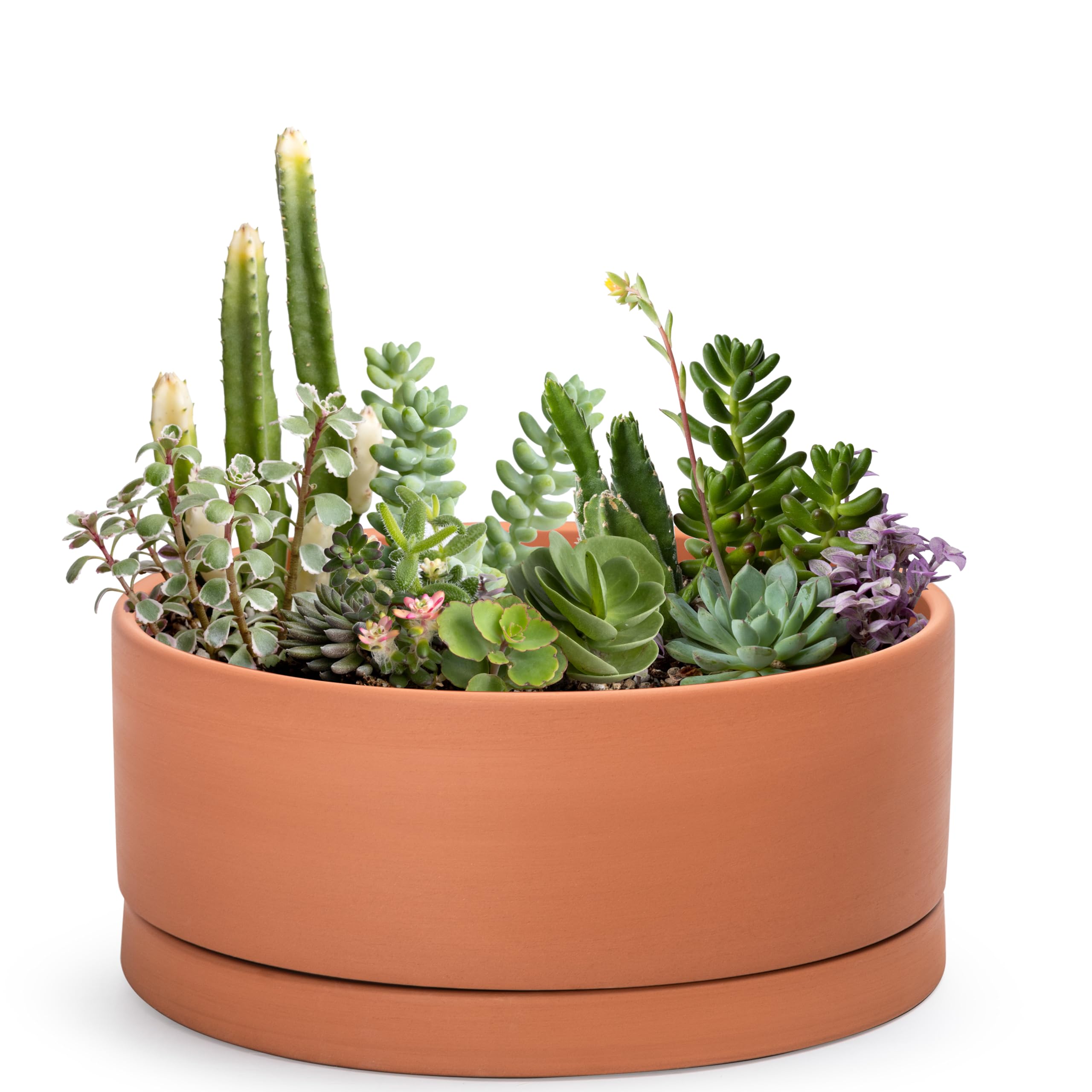
This 12-inch terracotta planter hits the ideal width-to-depth ratio for most succulents, with a 5.2-inch height that keeps the soil column shallow enough to dry quickly between waterings. The handcrafted porous clay body actively wicks moisture from the root zone, which is the single most effective passive defense against root rot. The included terracotta saucer fits snugly and is detachable for cleaning, and the package also includes a drainage mesh and a felt pad to protect your tabletop surface.
Owner feedback consistently highlights the substantial weight and build quality — this is not a lightweight pot that tips over when a branch shifts. Multiple reviewers noted that it was larger than expected, which aligns with the 12-inch diameter providing ample room for a cluster of 4 to 6 medium-sized succulents to spread. The unfinished natural terracotta finish is neutral enough to work with any decor style, and the bare clay patina develops character over time.
The only real trade-off is that unglazed terracotta requires more frequent watering in dry indoor environments because the porous walls allow moisture to evaporate from the sides as well as the top. This is actually a benefit for overwaterers but may frustrate those who prefer low-intervention schedules. The fitted felt pad is a thoughtful addition that prevents the rough terracotta base from scratching furniture.
What works
- Porous terracotta speeds soil drying, reducing rot risk
- Generous 12-inch width with only 5.2-inch depth
- Includes mesh pad, felt pad, and matching saucer
What doesn’t
- Unglazed clay may need more frequent watering in arid homes
- Heavier than glazed ceramics of similar size
2. EPFamily 13″ Blue Ceramic Bonsai Pot
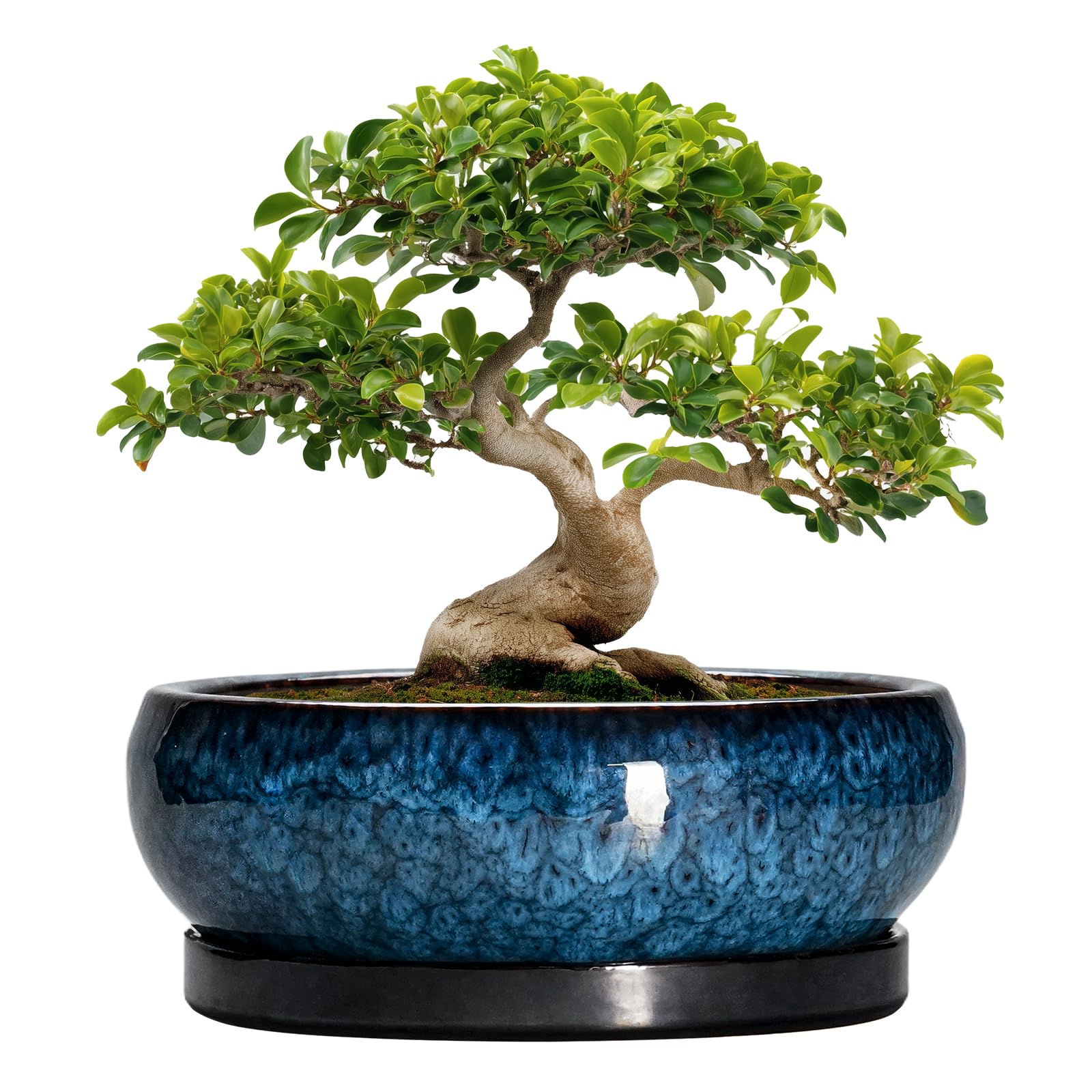
With an outer diameter of 13.1 inches and a height of just 4.1 inches, this glazed ceramic planter is purpose-built for shallow-rooted plants like bonsai and succulents. The high-temperature fired ceramic resists fading and peeling, and the glazed finish creates a smooth surface that is easy to wipe clean. The 9mm mesh screen placed over the drainage hole prevents soil from escaping while still allowing excess water to flow freely into the matching ceramic saucer.
Customer reviews consistently describe the pot as well-made and beautiful, with several owners using it for bonsai trees rather than succulents, which speaks to its versatility. The blue reactive glaze finish has enough visual depth to serve as a standalone decorative piece, and the included saucer is the same ceramic material rather than a mismatch plastic or bamboo tray. The inner diameter of 11.6 inches still provides substantial planting area despite the thick ceramic walls.
The primary downside is weight — at 4.3 kilograms (approximately 9.5 pounds), this is a heavy pot to move once planted. It is best suited for a permanent location such as a tabletop, shelf, or floor spot rather than a spot that needs frequent rearrangement. A few owners noted that the saucer can feel smaller than expected relative to the pot diameter, though it still catches runoff effectively.
What works
- Wide 13-inch diameter with shallow 4-inch profile
- Glazed finish resists stains and fading
- Mesh screen prevents soil loss through drainage hole
What doesn’t
- Heavy at over 9 pounds, difficult to relocate
- Glazed walls reduce breathability compared to terracotta
3. SQOWL 12″ Green Glazed Ceramic Planter
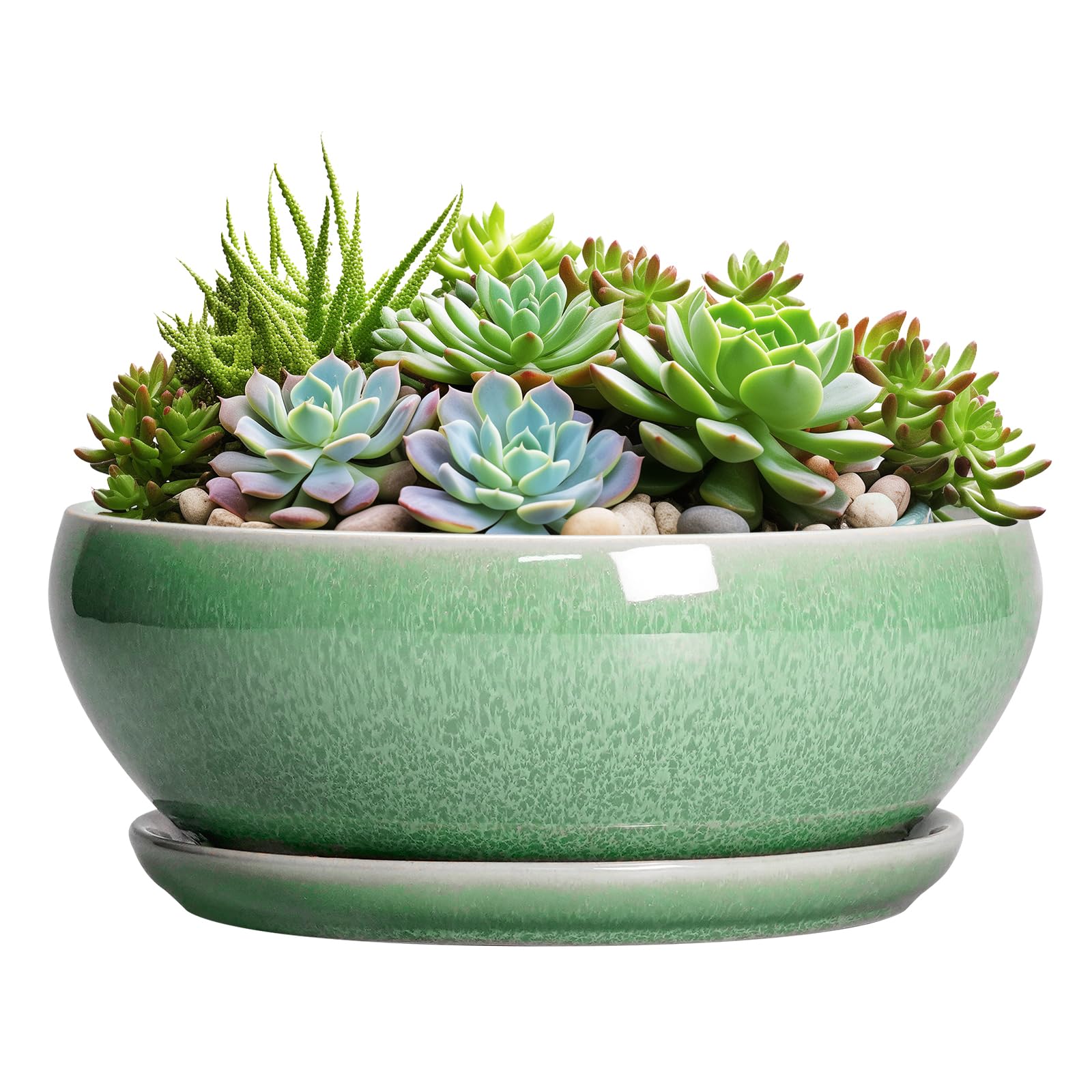
This 12-inch round planter from SQOWL delivers a fully glazed ceramic body with a matching ceramic saucer and a mesh pad, all at a competitive mid-range price point. The top outer diameter measures 12.2 inches, while the height including the tray is 4.7 inches, keeping the soil depth shallow enough for healthy succulent root development. The glossy green finish is smooth and easy to keep clean, and the color works well with both green foliage and colorful echeveria varieties.
Reviewers consistently praise the thoughtful construction, particularly the way the saucer fits snugly without wobbling. The drainage hole is properly positioned at the lowest point of the bowl, and the mesh pad prevents soil from clogging the hole. Multiple buyers have purchased additional units in different colors, suggesting that the quality is consistent across the product line. The planter works equally well for bonsai, succulents, and small cacti arrangements.
The 12-inch diameter is large enough for a meaningful arrangement but small enough to fit on a standard shelf or end table. A minority of owners mentioned that the pot felt slightly shallower than expected for deeper-rooted plants — though this is actually a feature for succulents, it limits its use for anything beyond the 3- to 4-inch root depth range. The glazed exterior means this planter traps more moisture than unglazed terracotta, so adjust watering frequency accordingly.
What works
- Fully glazed ceramic with matching ceramic saucer
- Properly positioned drainage hole with mesh pad
- Consistent quality across color options
What doesn’t
- Glazed body reduces evaporation rate
- Shallow depth limits plant selection to succulents and bonsai
4. Teagas 13.7″ Rectangle Bonsai Pot
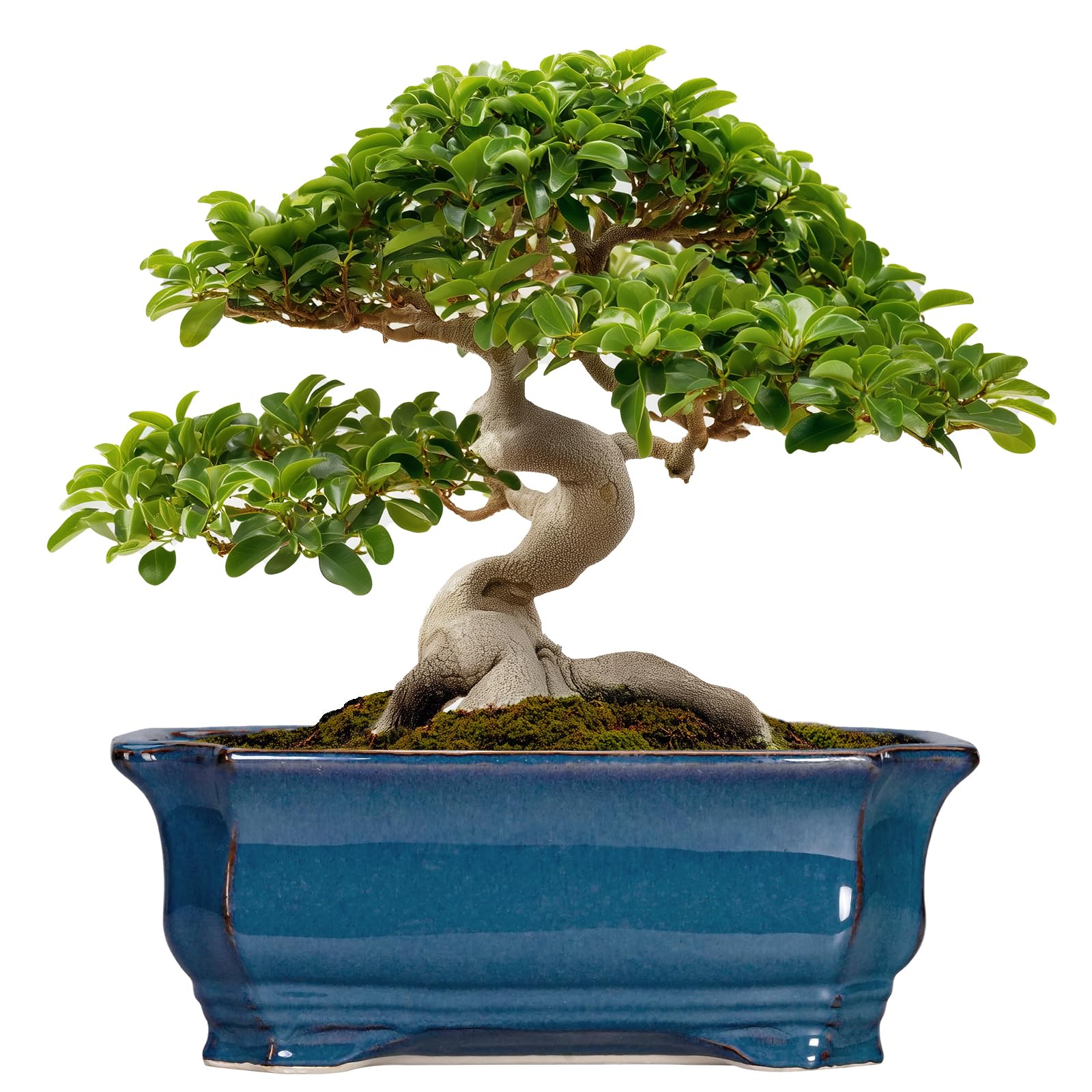
Teagas offers a rectangular ceramic planter that measures 13.7 inches long by 9.8 inches wide and 5.1 inches tall, providing a spacious horizontal planting area with a depth that accommodates slightly larger root balls than the round bowls. The retro blue reactive glaze creates a variegated finish where no two pots look exactly alike, giving each planter a unique appearance. Two holes on opposite sides allow for wiring plants into place, a feature typically found on dedicated bonsai containers.
Buyers report that the pot is sturdy and substantial, with the high-temperature fired ceramic resisting chips and cracks. The included drainage net helps prevent soil erosion through the hole, and the rectangular shape is ideal for creating tiered arrangements or for fitting onto longer windowsills and shelves. Multiple reviewers mentioned purchasing additional units for gift-giving, which suggests the presentation quality meets a high standard.
The rectangular footprint takes up more surface area than a round bowl of equivalent planting volume, so measure your space before ordering. Some owners noted that the glaze color in photos can vary slightly from the actual product due to the reactive finish nature, though none reported this as a significant disappointment. The 5.1-inch height is on the deeper end of the succulent planter spectrum, so use a grittier soil mix to compensate for the extra depth.
What works
- Large rectangular footprint for wide arrangements
- Wiring holes for bonsai anchoring
- Unique reactive glaze finish
What doesn’t
- 5-inch depth is deeper than ideal for some succulents
- Rectangular shape requires more shelf space
5. Veradek Mason Lane 24″ Bowl Planter
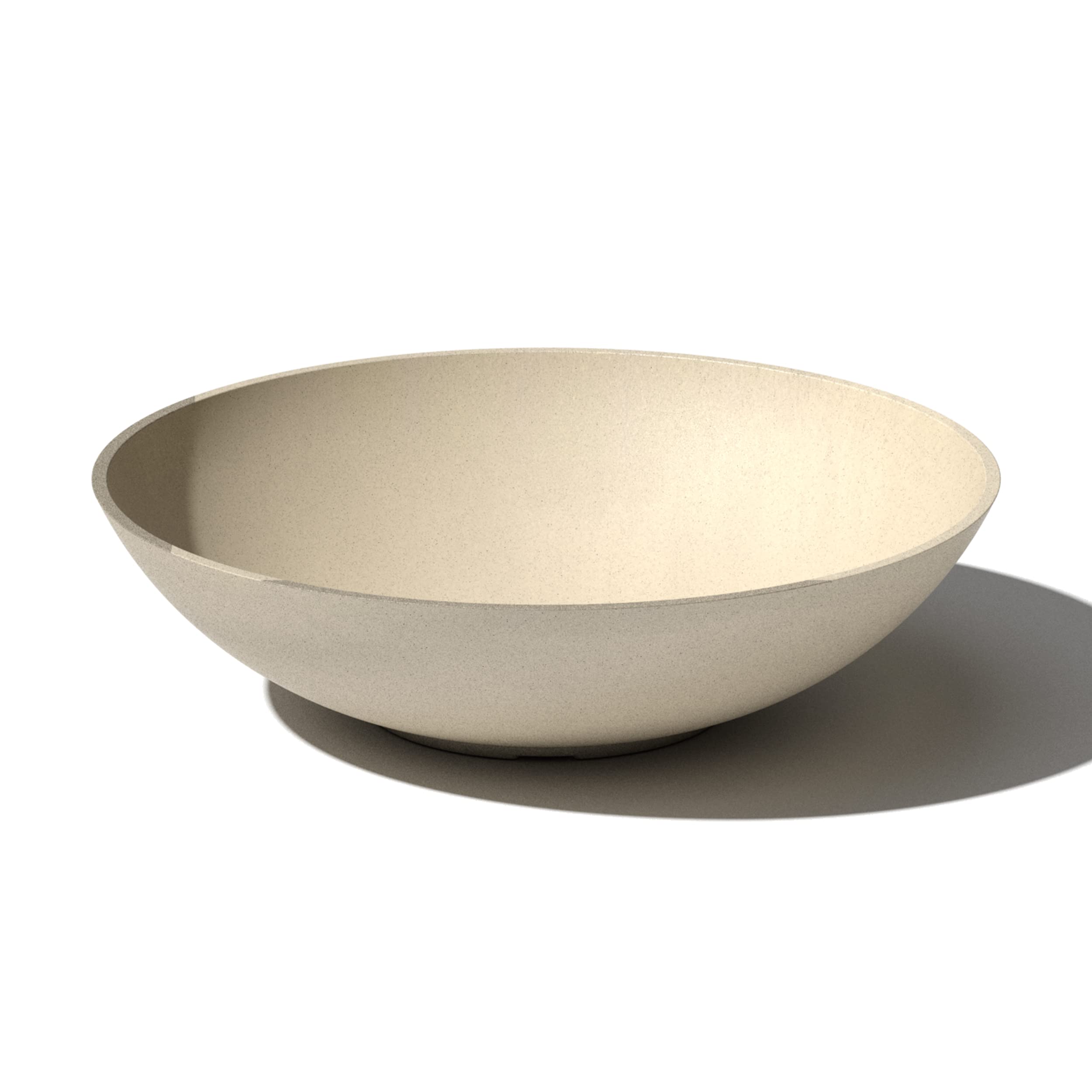
This 24-inch diameter bowl from Veradek is the largest planter on this list, designed for outdoor tabletops, patios, or entryway statements. The plastic-stone composite material is rated for temperatures from -20°F to 120°F, and it has pre-drilled drainage holes that prevent water pooling. Despite its 24-inch width, the bowl is only 6.5 inches deep, which is an ideal ratio for shallow-rooted succulents and cacti. The sand-colored textured finish gives it a natural stone appearance without the weight of actual stone.
Owner reports border on extreme in their praise — one reviewer noted that the planter survived a tree branch falling on it without cracking, and others have used it successfully as a birdbath base with a solar fountain. The composite material does not absorb water, so it will not crack during freeze-thaw cycles like ceramic or terracotta. It weighs only 7 pounds, making it easy to move around the yard or patio even when filled with soil.
The main limitation is that the composite material is non-porous, so it offers zero breathability. Soil in this planter will stay wetter longer than in terracotta or unglazed ceramic, requiring a very well-draining soil mix and careful watering discipline. The bowl also includes two removable drainage plugs that can be lost easily, and the shipping cost for a single unit can be high relative to the purchase price.
What works
- Massive 24-inch diameter with shallow 6.5-inch depth
- Freeze-thaw resistant composite construction
- Lightweight at 7 pounds despite large size
What doesn’t
- Non-porous material retains moisture longer
- Drainage plugs can be easily misplaced
6. ARTKETTY 11.8″ Rectangle Ceramic Pot
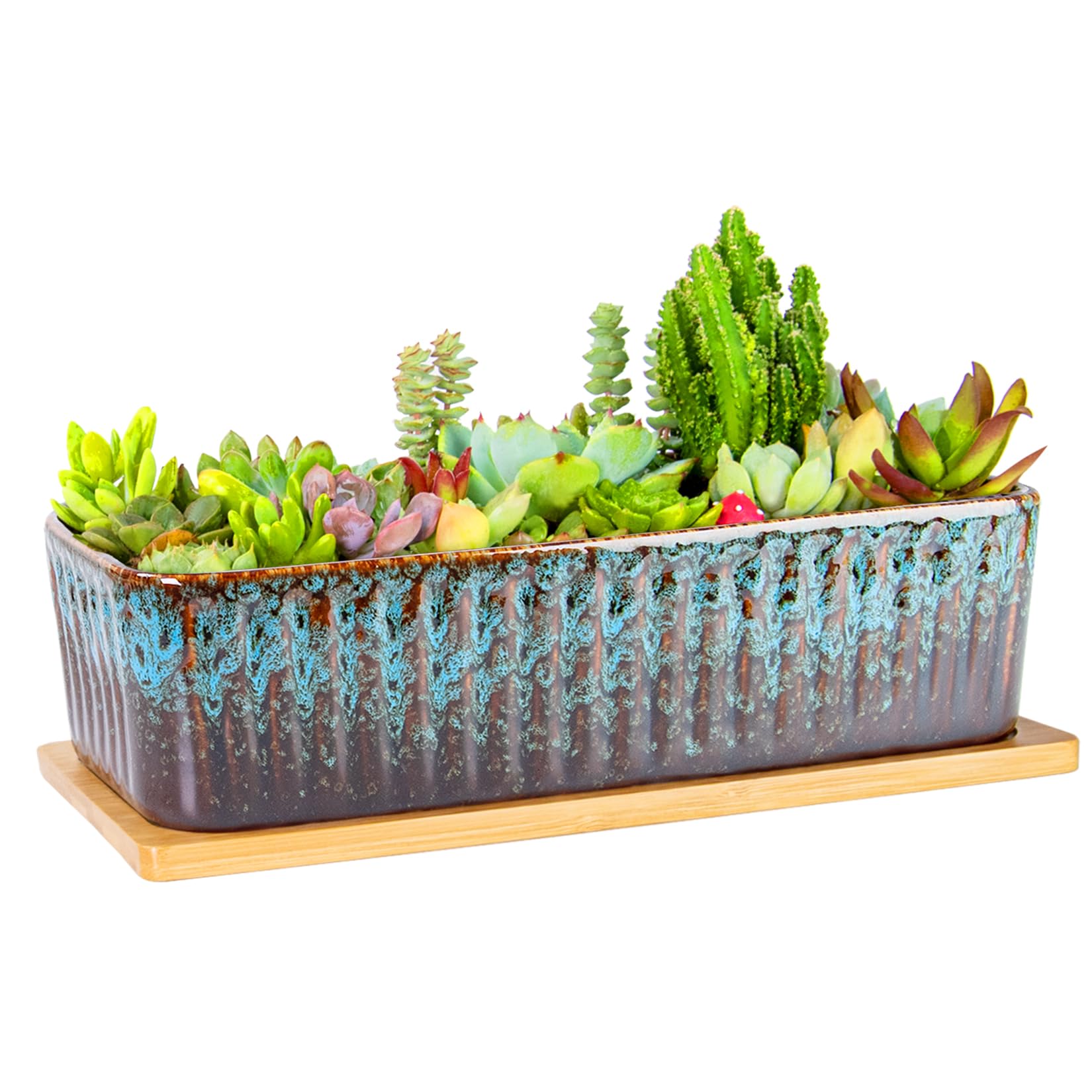
This 11.8-inch long rectangular ceramic pot from ARTKETTY offers a polished glazed finish and a removable bamboo saucer at a very accessible price point. The dimensions — 11.8 inches long, 4.7 inches wide, and 3 inches tall — make it one of the shallowest options available, ideal for windowsill succulent arrangements where depth is limited. The drainage hole at the bottom is functional, and the bamboo tray catches runoff while preventing water damage to your sill or desk surface.
Reviewers are overwhelmingly positive, describing the planter as gorgeous, well-packaged, and a great value for the price. Multiple owners reported buying two or more, using them for seed starting, small herb gardens, and succulent arrangements. The blue polished finish is attractive and does not show water spots easily. At 1.5 pounds, it is light enough to move freely without disturbing the plants.
The 3-inch height is genuinely shallow — this works perfectly for low-profile succulents like lithops and small echeveria, but may not have enough soil volume for larger or taller succulents that need deeper root anchorage. The bamboo tray, while attractive, can warp or stain if water sits on it for extended periods, so empty any standing water shortly after watering rather than letting it pool.
What works
- Very shallow 3-inch depth prevents overwatering
- Lightweight and easy to relocate
- Aesthetic bamboo tray matches most decor
What doesn’t
- Bamboo tray may warp with prolonged water exposure
- Too shallow for larger or tall succulents
7. MyGift 13″ Seafoam Green Rectangular Planter
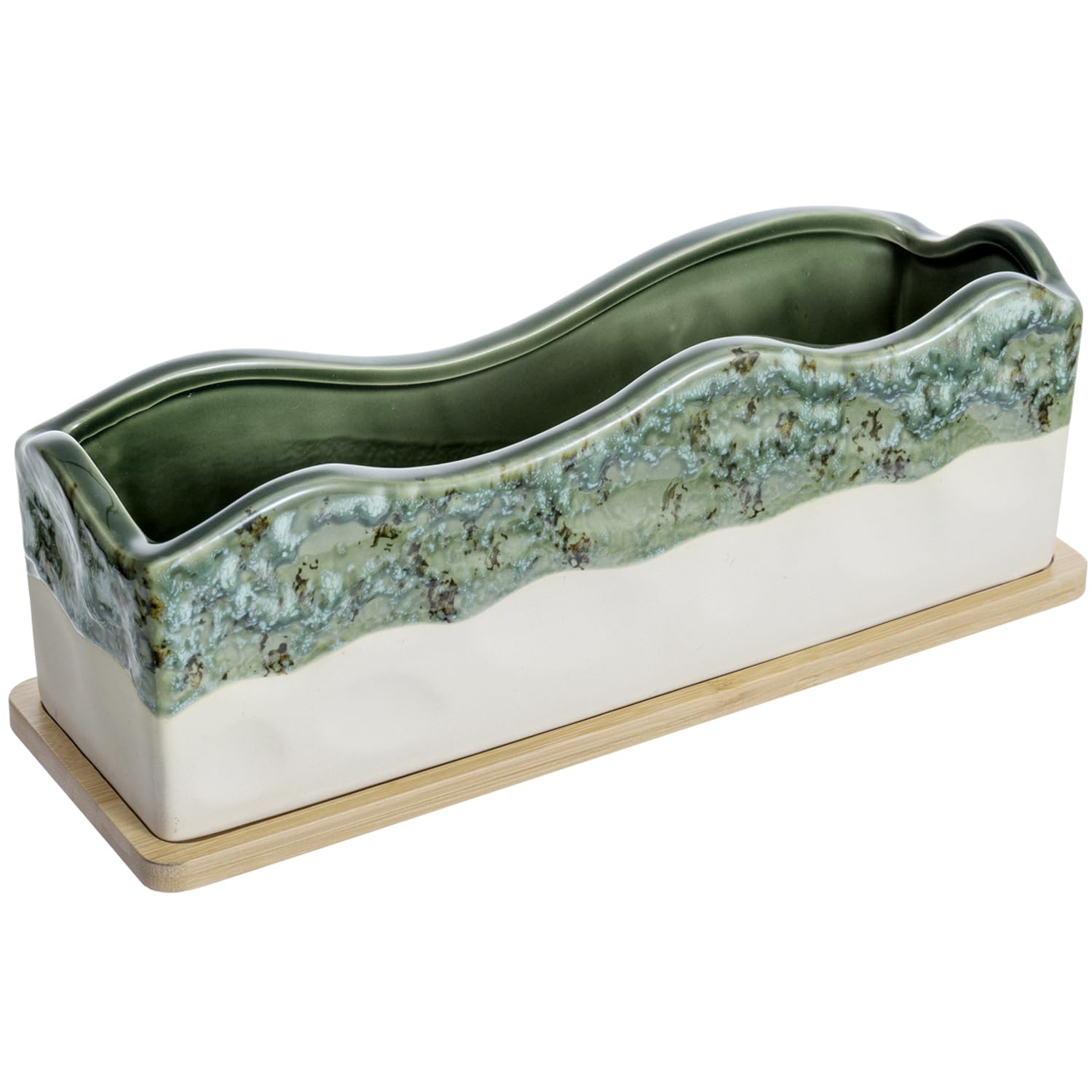
MyGift offers a 13-inch-long rectangular planter with a distinctive wave-top edge and a seafoam green glaze over a beige ceramic body. The dimensions are 12.9 inches long by 3.7 inches wide by 4.1 inches tall, with a removable bamboo tray that includes small foot pads to keep it elevated above the surface. The overall aesthetic leans toward coastal decor, making it a strong fit for beach-house themes or farmhouse-style interiors.
Buyers generally find the planter attractive and functional, with the drainage hole performing adequately for preventing overwatering. The wave-top design adds visual interest without making planting more difficult. The 4.1-inch height is a middle ground between the ultra-shallow 3-inch pots and the deeper 5-inch bowls, making it suitable for a broader range of succulent sizes. The glazed ceramic finish is easy to wipe clean when soil spills occur.
Quality control appears to be a recurring concern. Multiple reviewers reported receiving pots with pre-firing defects, including indentations from packaging and squished edges. The issue seems to affect a minority of shipments, but it is frequent enough to mention. The relatively narrow 3.7-inch width limits the layout options — you can create a single-file row of small succulents but not a clustered arrangement.
What works
- Attractive wave-top design with coastal glaze
- Removable bamboo tray with foot pads
- 4-inch depth works for various succulent sizes
What doesn’t
- Quality control issues with pre-firing defects reported
- Narrow width limits arrangement flexibility
Hardware & Specs Guide
Width-to-Depth Ratio
The most critical specification for a succulent planter is the ratio between its widest horizontal dimension and its internal depth. A ratio of at least 2.5:1 (width to depth) is ideal. For example, a 12-inch wide pot should have an internal depth no greater than 4.8 inches. This prevents moisture from lingering in the bottom third of the soil where roots cannot reach. All seven planters reviewed above exceed this ratio by design, with the ARTKETTY rectangular pot achieving roughly a 4:1 ratio.
Material Breathability Index
Unglazed terracotta has the highest breathability, allowing moisture vapor to pass through the walls at a rate of approximately 15-20% faster than glazed ceramic, based on empirical owner reports of drying frequency. Glazed ceramic reduces breathability significantly but adds stain resistance and strength. Plastic-stone composites offer zero breathability, meaning all moisture loss must occur through the topsoil surface. Choose unglazed terracotta for high-humidity environments or for plants that prefer infrequent, deep watering; choose glazed ceramic for low-humidity rooms where faster drying would be detrimental.
FAQ
Can I use a big succulent planter outdoors during winter?
How many succulents fit in a 12-inch round planter?
Is a drainage hole absolutely necessary for succulents?
Why do my succulents rot in glazed pots but thrive in terracotta?
Final Thoughts: The Verdict
For most gardeners, the big succulent planter winner is the D’vine Dev 12″ Terracotta because the porous clay body and ideal 12-inch width with 5-inch depth provide the best balance of breathability, drainage, and planting area. If you want a glazed ceramic option with a matching saucer and no assembly, grab the SQOWL 12″ Glazed Green. And for massive outdoor arrangements or a statement bowl that survives winter, nothing beats the Veradek Mason Lane 24″ Bowl.