
Synthetic salts give fast top-growth while silently collapsing the fungal networks and microbial populations your soil took seasons to build. Natural fertilizers feed the life in the ground first, which then feeds the plant at its own pace. The challenge is choosing between dozens of bags and jugs, each with different NPK ratios, release speeds, and sourcing ethics — one wrong pick can stunt blooms or create a nitrogen imbalance that attracts pests.
I’m Rikta — the co-founder and writer behind Lawn Gear Lab. My research into this space involves cross-referencing NPK profiles against specific crop requirements, verifying OMRI listings, analyzing fish-sourcing methods for emulsion products, and reading hundreds of owner experiences to separate marketing claims from measurable soil improvement.
The guide below compares seven clear contenders to help you pick the right best natural fertilizer based on your garden’s actual nutrient demands and your preferred application routine.
How To Choose The Best Natural Fertilizer
Natural fertilizers release nutrients at the pace of microbial digestion rather than dissolving instantly into the root zone. That means a 3-4-4 granular formula works differently than a 5-1-1 liquid, even though both are OMRI-safe. Understanding how each type interacts with your soil type, crop cycle, and application equipment will narrow the field fast.
Match the NPK Ratio to the Plant’s Current Phase
A blooming pepper plant needs more phosphorus (the middle number) and potassium (the last number) to set fruit, not extra nitrogen that pushes more leaves. Leafy greens and lawns respond well to higher first numbers like the 5-1-1 of a fish emulsion. Root crops like carrots and beets benefit from a balanced or slightly phosphorus-heavy profile such as 4-6-2. Check where your plants are in their cycle before opening any bag.
Liquid vs Granular — The Speed Tradeoff
Liquid natural fertilizers enter the soil within hours and are available to roots in 1-3 days, making them ideal for a quick correction during active growth or for container plants where soil biology is limited. Granular organics need 5-10 days of consistent soil moisture to activate microbes, then release steadily for 4-6 weeks. Granules build long-term soil structure better, but liquids give faster visible results on stressed plants.
Check the Source to Avoid Fillers
Some natural fertilizers contain “bio-solids” or unspecified organic matter that introduces heavy metals or inconsistent nutrient content. Reputable brands list specific ingredients like fish bone meal, feather meal, kelp meal, rock phosphate, or langbeinite. Products that use vague terms like “natural organic base” or “composted poultry manure” without disclosing percentages are harder to trust for consistent results across seasons.
Quick Comparison
On smaller screens, swipe sideways to see the full table.
| Model | Category | Best For | Key Spec | Amazon |
|---|---|---|---|---|
| Alaska Fish Fertilizer 5-1-1 | Premium Liquid | Vegetative growth, leafy greens, lawns | 115 fl oz, OMRI listed, cold-processed fish | Amazon |
| The Grow Co Fish Emulsion 2-3-1 | Premium Liquid | Blooms and fruiting, frequent feeding | 128 fl oz, 1:100 dilution, hydrolyzed fish | Amazon |
| Dr. Earth Flower Girl 4-10-7 | Mid-Range Granular | Flowering plants, fruit trees, dahlia growers | 4 lbs, 4-10-7 NPK, pet-safe, non-GMO | Amazon |
| Down To Earth All Purpose 4-6-2 | Mid-Range Granular | Tomatoes, peppers, vegetables, transplants | 5 lbs, 4-6-2 NPK, OMRI listed, non-burning | Amazon |
| Espoma Garden-tone 3-4-4 | Mid-Range Granular | Cool/warm season vegetables, herbs, gardens | 8 lbs (2 packs), 3-4-4 NPK, Bio-tone formula | Amazon |
| Sustane All Natural 4-6-4 | Mid-Range Granular | Soil building, raised beds, flower beds | 5 lbs, 4-6-4 NPK, improves soil structure | Amazon |
| Jobe’s Organics All Purpose 4-4-4 | Budget Granular | General garden, shrubs, trees, lawn | 16 lbs, 4-4-4 NPK, OMRI listed, granular | Amazon |
In‑Depth Reviews
1. Alaska Fish Fertilizer 5-1-1
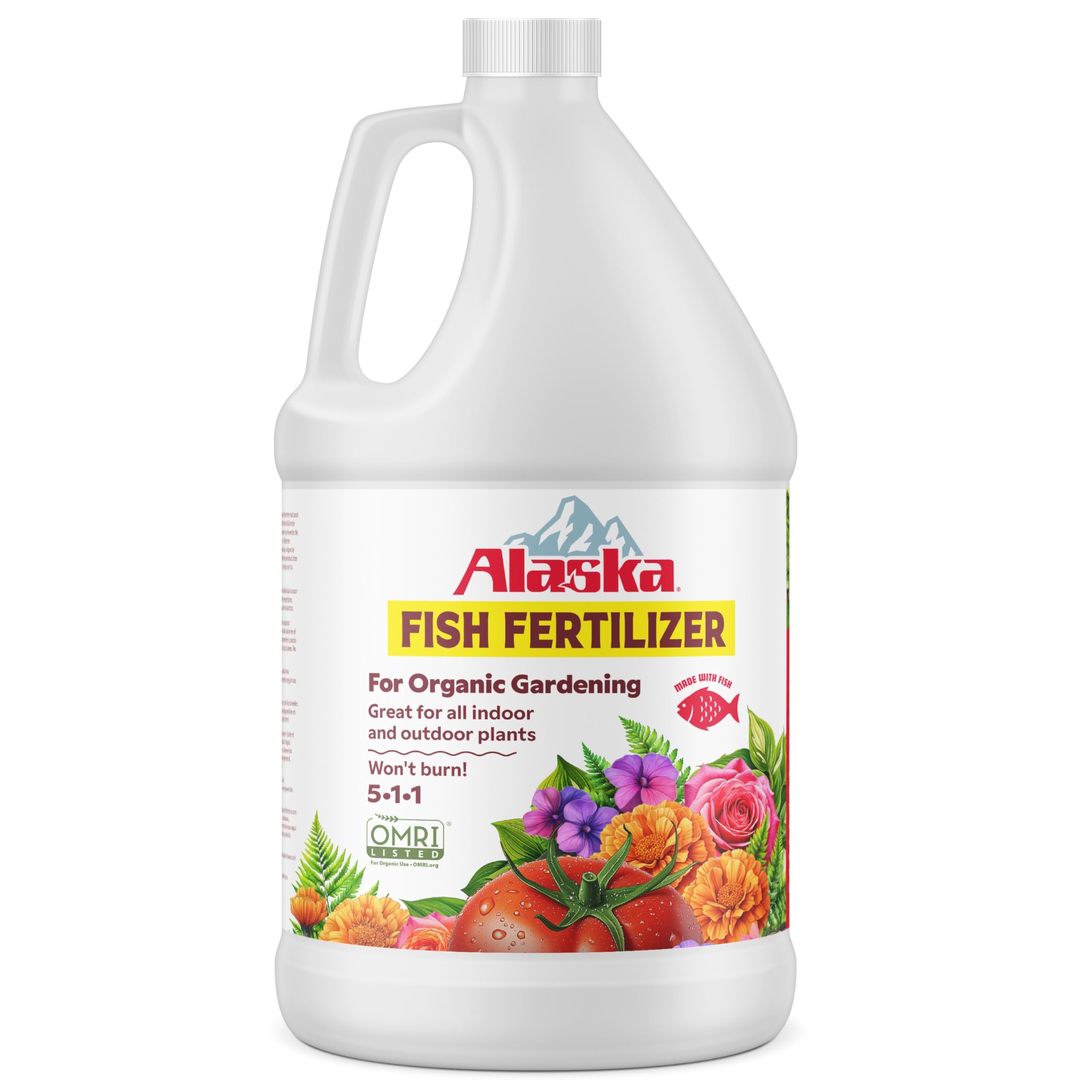
The Alaska Fish Fertilizer uses a cold-process method that preserves the amino acids and micronutrients that heat-based processing destroys. With a 5-1-1 NPK profile, this is a nitrogen-dominant option designed for lush vegetative growth — leafy greens, lawn green-up, and early-season transplants will respond within three to five days. The OMRI-listed status confirms that this product meets USDA organic standards, and the 115-fluid-ounce bottle covers roughly 1,000 square feet when diluted per label instructions.
Gardeners with ten-plus years of experience consistently mention this product as a reliable staple for starting seedlings and boosting soil microbial activity. The liquid formulation allows precise dosing with a hose-end sprayer or watering can, and users report that the deodorized formula dissipates its fishy odor within a day after application — far faster than many raw emulsion products. The low phosphorus content makes this unsuitable for flowering or fruiting stages, but that’s by design since this targets greenery and root establishment.
Some experienced growers note that the 5-1-1 ratio requires a supplemental bloom fertilizer later in the season if you are growing fruiting crops like tomatoes or peppers. The smell, though reduced, can still be noticeable for a few hours after watering in — not an issue for outdoor beds but something to consider for indoor or greenhouse use without adequate ventilation. Overall this is the most versatile liquid starter for anyone building soil life from the ground up.
What works
- Cold processing retains beneficial micronutrients and enzymes
- OMRI-listed with clear organic certification trail
- Deodorized formula reduces fishy smell compared to raw emulsions
- Large 115 oz bottle offers good coverage per application
What doesn’t
- Low phosphorus and potassium (5-1-1) needs supplementing for blooms and fruit set
- Residual odor can linger indoors for a day after application
- Not ideal for container plants where smell concentrates
2. The Grow Co Organic Fish Emulsion 2-3-1

The Grow Co’s fish emulsion uses a hydrolyzed, cold-pressed process that breaks down proteins into amino acids without high heat, preserving more of the natural micronutrients than standard emulsions. The NPK ratio of 2-3-1 shifts the balance toward the phosphorus and potassium needed for flower formation and fruit development — making this a better choice than the Alaska 5-1-1 for mid-to-late season garden stages. The 128-fluid-ounce bottle dilutes at a 1:100 ratio, covering over 160 gallons of mixed solution, which translates to many applications across a medium-sized vegetable garden.
Reviews from experienced growers — including one with over 50 years of gardening — highlight the thin consistency that mixes easily without clogging sprayers and the vigorous growth response when used weekly as a soil drench on tomatoes, peppers, and cucumbers. The manufacturer is transparent about the fish source and uses whole fish trimmings that would otherwise go to waste, which aligns with sustainable gardening practices. Users also note that combining this with rainwater and kelp meal creates a powerful natural feeding regimen.
The tradeoff is the undeniable fishy aroma that comes from a minimally processed real fish product. The company states this clearly: if it doesn’t smell, it’s not real fish. The odor does dissipate within a day in outdoor settings, but indoor use is not recommended unless you have excellent ventilation. A few users reported that the NPK listed on their bottle was 3-2-1 rather than the advertised 2-3-1, so checking the label upon arrival is wise if you need precise phosphorus numbers.
What works
- Phosphorus-focused 2-3-1 ratio supports blooming and fruiting stages
- Cold-hydrolyzed process preserves more amino acids than heat-treated emulsions
- 128 oz bottle makes over 160 gallons of feed at 1:100 dilution
- Uses sustainably sourced whole-fish trimmings with zero waste
What doesn’t
- Strong fishy smell during application that lingers for several hours outdoors
- Not suitable for indoor potted plants due to persistent odor
- Label NPK may occasionally differ from advertised ratio on delivery
3. Dr. Earth Flower Girl Bud & Bloom Booster 4-10-7

The Dr. Earth Flower Girl formula delivers a 4-10-7 NPK that is heavily weighted toward phosphorus — the nutrient responsible for bud set, bloom size, and root development in flowering plants. This granular blend includes no GMOs, chicken manure, or sewage sludge, and carries the OMRI and Non-GMO Project Verified seals. The 4-pound bag is handcrafted with ingredients like fish bone meal and kelp meal that release nutrients in sync with microbial activity in warm soil.
Experienced dahlia and dragon fruit growers report dramatic improvements in flower counts — one user saw dragon fruit blooms jump from three to twenty-five the season after switching to this formula. The slow-release granular form reduces the risk of nitrogen burn during the sensitive bloom phase, and the pet-safe formulation means you can apply it around vegetable beds without worrying about curious dogs or cats. The 4-liter volume covers roughly 50-100 square feet depending on crop density.
A clear mismatch exists between the Amazon listing and the actual product received. Several buyers note the description says 4-10-7 but the bag they receive shows 3-9-4 — a meaningful difference in phosphorus content that affects application rate. The price per pound is higher than many balanced organics, making it best reserved for plants that truly benefit from the bloom-focused profile rather than general garden feeding.
What works
- High phosphorus (10) in stated formula drives exceptional bloom production
- Non-GMO verified with no sewage sludge or chicken manure fillers
- Pet-safe and child-safe after watering in
- Slow-release granules prevent nitrogen burn during flowering
What doesn’t
- NPK on received bag often reads 3-9-4, inconsistent with 4-10-7 listing
- Premium price per pound compared to balanced all-purpose organics
- Not suitable for general vegetative growth or leafy greens
4. Down To Earth All Natural 4-6-2 Tomato & Vegetable Mix

Down To Earth’s 4-6-2 mix is a gentle, non-burning granular fertilizer specifically formulated for vegetables, herbs, and flowers. The 5-pound box contains fish bone meal, blood meal, feather meal, rock phosphate, langbeinite, greensand, humates, and kelp meal — a broad-spectrum ingredient list that feeds both the plant and the soil microbiome. The OMRI listing means this is certified for organic production, and the 4-6-2 ratio provides moderate nitrogen with a phosphorus boost for young transplants establishing roots.
Reviews consistently highlight the product’s effectiveness on tomato plants — one user reported reviving pale, flimsy tomato seedlings within two weeks after a single application. The granular form is easy to work into the top 1-2 inches of soil around the drip line, and the non-burning nature reduces the risk of root damage even if application rates are slightly overestimated. A 15-pound bag covers a full season for an avid gardener, making it an economical choice for medium-sized plots.
The primary downside is the smell. Ingredients like blood meal and fish bone meal produce a strong organic odor that some find unpleasant for the first few days after application. The smell does dissipate within a week, but if you have neighbors close to your garden beds or frequently work right over the soil, it can be noticeable. Additionally, the granular breakdown is temperature-dependent — in cooler soil (below 55°F), the release is significantly slower, which can delay results in early spring.
What works
- Non-burning formula safe for delicate transplants and seedlings
- Broad spectrum ingredient list includes seven organic amendments
- OMRI listed for certified organic production
- Gentle 4-6-2 ratio supports strong root and stem development
What doesn’t
- Strong organic smell persists for several days after application
- Microbial breakdown slows in soil below 55°F, delaying early spring results
- Bags may arrive damaged if box packing is insufficient during shipping
5. Espoma Organic Garden-tone 3-4-4 (Pack of 2)

Espoma’s Garden-tone uses a 3-4-4 NPK enriched with Bio-tone — Espoma’s proprietary blend of beneficial microbes and mycorrhizae designed to improve nutrient uptake and root colonization. The 5% calcium content helps prevent blossom end rot in tomatoes and peppers, a common problem when using fertilizers without secondary nutrients. This two-pack provides 8 pounds total, enough to cover roughly 100 linear feet of row crops when applied monthly during the growing season.
Long-term users frequently call this their “go-to” fertilizer, noting that even when applied liberally, the gentle formula does not burn plants. One reviewer switched from commodity fertilizers to Espoma and observed dramatically stronger bloom sets and more vibrant foliage across a varied vegetable garden including kale, peppers, squash, and melons. The granular application is straightforward — sprinkle around the drip line and water in — with no mixing required. The Bio-tone microbes are most active when soil temperatures stay between 60°F and 85°F.
The smell is a common complaint. Organic ingredients naturally produce an earthy, slightly sour odor that some find unpleasant during application and for a day or two afterward. The Bio-tone microbial activity does help break down organic matter faster, which mitigates the smell compared to raw blood meal products, but it is still noticeable. For large gardens needing more than 8 pounds, buying in single bulk bags of 36 or 50 pounds is more cost-effective than stacking these two-packs.
What works
- Bio-tone microbes improve phosphorus uptake and root colonization
- 5% calcium content helps prevent blossom end rot in tomatoes
- Gentle 3-4-4 ratio is safe even with liberal application
- Monthly application schedule is simple and beginner-friendly
What doesn’t
- Organic smell is noticeable during application and the day after
- Two-pack format less economical than buying bulk single bags
- Microbes need consistent soil warmth to activate fully
6. Sustane All Natural 4-6-4 Flower and Vegetable Food

Sustane’s 4-6-4 granular fertilizer focuses on soil remediation as much as plant feeding. The formulation is designed to improve soil structure and promote microbial biodiversity, making it a strong choice for rebuilding tired raised beds or new garden plots with poor native soil. Independent research referenced by the manufacturer suggests this product produces more fruits and blooms than both other organic fertilizers and synthetic alternatives in side-by-side trials. The 5-pound bag contains 80 ounces by weight, covering about 40-50 square feet at standard application rates. This granular form is derived from composted poultry manure and plant-based materials, creating a slow release that lasts 8-10 weeks in warm, moist soil.
Users report impressive results in raised beds and soilless mixes — one gardener mixed half a cup into the top six inches of each 2×6-foot bed with perlite, compost, and coconut coir, then observed vegetables growing at what they described as a “breakneck pace.” Onions started from ends regrew to 2 feet in under two weeks when fed with this product. The slow release reduces the risk of nutrient leaching in sandy or heavily irrigated soil, and the consistent 4-6-4 ratio supports both vegetative growth and early flowering without needing a second fertilizer until fruit set.
Some users on the fence about the results note that heavy-feeding crops like tomatoes may still require supplemental fertilizer later in the season to maintain fruit production through the full harvest window. The 5-pound size is small for larger gardens — a 50+ pound bag is more practical for serious growers — and the granular form can be dusty when poured, especially in windy conditions. The pelletized consistency works well with handheld spreaders but may clog some concentrated drop spreaders designed for synthetic prills.
What works
- Independent trials show bloom and fruit yields exceeding both organic and synthetic competitors
- 8-10 week slow release reduces leaching and labor
- Improves soil structure and microbial biodiversity over repeated applications
- Balanced 4-6-4 ratio supports both foliage and early flowering
What doesn’t
- 5-pound size is small for large gardens; bulk bags are more practical
- Granules can be dusty and may clog certain drop spreaders
- Heavy-feeding crops may need late-season supplemental feeding
7. Jobe’s Organics All Purpose 4-4-4 Granular

Jobe’s Organics 4-4-4 delivers a perfectly balanced NPK in a 16-pound bag, making it the most economical granular option for covering large garden areas or maintaining multiple beds. The balanced ratio works for vegetables, flowers, shrubs, and trees without needing to switch products between planting stages — a simple every-2-3-weeks application schedule keeps most crops healthy through the season. The OMRI listing confirms compliance with organic standards, and the granules are formulated to resist clumping and dust, making them easy to apply with either hand-toss methods or a hand-crank spreader. Jobe’s also includes Biozome — a proprietary blend of beneficial microbes — to accelerate organic matter breakdown and improve nutrient cycling in the soil.
Users consistently report rapid visible results, with one noting that squash, cucumbers, and eggplant began flowering within 48 hours after a liquid steep feeding (1 cup per gallon of dechlorinated water steeped for 24 hours). The 4-4-4 ratio provides steady nutrition for all-purpose gardening, and the 16-pound bag covers roughly 250-300 square feet depending on application rate. The granules are dark green and friable, spreading easily without the dust cloud that some competition produces. For growers who prefer a “set it and forget it” granular approach, this is a strong candidate for the primary garden fertilizer.
The smell, while milder than raw manure, is still present due to the feather meal and bone meal content. Some users find it less offensive than fish emulsions but noticeable for a day or two after spreading. The 4-4-4 ratio is not ideal for bloom-heavy feeding — if you are growing heavy-flowering crops like dahlias or fruiting tomatoes, you may still need a phosphorus booster mid-season. The bag is also resealable but the zipper closure on the bag is not always reliable, which can lead to spillage in storage if the bag is not clipped shut.
What works
- 16-pound bag offers the best cost-per-pound among granular organics reviewed
- Balanced 4-4-4 ratio works for vegetables, flowers, shrubs, trees, and lawn
- Biozome microbes improve organic matter breakdown and nutrient cycling
- Low-dust granules spread evenly with hand or broadcast spreaders
What doesn’t
- 4-4-4 ratio may require phosphorus supplement for heavy bloomers and fruiting vegetables
- Bag zipper closure not durable; needs clip or container for sealed storage
- Noticeable organic smell for 1-2 days after outdoor application
Hardware & Specs Guide
NPK Ratio and What It Means
The three numbers on every fertilizer bag represent the percentage by weight of Nitrogen (N), Phosphorus (P), and Potassium (K). A 4-6-2 ratio means 4% N, 6% P, and 2% K. Natural fertilizers often have lower total NPK values than synthetics because the nutrients are bound in organic compounds that must be broken down by soil microbes — this reduces the risk of salt burn but requires longer planning. For leafy greens, the N number (first digit) should be highest. For flowering and fruiting, the P number (middle digit) should dominate. For root crops and general health, look for balanced or slightly higher K numbers (last digit).
OMRI Listing vs Organic Claims
OMRI (Organic Materials Review Institute) listing provides independent verification that a product meets the standards for certified organic production under the USDA National Organic Program. Products without OMRI listing can still be natural — they may use ingredients that are inherently organic but have not gone through the certification process. However, for growers who need organic certification for their produce or want the strictest ingredient guarantees, OMRI-listed products like the Alaska Fish Fertilizer, Down To Earth mixes, and Jobe’s Organics provide the clearest safety net against hidden fillers or synthetic additives.
FAQ
Can natural fertilizers burn my plants the way synthetic fertilizers can?
How often should I apply granular natural fertilizer during the growing season?
Why does fish emulsion smell so strong and is there a way to reduce the odor?
Final Thoughts: The Verdict
For most gardeners, the best natural fertilizer winner is the Alaska Fish Fertilizer 5-1-1 because of its cold-processed preservation of micronutrients, OMRI listing, reliable performance across vegetables and ornamentals, and the large 115 oz bottle that provides excellent coverage. If you want a bloom-focused granular formula for heavy flowering crops, grab the Dr. Earth Flower Girl 4-10-7. And for the best value-per-pound when feeding a large mixed garden, nothing beats the Jobe’s Organics 4-4-4 in the 16-pound bag.