
The first few weeks after seeding or laying sod define the long-term health of a lawn. Applying the wrong granular mix can burn tender young roots or fail to supply the phosphorus needed for vigorous establishment. The difference between a patchy yard and a dense, uniform turf often comes down to the exact NPK ratio and the release profile of the starter you choose.
I’m Rikta — the co-founder and writer behind Lawn Gear Lab. I evaluate dozens of granular starter formulas each season by cross-referencing label guarantees, micronutrient packages, and long-term owner feedback to separate the truly effective from the overpriced.
Selecting the wrong product can set a new lawn back by a full season, so this guide breaks down the essential specs and real-world performance of the top contenders to help you confidently choose the best fertilizer for a new lawn that matches your soil type and grass species.
How To Choose The Best Fertilizer For A New Lawn
New grass seed and sod have different nutritional demands than an established lawn. The wrong ratio can delay germination, weaken roots, or cause excessive top-growth before the root system can support it. Focus on three core factors: the NPK ratio (especially phosphorus), the nitrogen release mechanism, and the secondary nutrient package.
Phosphorus Is the Root-Building Engine
A starter fertilizer should always have a middle number (phosphorus) that is higher than or equal to the nitrogen. For new lawns, an ideal phosphorus range is 18–27. This nutrient fuels root cell division and helps the young plant anchor into the soil. Skip any bag where the phosphorus is significantly lower than nitrogen, as that blend is designed for maintenance, not establishment.
Slow-Release vs. Quick-Release Nitrogen
Young grass roots are susceptible to nitrogen burn. A formula that combines some quick-release nitrogen for an initial green-up with slow-release nitrogen (often from XCU, polymer-coated sulfur, or IBDU) provides sustained feeding over 6–8 weeks without the surge that damages new tissue. Pure quick-release granules require careful watering and can spike growth too fast.
Secondary Nutrients and Humates
Iron delivers a deep green color that signals healthy chlorophyll production. Calcium and sulfur support cell wall strength and disease resistance. Humates and mycorrhizal fungi—found in some organic blends—improve nutrient exchange in the root zone. These additives can accelerate establishment by 1–2 weeks in average soil.
Quick Comparison
On smaller screens, swipe sideways to see the full table.
| Model | Category | Best For | Key Spec | Amazon |
|---|---|---|---|---|
| The Andersons Premium New Lawn Starter | Synthetic | Maximum root establishment | 20-27-5 NPK | Amazon |
| Lawn Synergy 15-20-10 | Professional | Fast germination & seed vigor | 15-20-10 NPK | Amazon |
| Jonathan Green Green-Up 12-18-8 | Synthetic | Shade & tough soil conditions | 12-18-8 NPK | Amazon |
| Jonathan Green Veri-Green 12-18-8 | Synthetic | Seeding & sodding balance | 12-18-8 with humates | Amazon |
| Yard Mastery 12-12-12 | Balanced | Large-area even coverage | 12-12-12 NPK | Amazon |
| Fertilome 9-13-7 | Value Entry | Budget-friendly large coverage | 9-13-7 NPK | Amazon |
| Espoma Bio-Tone Starter Plus | Organic | Organic site prep & transplants | 4-3-3 + mycorrhizae | Amazon |
In‑Depth Reviews
1. The Andersons Premium New Lawn Starter 20-27-5
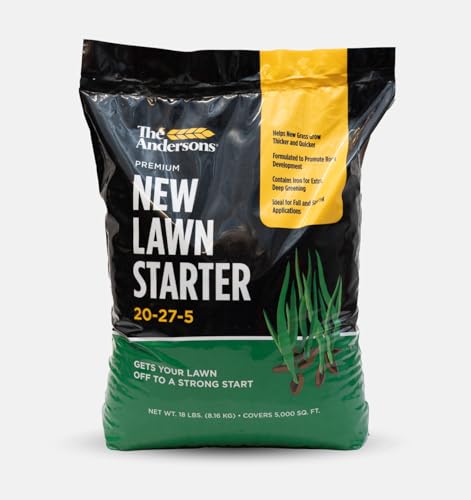
The Andersons delivers the highest phosphorus concentration in this comparison at 27 percent, which directly drives the rapid root elongation new seed and sod require. The 20-27-5 ratio is aggressively tilted toward root formation while still supplying enough nitrogen for early top-growth and color. A dual-release nitrogen source (quick plus slow-release) provides an immediate green flush followed by sustained feeding over several weeks.
The formula includes 1 percent iron for deep greening without pushing excessive leaf growth that would outpace root development. Owners consistently report seeing dense turf in just over a week after application, with roots that hold well through the first mowing. The 18-pound bag covers 5,000 square feet, making it a straightforward choice for quarter-acre seeding projects.
Some users note the prills can be slightly dusty in the bag, and the high phosphorus concentration requires careful spreader calibration to avoid overlaps that could concentrate nutrients. The product also lacks mycorrhizal additives, so it relies entirely on its synthetic NPK punch rather than biological enhancement.
What works
- Highest phosphorus (27) in class for maximum root development
- Dual-release nitrogen provides fast green-up and extended feeding
- Iron inclusion delivers deep greening without excess top growth
What doesn’t
- Prills can be dusty, requiring careful spreader handling
- No mycorrhizal or biological additives for soil biology
2. Lawn Synergy 15-20-10 Professional Starter
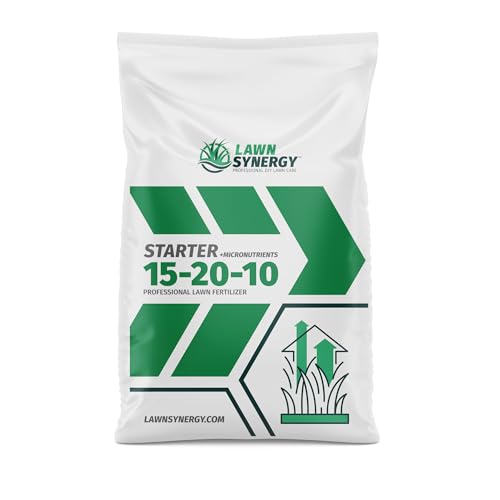
Lawn Synergy’s 15-20-10 professional-grade blend is formulated specifically for germination and early seedling vigor. The 20 percent phosphorus drives root formation, while the XCU slow-release nitrogen provides a steady nutrient supply without the surge that burns delicate seedlings. The prills are clean and flow freely through rotary and drop spreaders, providing even coverage across 4,500 square feet per 18-pound bag.
The formula also includes ammonium sulfate and iron for quick color, and essential micronutrients that support enzyme function during the establishment phase. Owners pairing this with tall fescue seed report 3-inch grass in three weeks with deep green color, outperforming standard big-box starters in side-by-side comparisons. The product is not sold in retail stores, which limits availability but also avoids the filler-heavy blends common on shelf displays.
The main drawback is the coverage area—4,500 square feet per bag is slightly smaller than the 5,000-foot standard, so larger lawns require an extra bag. The price point sits at the higher end of the starter market, making it less economical for budget-focused projects.
What works
- XCU slow-release nitrogen prevents burn on young seedlings
- Clean, uniform prills deliver even spreader flow
- High phosphorus and iron combo speeds visible results in 3 weeks
What doesn’t
- Coverage is 4,500 sq ft, smaller than the 5,000-sq-ft standard
- Premium pricing may not suit large-area budgets
3. Jonathan Green Green-Up 12-18-8
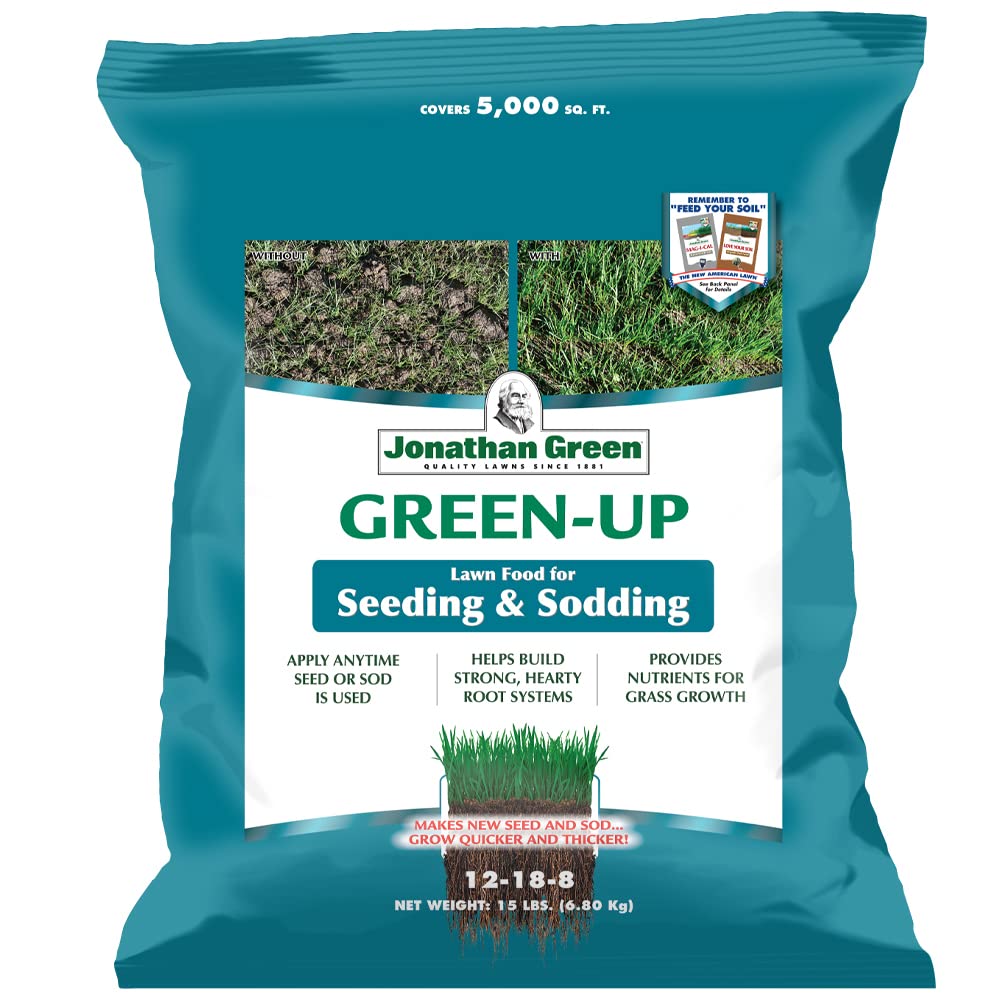
Jonathan Green’s Green-Up formula uses a proven 12-18-8 analysis with humates added to improve nutrient exchange in the root zone. This is especially valuable in soils with poor tilth or low organic matter, where nutrients tend to leach or bind. The humate content helps the phosphorus and potassium remain available longer, which translates to more consistent establishment in variable conditions.
The iron included in this blend delivers the characteristic dark green color that Jonathan Green users expect. Owners in full-shade situations and tough clay soil report 90 percent coverage in four weeks when paired with Black Beauty seed. The 15.2-pound bag covers the standard 5,000 square feet and stores well when sealed. The slow-release nitrogen component feeds up to two months, reducing the need for a second application during the establishment window.
A few users found the price notably higher than comparable starter blends and did not see a dramatic difference versus products with similar NPK at lower cost. The humates add real value in poor soils but offer diminishing returns in already rich loam.
What works
- Humates improve nutrient availability in poor or compacted soil
- Iron content delivers deep greening in shade conditions
- Two-month feeding window reduces mid-season reapplication
What doesn’t
- Higher price per pound than several mid-range options
- Humate value diminishes in already fertile soil
4. Jonathan Green Veri-Green 12-18-8
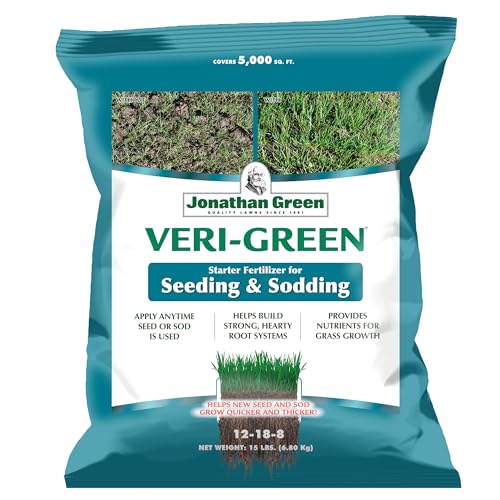
Veri-Green is the direct-value sibling of the Green-Up line, sharing the same 12-18-8 NPK ratio and humate enrichment but at a slightly lower price point. The primary difference is packaging—this bag is labeled specifically for seeding and sodding and targets the same 5,000-square-foot coverage. The phosphorus content remains sufficient for strong root initiation across cool-season and warm-season grasses.
Owners consistently praise its performance when used with sod installations, noting that new strips root into native soil faster compared to unfertilized sections. The humates again help buffer against nutrient lock-up in variable soil pH. The product feeds up to two months and works well when applied the same day as seeding or laying sod. The bag is easy to handle and the granules sweep through a rotary spreader without clogging.
The drawback is the 12 percent nitrogen, which is on the lower side for a starter—most premium options now push 15 percent or higher. In cool, wet springs this lower nitrogen can result in a slower initial green-up compared to higher-nitrogen starters.
What works
- Humate-enhanced formula buffers nutrient lock-up in variable soil pH
- Reliable performance on sod installations with visible root anchoring
- Two-month feeding window supports consistent establishment
What doesn’t
- 12 percent nitrogen is lower than several premium alternatives
- Slower initial green-up in cool, wet spring conditions
5. Yard Mastery 12-12-12 Starter 18 lbs
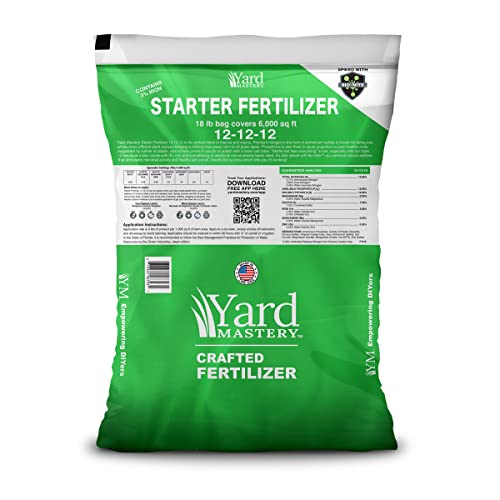
Yard Mastery takes a balanced approach with an even 12-12-12 NPK ratio, which makes this product more versatile than a strict starter but still effective for new lawns due to the 12 percent phosphorus. The standout feature here is the coverage—6,000 square feet per 18-pound bag, the largest coverage of any product in this comparison. The slow-release formulation provides consistent feeding over time and includes 3 percent iron for steady greening.
Owners pairing this with ryegrass or fescue seed report germination in about one week and thick growth in 15 days at a double seeding rate. The balanced ratio also means the same bag can transition to maintenance feeding later in the season. The ammonium sulfate component delivers a quick nitrogen hit for early color, while the slow-release prills sustain growth. The price per square foot is very competitive for large lawns.
The trade-off is that the phosphorus level (12 percent) is significantly lower than the 20-25 percent range found in dedicated starter blends. Lawns on extremely phosphorus-deficient soil may see slower root development than with a higher-phosphorus formula. The bag also lacks humates or biological enhancers.
What works
- Largest coverage at 6,000 sq ft per bag—best value per square foot
- Balanced 12-12-12 transitions from starter to maintenance use
- 3 percent iron and slow-release nitrogen deliver consistent color
What doesn’t
- Phosphorus at 12 percent is lower than dedicated starter formulas
- No humates or mycorrhizae for soil biology support
6. Fertilome 9-13-7 New Lawn Starter
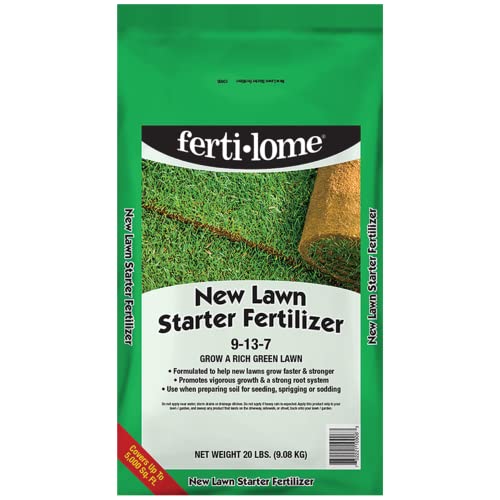
Fertilome provides a solid entry-level starter with a 9-13-7 NPK that keeps phosphorus in the lead role at 13 percent. The 20-pound bag covers 5,000 square feet at the standard rate, giving you more total product weight than most competitors at a lower per-pound cost. The granules are noticeably larger than many mass-market starters, which helps them break down slowly and reduce the risk of nitrogen burn on new seed.
Owners upgrading from cheaper big-box products consistently note that Fertilome produces a darker, denser lawn with fewer weak patches. The 9 percent nitrogen is sufficient for early color without pushing excessive leaf growth, and the 7 percent potassium supports overall plant health during the stressful establishment window. The product works across seeding, overseeding, and sod applications without scorching.
The lower nitrogen and phosphorus numbers mean this product will not drive the same explosive root growth as the 20-27-5 options. In very sandy or leached soils, the 9-13-7 may require a follow-up application earlier than the standard eight-week window. The bag also lacks any iron or humate additives.
What works
- Large granules reduce burn risk and feed steadily
- 20-pound bag offers more product weight for the same coverage area
- Consistently outperforms mass-market starters in side-by-side tests
What doesn’t
- 9-13-7 numbers mean slower root response than high-phosphorus blends
- No iron or humates for extra greening or soil conditioning
7. Espoma Organic Bio-Tone Starter Plus 4-3-3
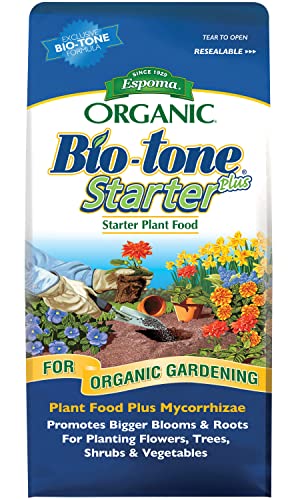
Espoma’s Bio-Tone Starter Plus takes a completely different approach than the synthetic granular starters in this roundup. The 4-3-3 NPK is low by conventional standards, but the real value comes from the inclusion of both endo and ecto mycorrhizae—beneficial fungi that colonize the root zone and dramatically increase nutrient and water uptake. This biological boost allows a low-analysis organic to compete with synthetics in plant performance.
The product is OMRI-listed for organic production and contains 5 percent calcium for cell wall strength and disease resistance. Owners who follow the broadcast approach for new lawns mix it thoroughly into the top two inches of soil before seeding. Feedback from organic growers is consistently positive, with many refusing to plant anything without Bio-Tone in the hole. The 4-pound bag (pack of two) is relatively small, but the product is intended for targeted use rather than broad-acre coverage.
The major limitation is coverage—at the recommended rate, this bag covers approximately 100 square feet of soil when mixed 1:1 by volume, making it impractical for full-lawn seeding over 5,000 square feet without purchasing multiple units. The odor is also notably strong, described by users as “stinky” but effective.
What works
- Dual endo/ecto mycorrhizae dramatically boost root nutrient uptake
- OMRI-listed organic and safe for all plants and soil types
- Calcium content supports cell wall strength and disease resistance
What doesn’t
- Very low NPK per pound requires more product for full-lawn coverage
- Strong organic odor persists after application
Hardware & Specs Guide
NPK Ratio Decoded
The three numbers on a starter bag represent Nitrogen (leaf growth), Phosphorus (root formation), and Potassium (overall plant health). For new lawns, the middle number should be the highest—preferably 18 percent or above. A 20-27-5 analysis delivers 27 percent phosphorus, which directly fuels root cell division. Stick to ratios where the second number equals or exceeds the first number for seed and sod establishment.
Slow-Release Nitrogen Types
Slow-release nitrogen is typically labeled as polymer-coated sulfur-coated urea (SCU), XCU, or methylene urea. These sources break down via soil moisture and temperature over 6-8 weeks, providing steady feeding without the surge that burns young roots. Quick-release sources like ammonium sulfate or urea deliver immediate green-up but require careful watering to avoid seedling damage. The best starters combine both types.
Iron and Color Retention
Iron (chelated or ferrous sulfate) is added to many starter formulas at 1-3 percent to promote chlorophyll production. This gives the grass a deep green appearance without pushing excess leaf growth. Iron-started lawns often look full and lush earlier than those started without it, and the effect is visible within 7-10 days of application. Iron also helps maintain color during cooler spring and fall conditions.
Humates and Mycorrhizal Fungi
Humates are organic compounds that enhance cation exchange capacity (CEC) in the root zone, making soil nutrients more available. Mycorrhizal fungi form a symbiotic relationship with grass roots, extending the root system’s reach for water and phosphorus. Products containing one or both of these additives typically show faster establishment in poor or compacted soil, though they add cost per bag.
FAQ
Can I use a regular lawn fertilizer on a new lawn instead of a starter?
How soon after seeding should I apply starter fertilizer?
Will too much phosphorus harm my new lawn?
How long does a starter fertilizer actually feed the grass?
Final Thoughts: The Verdict
For most gardeners, the fertilizer for a new lawn winner is the The Andersons Premium New Lawn Starter 20-27-5 because its aggressive 20-27-5 NPK and dual-release nitrogen deliver the fastest root establishment and most reliable coverage across both seed and sod projects. If you want professional-grade germination acceleration with XCU slow-release nitrogen, grab the Lawn Synergy 15-20-10. And for large-area seeding on a tighter budget, nothing beats the Fertilome 9-13-7 for per-square-foot value without sacrificing root-focused phosphorus.